User Group: Researcher

  • European Sovereignty in the AI Era

    European Sovereignty in the AI Era


    The discussions will center around key questions regarding the current European regulatory framework concerning transparency, fairness, and accountability, as well as the establishment of a robust European data governance framework. Within this overarching theme, the focus will be on the transformative impact of artificial intelligence on the efficiency of public institutions.

    How can we ensure the ethical use of AI technologies within public institutions? How can governments guarantee transparency in AI decision-making processes and address and mitigate biases in AI algorithms used in public services? How are governments tackling the security challenges associated with AI applications in critical areas such as defense and national security? Furthermore, what initiatives are being undertaken to enhance the AI literacy and skills of public servants?

    Finally, the aim is to address the role of investments and capital for start-ups and academic institutions in Europe to ensure sustained growth and competitiveness in the AI sector. Eager engagement in insightful conversations and collaborative exploration at this event is anticipated.


    When

    Thursday, January 18th, 2024


    Where

    AI House Davos


    Speakers

    • Jonas Andrulis: Founder, Aleph Alpha
    • Christian Lindner: Federal Minister of Finance, Germany
    • Dr. Rainer Esser: CEO, DIE ZEIT
    • Jochen Wegner: Editor in Chief, ZEIT Online, Moderator
  • Tübingen AI Talk Series with Prof Niklas Boers

    Tübingen AI Talk Series with Prof Niklas Boers


    The Earth’s climate is a highly complex system and as such many processes and phenomena cannot be resolved in terms of fundamental physical equations, either because they are unknown or because they would be to costly to explicitly include in numerical simulations. While there is a long history of complementary, data-driven modelling approaches, recent developments in deep learning promise substantial advances.

    Here Prof. Boers presents some recent results on machine learning approaches to address several challenges in nonlinear Earth system dynamics, including the prediction of climate phenomena such as monsoon onsets or ENSO, hybrid modelling combining process-based with deep learning model components, as well as bias correction and downscaling of Earth system models with generative machine learning models.


    About Prof. Niklas Boers:

    Niklas Boers is professor of Earth system modelling at the Technical University of Munich, leads the Future Lab on Artificial Intelligence at the Potsdam Institute for Climate Impact Research, and is Honorary Professor of Mathematics at the University of Exeter. He obtained his PhD from Humboldt University Berlin and spent several years at the ENS Paris and Imperial College London. As a physicist and mathematician by training, he studies theoretical climate dynamics with a combination of physical and data-driven approaches. In his research he develops methods rooted in dynamical system theory, complexity, science, and machine learning and applies them to different problems of nonlinear dynamics, with a focus on modelling and predicting extreme events and abrupt transitions in the Earth system.


    Date and Time: 25.01.2024 at 11 a.m. sharp
    Location: MvL6 Lecture Hall


    1-on-1 Meetings and Dinner:

    Niklas Boers is available for 1-on-1 meetings during the day; sign up here.
    If you're interested in joining for dinner, please indicate your preference in the same form.


  • Top supercomputers strengthen UN SDGs and global sustainability

    Top supercomputers strengthen UN SDGs and global sustainability

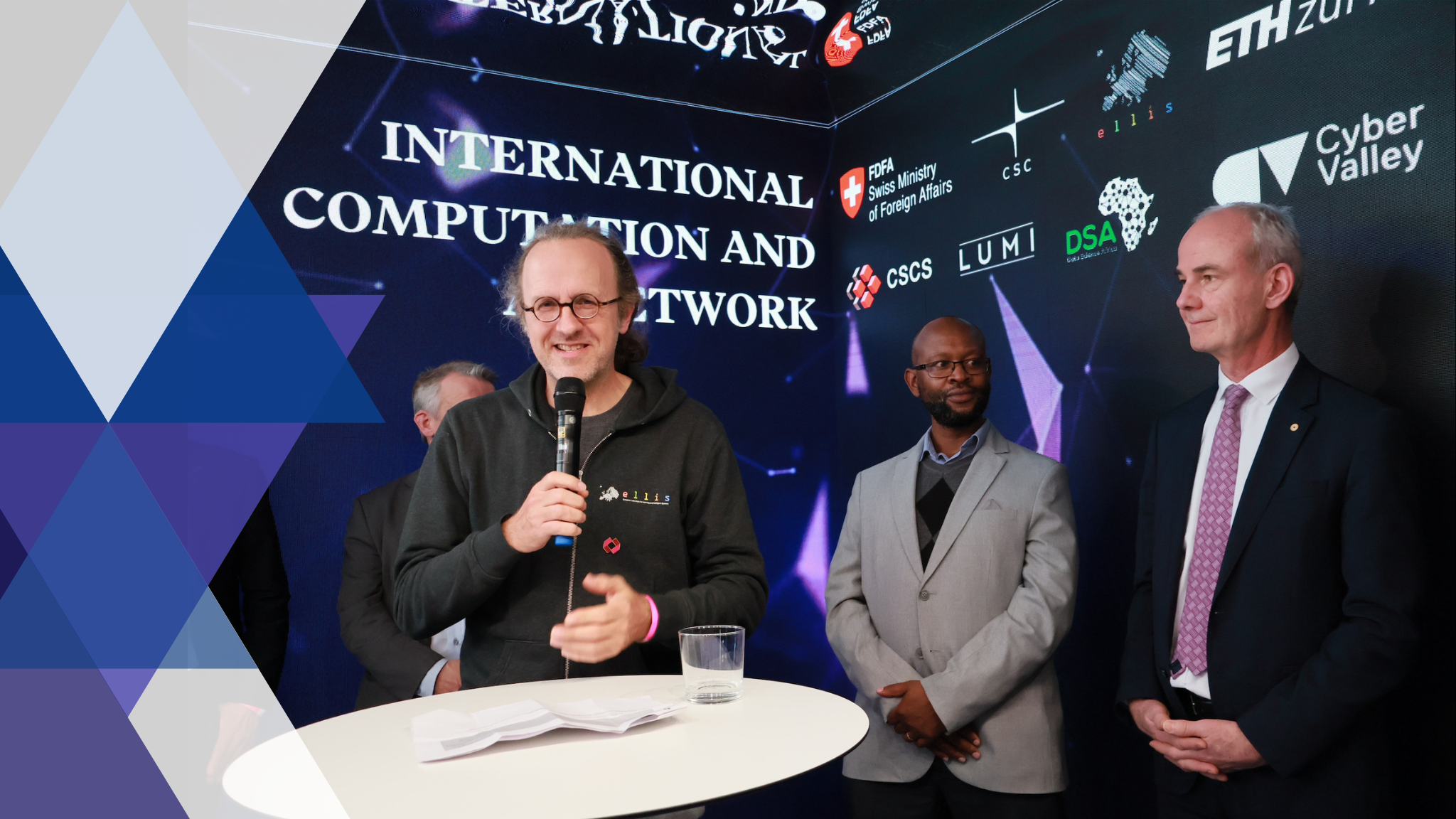
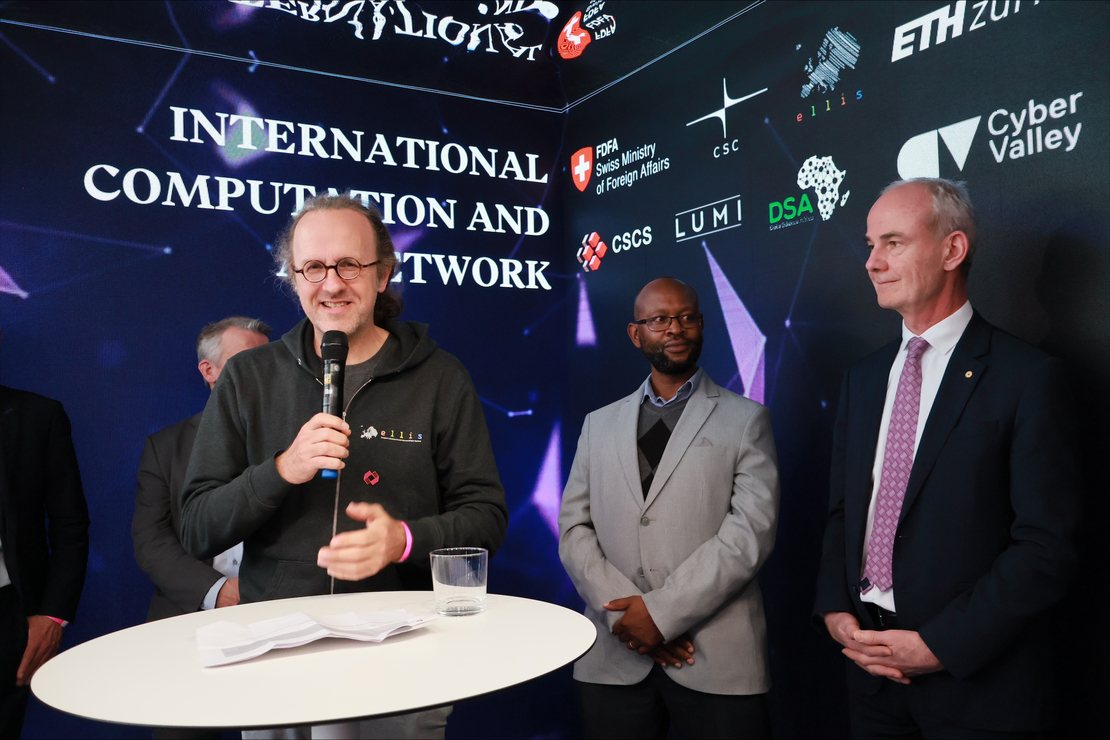
    The new network aims to broaden access to supercomputing, data and software infrastructures, and will operate at the intersection of public and private sectors, academia, and civil society. In addition to ELLIS, ICAIN’s founding members include the Swiss Federal Department of Foreign Affairs, ETH Zurich, the Swiss National Supercomputing Centre, Data Science Africa and the Finnish IT Center for Science, which is the hosting member of the LUMI consortium. 


    Supercomputing facilities is essential for AI-based technologies 

    Artificial intelligence has a profound economic and societal impact on a global scale and can help combat challenges such as climate change and pandemics. However, not all players, especially in the global south, have the same access to expertise and computing resources which are crucial for the development and implementation of innovative AI-based technologies. 

    This is where ICAIN comes in: By broadening access to such resources, the founders of ICAIN aim to enable international research projects that benefit society as a whole and are in line with the United Nations Sustainable Development Goals (SDGs). With the European LUMI and the Swiss ‘Alps’, the new network includes two of the most powerful supercomputers in the world. All founding partners will further contribute to ICAIN by sharing their AI expertise. 

    ICAIN in Davos


    Powering the future of AI excellence internationally 

    ICAIN is set to have a strong impact on AI entrepreneurs and scientists internationally, providing them with the knowledge and necessary tools needed to push their AI advancements to unprecedented heights. This initiative positions Europe as a global leader in AI excellence, fostering innovation and collaboration to drive the capabilities of AI forward.  

    ICAIN is driven by the recognition of artificial intelligence as a crucial technology with the potential to address global challenges. The initiative aims to ensure inclusive participation in AI research and viewing AI solutions as global public goods accessible to all. It prioritizes addressing major scientific and social issues in AI collaboratively and transparently. This also illustrates the importance of collaborative efforts between politics and science to ensure that AI remains at the forefront of future developments. 
     

    Cyber Valley Community Member ELLIS joins forces 

    “ELLIS is a pan-European AI network aiming to create outstanding conditions for AI researchers. More than 1,000 top scientists and leading AI research institutions such as ETH Zurich, Cambridge, Oxford, Paris and Max Planck Institute for Intelligent Systems are part of ELLIS”, says Bernhard Schölkopf, Director of the ELLIS, Director of Max Planck Institute for Intelligent Systems, and Cyber Valley Board Member. “We will contribute our network’s scientific expertise to provide meaningful input on how the compute resources get used, ensuring that the major scientific and social issues of AI are tackled jointly and transparently. We like to think that having ELLIS as a founding partner and co-initiator will be essential to the success of the proposal.”

    Launch highlights  

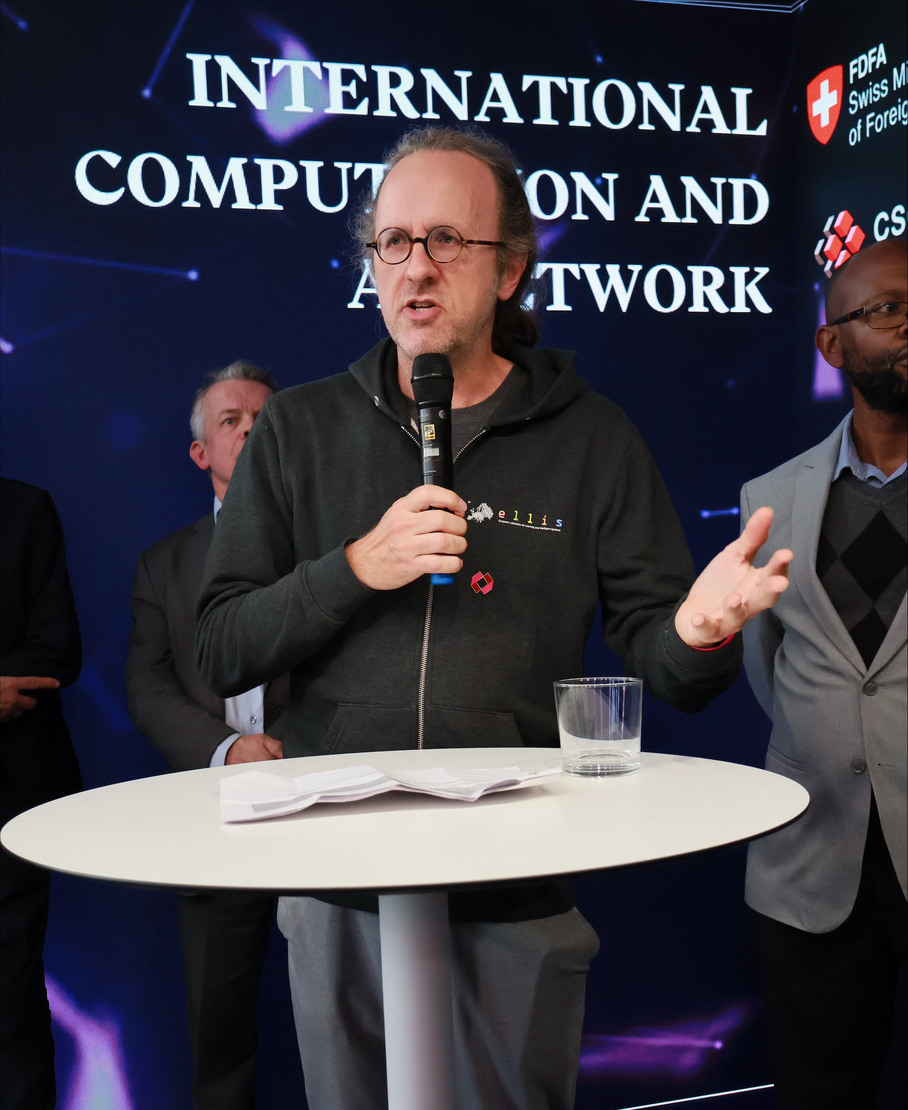
    ICAIN’s launch was announced at a joint press conference at the World Economic Forum in Davos on January 17, 2024, followed by an inaugural panel discussion:

    Panelists 

    • State Secretary Alexandre Fasel, Swiss Foreign Ministry;   
    • Prof. Bernhard Schölkopf, Director of the ELLIS-Institute, Director Max Planck Institute for Intelligent Systems, and Cyber Valley Board Member 
    • ETH Vice President Prof. Christian Wolfrum;
    • Prof. Ciira Maina, Director of Data Science for Africa 


    Fully operational by 2025

    The ICAIN initiative aims to achieve full completion by 2025. As part of their objectives for the current year, they are actively seeking additional partners, including research institutes, international organizations, companies, or foundations, to join their mission and provide active support. These partners may contribute financial support or offer contributions in kind, such as computing power or specialized expertise.

    Throughout the ongoing incubation phase, governance rule, coordination processes, and financing for ICAIN will be formulated. Simultaneously, the first pilot projects, in collaboration with other entities, will begin to gather valuable experience in partnership collaboration. By 2025, ICAIN aims to have all its organizational structures firmly established.

    Media contact for Cyber Valley at AI House Davos: 

    Hazel Rowland 

    Cyber Valley Media Manager 

    Hazel.Rowland@cyber-valley.de 


    About Cyber Valley  

    Cyber Valley is Europe’s largest and leading center for excellence in artificial intelligence and modern robotics. Its mission and public mandate are to advocate for research, development, application, and acceptance of technologies and methods in the field of intelligent systems. Cyber Valley encourages entrepreneurship by uniting scientific excellence with innovation and technology transfer. In addition, Cyber Valley facilitates critical reflection on the ethical and social implications of AI through public engagement. Cyber Valley envisions a future in which the full potential of intelligent systems is leveraged for the greater good of the world.

    The Cyber Valley Community is a network of AI researchers, entrepreneurs, investors, and start-ups, alongside partners from academia, industry, and society. Cyber Valley GmbH is owned by the State of Baden-Württemberg and the Max Planck Gesellschaft. It acts as the service provider, central organizer, and host for the Cyber Valley Community. While Cyber Valley GmbH is located in Stuttgart and Tübingen, it operates across Baden-Württemberg with a global reach, attracting the best talent from across the world to create the future with AI.


    About ELLIS 

    ELLIS is a pan-European AI network of excellence. It builds upon machine learning as the driver for modern AI and aims to secure lasting international leadership of AI made in Europe by connecting top researchers in this field and by creating a multi-centric AI research laboratory. Founded in 2018, ELLIS has grown into a network that counts 41 ELLIS units at world-class institutions in 16 countries, 16 ELLIS programs and a pan-European PhD program. The members of ELLIS are committed to shaping the future of AI in Europe by pushing the scientific and technological boundaries for human-centered, beneficial and safe AI.

  • IMPRS-IS 2024 Interview Symposium Keynotes

    IMPRS-IS 2024 Interview Symposium Keynotes

    The International Max Planck Research School for Intelligent Systems (IMPRS-IS) brings together the MPI for Intelligent Systems with the University of Stuttgart and the University of Tübingen to form a highly visible and unique graduate school of internationally recognized faculty, working at the leading edge of the field. This program is a key element of Baden-Württemberg’s Cyber Valley initiative to accelerate basic research and commercial development in artificial intelligence.

    Each year, the program hosts a symposium to interview IMPRS-IS Ph.D. applicants. As the scientific highlight of this year's program, Dr. Wieland Brendel (Max Planck Institute for Intelligent Systems and ELLIS) and Prof. Andreas Bulling (University of Stuttgart) will be featured as keynote speakers for the event.

    Their hybrid keynote talks will take place back-to-back at the two sites of MPI-IS on Thursday, February 8. All community members are encouraged to join these presentations, preferably onsite if possible. 

    Speakers:

    Wieland Brendel – Cracking the black box: how far are we from understanding the inner workings of deep vision models?
    Date: Thursday, Febrary 8, 2024
    Time: 15:30 – 16:15 CET
    Onsite Location: MPI-IS Tübingen, Main Lecture Hall, Room N0.002

    Andreas Bulling – The academic journey – a personal travel report
    Date: Thursday, Febrary 8, 2024
    Time: 16:30 – 17:15 CET
    Onsite Location: MPI-IS Stuttgart, Copper Lecture Hall (Formerly R204)

    Participants can watch these talks on-site in either Stuttgart or Tübingen. One talk will be presented live in each location, and the other will be streamed remotely in real time. Both talks can also be watched online via Webex, which is how most applicants will join.

    Each keynote talk is anticipated to be 30 minutes long plus about 15 minutes for questions and discussion, giving a break of about 15 minutes between them.

    Links to access this event will be distributed via our community mailing lists. 

    With questions about this event or how to join, please contact Sara Sorce (sara.sorce@tuebingen.mpg.de).

    Keep in mind: This event is for internal community members only. 

  • Join the global forum for AI progress at AI House Davos

    Join the global forum for AI progress at AI House Davos

    • AI House Davos will bring together leaders in industry, civil society, government, the investing community, and academics to drive the global conversation on artificial intelligence.

    • Confirmed speakers include: Yann LeCun (VP of Meta), Kay Firth-Butterfield (CEO of Good Tech Advisory), Amy Webb (CEO of Future Today Institute), Arvind Krishna (CEO of IBM), Jonas Andrulis (CEO of Aleph Alpha), Theresa May (former Prime Minister of the UK), and Christian Lindner (Germany’s Finance Minister). 

    • Cyber Valley, contributor to the AI House program, invites you to its sessions. 

    Davos, Switzerland. We are pleased to announce the upcoming opening of AI House Davos during the World Economic Forum (WEF) Annual Meeting from January 15-19, 2024. Registration for a packed calendar of events is now open on the AI House website.

    Understanding AI’s current and future capabilities has never been more important. AI will undoubtedly be the dominant discussion at this year’s WEF Annual Meeting, and AI House Davos will be a crucial global forum to bring the deepest discussions on AI to life, from how AI can benefit humankind to how world economies can provide a catalyst for sustainable innovation. 

    The AI House will bring together leaders across diverse sectors — from academics to industry, as well as government, and entrepreneurship — to facilitate deep discussions and collaboration geared toward safeguarding the future of artificial intelligence. The AI House is a dedicated platform with a multidisciplinary and multi-stakeholder approach working to address the challenges and opportunities facing the artificial intelligence ecosyste. This includes conversations surrounding responsible growth, scaling, and regulation. 

    Speakers at AI House include Yann LeCun (VP of Meta), Kay Firth-Butterfield (CEO of Good Tech Advisory), Amy Webb (CEO of Future Today Institute), Arvind Krishna (CEO of IBM), Jonas Andrulis (CEO of Aleph Alpha), Theresa May (former Prime Minister of the UK), Christian Lindner (Germany’s Finance Minister), and many more. Confirmed speakers can be found on the website.


    Cyber Valley events at AI House Davos

    AI House Davos events with Cyber Valley contributions

    Five major themes will be covered throughout the week. Monday will focus on the current state of AI. An Opening Ceremony will take place where the AI House initiators will discuss the activities planned for the week. On Tuesday, a dive into AI’s opportunities and risks will take place. Wednesday will focus on applications of AI. Thursday will look toward the next frontier. On Friday, the program will conclude with a review of the week and a look ahead to the future.

    Members of the press should join the waitlists for the specific sessions at AI House they wish to attend. Invitations are at the discretion of the session organizer. Press inquiries about AI House should be sent to steven.perlberg@merantix.com. 

    AI House is a joint initiative led by Merantix, ETH AI Center, Swisscom, UTokyo Institute for AI and Beyond, Hewlett Packard Enterprise (HPE), and G42. AI House partners and sponsors include the European Commission, European Innovation Council, European AI Forum, Automation Anywhere, EPFL, EY, TÜV AI Lab, Cyber Valley and many more. Forbes, Handelsblatt, and Devex are the media partners. 

    The AI House is perfectly positioned in the heart of the Davos promenade. Just 750 meters from the congress center, this central location ensures seamless access to all the key events in Davos. Find AI House on Promenade 68, Davos Platz.

    Faheem Ahamed, Group CMO of G42, said: “At G42, we embrace a global, inclusive approach to the future of AI. As the Initiator Partner of AI House Davos, we eagerly anticipate engaging with organizations and individuals who share our dedication to leading-edge scientific research, transformative AI applications, and effective regulation. Together, we can accelerate AI's positive impact on society and the global economy, cultivating an ecosystem that fuels innovation while steadfastly upholding ethical standards in the advancement and integration of this transformative technology.”

    Masami Hagiya, Director of UTokyo Institute for AI and Beyond, said: “As AI technologies spread, all aspects of human society are affected and need to change to build a better world. The multi-stakeholder approach of AI House is a suitable framework for discussing issues from different perspectives of human society. The panel on ‘AI Governance and Safety: G7 Hiroshima AI process’ is a typical topic involving multiple stakeholders. Also, UTokyo Institute for AI and Beyond will host ‘AI and Higher Education,’ focusing on how higher education should evolve as generative AI gradually replaces many aspects of human intelligence. ‘Harmony of Coexistence’ will touch on human intelligence and AI from various perspectives.”

    Dr. Rasmus Rothe, CTO and Co-Founder of Merantix, said: “What the AI landscape really needs now in order to thrive is a vibrant community bringing together all the different stakeholders, from investors, startups, academics, regulators, government leaders, and corporates, to discuss AI’s future, learn about AI’s current application in the real world, and create some meaningful new collaborations leveraging AI’s potential. That’s why we initiated AI House, and it’s why Davos is the perfect venue for these discussions.”

    Evan Sparks, Vice President and General Manager for AI Solutions and Supercomputing Cloud, Hewlett Packard Enterprise, said: “AI will have a transformative societal impact. As a fundamental technology, AI will solve complex scientific challenges and make breakthroughs in drug discovery, provide accurate medical diagnosis faster, predict and prevent catastrophic weather events, and advance renewable energy to help us transition to a net-zero world. However, to make AI beneficial to humanity, we must make it accessible, sustainable, and responsible, and the power of collaboration will help us get there. As co-initiators of AI House Davos, we look forward to being a part of an important initiative that will bring together stakeholders across private and public sectors to design, develop, and deliver efficient and ethical AI solutions to benefit the greater good.”

    Dr. Alexander Ilic, Founder and Executive Director of ETH AI Center, said: “In the imminent future, we anticipate many breakthroughs in AI research to catalyze significant advancements towards achieving the Sustainable Development Goals – marking a new era of progress and innovation. From education to healthcare to sustainability, AI is a technology that should be accessible, trustworthy, and safe for everybody. The AI House Davos therefore serves as a central hub, fostering and expediting collaboration between global key stakeholders from academia, industry, NGOs, start-ups, and civil society, all dedicated to realizing our shared vision.”

    Laure Willemin, Executive Vice President of Data, Analytics & AI at Swisscom, said: “The AI House Davos is the start of a joint journey towards a common understanding of AI. Switzerland is the right place to host the AI pioneers from all over the world to meet, connect and shape AI. As one of the most competitive and innovative countries, with its renowned universities, Switzerland plays a leading role in AI research and AI development. Swisscom is excited to be part of this journey and committed to develop trusted AI solutions to the benefit of Switzerland.”

    More information about the AI House and its initiators, partners, and sponsors can be found here. 

    Media contact:
    Steven Perlberg
    Head of Communications at Merantix
    steven.perlberg@merantix.com 

    Media contact for Cyber Valley at AI House Davos:
    Hazel Rowland
    Cyber Valley Media Manager
    Hazel.Rowland@cyber-valley.de

  • EuroEAP 2024 comes to Stuttgart

    EuroEAP 2024 comes to Stuttgart

    What is the topic of this conference?

    The 21st century is experiencing a paradigm change from the age of passive synthetic materials to the age of stimuli-responsive and multi-functional materials. Among them, soft transducers and electromechanically active materials represent a fast growing scientific field of research and development. Soft transducers consist of soft polymeric materials, devices, or systems that react or adapt to external stimulus, such as electrical, magnetic, and mechanical forces. This leads to changes in shape, size, force, stiffness, surface texture, or even colour.

    These transducers can be used for various needs, including actuation, sensing and energy harvesting. These applications make this research field inherently and highly interdisciplinary, bridging the gap between chemistry and physics of materials, electrical and mechanical engineering, user interface science, and intelligent systems.

    These technologies will play an increasingly important role in the future, thanks to their unique combination of stimuli-responsiveness and soft structure. They are already opening numerous possibilities of application in various fields, such as soft robotics, biomedical devices, human-machine interaction, wearables, and smart textiles, to name a few. 

    What is EuroEAP?

    The EuroEAP international conference, organized by the EuroEAP Society with a not-for-profit distinctive character and always held in Europe, primarily aims to share the latest advances and findings in this emerging field. It gathers experts from all over the world in a highly multidisciplinary event driven by scientific quality and industrial impact, with an organization that enables significant opportunities for one-to-one discussions in a friendly atmosphere. Since 2011, the conference has been focused on electromechanically active polymers. Today, the event expands its scope to the larger international and diverse research community of soft smart materials and soft transducers.

    About the venue

    The goal of the Max Planck Institute for Intelligent Systems is to investigate and understand the organizing principles of intelligent systems and the underlying perception-action-learning loop. The Max Planck Institute for Intelligent Systems combines – within one center – theory, software, and hardware expertise in the research field of intelligent systems. Research at the Stuttgart campus of the institute covers small-scale robotics, self-organization, haptic perception, bio-inspired systems, medical robotics, robotic materials, and physical intelligence; that is, the embodiment of intelligent behavior in physical, rather than computational, systems. 

    The program will be released closer to the conference.

  • AI House Davos: Open Source

    AI House Davos: Open Source


    Open-source practices have been foundational in the development of today’s digital technologies. Rapid advances in capabilities of frontier AI models have brought new attention to these practices, as policymakers grapple with open source’s role in AI safety. These debates highlight tensions between open source as a tool for innovation and scrutiny, and concerns about unconstrained proliferation of powerful dual-use technologies. The question that follows is how to leverage open-source development to enable innovation without enabling harm; how can we use these approaches for safe and socially beneficial technology development, while also reducing AI risks?


    When?

    Tuesday January 16, 2024, 12:30-13:30 CET


    Where?

    Valley Stage, AI House Davos, Promenade 68, 7270 Davos Platz


    Format

    • Networking lunch with panel discussion


    Moderator and session coordinator: 

    • Jessica Montgomery, Director AI@Cam, University of Cambridge


    Speakers

    • Bernhard Schölkopf, Professor – Max Planck Institute for Intelligent Systems & ETH
    • Neil Lawrence, University of Cambridge – Professor of Machine Learning
    • Yann LeCun, Meta – VP & Chief AI Scientist


    Further information

    Register

  • AI House Davos

    AI House Davos


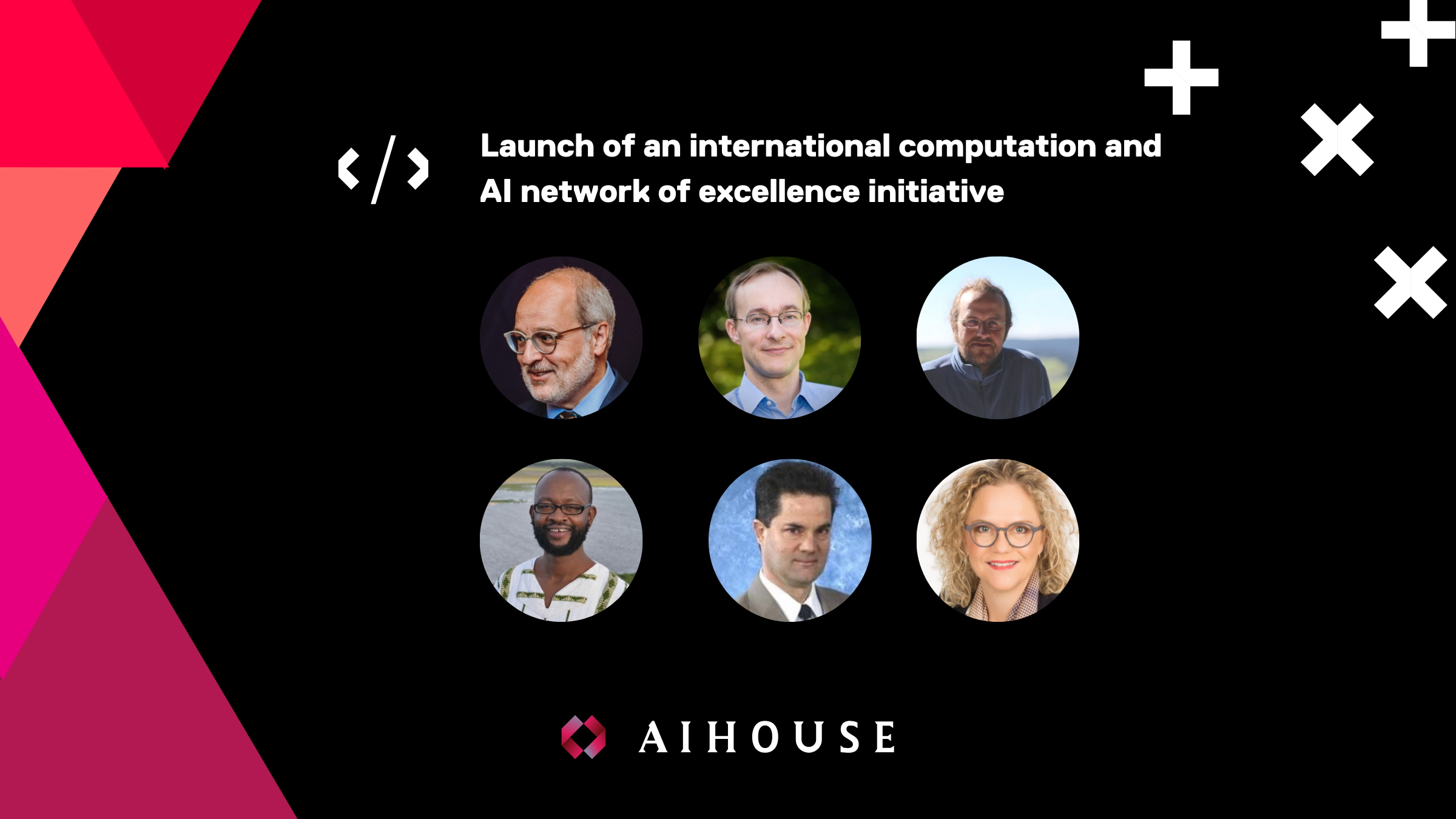
    Join the launch of an international computation and AI network of excellence initiative. We're embarking on an initiative to balance AI development globally, focusing on computing, data, and AI research, aligned with the UN SDGs. Discover use cases and our incubation phase roadmap in an interactive session with Q&A.


    When?

    Wednesday January 17, 2024, 13:40-14:00 CET


    Where?

    Mountain Stage, AI House Davos, Promenade 68, 7270 Davos Platz


    Format

    • Announcement


    Moderator and session coordinator: 

    • Katharina Frey, Deputy Head Digitalisation Division, Swiss Foreign Ministry of Federal Affairs


    Speakers

    • Alexandre Fasel, State Secretary – Federal Department of Foreign Affairs Switzerland FDFA
    • Andreas Krause, Academic Chair – ETH AI Center
    • Bernhard Schölkopf, Professor – Max Planck Institute for Intelligent Systems & ETH
    • Ciira Maina, Director Data Science Africa – Dedan Kimathi University of Technology
    • Thomas Schulthess, Director – Swiss National Supercomputing Center (CSCS)


    Further information

    Register

  • AI House Davos: Catalyzing AI tech transfer in Europe

    AI House Davos: Catalyzing AI tech transfer in Europe


    It will address the facilitation of cross-sector AI innovation (like ELLIS), discussing the synergy between academia, industry, and government to accelerate tech transfer, drive economic growth, and meet societal needs with cutting-edge AI solutions.


    When?

    Wed, 17. January 2024, 10:30 – 10:55


    Format

    • Round table
    • Open to the press


    Speakers

    • Bernhard Schölkopf, Professor – Max Planck Institute for Intelligent Systems & ETH
    • Alexander Diehl, Investor & Entrepreneur
    • Rebecca C. Reisch, CEO Cyber Valley


    Moderator

    • Julian Enz, Chief Innovation Office, Cyber Valley


    Further information