User Group: Researcher

  • AISA Colloquium

    AISA Colloquium

    Im Rahmen des AISA Colloquium findet kommenden Mittwoch eine Veranstaltung an der Universität Stuttgart statt. AISA steht für „Artificial Intelligence Software Academy“. Im Colloquium stellen Expert:innen die neusten Entwicklungen im Bereich Künstliche Intelligenz und Software-Entwicklung vor. 

    Im Zuge der Veranstaltungsreihe hält Prof. Steffen Freitag vom KIT einen Vortrag zum Thema “Artificial Neural Networks in Structural Mechanics”. Sein Vortrag gibt einen Überblick über Anwendungen von künstlichen neuronalen Netzen.

    Weitere Informationen zu Prof. Freitags Vortrag gibt es auf der Veranstaltungsseite des AISA Colloquium. Die Veranstaltung findet in der Universitätsstr. 32, R101 statt. 

  • Gründen als Freiberufler:in

    Gründen als Freiberufler:in

    Du möchtest eine Geschäftsidee austesten? Du überlegst, Dich während Deines Studiums im Nebenerwerb mit einer freiberuflichen Tätigkeit selbstständig zu machen? Du bist dir nicht sicher, ob es sich wirklich um eine freiberufliche oder vielleicht sogar gewerbliche Tätigkeit handelt und was das mit sich bringt? 

    Inhalte:

    • Freiberufler, Freelancer oder Kleinunternehmer?
    • Scheinselbstständigkeit
    • Rechtsformen für Freie Berufe und Anmeldung
    • Buchführung, Steuern und Versicherungen
    • Gründungsschritte im Überblick
    • Tipps für die Gründung


    Die Veranstaltungen richten sich vorrangig an Forschende, Mitarbeitende und Studierende der Universität Tübingen. Freie Plätze werden allerdings auch an Personen des Cyber Valley Ökosystems vergeben.

    Zur Anmeldung 

  • Buchführung und Steuern für Einsteiger:innen

    Buchführung und Steuern für Einsteiger:innen

    Wie funktioniert die Buchführung eines Kleinunternehmens und was gibt es dabei zu beachten? Wo muss ich mein Einzelunternehmen anmelden und was bedeuten die vielen steuerlichen Fachbegriffe, die mir auf dem Weg zur Selbständigkeit begegnen?

    In diesem Online-Seminar erhaltet ihr einen Überblick über die steuerlichen Pflichten und Begrifflichkeiten als Selbstständige oder Gewerbetreibende. Der Schwerpunkt liegt dabei auf der Erstellung der Einnahmenüberschussrechnung.

    Inhalte:

    • Von Einkommensteuer bis Vorsteuer – Steuerarten im Überblick
    • einen Einstieg in die Grundlagen der Buchführung
    • Basiswissen zur Einnahmenüberschussrechnung
    • Wissen zu und Umgang mit verschiedenen Betriebsausgaben


    Die Veranstaltungen richten sich vorrangig an Forschende, Mitarbeitende und Studierende der Universität Tübingen. Freie Plätze werden allerdings auch an Personen des Cyber Valley Ökosystems vergeben.
     

    Zur Anmeldung

  • Kleingewerbe Gründen – wie geht das?

    Kleingewerbe Gründen – wie geht das?

    Du möchtest eine Geschäftsidee austesten? Du überlegst, Dich während Deines Studiums im Nebenerwerb selbstständig zu machen? Dann ist vielleicht die Gründung eines Kleingewerbes für Dich sinnvoll.

    Wie Du ein Kleingewerbe anmeldest und was Du alles dabei beachten solltest, erfährst Du in diesem Online-Seminar welches in Kooperation mit der IHK Reutlingen stattfindet.

    Inhalte:

    • Kleingewerbe im Überblick
    • Rechtsformen für das Kleingewerbe
    • Kleingewerbe anmelden
    • Buchführung und Steuern
    • Gründungsschritte im Überblick
    • Tipps für die Gründung


    Die Veranstaltungen richten sich vorrangig an Forschende, Mitarbeitende und Studierende der Universität Tübingen. Freie Plätze werden allerdings auch an Personen des Cyber Valley Ökosystems vergeben.

    Zur Anmeldung

  • “AI Champions BW” wanted

    “AI Champions BW” wanted

    As of now, both startups and companies from all industries with AI-based products, services or business models as well as research institutions can apply with outstanding AI research projects that are already as far advanced as possible and promise significant economic potential or a major contribution to solving societal challenges. This year, AI clusters that drive and support outstanding AI innovations are also eligible to enter the competition.

    “With the 'AI Champions', we want to present best practice examples of companies, research institutions and AI clusters that are already using successful AI solutions or are driving outstanding AI innovations. In this way, we want to increase national and international visibility and make an effective contribution to the expansion of Baden-Württemberg as an AI location” said Economics Minister Dr. Nicole Hoffmeister-Kraut at the launch of the competition in Stuttgart.

    Interested parties can apply via the online form until March 31, 2023. The announcement of the AI Champions 2023 will be made at the Digital Summit on June 22, 2023 in Stuttgart. In addition, the best practice examples will be published on the portal www.wirtschaft-digital-bw.de. Information on the competition, the online application form and information on the 27 “AI-Champions BW” of the last few years can be found at: www.ki-champions-bw.de.

  • Master class: The Numerics of Machine Learning

    Master class: The Numerics of Machine Learning

    A new course is available on the YouTube channel “Tübingen Machine Learning”. The lecture series explains the view of probabilistic numerics, which assumes that computation itself is an inference process.

    Materials:

    • To the slides (github). All slides come with embedded, time-stamped links to these youtube videos (click on the icon on the bottom right of each slide).
    • To the playlist (youtube). Videos are uploaded in semantic groups over the course of January and February 2023.

    The introductory lecture of the course will be given by Philipp Hennig, Cyber Valley co-spokesperson and professor of machine learning methods at the Tübingen AI Center of the University of Tübingen. The course on machine learning numerics will be taught in the winter semester 2022/23 as part of the master's program in Machine Learning.

    Freely accessible learning and teaching videos

    The new series of lectures is one of several available for free on the YouTube channel “Tübingen Machine Learning” which is the result of a collaboration between the cluster's faculty and the Tübingen AI Center. “We started this during Corona, and have since built up a broad audience” says Philipp Hennig. For those interested in learning about machine learning without prior knowledge, he recommends the course series “Introduction to Machine Learning” by Dmitry Kobak. Those who want to stay up to date on current research can watch the three-minute “Research Spotlight Videos” that researchers publish on new scientific papers. The channel, which has more than 25,000 subscribers, is an example of OER practice in action in the Cyber Valley ecosystem. OER stands for Open Educational Resources, which are freely accessible learning and teaching materials that enable people around the world to further their education in the field of machine learning. 

    To the overview of the lecture series 

  • Research Talk: Semantic Probabilistic Layers for Neuro-Symbolic Learning

    Extending current deep learning architectures to correctly conform to prior knowledge and capture symbolic constraints while guaranteeing their satisfaction is a big open problem. Doing so would benefit many structured-output prediction (SOP) tasks in machine learning such as predicting rankings, hierarchies and other structured objects. In this talk, I will discuss how we can design a predictive layer for SOP that guarantees its predictions to be consistent with a set of predefined symbolic constraints. This Semantic Probabilistic Layer (SPL) can act as a drop-in replacement of existing predictive layers while still being amenable to end-to-end learning via exact maximum likelihood. SPLs combine exact probabilistic inference with logical reasoning in a clean and modular way via probabilistic circuits. We empirically demonstrate that SPLs outperform other neuro-symbolic approaches in terms of accuracy on challenging SOP tasks including hierarchical multi-label classification, pathfinding and preference learning, while retaining perfect constraint satisfaction.


    Antonio Vergari is a Lecturer (Assistant Professor) in Machine Learning at the University of Edinburgh. His research focuses on efficient and reliable machine learning in the wild; tractable probabilistic modeling and combining learning with complex reasoning. He recently was awarded an ERC Starting Grant on automating probabilistic reasoning for trustworthy ML. Previously he was postdoc in the StarAI Lab lead by Guy Van den Broeck at UCLA. Before that he did a postdoc at the Max Planck Institute for Intelligent Systems in Tuebingen in the Empirical Inference Department of Bernhard Schoelkopf. He obtained a PhD in Computer Science and Mathematics at the University of Bari, Italy. He likes to tease and challenge the probabilistic ML community at large on how we desperately need reliable ML an AI models nowadays. To this extent, he organized a series of tutorials, workshops, seminars and events at top ML and AI venues such as UAI, ICML, AAAI, IJCAI and NeurIPS and last year a Dagstuhl Seminar.

  • Brem among professors with strongest research record

    Brem among professors with strongest research record

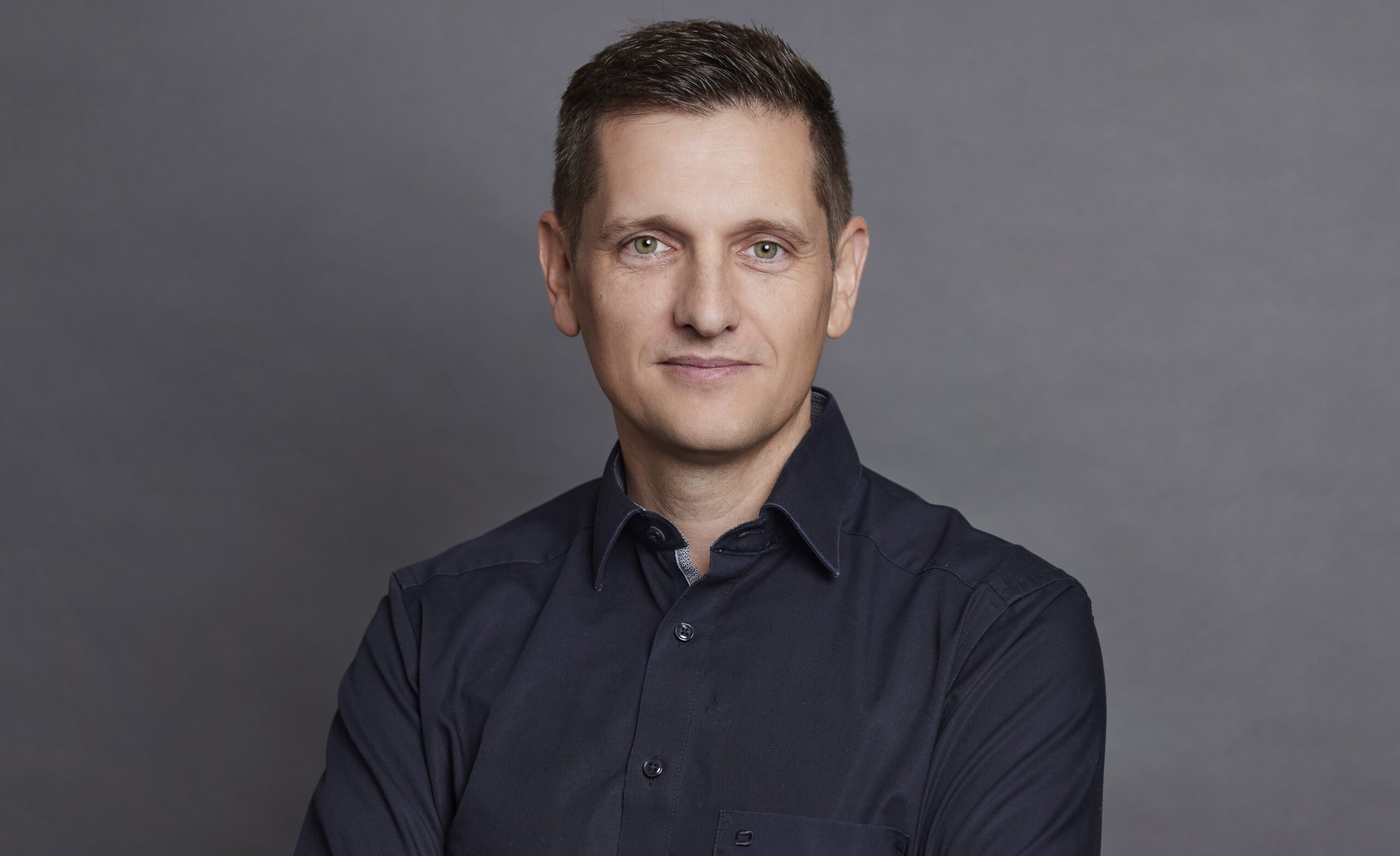
    This places Brem in the top 0.5 percent of all business economists in German-Speaking countries across all disciplines, including management, finance, tax, production, marketing, human resources, and entrepreneurship. He is ranked 105th in the lifetime achievement ranking, up from 153rd in the last round.

    The renowned “WirtschaftsWoche” ranking of business economists with the strongest research in German-speaking countries was published for the first time in 2020. The current edition covers research publications from 2018 up to and including 2022. The lifetime achievement ranking takes into account all articles ever published by a researcher. Articles published in selected, internationally established journals are regarded particularly highly in the evaluation. The category “authors” assessed a total of 3,638 people, while the lifetime achievement ranked more than 4,500 researchers.

    The data used for the ranking is sourced from the bibliometric web portal Research Monitoring, which is operated by the KOF SWISS Economic Institute at ETH Zurich. Publications in almost 860 business administration journals were taken into account, weighted according to their reputation.

    In addition to being well-placed in the “WirtschaftsWoche” ranking, Prof. Brem was also delighted to be placed among the top 1% in the latest Stanford/Elsevier ranking, which ranks him among the most frequently cited scientists worldwide in the field of “Business & Management”. Furthermore, this ranking also lists 120 other members of the University of Stuttgart from various departments.

  • Leibniz Prize for Achim Menges

    Leibniz Prize for Achim Menges

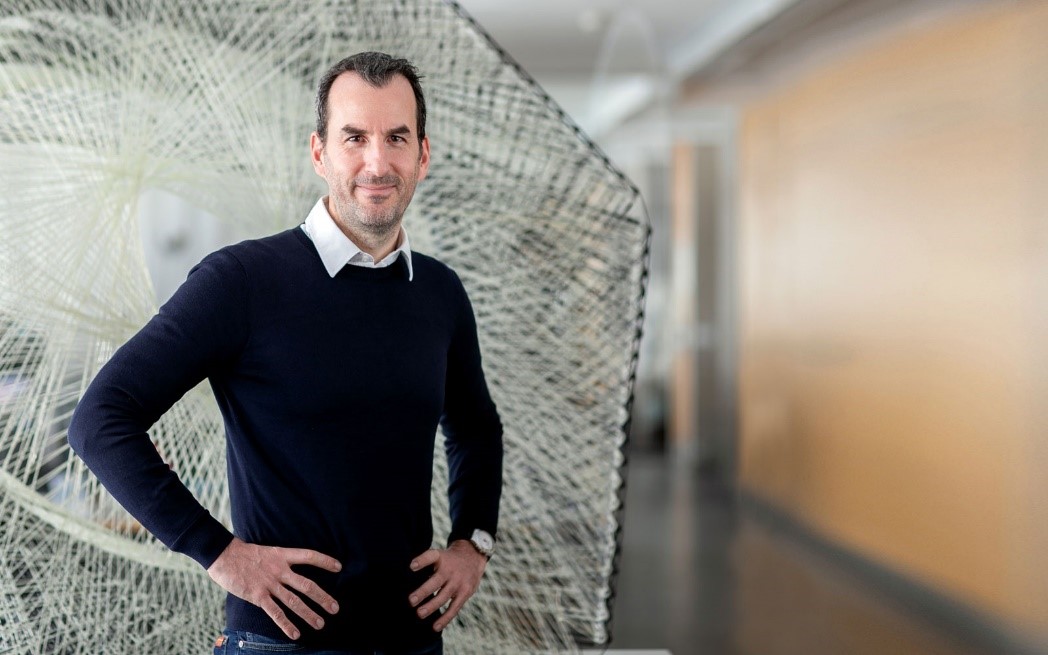
    “We warmly congratulate Professor Achim Menges on the prestigious Leibniz Prize and are quite proud to have such an outstanding pioneer of architecture at our university,” says Prof. Wolfram Ressel, Rectorate of the University of Stuttgart. “With his work, Achim Menges exemplifies our vision of ‘Intelligent Systems for a Sustainable Society’ in architecture and construction. He takes an interdisciplinary approach to researching novel and sustainable construction methods and has established numerous bridges to other departments. These are bundled in our Cluster of Excellence ‘Integrative Computational Design and Construction for Architecture’ (IntCDC). Without Achim Menges, IntCDC would not exist.”

    In recent years, Menges has made a name for himself through his research into sustainable building. He has also played a key role in shaping the Department of Architecture at the University of Stuttgart. His field of research is particularly relevant to society because there is considerable demand for new construction worldwide. The construction sector is also responsible for roughly half of the world’s waste and almost 40 percent of global energy- and process-related CO2 emissions, 11 percent of which are attributable to the production of building materials alone. Menges is researching novel and sustainable construction methods made possible by digital design methods and robotic manufacturing processes. The aim is to be able to build much faster with much less material as well as to see this as an opportunity for high-quality architecture that is worth living in.

    Menges’ open-ended and fundamental research has resulted in integrative design methods, innovative construction processes, and novel building systems that open up completely new possibilities for resource-efficient and sustainable architecture. Examples include robotically wound, long-span, and extremely material-efficient fiber structures, digitally manufactured lightweight wood building systems adaptable to various construction tasks, and adaptive 3D-printed facade elements that do not require any mechatronics or operating power.

    Architect, Institute Director and Spokesperson for the Cluster of Excellence

    Achim Menges, born in Mannheim in 1975, studied architecture at TU Darmstadt and at the Architectural Association in London. In 2008, he joined the University of Stuttgart as a professor. There, he founded the Institute for Computational Design (ICD) in 2009 and established what was then a unique and now globally visible research activity on digital design methods and robotic manufacturing processes for civil engineering. From 2009 to 2015, Menges was also a visiting professor at Harvard. In 2013, he co-founded the interdisciplinary master’s program Integrative Technologies and Architectural Design Research (ITECH) at the University of Stuttgart. Since 2019, Menges has been the spokesperson for the only cluster of excellence for architecture and civil engineering in Germany: “Integrative Computational Design and Construction for Architecture” (IntCDC) at the University of Stuttgart.

    About the Leibniz Prize

    The Gottfried Wilhelm Leibniz Prize is the most important research award in Germany. The aim of the Leibniz Program, which was established in 1985, is to improve the working conditions of outstanding scientists, to expand their research opportunities, and to relieve them of administrative workloads as well as to facilitate the employment of particularly qualified scientists. The award is endowed with up to EUR 2.5 million.


  • Cyber Valley Meet-up

    Cyber Valley Meet-up

    Wir laden euch herzlich zu diesem entspannten Treffen für alle Start-ups, Forschungsgruppen und Doktorand:innen ein!

    Cyber Valley Geschäftsführerin Rebecca C. Reisch wird eine kurze Einführung über Cyber Valley, seine Mission, das Team und die Zukunftspläne geben. Danach werden wir eine informelle Fragerunde abhalten, in der ihr uns bei Pizza, Salat und einem kühlen Getränk eurer Wahl alles über Cyber Valley fragen können. Außerdem würden wir gerne von euch wissen, welche Erwartungen ihr an Cyber Valley habt.


    Wann?

    Mittwoch, 7. Dezember 2022. 17:30–20:00 Uhr


    Wo?

    Max-Planck-Institut für Intelligente Systeme, Tübingen. Lounge im Erdgeschoss.


    Anmeldung

    Wir freuen uns darauf, euch zu treffen sowie mit euch bei etwas zu essen, zu trinken und anregende Gespräche zu führen. 

    Anmeldung

    Die Veranstaltung ist kostenlos und jede:r kann einfach vorbei kommen. Eine Anmeldung über den Button unten hilft uns allerdings, damit wir genug Pizza für alle bestellen. Bei Fragen und zur Anmeldung von Pitches wende dich gerne an: Oliwia Gust, Cyber Valley Event Manager, oliwia.gust@cyber-valley.de

    Wir freuen uns darauf, Sie kennenzulernen und gemeinsam etwas zu essen, zu trinken und anregende Gespräche zu führen! Kommen Sie einfach vorbei.

    Kommt einfach vorbei – 


    Bei Fragen wendet ihr euch bitte an Oliwia Gust, Cyber Valley Event Managerin: oliwia.gust@cyber-valley.de