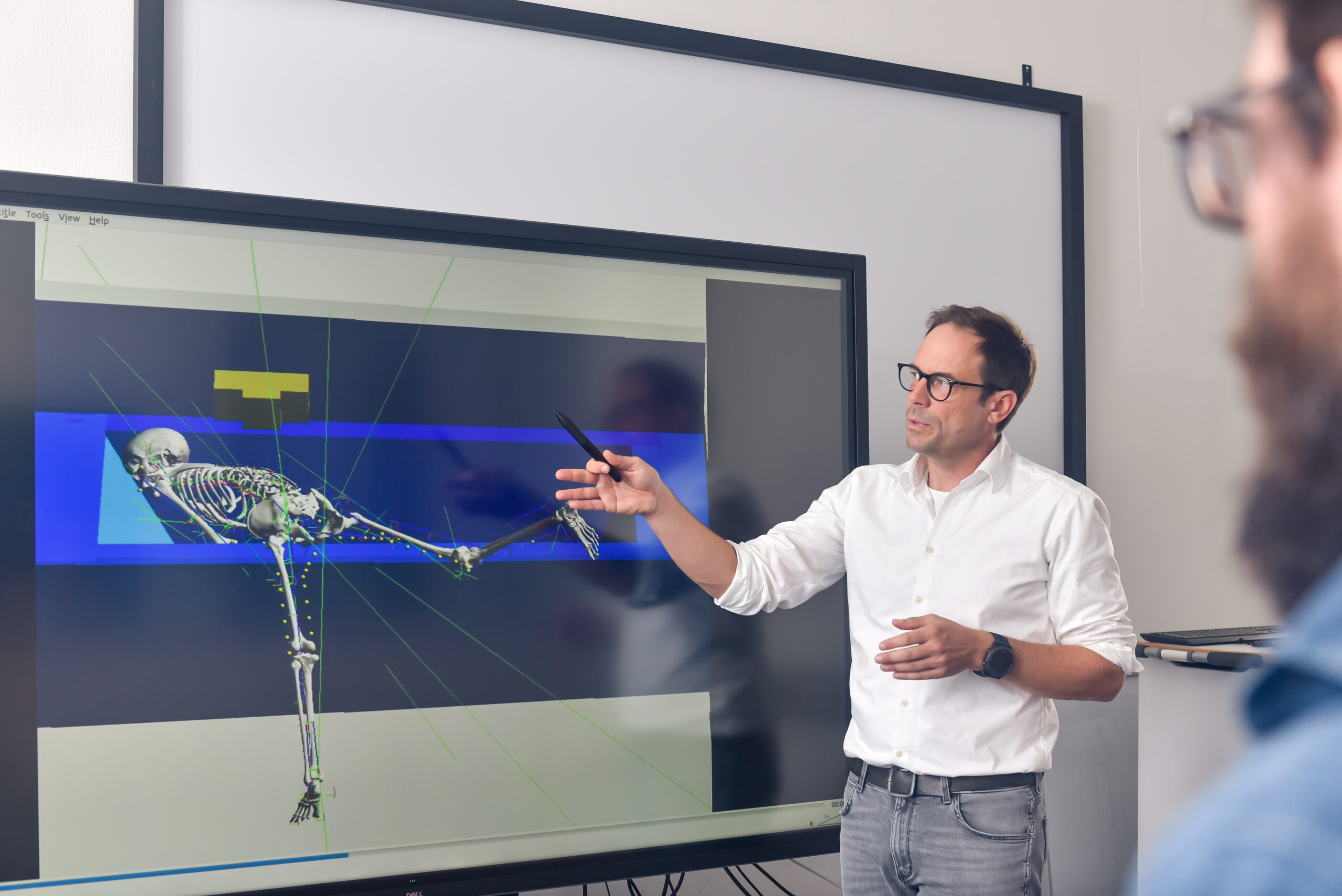
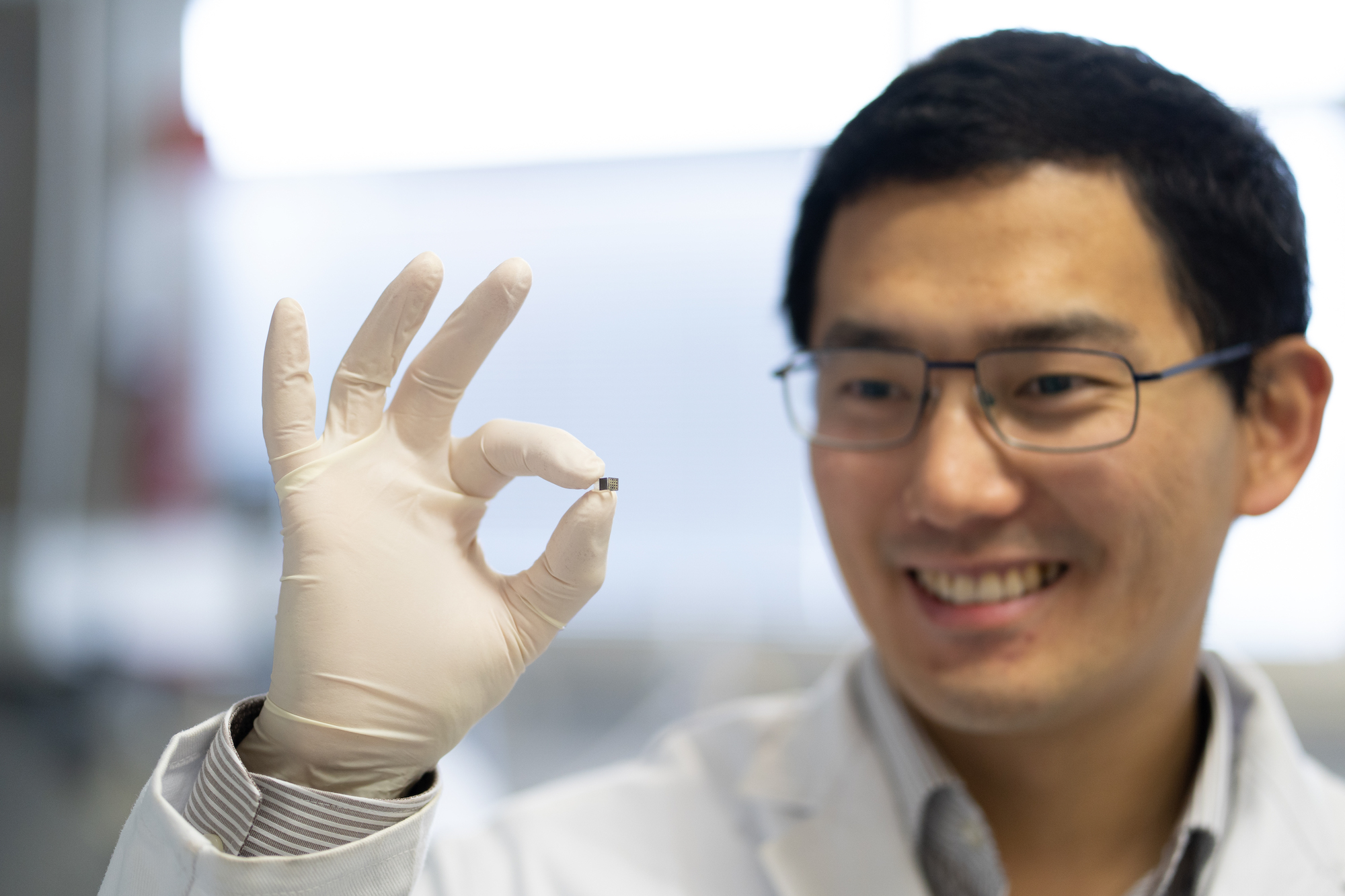
The new, computer-aided biomechanical simulation method, which came into play in the expert opinion and was one of the main reasons why the investigation was reopened, was developed by a team of scientists under the leadership of Prof. Syn Schmitt. The Doctor of Physics is one of the heads of the Institute for Modeling and Simulation of Biomechanical Systems and is doing research in the SimTech Cluster of Excellence at the University of Stuttgart. He is concerned with autonomous, muscle-driven systems. For example, he uses simulations to reproduce human movement patterns. Depending on how heavy, how tall, or how old the model person is, different movement patterns are computed and a “digital human model” is created. In order to check whether the corresponding calculations are correct, the team feeds the data into robotic systems and thus verifies that the computed and simulated movements could take place in reality.
How did the conviction come about?
The case is as follows: 87-year-old Lieselotte Kortüm was found dead in her bathtub, which was filled with water. She had two hematomas on the back of her head. At the time, there were several indications that it was an accident, such as the woman’s age and a pre-existing condition that often leads to falls. However, the judges and the forensic medical expert at the time ruled out the possibility that the hematomas could have been caused by a fall. They also said that the position in which the body was found could not be explained by a fall without external influence. The caretaker Manfred Genditzki, who helped Kortüm and other residents with their daily chores, was the last person to enter the apartment. Embezzlement, the initially assumed motive, had to be discarded later. Instead, it was assumed that there had been an argument. This is how the caretaker was finally convicted as a murderer. Genditzki has been in prison for 13 years. He never confessed to the crime, but repeatedly protested his innocence.
Biomechanical simulation is recognized as a forensic expert report
After four years of imprisonment, attorney Regina Rick took over the defense of Genditzki. In order to get the case reopened, she commissioned Prof. Syn Schmitt, among others, to provide an expert opinion. Already during the appeal in 2011, Schmitt was requested as an expert by the defense attorney at the time. Back then, however, he was still at the beginning of his research. Today, the method developed by the Stuttgart scientists is recognized by the Higher Regional Court in Munich and, for this case, is used for a forensic expert opinion for the first time.
In August 2022, the Higher Regional Court in Munich decided that the reopening of the case is justified and that a new main trial must take place. Genditzki, convicted of murder and imprisoned for 13 years, was released immediately – which was a sensation. The main reason given for ordering the reopening was the change in the evidence due to the biomechanical expert report by Schmitt and the thermodynamic expert report by Prof. Niels Hansen, Deputy Head of the Institute of Thermodynamics and Thermal Process Engineering at the University of Stuttgart as well as a new witness statement. Based on the thermodynamic expert report medical examiner Prof. Gita Mall was able to narrow down the time of death.
The expert opinions from the two scientists of the University of Stuttgart are an important basis for the reopening of the case
Using the biological data of the deceased woman, such as height, weight, the specific weight distribution in elderly people, and bone lengths, Schmitt’s team created a person-specific model. Schmitt and his team then started from an initial state: the person-specific model of Ms. Kortüm in front of the bathtub filled with water. The aim was to reconstruct the incident. Based on the assumed initial situation, can the simulation represent the final state found? The final state – that is the body lying in the bathtub, the two hematomas as well as the shoes and the cane of the dead woman in front of the bathtub. “In principle, the circumstances surrounding the case are not important for our work. We are only interested in whether the final state can be reached naturally, that is without external influence, from the assumed initial position. We want to find the truth,” Schmitt points out. “Using our method, we are able to determine, objectively and transparently, which movements are possible depending on the laws of physics.” This is exactly what is important for solving the case.
The simulation clearly supports the view that it may have been an accident
The scientists conducted numerous simulations of the incident. “Simulation is also a question of probability,” Schmitt explains. All simulations lead to the same result: They show that a fall without external influence is probable. Thus, the simulation clearly supports the view that the incident may have been an accident.
The thermodynamic expert report allows conclusions to be drawn about the time of death
The Stuttgart scientist Prof. Niels Hansen was able to narrow down the approximate water temperature at the time the body was found. This allows conclusions to be drawn about how long the body had been in the water and thus about the time of death. The expert opinion of medical examiner Gita Mall, which is based on Hansen’s investigations, suggests a time of death that lies considerably outside the time window assumed by the trial court.
One of the most famous criminal cases of the past 15 years is reopened and scientists from the SimTech Cluster of Excellence at the University of Stuttgart provided the essential prerequisites.
About Syn Schmitt
What does the simulation scientist do when he isn’t working on an expert report for a murder trial? He’s working at the Institute for Modeling and Simulation of Biomechanical Systems and in the SimTech Cluster of Excellence at the University of Stuttgart as part of an interdisciplinary team of 20 scientists from the fields of simulation science, physics, mechanical engineering, and medical engineering. The team is concerned with computer-aided biophysics and biorobotics. “We’re trying to understand the movement patterns of humans or animals. Our language is mathematics and we use it to describe the models,” Schmitt explains. The scientists are also working in close cooperation with the Hertie Institute for Clinical Brain Research at the University Hospital Tübingen and with the Spine Center at the Diakonie-Klinikum hospital in Stuttgart. The research findings could be used in future for the development of prostheses or orthoses and for robotics. The simulation scientist is also involved in research on Artificial Intelligence and modern robotics at Cyber Valley.
Many other unfamiliar activities are associated with his role as an expert witness in a murder trial. He was in contact with the Ministry of Justice, especially in connection with the recognition of the simulation method as legal evidence. He also has to face questions from the media.
What does he think about the case? “I separate the emotional side from the professional task. That’s really important to me. Dealing with this case for about five years has advanced our research. We took an even closer look and it was demonstrated that medical examiners and simulation scientists can work well together.” Syn Schmitt would be pleased if the method also found its way into the training of forensic pathologists or into examination laboratories: “It can support traditional forensic medicine, especially in the reconstruction of falls.”
About Niels Hansen
Prof. Niels Hansen is the Deputy Head of the Institute of Thermodynamics and Thermal Process Engineering (ITT) at the University of Stuttgart. The ITT presents the fields of thermodynamics and thermal process engineering in research and teaching. It is an important link between the engineering sciences and the natural sciences. Thermodynamics is a basic discipline in the natural and engineering sciences. It deals with the various manifestations of energy and their conversion into each other.
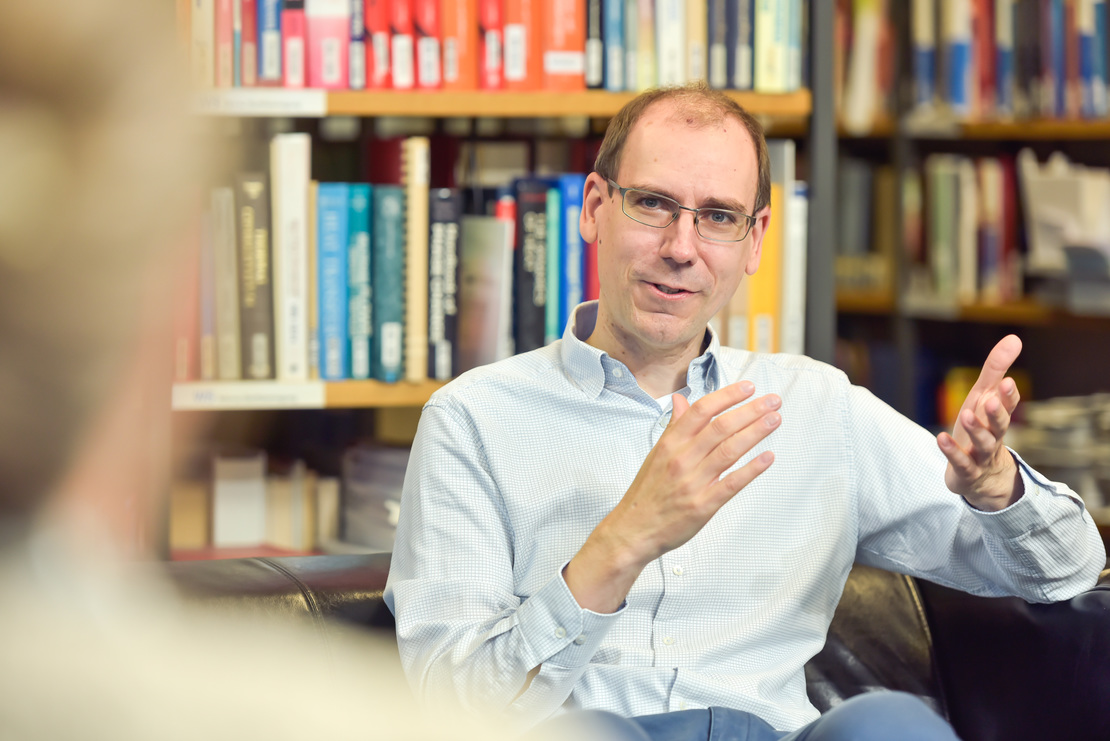
Hansen conducts research on molecular models, which he uses to make predictions of macroscopic thermodynamic properties. In addition to quantitative predictions, molecular-simulation methods also allow a molecular interpretation of physical processes that often cannot be made visible by measurements. The ITT is involved in several interdisciplinary research networks, such as the Collaborative Research Centers “Interface-Driven Multi-Field Processes in Porous Media – Flow, Transport and Deformation” and “Molecular Heterogeneous Catalysis in Confined Geometries” as well as the SimTech Cluster of Excellence.