User Group: Wissenschaftler:innen

  • How to InterText? Elevating NLP to cross document level

    How to InterText? Elevating NLP to cross document level


    About the talk: 

    While modern language models do a great job at finding documents, extracting information from them and generating naturally sounding language, the progress in helping humans read, connect, and make sense of interrelated long texts has been very much limited.

    Funded by the European Research Council, the InterText project brings natural language processing (NLP) forward by developing a general framework for modeling and analyzing fine-grained relationships between texts – intertextual relationships. This crucial milestone for AI would allow tracing the origin and evolution of texts and ideas and enable a new generation of AI applications for text work and critical reading.

    This talk will elaborate their intertextual approach to NLP using the scientific domain as a prototypical, challenging application area. Specifically, they will highlight two lines of our work. The first one is related to task design, practical applications and intricacies of data collection in the peer-review domain. The second one is about scientific text generation targeting (i) citation text and (ii) attitude and theme-guided rebuttals. To conclude, they will briefly describe our ongoing efforts towards fine-grained linking of multiple documents, temporal analysis of scientific datasets and research novelty modeling.


    About the speaker: 

    Iryna Gurevych (PhD 2003, U. Duisburg-Essen, Germany) is professor of Computer Science and director of the Ubiquitous Knowledge Processing (UKP) Lab at the Technical University of Darmstadt in Germany. In addition, she is an adjunct professor at MBZUAI in Abu-Dhabi, UAE and an affiliated professor at INSAIT in Sofia, Bulgaria. Her main research interests are in machine learning for large-scale language understanding and text semantics.

    Iryna’s work has received numerous awards. Those include the ACL fellow award 2020, the first-ever Hessian LOEWE Distinguished Chair award (2,5 mil. Euro) in 2021 and an ERC Advanced Grant in 2022 (2,5 Mil. Euro). Iryna is co-director of the NLP program within ELLIS, a European network of excellence in machine learning. In 2023, she was the president of the Association for Computational Linguistics (ACL).


    When?

    May 8, 2024. 11:30am


    Where? 

    Universitätstraße 32.101, Campus Vaihingen of the University of Stuttgart 


    Find more information here.


  • KI und die Zukunft der Radiologie

    KI und die Zukunft der Radiologie

    About the Speaker:

    Since 2020, Daniel Rückert is Alexander von Humboldt Professor for AI in Medicine and Healthcare at the Technical University of Munich. He is also a Professor at Imperial College London. He gained a MSc from Technical University Berlin in 1993, a PhD from Imperial College in 1997, followed by a post-doc at King’s College London. In 1999 he joined Imperial College as a Lecturer, becoming Senior Lecturer in 2003 and full Professor in 2005. From 2016 to 2020, he served as Head of the Department of Computing at Imperial College.

    When?

    Monday, July 29, 2024 at 03:00 PM

    Where?

    AI Research Building (MvL6), Lecture Hall

    Maria-von-Linden-Str. 6, 72076 Tübingen

    Additional information:

    IMBI Website

    Tübingen Talks

  • Vier Motoren für Europa – Künstliche Intelligenz als Chance für die Gesellschaft

    Vier Motoren für Europa – Künstliche Intelligenz als Chance für die Gesellschaft


    On the occasion of the handover of the presidency from Baden-Württemberg to Lombardy, a reception with a panel discussion will take place in the Mercedes-Benz Museum. With a special focus on “Artificial intelligence as an opportunity for society”, attendees will gain insights into examples of AI applications with social benefits from the regions of the Four Motors for Europe.


    When?

    Date: April 11, 2024

    Time: 18:00–22:00


    Where?

    Mercedes-Benz Museum
    Mercedesstraße 100
    70372 Stuttgart


    What?

    Welcome:
    Florian Hassler, State Secretary for Political Coordination and Europe in the State Ministry of Baden-Württemberg 

    Keynote:
    Dr. Wieland Brendel, Hector-endowed ELLIS Fellow, ELLIS Institute Tübingen, Max Planck Institute for Intelligent Systems, Tübingen AI Center

    Panel discussion with moderation by Rebecca C. Reisch, Managing Director Cyber Valley

    • Auvergne-Rhône-Alpes: N.N.
    • Baden-Württemberg: Max-Frederick Gerken, CEO and Co-Founder, Optocycle
    • Lombardy: Sara Uboldi, Head of Solutions, Intellico s.r.l.

    Closing:
    Dr. Patrick Rapp, State Secretary at the Ministry of Economic Affaris, Labour and Tourism Baden-Württemberg


    Registration

    Registration for this event is necessary, please register via this form.

  • Cyber Valley fördert CELL’n’ROLL mit 500.000 Euro durch das 2023 Innovation Fellowship Programm

    Cyber Valley fördert CELL’n’ROLL mit 500.000 Euro durch das 2023 Innovation Fellowship Programm

    CELL’n’ROLL aims to develop next-generation diagnostic solutions for detecting complex diseases such as cancer. Leveraging robotics, artificial intelligence, and microtechnology, the initiative aims to democratize access to these diagnostic tools worldwide. CELL’n’ROLL envisions a future where diagnostics are not only swift and precise but also accessible in resource-constrained settings by harnessing the power of robotics, artificial intelligence, and microfluidics. 

    The CELL’n’ROLL team consists of Postdoctoral Researchers Alp Can Karacakol, Erdost Yildiz, and the project leader Ugur Bozuyuk. As emerging scientific talents, the team comprises three scientists from the Max Planck Institute for Intelligent Systems, each with interdisciplinary expertise spanning medicine and engineering, and a collective experience exceeding three years of collaboration. Additionally, the team benefits from mentorship provided by international experts from academia and industry. 

    The Innovation Fellowship program will support their journey from outstanding research to practical application. The program’s aim is to bridge the gap between research and commercial application by fostering scientific breakthroughs that add value to science, economy, and society. The Innovation Fellowship program is funded by the Carl-Zeiss-Stiftung (CZS) and offers talented individuals or teams the opportunity to translate their research into tangible applications. With a duration of up to 24 months, researchers work on a project that is not yet commercially viable and requires time for further development and product transformation in a research environment. The program focuses on application-oriented research related to artificial intelligence and robotics. Its goal is to create an innovative spin-off from the project after the funding term has ended.  

    With its mission of creating “an open environment for scientific breakthroughs”, the Carl Zeiss Foundation is an essential Cyber Valley partner. The foundation aims to accompany the entrepreneurial path of young talent from research to application. It strives to achieve scientific breakthroughs that support research, the economy, and society through funding elementary research and specific applications.  

    The next Cyber Valley Innovation Fellowship call for proposals will be announced in April 2024. Scientists employed by the Max Planck Institute for Intelligent Systems, the University of Stuttgart, and the University of Tübingen are eligible to apply. All external scientists affiliated with these Institutes may also apply.  

    About Cyber Valley  

    Cyber Valley is Europe’s largest and leading center for excellence in artificial intelligence and modern robotics. Its mission and public mandate are to advocate for research, development, application, and acceptance of technologies and methods in the field of intelligent systems. Cyber Valley encourages entrepreneurship by uniting scientific excellence with innovation and technology transfer. In addition, Cyber Valley facilitates critical reflection on the ethical and social implications of AI through public engagement. Cyber Valley envisions a future in which the full potential of intelligent systems is leveraged for the greater good of the world. Cyber Valley GmbH, with locations in Stuttgart in Tübingen, is owned by the State of Baden-Württemberg and the Max Planck Society.  
     

    About the Carl-Zeiss-Stiftung  

    The Carl-Zeiss-Stiftung’s mission is to create an open environment for scientific breakthroughs. As a partner of excellence in science, it supports basic research as well as applied sciences in the STEM subject areas (science, technology, and mathematics). Founded in 1889 by the physicist and mathematician Ernst Abbe, the Carl-Zeiss-Stiftung is one of the oldest and biggest private science funding institutions in Germany. It is the sole owner of Carl Zeiss AG and SCHOTT AG. Its projects are financed from the dividend distributions of the two foundation companies.  

    About CELL’n’ROLL 

    CELL’n’ROLL, established two years ago, is driven by a team of three dedicated scientists with varied expertise, spanning engineering and medicine. Their collective passion lies in pioneering cutting-edge diagnostic systems for the detection of complex diseases, such as cancer. They envision a future where diagnostics are not only swift and precise but also accessible in resource-constrained settings by harnessing the power of robotics, artificial intelligence, and microfluidics. 

  • Entrepreneurial Support for Scientists – Info Event

    Entrepreneurial Support for Scientists – Info Event

    Who to expect:

    Meet Cyber Valley:

    Discover Cyber Valley’s support for entrepreneurs and founders, from the Al Incubator program to our Proof of Concept and Innovation Fellowship grants.

    Introducing MAX!mize:

    Explore the opportunities to transform your research into a business with our comprehensive incubation program.

    Discover how we can support you in navigating the journey from laboratory innovation to successful startup launch.

    When and Where?

    April 10, 2024, 3:30 pm

    Max Planck Institute for Intelligent Systems

    Heisenbergstr. 3, 70569 Stuttgart

    Room Copper (2R04)

    April 11, 2024, 1:30 pm

    Max Planck Institute for Intelligent Systems

    Max-Planck-Ring 4, 72076 Tübingen

    Room NO.002 (Ground Floor)

    We are looking forward to seeing you!

  • Cyber Valley feiert eine neue Partnerschaft mit UTokyo IPC

    Cyber Valley feiert eine neue Partnerschaft mit UTokyo IPC

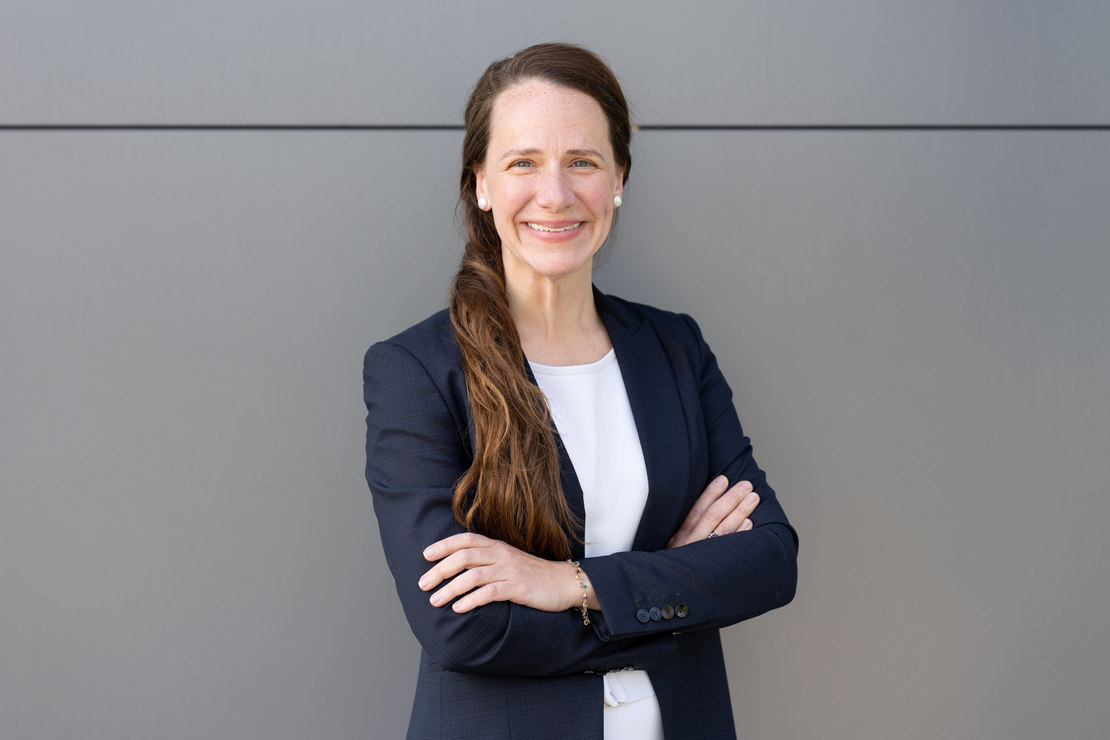
    (Stuttgart, 30.04.2024) The strategic alliance is Cyber Valley's first collaboration with UTokyo IPC, promising a range of exciting opportunities between Europe and Japan. The LOI establishes the framework for various programs aimed at promoting innovation from cutting-edge research by building bridges between scientific, corporate and start-up networks.  

    Rebecca C. Reisch, Managing Director of Cyber Valley, remarks, “Together, this alliance is set to not only benefit our respective regions, but it will also make a significant contribution to innovation on a global scale. By pooling our shared commitment to excellence and advancements, we will foster a cross-cultural exchange of ideas towards AI and robotics.” 
    The highlights of this partnership include a dedicated market exploration trip, offering participating start-ups a unique opportunity to expand within international markets by connecting with essential partners, investors, and customers. Additionally, the collaboration offers the potential of non-dilutive funding to facilitate the growth of start-ups into these markets.  

    Exclusive networking opportunities with major corporations, including venture capital firms in the targeted markets, are also included in the program. Start-ups will benefit from monthly mentoring sessions over a six-month period, fostering sustainable growth and knowledge exchange. Additionally, they will have the chance to undertake proof-of-concept projects with corporate partners, further solidifying their market presence. 

    UTokyo IPC, established in 2016 by the University of Tokyo, operates as an investment company dedicated to expanding the University's innovative ecosystem. It drives innovation through three core business perspectives: investment, incubation (1st round), and human resource assistance (DeepTech Dive). It supports affiliated start-ups in five fields: healthcare/agriculture, space, robotics/hardware, IT/services, and artificial intelligence. The organization is a key player in Japanese innovation, having invested in and/or supported more than 140 start-ups so far. 

    Kosuke Ueda, President and CEO of UTokyo, elaborates, "UTokyo IPC, as a wholly owned subsidiary of the University of Tokyo, works diligently to create and nurture university-related startups and to build a startup ecosystem, in collaboration with a wide range of stakeholders including academia, government and municipalities, corporations, and venture capitals. In particular, we are intensifying our cooperation with Cyber Valley, which leads Europe in AI and robotics, leveraging its extensive research network and rich experience in societal implementation. This enhances the commercialization of valuable technologies and ideas from universities and research institutions beyond international frameworks. By doing so, we aim to provide value to Europe's advanced start-up ecosystem, fully leverage Japan's deep tech potential, and contribute to the creation of start-ups that tackle global challenges, thereby fostering the development of a global innovation ecosystem." 

    Through this collaboration, Cyber Valley and UTokyo IPC aim to foster innovation, accelerate growth in the advancement of artificial intelligence and modern robotics, and connect thriving communities for start-ups in both Europe and Japan. 

    About Cyber Valley 

    Cyber Valley is Europe’s largest and leading center for excellence in artificial intelligence and modern robotics. Its mission and public mandate are to advocate for research, development, application, and acceptance of technologies and methods in the field of intelligent systems. Cyber Valley encourages entrepreneurship by uniting scientific excellence with innovation and technology transfer. In addition, Cyber Valley facilitates critical reflection on the ethical and social implications of AI through public engagement. Cyber Valley envisions a future in which the full potential of intelligent systems is leveraged for the greater good of the world.   

    About UTokyo Innovation Platform Co., Ltd. (UTokyo IPC) 

    UTokyo IPC was established in 2016 as a wholly owned subsidiary of the University of Tokyo, aiming to further develop the venture ecosystem cultivated in and around the University of Tokyo. Alongside investing in over 60 university-related start-ups both domestically and internationally through two funds, UTokyo IPC provides comprehensive hands-on support, including human resource assistance. It also operates "1stRound", Japan's largest cross-university accelerator, co-sponsored by 14 universities. This program is designed to accelerate the commercialization of cutting-edge technologies and ideas emerging from universities. By collaborating with a broad spectrum of stakeholders, including universities, corporations, venture capitals, and the government, UTokyo IPC plays a pivotal role in the global innovation landscape, fostering cross-border collaboration and the development of transformative technologies. 

  • Lecture series in the ELLIS network

    Lecture series in the ELLIS network

    Find an overview of the different initiatives below and visit the units’ web pages for more information on upcoming sessions. Many of the talks can be joined online.

    Unit Stuttgart

    The ELLIS Unit in Stuttgart regularly invites outstanding scientists to present their latest research projects. Learn more about past and upcoming sessions and about how to join them here.

    Unit Alicante

    With the Distinguished Speaker Series, ELLIS Alicante invites top AI researchers from around the world to present their work to the team of ELLIS Alicante. In collaboration with the University of Alicante, the event is open to any student and researcher of the university. Find all the details here.

    Unit Cambridge

    The Cambridge ELLIS Unit Seminar Series holds talks by leading researchers in the area of machine learning and AI. Learn more about upcoming sessions here.

    Unit Helsinki

    The distinguished lecture series organized by the ELLIS Unit in Helsinki is open for everyone and can be joined online. Find all information and registration details here.

    Unit Jena

    The ELLIS Unit Jena organizes the AI4Good hosted online webinar series „AI for Earth and Sustainability Science“. The series highlights seminal and recent progress in AI-enabled modelling and understanding of the Earth system from local to global scale and AI-science based diagnosis, prediction, and remedy of environmental crises. Interdisciplinary researchers from academia, industry, UN and government agencies as well as NGOs will talk about tackling systemic real-world challenges with AI, including disaster risk reduction and preparedness, environmental degradation, climate change, societal impacts and dynamics, and the sustainable and responsible use of natural resources such as water and energy. The webinar series is curated by the ELLIS Unit Jena and the ELLIS Program “Machine Learning for Earth and Climate Sciences”.

    Unit Lisbon

    The ELLIS Lisbon & Unbabel seminars on Machine Learning and Natural Language Processing, organised jointly by members of the ELLIS Unit Lisbon & Portuguese translation start-up Unbabel, aim to provide, on a regular basis, an outlet for discussion of the latest research on Machine Learning and Natural Language Processing by researchers and students from all over the world. The seminars are open to all and streamed online. Find all details and information here.

    Unit Munich

    The Munich AI Lectures are a joint initiative of the ELLIS Unit Munich, the Munich Center for Machine Learning (MCML), the Munich Data Science Institute (MDSI) at TUM, the Center for Advanced Studies (CAS) at LMU, and the Konrad Zuse School of Excellence in Reliable AI (relAI). On a monthly basis, they invite top-level AI researchers to give the audience a glimpse into their work and the future of AI. Join them for the next sessions here.

    ELLIS Student & Postdoc Reading Groups

    As part of its educational activities, ELLIS aims to connect PhDs and postdocs in the network and supports them in creating opportunities to discuss science. Currently, two student-led reading groups on machine learning-related topics (Human-Centric Machine Learning & Mathematics of Deep Learning) meet regularly to discuss a paper the group previously voted on. ELLIS Reading Groups are initiated and organized by ELLIS PhD students and postdocs across Europe. Take a look at this page for details and upcoming sessions.

    Artificial Intelligence Doctoral Academy (AIDA)

    AIDA, the Artificial Intelligence Doctoral Academy, has been created to nurture a new generation of AI talent by offering knowledge and expertise in AI through educational and training activities. It’s a joint initiative of the EU-funded projects ELISE, AI4media, VISION, HUMANE AI and TAILOR. ELLIS Fellows often participate in the AIDA AI Excellence Lecture Series. Find a list of upcoming sessions here and an overview of past sessions here.

  • The AI Incubator 2024 Batch #4: Q&A Session 2

    The AI Incubator 2024 Batch #4: Q&A Session 2


    Q&A Dates:


    The AI Incubator 2024

    The AI Incubator encourages scientists, technologists, and business talent to found their own businesses and be part of the next generation of AI start-ups. 

    Our six-week program encourages researchers to consider how they can transfer their cutting-edge AI and robotics research into products and applications. Topics include:

    • Product-market-fit
    • Business strategy
    • Funding opportunities

    We want to equip participants with knowledge, tools, and skills while connecting them with a network of experts, mentors, investors, and other founders to inspire their AI start-up journey. At the program's conclusion, every team will have the opportunity to pitch their idea to a jury.

    If you're interested in taking part in The AI Incubator, join one of our Q&A sessions to ask us about the application process, the program, or anything else. You can find more information on the application process and all the dates here.

  • The AI Incubator 2024 Batch #4: Q&A Session 1

    The AI Incubator 2024 Batch #4: Q&A Session 1

    Q&A Dates:

    The AI Incubator 2024

    The AI Incubator encourages scientists, technologists, and business talent to found their own businesses and be part of the next generation of AI start-ups.

    Our six-week program encourages researchers to consider how they can transfer their cutting-edge AI and robotics research into products and applications. Topics include:

      • Product-market-fit
      • Business strategy
      • Funding opportunities

    We want to equip participants with knowledge, tools, and skills while connecting them with a network of experts, mentors, investors, and other founders to inspire their AI start-up journey. At the program’s conclusion, every team will have the opportunity to pitch their idea to a jury.

    If you’re interested in taking part in The AI Incubator, join one of our Q&A sessions to ask us about the application process, the program, or anything else. You can find more information on the application process and all the dates here.

  • Brave Conversations Stuttgart 2024

    Brave Conversations Stuttgart 2024

    When?

    May 21, 2024, 9:00–13:00 CEST

    Where?

    Room 00.150

    University of Stuttgart

    Universitätsstraße 34

    70569 Stuttgart, Vaihingen

    Germany

    Brave Conversations Stuttgart 2024 takes place within the context of a world undergoing significant social, political, and technological change:

      • 2024 is the year which seems the most number of human beings participating in ‘democratic’ elections, something that has been described as an ‘election extravaganza’. Read more.
      • Technology companies are releasing more and more powerful Large Language Models and Machine Learning systems and Intelligent Agents. Read more.
      • They are also rapidly developing and releasing new ways of interacting with technologies such as Augmented Reality. Read more.
      • Social Media companies are under increasing scrutiny by governments and regulatory authorities around online safety. Read more.
      • Progress on human longevity is becoming increasingly interesting with progress being made on the Science of Ageing. Read more.
      • It is hoped that renewable energy sources will achieve one-third of global power generation in 2024. Read more.

    Within all of these themes perhaps the most important is not the technological advances, but what the implications are for humans and the human systems within which we live. This is what Brave Conversations seeks to explore. We can’t go down every rabbit hole but we can peek into a few and see if we can draw out themes that impact each of us in our daily lives, to explore how we can retain our humanity and our agency in the Age of Smart Machines.

    We will be exploring

      • What is the definition of a human in the Age of the Smart Machine?
      • What is the role of a human in this Age of the Smart Machine?
      • How do we retain our humanity whilst harnessing the power of Smart Machines to improve life for all on Planet Earth?

    For more information please visit Brave Conversations and IRIS.

    Registration is free but mandatory and space is limited. If you would like to join, please register here.

    Organising Committee

    Sierra Kaiser – University of Stuttgart

    Anni Rowland-Campbell, Intersticia and Web Science Trust