User Group: Wissenschaftler:innen

  • EuroEAP 2024 kommt nach Stuttgart!

    EuroEAP 2024 kommt nach Stuttgart!


    What is EuroEAP?

    The EuroEAP international conference, organized by the EuroEAP Society with a not-for-profit distinctive character and always held in Europe, primarily aims to share the latest advances and findings in this emerging field. It gathers experts from all over the world in a highly multidisciplinary event driven by scientific quality and industrial impact, with an organization that enables significant opportunities for one-to-one discussions in a friendly atmosphere. Today, the event expands its scope to the larger international and diverse research community of soft smart materials and soft transducers. The event is conceived as an exclusive forum for international experts and professionals seeking scientific quality, industrial impact, and opportunities for cooperation.


    When?

    June 11–13

    Important deadlines:

    • Hotel reservation (special rate): 10 APRIL 2024 (70 pre-booked rooms)
    • Early registration & abstract submission: 10 APRIL 2024
    • Deadline for registration: 10 MAY 2024


    Where?

    Max Planck Institute for Intelligent Systems 

    Heisenbergstrasse 3 | 70569 Stuttgart | Germany


    How to contribute and/or attend?

    Please have a look here: EuroEAP Platform


    Curious to see what awaits you there?

    Get exclusive insights in advance: The program 


    Tuesday, 11 June

    • A social dinner will be organized on Tuesday evening in the Stuttgart city center.
    • Transport from the MPI to the dinner and from the dinner to the hotel will be provided.
    • The cost to attend this event is covered by the conference registration fee.
    • More details will be released closer to the conference start.


    Wednesday, 12 June

    Castle tour:

    A castle tour for the participants of the conference will be organized on Wednesday. We will get a guided tour through Residenzschloss Ludwigsburg, one of the most beautiful baroque castles in Germany.
    The tour will start at 16:00.


    Social dinner:

    • Following the castle tour, there will be a social dinner at the restaurant Württemberger Hof (http://www.wuerttemberger-hof-ludwigsburg.de/), which is in walking distance from the castle.
    • The dinner will start at 19:00.
    • Transport from the MPI to Ludwigsburg and from the dinner to the hotel will be provided.
    • The cost to attend this event is covered by the conference registration fee.


    Accompanying persons

    • The castle tour and social dinners are open to accompanying people.
    • The participation fees for each accompanying person will be announced closer to the conference start.
    • The fees should be paid in cash at the conference desk (credit cards are NOT acceptable).
    • Attendees willing to join the castle tour and the social dinners should specify the option (including the number of accompanying persons) during the online registration to the conference.


    Thursday, 13 June

    SOFTWEAR Days:

    This year there is a satellite event to the EuroEAP 2024 conference: SOFTWEAR Days 2024. There will be an oral session also open to all EuroEAP participants, free of charge, on Thursday 13th of June in the afternoon at the same venue and room as the EuroEAP 2024. Oral presentations will be given by the SOFTWEAR PhD students presenting their research.

    A few slots have also been reserved for presentations by other PhD students outside SOFTWEAR. The topic of the presentation must be in the broad category of soft actuators for wearables. If you, as a non-SOFTWEAR student, want to give an oral presentation (15 mins incl. questions), please contact edwin.jager@liu.se.

    SOFTWEAR is a Marie Skłodowska-Curie Actions Doctoral Network in the emerging and rapidly growing field of wearables, with a unique focus on soft actuators for wearables and exoskeletons. The primary objective of SOFTWEAR is to train young researchers in the multidisciplinary science of soft actuators for integration in wearables and augmenting textiles. This will be achieved by merging chemistry, physics, mechanics, electronics, textile technology, design, human-technology interaction, and ethics in a truly interdisciplinary manner, while teaching essential skills in ethics, product development, IPR, and industrial realization, thus providing a unique added value to the careers of the researchers. For more information, see: https://softwear-dn.eu/


    EuroEAP Society Challenge:

    During the EuroEAP 2024, we’ll be having a challenge with € 400 worth of prizes. It is an open competition where teams of talented researchers can showcase a project of their choice and compete with colleagues in academia and industry. The final aim of the Challenge is to captivate and inspire the imagination of experts and the public alike with the possibilities that soft smart materials and soft transducers empower. More information on the challenge web page:
    http://www.euroeap.eu/index.php/euroeap-society-challenge-home.


    Deadlines

    • Enrolment: 23 APRIL 2024
    • Final submission: 23 MAY 2024


    Cyber Valley is looking forward to this event happening within the Cyber Valley community and welcomes our international guests!
  • KI-Forscher Philipp Hennig erhält ERC Consolidator Grant der Europäischen Union

    KI-Forscher Philipp Hennig erhält ERC Consolidator Grant der Europäischen Union

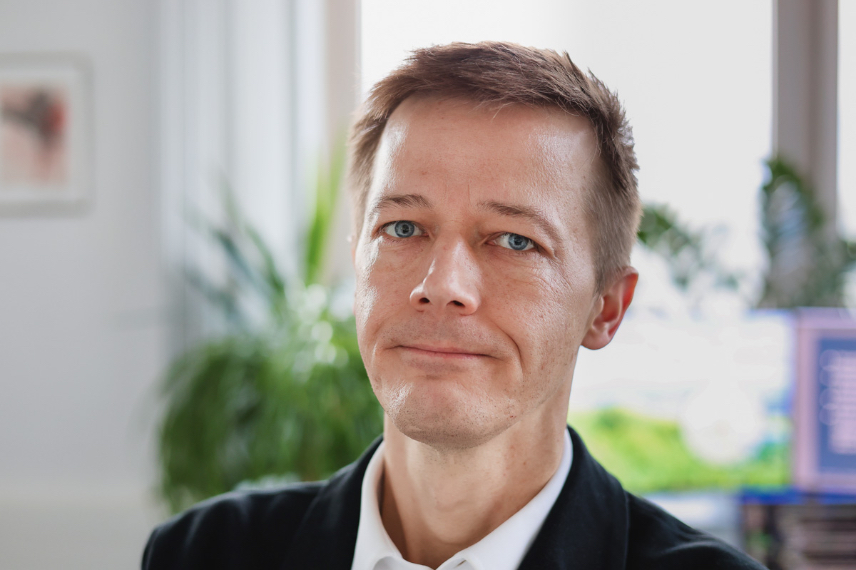
    Philipp Hennig is Professor of Machine Learning Methods in the Department of Informatics at the University of Tübingen, part of Cyber Valley, and a member of the board of the Tübingen AI Center and the cluster of excellence Machine Learning: New Perspectives for Science. 

    ANUBIS objectives

    The ANUBIS project aims to manage the computing resources of scientific AI applications comprehensively and consistently. In climate models, geological and neuroscientific simulations, many inference problems occur in which information or a data set is used to indirectly deduce or “infer” the information that is actually being sought. "To solve such inference problems, we need large amounts of data and large computing resources," Hennig explains. "A single partial data set from climate research, for example, can be as large as 100 terabytes (i.e. 100,000 gigabytes)."

    Data processing challenges

    In the project, what a computer does – computing – is regarded as a source of information. This information relates to questions that cannot be answered definitively and perfectly (such as "What will the weather be like in 10 years' time?"). Such questions usually consist of an infinite number of sub-questions that are not fully answered by the calculation. Therefore, while the computer is answering these sub-questions, it should simultaneously keep a record of which parts of the question have already been answered and how well. This is not so easy, because the record-keeping itself is also a calculation. For the whole thing to remain feasible, the record-keeping must therefore be simpler than the calculation itself.

    Innovative approaches to solutions

    To do this, it will be necessary to extend modern machine learning methods so that their functionality harmonizes with the new concept. The advantages of the extended methodology are not only more economical algorithms, but also new functionality. "It will then be easier for researchers from the geosciences, climate sciences and neurosciences, for example, to flexibly incorporate very different types of data such as specific measurements, simulation data and expert knowledge into their code," says Hennig. "The uncertainty of the information from the different data sources must be quantified. Neither was possible with the previous methods."

    Related Links

    Media Contact

    Claudia Brusdeylins
    Tübingen AI Center / Universität Tübingen

  • Humboldt Lecture

    Humboldt Lecture


    Each lecture will have two fellows sharing their findings and then a round of discussions and networking will be continued over drinks in the Kleiner Senat. The Humboldt Lecture Series is jointly organised by the College of Fellows and the Welcome Center of the University of Tübingen.

    Read the abstracts and the full programme of the Lecture Series here:
    Programme of the Lecture Series


    When?

    Wed, 7 February 2024, 6.30 pm
    Großer Senat, Neue Aula
    (Geschwister-Scholl-Platz, Tübingen)
     

    Who?

    Speakers:
    – Dr Stefano Floris (Institute of Biblical Archaeology):
    "History of a Punic City, Seen from Its Tophet: A Sardinian Perspective"
    – Dr Riccardo Marin (Tübingen AI Center):
    "Connecting the (Digital) Dots: Studying Relations in 3D Geometries for Human Virtualization"

  • ELLIS Board Members discuss the future of AI in Brussels

    ELLIS Board Members discuss the future of AI in Brussels

    Among the speakers and panelists of the workshop in January were the German Federal Minister of Education and Research Bettina Stark-Watzinger, the French Minister for Higher Education and Research Sylvie Retailleau, the Undersecretary of State at the Polish Ministry of Science and Higher Education Andrzej Szeptycki, as well as representatives from the EU and AI research institutions in Europe. ELLIS was represented by President Bernhard Schölkopf and Board Member Florence d'Alché-Buc, and referred to by multiple other speakers, including German State Secretary Sabine Döring and the Polish representative Andrzej Szeptycki.

    “Too many research programs at national and European levels go in the same direction and create a funding jungle instead of a coordinated program. In order to be attractive to top researchers from all over the world, we therefore need an overarching and networked European initiative”, highlights Sabine Döring. “Our aim is to work with our partners in Europe to create a platform as a contact point for top researchers from all over the world in order to actively promote this idea”, she adds.

    During the high-level meeting, discussions centered around opportunities for organizing, distributing, and financing AI infrastructures at both the European and EU member state levels. The group also explored ideas for jointly promoting young international AI talent in Europe – a topic that is a strategic priority for ELLIS. With the ELLIS PhD Program, the network has implemented a competitive pan-European PhD program aimed at attracting and retaining outstanding young researchers from around the world.

    ELLIS PhD students benefit from joint supervision in the European ELLIS network

    The ELLIS representatives provided insights into the program and outlined its potential for facilitating PhD training in Europe: Since its inception in 2020, the program has attracted more than 7,000 applications from all over the world, around 300 of which successfully secured a PhD position in the program. ELLIS PhD students benefit from joint supervision by two leading AI researchers at different institutions in Europe and are integrated into an international network of top scientists early in their careers. European cooperation is essential for the program: In the challenge of attracting international talent, many European institutions face difficulty when acting alone. ELLIS, however, offers a significant added value by leveraging its extensive research network for the joint training of doctoral students. Moreover, the program’s central application portal has proven to be a key success factor, as it allows PhD candidates to reach many European top AI labs with just a single application.

    “The IDEAS institute in Warsaw has just founded an ELLIS unit, following a rigorous selection process where international reviewers got convinced that the unit will make a major contribution towards strategically developing the ELLIS network. This further extends our talent base, and we are happy to invite Poland to join France and Germany to develop the ELLIS PhD Program into the leading international networking platform for AI talent”, says Bernhard Schölkopf.

    BMBF established ELLIS as an international networking platform for young AI researchers

    As part of its AI Action Plan presented last year, the German Federal Ministry of Education and Research (BMBF) established ELLIS as a European and international networking platform for young AI researchers. The successful use of AI in Europe requires excellence and cooperation on a large scale. At ELLIS, 41 units in 16 countries and more than 1,000 members collaborate to build up a pan-European AI network of excellence. The most recent unit that joined the network is the ELLIS Unit in Warsaw hosted by IDEAS NCBR. IDEAS NCBR was represented at the workshop in Brussels by their Board Member Garzyna Zebrowska.


    About ELLIS

    ELLIS is a pan-European AI network of excellence. It builds upon machine learning as the driver for modern AI and aims to secure lasting international leadership of AI made in Europe by connecting top researchers in this field and by creating a multi-centric AI research laboratory. Founded in 2018, ELLIS has grown into a network that counts 41 ELLIS units at world-class institutions in 16 countries, 16 ELLIS programs and a pan-European PhD program. The members of ELLIS are committed to shaping the future of AI in Europe by pushing the scientific and technological boundaries for human-centered, beneficial, and safe AI.
     

    More Information

    Read the article “German Federal Ministry of Education and Research establishes ELLIS as a European and international networking platform for young AI researchers” here.

    Learn more about the ELLIS PhD Program here. This program has received funding from the European Union’s Horizon 2020 research and innovation programme under ELISE Grant Agreement No. 951847.


    Contact

    For interview requests regarding ELLIS or further information, please contact pr@ellis.eu.

  • Cyber Valley Founding Partner Fraunhofer IAO opens KI-Studios

    Cyber Valley Founding Partner Fraunhofer IAO opens KI-Studios

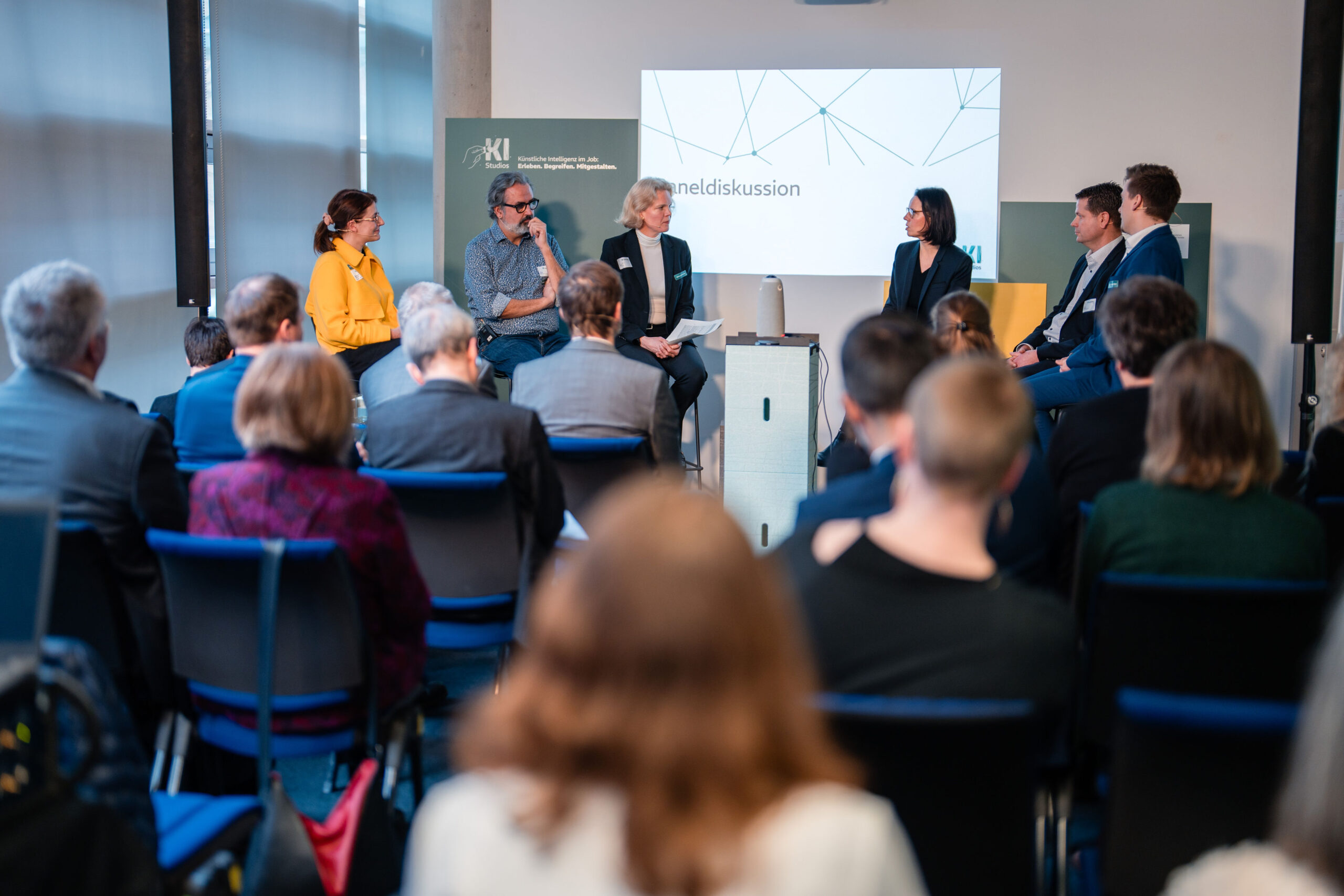
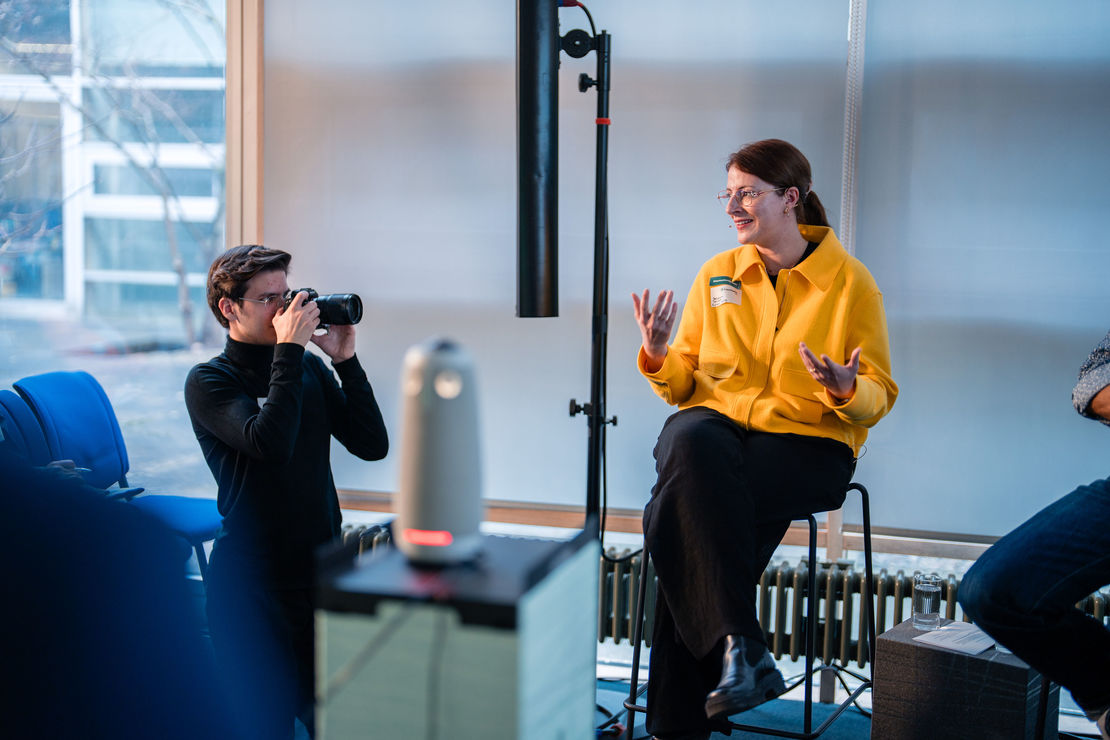
    Stuttgart, February 1, 2024 – Cyber Valley was delighted to take part in the opening of the KI-Studios (AI Studios) by Fraunhofer IAO (Fraunhofer-Institut für Arbeitswirtschaft und Organisation IAO). The KI-Studios aims to show possible applications of artificial intelligence (AI) in the working world by enabling companies to try out interactive AI demonstrations from various sectors and then apply their knowledge. The event took place at the Institut für Arbeitswissenschaft und Technologiemanagement (Institute of Human Factors and Technology Management, IAT of the University of Stuttgart).

    State Secretary Lilian Tschan (Federal Ministry of Labor and Social Affairs), Prof. Dr. Katharina Hölzle (Director IAT of the University of Stuttgart and the Fraunhofer IAO), and Dr. Matthias Peissner (Head of Human-Technology Interaction Research Unit and Team Leader Interaction Design and Technologies at Fraunhofer IAO) opened the KI-Studios by welcoming the guests to this special event. A panel discussion followed with Cyber Valley Director Communication & Society (CCO) Rebecca Beiter, Ana Dujic (Federal Ministry of Labor and Social Affairs), Carsten Gauch (BGV), Thomas Kniehl (Kaiser+Kraft Gmbh), and Claudius Messerschmidt (TRUMPF)

    The panel discussed the impact artificial intelligence will have on the world of work and how to involve employees in AI’s implementation. When asked how KI-Studios could learn from Cyber Valley’s experiences, Rebecca Beiter had an easy answer: #bettertogether. Only together with inputs from society, science, and the economy can AI be developed and used in the best possible way. Cyber Valley has greatly benefited from the diversity of the Cyber Valley Community which itself consists of multiple perspectives.

    Cyber Valley CCO Rebecca Beiter takes part in the panel discussion at the opening of KI-Studios. Photo Ludmilla Parsyak © Fraunhofer IAO

    One of the main topics during the event was how to find a balance between avoiding risks while taking full advantage of AI’s potential. AI is already everywhere and will support us even more in the future. If we want to shape this future, we need well-informed employees, corporates, curious scientists, and bold entrepreneurs eager to participate in AI’s development. The KI-Studios will support this by showcasing concrete examples of AI’s useful application and embedding this in a dialogue with employees.

    Rebecca Beiter was honored to be one of the five panelists to share her perspective on AI‘s potential role in the world of work, and how AI can be leveraged to drive innovation. “As we continue to explore the innovative opportunities that AI can bring to various industries, it is important to promote AI in the workplace. The KI-Studios can play a crucial role in this regard. I am honored to have been one of the panelists to share my perspective on the impact of AI on the industry and how it can be leveraged to drive innovation.”

    Cyber Valley was excited to be part of this event and is looking forward to future collaborations with Fraunhofer IAO.

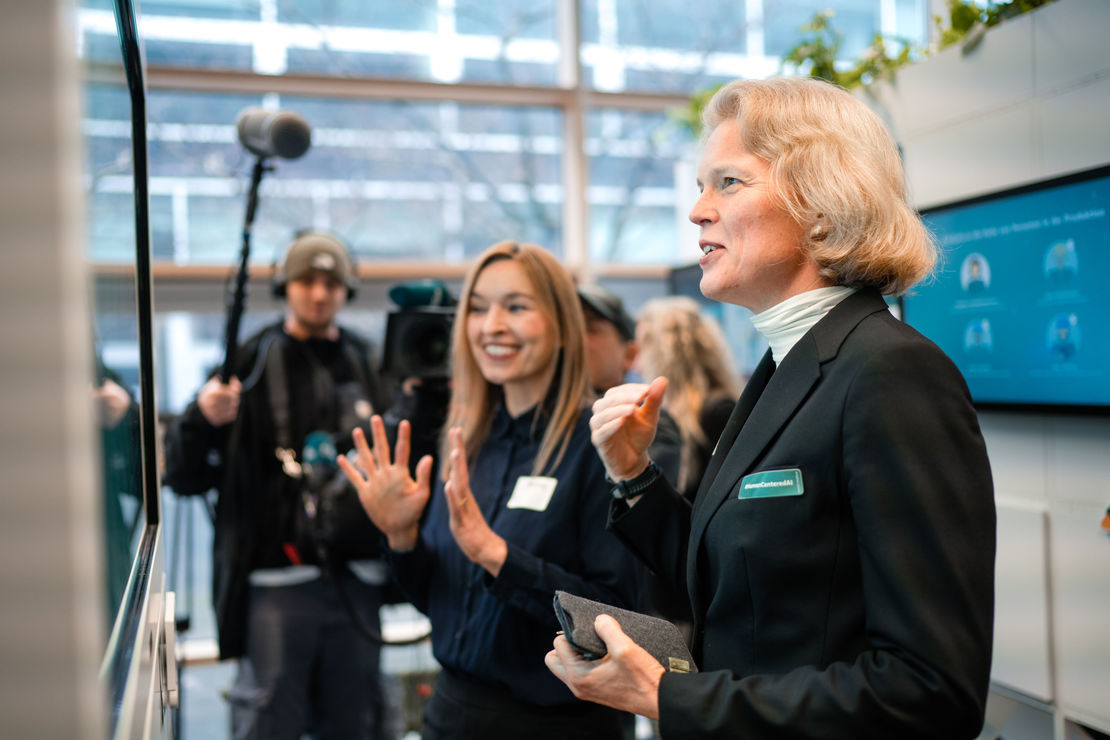
    Prof. Dr. Katharina Hölzle, Director IAT University of Stuttgart and of Fraunhofer IAO. Photo Ludmilla Parsyak © Fraunhofer IAO

    About Cyber Valley

    Cyber Valley is Europe’s largest and leading center for excellence in artificial intelligence and modern robotics. Its mission and public mandate are to advocate for research, development, application, and acceptance of technologies and methods in the field of intelligent systems. Cyber Valley encourages entrepreneurship by uniting scientific excellence with innovation and technology transfer. In addition, Cyber Valley facilitates critical reflection on the ethical and social implications of AI through public engagement. Cyber Valley envisions a future in which the full potential of intelligent systems is leveraged for the greater good of the world.

    The Cyber Valley Community is a network of AI researchers, entrepreneurs, investors, and start-ups, alongside partners from academia, industry, and society. Cyber Valley GmbH is owned by the State of Baden-Württemberg and the Max Planck Gesellschaft. It acts as the service provider, central organizer, and host for the Cyber Valley Community. While Cyber Valley GmbH is located in Stuttgart and Tübingen, it operates across Baden-Württemberg with a global reach, attracting the best talent from across the world to create the future with AI.

    About KI-Studios

    KI-Studios (AI Studios) project aims to empower employees and their interest groups from all sectors to help shape company applications of artificial intelligence. The prerequisite for this is that employees have a concrete understanding of the possibilities, areas of application, and limitations of AI. They must be aware of the positive potential of AI for their workplace, but also its risks and challenges.

    The KI-Studios project is being undertaken by the Fraunhofer IAO and the University of Stuttgart and funded by the Federal Ministry of Labor and Social Affairs with around 4.1 million euros. The project involves interactive demonstrators who provide information, raise awareness, and bring AI to life with vivid and realistic application examples from the working world of today and tomorrow. In specially developed innovative workshop formats, employees are methodically supported in dealing with AI systems and empowered to participate in implementation processes.

    The KI-Studios project launched an ideas competition in autumn 2023, in which organizations and companies from all over Germany applied to become part of the network. From February, seven teams will expand the network and develop further innovative demonstrators and event formats for the AI Studios. This means that even more employees and employees and their interest groups throughout Germany can now take advantage of the diverse offers throughout Germany.

    Following the opening of the first AI studio in Munich in September 2023 and the start of the roadshow with the “KI Infomobile”, the range of services is now being expanded with a second AI studio in Stuttgart.

    About Fraunhofer IAO

    How will people live and work in the future? Asking this and similar questions, researchers at Fraunhofer Institute for Industrial Engineering IAO apply their findings in practice to achieve concrete results. Our experts shape the interaction between humans, technology and organization with a view to the whole, keeping each customer’s specific needs in mind. We help companies and institutions recognize the potential of new technologies, harness them for profit, and open up attractive future markets. Employ our knowledge advantage to make your business a success!

  • European Sovereignty in the AI Era

    European Sovereignty in the AI Era


    The discussions will center around key questions regarding the current European regulatory framework concerning transparency, fairness, and accountability, as well as the establishment of a robust European data governance framework. Within this overarching theme, the focus will be on the transformative impact of artificial intelligence on the efficiency of public institutions.

    How can we ensure the ethical use of AI technologies within public institutions? How can governments guarantee transparency in AI decision-making processes and address and mitigate biases in AI algorithms used in public services? How are governments tackling the security challenges associated with AI applications in critical areas such as defense and national security? Furthermore, what initiatives are being undertaken to enhance the AI literacy and skills of public servants?

    Finally, the aim is to address the role of investments and capital for start-ups and academic institutions in Europe to ensure sustained growth and competitiveness in the AI sector. Eager engagement in insightful conversations and collaborative exploration at this event is anticipated.


    When

    Thursday, January 18th, 2024


    Where

    AI House Davos


    Speakers

    • Jonas Andrulis: Founder, Aleph Alpha
    • Christian Lindner: Federal Minister of Finance, Germany
    • Dr. Rainer Esser: CEO, DIE ZEIT
    • Jochen Wegner: Editor in Chief, ZEIT Online, Moderator
  • Tübingen AI Talk Series with Prof Niklas Boers

    Tübingen AI Talk Series with Prof Niklas Boers


    The Earth’s climate is a highly complex system and as such many processes and phenomena cannot be resolved in terms of fundamental physical equations, either because they are unknown or because they would be to costly to explicitly include in numerical simulations. While there is a long history of complementary, data-driven modelling approaches, recent developments in deep learning promise substantial advances.

    Here Prof. Boers presents some recent results on machine learning approaches to address several challenges in nonlinear Earth system dynamics, including the prediction of climate phenomena such as monsoon onsets or ENSO, hybrid modelling combining process-based with deep learning model components, as well as bias correction and downscaling of Earth system models with generative machine learning models.


    About Prof. Niklas Boers:

    Niklas Boers is professor of Earth system modelling at the Technical University of Munich, leads the Future Lab on Artificial Intelligence at the Potsdam Institute for Climate Impact Research, and is Honorary Professor of Mathematics at the University of Exeter. He obtained his PhD from Humboldt University Berlin and spent several years at the ENS Paris and Imperial College London. As a physicist and mathematician by training, he studies theoretical climate dynamics with a combination of physical and data-driven approaches. In his research he develops methods rooted in dynamical system theory, complexity, science, and machine learning and applies them to different problems of nonlinear dynamics, with a focus on modelling and predicting extreme events and abrupt transitions in the Earth system.


    Date and Time: 25.01.2024 at 11 a.m. sharp
    Location: MvL6 Lecture Hall


    1-on-1 Meetings and Dinner:

    Niklas Boers is available for 1-on-1 meetings during the day; sign up here.
    If you're interested in joining for dinner, please indicate your preference in the same form.


  • Top supercomputers strengthen UN SDGs and global sustainability

    Top supercomputers strengthen UN SDGs and global sustainability

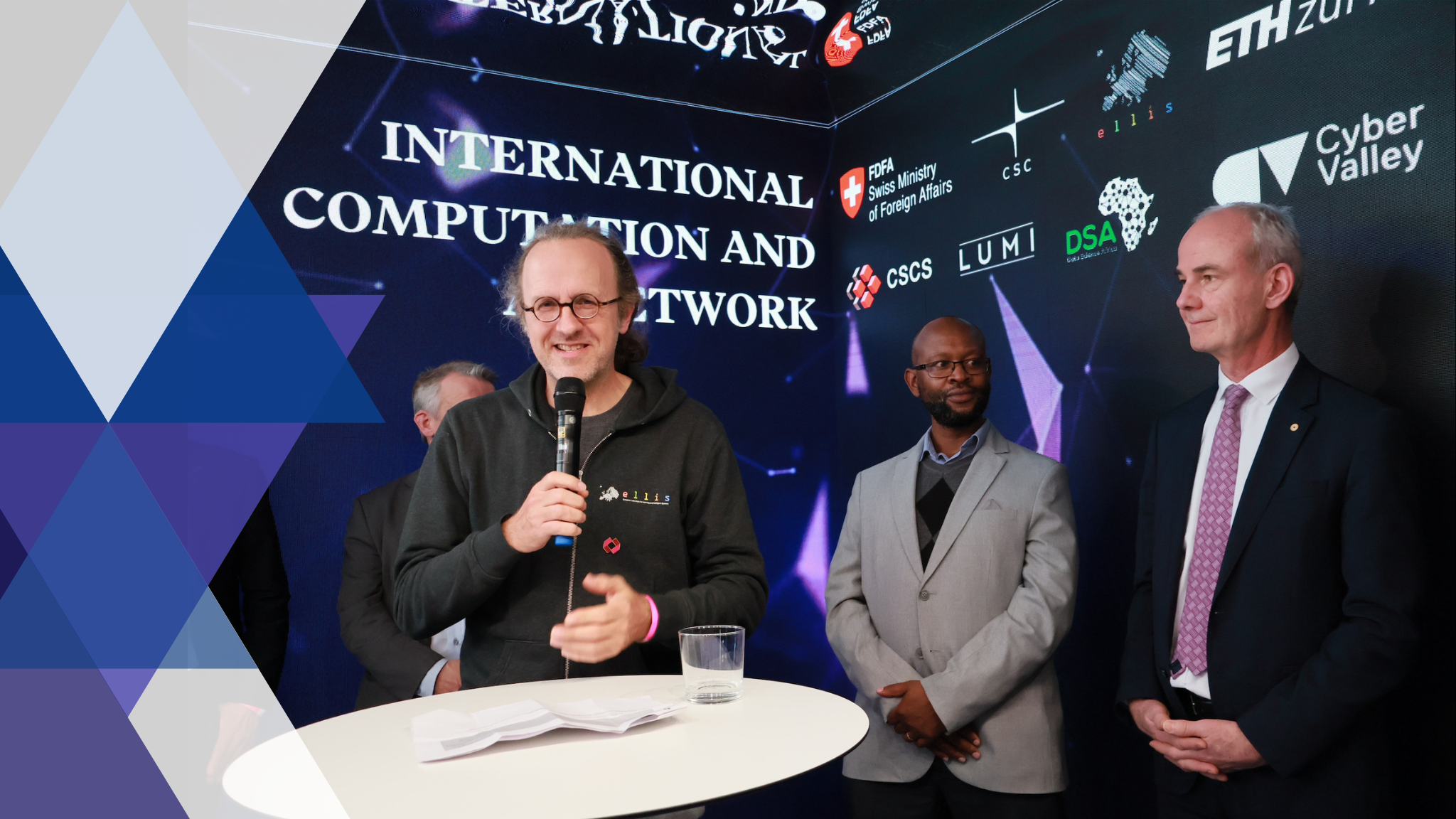
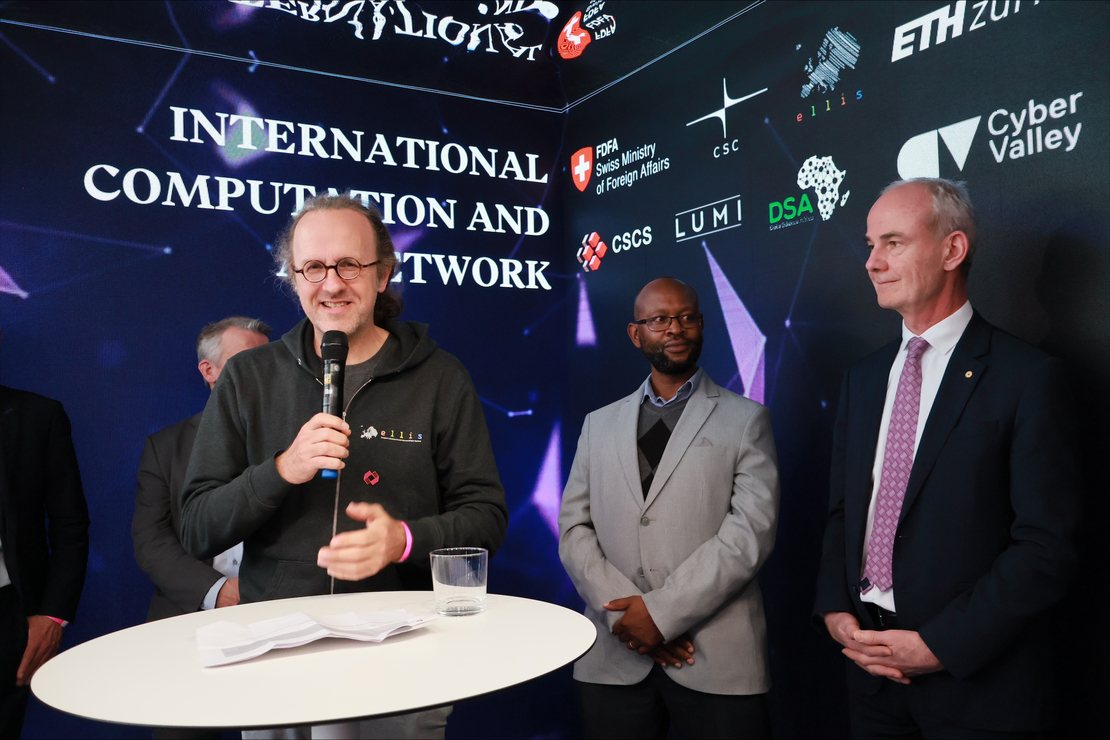
    The new network aims to broaden access to supercomputing, data and software infrastructures, and will operate at the intersection of public and private sectors, academia, and civil society. In addition to ELLIS, ICAIN’s founding members include the Swiss Federal Department of Foreign Affairs, ETH Zurich, the Swiss National Supercomputing Centre, Data Science Africa and the Finnish IT Center for Science, which is the hosting member of the LUMI consortium. 


    Supercomputing facilities is essential for AI-based technologies 

    Artificial intelligence has a profound economic and societal impact on a global scale and can help combat challenges such as climate change and pandemics. However, not all players, especially in the global south, have the same access to expertise and computing resources which are crucial for the development and implementation of innovative AI-based technologies. 

    This is where ICAIN comes in: By broadening access to such resources, the founders of ICAIN aim to enable international research projects that benefit society as a whole and are in line with the United Nations Sustainable Development Goals (SDGs). With the European LUMI and the Swiss ‘Alps’, the new network includes two of the most powerful supercomputers in the world. All founding partners will further contribute to ICAIN by sharing their AI expertise. 

    ICAIN in Davos


    Powering the future of AI excellence internationally 

    ICAIN is set to have a strong impact on AI entrepreneurs and scientists internationally, providing them with the knowledge and necessary tools needed to push their AI advancements to unprecedented heights. This initiative positions Europe as a global leader in AI excellence, fostering innovation and collaboration to drive the capabilities of AI forward.  

    ICAIN is driven by the recognition of artificial intelligence as a crucial technology with the potential to address global challenges. The initiative aims to ensure inclusive participation in AI research and viewing AI solutions as global public goods accessible to all. It prioritizes addressing major scientific and social issues in AI collaboratively and transparently. This also illustrates the importance of collaborative efforts between politics and science to ensure that AI remains at the forefront of future developments. 
     

    Cyber Valley Community Member ELLIS joins forces 

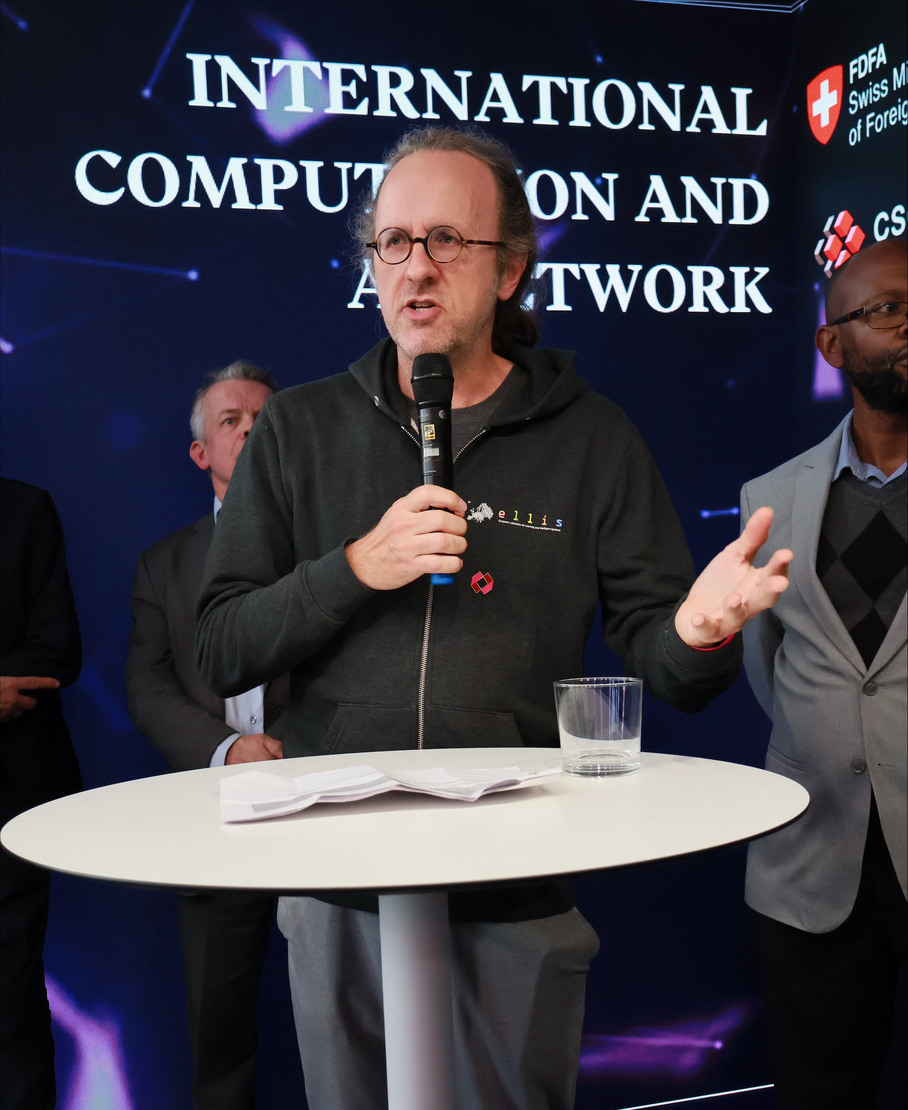
    „ELLIS is a pan-European AI network aiming to create outstanding conditions for AI researchers. More than 1,000 top scientists and leading AI research institutions such as ETH Zurich, Cambridge, Oxford, Paris and Max Planck Institute for Intelligent Systems are part of ELLIS“, says Bernhard Schölkopf, Director of the ELLIS, Director of Max Planck Institute for Intelligent Systems, and Cyber Valley Board Member. „We will contribute our network’s scientific expertise to provide meaningful input on how the compute resources get used, ensuring that the major scientific and social issues of AI are tackled jointly and transparently. We like to think that having ELLIS as a founding partner and co-initiator will be essential to the success of the proposal.”

    Launch highlights  

    ICAIN’s launch was announced at a joint press conference at the World Economic Forum in Davos on January 17, 2024, followed by an inaugural panel discussion:

    Panelists 

    • State Secretary Alexandre Fasel, Swiss Foreign Ministry;   
    • Prof. Bernhard Schölkopf, Director of the ELLIS-Institute, Director Max Planck Institute for Intelligent Systems, and Cyber Valley Board Member 
    • ETH Vice President Prof. Christian Wolfrum;
    • Prof. Ciira Maina, Director of Data Science for Africa 


    Fully operational by 2025

    The ICAIN initiative aims to achieve full completion by 2025. As part of their objectives for the current year, they are actively seeking additional partners, including research institutes, international organizations, companies, or foundations, to join their mission and provide active support. These partners may contribute financial support or offer contributions in kind, such as computing power or specialized expertise.

    Throughout the ongoing incubation phase, governance rule, coordination processes, and financing for ICAIN will be formulated. Simultaneously, the first pilot projects, in collaboration with other entities, will begin to gather valuable experience in partnership collaboration. By 2025, ICAIN aims to have all its organizational structures firmly established.

    Media contact for Cyber Valley at AI House Davos: 

    Hazel Rowland 

    Cyber Valley Media Manager 

    Hazel.Rowland@cyber-valley.de 


    About Cyber Valley  

    Cyber Valley is Europe’s largest and leading center for excellence in artificial intelligence and modern robotics. Its mission and public mandate are to advocate for research, development, application, and acceptance of technologies and methods in the field of intelligent systems. Cyber Valley encourages entrepreneurship by uniting scientific excellence with innovation and technology transfer. In addition, Cyber Valley facilitates critical reflection on the ethical and social implications of AI through public engagement. Cyber Valley envisions a future in which the full potential of intelligent systems is leveraged for the greater good of the world.

    The Cyber Valley Community is a network of AI researchers, entrepreneurs, investors, and start-ups, alongside partners from academia, industry, and society. Cyber Valley GmbH is owned by the State of Baden-Württemberg and the Max Planck Gesellschaft. It acts as the service provider, central organizer, and host for the Cyber Valley Community. While Cyber Valley GmbH is located in Stuttgart and Tübingen, it operates across Baden-Württemberg with a global reach, attracting the best talent from across the world to create the future with AI.


    About ELLIS 

    ELLIS is a pan-European AI network of excellence. It builds upon machine learning as the driver for modern AI and aims to secure lasting international leadership of AI made in Europe by connecting top researchers in this field and by creating a multi-centric AI research laboratory. Founded in 2018, ELLIS has grown into a network that counts 41 ELLIS units at world-class institutions in 16 countries, 16 ELLIS programs and a pan-European PhD program. The members of ELLIS are committed to shaping the future of AI in Europe by pushing the scientific and technological boundaries for human-centered, beneficial and safe AI.

  • IMPRS-IS 2024 Interview Symposium Keynotes

    IMPRS-IS 2024 Interview Symposium Keynotes

    The International Max Planck Research School for Intelligent Systems (IMPRS-IS) brings together the MPI for Intelligent Systems with the University of Stuttgart and the University of Tübingen to form a highly visible and unique graduate school of internationally recognized faculty, working at the leading edge of the field. This program is a key element of Baden-Württemberg’s Cyber Valley initiative to accelerate basic research and commercial development in artificial intelligence.

    Each year, the program hosts a symposium to interview IMPRS-IS Ph.D. applicants. As the scientific highlight of this year's program, Dr. Wieland Brendel (Max Planck Institute for Intelligent Systems and ELLIS) and Prof. Andreas Bulling (University of Stuttgart) will be featured as keynote speakers for the event.

    Their hybrid keynote talks will take place back-to-back at the two sites of MPI-IS on Thursday, February 8. All community members are encouraged to join these presentations, preferably onsite if possible. 

    Speakers:

    Wieland Brendel – Cracking the black box: how far are we from understanding the inner workings of deep vision models?
    Date: Thursday, Febrary 8, 2024
    Time: 15:30 – 16:15 CET
    Onsite Location: MPI-IS Tübingen, Main Lecture Hall, Room N0.002

    Andreas Bulling – The academic journey – a personal travel report
    Date: Thursday, Febrary 8, 2024
    Time: 16:30 – 17:15 CET
    Onsite Location: MPI-IS Stuttgart, Copper Lecture Hall (Formerly R204)

    Participants can watch these talks on-site in either Stuttgart or Tübingen. One talk will be presented live in each location, and the other will be streamed remotely in real time. Both talks can also be watched online via Webex, which is how most applicants will join.

    Each keynote talk is anticipated to be 30 minutes long plus about 15 minutes for questions and discussion, giving a break of about 15 minutes between them.

    Links to access this event will be distributed via our community mailing lists. 

    With questions about this event or how to join, please contact Sara Sorce (sara.sorce@tuebingen.mpg.de).

    Keep in mind: This event is for internal community members only.