User Group: Wissenschaftler:innen

  • Universität Stuttgart mit Clusterskizzen erfolgreich

    Universität Stuttgart mit Clusterskizzen erfolgreich

    "The decision of the panel of experts offers us the opportunity to sharpen and further expand our excellent profile as an interdisciplinary university with great strength in research. We will seize this opportunity and use our cutting-edge research to make an even greater contribution to solving major global challenges," explains Prof. Wolfram Ressel, Rector of the University of Stuttgart. Ressel was delighted with the success of the cluster outlines, congratulated the scientists at the University of Stuttgart and their cooperation partners, and thanked everyone involved for their commitment. Initiatives for the clusters of excellence "Bionic Intelligence for Health" and "Chem4Quant" are eligible to apply.

    Bionic Intelligence for Health: New approaches to the therapy and diagnosis of neuronal diseases

    “The Bionic Intelligence for Health cluster project is searching for fundamentally new approaches to integrate technology and medicine in order to better diagnose and treat neuronal diseases. It thus addresses one of the greatest challenges facing our healthcare system and our society as a whole", says Wolfram Ressel.

    In the Bionic Intelligence for Health cluster project, an interdisciplinary research team is combining the neuronal and physical intelligence of the human body with a fundamentally new approach to intelligent technology. The aim is to better recognize neuronal diseases, treat them adaptively, and thereby improve the quality of life of those affected in their everday lives. To this end, innovative technical systems are to be intelligently integrated with the body. The cluster project is an initiative of the University of Stuttgart in cooperation with the University of Tübingen. The Max Planck Institute for Intelligent Systems in Stuttgart and Tübingen as well as the Max Planck Institute for Biological Cybernetics in Tübingen are involved as cooperation partners. The project builds on the complementary expertise of outstanding scientists from the fields of neuroscience, materials science, biomechanics and systems theory, among others. It benefits from the excellent Stuttgart-Tübingen ecosystem and has the potential to significantly reduce the social challenges posed by neuronal diseases.

    Chem4Quant: Chemical platform for high-precision quantum architectures

    "Quantum technology has the potential to revolutionize numerous applications, such as making communication secure or exponentially accelerating computing power. Our cluster initiative Chem4Quant researches novel quantum materials and structures and thus makes a fundamentally new contribution to achieving this goal”, says Wolfram Ressel.

    Researchers from the Karlsruhe Institute of Technology (KIT), the University of Ulm and the University of Stuttgart want to purposefully develop material structures for future quantum technologies in the joint Chem4Quant initiative. Despite the breakthroughs already achieved in quantum technologies, many of the platforms currently in use are limited in terms of scalability, adjustability, positionability, and error correction. Chem4Quant is therefore proposing a fundamentally new approach with a chemistry-based platform: Chemically, precisely-definable quantum architectures can be used to plan atomically accurate material structures and their quantum properties in a targeted manner. For example, qubits can be positioned in electrical or photonic components with a precision below the nanometer range. The initiative aims to develop novel qubit materials and create the first components for the future quantum internet. Chem4Quant can draw on globally unique expertise in the field of molecular quantum systems as well as established collaborations.

    Successful Clusters of Excellence apply for further funding period

    "Our already very successful Clusters of Excellence Integrative Computational Design and Construction for Architecture (IntCDC) and Data-integrated Simulation Science (SimTech) also stand for cutting-edge interdisciplinary research that uses fundamentally new investigative approaches and methods to advance solutions for social challenges," emphasizes Ressel.  For example, IntCDC is paving the way towards greater sustainability in the construction industry, and thus making a decisive contribution to the development of a climate- and environmentally-friendly society. With its innovative data-based simulation models, SimTech enables significant progress in the research, testing, and application of new technologies. Both Clusters of Excellence are now applying for a further funding period.

    IntCDC: Research for more sustainability in the construction industry

    Launched in 2019, the Integrative Computational Design and Construction for Architecture (IntCDC) cluster uses digital technologies to rethink planning and construction in an integrative and interdisciplinary approach, and thus enable greater sustainability in the construction industry. To this end, the University of Stuttgart and the Max Planck Institute for Intelligent Systems (MPI-IS) merge their internationally recognized research expertise. More than 150 scientists from the fields of architecture, computer science and robotics, engineering, production and systems technology as well as the humanities and social sciences are currently working together to modernize the construction sector. They are focusing on the co-design of integrative computer-based planning and construction methods, on cyber-physical manufacturing and construction processes, as well as on next-generation sustainable material and construction systems. In the second funding phase, the cluster aims to take up new initiatives and scientific challenges in order to lay the methodological foundations for sustainable architecture.

    SimTech: New simulation models for science and innovation

    Without simulations, advances in science and technological innovations for the benefit of society are not possible. Since 2019, researchers at the Cluster of Excellence Data-integrated Simulation Science (SimTech) have been working on new data-driven methods that go beyond improving the applicability and accuracy of simulation models. The systematic integration of data into simulation science is also changing the way science and technology are conducted. Developments include data-based representations of physical phenomena, new methods for designing and optimizing micro-materials, and data-based models for optimizing control processes and algorithms. Although we have already come a long way in data-integrated simulation science, there is still a great deal of untapped potential in dealing with knowledge and understanding. This untapped potential will be the focus of research in the next funding phase and will be systematically integrated into models, methods, and algorithms in the future in order to further promote our insights.

    Press contact

    Dr. Florian Krüger, University of Stuttgart, Head of University Communi­ca­tions, Phone: +49 711 685-82555.

    Dr. Jutta Witte, University of Stuttgart, University Communi­ca­tions, Phone: +49 711 685-82176.
  • Women in Science

    Women in Science

    Date

    Friday, March 22, 2024


    Time

    14:00


    Location

    Stuttgart, Heisenbergstr. 3, Copper Lecture Hall (2R04)

  • Entrepreneurial Ecosystem Spring School

    Entrepreneurial Ecosystem Spring School


    In this Research Spring School, we aim to provide a unique opportunity for early-career researchers to network, collaborate, and test research ideas with fellow academics involved in research on the configuration, mechanisms, and evolutionary dynamics of Entrepreneurial Ecosystems. Expect a dynamic three-day program featuring intensive feedback sessions, interactive workshops, and discussions with leading academics and peers worldwide.


    Topics:

    • The evolutionary dynamics of entrepreneurial ecosystems
    • Unlocking the mechanisms within and between entrepreneurial ecosystems
    • Inclusiveness of entrepreneurial ecosystems
    • Theoretical challenges towards entrepreneurial ecosystem research
    • Methods for entrepreneurial ecosystem research, with a specific interest in longitudinal studies, web scraping, and natural language processing approaches


    The program will include:

    • Keynote Sessions: Erik Stam (Utrecht University), Niels Bosma (Utrecht University), Christina Theodoraki (TBS Education), Bernd Wurth (University of Glasgow), Friederike Welter (University Siegen), Angelo Cavallo (Politecnico di Milano), Karim Messeghem (University of Montpellier)
    • A Meet the Editors Session: Erik Stam (ET&P), Christina Theodoraki (SBEJ, JSBM), Riccardo Fini (JMS), Jean-Michael Sahut (Management & Prospective/Gestion 2000)
    • Paper Development Workshops
    • A Methods Workshop
    • An Interactive Session to discuss the future of entrepreneurial ecosystem research


    Scientific committee: 

    Erik Stam (Universiteit Utrecht, Netherlands), Christina Theodoraki (TBS Education, France), Niels Bosma (Universiteit Utrecht, Netherlands), Didier Chabaud (IAE Paris – Sorbonne Business School, Chaire ETI – IAE Paris Sorbonne School, France), Grégory GUENEAU, PhD (ADALIA School of Business, Morocco), Alexander Brem (University of Stuttgart, Germany), Ferran Giones Valls (University of Stuttgart, Germany), Andreas Wahl (University of Stuttgart, Germany), Sophia Hess (University of Stuttgart, Germany)


    Sponsors: 

    Gründermotor, Académie de l'Entrepreneuriat et de l'Innovation, AIREPME – Association Internationale de Recherche en Entrepreneuriat et PME, EUROPEAN ACADEMY OF MANAGEMENT, Entrepreneurial Ecosystem Lab, Landeshauptstadt Stuttgart


    Deadline for abstract submission: March 7 2024

    Submission system: https://ecosys24.sciencesconf.org/

  • Engineering Intelligence

    Engineering Intelligence

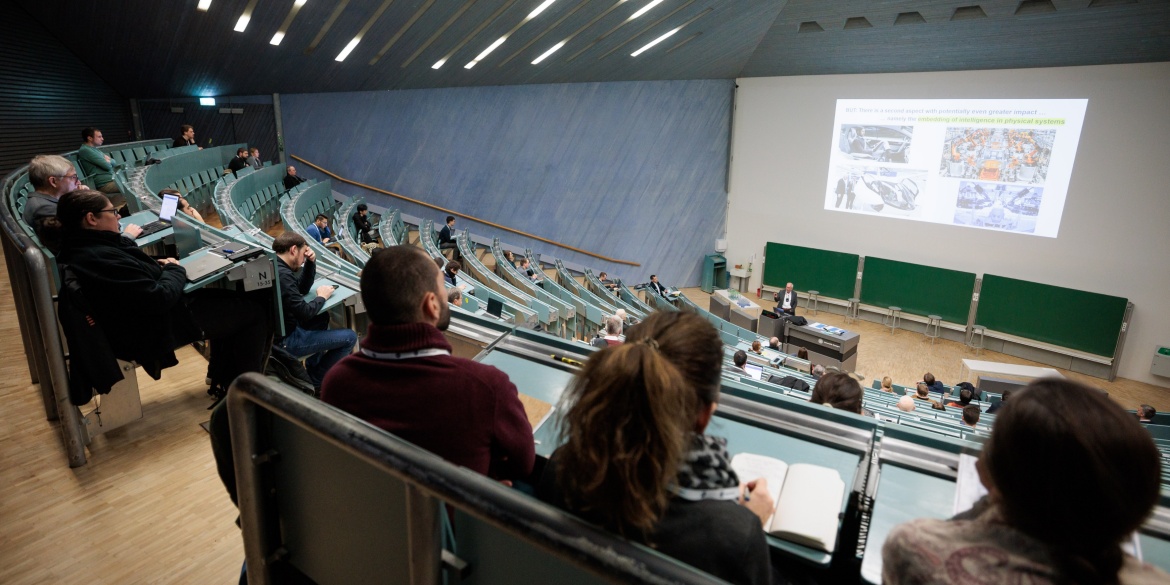
    Practicing the piano, researching the behavior of animals, developing sustainable building materials, analyzing political speeches, explaining emotions to chatbots, preventing operational failures or putting autonomous satellites into orbit: The "Engineering Intelligence – Cyber Valley at the University of Stuttgart" event demonstrated how artificial intelligence, intelligent robotics and intelligent systems permeate almost all areas of our society – and what the University of Stuttgart and its partners are accomplishing in these fields.

    European hotspot for intelligent systems

    "Our common goal is to become a European hotspot for intelligent systems and to attract the next generation of students and researchers from all over the world," explained Professor Wolfram Ressel, Rector at the University of Stuttgart, in his welcome address. On November 29 and 30, 2023, around 400 interested parties and experts from the fields of science, business, and politics and around 50 speakers came together to learn more about the diverse research projects being developed by the University of Stuttgart and its partners, and to discuss the opportunities and risks of AI and strengthen the Cyber Valley network. 

    The two clusters of excellence SimTech and IntCDC, as well as the Institute for Artificial Intelligence, the Center for Bionic Intelligence Tübingen Stuttgart (BITS), Cyber Valley GmbH and the University of Stuttgart's new Transfer Center (TRACES) were among the participants. The event was organized by the Institute for Entrepreneurship and Innovation Science (ENI) in cooperation with the university's Office of the Rectorate.

    A man in a suit stands in front of a blackboard. The picture shows Professor Wolfram Ressel, Rector of the University of Stuttgart

    Prof. Wolfram Ressel, Rector of the University of Stuttgart, at the opening speech of the event. Photo: Jan Potente / University of Stuttgart

    Intelligent systems that benefit society

    "Advances in AI will have an enormous impact on society," emphasized Professor Frank Allgöwer, Head of the Institute for Systems Theory and Automatic Control (IST) at the University of Stuttgart. As part of the Cyber Valley research alliance, the University of Stuttgart is focusing on intelligent robotics and embedding intelligent robots in physical systems. The aim is not only to anchor modern AI developments in the engineering sciences, but also to utilize the potential of intelligent systems for the benefit of society. 

    Among other topics, research is being conducted into intelligent robots for healthcare applications, human-machine interaction, the perceptual and cognitive capabilities of intelligent systems, hardware components, modeling, and simulation technologies as well as ethical issues and exploitation possibilities. Five new professorships, two independent junior research groups and six tenure-track professorships have now been created as part of Cyber Valley.

    Leveraging opportunities and minimizing risk

    The two-day congress once again made it clear that the development and application scenarios of intelligent robots and systems encompass much more than just technical challenges. The experts agreed that it is impossible to exploit the full potential of artificial intelligence without the involvement of all disciplines and joint research by the fields of humanities, natural sciences, and engineering. How can intelligent systems be developed in a people-centered way and how can we counteract prejudices during their development? What are the limits of AI applications, for example in autonomous vehicles or in diagnostics and medical treatments? What long-term effects will AI have on our society, for example with regard to future jobs? These questions were also on the agenda at "Engineering Intelligence". It is clear that AI should remain a tool to support people, not replace them.

    A woman in a red jacket giving a presentation. The picture shows Professor Amrei Bahr, Institute for Philosophy (PHILO).

    Jun.-Prof. Amrei Bahr, expert in the philosophy of technology, during her keynote speech at the opening of the Transfer Center (TRACES). Photo: Jan Potente / University of Stuttgart

    A transfer of knowledge that benefits society

    Amrei Bahr, Junior Professor of Philosophy of Technology & Information at the University of Stuttgart, explained why not only AI, but also the transfer of knowledge and technologies need an "ethical foundation". The links being forged for the transfer of knowledge between university and industry are not one-way streets. Bahr emphasized that good scientific practice is needed to stabilize these new links, among other things, and also the responsible implementation of research findings. 

    A group of people standing in front of a podium. In the foreground: Doctor Rubina Zern-Breuer, in the background: Transfer Center team.

    Dr. Rubina Zern-Breuer, Head of the TRACES Transfer Centre with her team (from left to right: Eberhard Renz, Tamara Arutyunyants, Christine Kispert, Melanie Minderjahn, Kristina Winter and Dr. Jordi Mauri). Photo: Jan Potente / University of Stuttgart

    Dr. Rubina Zern-Breuer, head of the TRACES Transfer Centre, which was launched as part of this event, knows that the start-up-oriented transfer that the University of Stuttgart is committed to is not a sure-fire success. In the spirit of the so-called 'third mission', universities are not only sources of knowledge and training centers, but also places where innovation and ideas come to life. It is important that transfer from the university to business, politics and society enable solutions that benefit society. Prof. Peter Middendorf, Vice Rector for Knowledge and Technology Transfer at the University of Stuttgart, also made it clear in his keynote speech at the launch of the TRACES center, how important it is that the University of Stuttgart supports the "third mission" in terms of its transfer strategy and the practical implementation by the new transfer center.

  • Cyber Valley joins forces with Seoul AI Hub and AIIS in historic MOU signing

    Cyber Valley joins forces with Seoul AI Hub and AIIS in historic MOU signing

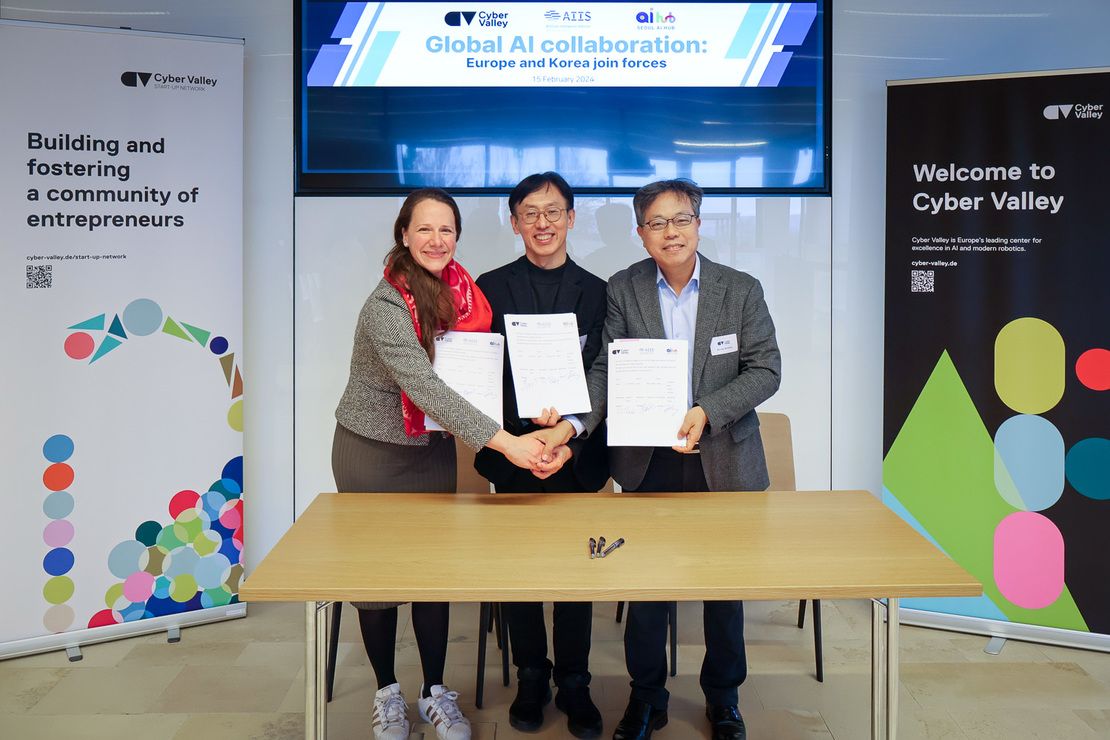
    (Tübingen, 15.02.24) – An official Memoranda of Understanding (MOU) signing ceremony took place on February 15th, 2024, at the Max Planck Institute for Intelligent Systems (MPI-IS) in Tübingen, Germany. This collaboration marks a historic achievement, as it signifies the first official partnership between Cyber Valley and two significant artificial intelligence institutes in Asia.   

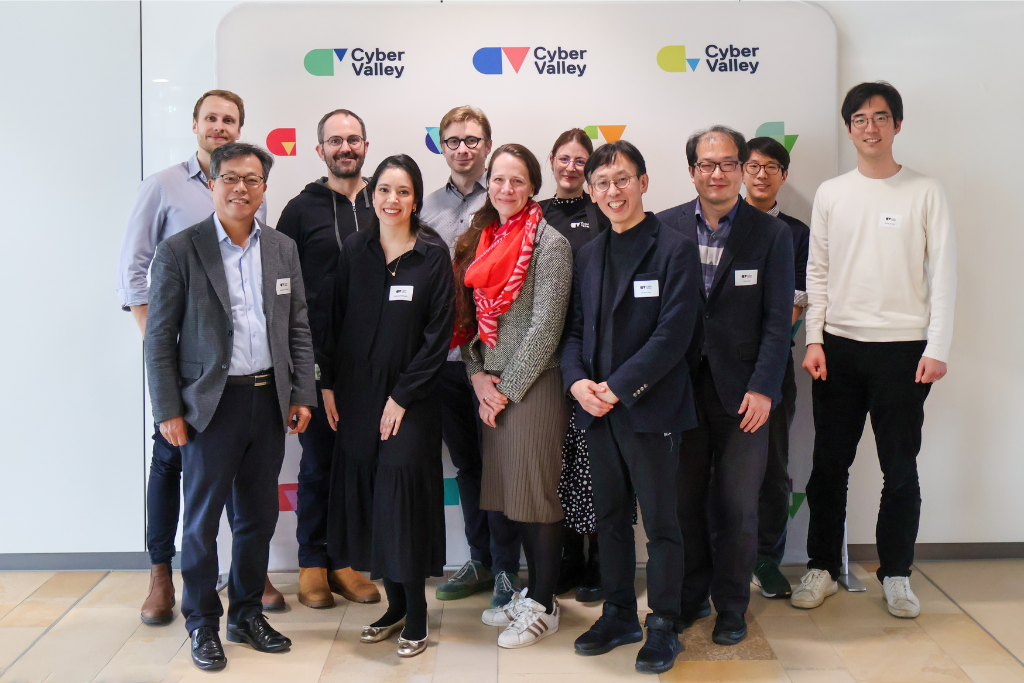
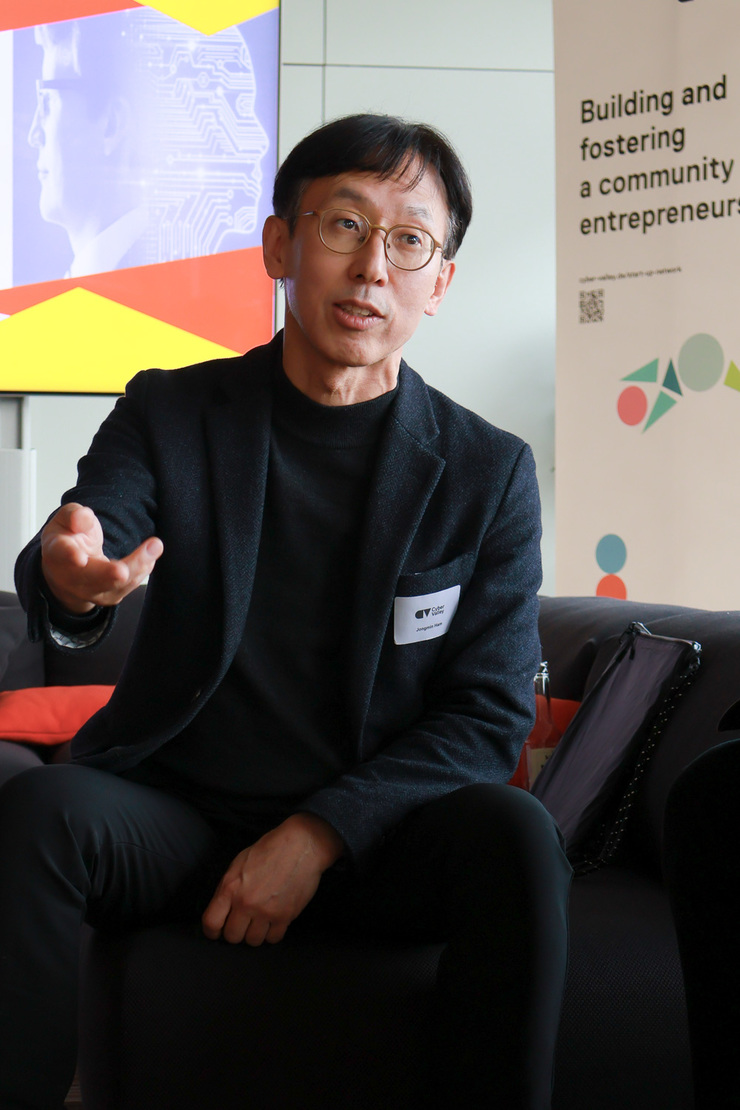
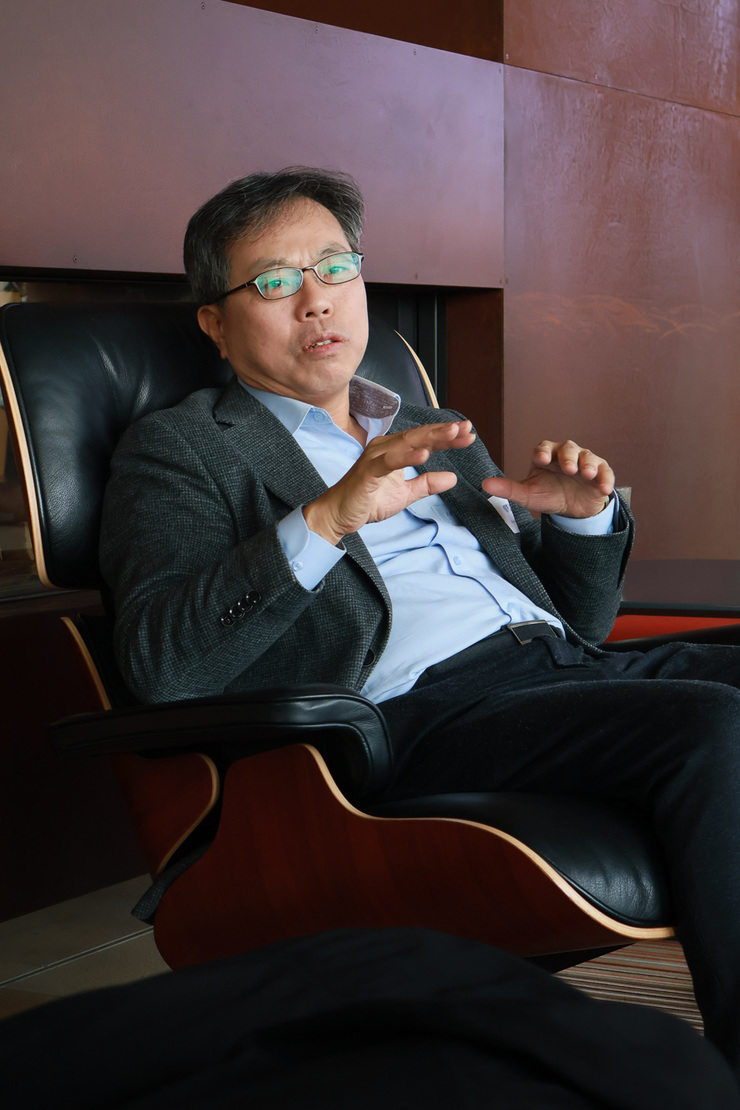
    The ceremony was attended by Rebecca C. Reisch, Managing Director of Cyber Valley, who warmly welcomed the Chief of the Seoul AI Hub, Jong-min Ham, as well as the Director of Artificial Intelligence Institute Seoul National University (AIIS), Byoung-Tak Zhang, highlighting the significance of this unique event. The ceremony featured presentations by two start-ups from the Cyber Valley Community – NeurCG and Tabularis.AI – who underscored the benefits of being situated in Baden Württemberg. Following the ceremony, attendees enjoyed a tour of MPI-IS Tübingen, along with a special lab tour.  


    Strengthening partnership on a global scale  

    The MOU serves as a testament to the commitment of both organizations to foster innovation and collaboration in the field of artificial intelligence. It opens avenues for extensive networking opportunities in Asia and Europe, laying the foundation for future advancements and partnerships.  

    Rebecca C. Reisch elaborates, „The partnership with AI Hub Seoul and the Artificial Intelligence Institute of Seoul National University marks Cyber Valley’s first-ever collaboration between South Korea’s premier AI institutes. This collaboration is poised to transform the artificial intelligence landscape across Asia and Europe, making a lasting impact. The impact of #bettertogether is particularly evident here, where our goal is to advance the growth of start-ups through the collective use of our resources.” 

    Key highlights of the collaboration between the three parties include the sharing of resources, with a specific focus on establishing a funding network and investment avenues for start-ups. Joint research projects and start-up research residencies are also integral components of this partnership, providing a platform for shared exploration and development.

    Innovation and Growth: Seoul AI Hub and AIIS  

    The Seoul AI Hub was established in December 2017 by the city of Seoul and has evolved significantly since then. Thus far, it has facilitated the growth of over 360+ AI start-ups, with particular note on the recent successful IPO of Crowdworks among its portfolio.  

    The Seoul AI Hub plays a role in supporting AI start-ups in Korea. Its assistance spans technical problem-solving, overseas expansion, and management support, among other areas. The strategic location near Gangnam, a pivotal hub in the IT industry with research facilities of major companies, further enhances seamless communication with industry members. The Seoul AI Hub has emerged as a vital stepping stone in the AI start-up realm. 

    Jongmin Ham, Chief of Seoul AI Hub, said, “We have great expectations for jointly fostering and supporting Korean AI start-ups through our collaboration with Cyber Valley and AIIS.” He added, “We hope that our global AI network has paved the way for Korean AI start-ups to thrive in the European market.“

    Established in 2019, the AIIS is an interdisciplinary research institute committed to consolidating and promoting AI-related research. Positioned as a central hub for research in Core AI and X+AI domains, AIIS encourages collaboration among researchers from various disciplines. Their guiding principles include a commitment to AI for All Research, AI for All Industries, and AI for All People. Presently, AIIS boasts approximately 300 affiliated faculty members actively engaged in its initiatives. 

    Byoung-Tak Zhang, Director of the AIIS, said, “ Byoung-Tak Zhang, Director of the AIIS, said, “Since the beginning of the AIIS in 2019, we have always envisioned a global network of specialists in the AI field collaborating with one another to become more than the sum of our parts.” He added, “We are excited to partner with some of the brightest minds in the AI field here at Cyber Valley along with Seoul AI Hub and eagerly anticipate what the future holds for all of us.” 

    Cyber Valley, Seoul AI Hub, and Artificial Intelligence Institute of Seoul National University (AIIS) are excited about the prospects this collaboration brings and anticipate the positive impact it will have on the global AI community.  

    About Cyber Valley  

    Cyber Valley is Europe’s largest and leading center for excellence in artificial intelligence and modern robotics. Its mission and public mandate are to advocate for research, development, application, and acceptance of technologies and methods in the field of intelligent systems. Cyber Valley encourages entrepreneurship by uniting scientific excellence with innovation and technology transfer. In addition, Cyber Valley facilitates critical reflection on the ethical and social implications of AI through public engagement. Cyber Valley envisions a future in which the full potential of intelligent systems is leveraged for the greater good of the world.  

    About Seoul AI Hub  

    Seoul AI Hub is a non-for-profit organization that was established in 2017 by the Seoul Metropolitan Government in order to foster the AI industry. In this regard, Seoul AI Hub now cultivates AI human resources, provides accelerating programs to 250+  membership AI start-ups, and tries to form synergistic connections within the industry. 

    About Artificial Intelligence Institute of Seoul National University (AIIS)  

    Artificial Intelligence Institute of Seoul National University is an intercollegiate research institute established in 2019, committed to integrating and supporting AI-related research. As a hub of AI research both in Core AI and X+AI areas, Seoul National University’s 300+ professors and 2,000+ researchers of diverse disciplines collaborate through AIIS.

  • ELLIS Doctoral Symposium 2024

    ELLIS Doctoral Symposium 2024


    What is ELLIS?

    The European Laboratory for Learning and Intelligent Systems (ELLIS) is a pan-European AI network of excellence which focuses on fundamental science, technical innovation and societal impact. Founded in 2018, ELLIS builds upon machine learning as the driver for modern AI and aims to secure Europe’s sovereignty in this competitive field by creating a multi-centric AI research laboratory. ELLIS has established 41 units in 16 different countries in Europe. It has also launched the ELLIS PhD Program, one of Europe’s most competitive PhD programs which aims to foster and educate the best talent in machine learning and related research areas by pairing outstanding students with leading academic and industrial researchers across Europe. The ELLIS PhD Program has received funding from the European Union’s Horizon research and innovation programme under ELIAS Grant Agreement No. 101120237 (2023-2027) and from the Horizon Europe research and innovation programme under ELISE Grant Agreement No. 951847 (2020–2024).


    What is EDS2024?

    The ELLIS Doctoral Symposium is an annual conference for ELLIS PhD students and other PhD students to meet in person and share knowledge about machine learning. The ELLIS Doctoral Symposium 2024 (EDS2024) is the fourth edition, which is co-organised by the University of Tübingen and the Institut Polytechnique de Paris, and will be held in Paris, France. It is expected to host 150 attendees during one week from Monday, August 26 to Friday, August 30.

    The focus of this year’s symposium is AI & Sustainability.

    Participants are expected to prepare a poster or a tooling session with a strong machine-learning component. The topic of the poster or tooling session is completely open, as the ELLIS Programs bring together researchers from multiple disciplines within the machine learning community (Computer Vision, NLP, Theoretical ML, Reinforcement Learning, Human-Centric ML, etc.). If upon registering you are unsure about the material you wish to present, do feel free to submit a tentative title. EDS2024 follows in the footsteps of the previous EDS iterations held in Helsinki (EDS2023), Alicante (EDS2022) and Tübingen (EDS2021). Save the date and join us for keynotes, poster & tooling sessions and social events in the beautiful City of Light!

    Students requiring a short-stay visa for the event can apply here.

  • 119 of the world’s most cited researchers are from Stuttgart

    119 of the world’s most cited researchers are from Stuttgart

    The latest update of a database published by Elsevier provides information on the most cited researchers in 2022 for each scientific field, including extensive figures on publications, citations, self-citation rates, and indices. The dataset contains more than 200,000 authors and takes into account the different publication cultures of the individual subject areas by including the top 2 percent of the world's most frequently cited researchers in their field in the list.

    These include 119 academics from the University of Stuttgart, which are spread across a total of 12 departments and listed as follows.

    Discipline

    # of scientists at the University of Stuttgart in the top 2%

    Physics & Astronomy

    35

    Engineering

    21

    Enabling & Strategic Technologies    

    16

    Information & Communication Technologies    

    11

    Biomedical Research    

    7

    Mathematics & Statistics    

    7

    Built Environment & Design

    3

    Clinical Medicine    

    3

    Psychology & Cognitive Sciences    

    2

    Economics & Business    

    1

    Philosophy & Theology    

    1

    Total number

    119

    Strong individual performances in a global comparison

    Over 20 percent of the University of Stuttgart's current faculty members are accounted for.

    The researchers from the University of Stuttgart, active in the year under review, are listed below as the most frequently cited in their respective fields (in alphabetical order):

    Scientists

     Occupies place # in the field of…

    Allgöwer, Frank 605 of 106.863 in Industrial Engineering & Automation
    Bárdossy, András 148 of 57.175 in Environmental Engineering
    Birkmann, Joern 41 of 21.624 in Strategic, Defence & Security Studies
    Brem, Alexander 209 of 52.318 in Business & Management
    Brink, Stephan ten 310 of 197.500 in Networking & Telecommunications
    Buchmeiser, Michael R. 345 of 108.979 in Polymers
    Bulling, Andreas 60 of 14.370 in Human Factors
    Bürkner, Paul Christian 26 of 21.194 in Statistics & Probability
    Dressel, Martin 1595 of 295.432 in Applied Physics
    Giessen, Harald 205 of 64.789 in Optics
    Hauer, Bernhard 570 of 161.671 in Organic Chemistry
    Hilfer, Rudolf 277 of 50.409 in Fluids & Plasmas
    Jeltsch, Albert 334 of 204.091 in Biochemistry & Molecular Biology
    Kaim, Wolfgang 70 of 72.729 in Inorganic & Nuclear Chemistry
    Kästner, Johannes 271 of 100.804 in Chemical Physics
    Kontermann, Roland E. 646 of 147.556 in Immunology
    Liu, Na 474 of 117.692 in Nanoscience & Nanotechnology
    Lutz, Eric 191 of 73.580 in General Physics
    Menges, Achim 2 of 1.681 in Architecture
    Seifert, Udo 17 of 50.409 in Fluids & Plasmas
    Speck, Thomas 253 of 50.409 in Fluids & Plasmas
    Steinwart, Ingo 1578 of 356.955 in Artificial Intelligence & Image Processing
    Weitkamp, Jens 127 of 38.735 in Physical Chemistry
    Werner, Hans Joachim 97 of 100.804 in Chemical Physics
    Wrachtrup, Jörg 371 of 295.432 in Applied Physics
    Yang, Bin 335 of 197.500 in Networking & Telecommunications

    More names of top-cited scientists can be found in the database.

    Cyber Valley would like to congratulate these and all other researchers on their success!

  • ETH Zurich launches joint initiative for trustworthy AI

    ETH Zurich launches joint initiative for trustworthy AI

    In spring 2024 the new Alps supercomputer goes live at the Swiss National Supercomputing Centre (CSCS) of ETH Zurich in Lugano. Boasting the next generation of more than 10,000 graphics processing units (GPUs), Alps is one of the world’s most powerful computers for applications in the field of artificial intelligence (AI). This new computer gives Swiss scientists access to the sort of computing power only available to the world’s biggest tech companies.

    Transparency and Open Source

    The initiative aims to develop and train new large language models (LLM). These must be transparent, deliver comprehensible results, and ensure legal, ethical, and scientific criteria are met. “Unlike the large language models that are usually available in the public domain today, the Swiss AI Initiative strongly emphasized transparency and Open Source. Everyone must be able to understand how the models were trained, the sort of data used, and how results are recovered,” stresses Jan Hesthaven, Provost and Vice President for Academic Affairs at EPFL.

    To develop such models, the Swiss AI Initiative will use ten million GPU hours on the new Alps computer over the next 12 months, equivalent to the computing power of a single GPU running at full load for over 1,100 years. Switzerland is therefore the first country in the world to operate a research infrastructure on the next-generation NVIDIA Grace Hopper Superchip.

    Swiss AI Initiative is already up and running

    This additional computing capacity will be used to develop new, industry-specific AI-based models for use in different areas such as robotics, medicine, climate sciences, or diagnostics. In addition, the Initiative will also explore fundamental questions in the development and use of LLM models, such as: What form will future interaction between humans and AI take? What is the appropriate ethical framework? How do we manage security and data privacy? What new approaches can be used to scale up models and make them more energy efficient?

    AI for industry and public administration

    The Swiss AI Initiative has set itself the goal of bringing together science, industry, and politics to collaborate in shaping and driving forward the development and use of artificial intelligence in Switzerland. Existing partnerships with companies, hospitals, and public-sector bodies will be expanded further. Swisscom’s CTO Gerd Niehage commented: “Here at Swisscom we welcome the Swiss AI Initiative, especially as we are convinced this will be an important building block in Switzerland’s digital future. It accelerates the digital transformation and creates new capabilities our country needs to play a dominant role in the area of generative artificial intelligence. For Swisscom, AI solutions like the Swiss AI Initiative are a key element of innovative digital solutions that our customers can trust.”

    The software infrastructure, accumulated expertise and base models developed in Switzerland should be transferable as openly and directly as possible to society and industry. To remain competitive, SME’s will also have to rely increasingly on the use of AI in the future. Like public services, they will be able to directly benefit from the open Swiss AI Initiative. On top of that, the Swiss AI Initiative is developing a program for supporting start-ups in the area of artificial intelligence.

    Networking researchers all over Switzerland

    ETH Zurich and EPFL operate their own AI centers that will work closely together in the future, along with the Swiss Data Science Center, to conduct world-class, interdisciplinary AI research. This initiative aims to pool the specialist knowledge of around a dozen Swiss universities, technical universities, and research institutes. Over the past few months over 75 professors from all over Switzerland have signed up for the initiative. In addition, other international researchers have also been invited to work together on the development of multilingual, cross-border, open-source LLMs. ETH Zurich and EPFL are already members of ELLIS, the European network of AI excellence, which incudes some 40 AI hot spots in Europe. 

    Press contact

    Markus Gross

    ETH Zurich
    Switzerland

  • WebSci’24:

    WebSci’24:


    The conference will present quantitative, qualitative, and mixed methods research, including techniques from the social sciences and computer science, as well as work exploring web-based data collection and research ethics. Other sessions will also present studies that combine analyses of web data and other types of data (e.g., from surveys or interviews) and help better understand user behavior online and offline.

    Keynotes and papers for this conference are now fixed. See the conference website for more information. 


    When?

    May 21–24, 2024


    Where?

    Stuttgart, Germany


    This event is organized by the University of Stuttgart and hosted by the Interchange Forum for Reflecting on Intelligent Systems (IRIS).