User Group: Wissenschaftler:innen

  • 1,5 Millionen Euro für Mikro-Medizinroboter

    1,5 Millionen Euro für Mikro-Medizinroboter

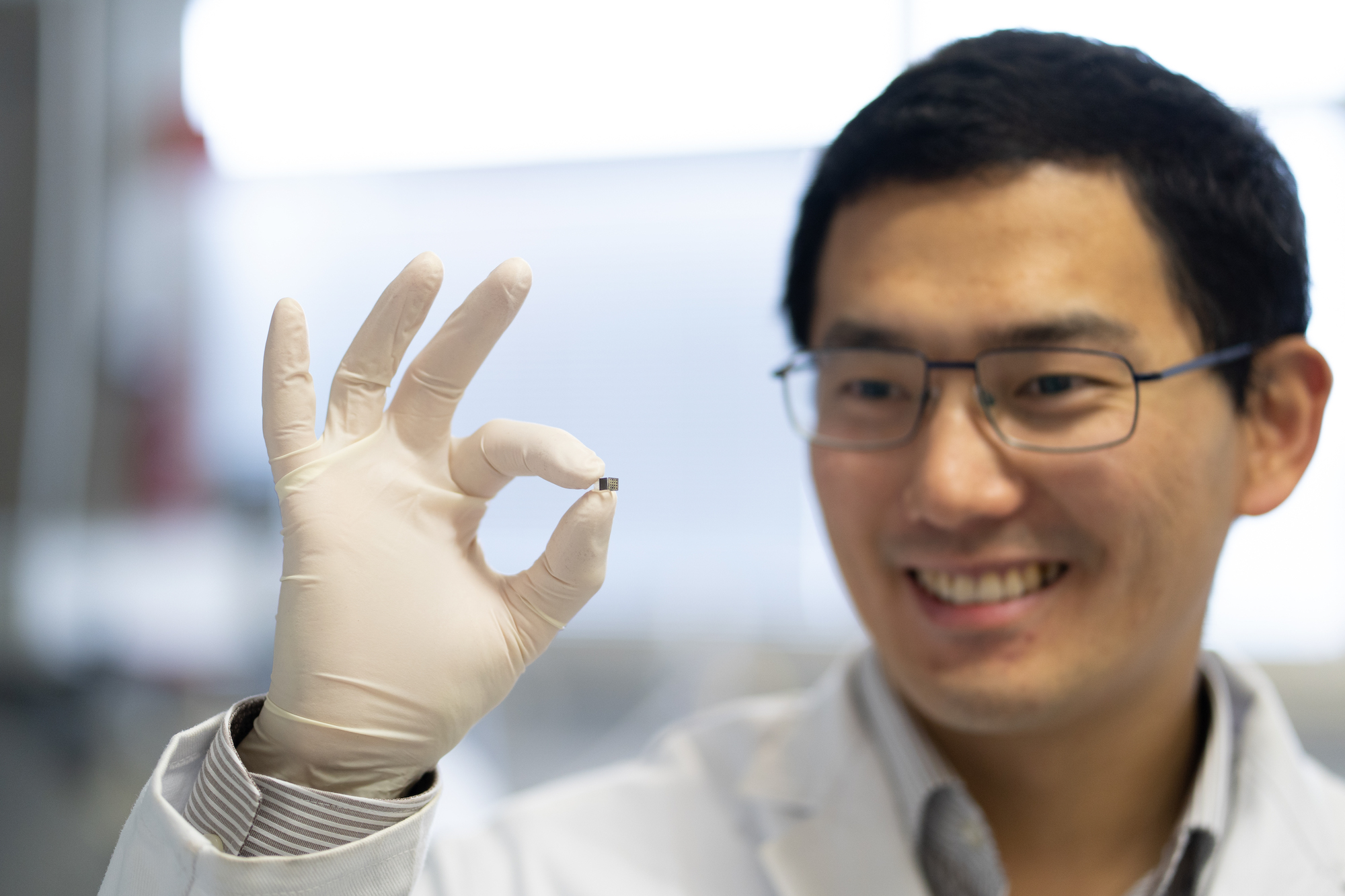
    How could drugs be used in the body in a more targeted way in the future? Biomedicine could provide an answer. Dr. Tian Qiu is researching tiny robots that travel through the human body. Tian Qiu and his team already succeeded in steering nanorobots through the dense tissue of an eyeball for minimally invasive drug delivery, which had never been achieved before.

    In the “VIBEBOT” project, Qiu and his team are taking this approach further: They are going to build the first micro-sized robot that can actively propel and wirelessly sense in deep biological tissues. For the project, Qui was inspired by nature: “We know that worms, for example, can penetrate human skin to infect humans. Why can't we build a similar-sized robotic system that can penetrate soft tissue to treat disease?” Research on this holds enormous potential for future minimally invasive medicine, “such as targeted drug delivery for tumor therapy,” Qiu said.

    Tian Qiu has been Cyber Valley research group leader for “Biomedical Microsystems” since 2019. The group is based at the Institute of Physical Chemistry at the University of Stuttgart. Previously, he studied mechanical and biomedical engineering at Tsinghua University in Beijing, which is considered China's leading technical university. He came to Europe in 2012, earning a PhD in biotechnology and bioengineering at Switzerland's Ecole Polytechnique Fédérale de Lausanne (EPFL) and conducting research at the Max Planck Institute for Intelligent Systems (MPI-IS).

    With the ERC Starting Grants, the European Research Council supports outstanding young scientists for innovative projects in basic research. The ERC evaluates the applications exclusively according to the criterion of scientific excellence. The research project “VIBEBOT” will receive funding of 1.5 million euros; the funding will run for five years. With the new grant, the University of Stuttgart is home to twelve active ERC grants, including six ERC Starting Grants (overview of scientists at the University of Stuttgart who have been awarded an ERC Grant). Two other Cyber Valley researchers were also awarded ERC Grants, an ERC Starting Grant and an ERC Consolidation Grant.

    _______________
    Further information
    From researcher to founder
    Scope of Cyber Valley research expanded to include intelligent biomedical microsystems

  • IntCDC Conference 2022

    IntCDC Conference 2022

    We will discuss current challenges and novel research approaches focusing on computational co-design, digital fabrication and cyber-physical construction, with an emphasis on sustainability and responsibility in advancing architecture, engineering and construction.

    Join us on Thursday, October 13, 2022, for multifaceted insights and lively discussions.

    The conference is presented as part of the Stuttgart Week of Advancing AEC.

  • Überlegungen zu intelligenten Systemen: eine disziplinübergreifende Definition

    Überlegungen zu intelligenten Systemen: eine disziplinübergreifende Definition

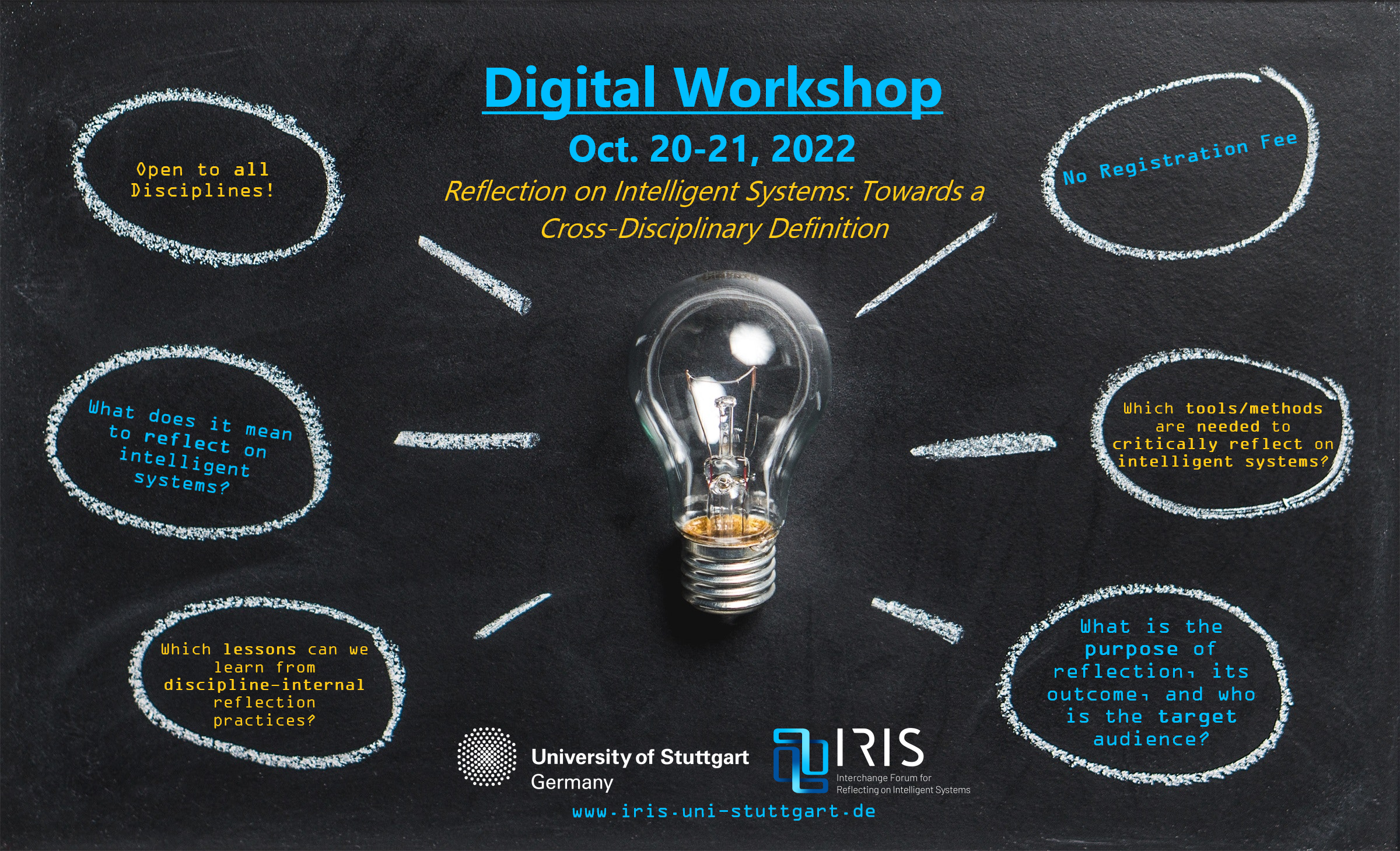
    IRIS is currently accepting submissions for this workshop!

    Submissions (2-page abstracts) should relate to one or multiple workshop themes:

    • What does it mean to reflect on intelligent systems?
    • Which tools and methods are needed to successfully engage in (critical) reflection on intelligent systems?
    • What is the purpose of this reflection, its outcome, and who is the target audience?
    • Which lessons can we learn from discipline-internal reflection practices?
    • To what extent can these lessons be “translated” into interdisciplinary collaborations, teaching, science-policy debates, and science communication to a broader public?

    We particularly encourage submissions that report on unpublished empirical or theoretical work or present relevant aspects of already published work. As this is a workshop, working papers are welcome!

    All submissions should be sent to reflection.workshop@iris.uni-stuttgart.de with a short bio by September 11, 2022. The participants will be notified of the acceptance by the end of September.

  • ETFA 2022

    ETFA 2022

    Über die ETFA

    Die ETFA 2022 ist die 27. Konferenz der IEEE Industrial Electronics Society (IES), die sich auf die neuesten Entwicklungen und neuen Technologien im Bereich der Industrieautomation konzentriert. Ziel der Konferenz ist die Verbreitung neuartiger Ideen und aufkommender Trends, Forschungsergebnisse und praktischer Errungenschaften. Die ETFA 2022 findet vom 6. bis 9. September 2022 statt. Sie bietet die Gelegenheit, sich zu vernetzen, Partnerschaften aufzubauen und Ideen auszutauschen, sowohl mit Branchenführern als auch mit einer Vielzahl erfahrener Wissenschaftler:innen, Entwickler:innen und Praktiker:innen aus verschiedenen Branchen, Universitäten und Forschungsinstituten.


    Cyber Valley auf der ETFA

    Cyber Valley, Europas größtes KI-Forschungskonsortium, wird auf der ETFA 2022 ab dem 7.September mit einem Stand vertreten sein und spannende Einblicke in die KI-Forschung sowie Innovationen und Start-ups aus dem Themenfeld der künstlichen Intelligenz. Kommen Sie gerne vorbei!


    Ort

    Die Konferenz ETFA 2022 findet an der Universität Stuttgart statt, Pfaffenwaldring 47, 70569 Stuttgart, Deutschland.


    Anmeldung

    Zur Anmeldung

  • ERC Consolidator Grant für Georg Martius

    ERC Consolidator Grant für Georg Martius

    Der Consolidator Grant (Konsolidierungs-Förderung) des ERC (European Research Council) wird an etablierte Spitzenforscherinnen und Spitzenforscher verliehen. Diese haben bereits exzellente Forschungsleistungen erbracht und blicken auf eine verheißungsvolle Zukunft in der Wissenschaft.

    Georg Martius’ Projekt „REAL-RL = Model-based Reinforcement Learning for Versatile Robots in the Real World“ wird ab 1. Januar 2023 mit einer Fördersumme von zwei Millionen Euro unterstützt. Die Förderung läuft über fünf Jahre.

  • Könnten eines Tages Krebs bekämpfen

    A team of scientists in the Physical Intelligence Department at the Max Planck Institute for Intelligent Systems have combined robotics with biology by equipping E. colibacteria with artificial components to construct biohybrid microrobots. Firstly, as can be seen in Figure 1, the team attached several nanoliposomes to each bacterium. On their outer circle, these spherical-shaped carriers enclose a material (ICG, green particles) that melts when illuminated by near infrared light. Further towards the middle, inside the aqueous core, the liposomes encapsulate water soluble chemotherapeutic drug molecules (DOX).

    The second component the researchers attached to the bacterium is magnetic nanoparticles. When exposed to a magnetic field, the iron oxide particles serve as an on-top booster to this already highly motile microorganism. In this way, it is easier to control the swimming of bacteria – an improved design toward an in vivo application. Meanwhile, the rope binding the liposomes and magnetic particles to the bacterium is a very stable and hard to break streptavidin and biotin complex, which was developed a few years prior and comes in useful when constructing biohybrid microrobots.

    Figure 1: Bacterial biohybrids carrying nanoliposomes (200 nm) and magnetic nanoparticles (100 nm). Nanoliposomes are loaded with chemotherapeutic DOX and photothermal agent ICG, and both cargoes are conjugated to E. coli bacteria (2 to 3 µm in length) via biotin-streptavidin interactions. Akolpoglu et al., Sci. Adv. 8, eabo6163 (2022).

    E.coli bacteria are fast and versatile swimmers that can navigate through material ranging from liquids to highly viscous tissues. But that is not all, they also have highly advanced sensing capabilities. Bacteria are drawn to chemical gradients such as low oxygen levels or high acidity – both prevalent near tumor tissue. Treating cancer by injecting bacteria in proximity is known as bacteria mediated tumor therapy. The microorganisms flow to where the tumor is located, grow there and in this way activate the immune system of patients. Bacteria mediated tumor therapy has been a therapeutic approach for more than a century.

    For the past few decades, scientists have looked for ways to increase the superpowers of this microorganism even further. They equipped bacteria with extra components to help fight the battle. However, adding artificial components is no easy task. Complex chemical reactions are at play, and the density rate of particles loaded onto the bacteria matters to avoid dilution. The team in Stuttgart has now raised the bar quite high. They managed to equip 86 out of 100 bacteria with both liposomes and magnetic particles.
     
    The scientists showed how they succeeded in externally steering such a high-density solution through different courses. First, through an L-shaped narrow channel with two compartments on each end, with one tumor spheroid in each. Second, an even narrower set-up resembling tiny blood vessels. They added an extra permanent magnet on one side and showed how they precisely control the drug-loaded microrobots towards tumor spheroids. And third – going one step further – the team steered the microrobots through a viscous collagen gel (resembling tumor tissue) with three levels of stiffness and porosity, ranging from soft to medium to stiff. The stiffer the collagen, the tighter the web of protein strings, the more difficult it becomes for the bacteria to find a way through the matrix (Figure 2). The team showed that once they add a magnetic field, the bacteria manage to navigate all the way to the other end of the gel as the bacteria had a higher force. Because of constant alignment, the bacteria found a way through the fibers.

    Figure 2: Schematic showing bacterial biohybrid microrobots magnetically guided through fibrous environments. Bacterial biohybrids can release their payload upon NIR irradiation. Akolpoglu et al., Sci. Adv. 8, eabo6163 (2022).

    Once the microrobots are accumulated at the desired point (the tumor spheroid), a near infrared laser generates rays with temperatures of up to 55 degrees Celsius, triggering a melting process of the liposome and a release of the enclosed drugs. A low pH level or acidic environment also causes the nanoliposomes to break open – hence the drugs are released near a tumor automatically.
     
    “Imagine we would inject such bacteria based microrobots into a cancer patient’s body. With a magnet, we could precisely steer the particles towards the tumor. Once enough microrobots surround the tumor, we point a laser at the tissue and by that trigger the drug release. Now, not only is the immune system triggered to wake up, but the additional drugs also help destroy the tumor,” says Birgül Akolpoglu, a Ph.D. student in the Physical Intelligence Department at MPI-IS. She is the first author of the publication titled “Magnetically steerable bacterial microrobots moving in 3D biological matrices for stimuli-responsive cargo delivery” co-led by former postdoctoral researcher in the Physical Intelligence Department, Dr. Yunus Alapan. It was published in Science Advances on July 15, 2022.
     
    “This on-the-spot delivery would be minimally invasive for the patient, painless, bear minimal toxicity and the drugs would develop their effect where needed and not inside the entire body,” Alapan adds.
     
    “Bacteria-based biohybrid microrobots with medical functionalities could one day battle cancer more effectively. It is a new therapeutic approach not too far away from how we treat cancer today,” says Prof. Dr. Metin Sitti, who leads the Physical Intelligence Department and is the last author of the publication. “The therapeutic effects of medical microrobots in seeking and destroying tumor cells could be substantial. Our work is a great example of basic research that aims to benefit our society.”

  • Roboter-Hund lernt in einer Stunde das Laufen

    Roboter-Hund lernt in einer Stunde das Laufen

    A newborn giraffe or foal must learn to walk on its legs as fast as possible to avoid predators. Animals are born with muscle coordination networks located in their spinal cord. However, learning the precise coordination of leg muscles and tendons takes some time. Initially, baby animals rely heavily on hard-wired spinal cord reflexes. While somewhat more basic, motor control reflexes help the animal to avoid falling and hurting themselves during their first walking attempts. The following, more advanced and precise muscle control must be practiced, until eventually the nervous system is well adapted to the young animal’s leg muscles and tendons. No more uncontrolled stumbling – the young animal can now keep up with the adults.

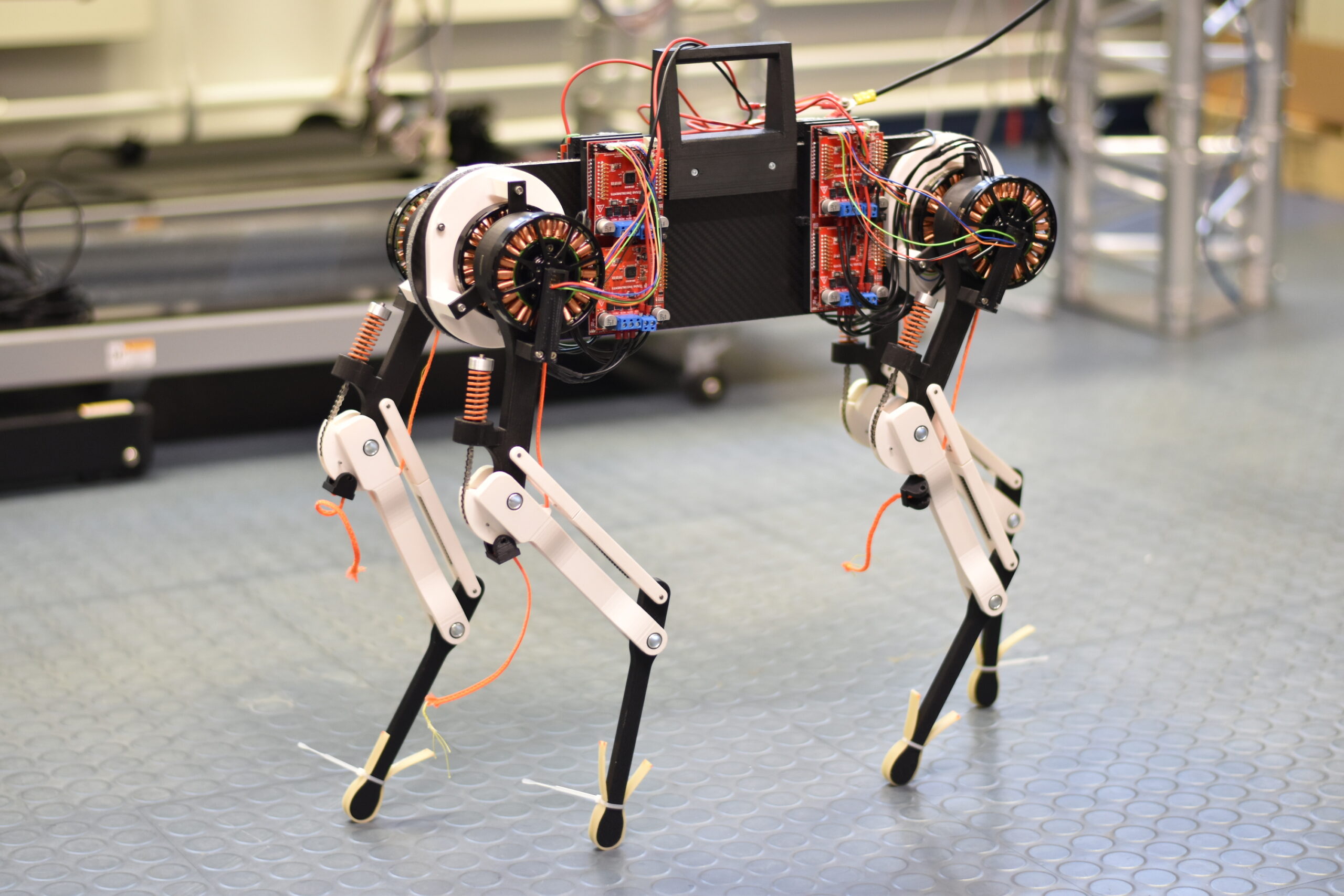
    Researchers at the Max Planck Institute for Intelligent Systems (MPI-IS) in Stuttgart conducted a research study to find out how animals learn to walk and learn from stumbling. They built a four-legged, dog-sized robot, that helped them figure out the details.

    “As engineers and roboticists, we sought the answer by building a robot that features reflexes just like an animal and learns from mistakes,” says Felix Ruppert, a former doctoral student in the Dynamic Locomotion research group at MPI-IS. “If an animal stumbles, is that a mistake? Not if it happens once. But if it stumbles frequently, it gives us a measure of how well the robot walks.”

    Felix Ruppert is first author of “Learning Plastic Matching of Robot Dynamics in Closed-loop Central Pattern Generators”, which was published July 18, 2022 in the prestigious journal Nature Machine Intelligence.

    Learning algorithm optimizes virtual spinal cord

    After learning to walk in just one hour, Ruppert’s robot makes good use of its complex leg mechanics. A Bayesian optimization algorithm guides the learning: the measured foot sensor information is matched with target data from the modeled virtual spinal cord running as a program in the robot’s computer. The robot learns to walk by continuously comparing sent and expected sensor information, running reflex loops, and adapting its motor control patterns.

    The learning algorithm adapts control parameters of a Central Pattern Generator (CPG). In humans and animals, these central pattern generators are networks of neurons in the spinal cord that produce periodic muscle contractions without input from the brain. Central pattern generator networks aid the generation of rhythmic tasks such as walking, blinking or digestion. Furthermore, reflexes are involuntary motor control actions triggered by hard-coded neural pathways that connect sensors in the leg with the spinal cord.

    As long as the young animal walks over a perfectly flat surface, CPGs can be sufficient to control the movement signals from the spinal cord. A small bump on the ground, however, changes the walk. Reflexes kick in and adjust the movement patterns to keep the animal from falling. These momentary changes in the movement signals are reversible, or ‘elastic’, and the movement patterns return to their original configuration after the disturbance. But if the animal does not stop stumbling over many cycles of movement – despite active reflexes – then the movement patterns must be relearned and made ‘plastic’, i.e., irreversible. In the newborn animal, CPGs are initially not yet adjusted well enough and the animal stumbles around, both on even or uneven terrain. But the animal rapidly learns how its CPGs and reflexes control leg muscles and tendons.

    The same holds true for the Labrador-sized robot-dog named “Morti”. Even more, the robot optimizes its movement patterns faster than an animal, in about one hour. Morti’s CPG is simulated on a small and lightweight computer that controls the motion of the robot’s legs. This virtual spinal cord is placed on the quadruped robot’s back where the head would be. During the hour it takes for the robot to walk smoothly, sensor data from the robot’s feet are continuously compared with the expected touch-down predicted by the robot’s CPG. If the robot stumbles, the learning algorithm changes how far the legs swing back and forth, how fast the legs swing, and how long a leg is on the ground. The adjusted motion also affects how well the robot can utilize its compliant leg mechanics. During the learning process, the CPG sends adapted motor signals so that the robot henceforth stumbles less and optimizes its walking. In this framework, the virtual spinal cord has no explicit knowledge about the robot’s leg design, its motors and springs. Knowing nothing about the physics of the machine, it lacks a robot ‘model’.

    “Our robot is practically ‘born’ knowing nothing about its leg anatomy or how they work,” Ruppert explains. “The CPG resembles a built-in automatic walking intelligence that nature provides and that we have transferred to the robot. The computer produces signals that control the legs’ motors, and the robot initially walks and stumbles. Data flows back from the sensors to the virtual spinal cord where sensor and CPG data are compared. If the sensor data does not match the expected data, the learning algorithm changes the walking behavior until the robot walks well, and without stumbling. Changing the CPG output while keeping reflexes active and monitoring the robot stumbling is a core part of the learning process.”

    Energy efficient robot dog control

    Morti’s computer draws only five watts of power in the process of walking. Industrial quadruped robots from prominent manufacturers, which have learned to run with the help of complex controllers, are much more power hungry. Their controllers are coded with the knowledge of the robot’s exact mass and body geometry – using a model of the robot. They typically draw several tens, up to several hundred watts of power. Both robot types run dynamically and efficiently, but the computational energy consumption is far lower in the Stuttgart model. It also provides important insights into animal anatomy.

    “We can’t easily research the spinal cord of a living animal. But we can model one in the robot,” says Alexander Badri-Spröwitz, who co-authored the publication with Ruppert and heads the Dynamic Locomotion Research Group. “We know that these CPGs exist in many animals. We know that reflexes are embedded; but how can we combine both so that animals learn movements with reflexes and CPGs? This is fundamental research at the intersection between robotics and biology. The robotic model gives us answers to questions that biology alone can't answer.”