User Group: Wissenschaftler:innen

  • Starker Auftritt von Cyber Valley bei der ICML 2022

    Starker Auftritt von Cyber Valley bei der ICML 2022

    Like last year, Cyber Valley partner institutions successfully submitted 23 scientific articles to the ICML. The conference, held this year in Baltimore, USA, began on July 17 and continues through July 23.

    “Our enduring presence at leading global conferences such as ICML is not only a testament to the quality of research at Cyber Valley partner institutions, but also that we have established ourselves broadly at the international level,” says Philipp Hennig, professor of machine learning methods at the University of Tübingen and deputy speaker of the Cyber Valley Executive Board.

    Since Cyber Valley was founded at the end of 2016, the dynamic AI ecosystem in the Stuttgart/Tübingen region has consistently gained momentum in the fields of machine learning, robotics, and computer vision. In addition to attracting world-class senior scientists, Cyber Valley’s graduate programs have quickly gained a solid international reputation among young researchers in the field of modern AI.

    A full list of papers and authors is available below.

  • Aufnahme ins Elisabeth-Schiemann-Kolleg

    Aufnahme ins Elisabeth-Schiemann-Kolleg

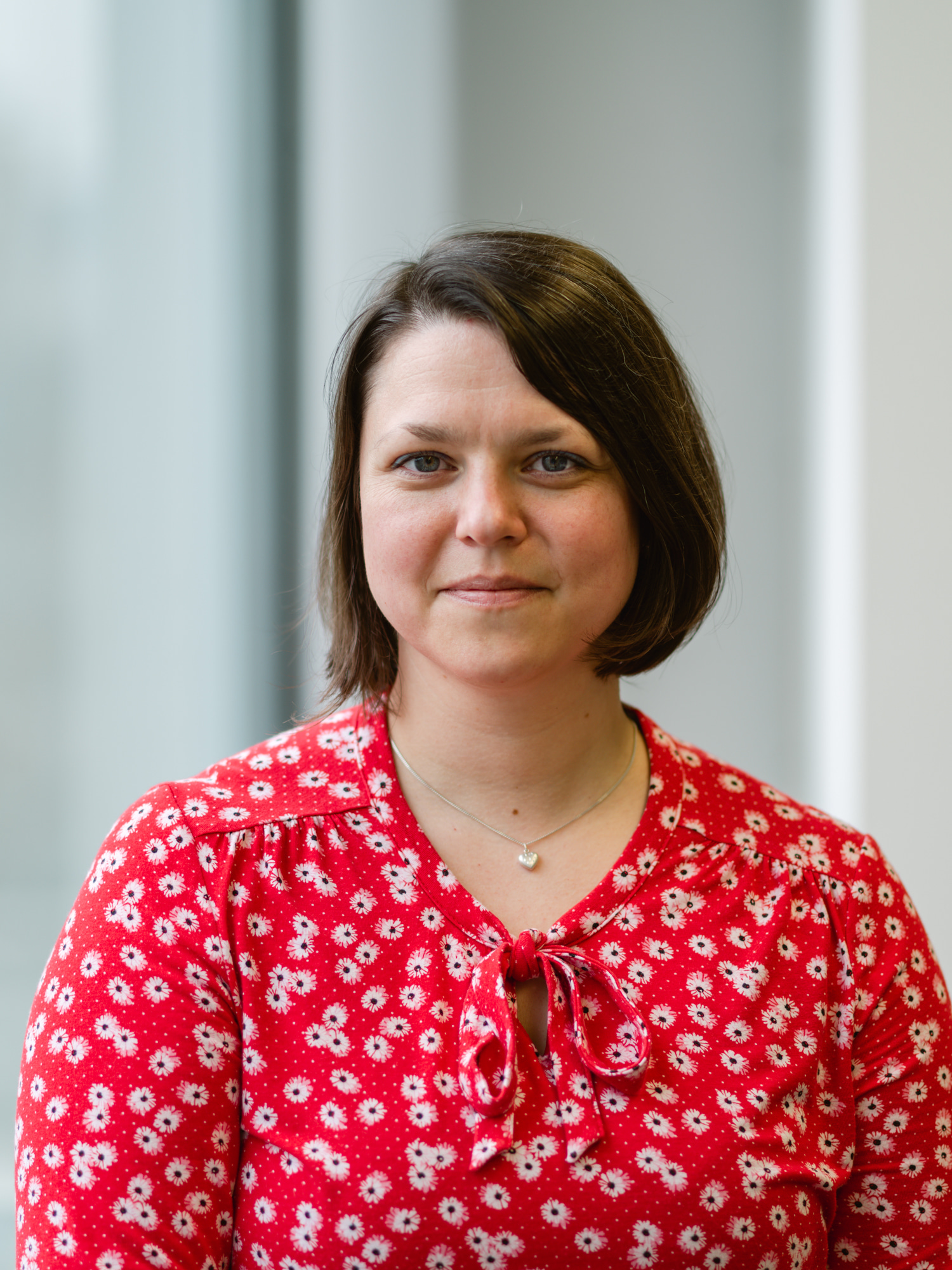
    “Being accepted into the program allows me to sharpen my scientific profile in a more technically oriented direction and to expand my professional network in disciplinary terms,” says Wirzberger. She had already taken this path in 2018 as a post-doctoral researcher by moving to the Max Planck Institute for Intelligent Systems in Tübingen. There, the cognitive psychologist led the development of AI-supported software for training attentional control. In 2020, she moved to the University of Stuttgart, where Wirzberger heads the Department of Teaching and Learning with Intelligent Systems as well as serving as spokesperson for the Interchange Forum for Reflecting on Intelligent Systems (IRIS) and is in charge of the “Platform of Reflection” of the Data-Integrated Simulation Science (SimTech) Cluster of Excellence.

    Networking the disciplines

    Interdisciplinary networking has always played an important role for Wirzberger. Already in her master’s studies at the Technical University of Berlin, she decided against a classic master’s program in psychology with “Human Factors”. “In my bachelor’s thesis, I realized how much I enjoy programming and how exciting issues at the interface between humans and technology are. That’s why I wanted to develop further in this direction,” says Wirzberger. As a doctoral student in the DFG Research Training Group “CrossWorlds” at Chemnitz University of Technology, she worked closely with colleagues from the faculty of Computer Science.

    Mentoring as an important building block

    When it comes to networking, mentoring also plays an important role for Wirzberger. Particularly in cross-disciplinary mentoring programs, she sees the opportunity to benefit from the exchange with established colleagues and thereby also develop further in her role as a leader.

    For Wirzberger, admission to the Elisabeth Schiemann Kolleg is therefore an important step in strategically advancing both her own professionalization and her vision for the development of adaptive educational technologies.

    Contact

    Jun.-Prof. Dr. Maria Wirzberger
    Interchange Forum for Reflecting on Intelligent Systems
    maria.wirzberger@iris.uni-stuttgart.de
    https://www.iris.uni-stuttgart.de/

  • ERC Starting Grant für Philipp Berens

    ERC Starting Grant für Philipp Berens

    Vision is one of the most important senses for many animals as well as for humans. However, the retina of the eye, which is also called the retina, has not been fully explored to date. The amacrine cells in particular still puzzle researchers. These special nerve cells are cross-connected with the other nerve cell layers of the retina and form the main class of inhibitory cells. More than 60 types of amacrine cells are now known from the mouse retina – they differ, for example, in their appearance, function and circuitry. They are particularly challenging for modeling because their activity is difficult to measure and their function can only be inferred from their interconnection in the network.
     
    To better understand their role, Philipp Berens and his team are developing a new type of model in their ERC project “Next generation mechanistic models of retinal interneurons” (NextMechMod). Models have always played an important role in the history of research on information processing in the nervous system. Alan Lloyd Hodgkin and Andrew Fielding Huxley received the Nobel Prize in Medicine in 1963 for their biophysical model of ionic currents during excitation and inhibition at the nerve cell membrane, presented in 1952. This model, while very detailed, is difficult to fit to measured data. This is easier for statistical models, but these lack the relationship to biological reality.
     
    To capitalize on their respective strengths, Berens aims to develop a new generation of hybrid mechanistic model that combines the different model levels. To do this, he is taking advantage of the latest advances in machine learning and “computational neuroscience”. His team is working closely with collaborators to make the models realistic with data obtained from imaging techniques and with methods from genetics. In doing so, he hopes to develop a toolbox to decipher the role of amacrine cells during the natural processing of visual information. A better understanding of the functions of the healthy eye can form the basis for new therapies for eye diseases.
     
    Philipp Berens studied bioinformatics and philosophy at the University of Tübingen, where he also received his PhD in 2013. After spending time as a postdoctoral researcher at the Bernstein Center for Computational Neuroscience, he joined the Tübingen Institute for Ophthalmic Research as a research group leader in 2016. There, he was appointed in 2018 to a Heisenberg Professorship for “Data Science for Vision Research” funded by the German Research Foundation. Together with Professor Ulrike von Luxburg, Philipp Berens heads the Cluster of Excellence “Machine Learning: New Perspectives for Science”. He is a member of the Tübingen AI Center.

  • Knapp 20 Millionen für Tübingen AI Center

    Knapp 20 Millionen für Tübingen AI Center

    “I am very pleased that with the financial support of the federal government we can offer highly attractive working conditions in order to be at the forefront of the competition for the best AI specialists in the world. The permanent funding will make it possible to pursue a long-term research strategy, train excellent scientists in the field of artificial intelligence and bring AI technology ‘made in The Länd’ to our companies. To this end, Cyber Valley now receives another important building block,” said Science Minister Theresia Bauer in Stuttgart on Friday (July 1).

    In 2018, the German government laid the foundation for the establishment and expansion of AI lighthouses with international appeal with its AI strategy. Together with the German Research Center for Artificial Intelligence (DFKI), the five new AI centers in Baden-Württemberg, Bavaria, Berlin, North Rhine-Westphalia and Saxony form an integral part of Germany’s AI research landscape and pursue the common goal of establishing a European and internationally competitive research network that will sustainably strengthen Germany as a leading location for research, teaching and technology transfer.

    The Tübingen AI Competence Center is integrated into the Cyber Valley ecosystem as part of the University of Tübingen and the Max Planck Institute for Intelligent Systems. It has its origins in the machine learning funding program initiated by the BMBF in 2018.

    Under the motto “Machine Learning in the World,” Tübingen scientists pursue a broad range of research questions, from fundamental new methods for machine learning and causal inference to the integration of intelligent systems into the broader socio-technical environment. In doing so, the Tübingen AI Center pays close attention to societal impact, on the one hand through research, and on the other hand through target group specific offerings. In addition, the center is committed to providing targeted support and attractive positions for young scientists at all stages of their scientific careers.

  • Andreas Geiger gewinnt Longuet-Higgins-Preis

    “It is fantastic to see how KITTI has been driving research in computer vision over the last ten years as recognized by this award”, said Geiger. “When we started out, we were not sure if all the hard work would pay off eventually. It was a risky project that has continuously evolved with new benchmarks and data. It is still actively maintained by myself and many international collaborators that contributed time and dedication.”

    This is the second high-profile award for Geiger and his team – in October 2021, the researchers were honored with the Everingham Prize for KITTI. It’s also the second time in three years, that the Longuet-Higgins prize is awarded to a scientist from the Cyber Valley ecosystem: In 2020, Michael J. Black, Director at the Max Planck Institute for Intelligent Systems, won it along with his former students Deqing Sun and Stefan Roth for their paper “Secrets of optical flow estimation and their principles”.

    KITTI is among the world’s most popular datasets used in the development of self-driving cars and related machine vision applications. The dataset established new tasks and fostered new research in the area of perception for self-driving vehicles, in particular in stereo, flow, scene flow, monodepth, odometry, detection, tracking and semantic segmentation. The KITTI benchmark has over 24,500 registered users, has received more than 28,500 submissions since its inception and currently lists 1905 public entries in its various leaderboards. The KITTI benchmarks has led to various follow-up datasets, benchmarks and workshops in the computer vision community.

    The original paper “Are we ready for Autonomous Driving? The KITTI Vision Benchmark Suite” by Geiger, Lenz and Urtasun was published at CVPR in 2012. Now, ten years later, it is recognized by this award due to its significant impact on computer vision research in the past decade. The prize is named after theoretical chemist and cognitive scientist H. Christopher Longuet-Higgins. The award is presented by IEEE Pattern Analysis and Machine Intelligence (PAMI) Technical Committee at each year’s CVPR. Winners are decided by a committee appointed by the TCPAMI Awards Committee.

  • Cyber Valley sticht bei führender Konferenz hervor

    Cyber Valley sticht bei führender Konferenz hervor

    “Our constant success at major conferences like CVPR shows how well-established the Cyber Valley research community is on the international level”, says Michael J. Black, Cyber Valley spokesperson and Director at the MPI-IS, where he heads the Perceiving Systems Department. CVPR 2022 will take place from June 19 to June 24 in New Orleans, Louisiana, USA, with both in-person and virtual attendance options.

    Since Cyber Valley was founded at the end of 2016, the dynamic AI ecosystem in the Stuttgart/Tübingen region has consistently gained momentum in the fields of machine learning, robotics, and computer vision. In addition to attracting world-class senior scientists, Cyber Valley’s graduate programs have quickly gained a solid international reputation among young researchers in the field of modern AI.

    A full list of papers and authors is available below.

  • Ethics in tech entrepreneurship

    Ethics in tech entrepreneurship

    Beim Aufbau eines Start-ups stehen Gründer:innen vor vielen Herausforderungen, wie dem Aufbau eines Teams, der Entwicklung eines Produkts und der Gewinnung von Kunden. Daher ist es nicht immer das vorrangige Ziel von Gründer:innen, sich ausführlich mit ethischen Fragen zu befassen. In der nächsten Ausgabe unserer Cyber Valley Entrepreneurship Series werden unsere Referent:innen erläutern, warum es sehr nützlich sein kann, beim Aufbau eines Unternehmens auch ethische Aspekte zu berücksichtigen. Unsere Expert:innen geben Einblicke in verschiedene Perspektiven der Ethik für KI-Start-ups und zeigen mögliche Vorteile auf.

    Wissenschaftler:innen, Gründer:innen, Studierende und alle, die sich für das Thema „Ethics in tech entrepreneurship“ interessieren, sind herzlich eingeladen, am Donnerstag, den 23. Juni, 14:00–15:30 Uhr MESZ dabei zu sein.


    Referent:innen

    Tillmann Lang
    Gründer & CEO, Inyova Impact Investing GmbH

    Michael Raschke
    CEO Blickshift GmbH

    Ulrich Hemel
    Direktor Weltethos-Institut in Tübingen

    Zhijing Jin
    MPI-IS, Abteilung Empirische Inferenz

    Rebecca C. Reisch
    Geschäftsführerin Cyber Valley


    Registrierung

    Bitte hier registrieren. Das Event findet via Zoom und in englischer Sprache statt.


    Kontakt

    Oliwia Gust, Cyber Valley Event Managerin
    Telefon: +49 7071 601 1554
    Mobil: +49 151 4075 6302 
    E-Mail: oliwia.gust@cyber-valley.de

  • 3,4 Millionen Euro für IRIS3D

    “I am pleased that we are taking another important step in the right direction with the IRIS3D project at the University of Stuttgart – towards value- and human-centered AI, AI ‘made in THE LÄND’. We want to understand what influence intelligent systems have on our society and how we can use them. One goal is to enter into an intensive dialogue with society beyond the boundaries of universities. Only in this way can artificial intelligence be used as a key technology with the greatest possible added value for everyone,” said Science Minister Theresia Bauer in Stuttgart on Thursday (June 9).

    The area of diversity is about ensuring that stereotypes and prejudices are not transferred to intelligent systems. “One way to achieve this is to enrich the technology with data that is as diverse as possible and thereby also keep in mind special characteristics and support needs of the respective target groups, for example mental or physical limitations,” said tenure-track professor Maria Wirzberger, co-applicant of IRIS3D and spokesperson of the interdisciplinary research forum IRIS.

    Due to demographic change, society is changing and is also becoming increasingly culturally heterogeneous. This brings with it specific requirements for the design of intelligent systems in order to enable intuitive use, for example, also for older users. The area of demography deals with these aspects.

    The third topic area of democracy is particularly significant and deals with how intelligent systems can generally influence our understanding of democracy and thus also public opinion. “So far, we have mainly noted how digitalization is attacking our democracy. With IRIS3D, however, we want to develop procedures for using digitization to strengthen our democracy,” said Professor Steffen Staab, who developed the concept of IRIS3D and is co-spokesperson of IRIS.

    The IRIS3D research project creates structures to bring science, business, educational institutions and society closer together. In the process, ideas are to be developed on how intelligent systems can enrich our future. “The goal is to reflect and analyze together, but also to research and develop. In particular, the focus will be on how AI should look and be used in the future – and how not,” said Science Minister Bauer.

    Top young scientists are to be recruited for the Stuttgart location for the three topic areas. To this end, three junior research groups will be set up at the University of Stuttgart for five years each, which will be led by up-and-coming international researchers and will conduct independent and interdisciplinary research.

    The IRIS3D project is incorporated into the Cyber Valley ecosystem as part of IRIS, the “Interchange Forum for Reflecting on Intelligent Systems”.

    More information about IRIS and its research can be found here.