News Category: Press Release

  • International team of scientists develops machine learning model that could help inform COVID-19 containment measures

    International team of scientists develops machine learning model that could help inform COVID-19 containment measures

    Tübingen – Scientists from the Max Planck Institutes for Intelligent Systems and Software Systems, ETH Zurich, the École Polytechnique Fédérale de Lausanne, and the global public health non-profit Zerobase Foundation, have developed a new mathematical model that could help inform COVID-19 containment measures by drawing on data from contact tracing technologies. The authors Lars Lorch, William Trouleau, Stratis Tsirtsis, Aron Szanto, Bernhard Schölkopf, and Manuel Gomez-Rodriguez presented their findings in a paper entitled “A Spatiotemporal Epidemic Model to Quantify the Effects of Contact Tracing, Testing, and Containment,” which was released last week. The scientists discussed the research project at last Wednesday's virtual “ELLIS against COVID-19” workshop.

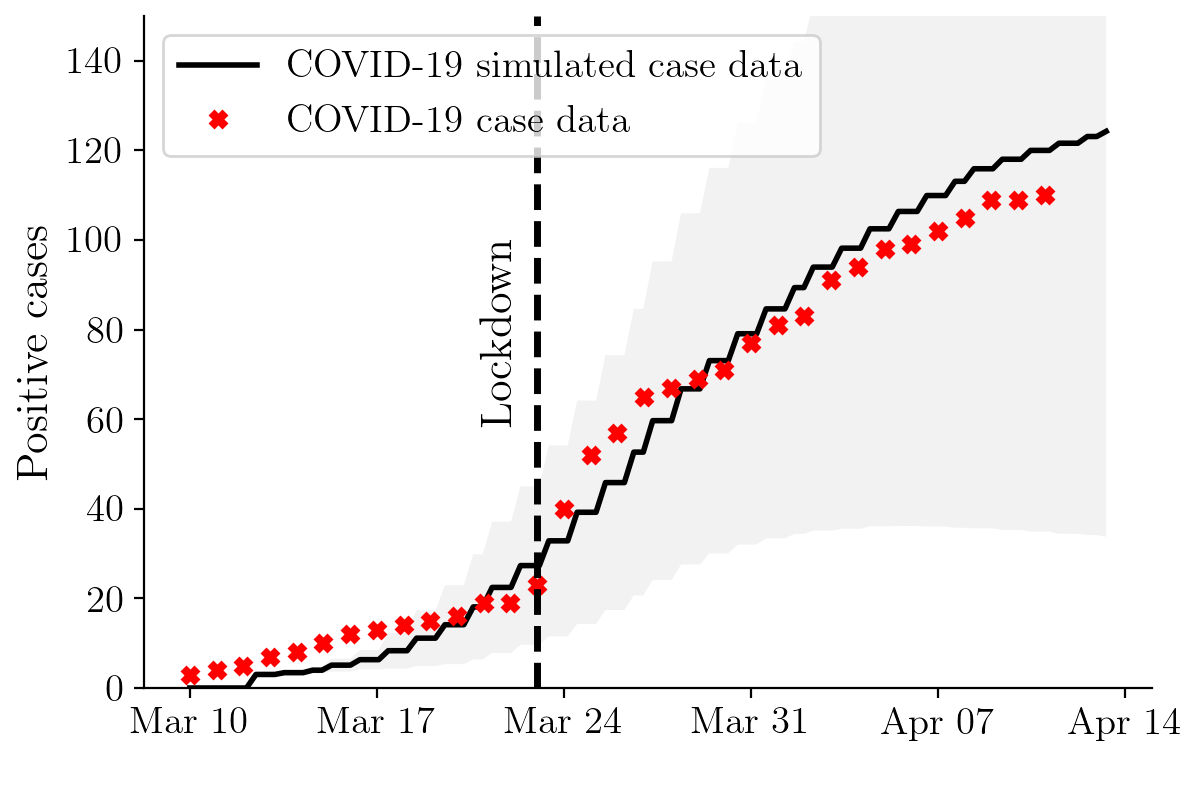
    "By using data from any of the contact tracing technologies currently available, the model we’ve developed can quantify or predict the potential effect – in terms of containment – that contact tracing, social distancing measures, or business restrictions will have on a specific town or city", says Manuel Gomez Rodriguez, faculty member at the Max Planck Institute for Software Systems in Kaiserslautern, Germany. The team recently put the new model to the test with a simulation on the town of Tübingen in southwestern Germany. Drawing on COVID-19 and mobility pattern data collected between March 10 and April 12, the model predicted that coronavirus infections would have skyrocketed to 29,000 (about a third of the local population) if social distancing measures had not been put in place. “If the model considers the restrictions that were implemented, it closely predicts the number of infections that actually occurred,” says Gomez-Rodriguez.

    “What sets this research apart from other approaches is that it can specifically quantify the effects of tracing, testing, and containment strategies on individual people,” says Bernhard Schölkopf, Director at the Max Planck Institute for Intelligent Systems in Tübingen. “As policymakers around the world discuss strategies to gradually transition out of lock-down and reopen their economies, this model could help pave a safe way forward.” The paper also demonstrates that contact tracing technology such as PEPP-PT or Zerobase can also help flatten the curve. The authors conclude that an anonymous contact tracing system can enhance the effectiveness of conventional public health measures, thus helping contain and ultimately stop the spread of COVID-19.

  • CoroNotes: New app supports medical research on COVID-19

    CoroNotes: New app supports medical research on COVID-19

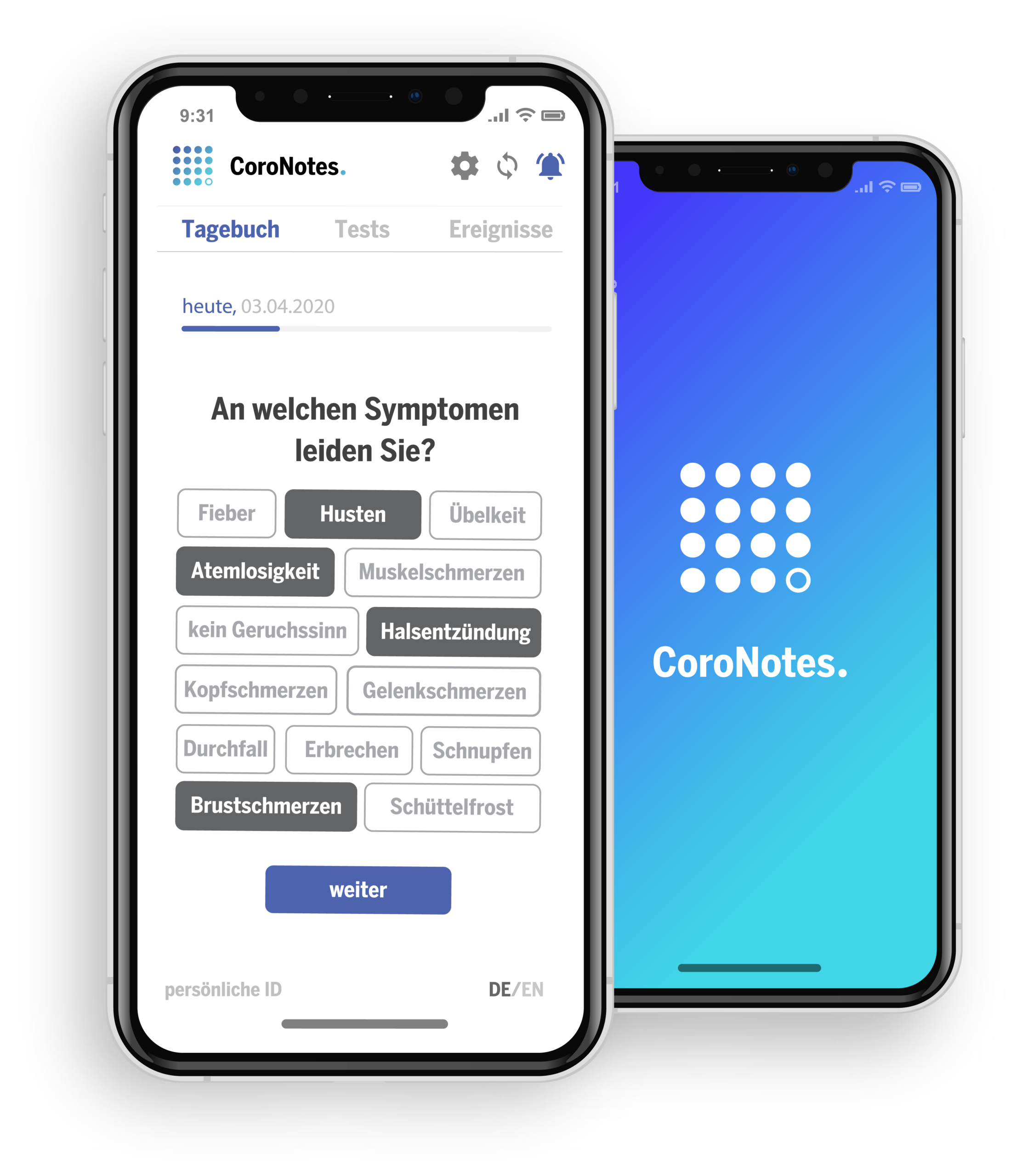
    Scientists at the Tübingen AI Center, a joint facility of the University of Tübingen and the Max Planck Institute for Intelligent Systems, have developed CoroNotes in cooperation with physicians at the University Hospital Tübingen. CoroNotes is an app that collects urgently needed data on COVID-19 quickly and efficiently. The aim of the project is to support medical and scientific studies on the novel coronavirus and thus gain important insights into the spread and progression of COVID-19. The free app is now available in GooglePlay and will soon also be released in the Apple App Store.

    "With CoroNotes, we have created a platform that offers users the opportunity to anonymously participate in research efforts every day by answering a few questions about their health status and possible symptoms. Scientists can then use this data to draw conclusions about the course of diseases that could be related to COVID-19. In this way, all users can contribute to scientific research on this virus," said Bernhard Schölkopf, Director at the Max Planck Institute for Intelligent Systems and Co-Director of the Tübingen AI Center. “We hope that the data collected will help us answer important questions, such as which treatments are most effective, how diagnoses can be made that are as reliable as possible, or how immunity to the virus can be demonstrated.”

    A simple questionnaire, which app users fill out daily on their smartphone or tablet in less than a minute, provides important information about the COVID-19 pandemic. Users answer questions on whether they feel well, or whether they are experiencing symptoms like headaches, aching limbs, or a fever, for instance. Every day counts, even if a person feels healthy. The researchers hope to use the data to better identify early indicators of serious disease progression, or to target suitable people for medical studies, which promise to provide a particularly large amount of information on how to best deal with COVID-19. The data can also help identify epicenters of the pandemic at an earlier stage.

    In the future, the platform will also be available to other researchers and physicians in order to test hypotheses in studies, for example, on the influence of certain drugs or the connection with pre-existing conditions. For this purpose, additional information can be requested if necessary and merged with the previously recorded health history. This interaction makes it possible to find answers to certain questions very quickly.

    "The COVID 19 pandemic is developing very dynamically. For science to develop solutions as quickly as possible, the availability of data is crucial," says Matthias Bethge, Professor of Computational Neuroscience and Machine Learning at the University of Tübingen and Co-Director of the Tübingen AI Center. Bethge specializes in the recognition of patterns and correlations from large amounts of data. "Each individual contribution counts. That’s why we hope that many people will download and use CoroNotes," said Bethge.

    "It is particularly important to us that app users do not disclose any data they don’t want to disclose,” Bethge emphasized. CoroNotes meets the strict requirements of the German Data Protection Act (DSGVO). The app only collects data from users who actively decide to share certain information – data is not collected automatically. CoroNotes is not a tracking or tracing app, and does not record movement profiles or contacts with other people. In addition, users are given a randomly selected pseudonym when they register and are not required to provide their telephone number or email address. They thus remain anonymous and the app only collects the health data the users themselves have provided. Users can download or subsequently delete their own data at any time.

    The scientists share this anonymous data with public health organizations, academic research institutions, or non-profit organizations based in Europe – again under the strict data protection guidelines of the DSGVO. The data may only be used for research and analysis projects directly related to COVID-19.

    Further information about CoroNotes can be found at: https://coronotes.de

    Find answers to frequently asked questions about the app here: https://coronotes.de/de/faq.html

    Researchers at the Tübingen AI Center are also involved in the European ELLIS (European Laboratory for Learning and Intelligent Systems) network in the fight against COVID-19: https://ellis.eu/covid-19

  • Bundeswettbewerb Künstliche Intelligenz startet in die nächste Runde

    Bundeswettbewerb Künstliche Intelligenz startet in die nächste Runde

    Am 30. März geht der Bundeswettbewerb Künstliche Intelligenz (BWKI) in die nächste Runde: Schülerinnen und Schüler können ‒ allein oder im Team ‒ Projektideen für Algorithmen einreichen und bis Oktober 2020 an ihren kreativen Lösungen für die Herausforderungen unserer Zukunft arbeiten. Neben vielen attraktiven Preisen gibt es einen Besuch bei der Konferenz AI Con zu gewinnen, ermöglicht durch die Firma Bosch.

    Im BWKI entwickeln Schülerinnen und Schüler Algorithmen mit ökologischem, medizinischem, technischem oder gesellschaftlichem Anwendungspotential. Nach einer hohen Resonanz mit mehr als 2500 Teilnehmenden im Vorjahr, wird der Wettbewerb in diesem Jahr zum zweiten Mal durchgeführt. Die Veranstalter sind das Tübingen AI Center der Universität Tübingen und das Max-Planck-Institut für Intelligente Systeme in Kooperation mit der Cyber Valley Initiative.

    Der BWKI bietet allen Interessierten ab April die Möglichkeit, über social media Kanäle (facebook, instagram und twitter) eine sog. Programmieraufgabe der Woche zu lösen.

    Erstmals gibt es zudem die Möglichkeit, einen umfangreichen KI-Kurs online zu besuchen – ein Kurs, der viele wichtige Werkzeuge der Künstlichen Intelligenz vermittelt und gleichzeitig eine interessante Abwechslung für Schülerinnen und Schüler ist, die zuhause bleiben müssen und erst mal nicht wieder in die Schule dürfen. In dem KI-Kurs werden die Grundlagen Künstlicher Intelligenz durch Programmier-Tutorials vermittelt und eine Auseinandersetzung mit ethischen Grundfragen angeboten. Abschließend können Teilnehmende sich an einem der Finalisten- Projekte des Vorjahres ausprobieren. Der Kurs eignet sich besonders für Schulen und bietet die Möglichkeit, zukunftsweisende Methoden in den Schulalltag einzubinden. Die Schule mit den meisten und aktivsten Teilnehmenden am KI-Kurs wird im November zur >KI-Schule des Jahres ernannt und erhält Bionik-Bildungsbaukästen (bionics4education), gestiftet von der Firma Festo.

    Im November werden die Finalisten zur Preisverleihung an das Max- Planck-Institut für Intelligente Systeme eingeladen. Die nominierten Projekte werden dort einer hochrangigen Jury mit Vertretern aus Wissenschaft, Wirtschaft und Medien vorgestellt. Zu den diesjährigen Jurymitgliedern gehört unter anderem der Wissenschaftsjournalist Ranga Yogeshwar und international bekannte KI-Forscher (https://bw-ki.de/jury). Die Veranstaltung wird wieder durch Fernsehmoderator und Webvideoproduzent Philip Häusser moderiert.

    Der Wettbewerb steht unter der Schirmherrschaft der baden-württembergischen Wissenschaftsministerin Theresia Bauer. Die Carl-Zeiss-Stiftung ist Hauptförderer des Wettbewerbs. Weitere Unterstützer sind die Unternehmen Bosch, Amazon, Festo und NVIDIA.

    Informationen und Anmeldung unter https://bw-ki.de und https://ki-kurs.org

  • The Cyber Valley Public Advisory Board elects Deputy Spokesperson

    The Cyber Valley Public Advisory Board elects Deputy Spokesperson

    "The Tübingen PAB shows how valuable constructive dialogue between the various stakeholders – research, industry, and civil society – can be. It is particularly gratifying that the ethical sensitivity and ethical language skills of the researchers have already developed enormously in such a short period of time," said Professor Hemel. "The establishment of a Public Advisory Board for Cyber Valley has pooled voices from different social, economic, scientific and political areas. This in itself can be considered a form of social innovation, especially when it comes to the ethical and social consequences in the field of machine learning."

  • Neue Stiftungsprofessur „Entrepreneurship in Technologie und Digitalisierung“

    Neue Stiftungsprofessur „Entrepreneurship in Technologie und Digitalisierung“

    „Mit Alexander Brem haben wir einen ausgewiesenen Experten für Entrepreneurship in Forschung und Lehre an unserer Universität gewinnen können“, sagte Prof. Wolfram Ressel, Rektor der Universität Stuttgart. „Wir freuen uns auf seine aktive Mitgestaltung in strategischen Zukunftsprojekten der Universität Stuttgart und des Landes Baden-Württemberg wie dem Cyber Valley Baden-Württemberg und dem Forschungscampus ARENA2036 sowie mit der dort angesiedelten Startup-Innovationsplattform STARTUP AUTOBAHN. Die Professur wird zudem in fakultätsübergreifender Zusammenarbeit und enger Verknüpfung von Theorie und Praxis einen wesentlichen Beitrag für das geplante, regional verankerte und international ausgerichtete, Entrepreneurship Center der Universität Stuttgart leisten.“

    „Die Universität Stuttgart mit ihrer strategischen Vernetzung in Wissenschaft, Wirtschaft und Gesellschaft in einer der bedeutendsten Hightech-Regionen Europas bietet herausragende Möglichkeiten, den Bereich Entrepreneurship in Forschung, Lehre und Transfer vital auszugestalten. Ich freue mich sehr darüber, bei diesen vielfältigen und zukunftweisenden Kooperationsmöglichkeiten an so prominenter Stelle mitwirken und den Stuttgarter Weg der konsequenten Interdisziplinarität mit ausgestalten zu können“, betonte der Diplom-Kaufmann Brem zu seinem Dienstantritt an der Universität Stuttgart. Hierzu wird er mit seinem Forschungsschwerpunkt technologiebasierter Innovationen und Entrepreneurship beitragen, wobei die Aspekte des digitalen Wandels besondere Berücksichtigung finden sollen.

     Die Stiftungsprofessur ist in der Fakultät 10 Wirtschafts- und Sozialwissenschaften der Universität Stuttgart mit einem neuen Institut angesiedelt und wird vom Daimler-Fonds im Stifterverband für die Deutsche Wissenschaft unterstützt.

    Über Prof. Alexander Brem

    Nach dem Studium der Betriebswirtschaftslehre mit dem Schwerpunkt Unternehmensgründung und Entrepreneurship arbeitete Alexander Brem als wissenschaftlicher Mitarbeiter am Lehrstuhl für Industrielles Management an der Friedrich-Alexander-Universität Erlangen-Nürnberg (FAU). Parallel dazu gründete er zusammen mit drei Kommilitonen die mit einem Gründerpreis ausgezeichnete VEND consulting GmbH. Nach Abschluss seiner Promotion im Herbst 2007 war Brem als Geschäftsführer und Berater tätig und betreute unter anderem die Ausgründung der Agrolytix GmbH. Mit diesem Unternehmen war Professor Brem für den Hochschulgründerpreis nominiert und gewann den deutschlandweiten Science4Life Gründungswettbewerb sowie den Businessplanwettbewerb Nordbayern. Darüber hinaus ist Professor Brem Gründungsmitglied und stellvertretender Vorstandsvorsitzender von „quer.kraft – der Innovationsverein e.V.“.

    Von 2011 bis 2014 war er Inhaber der Juniorprofessur für Ideen- und Innovationsmanagement an der FAU, anschließend leitete er knapp drei Jahre als Professor für Technologie- und Innovationsmanagement an der Syddansk Universitet (SDU) u.a. die interdisziplinäre Sektion „Innovation and Design Engineering“. Von Dezember 2016 bis Dezember 2019 war er Inhaber des Lehrstuhls für Technologiemanagement am Nuremberg Campus of Technology an der FAU. 2017 wurde er zum Honorarprofessor an der SDU ernannt, 2018 zum IEEE Senior Member.

    Vier Cyber Valley-Wissenschaftler an der Universität Stuttgart

    Mit Prof. Alexander Brem sind nunmehr vier Cyber Valley-Wissenschaftler an der Universität Stuttgart tätig: Am Institut für Visualisierung und Interaktive Systeme beschäftigt sich Jun. Prof. Michael Sedlmair mit den Themen Augmented und Virtual Reality. Dr. Tian Qiu leitet die Cyber Valley Forschungsgruppe „Biomedical Microsystems” am Institut für physikalische Chemie (IPC). Prof. Steffen Staab trat im Februar 2020 die Professur „Data Analytics“ an und wird die Gründung eines Instituts für Künstliche Intelligenz vorantreiben. Sein Forschungsschwerpunkt liegt im Bereich semantischer Technologien.

  • European Commission Vice-President Vestager visits Cyber Valley

    European Commission Vice-President Vestager visits Cyber Valley

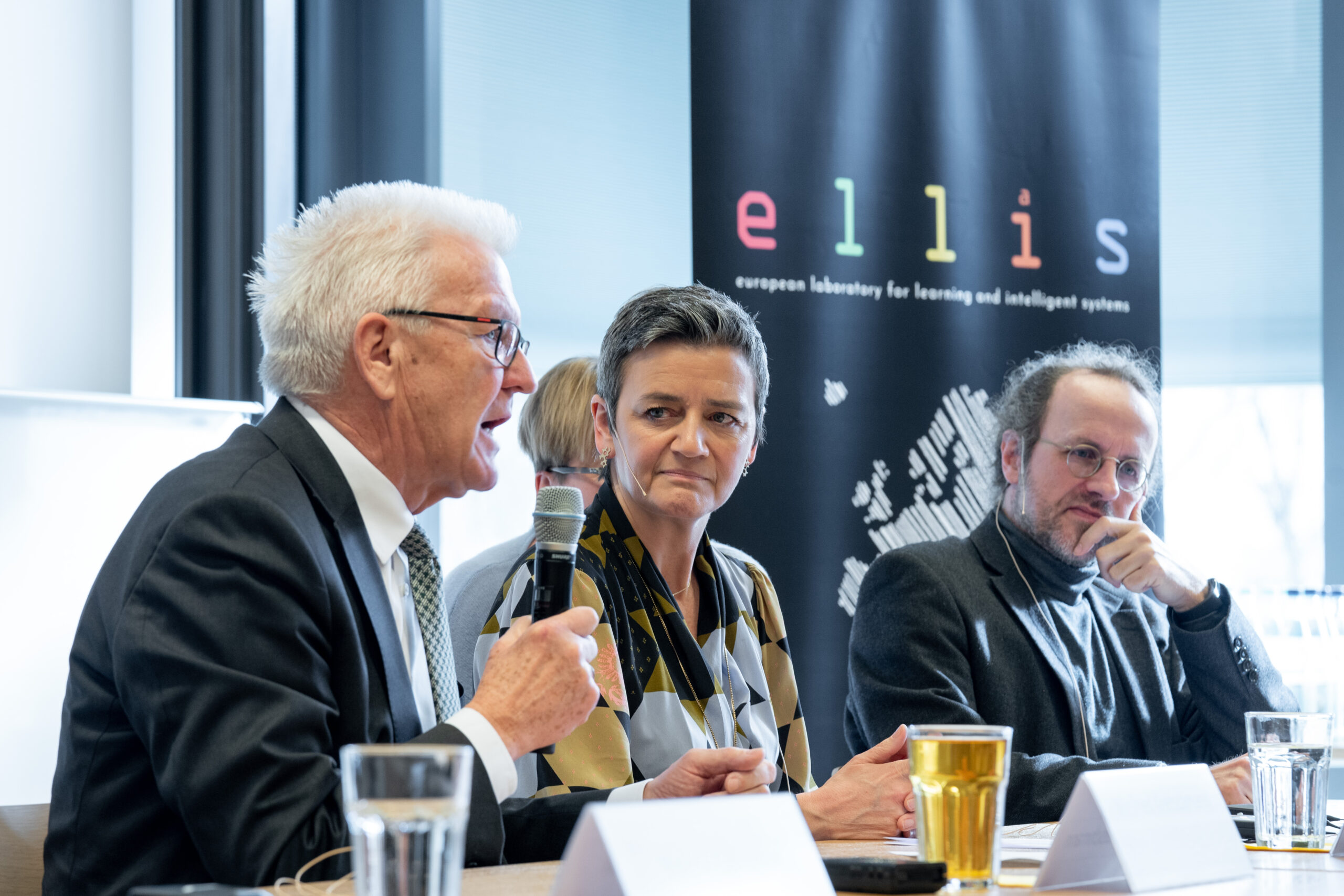
    Tübingen – One day following the publication of the European Commission’s White Paper on Artificial Intelligence, Margrethe Vestager, the EC’s Executive Vice-President and Chair of the “Commissioners’ Group on a Europe Fit for the Digital Age”, on Thursday met with scientists from the Cyber Valley ecosystem in Tübingen to discuss the future of AI research in Europe. She was accompanied by Winfried Kretschmann, the Minister-President of Baden-Württemberg, as well as Theresia Bauer, the state’s Science Minister.

     "With Cyber Valley, Baden-Württemberg is home to one of Europe‘s largest research cooperations between industry and science in the field of artificial intelligence. My state government alone has invested over 100 million euros in this innovation campus. Top-level research and entrepreneurial spirit are combined here so that Baden-Württemberg can play a pioneering role in the development of intelligent solutions for industry, mobility, and medicine. Europe is facing fierce competition in the field of top-level research; attracting and retaining the world’s best minds is decisive. The Europe-wide ELLIS initiative with sites in Tübingen and Freiburg will be helpful in this regard," said Minister-President Kretschmann. "In an international comparison, Europe still lags behind the USA and China, particularly when it comes to the economic exploitation of artificial intelligence. To prevent this gap from widening, we need to join forces. We need a European alliance in the field of AI. And we need AI 'Made in Europe' that combines innovation with our values. It is also about our individual freedom and the question of how AI applications affect our society. These matters are essential for the acceptance of these technologies.“

     “We welcome Vice-President Vestager’s visit and the opportunity to help drive the discussion on European AI forward,” said Bernhard Schölkopf, Director at the Max Planck Institute for Intelligent Systems, co-initiator of Cyber Valley, and co-founder of the European Laboratory for Learning and Intelligent Systems, ELLIS. “With Cyber Valley and ELLIS, we are building a strong European ecosystem for basic research in the field of modern AI. To secure Europe’s long-term global competitiveness and develop beneficial AI that is in line with the values of Europe’s open societies, we must establish research conditions that enable us to attract and keep the world’s top minds. To do this, we need the support of European policymakers.” 

    "We need to address the question of how we can enable artificial intelligence to happen. That is one of the reasons why I am particularly happy to be here today: what is happening here shows how we can enable things," says Commissioner Verstager. "It is very telling to hear about the warmth and interaction between the state, the businesses in the region, and the institute itself, and to see that they are working toward the same goal. Of course, I hope for a visible European dimension: the ELLIS program shows how Europe is coming together to create an ecosystem that will allow us not only to match what is happening elsewhere in the world, but also to do better.”

    ELLIS is on a clear upward trajectory. Initiated in 2018, the pan-European effort aims to promote research excellence in machine learning and related fields. In recent months, the initiative has established 11 research programs in broad-ranging AI-related fields and mobilized some 200 million euros in funding for an initial period of five years. Moreover, 17 ELLIS units have been created across Europe and in Israel, and proposals for additional units are presently under review. In the medium term, ELLIS plans to establish a network of sites and institutes analogous to the model of the European Molecular Biology Laboratory (EMBL), which is financed by 21 European countries and has laboratories across the continent.  

    “There is a need for funding, but also a need to organise our research and development efforts in a way that attracts talent. Because talent attracts more talent. Based on the discussions I have had today, what is being done here is the way to go,” Vestager continues.

    Cyber Valley has also gained significant momentum in recent months. The initiative reached several major milestones in 2019, including the accession of the Fraunhofer-Gesellschaft, the launch of the new Cyber Valley Start-up Network, additional investments by Cyber Valley industrial partners Robert Bosch GmbH and Amazon in Tübingen, and the successful completion of a third round of applications to the International Max Planck Research School for Intelligent Systems (IMPRS-IS), the doctoral program established as part of the Cyber Valley initiative.

  • Bernhard Schölkopf receives Frontiers of Knowledge Award

    Bernhard Schölkopf receives Frontiers of Knowledge Award

    The BBVA Foundation Frontiers of Knowledge Award in the Information and Communications Technology category has gone in this twelfth edition to Bernhard Schölkopf as well as to Isabelle Guyon and Vladimir Vapnik for their “fundamental contributions to machine learning,” in the words of the committee. The methods they developed in artificial intelligence are “transforming the everyday world, improving fields as diverse as medical diagnosis, computer vision, natural language processing and the monitoring of climate change.”


    “Vapnik, Guyon and Schölkopf,” the citation continues, “have collectively performed ground-breaking research that transcends traditional boundaries in computer science, and deservedly rank among the world’s leading innovators.”


    The awardees have developed methods that endow machines with the essential human skill of recognizing patterns in large volumes of data, enabling them to be sorted into categories. The goal is for the machine to learn through being presented with numerous examples.
    Vapnik and Guyon came up with the mathematical tools known as support vector machines (SVM), while Schölkopf extended their range and power through the use of kernel methods, which allow for the input of much more specific categories, thereby multiplying applications. These models are described by the committee as representing “a major machine learning paradigm in both research and applications.”


    Thanks to SVM and kernel methods, intelligent machines can now be trained to classify data sets with human precision, or at times even better, enabling them to recognize everything from voices, handwriting or faces to cancer cells or the fraudulent use of credit cards.
    SVMs are now being used in genomics, cancer research, neurology, diagnostic imaging, and even in HIV drug cocktail optimization, as well as finding diverse applications in climate research, geophysics and astrophysics.


    Schölkopf, Director at the Max Planck Institute for Intelligent Systems in Tübingen (Germany), has recently been employing these methods to analyze data from the NASA satellite Kepler 2. This has helped with the discovery of 21 extrasolar planets, including one with an atmosphere in which signs of water vapor have been detected for the first time.


    In the words of one of the nominators, Martin Stratmann, President of the Max Planck Society, machine learning is a core discipline of modern artificial intelligence, consisting of “the study of how to extract patterns or regularities from empirical data.” And Vapnik, Guyon and Schölkopf, he adds in his letter, are “the three scientists who have jointly shaped the field.”

    Machines that learn from examples

    The three laureates coincided at America’s Bell Laboratories in the early 1990s. Yet their backgrounds had little in common. Vapnik, born in 1936 in the former USSR, had worked until 1990 at the Institute of Control Sciences in Moscow, where he and his then pupil Alexey Chervonenkis – who died in 2014 – laid the mathematical foundations for automated pattern recognition methods. Vapnik is now widely recognized, the committee remarks, as “a living legend in machine learning.”


    Isabelle Guyon (Paris, France, 1961) was a postdoctoral researcher when she met Vapnik in 1991. Together they two would create the first proven method enabling optimal classification of data, the support vector machine. In 1994 they were joined in their efforts by one of Vapnik’s doctoral students, Bernhard Schölkopf, who expanded the application range of SVMs.


    For Vapnik, speaking on the phone after hearing of the award, “the main problem in artificial intelligence is how to get the machine to recognize things, how to distinguish, for instance, between men and women or between different medical diagnoses. You cannot give the machine the rule, the machine has to learn the rule. The support vector machine was developed precisely to fulfil this condition. The aim of all these methods of machine learning is simply so the machine can learn from examples.”


    “Machine learning technology is the foundation of almost everything in AI-related business, and will become more and more important in future,” affirms Vapnik, who confesses that he too has been greatly surprised at how much the field has expanded in the past few decades.
    The awardee also recalled the initial problem that gave rise to the machine learning field “over fifty years ago,” when he was asked “to solve a small, practical problem that consisted of distinguishing between oil and water, so as to achieve greater precision during prospections based on geological observations.”


    In search of cause-effect


    Although their paths have diverged, the three laureates have continued to collaborate. Specifically, Guyon and Schölkopf are working on what is seen as one of the key problems in the area: how to identify not just statistical correlations in a forest of data but also relations of causality. Advances in this terrain could tell us, for example, whether a genetic mutation is the cause or consequence of a cancerous process.


    The committee says in this respect that “Schölkopf and Guyon have independently and cooperatively advanced the science of causal discovery, uncovering cause-and-effect relationships in observed data, a problem considered by many to be unsolvable.”


    In conversation yesterday, Schölkopf explained how his work on causality aided in the discovery of exoplanets: “We had a causal model to distinguish between the signals coming from the star and planet, and the noise produced by the space telescope itself. With this model we managed to filter out the ‘noise’ and determine which signals really originated in outer space.”


    A fan of astronomy since childhood, Schölkopf cannot hide his satisfaction at the fact that one of the 21 exoplanets discovered with his aid lies in the habitable zone, and has been found to have water vapor in its atmosphere.


    Guyon, meantime, has founded not-for-profit educational initiatives, developed crowd-sourced research and worked on the application of AI techniques to address problems in electricity transmission.


    The future of AI


    Both Vapnik and Schölkopf are convinced that the AI-led transformation of society is only just starting, and that many of the tasks now performed by humans will be taken over by machines. But this is not to say that machines will actually surpass us in intelligence.
    “The machine can already do better than humans at recognizing things, for example, in cases of medical diagnosis or facial recognition,” says Vapnik. “But for me that doesn’t mean that the machine is intelligent. Intelligence is a whole lot more, and we are only just beginning to understand what it is.”


    Schölkopf agrees that “we are extremely far away from a machine being more intelligent than a human being.” It is true, he adds, that “in very specific applications, like playing chess or Go, or perhaps in optical recognition scenarios like the diagnosis of skin cancer, machines can do better than humans.” Like Vapnik, however, Schölkopf does not believe that pattern recognition “should really be defined as intelligence,” since what we are talking about is “performance in one very restricted task.”


    “What is interesting about our intelligence,” Schölkopf continues, “is that we can play Go then get up from the table and make dinner, which a machine cannot do.” By this general standard of intelligence, the German scientist insists that “machines are still much more stupid than humans.” That said, advances in machine learning are compelling enough, he believes, to cause “legitimate concern that the technology may in future take some kinds of jobs away,” and this is something “we should begin to think about as a society.”


    Laureate bio note
    Bernhard Schölkopf (Stuttgart, Germany, 1968) studied physics, mathematics and philosophy at the Universities of London and Tübingen (1988-1994), before going on to earn a Ph.D. in Computer Science at TU Berlin in 1997. After spells as a researcher and group leader at the National Research Center for Computer Science (Berlin), Microsoft Research (Cambridge) and Biowulf Technologies (New York), in 2001 he was appointed a Director at the Max Planck Institute for Biological Cybernetics in Tübingen. He remained there until 2010, and the following year took up the post of Director at the Max Planck Institute for Intelligent Systems, where he heads the Department of Empirical Inference.


    Author of more than 460 publications, he is also an Affiliated Professor at ETH Zurich and an Amazon Distinguished Scholar. He is one of three Editors-in-Chief of the Journal of Machine Learning Research and a Series Editor of Information Science and Statistics, as well as serving on the boards of the Neural Information Processing Systems Foundation and of the International Machine Learning Society.

    About the BBVA Foundation Frontiers of Knowledge Awards

    The BBVA Foundation centers its activity on the promotion of world-class scientific research and cultural creation, and the encouragement of talent.


    The BBVA Foundation Frontiers of Knowledge Awards, established in 2008, recognize and reward contributions of singular impact in diverse fields of science, technology, social sciences and the humanities that have demonstrably expanded the frontiers of the known world, opening up new paradigms and knowledge fields. Their eight categories are reflective of the knowledge map of the 21st century, encompassing basic research in Physics, Chemistry and Mathematics, Biology and Biomedicine, Information and Communication Technologies, Humanities and Social Sciences, Economics, Finance and Management, Ecology and Conservation Biology, Climate Change, and, within the arts, the supremely creative realm of music.


    The BBVA Foundation is aided in the evaluation process by the Spanish National Research Council (CSIC), the country’s premier public research organization. The Foundation and CSIC jointly appoint the evaluation support panels charged with undertaking an initial assessment of the candidates proposed by numerous institutions across the world and drawing up a reasoned shortlist for the consideration of the award committees. CSIC is also responsible for designating the chair of each committee, formed by eminent authorities in the subject area.

  • Understanding the significance of data

    Understanding the significance of data

    Prof. Wolfram Ressel, Rector at the University of Stuttgart, warmly welcomed Prof. Steffen Staab. “By focusing on information systems and data analysis, Prof. Staab will make the research into intelligent systems carried out at the University of Stuttgart and in Cyber Valley even stronger. It makes us particularly happy that Staab also decided on the University of Stuttgart because of the interdisciplinary nature of our university. This confirms the particular profile of the University of Stuttgart as the “Stuttgarter Weg (Stuttgart Way)”, which stands for a consistent interdisciplinary network of complementary specialist disciplines, as well as the integration of engineering, natural sciences, the humanities and social sciences.”

    Staab himself expects numerous cooperation opportunities while working in Cyber Valley and the University of Stuttgart to further his research in the area of semantic technologies, both in basic and applied research, and in the process also questioning the implications for society. “Cyber Valley is one of the earliest and biggest initiatives in Germany for strengthening research into artificial intelligence. And Computer Science at the University of Stuttgart is also excellently well positioned, which is shown by two Clusters of Excellence among other things, and there is an established culture of interdisciplinary collaboration between technical sciences, the humanities and social sciences”, emphasized the scientist.

    Semantic technologies as a research focus

    Staab’s field of research in semantic technologies is committed to gaining an understanding of the significance of data and information. The significance can be presented in the form of conceptual models and ontologies. They form the basis for knowledge networks, which enable the computer to handle data in a meaningful way.


    In order to find the most meaningful model, algorithm-based analysis procedures are used such as text and data mining, as well as information extraction (e.g. by means of ontology learning and text clustering). Connections between data and how it is used in context (for example by a smartphone) can be investigated in this way. This is how knowledge networks are found in data, which is especially significant in the context of social networks.


    The biggest construct for communicating data of significance is the World Wide Web. Web science investigates how networks of people and knowledge in the Web emerge, as well as how people handle it and what consequences it has for us. “The Web is a machine of significance that I want to come to understand through my research”, says Staab.


    About Prof. Steffen Staab
    Steffen Staab was born in 1970 and studied Computer Science and Computer Linguistics at the University of Erlangen-Nuremberg and at the University of Pennsylvania. In 1998, he graduated from the University of Freiburg with a PhD in Computer Science. Afterwards, he worked at the Institute of Human Factors and Technology Management (IAT) at the University of Stuttgart as well as at the Fraunhofer Institute for Industrial Engineering (IAO), and later moved to the University of Karlsruhe (now known as KIT). In 2004, Staab was appointed as Professor of Databases and Information Systems at the University of Koblenz and Landau, where he founded the Institute for Web Science and Technologies (WeST) in 2009. Since March 2015 he has also held a Chair for Web and Computer Science at the University of Southampton.


    Four Cyber Valley scientists at the University of Stuttgart
    With Prof. Steffen Staab, there are now four Cyber Valley scientists working at the University of Stuttgart. Michael Sedlmair, who is junior professor at the Institute for Visualization and Interactive Systems (VIS), works in the department of Augmented and Virtual Reality. Dr. Tian Qiu leads the Cyber Valley research group “Biomedical Microsystems” at the Institute of Physical Chemistry (IPC). Since January 2020, Prof. Alexander Brem has held the chair for ‘Entrepreneurship in technology and digitalisation’.

    Image: Max Kovalenko

  • Enquete-Kommission Künstliche Intelligenz zu Besuch im Cyber Valley

    Enquete-Kommission Künstliche Intelligenz zu Besuch im Cyber Valley

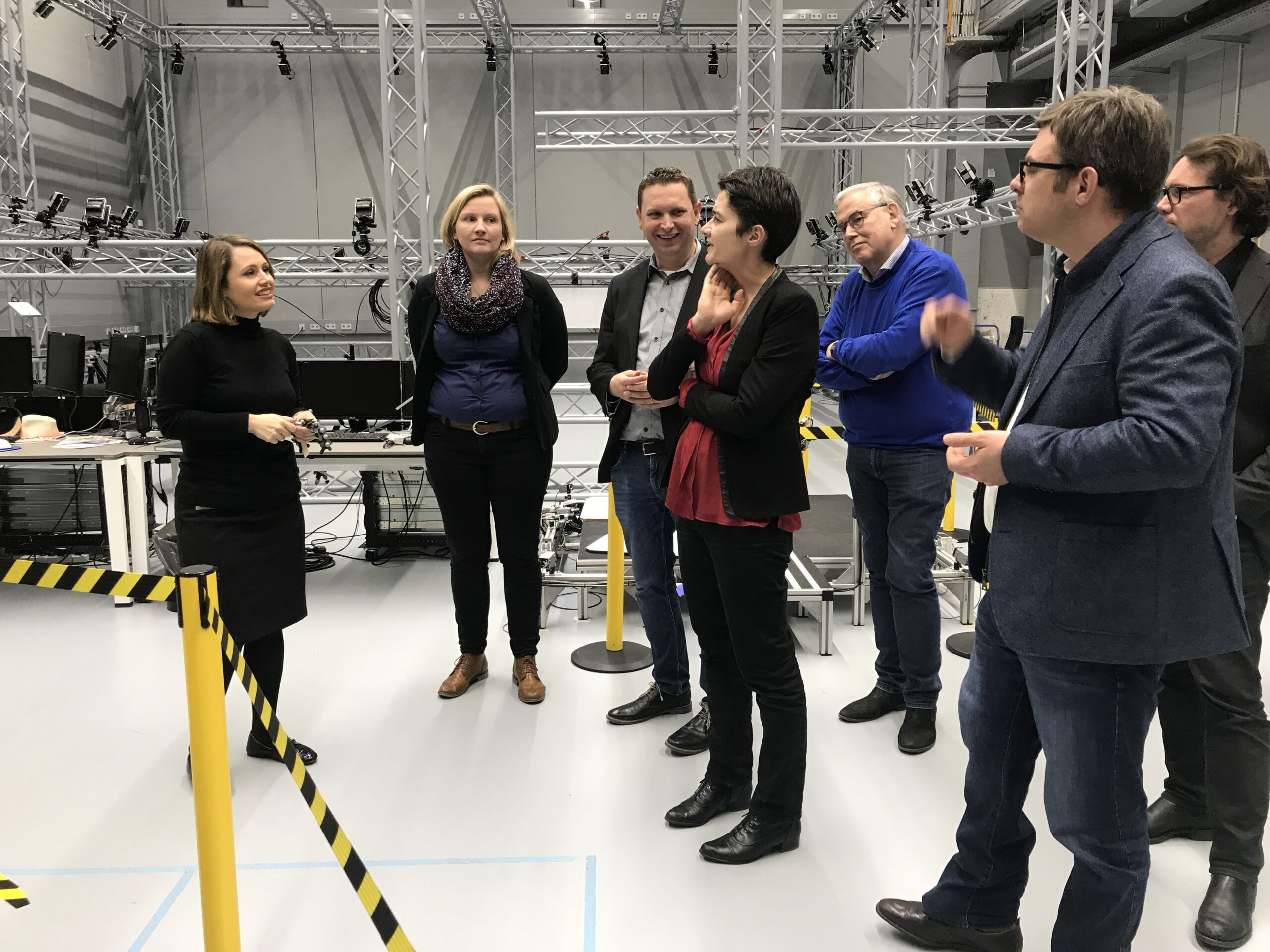
    Bei Laborbesuchen und Gesprächen mit führenden KI-Wissenschaftler*innen des Max-Planck-Instituts für Intelligente Systeme und der Universität Tübingen gewann gestern Daniela Kolbe, SPD Bundestagsabgeordnete und Vorsitzende der Enquete-Kommission „Künstliche Intelligenz: Gesellschaftliche Verantwortung und wirtschaftliche, soziale und ökologische Potenziale“, Einblicke in die Forschung des Cyber Valley Ökosystems. Begleitet wurde sie vom SPD Bundestagsabgeordneten Dr. Martin Rosemann. 

    Cyber Valley ist Europas größte Forschungskooperation im Bereich Künstliche Intelligenz (KI) mit Partnern aus Politik, Wissenschaft und Wirtschaft. 

     „Mit Cyber Valley entsteht ein Cluster, das Ausstrahlungskraft hat,“ sagte Daniela Kolbe. „Die Forschungsansätze und die gelungene Kooperation mit Unternehmen sind sehr beeindruckend. Das Modell Cyber Valley zeigt uns, wie wir in Deutschland im Bereich Machine Learning vorankommen können.“ 

    Die Enquete-Kommission wurde 2018 gegründet und besteht je zur Hälfte aus Abgeordneten des Deutschen Bundestages und Expertinnen und Experten aus allen gesellschaftlichen Bereichen. Die Kommission zielt darauf ab, eine kritische Diskussion über die Chancen der KI für Wirtschaft und Gesellschaft zu führen, um auch die Risiken der neuen Technologien möglichst zu minimieren.

    "Wir begrüßen den Besuch der Enquete-Kommission. Als KI-Forscher stehen wir in der Verantwortung, sich kritische Fragen zu stellen, um die gesellschaftliche Diskussion mitzugestalten,“ sagte Bernhard Schökopf, Direktor am Max-Planck-Institut für Intelligente Systeme und Mitgründer der Cyber Valley Initiative. "Maschinelles Lernen und Künstliche Intelligenz werden die Welt verändern. Mit der Cyber Valley Initiative wollen wir intelligente Systeme entwickeln, die die Gesellschaft voranbringen. Damit Europa in dieser Hinsicht eine führende Rolle spielen kann, ist die Unterstützung der Politik unabdingbar.“ 

    Die im Dezember 2016 im Südwesten Deutschlands gegründete Cyber Valley Initiative ist Europas führendes Forschungskonsortium auf dem Gebiet der künstlichen Intelligenz. Laut einem Ranking, das auf der Anzahl der Veröffentlichungen zwischen 2009 und 2019 auf den wichtigsten globalen Konferenzen für maschinelles Lernen – NeurIPS und ICML – basiert, belegen die akademischen Partner des Cyber Valley derzeit weltweit Platz 8, in Europa und Deutschland sogar Platz 1. 
    Allein in den vergangenen Monaten wurden mehrere wichtige Meilensteine erreicht, darunter der Beitritt der Fraunhofer-Gesellschaft, der Start des neuen Cyber-Valley-Start-Up-Netzwerks, zusätzliche Investitionen der Industriepartner Robert Bosch GmbH und Amazon in Tübingen sowie der erfolgreiche Abschluss einer dritten Bewerbungsrunde an der International Max Planck Research School for Intelligent Systems (IMPRS-IS), dem im Rahmen der Cyber-Valley-Initiative gegründeten Doktoranden-Programm. Derzeit promovieren etwa 120 Wissenschaftler an der IMPRS-IS. 

  • Cyber Valley empfängt Delegation aus der französischen Region Grand Est

    Cyber Valley empfängt Delegation aus der französischen Region Grand Est

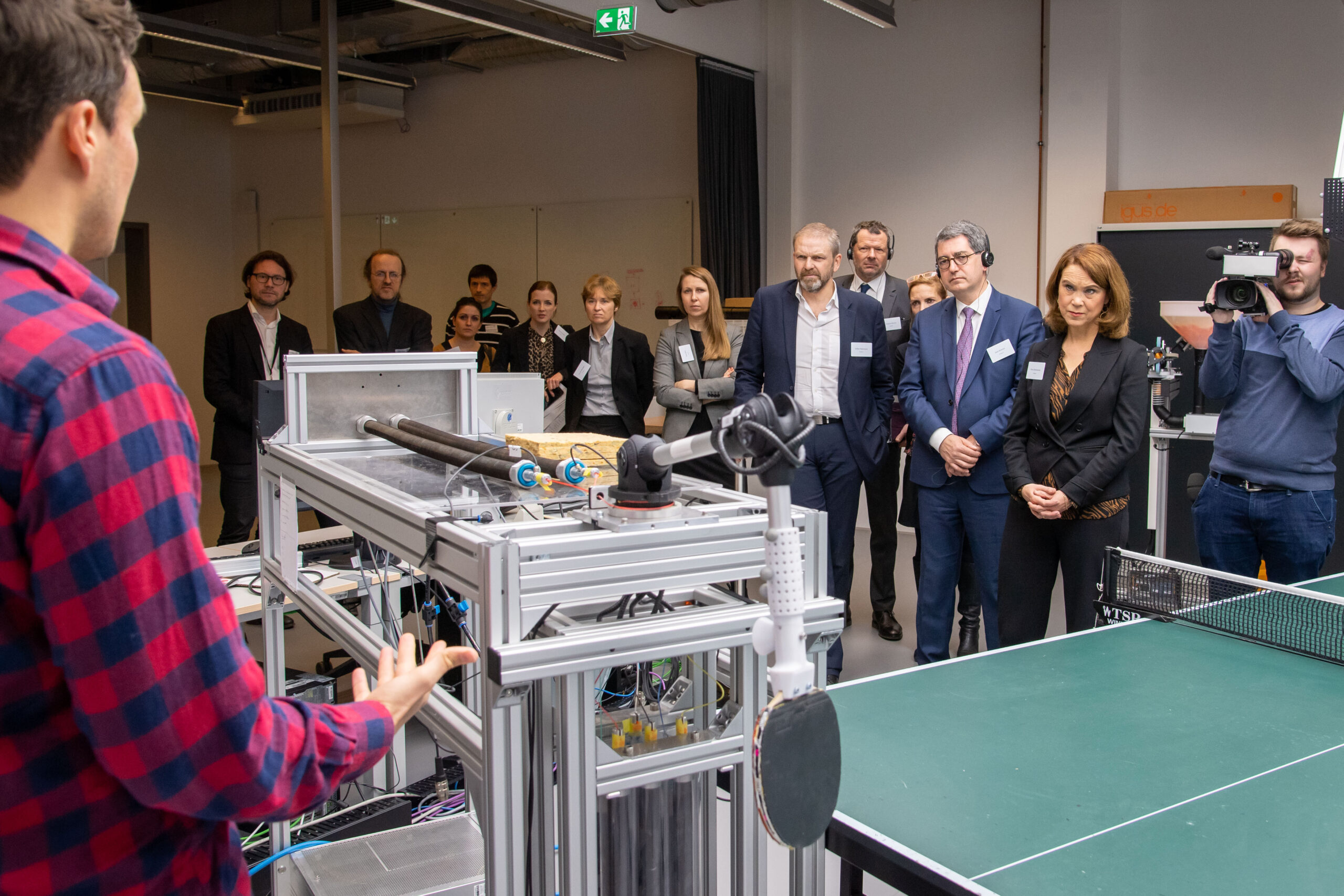
    Tübingen – Am Donnerstag besuchten Staatssekretär und Bevollmächtigter beim Bund Volker Ratzmann, die Staatsekretärin im Wissenschaftsministerium Petra Olschowski, der Staatsekretär im Umweltministerium und der Nachfolger Ratzmanns, Andre Baumann, sowie  der Präsident der Région Grand Est Jean Rottner das Cyber Valley in Tübingen. Die Beteiligten loteten verschiedene Anknüpfungspunkte für eine zukünftige Zusammenarbeit aus. Zudem erhielt die Delegation einen Einblick in die Arbeit der Wissenschaftlerinnen und Wissenschaftler am Max-Planck-Institut für Intelligente Systeme, das eines der Cyber Valley Partner ist. Am Nachmittag dann wurden die französischen Gäste von Ministerpräsident Winfried Kretschmann empfangen. Die Themen Bildung, Wissenschaft, Sicherheit, Umwelt, Mobilität, Industrie 4.0 und Künstliche Intelligenz standen dabei im Vordergrund.

    „Die Grenzregion am Oberrhein ist heute eine der am tiefsten integrierten Grenzregionen der Welt. Das zeigt sich auch darin, wie ungeheuer konkret unser Arbeitsprogramm ist. Die Konferenz war ein erstmaliges Format dieser Art und bestens dafür geeignet, unsere Frankreich-Konzeption zu diskutieren und mit unseren französischen Partnerinnen und Partnern gemeinsam zu beraten, wie wir unsere Zusammenarbeit bestmöglich weiterentwickeln können“, so Ministerpräsident Winfried Kretschmann anlässlich des Besuches.

    Die Pressemitteilung des Staatsministeriums finden Sie hier.

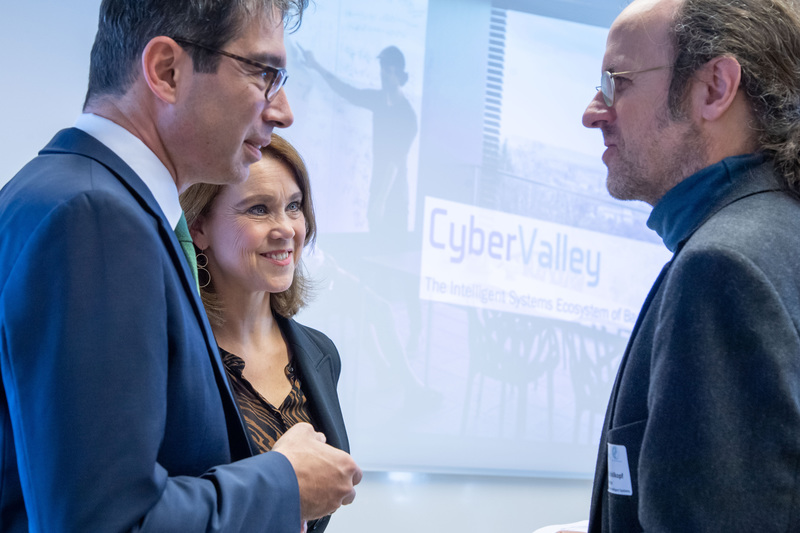
    v.l.n.r.: Staatssekretär Andre Baumann, Staatssekretärin Petra Olschowski und Bernhard Schölkopf, Direktor der Abteilung für Empirische Inferenz am Max-Planck-Institut für Intelligente Systeme. Bildnachweis: Staatsministerium Baden-Württemberg

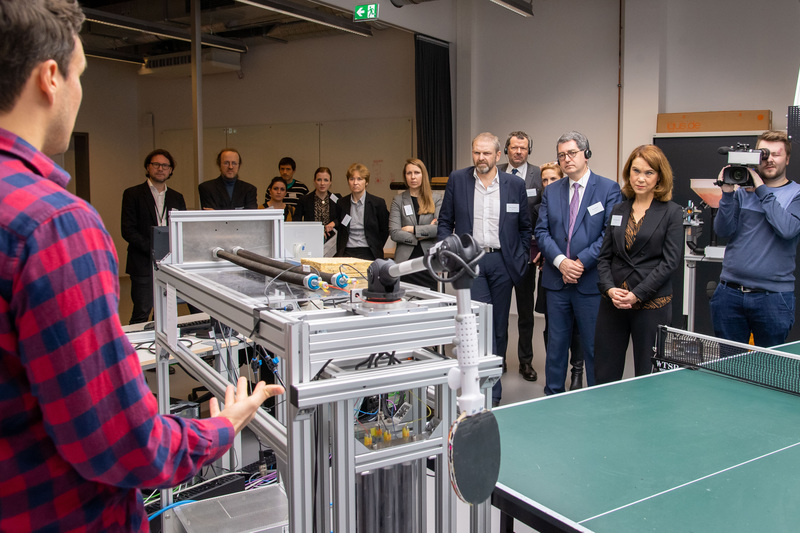
    Die Besuchergruppe bestaunt den Tischtennis spielenden Muskelroboter

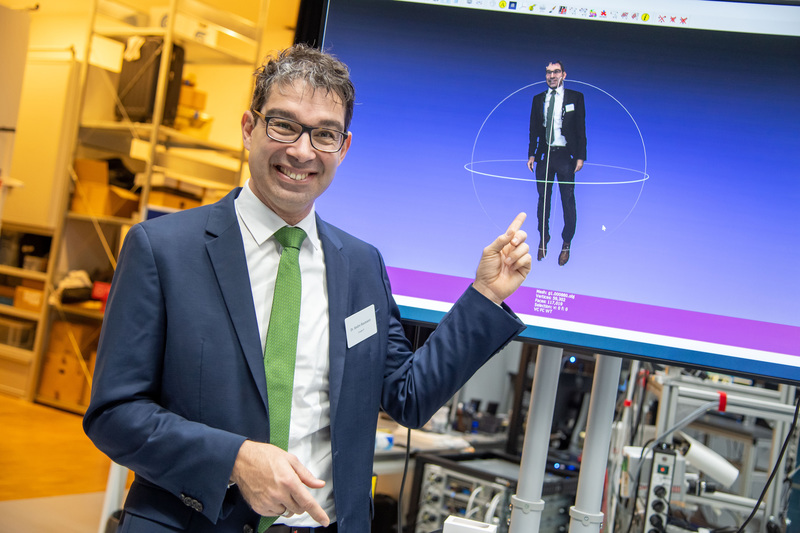
    Staatssekretär Andre Baumann

    Staatssekretär Volker Ratzmann, Bevollmächtigter des Landes beim Bund

    Staatssekretärin Petra Olschowski