User Group: Investor

  • Women in Tech Entrepreneurship

    Women in Tech Entrepreneurship

    In Germany, only 15 percent of all start-ups have at least one woman on the founding team, and just four percent of tech start-ups were founded by women only. In the AI & Robotics start-up scene, the numbers are even lower, and female founders and scientists can face gender bias.
     
    At this event, women will share their experiences and talk about female tech entrepreneurship. 

    Vivian Chu, Ph.D.

    Co-founder and CTO, Diligent Robotics

    Ksenia Keplinger, Ph.D.

    Group Leader, Max Planck Institute for Intelligent Systems, Group: Organizational Leadership & Diversity

    Katherine J. Kuchenbecker, Ph.D.

    Director, Max Planck Institute for Intelligent Systems, Department: Haptic Intelligence

    Co-founder and Chief Science Advisor, Tactai, Inc.

    Eva Wolfangel

    Science Journalist

    Registration

    Please register here, people of all gender identities are welcome. The meeting will be held in English on Zoom.

    Contact

    Oliwia Gust –  Event Manager for Cyber Valley
    Phone: +49 7071 601 1554
    Mobile: +49 151 4075 6302 
    Mail: oliwia.gust@cyber-valley.de 


    The event is taking place in the context of International Women's Day on March 8.

  • Cyber Valley Start-up Network continues to grow

    Cyber Valley Start-up Network continues to grow

    “With their software services, GaussML and Smart Site Solutions demonstrate the wide range of applications that AI-supported service solutions now offer,” says Michael Black, Director of the Perceptive Systems Department at the Max Planck Institute for Intelligent Systems and Cyber Valley speaker. “Both start-ups are pursuing approaches that can significantly improve production processes. This makes their products interesting for small and medium-sized companies, among others.”

    GaussML: Optimization for a wide range of applications

    Based in Stuttgart, Gauss Machine Learning GmbH (GaussML) offers a solution for improving industrial plants and processes, for example in the mechanical engineering sector or the pharmaceutical industry. The software is designed for easy use and integration into existing processes. With its support, the parameters of various processes can be intelligently optimized.

    “At GaussML, we aim to bring machine learning to the masses through easy-to-use solutions so that everyone -– especially small and medium-sized companies – can benefit from this technology,” said Edgar Klenske, CTO of GaussML. “With the help of intelligent parameter optimization, production times or material usage can be reduced, for example. This protects the environment and saves companies money.”

    Smart Site Solutions: Better logistics in road construction

    Smart Site Solutions from Nürtingen also focuses on optimization. Its cloud-based system is used to improve logistics in road construction. For predictive, dynamic transport and paving control, Smart Site Solutions relies on AI. “We coordinate material production in the mixing plant with just-in-time transport and the paving processes on the construction site,” said Marcus Müller, founder and CEO of Smart Site Solutions. “This helps our customers – from medium-sized road construction companies to international construction groups – to digitally control their processes, thus ensuring quality and saving costs.”

  • Cyber Valley is poised to expand, grow even stronger, and become more international

    Cyber Valley is poised to expand, grow even stronger, and become more international

    “Thanks to the support of Chancellor Merkel, European Commission Executive Vice- President Vestager, and Dr. Hector, we have a wonderful opportunity to keep building on the Cyber Valley success story further advance world-class international research in Baden-Württemberg,” said Minister-President Winfried Kretschmann in Stuttgart on Friday, February 5, 2021. “We want to move toward a unique and internationally competitive ecosystem for artificial intelligence – with powerful resources. For a key technology of this magnitude, we can only achieve this with the best research by the world’s best minds, in cooperation with our European neighbors.”

    “We can only be globally competitive in AI if we harness the power of cooperation here in Europe and focus on European AI. The Hector Foundations’ immense support in Cyber Valley’s expansion will create entirely new opportunities to offer top researchers an attractive European environment with strong roots in our scientific landscape,” said Theresia Bauer, Baden-Württemberg’s science minister.

    The “Hector Endowed ELLIS Fellowships” will shape the foundation of a future ELLIS Institute Tübingen. In close cooperation with Cyber Valley partners, the institute will establish links to Europe’s leading institutions and locations for AI research. The new institute will contribute to AI research and applications to a whole new level. On behalf of the state cabinet, the Ministry of Science is currently assessing approaches to designing the ELLIS institute.

    In addition, the Cyber Valley AI innovation campus in the Stuttgart/Tübingen region will be further expanded from 2022: in future, the federal and state governments will jointly fund the Tübingen AI Competence Center for Machine Learning, one of the five AI competence centers in German. The state has already earmarked a total of 13.5 million euros between 2021 and 2023 for the funding of a coding school that aims to teach practical skills in programming.

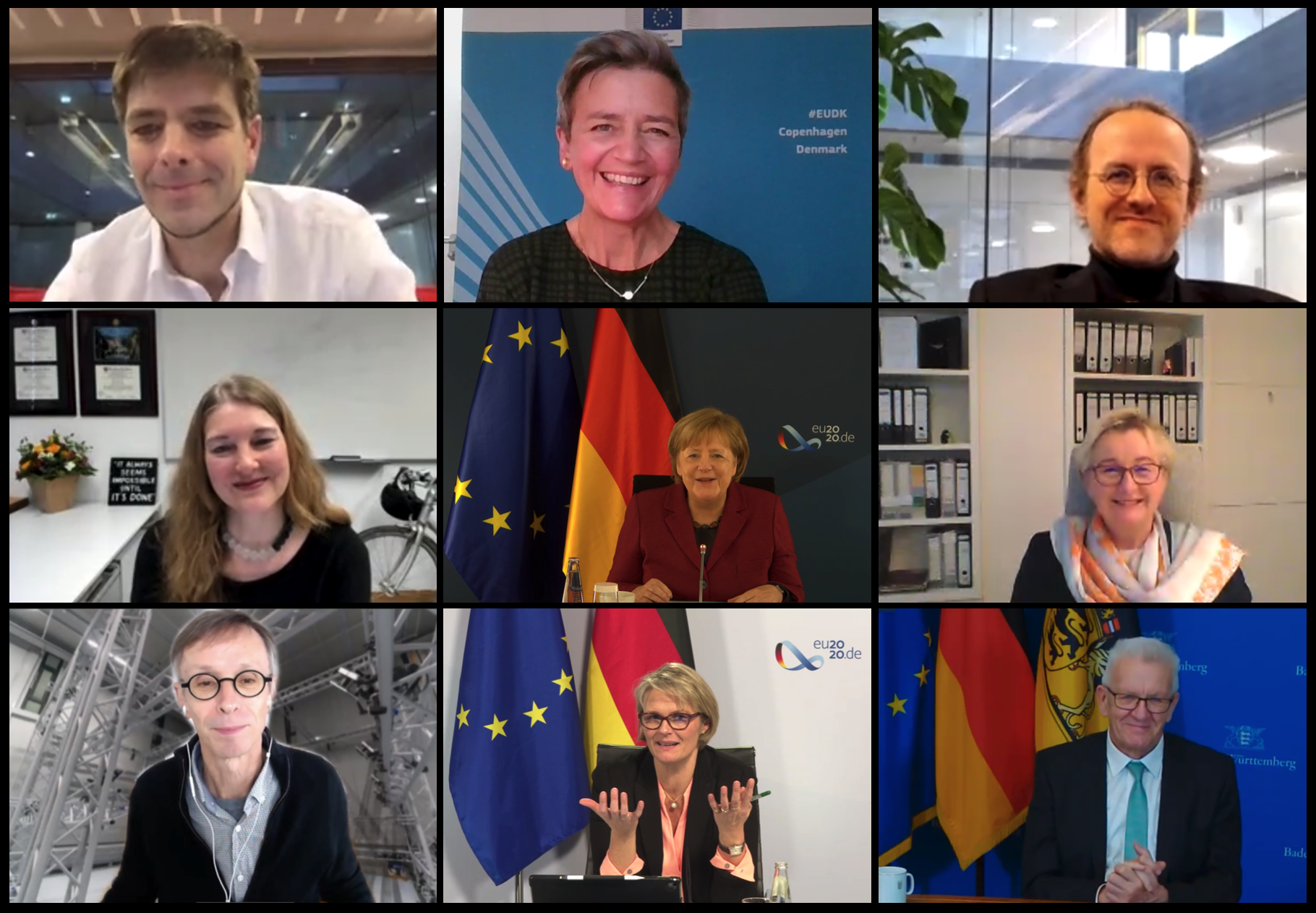
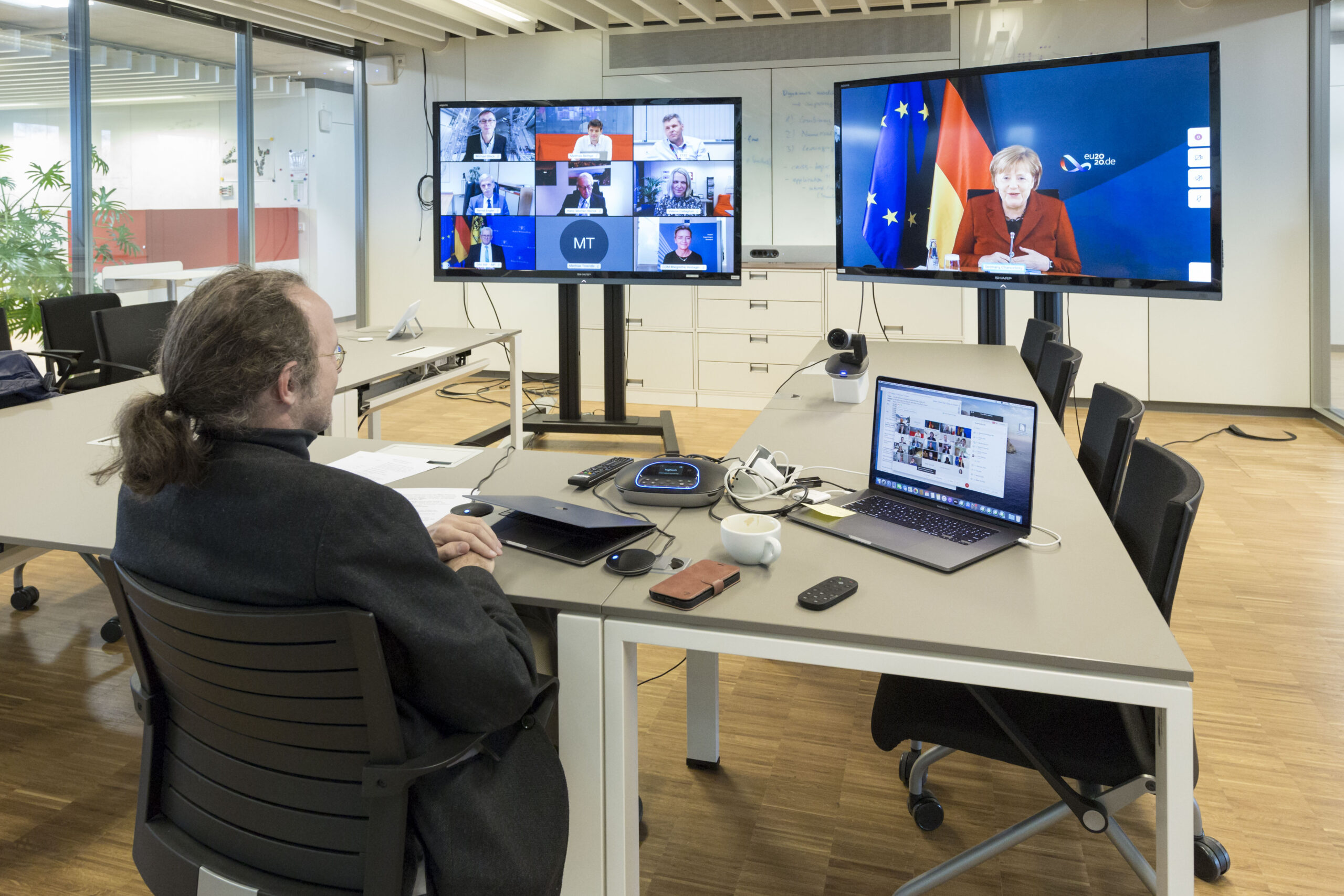
    In mid-December, Minister-President Kretschmann, Chancellor Angela Merkel, and EC Executive Vice-President Margrethe Vestager already emphasized the importance of  expanding Cyber Valley. Together, the federal government, the state, science, business, and private sector donors want to focus on promoting developments in the field of AI that provide incentives (e. g., scholarships, expansion of computing power, etc.).

    Over the course of 2021, Cyber Valley will become a GmbH (limited liability company), which will further strengthen the brand. Its new legal form will create the basis for further growth and internationalization.

    About ELLIS:

    The European Laboratory for Learning & Intelligent Systems (ELLIS) was founded by leading researchers in Europe who work closely with basic researchers from industry. The Ministry of Science is already providing financial support for the ELLIS initiative.

    ELLIS's overarching goal is to establish European cutting-edge, internationally competitive research in the field of artificial intelligence. Not only should Europe contribute to the ways in which AI and machine learning are changing the world, but also make an economic impact by creating new jobs.

    More information on ELLIS: https://ellis.eu

  • Bosch AI Con 2021

    Bosch AI Con 2021

    What is the AI CON 2021 about?

    Industrial AI or how to bring AI to the real world: A topic that not only Bosch is affected by. Learn about the Bosch way in this field through an exciting Keynote of Bosch’s CTO Michael Bolle on the AIoT Cycle and on the importance of Hybrid Models. You will also get insights into how other industrial companies handle this exciting field. But there is even more! You will have the chance to learn from renown researchers and AI experts from the industry sector like Raquel Urtasun (Uber ATG), Zico Kolter (Carnegie Mellon University), Jun Zhu (Tsinghua University), Nuria Oliver (MIT) or George Em Karniadakis (Brown University) about the latest findings and hot topics in the field of AI.

    Listen to exciting keynotes about various AI hot topics

    Experience what is possible through AI at our virtual exhibition

    Meet in instructive technical deep dives our AI experts and renowned researchers from the AI Community on innovative and hot topics

    Exchange with like-minded people to get new impulses and enable future collaborations

    From 13:00 – 17:00 Cyber Valley representatives will be available for virtual coffee breaks during BOSCH AI Con. If you’re interested in finding out about research and founding opportunities in Europe’s largest ecosystem for research and innovation in modern AI, please feel free to join for one of these 20-minute sessions. Our representatives will be talking about their experiences and answering questions about life as a researcher or entrepreneur in Cyber Valley.


    Be excited about what awaits you at the 2021 virtual AI CON!

  • Cyber Valley Professor listed among top researchers at the Wirtschaftswoche Ranking

    Cyber Valley Professor listed among top researchers at the Wirtschaftswoche Ranking

    The German magazine WirtschaftsWoche recently published their ranking of business and management researchers in all German speaking countries. The ranking is based on the platform forschungsmonitoring.com, which is run by the ETH Zurich and the Düsseldorf Institute for Competition Economics.

    The ranking is based on publications in overall 860 international peer-reviewed journals, weighted by the reputation of each journal. The authors' ranking includes 3.346 researchers, the U40 ranking is based on 481 scientists, and the life's ranking has overall 4.051 professors as basis for this evaluation.

  • Research team receives 1.5 million euros to develop algorithms that learn with child-like curiosity

    Research team receives 1.5 million euros to develop algorithms that learn with child-like curiosity

    The scientists first want to find out how children discover and learn to understand the world around them on the basis of their innate curiosity. In a second step, they will use their findings to develop mathematical routines based on human learning processes that could enable intelligent systems to develop childlike curiosity. The scientists will then test ways to equip robotic systems with these novel self-learning algorithms.

    "Even the famous computer scientist Alan Turing believed that true artificial intelligence can only be achieved if you manage to build a machine that learns like a child," said Eric Schulz, leader of the Computational Principles of Intelligence Lab, an independent research group at the Max Planck Institute for Biological Cybernetics. "So far, however, little is known about how children spontaneously explore their environment and how this behavior can be applied to challenging tasks in robotics and machine learning."

    An essential characteristic of human intelligence is the ability to systematically explore and understand one's own environment. In this context, exploration is not based on the traditional understanding of learning as the achievement of an externally imposed set of goals. Rather, children in particular act in a strongly self-motivated way and challenge themselves to learn or create something new again and again while playing.

    "In order to master this scientific challenge, we need even more interdisciplinary collaboration than before. Researchers in developmental psychology often have problems translating their findings on self-motivated learning into suitable mathematical form, while computer scientists have insufficient knowledge about aspects of human psychology. In our project, we want to combine the knowledge of the different disciplines in a holistic approach to develop new methods and achieve new insights," says Georg Martius, leader of the independent Autonomous Learning research group at the Max Planck Institute for Intelligent Systems.

    To this end, the researchers at the three Max Planck Institutes have decided to work together in interdisciplinary teams. Above all, the research project aims to deliver practical results that can either be immediately applied or further developed for computer science and AI applications. To ensure that the new findings can be quickly and fully transferred to science and application, all results and algorithmic codes will be made available to the general public via standard platforms, such as Github or OpenAI.

  • A real “gamechanger” for AI in the next decade

    A real “gamechanger” for AI in the next decade

    “The German government will continue to support AI research as well as the transfer to application intensively,” said Federal Chancellor Angela Merkel on Thursday at a virtual event that marked the launch of the AI Breakthrough Hub. “We decided to update the German AI strategy. As part of the Future Package, we have pledged an additional two billion euros for AI. The investment should serve as a catalyst for state-of-the-art computing infrastructures, attractive conditions for top talent, and forward-looking AI ecosystems.”

    The AI Breakthrough Hub project, funded by the federal and state governments as well as the private sector, will be developed at the Tübingen AI Center, the joint competence center for machine learning of the University of Tübingen and the Max Planck Institute for Intelligent Systems. This growing AI ecosystem, which includes Cyber Valley and the European Laboratory for Learning and Intelligent Systems (ELLIS), is expected to significantly increase Germany’s appeal to international talent in the field of artificial intelligence. Planned measures include a fellowship program for high-level visiting scientists, an increase in computing power, a coding school for programming education, the establishment of a platform for future AI start-ups, and increased research in the field of AI applications for medicine.

    EU Vice President Margrethe Vestager pointed to the need to bring industrial applications into the AI era: “Connecting the industrial foundation to cutting-edge research in artificial intelligence is the best way forward. We also need to increase cooperation, which is the core of this new Breakthrough Hub. Our European approach is based on our values and this new hub will be a cornerstone to bring European artificial intelligence forward.”

    “Today, Cyber Valley is one of the largest research collaborations in Europe and an international beacon in AI research. And this is thanks to a joint show of strength by the federal government, the state, academia, industry and private donors,” said Minister President Winfried Kretschmann. The state of Baden-Württemberg has already invested 140 million euros into Cyber Valley’s successful path, he added. “Most recently, this Tuesday, an amount in the tens of millions of euros was earmarked to secure the joint funding of the AI Competence Center by the federal and state governments. Together with the federal government and Cyber Valley, we have created an excellent concept for promoting AI in this country with the ‘AI Breakthrough Hub’. In addition, I am pleased that the Hector Foundation will also support the training of top AI scientists in Cyber Valley with an amount of up to 100 million euros.”

    “In just a few years, Cyber Valley has managed to attract the best international AI talent and establish excellent networks with the top locations for AI research in the world,” said Baden-Württemberg’s Minister of Science Theresia Bauer. “With a major joint effort, we can now achieve a breakthrough, bringing Cyber Valley into the top league worldwide and keeping it there. Because we want to make rapid progress in the development of a European AI.”

    “For four years, we have been building something new here with outstanding colleagues. We founded Cyber Valley, a regional AI ecosystem with international appeal. Then we became part of the federal government's AI strategy – and in the past two years we set out to become a driver of European AI as well,” said Professor Bernhard Schölkopf, Director at the Max Planck Institute for Intelligent Systems. “The official launch of the first 30 ELLIS research facilities in September, including Tübingen, was a milestone on the road toward enabling Europe to compete with the world's AI hotspots, especially the United States and China. With the establishment of the new AI Breakthrough Hub, the federal government and the state of Baden-Württemberg are now kicking off a new era. I personally feel it is a privilege that we are allowed to further develop excellence in research and innovation together in order to advance Baden-Württemberg, Germany, and Europe.”

    Robert Bosch GmbH is planning an AI Campus in Tübingen, in which the global corporation will invest 100 million euros in the coming years. The company is planning an open campus that will also offer space for AI startups and external research groups. In addition, the Bosch Center for Artificial Intelligence (BCAI) will support the ELLIS units in Tübingen, Freiburg, and Amsterdam.


  • DFG continues funding of Tübingen research centre

    DFG continues funding of Tübingen research centre

    The goal of the Collaborative Research Centre is to uncover the principles of robust vision and to identify its neural basis in the mammalian brain. To this end, scientists from the University of Tübingen, the Max Planck Institute for Intelligent Systems, the Max Planck Institute for Biological Cybernetics and the LMU Munich and from various disciplines such as neuroscience, machine learning and computer vision are working closely together to investigate the differences between the biological visual system and current machine vision algorithms.

    Matthias Bethge, spokesperson for the research center, is very pleased that the research program will continue to receive funding. “We are making great progress in understanding biological vision and in the field of robust machine vision. This also opens the door to the development of more reliable AI applications,” he said.

    In the second funding period starting 2021, the German Research Foundation will fund 12 scientific projects, one infrastructure project and one transfer project with Zeiss Vision with total funding of over €9 million.

    Background

    Human visual perception is amazingly robust: Even in highly variable environments, we are able to make reliable inferences about the spatial arrangement of the world from limited visual information. To achieve this, our brain must perform complex computations. Artificial vision systems, in turn – as used, for example, in self-driving cars – are making steep progress in reproducing the visual skills of humans. The goal of this centre will be to better understand the principles and algorithms that enable robust visual inference both in humans and machines.

  • Virtual AI Roadshow: USA – Baden-Württemberg – Canada

    Virtual AI Roadshow: USA – Baden-Württemberg – Canada

    Join the virtual AI Roadshow, starting on November 17 – November 19, 2020 and discuss with experts from Pittsburgh/USA as well as Ontario and Québec/Canada. What to expect: Three days of networking, interesting info sessions, and keynotes.

    Which Topics will be discussed ?

    • AI and Ethics
    • AI and Autonomous Driving
    • AI and Healthcare
    • AI and Robotics

    Why participate?

    • As a company – get information on how to implement AI solutions in your company and find qualified contacts during effective one-to one meetings
    • As a university – find new international counterparts and to discuss new technology and innovative solutions
    • As a start-up – pitch your idea and business solution

    How can you benefit from this event?

    • Publish and showcase your products, projects, services or business needs or research results to event participants
    • Initiate and arrange promising pre-scheduled 1:1 meetings at the event
    • Generate fresh leads and meet new contacts in a time and cost-efficient way
    • Stay one step ahead of your competitors by being seen and visibly present at the event

    Learn more about the program and the speakers of the event here.

  • Mobility & AI

    Mobility & AI

    Schedule

    • Welcome and Introduction – Michael Black  |  Cyber Valley Spokesperson
    • Keynote – Michael Halbherr  |  Co-Founder HERE and Technology Investor
    • Textual Explanations for Self-Driving Vehicles – Zeynep Akata  |  Uni Tübingen
    • Scientific Perspective on Mobility & AI – Andreas Geiger  |  Uni Tübingen / MPI IS
    • Investment – Tobias Jahn  |  BMW i Ventures
    • Companies & Start-ups
      • Kai Przybysz-Herz  |  NAiSE GmbH
      • Martynas Gudonavicius und Jurgis Pašukonis  |  Trafi
      • Philipp Gneiting  |  STARTUP AUTOBAHN / Mercedes Benz AG
    • Discussion

    Registration

    Please register here