User Group: Investor

  • Cyber Valley Start-Up Network is expanding

    Cyber Valley Start-Up Network is expanding

    The Cyber Valley Start-Up Network is pleased to be welcoming a new member to its ranks. With the addition of Colugo, the network now counts a strategic consultancy that specializes in assessing AI-related potential and opportunities for businesses in the Tübingen region. The start-up also offers workshops and training courses that aim to support businesses in gaining the understanding of AI they need to apply it in their respective fields.

    The Cyber Valley Start-Up Network was recently established with the aim of promoting technology transfer and entrepreneurship in the broad field of AI in the Stuttgart-Tübingen region. The network currently counts eight members and plans to keep expanding in the New Year. 

  • Amazon gründet Lablet zur Forschung an Künstlicher Intelligenz in Tübingen

    Amazon gründet Lablet zur Forschung an Künstlicher Intelligenz in Tübingen

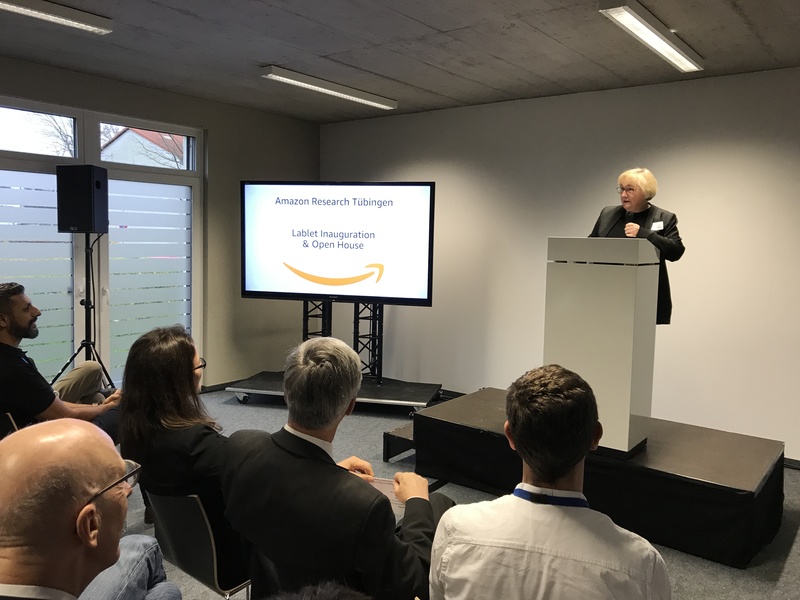
    Tübingen – Amazon hat die Gründung eines Lablets in Tübingen angekündigt. Diese neue Art einer Forschungsabteilung widmet sich der offenen Forschung in der Künstlichen Intelligenz (KI) und ihren Anwendungen, um an den langfristigen Fragestellungen im Bereich KI zu forschen. Ab Dezember 2019 arbeiten Wissenschaftler und Wissenschaftlerinnen verschiedener Fachrichtungen, darunter Informatik, Softwareentwicklung und Mathematik, an der KI Grundlagenforschung. Ihr besonderes Interesse gilt dabei der Erklärbarkeit, der Kausalität und der Erforschung von KI, die ihre Umgebung erfasst. Um den wissenschaftlichen Fortschritt und die Reproduzierbarkeit zu fördern, wird das Lablet-Team seine Forschungsergebnisse publizieren und in Form von Open-Source-Code oder als Datensatz bereitstellen.

    „Mit der Gründung des Lablets setzen wir auf einen Paradigmenwechsel. Anstatt darauf zu zielen, Produkte und Anwendungen schrittweise zu verbessern, ist die Forschung im Lablet neugiergetrieben. Die Freiheit der Forschung und vor allem die Freiheit zu wählen, was wissenschaftlich untersucht werden soll, sind nur die ersten beiden Schritte zu einer unvoreingenommenen, fairen und offenen KI,“ sagte Bernhard Schölkopf, Schirmherr des Tübinger Lablets und Direktor am Max-Planck-Institut für Intelligente Systeme. „Ein weiterer wichtiger Schritt ist der konstante Austausch mit Wissenschaft, Politik und Gesellschaft. Wir sind davon überzeugt, dass KI der Allgemeinheit dienen muss. Um das zu erreichen, müssen wir Vertrauen in KI schaffen, und das können wir nur erreichen, wenn wir KI so transparent und verständlich wie möglich machen.“ Amazon plant, weitere Lablets einzurichten, um weltweit KI-Grundlagenforschung zu betreiben.

    Schwerpunkt auf Austausch mit Wissenschaft und Stadtöffentlichkeit

    Die KI-Forschung im Tübinger Lablet wird sich auf folgende Bereiche konzentrieren: Kausalität und Erklärbarkeit,  Fairness, Datenschutz, Robustheit, Reinforcement Learning sowie Bildverarbeitung. Die Wahl des Standorts spiegelt diesen inhaltlichen Fokus wider. Als weltweit renommierter Forschungsstandort in Deutschland zeichnen sich Tübingen und die lokale Cyber-Valley-Initiative durch eine lebhafte und intensive Diskussionskultur aus. Amazon nutzt dieses Potenzial, um sowohl die wissenschaftliche Gemeinschaft als auch die Öffentlichkeit an der Forschung des Lablets teilhaben zu lassen. Das Forschungszentrum begrüßt einen offenen Dialog und lebhafte Diskussionen mit Vertretern aus Politik, Wissenschaft, Wirtschaft und Gesellschaft, beispielsweise in öffentlichen Veranstaltungen.

    „Amazon stellt langfristige Ergebnisse über den kurzfristigen Nutzen, was genau das ist, was wir für neugiergetriebene, langfristige Forschung benötigen,“ sagte Yasser Jadidi, operativer Leiter des Amazon Lablets in Tübingen. „Mit einer Mischung aus angewandten Wissenschaftlern, Softwareentwicklern, Doktoranden, Praktikanten und Amazon Scholars wollen wir die KI verstehen und die KI ihr Umfeld verstehen lassen. Unser Ziel ist es, den Menschen zu befähigen, datenbasierte Entscheidungen zu hinterfragen, zu erklären und kausale Erklärungen für das Verhalten eines Algorithmus zu liefern.“ Im Rahmen des lokalen Engagements in Tübingen arbeitet Amazon eng mit dem Max-Planck-Institut für Intelligente Systeme und der Universität Tübingen zusammen. Im Lablet steht diese Zusammenarbeit auch Wissenschaftlern anderer Institutionen offen.

    Neues Gebäude für die Forschung von Amazon

    2017 hatte Amazon angekündigt, ein Forschungszentrum in Tübingen zu eröffnen und innerhalb von fünf Jahren 100 hochqualifizierte Mitarbeiter einzustellen. Das Unternehmen trat außerdem der Cyber Valley-Initiative bei, die die Forschungsaktivitäten von internationalen Key-Playern aus Wissenschaft und Industrie auf dem Gebiet der bündelt. Der Standort in Tübingen ist nach Berlin, Dresden und Aachen das vierte Forschungs- und Entwicklungszentrum von Amazon in Deutschland. Das neue Lablet wird Teil dieses Forschungszentrums von Amazon in Tübingen.

    Mitte November genehmigte der Gemeinderat der Stadt Tübingen den Verkauf eines Grundstücks nahe des Max-Planck-Instituts für Intelligente Systeme an einen Projektentwickler, der darauf bis 2021 ein Gebäude errichten wird. Amazon wird dieses Gebäude mieten und es als neues Forschungszentrum in Tübingen nutzen. Das Gebäude wurde in enger Abstimmung mit dem Baubürgermeisteramt der Stadt Tübingen geplant und soll die räumlichen Anforderungen der Forschungsteams von Amazon erfüllen. Es wird außerdem ein Café, eine Veranstaltungsfläche und einen Co-Working Space beinhalten. Diese Bereiche werden für die Öffentlichkeit zugänglich sein, um den wissenschaftlichen Austausch und die Diskussion mit der Stadtgesellschaft zu fördern.

    Hier geht es zu der Pressemeldung im Amazon Newsroom.

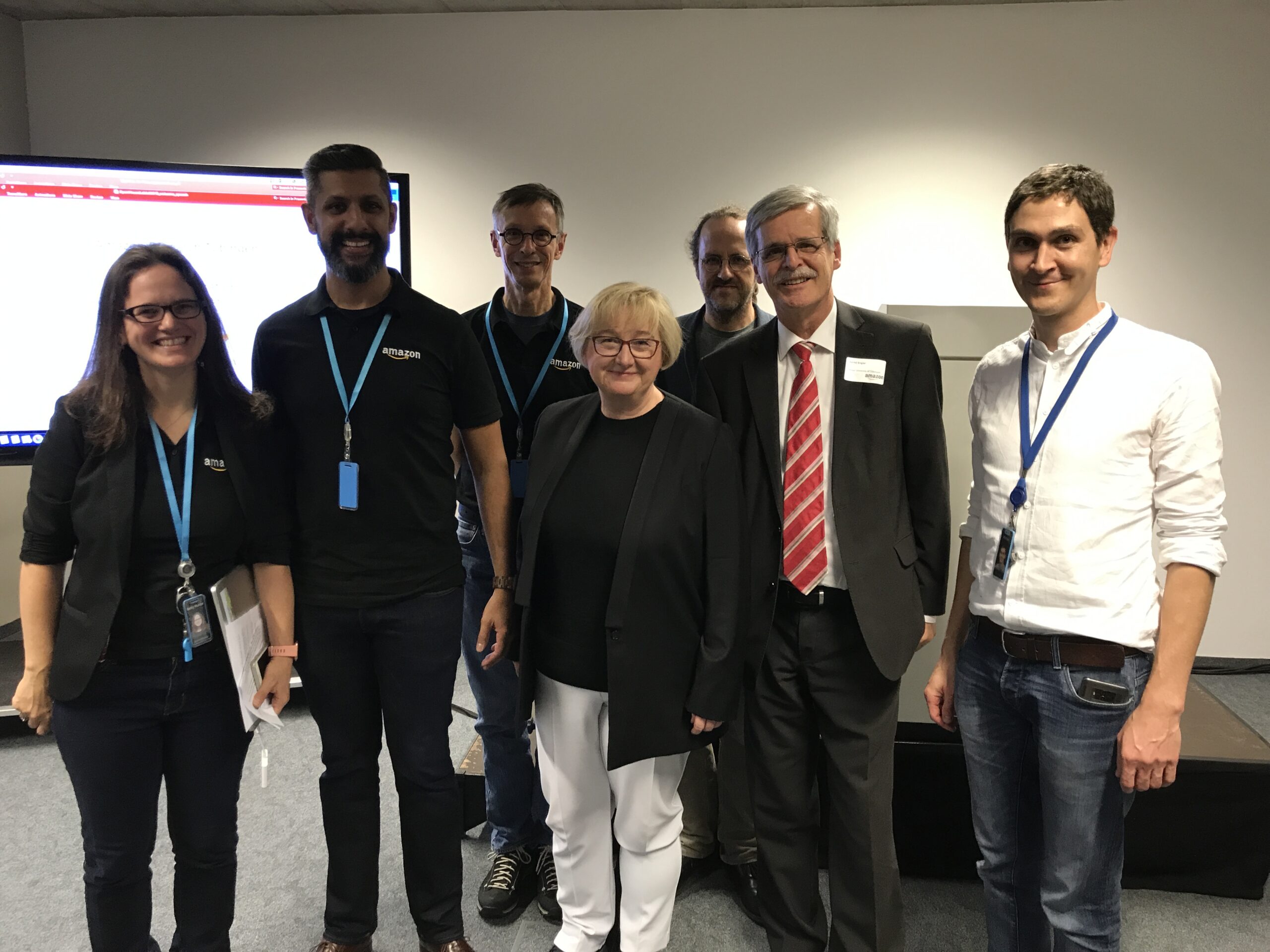
    From left to right: Amazon researcher Betty Mohler, Yasser Jadidi, Operative Head of Lablet at Amazon Tübingen, Michael Black, Director at the Max Planck Institute for Intelligent Systems (MPI-IS) and Cyber Valley Spokesperson, Theresia Bauer, Baden Württemberg’s Minister for Science, Research and Arts, Bernhard Schölkopf, Director at the MPI-IS, Bernd Engler, Rector of the University of Tübingen and Michael Hirsch, Research Science Manager & Site Lead at Amazon Tübingen.

  • Cyber Valley launches Start-Up Network

    Cyber Valley launches Start-Up Network

    Stuttgart/Tübingen. Cyber Valley on Monday announced the launch its new Start-up Network as a platform for exchange between AI start-ups within the Cyber Valley ecosystem.

    “By promoting dialog among experts in the field of intelligent systems, we are building a strong community of entrepreneurs in the Stuttgart-Tübingen region,” said Michael Black, Cyber Valley spokesperson and Director at the Max Planck Institute for Intelligent Systems in Tübingen. “With the Start-Up Network, we have taken an important step toward promoting tech transfer, which is one of the Cyber Valley initiative’s central goals.”  

    As members of the network, start-ups are invited to attend Cyber Valley networking events such as talks, meet-ups, and tech brunches on a regular basis. Network members’ activities must be related to the field of intelligent systems. Moreover, the start-ups are required to be connected with Cyber Valley, either by being headquartered in the Stuttgart-Tübingen region, or by having members or alumni of Cyber Valley partner institutions among their founders. Membership in the Cyber Valley Start-Up Network is reviewed once a year to ensure that these requirements continue to be met. 

    Cyber Valley invites interested start-ups that match these criteria to apply for membership to the Start-Up Network. “We want to help the start-up community in the region grow and are building this network to create a breeding ground for new ideas and innovation,” says Michael Black. 

    The Cyber Valley Start-Up Network counts seven initial members:

    • Deep Art: A joint venture between scientists at the University of Tübingen, École polytechnique fédérale de Lausanne (Switzerland), Université catholique de Louvain (Belgium), and the University of Freiburg, Deep Art applies an algorithm that allows everyone to create pictures in different artistic styles in just a few clicks.
    • Layer 7 AI. Founded by scientists at the University of Tübingen, the consultancy specializes in taking the latest breakthroughs in machine learning and turning them into scaleable products. 
    • Meshcapade was founded by two alumni of the Max Planck Institute for Intelligent Systems in Tübingen. The company aims to make animating, simulating, and recognizing human bodies effortless, and to bring realistic virtual humans into simulation and 3D environments.
    • Predictive Cueing is a Tübingen start-up offering motion cueing software that enables urban driving in a simulator. Its founder is an alumnus of the Max Planck Institute for Biological Cybernetics in Tübingen. 
    • Reasonal is developing a new generation of machine learning algorithms to bring meaning, clarity, and civility to online conversations. It was co-founded by scientists from the Max Planck Institute for Intelligent Systems in Tübingen and from the Max Planck Institute for Software Systems in Kaiserslautern.
    • Sagacity is a Tübingen-based start-up that seeks to improve customer and employee engagement with machine learning and artificial intelligence solutions.
    • Scatterblogs offers AI solutions for analysts, decision-makers, and journalists. Founded by alumni of the University of Stuttgart, the start-up’s solutions enable users to detect important events through social media such as Twitter and Facebook in real time and to identify relevant content.

    Start-ups interested in joining the Cyber Valley Start-Up Network are invited to contact the Cyber Valley management office at: contact@cyber-valley.de

  • Fraunhofer Gesellschaft joins Cyber Valley

    Fraunhofer Gesellschaft joins Cyber Valley

    Stuttgart – The Fraunhofer Institute for Manufacturing Engineering and Automation IPA and the Fraunhofer Institute for Industrial Engineering IAO have joined Cyber Valley, further strengthening Europe’s largest research consortium in the field of artificial intelligence (AI). The tie-up demonstrates once again that Baden-Württemberg is the AI hotspot in Europe, on a par with some of the world’s leading centers, for instance in North America.
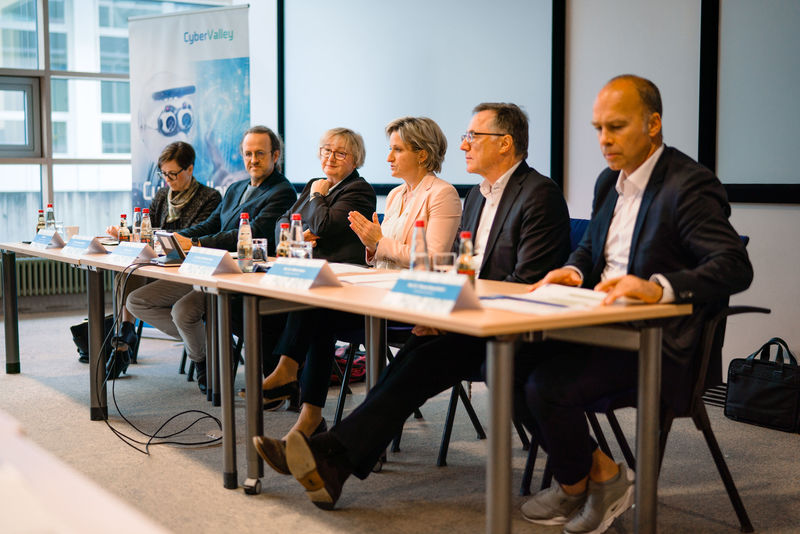
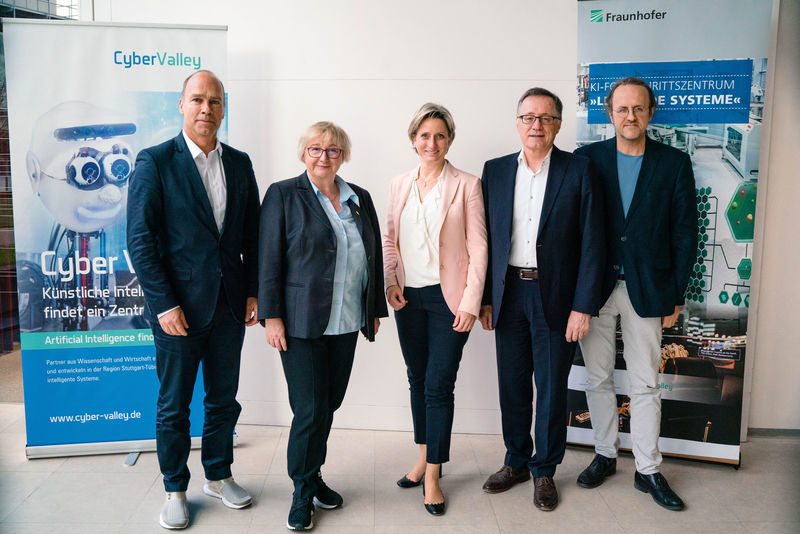
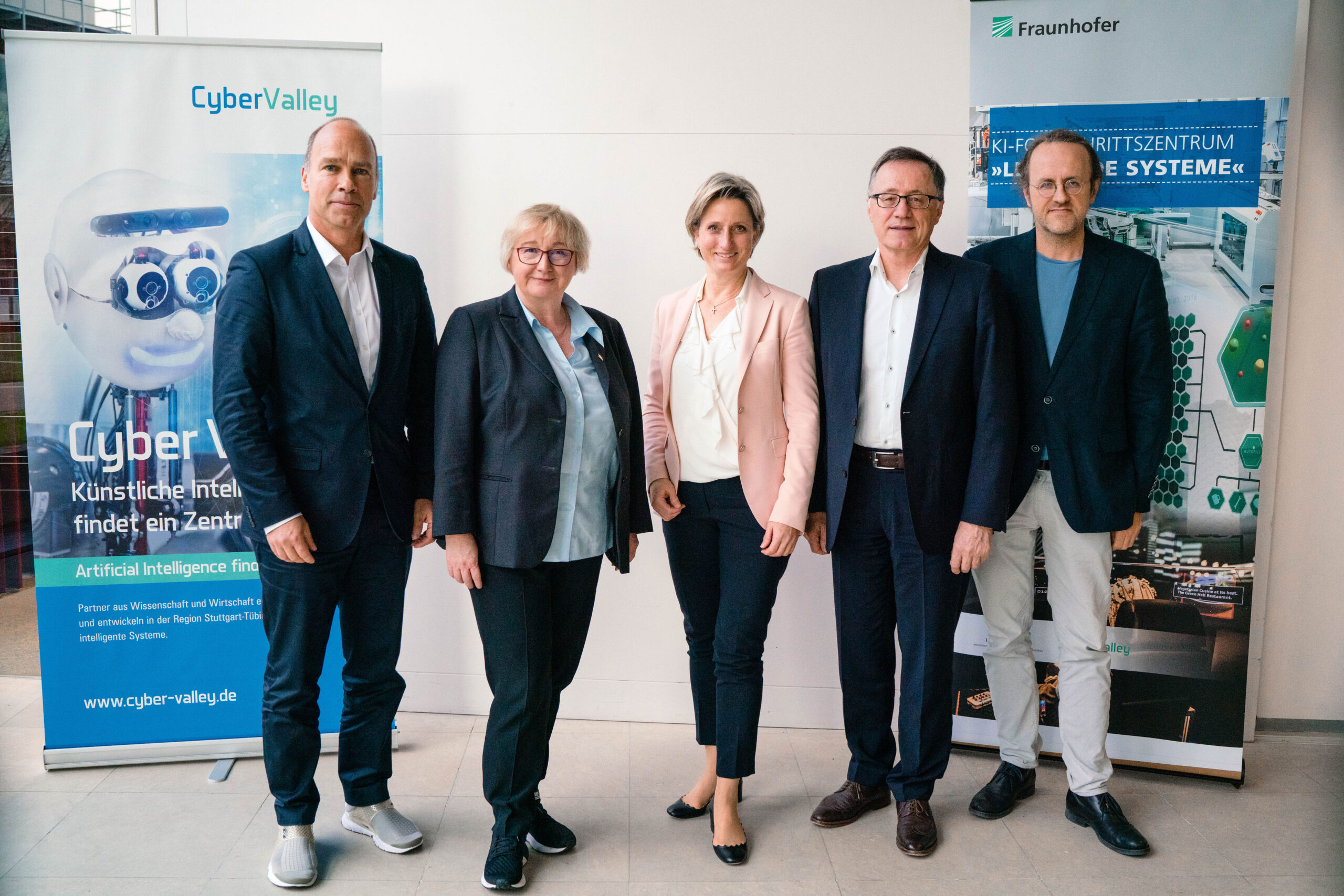
    From left to right: Silke Walter, press spokesperson Ministry of Economy, Prof. Bernhard Schölkopf, Baden-Württembergs Science Minister Theresia Bauer, Minister of Economy Dr. Hoffmeister-Kraut, and from Fraunhofer Prof. Wilhelm Bauer und Prof. Thomas Bauernhansl.

    “Artificial intelligence is a key driver of innovation and economic growth and holds enormous economic potential for our small and medium-sized enterprises,” said Baden-Württemberg's Minister of Economic Affairs, Labour and Housing Dr. Nicole Hoffmeister-Kraut. “We need more 'AI made in Baden-Württemberg' and we need to bring the results of our cutting-edge research even better and faster into the practical application of our companies. To this end, we must make massive progress in the research, development, and commercialisation of artificially intelligent systems.

    Baden-Württemberg's Science Minister Theresia Bauer added: “An internationally visible AI hotspot is created here. We warmly welcome the Fraunhofer-Gesellschaft to the ever-growing circle! The Cyber Valley research network is developing very dynamically and is attracting more and more scientists, young talents from all across the world, companies, and foundations. The boom has created the need to establish reliable management structures for the Cyber Valley network in order to effectively manage the growing organizational tasks.”

    "With their application-oriented focus, the Fraunhofer Institutes ideally complement the research of the Max Planck Institute for Intelligent Systems and the Universities of Tübingen and Stuttgart," said Professor Martin Stratmann, President of the Max Planck Society. "Fraunhofer’s engagement makes it easier to bridge the gap to the industrial partners within Cyber Valley: in this way, findings from basic research can be applied more quickly."
     
    Professor Reimund Neugebauer, President of the Fraunhofer-Gesellschaft, emphasized: "Artificial intelligence is one of the central digital issues of the future and will change our lives from the ground up. For the international economy and industrial value chains, it means a fundamental structural change. By joining Cyber Valley, together with our partners we will advance research and transfer from science to the market in order to fully exploit the potential of this key technology and strengthen Germany as a location for international competition.”

    "We very much welcome the Fraunhofer Gesellschaft’s participation, as it will help us apply the methods of modern AI, especially in small and medium-sized enterprises," said Professor Bernhard Schölkopf, Director at the Max Planck Institute for Intelligent Systems and co-founder of Cyber Valley.

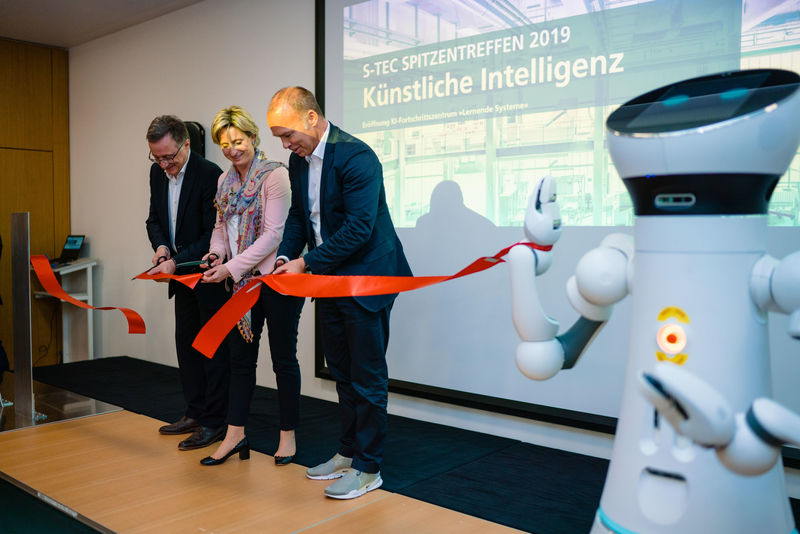
    Baden-Württemberg’s Ministry of Economic Affairs and the Fraunhofer Gesellschaft are co-financing the AI innovation center Learning Systems (KI-Fortschrittszentrum “Lernende Systeme”), which was incorporated into the Cyber Valley research consortium from October 1, 2019. The center is a laboratory with an initial team of 20 researchers and planned funding of ten million euros until the end of 2022.

    Central point of contact for application-oriented AI research

    For companies in Baden-Württemberg, the AI innovation center is a central point of contact for application-oriented research on artificial intelligence. The center explores applied research projects relevant to the manufacturing and service industries. It also acts as an interface between industry and the fundamental research conducted within the Cyber Valley consortium (the Universities of Tübingen and Stuttgart, the Max Planck Institute for Intelligent Systems, and several industry partners). The aim is to enable technology transfer to industry beyond the existing partners.

    As another component, joint research labs will be set up in which fundamental researchers will cooperate with more application-focused scientists at IPA or IAO. The projects will not be initiated by companies, but rather based on assessments of what the market needs. These joint research labs may thus bear the greatest potential for future start-ups.

    Direct cooperation with industry is a central focus of the AI innovation center. Feasibility studies and the development of prototypes of AI applications are partly financed by the innovation center’s budget. To establish strategic partnerships, industrial companies have the opportunity to operate and finance Enterprise Labs. At these labs, one or more researchers within the innovation center can give their full attention to the respective company’s specific needs. In all its activities, the AI innovation center Learning Systems aims to implement human-centered AI that people trust and accept. The full potential of AI can only be realized once people interact and work closely with new technology. To realize human-centered AI, research activities focus on topics such as explainability, privacy, safety, and the robustness of AI technologies.

    Benefit to industry and society

    With Cyber Valley, partners from science, business, and society are building a unique research ecosystem in the Stuttgart-Tübingen region. Supported by the state of Baden-Württemberg, Cyber Valley promotes an active exchange between science and industry. The initiative also focuses on training the best minds in the field of AI and creating a breeding ground for start-ups. The aim is to combine cutting-edge research with entrepreneurial spirit to promote spin-offs and technology transfer.

    The cooperation of the two Fraunhofer institutes and Cyber Valley is thus a major source of potential for all parties involved. Fraunhofer Gesellschaft has a 70-year history of excellence in business-oriented research. Its 72 institutes work closely with small and medium-sized enterprises, commonly referred to as the “German Mittelstand”, as well as with larger local and international enterprises. This expertise in realizing projects in close cooperation with industry is of immense value to Cyber Valley. With its proven track record of many successful start-ups, Fraunhofer Gesellschaft joining Cyber Valley will further enhance the research consortium's innovative and entrepreneurial strength. Fraunhofer Gesellschaft actively supports researchers who want to start their own companies based on the intellectual property they have developed while working with Fraunhofer. The mission of bringing technological pro-gress to companies and society is firmly anchored in the Fraunhofer mission statement.

    www.fraunhofer.de | www.iao.fraunhofer.de | www.ipa.fraunhofer.de

    Cyber Valley is Europe's largest research cooperation in the field of artificial intelligence with partners from politics, science, business, and society. The partnership strengthens research and teaching in the fields of machine learning, computer vision, and robotics as well as the links between these fields. Partners are the Max Planck Institute for Intelligent Systems, the University of Stuttgart, the University of Tübingen, the State of Baden-Württemberg and seven industrial partners: Amazon, the BMW Group, IAV GmbH, Daimler AG, Porsche AG, Robert Bosch GmbH and ZF Friedrichshafen AG. Cyber Valley is also supported by the Christian Bürkert Foundation, the Gips-Schüle Foundation, the Vector Foundation, and the Carl Zeiss Foundation.

    www.cyber-valley.de
  • Universität Tübingen bei Exzellenzstrategie erfolgreich

    Universität Tübingen bei Exzellenzstrategie erfolgreich

    Dies ist eine Pressemitteilung der Universität Tübingen:

    Die Universität Tübingen bleibt exzellent. Eine Kommission aus Wissenschaftlerinnen und Wissenschaftlern sowie Vertreterinnen und Vertretern von Bund und Ländern hat am Freitag entschieden, dass Tübingen für weitere sieben Jahre den Status einer Exzellenzuniversität erhält und entsprechend finanziell gefördert wird. „Mit diesem hart erkämpften Erfolg ist die Grundlage gelegt, um Tübingen dauerhaft in der kleinen Gruppe der weltweit besten Universitäten zu etablieren“, sagte Rektor Professor Bernd Engler. Die finanzielle Förderung durch Bund und Länder eröffne die Möglichkeit, die Universität nicht nur in einzelnen Forschungsgebieten, sondern strukturell und in einer großen thematischen Breite weiterzuentwickeln.

    „Die Welt wandelt sich derzeit rasch und die Wissenschaft macht da keine Ausnahme“, sagte Engler. „Genome Editing, Personalisierte Medizin, Digitalisierung und Künstliche Intelligenz sind hier nur einige Beispiele für Entwicklungen, deren Auswirkungen langfristig die Gesellschaft insgesamt verändern werden. Angesichts dieser Situation muss die Universität in der Lage sein, rascher als bisher auf die damit verbundenen Herausforderungen zu reagieren.“ Die Mittel aus der Exzellenzstrategie werde die Universität daher nutzen, um neue, vielversprechende Forschungsfelder an der Universität zu implementieren und flexibel auf Herausforderungen zu reagieren. Dazu würden unabhängige Nachwuchsforschungsgruppen und Tenure-Track-Professuren eingerichtet sowie das bewährte Instrument der „Exploration Funds“ eingesetzt. So könne die Universität junge Wissenschaftlerinnen und Wissenschaftler mit hohem Potenzial nach Tübingen holen beziehungsweise hier halten.

    Engler sagte, zahlreiche der in der ersten Förderphase gestarteten Projekte und Initiativen hätten sich bewährt und würden daher fortgesetzt. Dazu zählten etwa das Athene-Programm für Wissenschaftlerinnen, die „Innovation Grants“ für junge Postdocs zur Förderung des Wissenstransfers oder auch die „Exploration Funds“ für Forscherinnen und Forscher in den Geistes- und Sozialwissenschaften. Auch die Forschungsplattformen und die sogenannten Core Facilities wie QBiC, LISA+ und das eScience Center hätten sich bestens etabliert und blieben erhalten.

    Die Universität werde mit den Mitteln aus der künftigen Exzellenzförderung aber auch eine Reihe neuer Projekte starten. Darunter seien zum Beispiel: 

    • „Tübingen Structural Microscopy“ (TSM) wird als Core Facility in Zukunft die Kapazitäten der Universität Tübingen auf dem Gebiet der Elektronen- und Ionen-Mikroskopie bündeln. Einen Schwerpunkt der Arbeit wird der Einsatz modernster Untersuchungsverfahren auf der Mikro- und Nanoebene bilden.
       
    • Als neue Core Facility in den Wirtschafts- und Sozialwissenschaften wird das Methodenzentrum für empirische Forschung in erster Linie die Grundlagenforschung auf dem Gebiet quantitativer und qualitativer Methoden voranbringen. Das Zentrum wird zu interdisziplinären Methoden und neuen Techniken der Datenanalyse forschen und Lösungsansätze für unterschiedliche Modelle in den Sozial- und Wirtschaftswissenschaften sowie der Psychologie entwickeln, nicht zuletzt unter Einsatz von Techniken des Maschinellen Lernens.
       
    • Die Universität Tübingen wird ein College of Fellows für internationale Wissenschaftlerinnen und Wissenschaftler gründen und damit die Internationalisierung der Universität in Forschung und Lehre vorantreiben. Das College richtet sich insbesondere an internationale Postdoktoranden, die eine Chance erhalten, bis zu zwei Jahre lang in Tübingen an einem Projekt zu forschen und sich über Fachgrenzen hinweg auszutauschen. Während dieser Zeit werden die Fellows in das akademische Leben ihres gastgebenden Fachbereichs integriert und leisten auch Aufgaben in der Lehre.
       
    • Die Universität hat in den vergangenen Jahren ihre Aktivitäten in den Bereichen Innovation und Wissenstransfer erheblich ausgebaut. Beispielgebend dafür ist die Cyber Valley-Initiative, eine Kooperation von Universitäten, Forschungseinrichtungen und Unternehmen auf dem Gebiet der Künstlichen Intelligenz. Aufbauend auf diesen Erfahrungen werden wir in der nächsten Förderphase ein universitäres Innovationszentrum gründen, in dem alle Start-up-Aktivitäten gebündelt werden. Forscherinnen und Forschern, die ihre wissenschaftlichen Erkenntnisse zu neuen Dienstleistungen und Produkten weiterentwickeln wollen, wird hier eine Infrastruktur geboten. 
       
    • Mit der Forschungsplattform „Global Encounters“ wird sich die Universität auch in den Geistes- und Sozialwissenschaften verstärkt auf globale Handlungsräume ausrichten. Aufbauend auf bereits bestehenden Forschungskooperationen wird die Plattform Forscherinnen und Forscher zusammenbringen, um die sozialen und kulturellen Auswirkungen von Globalisierung, Mobilität und Systemveränderungen im Bereich der Politik und Ökonomie zu untersuchen.
       
    • Die Universität will ihre Studierenden durch ein „Global Awareness Education Program“ ermutigen, sich stärker für die globalen Horizonte ihrer Studien und auch ihrer künftigen Arbeitswelt zu öffnen und interkulturelle Kompetenzen stärker zu entwickeln. Dazu wird die Universität die Zahl der fremdsprachigen Lehrveranstaltungen deutlich erhöhen und verstärkt auf globale Themen setzen. Das Kursangebot zu interkultureller Kompetenz und ökologischer Nachhaltigkeit werden wir ausweiten und das Angebot auch den Beschäftigten zugänglich machen.

    Der Rektor betonte, die Exzellenzentscheidung werde positive Auswirkungen auf die gesamte Region haben: „Universitäten sind im 21. Jahrhundert die Motoren der wirtschaftlichen Entwicklung.“ Mit dem Erfolg Tübingens im Exzellenzwettbewerb sei die Region in einer hervorragenden Position, um die demographischen und wirtschaftlichen Herausforderungen der kommenden Jahrzehnte meistern zu können. 

    Engler dankte allen, die in den vergangenen drei Jahren an der erfolgreichen Exzellenzbewerbung mitgewirkt haben. „Unsere Wissenschaftlerinnen und Wissenschaftler, nicht zuletzt aber auch die Mitarbeiterinnen und Mitarbeiter im Forschungsdezernat haben eine enorme Leistung vollbracht und sich weit über das Selbstverständliche hinaus für das große Ziel engagiert“, sagte der Rektor. „Darüber hinaus gilt unser Dank unserem International Advisory Board und unserem weltweiten Netzwerk aus Hochschulexpertinnen und -experten, die uns auf diesem langen Weg zur Exzellenz mit ihrem Rat zur Seite gestanden haben.“ Sie alle hätten sich um die Universität Tübingen verdient gemacht.

    Kontakt:

    Eberhard Karls Universität Tübingen
    Hochschulkommunikation
    Dr. Karl Guido Rijkhoek
    Leitung

    Antje Karbe
    Pressereferentin
     +49 7071 29-76789
    Telefax +49 7071 29-5566
    antje.karbe@uni-tuebingen.de 

  • Bosch is expanding its involvement in Cyber Valley

    Bosch is expanding its involvement in Cyber Valley

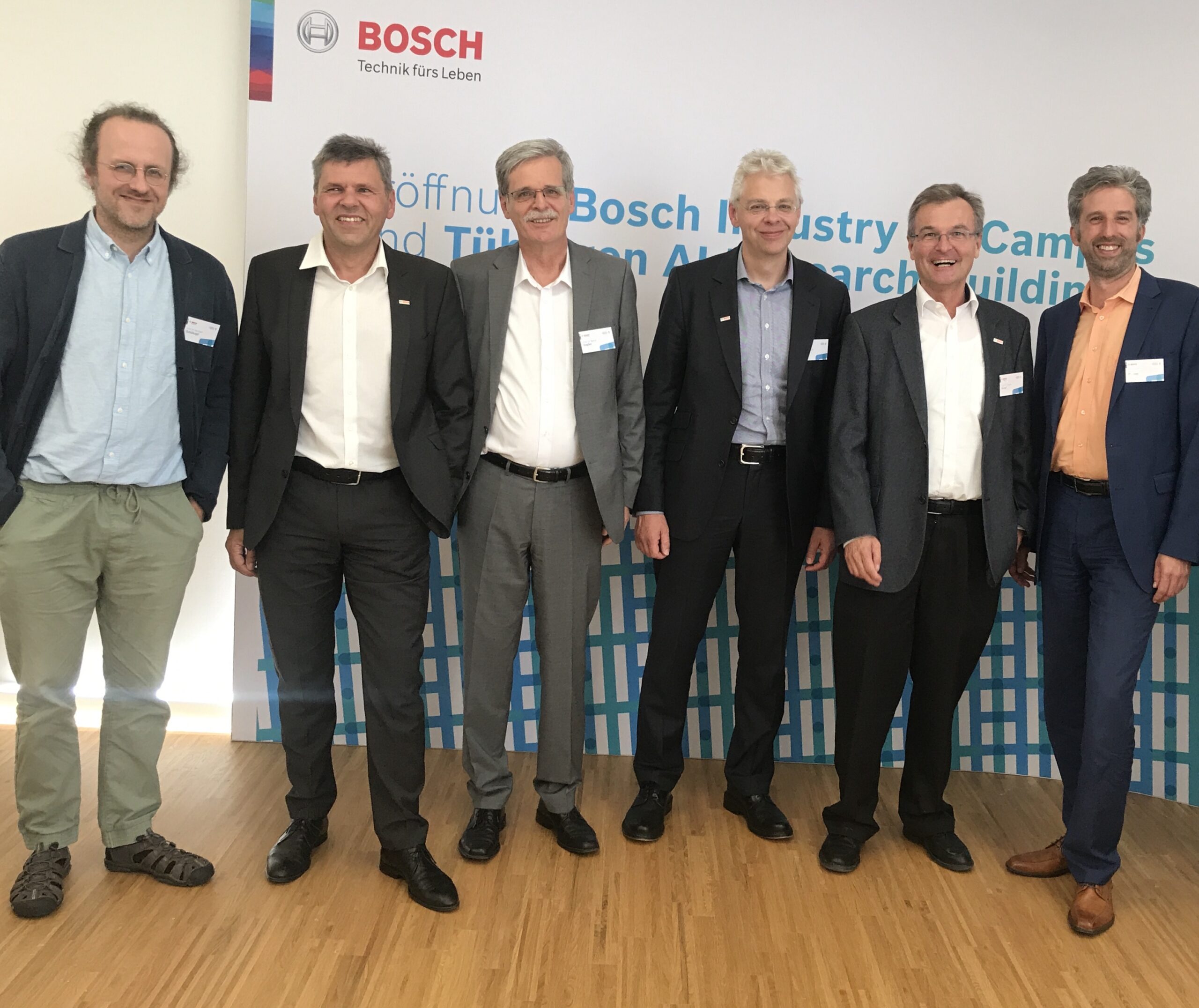
    Stuttgart/Tübingen − Bosch plans to ramp up its activities in the emerging technology of artificial intelligence (AI): in Tübingen in Germany’s Cyber Valley, the supplier of technology and services intends to invest some 35 million euros in a new “Bosch AI Campus.” Bosch is currently in talks with the city of Tübingen to negotiate the purchase of a rough 12,000 square-meter plot on which to build the campus. The move into the new research complex is planned for the end of 2022. Roughly 700 experts will work on applied AI there. “Bosch aims to be among the global leaders in industrial AI research,” said Bosch CDO/CTO Dr. Michael Bolle. “The new Bosch AI Campus will bring us a step closer to achieving this goal.”

    Space for startups and in-depth exchange

    The Bosch AI Campus in Tübingen will be situated close to the research facilities of the Max Planck Institute for Intelligent Systems and the University of Tübingen’s AI research building. Besides laboratories and offices, the campus will offer spaces in which startups and external AI research groups can take up temporary residence. Freely accessible areas on the first floor of the campus will serve to foster exchange among Cyber Valley experts. Other parts of the facility will also be open to the public. “In the new building, experts from the Bosch Center for Artificial Intelligence (BCAI) will work on projects together with experts from other Bosch divisions and from startups. The campus structure will do a lot to foster an exchange of ideas,” Bolle said.

    Bosch is a founding member of Cyber Valley, which was established in 2016. This joint research venture brings together partners from industry, academia, and politics to drive forward AI research in the German state of Baden-Württemberg. The idea is to quickly transfer research findings into real-world industrial applications. “Excellence clusters like Cyber Valley are important, as they make Germany even more attractive to top AI experts and strengthen our position in international competition,” Bolle continued. “The Bosch AI Campus also enhances Baden-Württemberg’s international appeal as an AI hub.”

    From research to practical application

    Bosch is researching artificial intelligence that is safe, robust, and explainable. Its investment in the new AI campus is yet another step by the company to strengthen AI research in Cyber Valley. Last year, Professor Matthias Hein was appointed to a Bosch-endowed chair at the University of Tübingen. The company sponsors two Industry on Campus professorships, which allow the university to integrate practical industrial expertise into its research and teaching.

    These professorships focus on the issues that arise when preparing for industrial applications. One example is predictive diagnostics, which makes it possible to predict machine breakdowns long before a fault actually occurs. Well-timed maintenance can avoid protracted machine downtimes. Predictive diagnostics is an example of machine learning, which is the focus of the research conducted at the BCAI. Currently, the BCAI has some 200 associates at a total of six locations in Germany, the United States, India, and Israel.

    Contact person for press inquiries:

  • Cyber Valley präsentiert KI-Spitzenforschung in Berlin

    Cyber Valley präsentiert KI-Spitzenforschung in Berlin

    Berlin, 27.06.2019 – Die Cyber Valley Initiative wird heute auf der traditionellen Stallwächterparty der Landesvertretung Baden-Württemberg in Berlin vertreten sein. Schon seit 1964 gehört die Stallwächterparty zu den Höhepunkten des Berliner Sommers, mit hochrangigen Gästen aus Politik und Wirtschaft. Unter dem Motto „im Herzen Europas“ zeigt die diesjährige Veranstaltung die Stärken des Standorts Baden-Württembergs. Mit einem Infostand und Mitmachaktionen gibt die Cyber Valley Initiative, Europas größte Forschungskooperation in Bereich künstliche Intelligenz, Einblicke in die Forschungsexzellenz der Region Stuttgart-Tübingen. 

    „Cyber Valley zieht Spitzenwissenschaftler von den Top-Universitäten der ganzen Welt an. Es ist ein Forschungsstandort, der das Zusammenspiel von exzellenter Grundlagenforschung und leistungsstarken Unternehmen fördert und damit wissenschaftliche Durchbrüche und eine hohe Gründungsdynamik ermöglicht. Damit bringen wir die europäische Zusammenarbeit in der KI-Spitzenforschung weiter voran“, sagt Theresia Bauer, Ministerin für Wissenschaft, Forschung und Kunst. 

    Das Ende 2016 gegründete Cyber Valley stärkt Forschung und Lehre in den Bereichen Machine Learning, Computer Vision und Robotik und fördert Technologietransfer und Ausgründungen in diesen Bereichen.Bereits heute ist das Cyber Valley der führende Forschungsstandort in Deutschland für künstliche Intelligenz und unter den zehn führenden KI-Forschungsstandorten weltweit. Knapp die Hälfte der Spitzenpublikationen von deutschen Forschungseinrichtungen im Bereich Machine Learning stammen derzeit aus der Region Stuttgart-Tübingen. Die Cyber Valley Initiative zielt unter anderem darauf ab, diese Position im globalen Wettbewerb um die besten Köpfe zu sichern und weiter auszubauen, um die Wettbewerbsfähigkeit europäischen KI-Forschung zu sichern.  

    „Die Zukunft wird maßgeblich durch neue Technologien gestaltet, die nicht an Ländergrenzen halt machen. Eine besonders schlagkräftige Rolle spielt dabei das Maschinelle Lernen, das gerade dabei ist, Industrie und Gesellschaft global im rasanten Tempo zu verändern,“ sagt Matthias Bethge, Professor für Computational Neuroscience und Machine Learning an der Universität Tübingen,und Mitgründer der European Laboratory for Learning and Intelligent Systems (ELLIS). DieELLIS-Initiative, die im Cyber Valley entstanden ist, fördert die Entwicklung eines starken europäischen KI-Forschungsnetzwerks. „Damit Europa die Zukunft gestalten kann, brauchen wir eine europäische Exzellenz-Institution, die in der Lage ist, Spitzenforscher aus aller Welt anzuziehen und in Europa tätig werden zu lassen. Das ist das Ziel der ELLIS-Initiative," so Bethge.

    „Ich freue mich, dass ELLIS bei der Stallwächterparty des Landes zum Thema Europa vertreten ist. Das Thema KI gehört neben der Landes- und Bundesebene unbedingt auf die europäische Ebene. ELLIS ist dabei ein zentrales Projekt, das die Landesregierung unterstützt“, sagt Ministerin Bauer.

    Das Landeskabinett hatte am 26. März 2019 ein Maßnahmenpaket von 20 Mio. € zur weiteren Stärkung der Künstliche Intelligenz bewilligt, ergänzend zu den 100 Millionen Euro, die bereits 2018 für die Ko-Finanzierung von Projekten des Bundes zu Künstlicher Intelligenz und für Batterieforschung vorgesehen wurden. Ziel ist es, Baden-Württemberg zum Vorreiter der europäischen Künstlichen Intelligenz zu machen. Das Cyber Valley soll dabei eine maßgebliche Rolle spielen.

  • Cyber Valley’s machine learning research makes a strong showing on the global stage

    Cyber Valley’s machine learning research makes a strong showing on the global stage

    Stuttgart/Tübingen, May 22, 2019 – In the coming weeks, the Cyber Valley initiative will shine on the global stage: researchers from the Max Planck Institute for Intelligent Systems (MPI-IS), the Universities of Tübingen and Stuttgart, and the Bosch Center for Artificial Intelligence will be well represented at the upcoming International Conference on Machine Learning (ICML) and Conference on Computer Vision and Pattern Recognition (CVPR), two of the leading conferences in global artificial intelligence (AI) research. Both conferences are being held in Long Beach, California: the ICML is set to run from June 9-15, and CVPR will follow from June 16-20.

    Founded at the end of 2016 in southwestern Germany, the Cyber Valley initiative is Europe’s leading research cooperation in the field of artificial intelligence. With a total of 27 papers accepted at both conferences, the initiative has once again demonstrated that the Stuttgart/Tübingen region is among the world’s top locations for research in the field of machine learning, computer vision, and robotics. 

    “These are highly competitive conferences. Only few submissions get accepted, and the leading researchers in the field present their best work. We are pleased to have an impressive display of publications from Cyber Valley”, said Professor Bernhard Schölkopf, Managing Director at MPI-IS and Director of the institute’s Empirical Inference department. 

    Submissions to both conferences reflect the incredible growth that the field of machine learning has seen in recent years: in 2019, ICML received 3424 papers, almost 1000 more than the previous year. At CVPR, submissions spiked 56 percent in 2019, to 5,165. Acceptance rates for the two conferences stand at around 25 percent.  

    At this year’s ICML, Cyber Valley is represented with 11 papers, nine of which are from Schölkopf’s team. Other papers include a cooperation between the head of the Cyber Valley Intelligent Control Systems research group, Dr. Sebastian Trimpe, the University of Stuttgart, and the Bosch Center for Artificial Intelligence, as well as a paper submitted by the team of Dr. Matthias Hein, the Bosch-Endowed Cyber Valley Professor at the University of Tübingen. 

    Researchers from Cyber Valley have been similarly successful at the 2019 CVPR: the research cooperation’s three academic partners are presenting 16 papers. “The success of our international team of scientists at this year’s CVPR demonstrates that Cyber Valley stands for outstanding research in AI,” said Andreas Geiger, Professor for learning-based computer vision at the University of Tübingen and leader of the Autonomous Vision research group at MPI-IS. Geiger’s team from the University of Tübingen has had nine papers accepted at the conference. Professor Matthias Hein of the University of Tübingen is also presenting one paper at CVPR.

    The Cyber Valley Spokesperson and MPI-IS Director Dr. Michael Black’s Perceiving Systems Department is also well represented at CVPR with six papers, one of which was written in cooperation with Professor Bernhard Schölkopf’s Empirical Inference Department. The Autonomous Learning Group, which is headed by Dr. Georg Martius, is also present at CVPR with one paper.

    A full list of papers and authors is available on the Cyber Valley website: 

    https://cyber-valley.de/en/websites/cyber-valley/pages/2019-icml

    About:

    For several years, the German Federal State of Baden Württemberg has been home to Cyber Valley, one of the largest research cooperations in Europe in the field of artificial intelligence, with partners from politics, science, business, and society. The partnership strengthens research and education in the fields of machine learning, computer vision, and robotics, as well as connections between these scientific disciplines.  

    Partners are the MPI-IS, the University of Stuttgart, the University of Tübingen, the State of Baden-Württemberg, and the following seven industrial partners: Amazon, the BMW Group, IAV GmbH, Daimler AG, Porsche AG, Robert Bosch GmbH, and ZF Friedrichshafen AG. With ten newly established research groups and ten new professorships at the Max Planck Institute for Intelligent Systems and the Universities of Stuttgart and Tübingen, Cyber Valley stands for independent basic research, and the initiative aims to attract the best young minds from around the world. In addition, with the recently founded International Max Planck Research School for Intelligent Systems (IMPRS-IS), well over 100 PhD students will graduate from Cyber Valley institutions in the coming years.

    http://www.cyber-valley.de
    Press Contacts: 

    Linda Behringer

    Cyber Valley Public Relations
    c/o Max Planck Institute for Intelligent Systems, Stuttgart

    T: +49 711 689 3552

    M: +49 151 2300 1111

    linda.behringer@cyber-valley.de

    Valérie Callaghan

    Cyber Valley Public Relations

    c/o Max Planck Institute for Intelligent Systems, Tübingen

    T: +49 7071 601 1832             
    M: +49 151 1560 4276

    valerie.callaghan@cyber-valley.de

  • New height in popularity: IMPRS-IS on track to double size in 2019

    New height in popularity: IMPRS-IS on track to double size in 2019

    Stuttgart/Tübingen – Launched just two years ago, the International Max Planck Research School for Intelligent Systems, also known as IMPRS-IS, has far exceeded its initial vision of recruiting 100 Ph.D. scholars over the course of its initial six-year grant. Since the third hiring symposium ended in February, 70 students from around the world have received offers for funded doctoral positions with IMPRS-IS faculty members at the Max Planck Institute for Intelligent Systems, the University of Stuttgart, and the University of Tübingen. 56 scholars are already pursuing their doctorates within IMPRS-IS.

    “We expect most of the 70 offers to be accepted, which means our young doctoral program will double in size this year,” says Katherine J. Kuchenbecker, Director at the Max Planck Institute for Intelligent Systems (MPI-IS) and IMPRS-IS spokesperson. “Once all the contracts have been signed, the IMPRS-IS will be one of the largest of the Max Planck Society’s IMPRS doctoral schools. These high enrollment numbers reflect the success of our faculty members at obtaining third-party funding, as well as their knack for creating attractive research projects that captivate qualified applicants.”

    Theresia Bauer, Baden-Württemberg's Minister of Science, Research and the Arts, is also very pleased with the international popularity of the doctoral school and its potential: “IMPRS is one of the most important activities within Cyber Valley. After all, young, talented people are the ones who will shape our future in the digital world, in science, in business, and in society. The high number of outstanding applications from around the world demonstrates how attractive Cyber Valley already is. An inspiring location has been created for learning and sharing ideas.“

    “It is just amazing to see how popular our school has become!” Leila Masri adds. She has coordinated IMPRS-IS since it was launched in early 2017. “This means many new, brilliant and talented students are joining us. And it means many new research projects and interactions between the universities and MPI-IS, making our ties even stronger. It’s fantastic!”

    The International Max Planck Research School for Intelligent Systems brings together the MPI for Intelligent Systems and the Universities of Tübingen and Stuttgart. Together, they form an interdisciplinary graduate school of 34 internationally renowned faculty working at the leading edge of computational cognitive science, computer graphics, computer vision, control systems, human-computer interaction, machine learning, micro- and nanorobotics, perceptual inference, and robotics. The doctoral program is a key element of the Cyber Valley research cooperation, which focuses on providing first-class education to the world’s top young researchers in the broad field of artificial intelligence.

    In the past two years, IMPRS-IS has gained high visibility within the scientific community, as the 675 applications received for the third hiring symposium clearly demonstrate. In February, 103 candidates were invited to hold talks and give presentations at the two MPI-IS sites in Stuttgart and Tübingen.

    “The 70 applicants who have just received an offer are presently studying and working as far away as New Zealand and as close as our participating institutions, plus everything in between,” Leila Masri says. In addition to Germany, the new recruits come from Brazil, China, Colombia, Croatia, Egypt, France, India, Indonesia, Iran, Poland, Russia, South Korea, Spain, Switzerland, Turkey, the UK, Ukraine, the US, and Venezuela. “Around 40 percent of this year’s recruits are German, and the rest come from abroad. The international part of our name really holds true.”

    Founded in early 2017, the IMPRS-IS aims to bring a new generation of young scientists and engineers into the highly multi-disciplinary research environment available in the Stuttgart/Tübingen region. The school is one of 67 IMPRS’s presently operating within the Max Planck Society. Common characteristics of these graduate programs are the close cooperation with one or more local universities, a curriculum with research seminars and soft-skills workshops, and a strong academic community that brings together students, faculty, and other researchers.

    The creation of IMPRS-IS was made possible by a central grant from the Max Planck Society to the MPI-IS for an initial duration of six years, as well as significant funding from the state of Baden-Württemberg for doctoral education at the Universities of Tübingen and Stuttgart. The school’s first class of 28 scholars from 11 countries began in the fall of 2017. The scholars, who were selected in a multi-stage process, have each completed a master’s degree in a field related to intelligent systems, such as mathematics, computer science, machine learning, physics, engineering, and robotics.

    Just seven months after the first class of Ph.D. students was recruited, a second class was selected in a similar selection process. The second generation of IMPRS-IS scholars, who started in 2018, includes another 28 young researchers. The IMPRS-IS gives these talented scholars an interdisciplinary doctoral research program with opportunities to study all key areas of intelligent systems, ranging from computer science to control theory, from mechanical engineering to neuroscience, and from mathematics to materials science.

  • Symposium Artificial Intelligence and Society

    Symposium Artificial Intelligence and Society

    The latest breakthroughs in artificial intelligence are based on machine learning. Using examples, computer programs can identify patterns and regularities in data sets and transfer these to similar situations in the future. The Stuttgart-Tübingen region is a leader in AI research and local research institutions occupy the top position in Germany for scientific publications in this field of research. The development is rapid and many questions about artificial intelligence and its significance for society need to be answered or at least discussed.

    Therefor the Max Planck Institute for Intelligent Systems in Tübingen is organizing a symposium on the topic of 'Artificial Intelligence and Society' on Friday, 14 September 2018, starting at 1 p.m.. The event is aimed in particular at the interested public.

    All interested parties are cordially invited to this symposium, which is organized together with the Cyber Valley Initiative and the Max Planck ETH Center for Learning Systems. Due to the limited space available, electronic registration is required by 03. September 2018:https://www.is.mpg.de/de/events/70-jahre-mpg/register

    Top-class speakers from science and industry were attracted to the symposium. The event is part of the Max Planck Day, the nationwide science festival of the Max Planck Society.

    The speakers at the KI Symposium are:

    • Dr. Michael Bolle / Robert Bosch GmbH
    • Prof. Dr. Dietmar Harhoff / Max Planck Institute for Innovation and Competition
    • Dr. Ralf Herbrich / Amazon Development Center Germany
    • Prof. Dr. Thomas Hofmann / ETH Zürich
    • Prof. Dr. Andreas L. Paulus / Georg-August-Universität Göttingen and member of the First Senate of the Federal Constitutional Court
    • Prof. Dr. Sarah Spiekermann / Vienna University of Economics and Business
    • Dr. Sandra Wachter/ Oxford Internet Institute

    The talks will be followed by a panel discussion. The event will take place in the lecture hall of the Max Planck Institute for Intelligent Systems, Max Planck Ring 4, in Tübingen. Since places in the lecture hall are limited, a video transmission will be set up on the Max Planck Campus Tübingen. The event will be held in German and simultaneous translation will be provided in English.

    The detailed program can be found here 

    The accompanying videos for the Symposium Artificial Intelligence and Society can be found here