User Group: Investor

  • Cyber Valley expands its Start-up Network with AIRAmed and Computomics

    Cyber Valley expands its Start-up Network with AIRAmed and Computomics

    AIRAmed develops software as a service (SaaS) that compares radiological image data based on neural networks with reference data in the background and extracts measurable disease characteristics. Computomics applies advanced machine learning (ML) methods to analyze genomic data in agriculture more quickly, thus enabling more precise predictions in plant breeding.

    “AIRAmed’s admission to the Cyber Valley Start-up Network highlights the growing importance of AI technology in medical applications,” said Michael Black, Director of the Perceiving Systems Department at the Max Planck Institute for Intelligent Systems and Cyber Valley spokesperson. “As a leader in machine learning-based data analysis, Computomics shows the contribution AI can make to food security – especially in times of climate change and in light of the growing world population. AIRAmed and Computomics are up-and-coming companies that exemplify the Cyber Valley ecosystem’s great potential for innovation.”

    AIRAmed: Reliable measurements for personalized medicine

    In Germany alone, about 350,000 new cases of dementia are diagnosed each year. Imaging technologies are of crucial importance in the diagnosis of dementia and other neurodegenerative diseases such as Alzheimer’s, Parkinson’s, and multiple sclerosis. Imaging-based structural changes precede the clinical symptoms of these diseases by many years. When it comes to prevention and selecting the right drug therapies, the best possible early detection and correct diagnosis are therefore essential. AIRAmed provides reliable measurement values as a basis for individual biomarkers in the context of personalized medicine.

    “We want to bring top university research to the patients. With AIRAmed’s service, treating physicians can recognize specific illnesses much earlier on the basis of quantitative and objective measurement parameters. In turn, this enables them to initiate appropriate therapies at an early stage and monitor their success in the course of the treatment,” said Tobias Lindig, one of the founders and managing directors of AIRAmed. The software uses neural networks to compare radiological image data with a large reference sample of healthy individuals of the same age and gender. It then extracts measurable disease characteristics from these data. Structural changes in the brain are detected almost in real time and in the highest quality and quantified in the background through a comparison with reference data. “The result enables objective and rapid diagnostics as detailed therapy monitoring. This is entirely in the patients’ interest, as it improves quality of life,” said Lindig.

    AIRAmed is a spin-off of the University Hospital Tübingen (UKT) and is located in Tübingen. The start-up has a cooperation agreement with the UKT regarding the acquisition of data for quality assurance, validation, and further development of the software. It is also involved in joint research projects with the Department of High-field Magnetic Resonance at the Max Planck Institute for Biological Cybernetics.

    Computomics: More efficient plant breeding thanks to AI

    Tübingen is also home to Computomics, a start-up that was founded in 2012. Its team comprises leading experts in the fields of machine learning, plant breeding, and bioinformatics. To date, Computomics has more than 100 projects in twelve countries under its belt. Among others, the company cooperates with the University of Tübingen’s Quantitative Biology Center (QBiC).

    “Around the globe, the agricultural sector faces the challenge of supplying new plant varieties for a changing climate and with fewer resources,” said Sebastian Schultheiss, founder and CEO of Computomics. “Until now, it has taken an average of 13 years to breed new varieties. In recent years, more and more data has been incorporated, for example for phenotyping, as well as drone images and climate, soil and marker data. We have developed unique machine learning methods that enable companies to improve traits such as yield, taste, color, texture, and shelf life.” By using AI models, millions of incidents of cross-breeding could be simulated in a very short time without having to plant them in the field. This would make it possible to calculate the yield of agricultural products much more reliably.
  • Seeding and Early Funding Opportunities

    Seeding and Early Funding Opportunities

    Experts from the Universities of Stuttgart and Tübingen and from Max Planck Innovation will participate in the Zoom conference, as will representatives of the Cyber Valley partner Fraunhofer IPA and several business incubators and funds. Just as we have done in other Start-up Network workshops, one successful company founder will once again share their experience with all participants. We are pleased that Sebastian Schultheiss of Computomics GmbH will be speaking at the event this time around.

    If you have a business idea but are not sure which financing opportunities are available in the early stages, this is the right event for you. This workshop aims to help people interested in gaining insights, offer networking opportunities with representatives of funding programs, and provide a forum for participants to exchange ideas with other people interested in starting a company.

    More information on registration, the full program, and the list of speakers can be found here.

    The Cyber Valley Entrepreneurship Series is an event series of the Cyber Valley Start initiative that kicked off in May 2020 with an inaugural event. In July, a workshop on IP rights, licensing, and patents took place. It was followed by an event in September at which researchers, start-up founders, and investors met to exchange ideas on AI and health. The organizers plan to hold one event per month in the future, and every second event will be a topic-specific workshop.

  • Seeding & Early Funding Opportunities

    Seeding & Early Funding Opportunities

    Schedule

    • Welcome and Introduction
    • Overview Early Funding Possibilities
    • Parallel Sessions
      • Univeristy of Tübingen
      • University of Stuttgart
      • Max Planck Innovation
    • Experiences and Programs from the region and Q&A
    • Closing Remarks

    Details below | Please register here.


    Welcome and Introduction

    Alex Diehl and Julia Schmaus

    Senior Advisor Cyber Valley 

    Innovation Manager

    Overview Early Funding Possibilities

    Tobias Dürr

    Innovation Manager

    Parallel Sessions

    University of Tübingen

    Sandra Gässler and Daniel Heblik


    University of Stuttgart

    Jordi Mauri


    Max Planck Innovation

    Florian Kirschenhofer

    Early Funding Opportunities, experiences and programs from the region

    Fraunhofer IPA

    Philipp Topic


    bwcon

    Timothy Earnshaw


    High-Tech Gründerfonds

    Gernot Berger


    Computomics GmbH

    Sebastian Schultheiss

    Closing and final Q&A

    Alex Diehl and Tobias Dürr

    Senior Advisor Cyber Valley 

    Innovation Manager

  • New AI in medicine initiative launched

    New AI in medicine initiative launched

    According to Professor Bernd Engler, President of the University of Tübingen, the new initiative is open to further prominent players from universities, non-university research institutions, and companies. “In particular, we aim to cooperate closely with the University of Stuttgart, which is a world-class institution in areas such as data integration and simulation technology.” Both universities would also benefit from their membership in the Cyber Valley initiative, Europe’s largest research consortium in the field of modern AI. Other important partners are the German Cancer Research Center (DKFZ), the European Molecular Biology Laboratory (EMBL), the University of Heidelberg, and all medical universities in Baden-Württemberg. Companies from Baden-Württemberg’s world-renowned medical technology industry are also on board. Moreover, the research field offers enormous potential for new start-ups in the fields of diagnostics, medical technology, pharmaceuticals, and medical-related services.

    Engler announced that the university and its medical faculty will, in a first step, establish four additional professorships this year in this promising field of research. They will focus on the evaluation of medical image data, sequencing, and meta data, as well as on time series or statistics using machine learning methods, among other things, thus creating new AI-supported instruments for diagnosis, therapy decisions, and the development of new drugs. “With the construction of the Cyber Valley building in the Tübingen Technology Park, which is currently in the planning stage, the Max Planck Society and the university have made provisions for the possible accommodation of the new professorships and their research groups in the second construction phase,” the President said.

    The project of the university, its faculty, and the Max Planck institutes is also supported by the non-profit Hertie Foundation, among others. The foundation has set itself the goal of supporting the establishment of a further scientific lighthouse project on the use of artificial intelligence in the neurosciences in Tübingen. For 20 years, the foundation has supported  the Hertie Institute for Clinical Brain Research in Tübingen, which is now considered a model for the transfer of findings from cutting-edge basic research to clinical application.

    In addition to numerous research groups, some 15 professors in Tübingen are already researching the use of computer science methods in medicine and the life sciences. Funded by the German government, university institutions such as the “Machine Learning for Science” Cluster of Excellence and the AI Competence Center have made Tübingen a leading German location for basic research in machine learning. In addition, a growing number of local medical start-ups are part of the Cyber Valley Start-up Network.

    “With our AI Health Initiative, we will continue to build on an already strong foundation,” said Michael Black, Director of the Max Planck Institute for Intelligent Systems in Tübingen. “From patient care to diagnostics and individualized treatment, the possibilities for enhancing modern medicine with AI and robotics are endless. By pooling our strengths, we aim to make a decisive contribution to driving research in the field of AI and health forward.”

    “Our basic research helps offer a firm foundation for the pioneering translational plans of this excellent initiative,” said Peter Dayan, Managing Director at the Max Planck Institute for Biological Cybernetics. “For instance, work on the advanced analysis of high-resolution magnetic resonance images of the human brain offers new insights that could illuminate normal and dysfunctional neural organization. Cognitive tasks designed in consilience with artificial intelligence principles to index hidden dimensions of human decision-making are being purposed to examine the nature and course of psychiatric disease.”

    The Dean of the Faculty of Medicine, Professor Bernd Pichler, said that the use of modern medical diagnostic procedures generates enormous amounts of data, the evaluation of which can hardly be handled by conventional methods: “Similar challenges arise in the life sciences for a wide range of issues, from basic research to the translation of research results into clinical application, for example in personalized medicine. I am thus convinced that in the coming years and decades, groundbreaking successes in medical research and patient care will be accompanied by the use of artificial intelligence.” The analysis and intelligent interpretation of health data will not only simplify the prognosis of disease progression or improve the prevention and early detection of diseases, but also support the search for new drugs and therapeutic options.


    Media contacts:

    Dr. Karl G. Rijkhoek
    Director Communications University of Tübingen
    Phone: +49 7071 29-76788
    karl.rijkhoek@uni-tuebingen.de

    Valérie Callaghan
    Communications Manager Max Planck Institute for Intelligent Systems
    Phone: +49 7071 601-1832
    valerie.callaghan@tuebingen.mpg.de

    Dr. Daniel Fleiter
    Head of Communications Max Planck Institute for Biological Cybernetics
    Phone: +49 7071 601-777
    daniel.fleiter@tuebingen.mpg.de

  • AI & Health

    AI & Health

    Schedule

    • Opening remarks
    • Start-Ups
    • Investors
    • Discussion
    • Closing Remarks
    Opening

    Alex Diehl

    Senior Advisor Cyber Valley

    Start-Ups

    Computomics GmbH (Start-Up, Tübingen)

    Sebastian Schultheiss

    "Computomics’ data analysis experts offer custom services for next-gen sequencing projects – from crop science to metagenomics."


    AIRAmed GmbH (Start-Up, Tübingen)

    Christiane Lindig & Tobias Lindig

    "Artificial intelligence makes neuroradiology measurable, Individual and objective."


    Curedatis (Early Stage Start-Up, Stuttgart)

    Robert Radloff

    "Current methods for evidence generation and synthesis do not scale to meet the demands, imposed by the exponentional growth of the evidence base."


    eye2you GmbH (Start-Up, Tübingen)

    Jörn-Philipp Lies

    "We want to make retinal eye care more accessible to everybody by leveraging the power of cutting-edge AI with the ubiquity of smartphones."


    Grazia Equity GmbH (Investor, Stuttgart)

    Benedikt Battke

    "Capital for entrepreneurs."


    Apollo Health Ventures (Investor, Hamburg)

    Victor Bustos

    "Apollo Health Ventures develops interventions with the potential to prevent or reverse age-related diseases and extend healthy human lifespan."

    Discussion

    Wieland Brendel

    Machine learning researcher at the University of Tübingen & Co-Founder of Layer7 AI


    Alexander Brem

    Chaired Professor of Entrepreneurship in Technology and Digitization, 
    endowed by the Daimler Fund in the Stifterverband, at the University of Stuttgart

    -Moderator-

    Closing

    Alex Diehl

    Senior Advisor Cyber Valley

  • Cyber Valley launches Investor Network

    Cyber Valley launches Investor Network

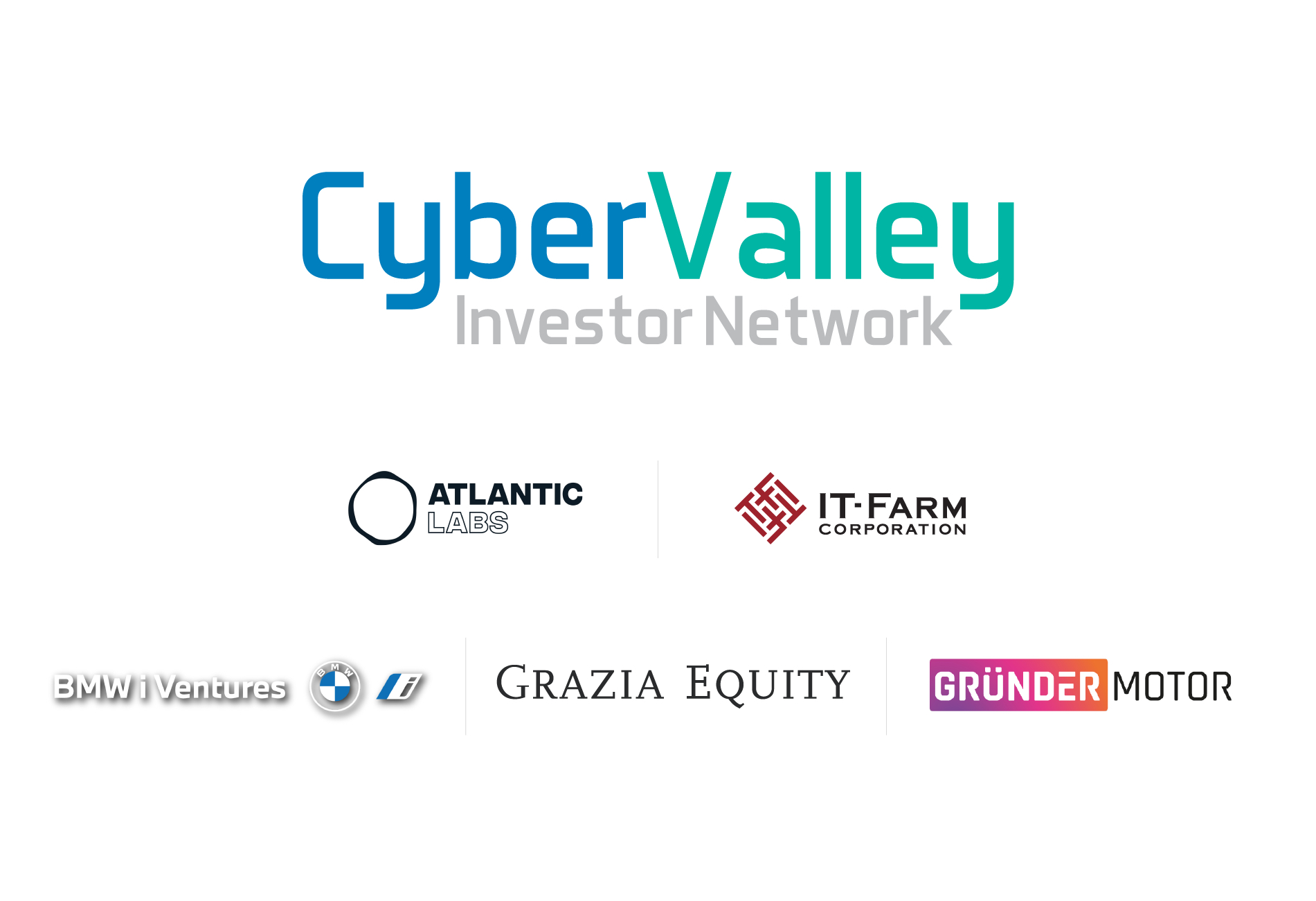
    The Cyber Valley initiative has launched the Cyber Valley Investor Network. The Network makes a significant contribution to making Europe’s largest research consortium in the field of artificial intelligence (AI) a breeding ground for successful AI start-ups. The initial five network members are well-known venture capital (VC) firms: Atlantic Labs (Berlin), IT-Farm (Tokyo/Palo Alto), BMW i Ventures (Mountain View/Munich), Grazia Equity (Stuttgart), and Gründermotor (Stuttgart). They are committed to providing mentorship to scientists within the Cyber Valley ecosystem by helping them turn research and business ideas into thriving companies. The VC firms’ guidance will serve as a springboard for future entrepreneurs, creating the AI jobs of the future. For the state of Baden-Württemberg, one of the core Cyber Valley partners, transferring knowledge into successful businesses is a top priority.

    “Cyber Valley has always aimed to bring science and industry together to develop innovative solutions through artificial intelligence,” said Baden-Württemberg’s Science Minister Theresia Bauer. “With the Cyber Valley Investor Network, our start-up scene and its young talent now have even greater support when it comes to commercializing their AI applications. This is where excellent research meets experienced investors: with both sides helping each other, the Cyber Valley ecosystem can reach its full potential. Once again, Cyber Valley has proven that it is not only a hot spot for cutting-edge research, but also an exciting place for forward-thinking investors.”

    The Cyber Valley ecosystem provides optimal conditions for successful start-ups: First, the region boasts the highest density of world-class AI researchers in Germany. Cyber Valley faculty includes more than 50 internationally renowned scientists in the fields of machine learning, computer vision, haptics, and robotics, working at the leading edge of science. Second, the International Max Planck Research School for Intelligent Systems (IMPRS-IS), an interdisciplinary doctoral program, is one of the key elements of the Cyber Valley research consortium. IMPRS-IS provides first-class education to the world’s top young researchers in the broad field of intelligent systems, preparing them for careers in academia and industry. Third, the strong economic infrastructure of the Stuttgart-Tübingen region provides an ideal breeding ground for new ventures.

    “The primary goal of Cyber Valley has always been to create the jobs of the future right here in the Stuttgart-Tübingen region,” said Michael J. Black, Cyber Valley Spokesperson and Director of the Perceiving Systems Department at the Max Planck Institute for Intelligent Systems. “The Investor Network will be a driving force in making this goal a reality. With the launch of the Cyber Valley Start-up Network in 2019, we created a platform for networking and scientific exchange among some the most promising AI companies in the region. With the Investor Network, we are taking the next step: some of the best local and international VC investors are providing our scientists with professional advice. Potential young entrepreneurs need expert guidance to transform an idea into a successful business. And they need financial support to grow.”

    All five initial members of the Cyber Valley Investor Network have extensive experience advising and funding successful start-ups. Like the scientists in the Cyber Valley ecosystem, these VC firms are active on a global scale. Having both local and global investors reflects Cyber Valley’s roots as well as the initiative’s international visibility.

    Venture capital firms support aspiring entrepreneurs with a long-term perspective on sustainable business development. Especially in the early developmental stages of start-ups, the members of the Cyber Valley Investor Network will provide guidance based on their expertise. They will share their knowledge about successfully kickstarting a company at informal and formal gatherings, such as workshops, tutorials and talks.

    “We are very happy to welcome Atlantic Labs, IT-Farm, BMW i Ventures, Grazia Equity and Gründermotor into the Cyber Valley ecosystem. This is just the first step for the Investor Network. We are looking forward to expanding this platform in the future”, said Black.

  • Bernhard Schölkopf holds keynote speech at online event “No one size fits all: Artificial Intelligence as Key Technology for Personalised Medicine”

    Bernhard Schölkopf holds keynote speech at online event “No one size fits all: Artificial Intelligence as Key Technology for Personalised Medicine”

    The Cyber Valley ecosystem is one such powerful AI hub. Different universities and university hospitals, research institutes and industry are working closely together in an integrated approach. All partners have contributed to integrating this thriving research center into a globally recognised European network, the European Laboratory for Learning and Intelligent Systems, also known as Ellis.

    Bernhard Schölkopf, Director of the Empirical Inference Department at the Max Planck Institute for Intelligent Systems, is the co-founder of Cyber Valley and of the Ellis Society. He held a keynote speech at an online event hosted by the Representation of the State of Baden-Württemberg to the European Union in Brussels. The event is among the first held after Germany took on the EU's rotating six-month presidency on July 1st. The panelists who contributed to the “No one size fits all: Artificial Intelligence as Key Technology for Personalised Medicine” event discussed the various interfaces between AI and medicine, the cooperation between science and industry as well as the future funding instruments for health and AI planned by the European Commission. Schölkopf particularly stressed the importance of creating an ideal research environment to help keep and attract the best AI talents from all over the world.

    The event was moderated by Dr. Julia Stamm, Founder and Director of Berlin based Science Leads. She was also joined by

    • Bodo Lehmann, Head of the Representation of the State of Baden-Württemberg to the European Union
    • Theresia Bauer, Minister of Science, Research and Arts of the State of Baden-Württemberg,
    • Dr. Karim Berkouk, Deputy Head of Unit Combatting Diseases, DG Research and Innovation, European Commission
    • Dr. Nuria Oliver, Chief Data Scientist, Data-Pop Alliance, Member of the Board of ELLIS Society (European Laboratory for Learning and Intelligent Systems) and ELLIS Unit Alicante
    • Dr. Oliver Stegle, Head of Division, Computational Genomics and Systems Genetics, German Cancer Research Center Heidelberg and European Molecular Biology Laboratory Heidelberg
  • Cyber Valley welcomes five new members to its Start-Up Network

    Cyber Valley welcomes five new members to its Start-Up Network

    “We are pleased to be welcoming these new members to the Cyber Valley Start-up community”, said Michael Black, Director of the Perceiving Systems Department at the Max Planck Institute for Intelligent Systems and Spokesperson of Cyber Valley. “These companies show that the AI ecosystem that we’ve built is thriving. Since it was launched less than a year ago, the Start-Up Network has gained significant momentum. The diversity of its members testifies to the broad scope of AI expertise in southwestern Germany and demonstrates the region’s strength as a tech hotspot.”

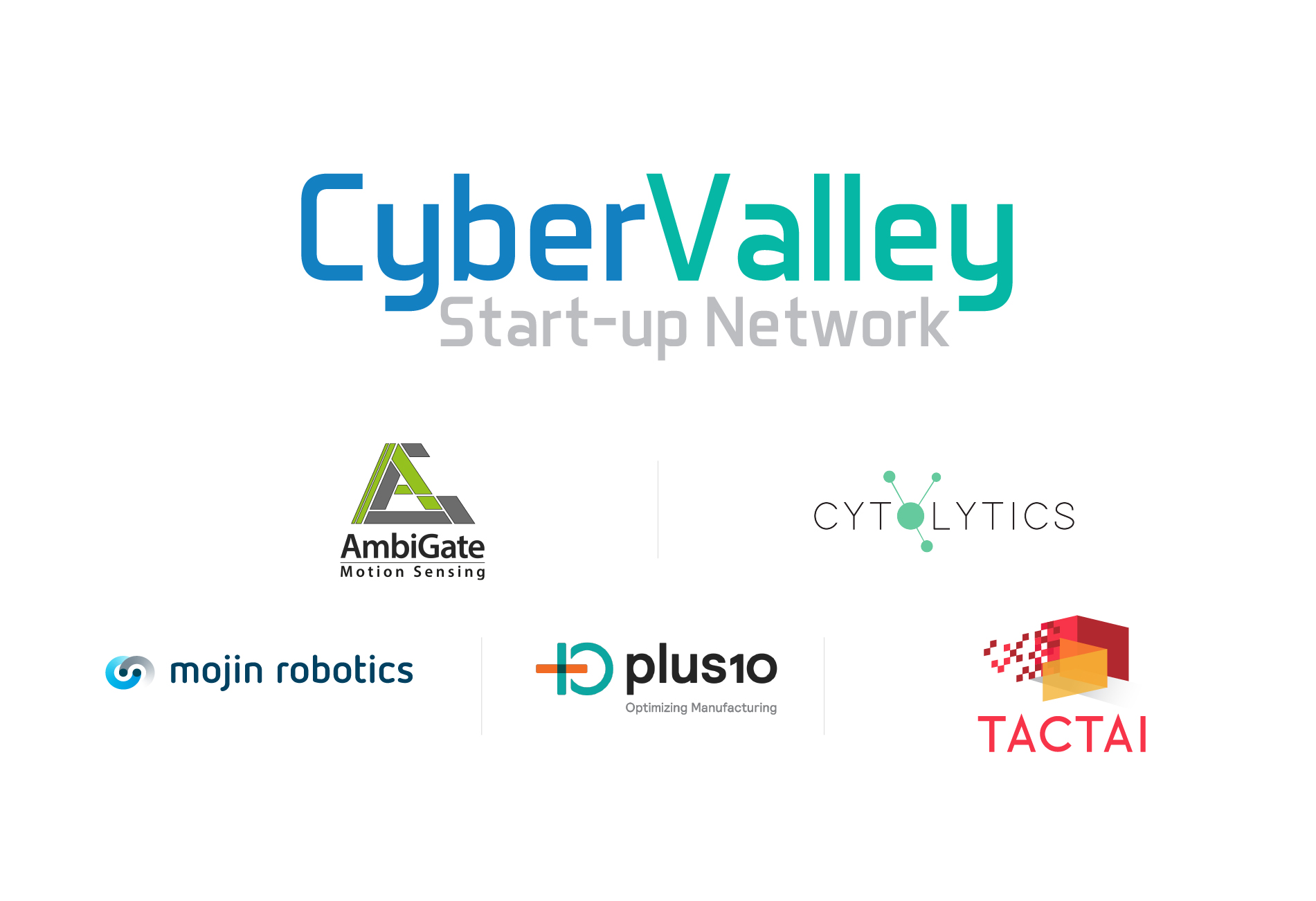
    AmbiGate is a Tübingen-based software company that specializes in human motion sensing. The spin-off of the University of Tübingen has developed software that – combined with 3D camera systems or common smartphone cameras – precisely analyses human motion to offer a solution for one of society’s most widespread health problems: back pain.

    Also based in Tübingen, Cytolytics has developed software that improves medical analyses and generates knowledge for research. Based on machine learning, the software speeds up flowcytometry analysis while at the same time ensuring more reliable results. Flowcytometry is used for routine diagnostics in hematology, infectiology and immunology, among others. Cytolytics is already collaborating with the Tübingen University Hospital.

    In Mojin Robotics, an already well-known player has joined the Cyber Valley start-up community. Its “Care-O-bot®4” robotics platform offers individual solutions in all kinds of customer service scenarios, such as retail, hotels, museums, hospitals, and airports. In 2015, Care-O-bot® won the prestigious RedDot Design Award with the distinction “best of the best” and in 2017, Mojin’s service robot Paul won at the retail technology awards europe (reta) in the category “Best Customer Experience”. The company, which is a spin-off of the Fraunhofer IPA Stuttgart and is based in Leinfelden-Echterdingen, is currently working on its next product: a mobile service robot for the logistics and manufacturing industry.

    plus10 has developed AI-based software tools to optimize automated manufacturing lines in the fields of consumer goods, medical devices and pharmaceutical production. For instance, its “Shannon®” virtual assistant system for machine operators helps increase productivity by delivering information about possible sources of error and identifying quick fixes. In addition, the “Darwin” software continuously learns about the behavior of automated stand-alone machines and provides feedback about technical improvements for each of machine. plus10 is also a Fraunhofer high-tech spin-off, operating from offices in Stuttgart and Augsburg.

    Tactai has developed software and hardware products that bring the natural sense of human touch to online digital interactons across a wide range of applications, among them touchscreens, VR devices, and haptic sensors. The company’s “Dynamic Haptics Platform” can be used for both commercial and medical applications. Tactai was cofounded by Katherine J. Kuchenbecker, Director of the Haptic Intelligence Department at the Max Planck Institute for Intelligent Systems in Stuttgart. The company is based in both Stuttgart and Boston, USA.

  • Cyber Valley Start-up Network welcomes two new members

    Cyber Valley Start-up Network welcomes two new members

    The Cyber Valley Start-Up Network continues to grow: at the end of February, two start-ups were added to the Network, bringing the current total to ten members. 

    Located in Stuttgart, 43IT is a software development start-up that works in the fields of computer vision, object recognition, and neural networks. More specifically, the company specializes in the analysis of volumetric image data. 

    With eye2you, the Start-Up Network now counts a MedTech start-up among its members. Based in Tübingen and Seoul, the company's mission is to make eye care more widely accessible by applying cutting-edge AI in combination with smartphones. In so doing, eye2you aims to help detect retinal disease at an early stage, which can prevent loss of vision. 

    More information on the Cyber Valley Start-Up Network can be found here: https://www.cyber-valley.de/cyber-valley-start-up-network

  • Cyber Valley Research Fund Board issues second call for proposals

    Cyber Valley Research Fund Board issues second call for proposals

    Tübingen – The Cyber Valley Research Fund Board (RFB) recently issued a second call for proposals from the nine Cyber Valley research groups. Eight projects were recently approved for funding in the first round, and decisions on the second round are scheduled for the first quarter of 2020. 

    The Cyber Valley Research Fund has a total volume of five million euros and comprises contributions from six of the research consortium’s industry partners. Its aim is to fund independent basic research projects in the multidisciplinary field of AI. Only Cyber Valley research groups are eligible to submit proposals.

    “The projects that received funding in the first round are as diverse as the Cyber Valley research groups themselves,” said Matthias Tröndle of the Cyber Valley Managing Office. “Our scientists are already conducting world-class research in their respective fields, and we look forward to seeing the ideas they come up with next.” 

    While the Cyber Valley Plenary Assembly and the research consortium’s industry partners suggest research themes that may serve as inspiration for potential projects, scientists are completely free to choose which research topics they propose and pursue.

    Once submitted, the RFB evaluates the proposals and funding is allocated based on scientific excellence and originality. Effective immediately, Cyber Valley’s Public Advisory Board (PAB) assesses the societal and ethical implications of each project idea. Where necessary, the PAB expresses concerns, makes recommendations, and engages in debate with the RFB.

    A full list of the current Cyber Valley Research Fund projects can be found here: https://cyber-valley.de/en/websites/cyber-valley/pages/research-projects

    Further information on the Cyber Valley Research Groups can be found here: https://cyber-valley.de/en/research-groups

    Further information about the Cyber Valley Public Advisory Board can be found here: https://cyber-valley.de/en/public-advisory-board