User Group: PhD Student

  • Another record in popularity: IMPRS-IS receives the highest ever number of applications

    Another record in popularity: IMPRS-IS receives the highest ever number of applications

    Stuttgart/Tübingen – Launched just three years ago, the International Max Planck Research School for Intelligent Systems (IMPRS-IS) has, again, far exceeded all expectations. In its recent application round for its fifth generation of scholars, the doctoral program saw a record number of applications: Of the 968 received, the top 489 completed applications have made it to the next phase of review. The applicants compete for funded doctoral positions which will begin in spring 2021. Selected applicants will get to work closely with IMPRS-IS faculty who are elite scientists affiliated with the Max Planck Institute for Intelligent Systems (MPI-IS), the University of Stuttgart, and the University of Tübingen. These Ph.D. applicants want to become part of the highly renowned multidisciplinary research landscape in Stuttgart and Tübingen in Southern Germany.

    “We are very proud we received yet another record number of applications,” says Dr. Leila Masri, who coordinates IMPRS-IS since its launch in early 2017. “We are particularly happy about the diversity: students from 55 countries applied and almost a third of them are female!”

    Currently, a team of over 100 faculty is reviewing the applications. Following this, faculty, associated faculty, and/or their representatives are asked to preliminarily interview applicants they are potentially interested in hiring. Ultimately, the top candidates will be invited to participate in a final selection symposium, set to take place virtually in January 2021.

    “We hope to see our entire IMPRS-IS community participate in the symposium, which will feature an introductory welcome, keynote talks, applicant talks, and virtual interviews,” says Masri. “I am excited to virtually meet the many brilliantly talented students, to hear about their current research projects and what they envision to potentially work on in the future should they join our school.”

    The International Max Planck Research School for Intelligent Systems brings together the MPI-IS and the Universities of Tübingen and Stuttgart. Together, they form an interdisciplinary graduate school of just under 70 internationally renowned faculty working at the leading edge of computational cognitive science, computer graphics, computer vision, control systems, human-computer interaction, machine learning, micro- and nanorobotics, perceptual inference, and robotics. The doctoral program is a key element of the Cyber Valley research ecosystem, which focuses on providing first-class education to the world’s top young researchers in the broad field of artificial intelligence.

    Currently, 159 full scholars are pursuing their doctorates within IMPRS-IS, far exceeding its initial vision of recruiting 100 Ph.D. scholars over the course of its initial six-year grant. IMPRS-IS is one of the largest of the Max Planck Society’s IMPRS doctoral schools. These high enrollment numbers reflect the success of all the faculty members at obtaining third-party funding, as well as their knack for creating attractive research projects that captivate qualified applicants.

    The creation of IMPRS-IS was made possible by a central grant from the Max Planck Society to the MPI-IS for an initial duration of six years, as well as significant funding from the state of Baden-Württemberg for doctoral education at the Universities of Tübingen and Stuttgart. The school’s first class of 28 scholars from 11 countries began in the fall of 2017. The scholars, who were selected in a multi-stage process, have each completed a master’s degree in a field related to intelligent systems, such as mathematics, computer science, machine learning, physics, engineering, and robotics.

    Find out more about IMPRS-IS at https://imprs.is.mpg.de

  • The Max Planck-ETH PhD program: Call for Applications

    The Max Planck-ETH PhD program: Call for Applications

    The Max Planck ETH Center for Learning Systems (CLS), a joint academic program between the Eidgenoessische Technische Hochschule (Zurich, Switzerland) and the Max Planck Society, primarily the Max Planck Institute for Intelligent Systems (Stuttgart / Tuebingen, Germany), is currently accepting applications for 2021.

    The highly competitive fellowship program aims to advance artificial intelligence by achieving a fundamental understanding of perception, learning, and adaption in complex systems through a platform for exchange in research and education. Applicants should have a strong interest in doing basic research in areas such as:

    • Machine learning and empirical inference of complex systems

    • Machine intelligence, including machine vision and natural language understanding

    • Perception-action cycle for autonomous systems

    • Robust model-based control for intelligent behavior

    • Robust perception in complex environments

    • Synthetic, bio-inspired, and bio-hybrid micro/nanoscale robotic systems

    • Haptic intelligence

    • Data-driven computational biology and medical informatics

    • Neurotechnology and emergent intelligence in nervous systems

    Ph.D. students are co-supervised by an advisor from each partner institution. All Ph.D. fellows will register as graduate students at ETH Zurich. Upon successful completion of their Ph.D. project, they will be granted a doctoral degree by ETH. The program offers a wide range of activities including retreats, workshops, and summer schools. Fellowships are remunerated through employment contracts with the Max Planck Society and ETH Zurich. The program language is English.

    Applicants must hold or expect to hold an excellent master's degree in a relevant subject and should be enthusiastic about spending time during at both CLS partner institutions over the course of their Ph.D. Good written and spoken English is essential. Anyone who meets our academic requirements is encouraged to apply, regardless of gender, nationality, or background.

    Please submit your application through our online application portal. Applications sent via email or postal services will not be considered. The application deadline is midnight (23:59 CET) on November 2, 2020.

    For further information about financial support, required documents, and our selection process please visit: https://learning-systems.org

  • ELLIS PhD Program: Call for Applications

    ELLIS PhD Program: Call for Applications

    The program supports excellent PhDs across Europe by giving them access to leading research through boot camps, summer schools and workshops of the ELLIS programs. Every PhD student is supervised by one ELLIS fellow/scholar and one ELLIS member from a different country and conducts a 1 year exchange at the other location.

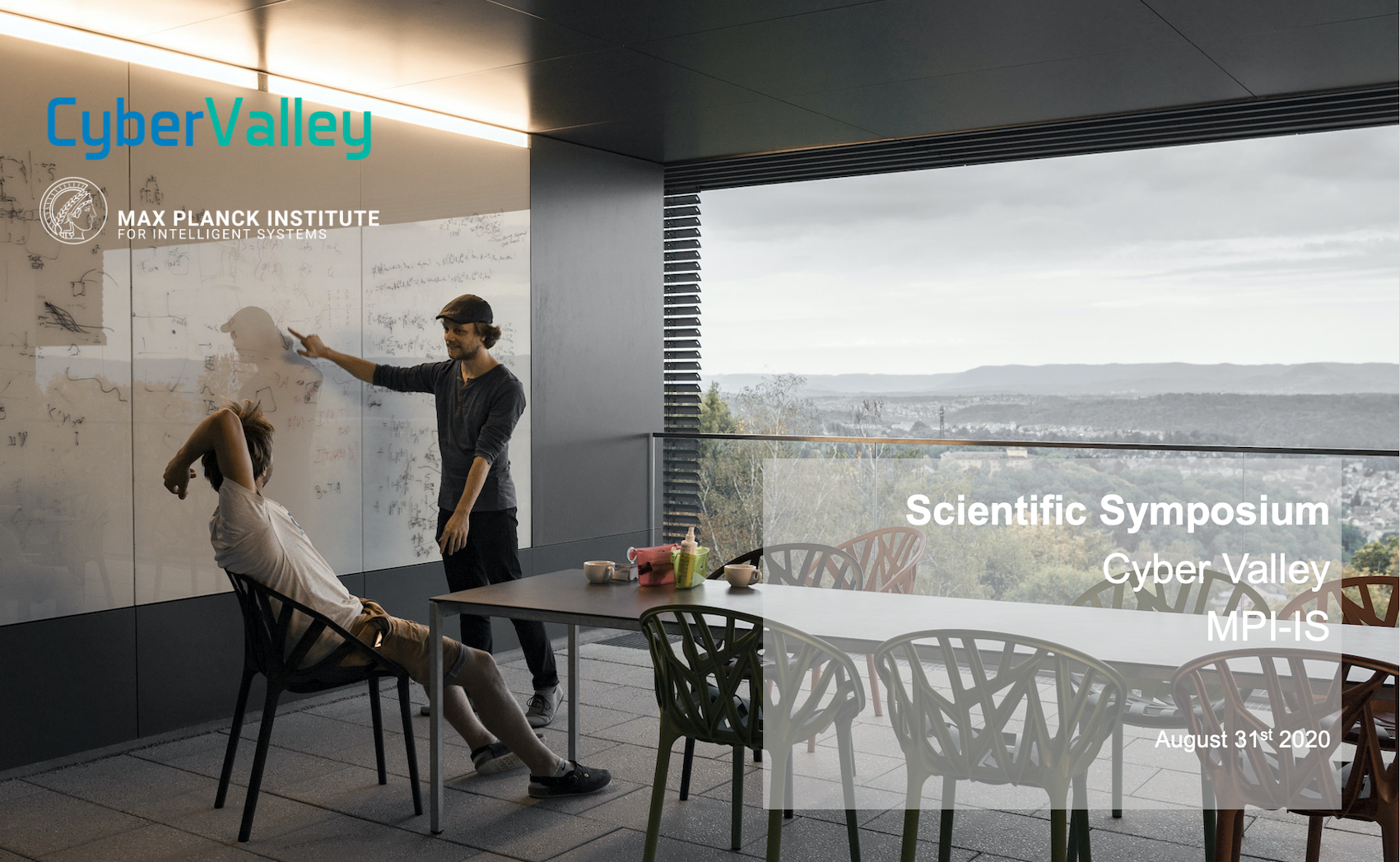
  • Scientific Symposium

    Scientific Symposium


    Schedule (CEST)

    __________________________________________

    8:55 am – 9:00 am    Opening remarks

    9:00 am – 11:00 am    Presentations | Part One

    11:00 am – 2:00 pm    – Break –

    2:00 pm – 4:00 pm    Presentations | Part Two 

    __________________________________________


    Justus Thies

    Technical University of Munich, Germany

    Talk: Monday, August 31, 2020 – 9:00-9:30 am

    Neural Rendering and Representation Learning for 3D Holograms of Humans

    Communicating via text messages, audio-, or video-calls is a part of our modern society. As a next evolution step, we already see early implementations of virtual 3D telepresence systems and personalized avatars. Capturing natural motions and expressions as well as the photorealistic reproduction of images under free views are challenging. With the rise of deep learning methods and, especially, neural rendering, we see immense progress to succeed in these challenges. In this talk, I will give an overview of my previous and ongoing research about image synthesis of humans, the underlying representation of appearance, geometry, and motion to allow for explicit and implicit control over the synthesis process. Specifically, I will talk about my work on facial reenactment and neural rendering. 


    Jochen Müller

    Harvard University, Cambridge, USA

    Wyss Institute for Biologically Inspired Engineering

    Talk: Monday, August 31, 2020 – 9:30-10:00 am

    A computational approach to the creation of digital matter

    Human creativity, combined with bioinspiration and modern, computational tools is now able to derive the most captivating designs, elevating both structural appearance and functionality to unprecedented levels. The physical realization of these designs, however, remains a bottleneck. On the other end, the grand challenge in manufacturing is to create a process that is economical, fast, repeatable, and that enables the desired design freedom in both geometric complexity and choice of materials. Digital Fabrication and, in particular, Additive Manufacturing (AM) has emerged as a potent alternative to conventional manufacturing and is considered by many the holy grail. Despite this hype, however, AM still lacks behind the expectations and is often not able to handle the required complexity, which significantly limits progress in major research fields.

    In my talk, I will address both the digital design of novel materials and structures with outstanding properties, and the fabrication thereof. First, I will present recent research that shows how the mutual exclusivity between stiffness and toughness can be overcome in mechanical metamaterials and how we can integrate (multi-)functionality, such as actuation and sensing, on a materials-level. Second, I will demonstrate AM-based solutions specifically tailored to these design paradigms that cannot be fabricated in any other way. Third, I will address the general limitations of AM and show how they can be (partially) overcome, with the ultimate goal of solving the grand challenge. Finally, I will outline potential next steps and provide a perspective on how the proposed, data-driven design approaches can dictate the future direction of the whole field.


    Christian Rupprecht

    University of Oxford, UK

    Talk: Monday, August 31, 2020 – 10:00-10:30 am

    Minimally Supervised Learning

    We know that deep learning works exceptionally well with copious amounts of annotated training examples. Collecting this data is often tedious, expensive and sometimes even infeasible. This talk explores what we can learn from a reduced amount of annotated data and how including physical priors about the world can substitute manual supervision. We will show how incorporating explicit knowledge about the world in the model can lead to more interpretable predictions and better generalization.  


    Mateusz Malinowski

    DeepMind, London, UK

    Talk: Monday, August 31, 2020 – 10:30-11:00  am

    no image

    Towards Scalable Visual Reasoning

    With deep learning and large-scale datasets, we have seen a seismic shift in computer vision, where more traditional problems such as image recognition on ImageNet are one-by-one tackled with many successes. However, can we build and investigate architectures that go beyond simple classification?

    In the first part of the talk, I will talk about my work on visual question answering. In this line of research, we ask machines various questions about the visual scene. Within that paradigm, we can test the "reasoning" capabilities beyond the typical classification. During the talk, I will also shortly mention related works on grounding language into percepts and actions as well as building a symbolic proof system using deep learning.

    In the second part of the talk, I will briefly introduce my recent work on more scalable and biologically plausible training on temporal input streams such as videos. The underlying hypothesis is that we can exploit various redundancies in such signals to approximate the standard backpropagation algorithm accordingly.


    Seyed-Moohsen Moosavi-Dezfooli

    Institute for Machine Learning, ETH Zurich, Switzerland

    Talk: Monday, August 31, 2020 – 2:00-2:30 pm

    Geometric aspects of adversial robustness of deep networks

    Despite showing impressive classification performance on many challenging benchmarks, generally in well-controlled settings, deep networks are intriguingly vulnerable to adversarial perturbations. It is indeed relatively easy to design noise that can change the estimated label of the classifier. The decision boundaries learned by state-of-the-art image classifiers are known to lie close to data samples. That is precisely why they exhibit such a poor performance under l_p-norm adversarial perturbations. The study of this high-dimensional phenomenon is proven to be a challenging yet extremely crucial task; it will eventually bring important benefits in safety-critical applications of machine learning such as self-driving cars, autonomous robots, and medical imaging.

    In this talk, I will present some geometric insight about deep networks' decision boundaries and how their geometry contributes to the l_p-norm robustness properties of such classifiers. Furthermore, I will demonstrate how these observations can be exploited to design efficient methods to evaluate and improve the robustness of state-of-the-art image classifiers. In particular, I will show how controlling curvature of the decision boundary can be critical to improve l_p adversarial robustness, and how, by exploiting curvature, computationally efficient algorithms can be derived to measure robustness properties.


    Rebekka Burkholz

    Harvard T.H. Chan School of Public Health, Boston, USA

    Talk: Monday, August 31, 2020 – 2:30-3:00 pm

    Cascade Processes in Machine Learning

    Cascade processes have been proven useful in modeling such diverse phenomena as epidemic spreading, signaling in biological networks, information propagation in social media, financial systemic risk, and the reorganization of international trade networks. In this talk, we will focus on two model classes, load redistribution and spreading models, and use them as means to an end to improve and develop machine learning algorithms. We will leverage the fact that load redistribution models correspond one-to-one to the evaluation of deep neural networks. We will derive successful initialization strategies and speed up model training based on analytic insights for random graph ensembles. We will further discuss how we can utilize these improvements for the inference of gene regulatory networks.


    Antonio Vergari

    University of California, Los Angeles, USA

    Talk: Monday, August 31, 2020 – 3:00-3:30 pm

    From Simple Inference to Complex Probabilistic Reasoning

    Probabilistic reasoning is generally considered to be the framework-of-choice to enable and support decision making under uncertainty in real-world scenarios. Ideally, we would like a probabilistic ML system that is deployed in the wild to be able to i) allow humans (or other AI agents) to pose arbitrary and articulated queries, that is questions about states of the world; ii) to provide guarantees on their results; iii) to deal with complex, heterogeneous and potentially structured data and, moreover iv) to support chaining several inference steps together. In this talk, I will argue that the above desiderata are still unmet in the current landscape of probabilistic ML. Even the most prominent paradigm nowadays, deep generative modeling, is able to provide only a shallow, simplistic, form of inference and struggles when dealing with complex queries or data. I will then delineate how my past and current research aimed at closing this gap. Specifically, I will touch some recent works investigating principled frameworks within dealing with complex tasks such as reasoning about the behavior of classifiers or dealing with algebraic constraints over heterogeneous data can be done elegantly and efficiently. Lastly I will talk about some future research perspectives: extending these complex probabilistic reasoning routines to interactive and relational settings while allowing for approximations with guarantees.


    Roberto Calandra

    Facebook AI Research, USA

    Talk: Monday, August 31, 2020 – 3:30-4:00 pm

    Towards Embodied Intelligence

    The creation of intelligent embodied artificial agents has long been a dream for roboticists and artificial intelligence researchers alike. In this talk, I will argue for several key advances that I believe are necessary before we can achieve this dream, and in particular two of these key research areas: multi-modal sensing, and data-efficient learning for fast adaptation. Regarding multi-modal sensing, I will discuss the importance of using alternative sensor modalities in addition to vision, and will present my recent research on using touch sensing to allow robots to perceive, understand, and interact with the world around them. About data-efficient learning, I will discuss the use of model-based reinforcement learning — which explicitly creates models of the world — and present some of my recent works to understand and overcome the limitations of current approaches


  • Interview with AI pioneer Peter Dayan about life and work in Cyber Valley

    Interview with AI pioneer Peter Dayan about life and work in Cyber Valley

    Professor Dayan, you came to the Max Planck Institute for Biological Cybernetics and the University of Tübingen about a year and a half ago. How’s life in Tübingen?

    Coming from London, it was obviously a big move. Before I came here, I was actually in San Francisco on sabbatical. Tübingen is lovely. I haven’t got a car, so walking up and down the hills takes a lot of effort. I hope I am a little bit fitter than I was before. In terms of its strong academic and intellectual environment, the University of Tübingen is fantastic. My wife works both at the university and the MPI, as well, and we have enjoyed our time here. One of the big differences coming from a big place to a smaller town is that you cannot even get on the bus without meeting someone you know – be it a student or a colleague. Of course, during the coronavirus pandemic, we have been very lucky to be in Germany because I think the country has handled the situation very well.

    How has your work been affected by the COVID-19 pandemic?

    Since my work is mainly theoretical and most of the experiments we do can be done online, these aspects of my work have not been dramatically impacted. Of course, not being able to meet in person has affected people in the group in various ways. Luckily, we are not a very big institute and we were still able to conduct experiments on site, provided that we practiced social distancing. On the whole, we have been very successful in keeping the disease away, which testifies to the hard work of everyone involved. At the beginning of the pandemic there were lots of uncertainties. But now, since the situation has stabilized, people are anxious to get back to work at the institute.

    How have you settled in to your new working environment at the University of Tübingen and the Max Planck Institute for Biological Cybernetics?

    In regards to my work at Max Planck, there are lots of change processes evolving over a period of time. We are moving from the institute’s second generation to the third generation. Building the team in my lab in the Computational Neuoscience department and slightly re-focusing the things that I’m working on has been great.

    “We are trying to build an integrated PhD program”

    And what are your main projects at the University of Tübingen?

    At the university, one main effort has been the International Max Planck Research School (IMPRS), where we successfully applied for new funding together with Professors Cornelius Schwarz, Marc Himmelbach and the GTC (Graduate Training Centre of Neuroscience). We are trying to build an integrated PhD program, which can recruit students with bachelor’s degrees and ultimately lead to a PhD. This is not a common German or Bologna model. It’s been interesting to work in very close cooperation with the university and trying to generate a program that meets the needs of both students and research institutions, and which is also consistent with the principles of excellence that were set up by the GTC, and the strictures of German regulations. The first cohort will start in the autumn.

    You recently were awarded with a Professorship of the Alexander von Humboldt-Foundation. What can you tell us about that?

    In terms of my Humboldt chair – that work has not fully started yet because it was meant to begin around the time the pandemic began. It is very hard to recruit people when you cannot meet them in person – especially since some of them would be coming from abroad. Nevertheless, the university, the President’s office and the whole administration have been incredibly supportive. I’m really looking forward to building those Humboldt groups once the impact of the virus decreases.

    Your research focuses on decision-making processes in the brain, the role of neuromodulators – chemical substances that influence the functioning of the neural system – as well as neuronal malfunctions on psychiatric diseases. You are also regarded as a pioneer in the field of artificial intelligence (AI). Why did you choose these fields? What inspired you to go in this direction with your research?

    When I was an undergraduate, I was actually a mathematician. However, I had already been interested in the early days of home computers at the challenges of developing systems that could simulate intelligence. When I was just finishing my undergraduate studies, a very influential book was published, called “Parallel Distributed Processing” by David Rumelhart and Jay McClelland. I was very lucky to grow up as a graduate student around that time. It was one of these epochal changes in thinking about both neuroscience and neural networks. Then I met some of the people who were involved in that work and I did my PhD at what we would now see as the computational neuroscience interface between biology, psychology and AI. I became interested in animal behavior and the ways we and other creatures make good and bad decisions and choices. When I started my postdoc, I was much more directly associated with neuroscience.
    Decision-making is one of few areas in neuroscience which we can tie together different levels of analysis: addressing the computational or perhaps ethological goals of choosing, the algorithms or psychological processes involved, and then the neural substrates. AI is mostly interested in the first two of these – and there are rich synergies with natural systems.

    “To make good decisions, you have to be able to make good predictions”

    Lately, you have also been looking at bad decisions…

    After about 20 years of looking at good quality decision-making, it seemed like a good time to start thinking about what happens when people, other animals and machines make decisions that are sub-optimal, from either a subjective or objective perspective. That’s what got me thinking about psychiatry. This partly coincided with the fact that people I was working with in London at that time were actively studying neurological and psychiatric disease. And it coincided with the observation made by many psychiatrists that the tests and analyses that are available are insufficiently predictive in terms of prognosis, or the choice, or optimization of treatment, and are often not strongly based on the sort of multi-level analysis we were just talking about. Of course, not everything in psychiatry comes down to unfortunate decisions – but we are starting there.

    So, what’s the common thread in your research? The connection between the ability to make predictions and decision-making?

    Coarsely speaking: to make good decisions, you have to be able to make good predictions. You need to predict the effect of your decisions – not only in the short term but also in the long term. So, predictions are a central part of how you go about your decision-making. Another aspect of this is representation, the way the brain encapsulates those aspects of the external and internal worlds in the conjoint activity of populations of neurons, and that is intimately involved in how we generalize from one situation to another.

    “Incredible concentration of people and collaborative energy”

    How is this field of research connected to the research in the Cyber Valley ecosystem?

    The Cyber Valley ecosystem has a lot of people interested in exactly this boundary between different aspects of natural intelligence and artificial intelligence. There are too many to name!

    What makes the Cyber Valley ecosystem so special?

    The incredible concentration of people and the collaborative energy is what makes the Max Planck Institutes and the institutions around our campus and the university such excellent places. Hats off to the mothers and fathers of this success! Another good example is the IMPRS, which has long been a critical component of interaction between the institute and the university. We have this fantastic partnership.
    At the same time, Tübingen has really invested in the field of neuroscience. That makes for a perfect environment for our work. The people you directly interact with are most important. Of course, it takes a while to build up collaborations and contacts. We are recruiting new groups that will have a big impact. The first group of recruits at the Max Planck Institute for Biological Cybernetics has already brought in fantastic skills and energy.

    The term artificial intelligence is still quite abstract for most people outside the world of computer science. How would you describe it?

    Like many words or concepts repeated too frequently, the meaning of AI is perhaps in danger of leeching out. On one hand, there are behaviors in which humans engage that seem to require flexible problem solving, exploiting past information and previously acquired skills in an adaptive manner. AI aspires to port this capacity into computers and robots and to enhance it dramatically, since there’s no obvious sense in which humans are the pinnacle of intelligence, any more than we are, for instance, the pinnacle of arithmetical calculators. On another hand, there are behaviors such as running gracefully over rough terrain, that we find simple – perhaps provided we don’t think about them too hard. AI would also like these to be accomplished by artificial systems – even though this is probably a different sort of capacity and certainly engages partly different neural systems. In both cases, AI will generate a new set of tools that enable us or help us to do things that we could not do or automate before.

    What could be an example for an area in everyday life where big innovations can be achieved with AI?

    I’m a basic researcher, so I’ll give you my opinion as a regular person rather than as a professional. One example that seems clear to me is automated mobility – self-driving cars for example, the bailiwick of Cyber Valley’s Professor Andreas Geiger. My children have held off learning to drive – so they are hoping for expeditious progress!

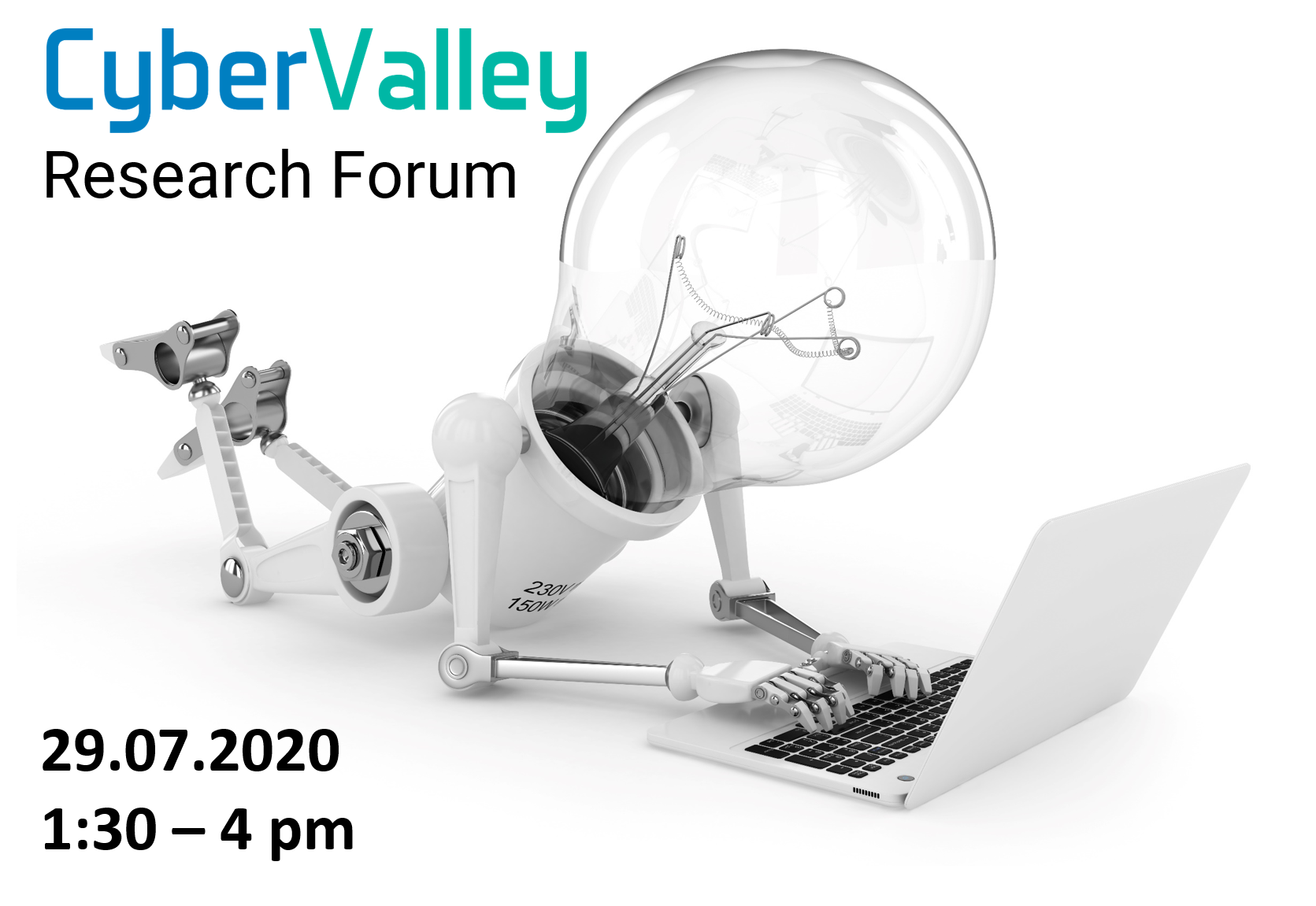
  • Cyber Valley Research Forum (virtual)

    Cyber Valley Research Forum (virtual)

    At this edition of the event, we will focus on the University of Stuttgart's Cyber Valley groups as well as on a recently established group at the University of Tübingen. In addition, our partners from Fraunhofer IPA and IAO will present the AI Innovation Center "Learning Systems" and their AI-related areas of research.

    Due to COVID-19 restrictions, the workshop will be held online (Zoom). If you would like to participate, please register here.


    Schedule
    13:30 Welcome
    13:30 – 13:40 AI Innovation Center “Learning Systems”
    https://www.ki-fortschrittszentrum.de
    13:40 – 14:00

    Dr. Tian Qiu

    Biomedical Microsystems, Institute of Physical Chemistry, University of Stuttgart

    Title: Augmented Reality Organ Phantom for the Generation of Biomedical Data

    Abstract:
    Biomedical data of the human body is complex and difficult to acquire for safety, ethical, legal, and technical reasons.  Building a realistic organ phantom based on rapid prototyping and augmented reality technologies is one of our group's research focuses. The phantom system represents the anatomy and the material properties of real organs. Moreover, the model can sense what it experiences and generate a large amount of data, which is not even possible with a real organ. The data will offer unique opportunities to train surgeons and optimize surgeries, and to develop new medical instruments and life protection systems.

    14:00 – 14:20

    Prof. Dr. Michael Sedlmair

    Virtual Reality and Augmented Reality, Visualization Research Center (VISUS), University of Stuttgart

    Title: VR/AR research at VISUS

    Abstract:
    I will introduce several examples of current Virtual/Augmented Reality (VR/AR) projects from the Visualization Research Center (VISUS) at the University of Stuttgart. Much of our work focuses on how data visualization can be meaningfully combined with VR/AR. Also referred to as Immersive Analytics, this combination is a popular topic. However, many things can go wrong. We will look at some of these pitfalls, identify ways of overcoming them, and outline scenarios that could have a truly significant and lasting effect.

    14:20 – 14:40

    Prof. Dr. Jakob Macke

    Machine Learning in Science, Cluster of Excellence "Machine Learning", University of Tübingen

    Title: Simulation-based inference: Bridging the gap between machine learning and scientific modelling

    Abstract:
    Many fields of science and engineering make extensive use of complex simulations that describe the structure and dynamics of the process being investigated. These models are derived from knowledge of the underlying mechanisms and are of critical importance for scientific hypothesis-building. However, linking such complex models to high-dimensional empirical data can be challenging. My group develops computational tools that aim to bridge the gap between data-driven machine learning and theory-driven, scientific modelling, with a focus on applications in the life sciences. In this talk, I will focus on our recent work on using neural conditional density estimators to perform Bayesian inference on simulation-based models. I will demonstrate the efficiency and flexibility of this approach and highlight applications to dynamical models of biological systems and source-reconstruction in biological imaging.

    14:40 – 15:00

    Prof. Dr. Alexander Brem

    Entrepreneurship in Technology and Digitization, Institute of Entrepreneurship in Technology and Science, University of Stuttgart

    Title: How AI-driven applications enhance Innovation and Entrepreneurship

    Abstract:
    Artificial intelligence (AI) is changing how entrepreneurs and companies innovate. Startups and established companies are developing a wide range of AI-driven applications, addressing different tasks along the innovation process. These tasks include, just to mention a few, the detection of emerging technologies and trends, the identification of customer needs or lead users, the generation of user feedback from emotional facial recognition, or the automated creation of new product designs.
    In light of such rapid developments, we offer an overview on how AI is being current used in creativity, innovation, and entrepreneurship. We describe how technology and management researchers in these fields are studying the applications and impact of AI. Finally, we outline the current research areas (still emerging) and suggest areas for further management research using AI and research on AI’s impact on innovation and entrepreneurship processes.

    15:00 – 15:25

    Fraunhofer Institute for Manufacturing Engineering and Automation (IPA)

    Dependable AI built on Explainability, Verification and Uncertainty Quantification
    (Nina Schaaf, Xinyang Wu, Marcel Albus)

    Computer Vision for Quality Control and Robotics
    (Bernd Meese, Johannes Stoll)

    Cognitive Robotics: Deep Learning for Robotic Grasping and Assembly
    (Marius Moosmann, Arik Lämmle)

    15:25 – 15:50

    Fraunhofer Institute for Industrial Engineering (IAO)

    X-tended Reality@Fraunhofer IAO – Labs and Usecases in the field of Building Construction
    (Alexandros Giannakidis, Günter Wenzel)

    AI-based solutions for text documents analysis
    (Maximilien Kintz)

    Applied Neuroscience and Neuroadaptive Technology
    (Katharina Lingelbach, Mathias Vukelic)

    Variable and adaptive driving behaviour and vehicle interior: Robust, safe and fun with AI
    (Frederik Diederichs, Mathias Vukelic, Matthias Bues)

    15:50 – 16:00 Wrap-up
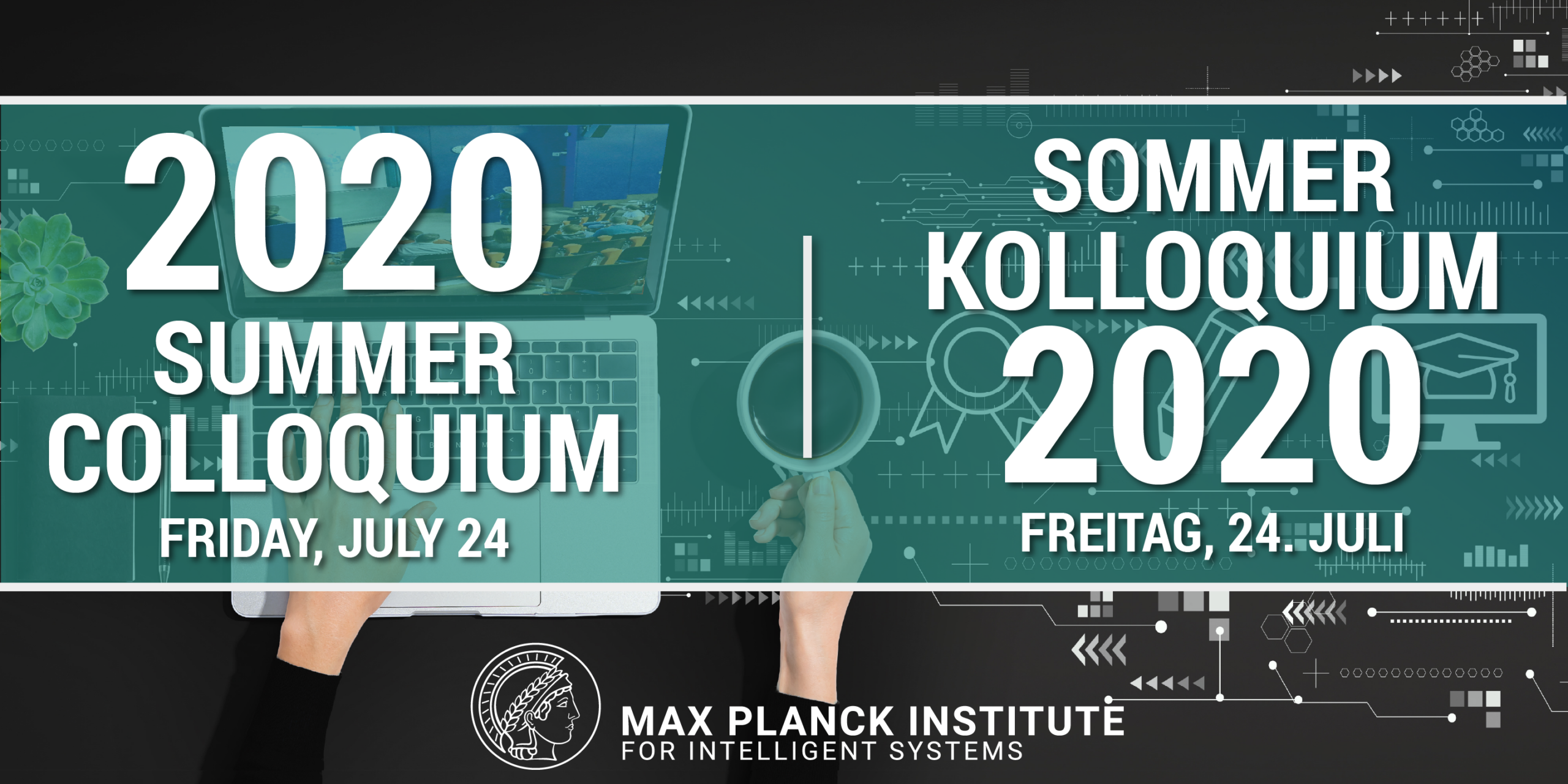
  • 2020 Intelligent Systems Summer Colloquium

    2020 Intelligent Systems Summer Colloquium

    MPI-IS cordially invites you to attend the 2020 Intelligent Systems Summer Colloquium

    Please see below for the schedule.

    The Max Planck Institute for Intelligent Systems is delighted to invite you to its annual scientific summer colloquium, formerly referred to as the Günter Petzow Colloquium.

    Date: Friday, July 24, 2020
    Virtual Meetup Time: 2:00 p.m.

    The event will commence at 2:00 pm that day and include four scientific presentations as well as a Ph.D. graduation ceremony. This year, it will be held virtually through a stable video-conferencing service. All current and former employees, friends of the institute, and the interested public are invited to this event.

    On the occasion of this year's summer colloquium, the Stuttgart site of the Max Planck Institute for Intelligent Systems will award the 15th annual Günter Petzow Prize to a young scientist from the institute for outstanding research in the field of materials science. Professor Günter Petzow was a Director at the Max Planck Institute for Metals Research in Stuttgart between 1973 and 1994. He is internationally renowned for his trend-setting research on multicomponent materials.

    The Günter Petzow Prize is funded by the Stifterverband für die Deutsche Wissenschaft and Volkswagen AG.

    Given his outstanding research success here at MPI-IS, the selection committee has chosen to bestow upon:

    Dr. Hakan Ceylan
    the
    2020 Günter Petzow Prize.

    Dr. Hakan Ceylan is a senior research scientist in the Physical Intelligence Department. He will be awarded this prize for his achievements in developing new design principles, materials, and manufacturing strategies that enable untethered soft robots as small as a single cell.

    Professor Metin Sitti will introduce Dr. Ceylan, who will then deliver a 25-minute presentation on his research.

    The final part of the colloquium will be a graduation ceremony for all of the MPI-IS Ph.D. students who completed their degree in the last year.

    Live transmission of the summer colloquium and the graduation ceremony will take place on the event website.


    Schedule

    14:00

    Opening by Katherine J. Kuchenbecker, Ph.D. (Managing Director)

    Max Planck Institute for Intelligent Systems, Stuttgart

    14:15

    Professor Syn Schmitt

    Morphological computation: from hopping robots to micro swimmers to human walking

    Institute for Modelling and Simulation of Biomechanical Systems, University of Stuttgart

    Abstract and speaker’s short biography >>

    Biological motion is fascinating. Especially locomotion plays a crucial part in the evolution of life. Highly evolved structures, like bones connected by joints and soft tissues and contracting proteins in a muscle-tendon unit, enable and prescribe the respective species' specific locomotion pattern. Most importantly, biological motion is autonomously learned, it is untethered as there is no external energy supply and typical for vertebrates, it's muscle-driven.

    This talk will focus on structures, which facilitate motion by their design and present criteria to measure to which extent a specific motion pattern is facilitated, i.e. morphological computation (MC). We will discuss, whether assessing MC helps in understanding how biology solves challenges, like non-linearity of materials, redundancy of actuators, delays of sensor signals and finally, learning motion.

    Syn Schmitt studied physics at the University of Stuttgart and graduated from the University of Tuebingen with a PhD in Theoretical Astrophysics (topic: muscle modelling / computational biophysics). In 2012, Schmitt was appointed as Juniorprofessor (assistant professor) at the University of Stuttgart. Since 2018, he is full professor of "Computational Biophysics and Biorobotics" at the University of Stuttgart and in 2019 he founded the Institute for Modelling and Simulation of Biomechanical Systems, together with his colleague Oliver Roehrle. Syn Schmitt is fellow of the Stuttgart Center for Simulation Science (SimTech) and a faculty member of the International Max Planck Research School for Intelligent Systems (IMPRS-IS). Recently, he was appointed as Adjunct Professor in the School of Mechanical, Medical and Process Engineering of the Queensland University of Technology in Brisbane, Australia. His research focuses on autonomous muscle-driven motion with special interests in design principles of the locomotion apparatus, non-linear dynamics of locomotion, motor control and morphological computation in biological and technical systems.

    14:45

    Peter Dayan, Ph.D.

    Model based and model free interactions: inference, influence and confidence

    Computational Neuroscience, Max Planck Institute for Biological Cybernetics, Tübingen

    Abstract and speaker’s short biography >>

    An influential reinforcement learning framework proposes that behaviour is jointly governed by model-free (MF) and model-based (MB) controllers. Whereas the former learns the values of actions directly from past encounters, the latter uses a cognitive map of the task to calculate them prospectively. Considerable attention has been paid to how these systems interact during choice, however, how they interact in more general facets of decision-making such as learning and confidence is unclear. Using variants of a simple task that lays out limpidly various aspects of the interaction, we show how MB information resolves uncertainty and focuses MF learning, and discuss unexpected facets of their joint contribution to confidence.

    Peter Dayan read Mathematics at Cambridge, studied for his PhD with David Willshaw in Edinburgh, and did postdocs with Terry Sejnowski at the Salk Institute and Geoff Hinton in Toronto. He was an assistant professor in the Department of Brain and Cognitive Sciences at MIT, and was a founding faculty member of the Gatsby Computational Neuroscience Unit at UCL, which he then ran for 15 years. He is currently a Director at the Max Planck Institute for Biological Cybernetics. His interests include affective decision making and neural reinforcement learning.

    15:15

    Professor Marco Hutter

    From legged robots to digital fabrication

    Institute of Robotics and Intelligent Systems (IRIS), ETH Zürich

    Abstract and speaker’s short biography >>

    Recent development in robotics, machine automation and intelligence has led to systems that are skilled and mature enough for real-world deployment. For example, quadrupedal robots have reached a level of mobility to navigate complex environments, which enables them to take over inspection or surveillance jobs in place like offshore industrial plants, in underground areas, or on construction sites. In this talk, I will present our research work with the quadruped ANYmal, mobile manipulators and automated construction machines, and explain some of the underlying technologies for locomotion control, manipulation, environment perception, and mission autonomy. I will show how these robots can learn and plan complex manoeuvres, how they can navigate through unknown environments and how they are able to conduct surveillance, inspection or construction tasks with super-human precision.

    Marco is an assistant professor for robotic systems at ETH Zurich, associate member of MPI-ETH Learning Center, and founder of ANYbotics AG. He studied mechanical engineering and completed his doctoral degree in robotics at ETH. Marco’s research interests are in the development of novel machines and actuation concepts together with the underlying control, planning, and learning algorithms for locomotion and manipulation. Marco is part of the National Centre of Competence in Research (NCCR) Robotics and NCCR Digital Fabrication and PI in various international projects (e.g. EU Thing) and challenges (e.g. DARPA SubT). His work has been recognized with a number of awards and prestigious grants such as the Branco Weiss Fellowship, ETH medal, IEEE/RAS Early Career Award or ERC Starting Grant.

    15:45
    Günter Petzow Prize Award Ceremony
    16:00

    Dr. Hakan Ceylan, Winner of the 2020 Günter Petzow Prize

    Cell-Size Robots for Minimally Invasive Medical Interventions and Targeted Delivery

    Physical Intelligence Department, Max Planck Institute for Intelligent Systems, Stuttgart

    Abstract and speaker’s short biography >>

    Untethered mobile robots the size of a human cell can make a disruptive impact in medicine. Their small size and wireless mobility can enable access and navigation in small, confined, hard-to-reach, and sensitive inner body sites, such as the central nervous system, the circulatory system, and the fetus. At these locations, such tiny machines can provide new ways of minimally invasive surgical interventions, remain inside for long durations as semi-implantable devices, and deliver targeted diagnosis and therapy with high precision and repeatability. To achieve these goals, however, there are many scientific and technical challenges to overcome. In this talk, I will present design, fabrication and control of cell-sized mobile robots for medical applications. I will demonstrate that the realization of coupled sensing, response and motion, the pillars of a robotic system, requires new materials and fabrication routes that can produce highly integrated systems that successfully interact with the environment. I will explore alternative power sources and design principles that would realistically sustain robotic operations at the microscopic size scales. I will demonstrate medical microrobots with the capabilities of moving around, sensing, responding to the local pathological information, and performing specific diagnostic and therapeutic tasks as orderly executed operations using their smart composite material architectures. Upon completing their functions, most of the microrobots I have developed are enzymatically degradable at the physiological conditions. Given the progress and the status of this emerging field, I will finally be providing a translational perspective on medical microrobotics research with an application-oriented, integrative design approach where powering, materials, fabrication, control, localization and medical functionalities need to be considered altogether at the same time. I will discuss the complexity of the challenges ahead and the potential directions to overcome them.

    Hakan Ceylan is a senior research scientist at Max Planck Institute for Intelligent Systems, Stuttgart, Germany, working on medical microrobots, bioinspired materials, molecular engineering, and intelligence at microscopic length scales. He received the BSc. degree in molecular biology and genetics (with high honor) and the Ph.D. degree in materials science and nanotechnology in 2010 and 2014, respectively, from Bilkent University, Ankara, Turkey. Dr. Ceylan was a post-doctoral researcher during 2014-2017 at Max Planck Institute for Intelligent Systems. He has been an associate member of Max Planck ETH Center for Learning Systems since 2015, the first joint institute of Max Planck Society and ETH Zurich. Dr. Ceylan’s inventions have resulted in one granted two pending patents and over twenty publications in the internationally renowned peer-reviewed journals. He has received several best paper, best talk and science-as-art awards as an extension of his research output. His studies have been publicized by Bayern2 radio, PC Magazine and a number of other printed and web-based German and international media. In 2019, PC Magazine featured Dr. Ceylan’s medical microrobot project among "5 amazing projects that will change the future of healthcare".

    16:30

    Ph.D. Graduation Ceremony

    We congratulate 15 young researchers who successfully defended their doctoral thesis during the past year

    Opening words from Professor Michael J. Black, Max Planck Institute for Intelligent Systems, Tübingen

    List of graduating Ph.D. students >>

    Six world-class universities are awarding doctoral degrees to this year’s batch of graduating students, who are affiliated either directly with MPI-IS or indirectly through our doctoral programs (Cam-Tue, CLS, CMU, and IMPRS-IS).

    University of Cambridge
    Matthias Bauer, Empirical Inference Department, Max Planck Institute for Intelligent Systems, Tübingen (Cam-Tue)
    Paul Rubenstein, Empirical Inference Department, Max Planck Institute for Intelligent Systems, Tübingen (Cam-Tue)

    Carnegie Mellon University
    Mehmet Berk Yigit, Physical Intelligence Department, Max Planck Institute for Intelligent Systems, Stuttgart
    Xiaoguang Dong, Physical Intelligence Department, Max Planck Institute for Intelligent Systems, Stuttgart

    Technical University of Darmstadt
    Dieter Büchler, Empirical Inference Department, Max Planck Institute for Intelligent Systems, Tübingen and Technical University of Darmstadt
    Sebastian Gomez-Gonzales, Empirical Inference Department, Max Planck Institute for Intelligent Systems, Tübingen and Technical University of Darmstadt

    University of Pennsylvania
    Siyao Hu, Haptic Intelligence Department, Max Planck Institute for Intelligent Systems, Stuttgart

    Eberhard Karls University Tübingen
    Anurag Ranjan, Perceiving Systems Department, Max Planck Institute for Intelligent Systems, Tübingen (CLS associate)
    Joel Janai, Autonomous Vision Group and Perceiving Systems Department, Max Planck Institute for Intelligent Systems, Tübingen
    Lars Mescheder, Autonomous Vision Group, Max Planck Institute for Intelligent Systems, Tübingen
    Matthias Kümmerer, Computational Neuroscience & Machine Learning Group, University of Tübingen (IMPRS-IS)
    Siyavash Haghiri, Theory of Machine Learning Group, University of Tübingen
    Steve Heim, Dynamic Locomotion Group, Max Planck Institute for Intelligent Systems, Stuttgart (CLS associate)

    ETH Zürich
    Ceren Yasa, Physical Intelligence Department, Max Planck Institute for Intelligent Systems, Stuttgart (CLS associate)
    Öncay Yasa, Physical Intelligence Department, Max Planck Institute for Intelligent Systems, Stuttgart

    17:30

    Closing by Katherine J. Kuchenbecker, Ph.D. (Managing Director)

    Max Planck Institute for Intelligent Systems, Stuttgart

  • Machine Learning Summer School (MLSS) Tübingen: the first-ever virtual event starts with a bang

    Machine Learning Summer School (MLSS) Tübingen: the first-ever virtual event starts with a bang

    The Max Planck Institute for Intelligent Systems’ Machine Learning Summer School (MLSS) is an internationally recognized and popular event that is regarded a major highlight at MPI-IS and beyond. This year, a record-breaking 1300 young researchers from around the globe applied to take part in the event, and 182 were accepted. Under normal circumstances, Tübingen would have become the global capital of machine learning for two weeks in July – with two weeks of talks, round-table discussions, and social events with the world’s leading scientists in the field. 

    However, the spread of COVID-19 began to worsen shortly after the application deadline for MLSS 2020, and the organizers were faced with the challenge of holding the event in the midst of the global pandemic. As it became clear that an in-person MLSS in Tübingen would not be possible, the organizers went back to the drawing board and came up with a virtual format that aimed to mimic the original version as closely possible. One week into the MLSS 2020, the speakers, participants, and organizers agree: while it doesn’t replace the real thing, the online event is a resounding success. 

    “There’s a lot of energy and enthusiasm that went into this, and I’ve really enjoyed the discussions that the online format has made possible,” said Bernhard Schölkopf, director at MPI-IS in Tübingen, where he heads the Empirical Inference Department. “When people ask questions, they fill your screen, and you can interact with them in a way that wouldn’t be possible if they were sitting at the back of a lecture hall.”

    The participants come from 39 countries on five continents, including five African countries. According to the organizers, the virtual format has revealed benefits that should be kept in mind once in-person events become possible again. “I think offering online streaming of physical events will them more accessible to a larger number of people, and that’s something we should consider in the future,” said Georgios Arvanitidis, a postdoctoral researcher in the Empirical Inference at MPI-IS in Tübingen and a member of the organizing committee.

    MLSS 2020 lectures are streamed and available for public viewing on the MLSS YouTube channel. The event, which began on June 29th, is running until Friday, July 10. For a complete schedule of lectures, please consult the MLSS 2020 event website.

  • Niki Kilbertus ist “Newcomer des Jahres” 

    Niki Kilbertus ist “Newcomer des Jahres” 

    Berlin, 29. November 2019 (Text der GI) – Im Rahmen des Projektes #KI50: Künstliche Intelligenz in Deutschland – gestern, heute, morgen im Wissenschaftsjahr 2019 – Künstliche Intelligenzdes Bundesministeriums für Bildung und Forschung (BMBF) zeichnet die Gesellschaft für Informatik 10 herausragende junge KI-Forscherinnen und Forscher aus.

    Mit den KI-Newcomer*innen werden nun 10 junge KI-Nachwuchsforscherinnen und -forscher in fünf Kategorien geehrt, die bereits heute die KI-Entwicklung in Deutschland und darüber hinaus vorantreiben. Neben der Informatik stammen die Ausgezeichneten aus den Lebenswissenschaften, den Gesellschafts- und Sozialwissenschaften, den Naturwissenschaften sowie den Technik- und Ingenieurswissenschaften.

    Niki Kilbertus ist einer von zwei Newcomer des Jahres in der Kategorie "Informatik". Sein Anspruch als PhD Student in maschinellem Lernen am Max-Planck-Institut für Intelligente Systeme und der Unversität Cambridge ist es KI beizubringen, sich in schwerwiegenden Entscheidungen fair zu verhalten: Sei es bei der Frage wer einen Kredit bekommt, zum Jobinterview eingeladen wird, oder sogar wer auf Bewährung entlassen wird. Insgesamt zielt seine Arbeit darauf ab schon heute innovative Lösungen für bevorstehende Herausforderungen wie Diskriminierung, Verlust von Privatsphäre und Verstärkung von Ungleichheit zu entwickeln. 

    Die KI-Newcomer*innen wurden in einem offenen Online-Abstimmungsprozess ausgewählt, bei dem mehr als 11.000 Stimmen abgegeben wurden. Zuvor wurden die 30 Jungforscherinnen und -forscher bereits aus über 100 Bewerberinnen und Bewerbern in die engere Vorauswahl ausgewählt.

     Die Nachwuchswissenschaftlerinnen und -wissenschaftler werden auf dem KI-Camp am 5.12.2019 in Berlin offiziell ausgezeichnet. 

  • Universität Tübingen bei Exzellenzstrategie erfolgreich

    Universität Tübingen bei Exzellenzstrategie erfolgreich

    Dies ist eine Pressemitteilung der Universität Tübingen:

    Die Universität Tübingen bleibt exzellent. Eine Kommission aus Wissenschaftlerinnen und Wissenschaftlern sowie Vertreterinnen und Vertretern von Bund und Ländern hat am Freitag entschieden, dass Tübingen für weitere sieben Jahre den Status einer Exzellenzuniversität erhält und entsprechend finanziell gefördert wird. „Mit diesem hart erkämpften Erfolg ist die Grundlage gelegt, um Tübingen dauerhaft in der kleinen Gruppe der weltweit besten Universitäten zu etablieren“, sagte Rektor Professor Bernd Engler. Die finanzielle Förderung durch Bund und Länder eröffne die Möglichkeit, die Universität nicht nur in einzelnen Forschungsgebieten, sondern strukturell und in einer großen thematischen Breite weiterzuentwickeln.

    „Die Welt wandelt sich derzeit rasch und die Wissenschaft macht da keine Ausnahme“, sagte Engler. „Genome Editing, Personalisierte Medizin, Digitalisierung und Künstliche Intelligenz sind hier nur einige Beispiele für Entwicklungen, deren Auswirkungen langfristig die Gesellschaft insgesamt verändern werden. Angesichts dieser Situation muss die Universität in der Lage sein, rascher als bisher auf die damit verbundenen Herausforderungen zu reagieren.“ Die Mittel aus der Exzellenzstrategie werde die Universität daher nutzen, um neue, vielversprechende Forschungsfelder an der Universität zu implementieren und flexibel auf Herausforderungen zu reagieren. Dazu würden unabhängige Nachwuchsforschungsgruppen und Tenure-Track-Professuren eingerichtet sowie das bewährte Instrument der „Exploration Funds“ eingesetzt. So könne die Universität junge Wissenschaftlerinnen und Wissenschaftler mit hohem Potenzial nach Tübingen holen beziehungsweise hier halten.

    Engler sagte, zahlreiche der in der ersten Förderphase gestarteten Projekte und Initiativen hätten sich bewährt und würden daher fortgesetzt. Dazu zählten etwa das Athene-Programm für Wissenschaftlerinnen, die „Innovation Grants“ für junge Postdocs zur Förderung des Wissenstransfers oder auch die „Exploration Funds“ für Forscherinnen und Forscher in den Geistes- und Sozialwissenschaften. Auch die Forschungsplattformen und die sogenannten Core Facilities wie QBiC, LISA+ und das eScience Center hätten sich bestens etabliert und blieben erhalten.

    Die Universität werde mit den Mitteln aus der künftigen Exzellenzförderung aber auch eine Reihe neuer Projekte starten. Darunter seien zum Beispiel: 

    • „Tübingen Structural Microscopy“ (TSM) wird als Core Facility in Zukunft die Kapazitäten der Universität Tübingen auf dem Gebiet der Elektronen- und Ionen-Mikroskopie bündeln. Einen Schwerpunkt der Arbeit wird der Einsatz modernster Untersuchungsverfahren auf der Mikro- und Nanoebene bilden.
       
    • Als neue Core Facility in den Wirtschafts- und Sozialwissenschaften wird das Methodenzentrum für empirische Forschung in erster Linie die Grundlagenforschung auf dem Gebiet quantitativer und qualitativer Methoden voranbringen. Das Zentrum wird zu interdisziplinären Methoden und neuen Techniken der Datenanalyse forschen und Lösungsansätze für unterschiedliche Modelle in den Sozial- und Wirtschaftswissenschaften sowie der Psychologie entwickeln, nicht zuletzt unter Einsatz von Techniken des Maschinellen Lernens.
       
    • Die Universität Tübingen wird ein College of Fellows für internationale Wissenschaftlerinnen und Wissenschaftler gründen und damit die Internationalisierung der Universität in Forschung und Lehre vorantreiben. Das College richtet sich insbesondere an internationale Postdoktoranden, die eine Chance erhalten, bis zu zwei Jahre lang in Tübingen an einem Projekt zu forschen und sich über Fachgrenzen hinweg auszutauschen. Während dieser Zeit werden die Fellows in das akademische Leben ihres gastgebenden Fachbereichs integriert und leisten auch Aufgaben in der Lehre.
       
    • Die Universität hat in den vergangenen Jahren ihre Aktivitäten in den Bereichen Innovation und Wissenstransfer erheblich ausgebaut. Beispielgebend dafür ist die Cyber Valley-Initiative, eine Kooperation von Universitäten, Forschungseinrichtungen und Unternehmen auf dem Gebiet der Künstlichen Intelligenz. Aufbauend auf diesen Erfahrungen werden wir in der nächsten Förderphase ein universitäres Innovationszentrum gründen, in dem alle Start-up-Aktivitäten gebündelt werden. Forscherinnen und Forschern, die ihre wissenschaftlichen Erkenntnisse zu neuen Dienstleistungen und Produkten weiterentwickeln wollen, wird hier eine Infrastruktur geboten. 
       
    • Mit der Forschungsplattform „Global Encounters“ wird sich die Universität auch in den Geistes- und Sozialwissenschaften verstärkt auf globale Handlungsräume ausrichten. Aufbauend auf bereits bestehenden Forschungskooperationen wird die Plattform Forscherinnen und Forscher zusammenbringen, um die sozialen und kulturellen Auswirkungen von Globalisierung, Mobilität und Systemveränderungen im Bereich der Politik und Ökonomie zu untersuchen.
       
    • Die Universität will ihre Studierenden durch ein „Global Awareness Education Program“ ermutigen, sich stärker für die globalen Horizonte ihrer Studien und auch ihrer künftigen Arbeitswelt zu öffnen und interkulturelle Kompetenzen stärker zu entwickeln. Dazu wird die Universität die Zahl der fremdsprachigen Lehrveranstaltungen deutlich erhöhen und verstärkt auf globale Themen setzen. Das Kursangebot zu interkultureller Kompetenz und ökologischer Nachhaltigkeit werden wir ausweiten und das Angebot auch den Beschäftigten zugänglich machen.

    Der Rektor betonte, die Exzellenzentscheidung werde positive Auswirkungen auf die gesamte Region haben: „Universitäten sind im 21. Jahrhundert die Motoren der wirtschaftlichen Entwicklung.“ Mit dem Erfolg Tübingens im Exzellenzwettbewerb sei die Region in einer hervorragenden Position, um die demographischen und wirtschaftlichen Herausforderungen der kommenden Jahrzehnte meistern zu können. 

    Engler dankte allen, die in den vergangenen drei Jahren an der erfolgreichen Exzellenzbewerbung mitgewirkt haben. „Unsere Wissenschaftlerinnen und Wissenschaftler, nicht zuletzt aber auch die Mitarbeiterinnen und Mitarbeiter im Forschungsdezernat haben eine enorme Leistung vollbracht und sich weit über das Selbstverständliche hinaus für das große Ziel engagiert“, sagte der Rektor. „Darüber hinaus gilt unser Dank unserem International Advisory Board und unserem weltweiten Netzwerk aus Hochschulexpertinnen und -experten, die uns auf diesem langen Weg zur Exzellenz mit ihrem Rat zur Seite gestanden haben.“ Sie alle hätten sich um die Universität Tübingen verdient gemacht.

    Kontakt:

    Eberhard Karls Universität Tübingen
    Hochschulkommunikation
    Dr. Karl Guido Rijkhoek
    Leitung

    Antje Karbe
    Pressereferentin
     +49 7071 29-76789
    Telefax +49 7071 29-5566
    antje.karbe@uni-tuebingen.de