SPRIND is coming to Cyber Valley as part of its Next Frontier AI roadshow—Europe’s most radical initiative for genuine technological independence in AI. Sign up for a chance to learn more about frontier AI, the challenge and to connect with like-minded individuals.
SPRIND is creating the conditions for Europe to discover and define the next frontier in AI—not by catching up, but by leaping forward with entirely new paradigms. Through massive funding (initially €125 million, non-dilutive), radical technological freedom, and a foundation of European values, SPRIND is establishing the environment to build three new Frontier AI Labs for research and deployment in Europe.
As a leading center of excellence in AI research and robotics, Cyber Valley is proud to host this stop of the roadshow, bringing together top talent from academia, startups, and industry in our ecosystem.
This isn’t your typical tech conference. No auditorium marathons. No sitting through panels while secretly checking your phone. This is an open, interactive ecosystem designed to go deep into what frontier AI actually means, to hear from Europe’s AI leaders, and know more about the initiative and the challenge.
It’s designed to turn curiosity into clear intent, and strangers into potential co-founders.
Who should attend–and why
Top AI talent and promising juniors. Researchers with radical ideas. Engineers ready to build. Anyone who believes Europe can set the standard, not just keep up.
Doors open at 14:00. Program starts at 14:45.
Come if
You’re already certain you’re applying and want to meet potential co-founders and sharpen your thesis
You’re on the fence and need to see whether this is actually for you
You have a team but need more people to fill key roles
You’re flying solo with a strong idea and need to find your first collaborator
You work at a big lab and wonder “could I do this myself?”
You’re a professor, investor or run an AI network with access to the right people and teams
What’s on the agenda
Inputs on the Initiative, to shake up assumptions about where the next S-curve actually is.
Open Q&A on the fundamentals of frontier AI, the labs we want you to build, and how the €125M → €1B funding path works. Ask us anything.
Networking and the opportunity for 1:1 time with the Next Frontier AI team. Questions about your application, your idea, the fine print? We’re excited to talk.
Pressure-test your frontier thesis. Not a pitch. Not a spotlight. Just an open table for real feedback on your thinking.
Food and drinks throughout– Continuous, distributed, designed to keep conversations going. No forced breaks. Standing, grazing, talking.
There was a lot going on at Cyber Valley last month. Here’s a quick rundown of our highlights:
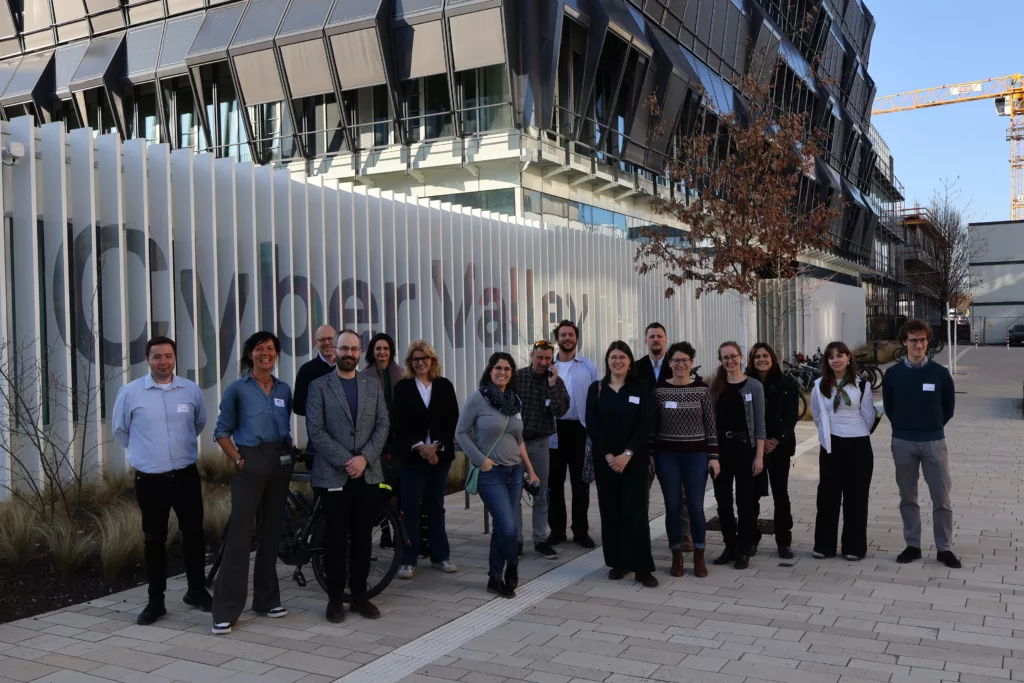
On March 4, we had the pleasure of welcoming journalists from across Europe to Cyber Valley Tübingen. The program, organized in collaboration with the Deutsch-Französisches Institut in Ludwigsburg, offered a fantastic overview of the research, innovation, and collaboration happening across the Cyber Valley Innovation Campus. The afternoon kicked off with inputs from Florian K. Mayer (CEO of Cyber Valley GmbH), Tobias Leismann (Managing Director at ELLIS Institute Tübingen), and Philipp Hennig (Director at Tübingen AI Center). Christoph Koch, former “Journalist in Residence”, gave insights into the Journalist in Residence Program, followed by pitches from the Cyber Valley Start-up Network: Laura Neusser (Chief Communication Officer at Optocycle) and Anand Waghmare (CEO and Co-Founder of Yugen Space). The afternoon was rounded off by lab visits from Tsvetelina Alexiadis and Michael Muehlebach at the Max Planck Institute for Intelligent Systems, as well as Martin Kiefel, Co-Founder of polybot.
Photo: Cyber Valley
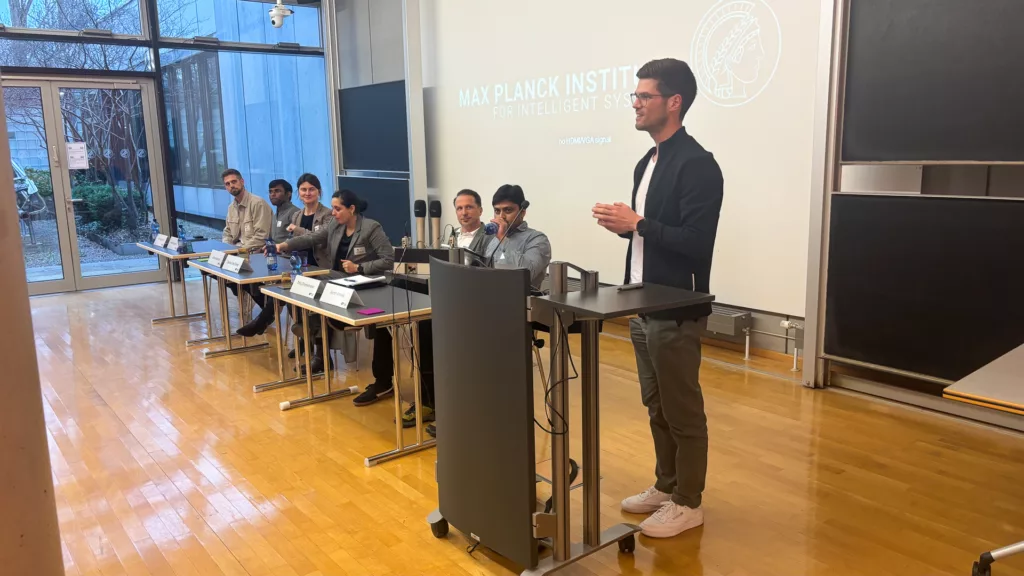
On March 17, the Cyber Valley Impulse series began, focusing on AI in Mobility and Aerospace. Researchers, start-ups, corporates, and investors met at the Max Planck Institute for Intelligent Systems in Stuttgart to discuss vision-based perception for aerial robots, AI in aerospace systems, automated driving, and new funding opportunities in mobility technologies. Speakers included: Aamir Ahmad (University of Stuttgart), Thilo Zimmermann (Innovation Campus Future Mobility), Zamira Daw Perez (Institute of Aircraft Systems), Ulrike Weinrich (FKFS Research Institute for Automotive Engineering and Powertrain Systems), Anand Waghmare (Yugen Space), and Frederik Boenke (NUVUS).
Photo: Cyber Valley
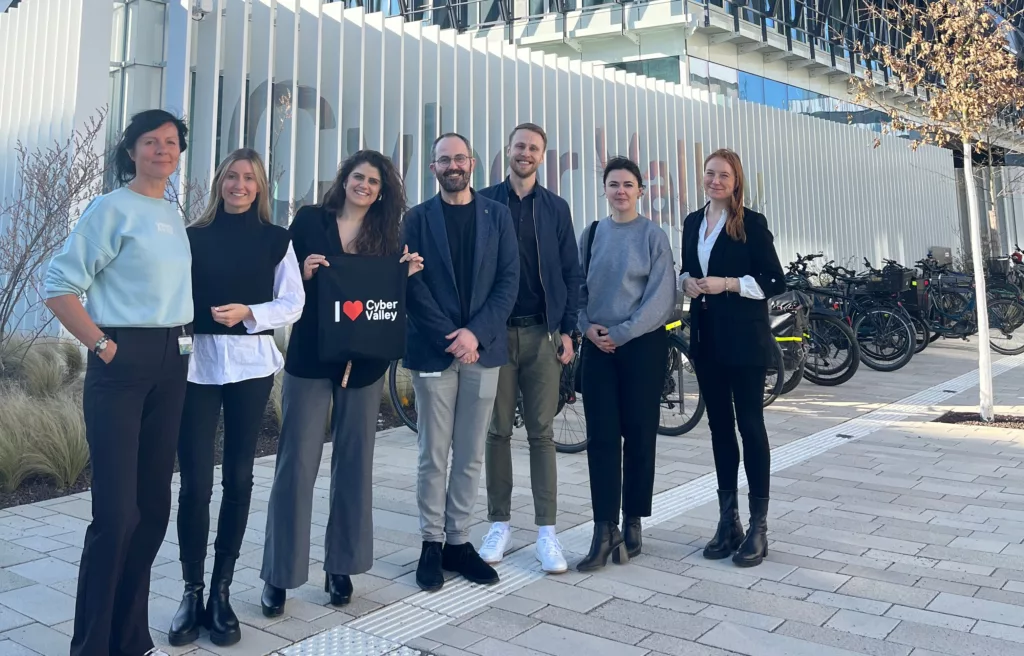
On March 19, we were delighted to welcome representatives from IPAI and IPAI Foundation at Cyber Valley in Tübingen for an exchange on future collaboration opportunities. It was a pleasure to host Jana Strattner, Tamara Pyter, and Sofia Willhauk—three driving forces behind IPAI’s mission to build a vibrant ecosystem for applied artificial intelligence.
By aligning strengths and working together, we can create even greater value for the ecosystem as a whole in Baden-Württemberg—reflecting a responsible approach that also considers the social and ethical implications of AI. The exchange highlighted our common goals: accelerating the transfer of AI research into applications, strengthening networks, and building meaningful collaborations across regions. Through this collaboration, we aim to build bridges between research, society, and industry to create a vibrant ecosystem for applied AI in Baden-Württemberg.
Photo: Cyber Valley
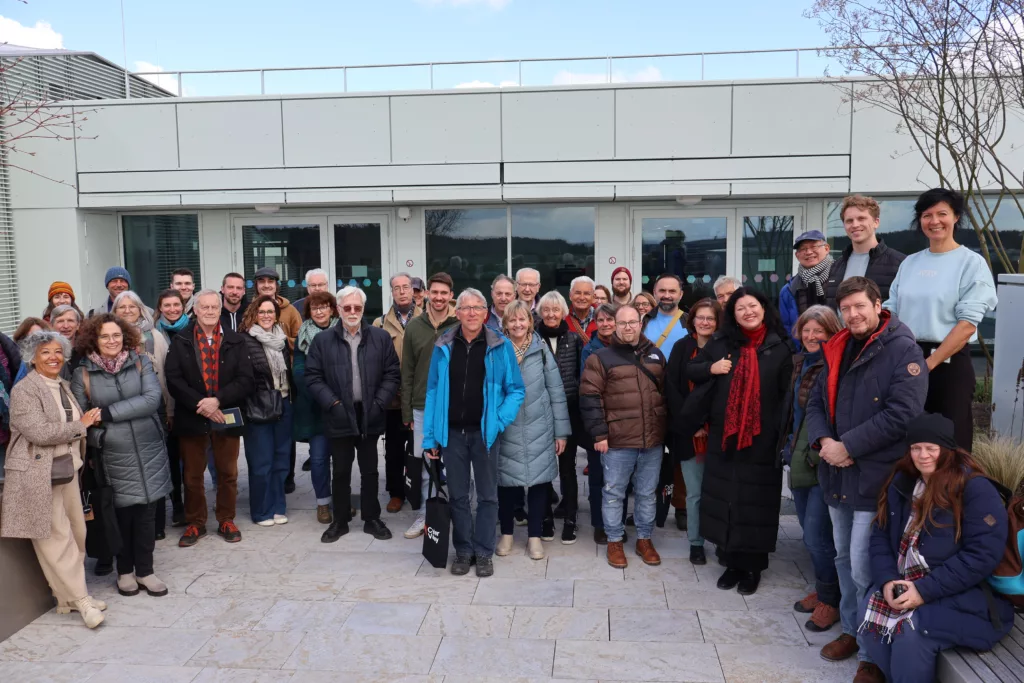
On March 27, representatives from “Tourismus und Stadtmarketing Tübingen GmbH” visited Cyber Valley in Tübingen. Tübingen’s tour guides and Stocherkahn operators were given an introduction to the Cyber Valley Innovation Campus. After an overview presentation, our guests joined a guided tour through the campus in Tübingen. At Cyber Valley, our mission is to turn AI and robotics research into real-world solutions that benefit people, industry, and society. An important part of that is engaging with the public and opening our doors to the community.
That’s why we are excited to launch our upcoming Campus Tours in Tübingen, where everyone will be welcome to explore the campus and learn more about the research happening here. Dates will be announced soon.
Photo: Cyber Valley
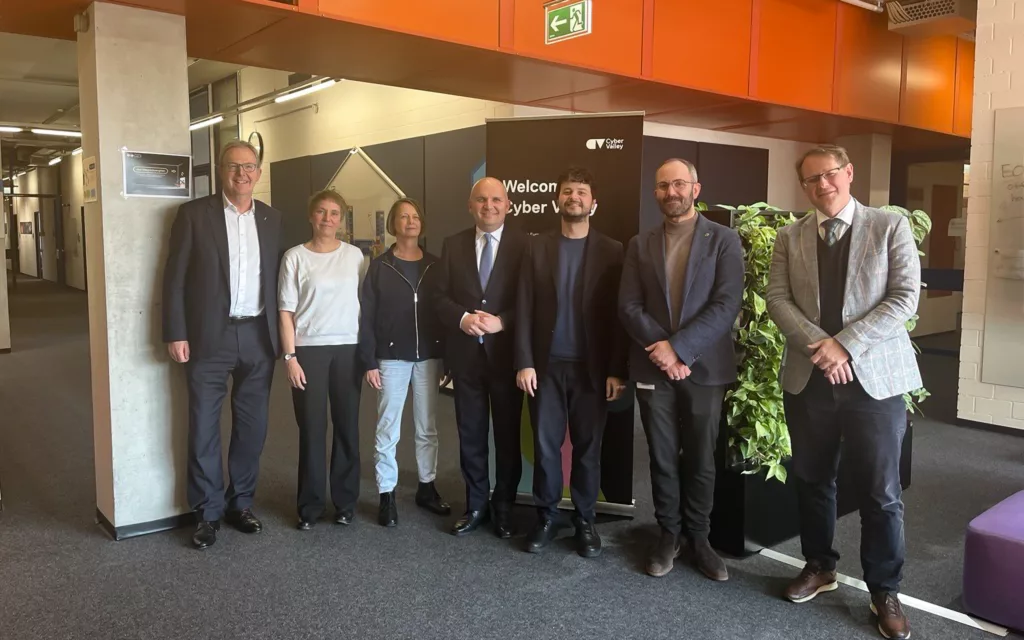
On March 30, we welcomed members of the European Parliament Ilhan Kyuchyuk, Axel Voss, Brando Benifei, and Anze Erbeznik to Cyber Valley in Stuttgart for an engaging exchange on Europe’s evolving AI landscape. Together with Regina Ammicht Quinn and Jessica Heesen from the International Center for Ethics in the Sciences and Humanities at Eberhard Karls Universität Tübingen, as well as Florian K. Mayer, CEO of Cyber Valley GmbH, they discussed key developments shaping Europe’s AI ecosystem. Topics included European AI legislation and the EU Artificial Intelligence Act, the ethical implications of AI, digital autonomy, and questions surrounding our digital afterlife.
In 2016, important actors from science, industry, and politics founded the Cyber Valley Consortium, which became the first Innovation Campus in Baden-Württemberg. Ten years on in 2026, we’re revisiting the most important milestones from the last decade. Each month, we’ll focus on a particular year since Cyber Valley’s beginning.
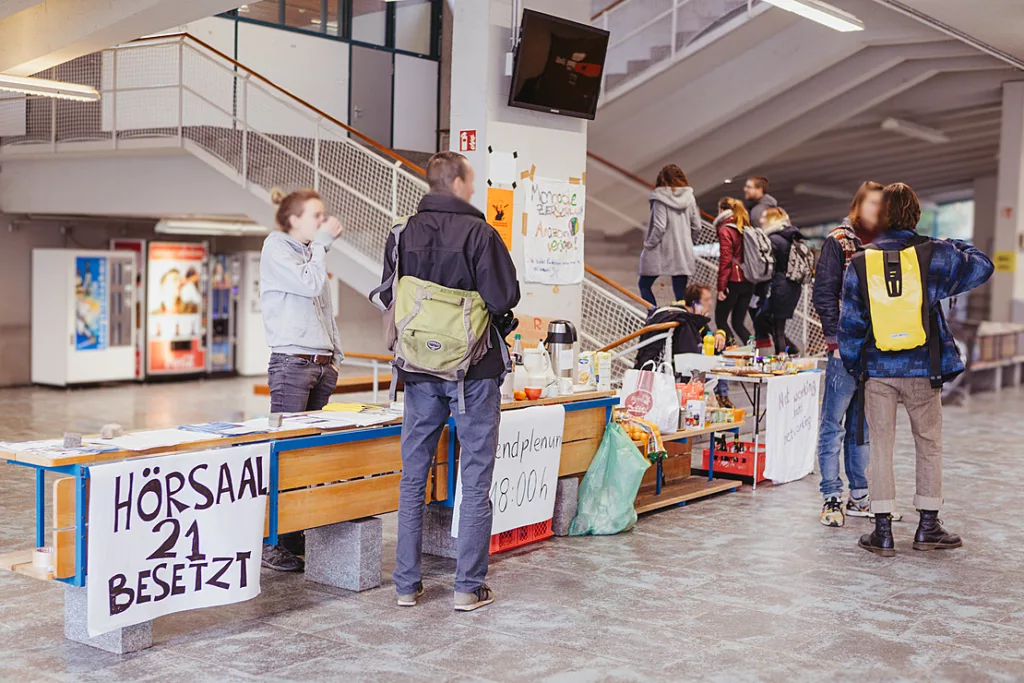
This month, we’re looking back to 2018, which marked an important moment for the exchange between AI research and society in Tübingen. From the end of November to the beginning of December, activists occupied a lecture hall in the Kupferbau (a university lecture hall in Tübingen) to demonstrate their concerns with Cyber Valley. They drew attention to the Innovation Campus’s collaboration with private companies and demanded greater public involvement in decision-making and transparency about its research.
The lecture hall occupation demonstrated the public’s interest in AI and the importance of open conversations about its impact on society. To increase dialog between researchers and the public, Cyber Valley launched several initiatives, including the Cyber Valley Public Advisory Board, the Cyber and the City exhibition at the Tübingen Stadtmuseum, the KI-Bürgerrat, as well as numerous public engagement activities from Cyber Valley GmbH.
Engaging the public in AI research: Philipp Hennig, Professor for the Methods of Machine Learning at the University of Tübingen
While the protests came as a surprise to many members of the Cyber Valley Community, they highlighted the importance of public engagement when building Baden-Württemberg’s future with AI. To ensure that the whole of society benefits from Cyber Valley’s research and collaboration with industry, the public needed to be involved in decision-making, as Philipp Hennig explains:
“On a late morning in 2018, I showed up for my lecture in the Kupferbau to find the building occupied. I walked up to the protest camp, interested to see what good cause the students were fighting for. It took a few bewildered moments before I realized that their banners had something to do with me. But I believe the protesters may also not have realized that there was a lecture in the building by and for the very people they were protesting against. At least, they seemed unprepared when I asked them to join me in the lecture hall so we could talk in front of my students.
Over the weeks that followed, I understood this mutual surprise was a metaphor for the situation in town. Students and the wider public did not know or understand what was happening on our nascent AI campus on the hill. And how could they? We had never made an effort to tell them. In our defense, it had not occurred to us that anyone would want to know. AI was still an emerging topic then. Many of us academics, myself included, thought of our work as a nerdy niche.
December 2018 and January 2019 would prove to be a very stressful time. But in hindsight, I am grateful for the experience. Many of my colleagues, from PhD students to professors, stepped up to speak publicly, often in antagonistic settings, about their work, and the often misunderstood administrative details of research funding. Perhaps the most interesting effect of the protests was what it did to Computer Science students. Most of them were initially indifferent. But as they found themselves forced to side with either their fellow students from other faculties or their own professors, many of them became increasingly engaged.
I learned that winter that explaining oneself—in public, and in person—is painful, but worth it. Seven years later, Tübingen may be more harmonious. But the question to our students has only become more pertinent: What kind of world do they want to build with AI?”
Photo: Friedhelm Albrecht/Universität Tübingen
Founding the Cyber Valley Public Advisory Board: Regina Ammicht Quinn, Senior Professor at the International Center for Ethics in the Sciences and Humanities (IZEW) at the University of Tübingen
One of the outcomes from the protests was the establishment of the Cyber Valley Public Advisory Board (PAB)—an independent committee that critically questions the ethical and social implications of the research projects from the Cyber Valley Innovation Campus. Here, PAB spokesperson, Regina Ammicht Quinn, recounts her experiences of the protests and how they led to the PAB’s founding:
“I experienced the occupation of the Kupferbau as remarkably civilized and cooperative. There were notes everywhere about what was allowed and what was not, chess was played in the afternoon, and the atmosphere was generally characterized by politeness and mutual respect. For example, when I wanted to hold an event in the Kupferbau as part of my lecture series on the topic of “Discrimination by Algorithms”, the sleeping bags were unceremoniously put aside so that the lecture could take place. In my opinion, the protesters did not formulate any concrete demands. Rather, they articulated general concerns and fears about the social consequences of artificial intelligence—questions and uncertainties that, in my view, have lost none of their relevance to this day.
The occupation’s aim was to draw attention to problems: next to the main demand ‘Amazon not in Tübingen!’, came calls for greater transparency—especially regarding possible weapons research—and fears of the already difficult housing situation deteriorating further. There were no concrete problems that were easy for the university to solve. The students articulated general concerns and fears regarding AI’s social consequences—questions and uncertainties that, in my view, have lost none of their relevance to this day. Universities are also committed to society, so a lecture hall can sometimes be a place of protest.
The establishment of a Public Advisory Board in Cyber Valley was therefore a necessary and important step. The Public Advisory Board should create the space in which social perspectives, ethical questions, and public concerns about AI research are brought into discussion. The board’s initial responsibilities included reviewing project proposals and making recommendations. It did not expressly see itself as a moral control body. Rather, it saw its role in pointing out that digital research should be more interdisciplinary and that additional scientific perspectives are necessary to broaden horizons.”
Cyber and the City: Thomas Thiemeyer, Professor for empirical cultural studies at the University of Tübingen
The protests also gave an impetus to cultural researchers like Thomas Thiemeyer, who curated the Cyber and the City exhibition at the Tübingen Stadtmuseum. The exhibition ran from February 2023 to January 2024 and gave an overview of the developments and debates surrounding AI research in Tübingen. For Thiemeyer, it offered a space for the public to engage with this topic following the protests in 2018:
“The protests raised some of the big questions related to AI that were little discussed publicly in Germany at the time: Where will our city develop if the tech industry and AI research become central players? What does AI do to our society? How does it change our everyday lives? And which economic models (keyword: ‘surveillance capitalism’) do we support with new technologies? What does this mean for scientific research, whose independence from commercial interests and political expectations is important?
The protests were the reason why we, as cultural researchers, dealt with the topic and finally made an exhibition on it. The protests meant that the topic of AI in Tübingen and Stuttgart became a topic for the people of Tübingen, where fundamental questions of urban and social development were negotiated. Protests are always interesting for cultural studies because they force societies to reflect upon themselves and make corrections.
A continuing dialog with the public about AI research and application is important because new technologies always change people’s lives. These technologies affect all of us and are therefore a subject of political discussion. For these discussions to be conducted not only by a few experts, but by as many citizens as possible, information is a prerequisite.”
The events of 2018 highlighted the importance of open discussions about new technology. AI developments not only raise scientific and technological questions but also touch on societal expectations, hopes, and concerns. This is why it is crucial to create spaces for the exchange of different perspectives.
Public engagement is an important part of Cyber Valley’s activities. Various public engagement formats and initiatives promote continuous exchange between researchers and the public—from dialog events and exhibitions to participatory formats such as citizens’ dialogues and campus tours. The aim is to make AI understandable, include different perspectives, and consider the social dimensions of new technologies.
To celebrate Cyber Valley’s ten-year anniversary, we’ll be sharing a variety of content across our website and social media channels reflecting on milestones from the last decade. Stay tuned for the next installments!
Led by Ardian Jusufi, this project investigated how biology and biomechanics can inform the design of soft robotic systems. Its goal was to develop flexible, stretchable, and potentially biocompatible materials that can sense deformation, pressure, and movement while adapting to complex surfaces.
The research combined soft sensors, hydrogel actuators, and bio-inspired robot designs. It also used robophysical models—simplified physical robots that allow researchers to test how biological bodies move and interact with their environment. The project concluded in February 2023.
Key results
Developed flexible and stretchable sensors for measuring strain, pressure, curvature, and body deformation.
Improved pressure sensing in situations where the sensor itself is stretched, addressing the trade-off between sensitivity, robustness, and durability.
Created multilayer hydrogel actuators with improved strength, stretchability, and fluidic performance.
Integrated soft sensors into bio-inspired robots, including an underwater robotic fish, to measure body movement and provide feedback during locomotion.
Used soft robotic fish and animal-inspired robots to study swimming, obstacle traversal, tail movements, mass distribution, and landing stability.
Demonstrated that soft sensors can measure body undulation and support closed-loop control, allowing a robotic fish to respond to changing flow conditions.
Used biorobotic models to test biological hypotheses, including how squirrels use their tails to reorient themselves during falls and how geckos use their tails to stabilise crash landings.
Why it matters
Soft robots can deform, absorb impacts, and adapt to their surroundings more easily than rigid machines. Sensors that stretch and move with a robot are therefore essential for reliable control and for measuring the robot’s interaction with its environment.
This research contributes to more adaptable soft robots, wearable and skin-like sensors, underwater systems, and bio-inspired machines. It also shows how soft robotics can function as a scientific tool: robotic models make it possible to measure forces and movements that are difficult to study directly in living animals.
Publications and output
Souri H, Banerjee H, Jusufi A, Radacsi N, Stokes A, Park I, Sitti M, Amjadi M. Advanced Int. Sys. 2 (8) 2000039. Wearable and Stretchable Strain Sensors: Materials, Sensing Mechanisms, and Applications. 2020. Advanced Intelligent Systems, Volume: 2, Issue: 8, 2020. DOI: https://doi.org/10.1002/aisy.202000039
Wright B, Vogt D, Wood R, Jusufi A*. IEEE International Conference on Soft Robotics (RoboSoft). Soft Sensors for Curvature Estimation under Water in a Soft Robotic Fish. COEX, Seoul, Korea, 2019.
Siddall R, Fukushima T, Bardhi D, Perteshoni B, Morina A, Hasimja E, Dujaka Y, Haziri G, Martin L, Banerjee H, Jusufi A*. Advanced Robotics 35 (7). Compliance, Mass Distribution and Contact Forces in Cursorial and Scansorial Locomotion with Biorobotic Physical Models. 2021. https://www.tandfonline.com/doi/full/10.1080/01691864.2021.1887760.
Fukushima Toshihiko, Robert Siddall,Fabian Schwab, Severine Toussaint, Greg Byrnes, John Nyakatura, and Ardian Jusufi. Inertial tail effects during righting of squirrels in unexpected falls: From behavior to robotics. Integrative and Comparative Biology, icab 023, 2021.
Lin Yu-Hsiang, Siddall R, Schwab F, Fukushima T, Banerjee H, Youngjoon Baek, Daniel Vogt, Yong-Lae Park, and Jusufi A. Modeling and control of a soft robotic fish with integrated soft sensing. Advanced Intelligent Systems, 2000244, 2021.
Fabian Schwab, Elias T Lunsford, Taehwa Hong, Fabian Wiesemüller, Kovac M, Park YL, Akanyeti O, Liao J C, and Jusufi A. Body caudal undulation measured by soft sensors and emulated by soft artificial muscles. Integrative and Comparative Biology, 2021.
Fabian Schwab, Fabian Wiesemüller, Claudio Mucignat, Yong-Lae Park, Ivan Lunati,Mirko Kovac, and Ardian Jusufi. Undulatory swimming performance explored with a biorobotic fish and measured by soft sensors and particle image velocimetry. Frontiers in Robotics and AI, page 387, 2021.
Robert Siddall, Greg Byrnes, Rob J. Full and Ardian Jusufi, Tails stabilize landing of gliding geckos crashing head-first into tree trunks’, Communications Biology, 2021.
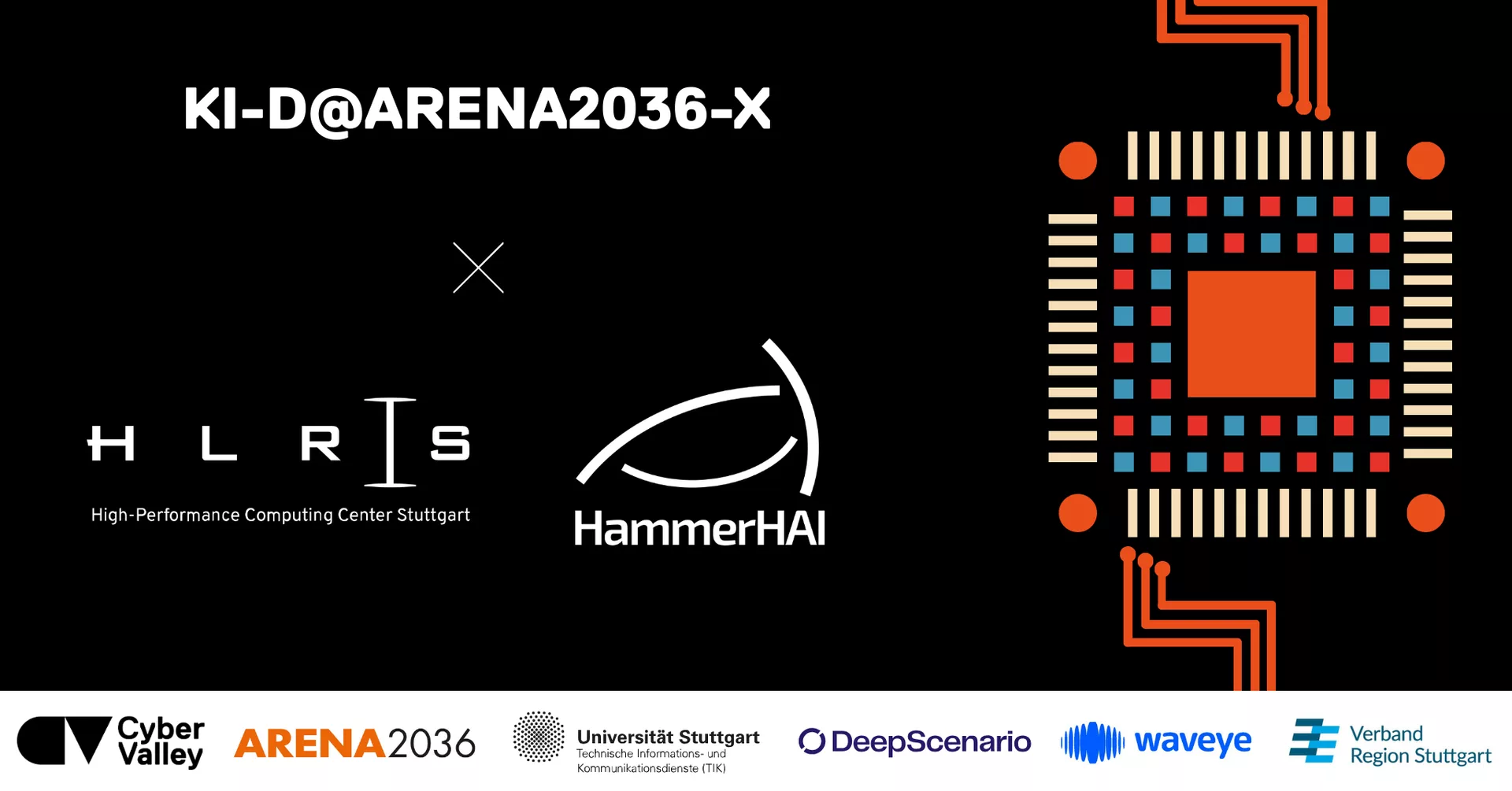
The future of Artificial Intelligence (AI) is taking an important step forward in the heart of Baden-Württemberg: the High-Performance Computing Center Stuttgart (HLRS) is joining the ‘KI-D@ARENA2036-X” program as a new partner, contributing its expertise and computing capacity.
With HLRS joining the initiative, the program gains an important new partner. This collaboration provides access to the infrastructure project HammerHAI. Starting in mid-year, extensive AI computing resources will be available across the entire development chain—from smaller systems directly integrated into machines or devices to powerful high-performance computing systems. This will make it possible to train and deploy very large and complex AI models.
Infrastructure designed to accelerate AI development
As part of the initiative, the partners are building an open IT and data infrastructure, including access to a data space for the sovereign exchange of data. The goal is to provide companies with easy access to powerful resources for AI applications—from the initial idea to practical deployment within companies. At the center of this effort is the networking of AI systems and data. Companies will be able to use the provided infrastructure without having to build large technical systems themselves. Access will be offered at competitive costs. Start-ups as well as small and medium-sized enterprises (SMEs) will particularly benefit, strengthening their innovative capacity and competitiveness.
This will create a scalable, transparent, and collaboratively designed system in Baden-Württemberg. Instead of a black-box approach, the project deliberately focuses on an open infrastructure.
This infrastructure is built on three key components:
Integrating own hardware
Companies can integrate their own computing hardware, allowing them to flexibly expand available computing capacity and address individual requirements.
Shared data space
A scalable, collaborative data space with marketplaces enables different organizations to work together on datasets, AI models, and concrete use cases.
High-performance computing with HammerHAI
Powerful high-performance computing resources enable the training and deployment of particularly large AI models.
A program that accelerates companies
Participating companies in the ‘KI-D@ARENA2036-X’ program benefit from practical access to powerful AI infrastructure and a strong innovation network.
The program offers, among other things:
the opportunity to test and implement new ideas and proof-of-concepts without high upfront investments
access to powerful high-performance IT without having to operate their own data center
professional exchange with other AI developers facing similar technological challenges
a real-world testing environment at ARENA2036 that brings together requirements from different industries
This means the program not only supports companies in their projects—it actively accelerates the development and implementation of new AI applications.
Voices from the project team
Prof. Dr. Peter Middendorf, Rector of the University of Stuttgart:
“The IT and data infrastructure of ‘KI-D@ARENA2036-X’ is another important building block in our innovation ecosystem. The University of Stuttgart contributes to the success of this project through its Technical Information and Communication Services and as a partner of ARENA2036. I am therefore particularly pleased that the High-Performance Computing Center Stuttgart (HLRS) is now joining as another strong partner. With its powerful computing infrastructure, HLRS will support companies and start-ups in testing and optimizing state-of-the-art AI applications.”
Dr. Alexander Lahl, Regional Director of the Verband Region Stuttgart:
“Together with the HammerHAI infrastructure project, an important nucleus for AI development is emerging in the region. Start-ups and especially small and medium-sized enterprises will benefit greatly from this initiative. Through our support, we are significantly strengthening the Stuttgart Region as a location for AI applications and data infrastructures. At the same time, this project highlights the importance of collaboration across research, industry, and regional partners.”
Michael Kaiser, Managing Director of Wirtschaftsförderung Region Stuttgart GmbH (WRS):
“The collaboration between ‘KI-D@ARENA2036-X’ and HLRS and its European AI Factory HammerHAI is another important building block for the AI ecosystem of the Stuttgart Region. It enables companies to train and use very large AI models using efficient high-performance computers—without having to operate their own data center. This opens up new opportunities in AI development and application, especially for small and medium-sized companies.”
Angelina Jukic, Program Manager at Cyber Valley GmbH:
“Our goal within the KI-D@ARENA2036-X program is to create a highly connected ecosystem that brings together research, start-ups, and industry. This will make the development and training of AI models more efficient. HammerHAI is one of Germany’s leading AI computing infrastructures and works together with ARENA2036 on forward-looking solutions.”
Project status and outlook
Following the successful establishment of the basic infrastructure during the first year of the project, the program will enable operational access to the available computing and data resources in 2026.
About the KI-D@ARENA2036-X program
The KI-D@ARENA2036-X program is jointly implemented by ARENA2036, Cyber Valley GmbH, DeepScenario, waveye, and the Technical Information and Communication Services (TIK) of the University of Stuttgart. The goal is to build a collaborative infrastructure that accelerates AI innovation in Baden-Württemberg while ensuring security, transparency, and long-term economic sustainability.
The program is funded by the Verband Region Stuttgart within the Co-Financing Program for Artificial Intelligence from 2024 to 2027 with a total of €685,000.
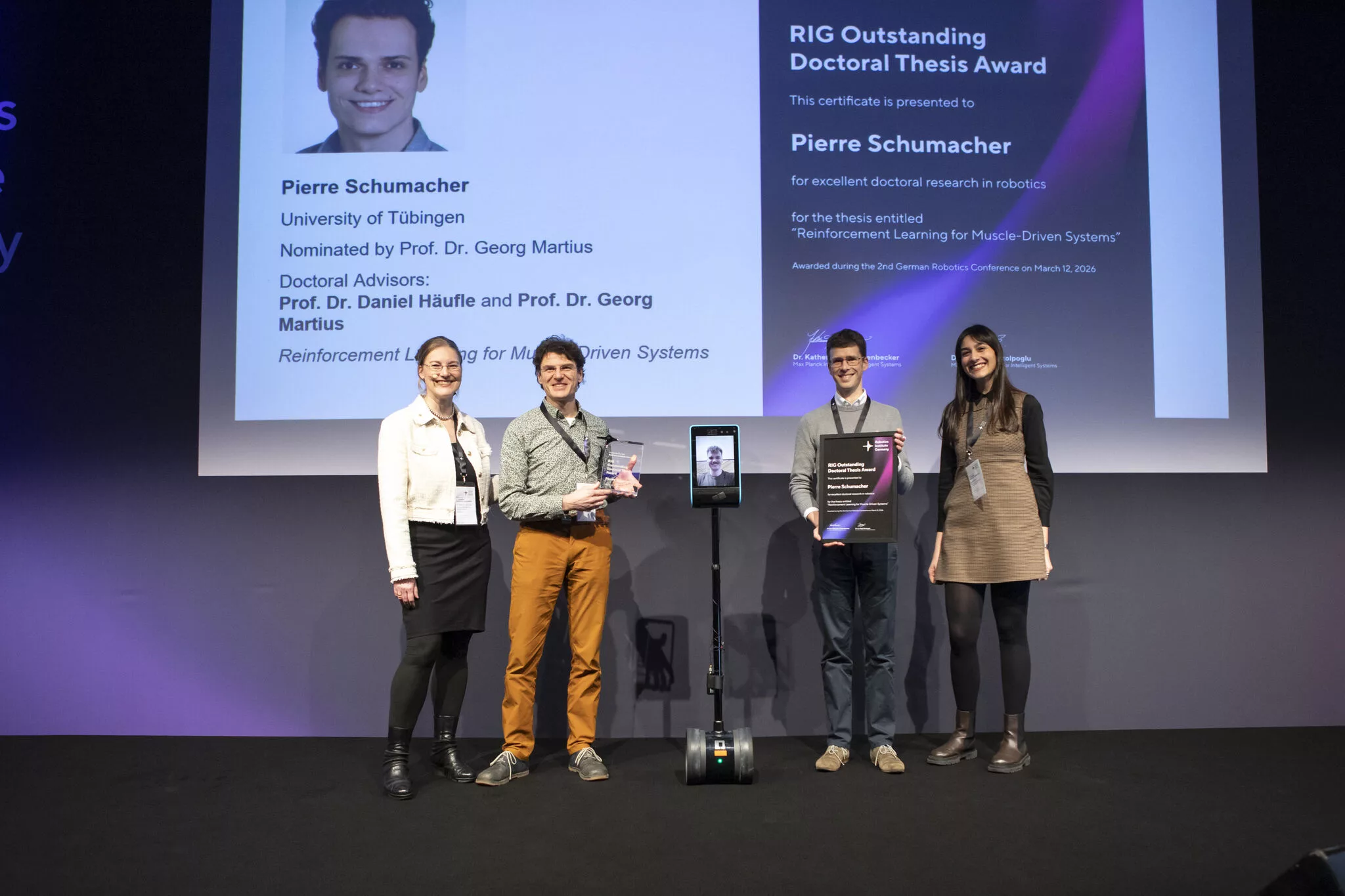
Pierre Schumacher has been selected as one of the two recipients of the “RIG Outstanding Doctoral Thesis Award”, recognizing exceptional doctoral research in robotics in Germany. The award was officially announced during the “RIG Heroes Award Night 2026” at the German Robotics Conference 2026, organized by the Robotics Institute Germany (RIG), in Cologne on March 12.
Schumacher’s dissertation, “Reinforcement Learning for Muscle-Driven Systems,” was selected from 27 nominations submitted by 16 institutions across Germany. Following an extensive evaluation process, an international selection committee chose two equal awardees, citing Schumacher’s work for its “scientific depth, originality, and impact”.
Pierre Schumacher conducted his doctoral research at the Max Planck Institute for Intelligent Systems in Tübingen under the supervision of Prof. Georg Martius (University of Tübingen) and Prof. Daniel Häufle (Hertie Institute for Clinical Brain Research) funded by the Cyber Valley Research grant “Learning effcient control of non-linear muscle-driven systems: Morphological computation as guiding principle”. His project was part of the Cluster of Excellence “Machine Learning: New Perspectives for Science” and the Center for Bionic Intelligence Tübingen Stuttgart (BITS). His dissertation, “Reinforcement Learning for Muscle-Driven Systems,” addresses challenges in controlling complex, highly overactuated robotic and biomechanical systems by developing new machine learning methods.
A central contribution of the work is the development of DEP-RL, a reinforcement learning approach that improves exploration and learning in systems with many redundant actuators, such as musculoskeletal models. Using this method, Schumacher demonstrated efficient learning for tasks involving complex simulated bodies, including a human model with dozens of muscles and animal-inspired locomotion systems.
Pierre’s research also explored how muscle-like actuation can improve learning performance and robustness in robotic systems. In collaborative studies, Schumacher and colleagues showed that musculoskeletal models can lead to more data-efficient and stable learning in anthropomorphic control tasks. More recent work demonstrated that reinforcement learning can produce natural and robust bipedal walking in musculoskeletal simulations without relying on motion-capture demonstrations.
Schumacher began his academic path with a trinational bachelor’s degree in physics that took him to universities in France, Luxembourg, and Germany. After completing his B.Sc. in physics in Saarbrücken 2017, he shifted toward computational approaches and pursued a master’s degree at Goethe University Frankfurt in Frankfurt am Main. In 2021, he joined the Max Planck Institute for Intelligent Systems and the Hertie Institute for Clinical Brain Research in Tübingen with Prof. Georg Martius and Prof. Daniel Häufle for his PhD in Computer Science, which he completed in 2025.Schumacher’s expertise has also attracted industry attention: he joined MyoLab, a startup based in New York focusing on musculoskeletal control technologies, last year.
The RIG Outstanding Doctoral Thesis Award highlights emerging researchers whose doctoral work significantly advances robotics research in Germany. Schumacher’s selection underscores the growing importance of combining machine learning, biomechanics, and embodied intelligence to enable the next generation of adaptive robotic systems.
In 2016, important actors from science, industry, and politics founded the Cyber Valley Consortium, which became the first Innovation Campus in Baden-Württemberg. Ten years on in 2026, we’re revisiting the most important milestones from the last decade. Each month, we’ll focus on a particular year since Cyber Valley’s beginning.
This month, we’re looking back to 2018, when the first Cyber Valley Research Groups were established. One of these research groups was led by Caterina De Bacco: between 2018 and 2024, she led the Physics for Inference and Optimization group at the Max Planck Institute for Intelligent Systems before becoming an Associate Professor at Delft University of Technology.
In the following interview, she explains how Cyber Valley’s network of scientists and innovators provided a thriving environment for her research, and how her research could be used for managing traffic in transportation networks.
What were your research group’s main aims and outcomes?
In my group, we were combining expertise from physics, mathematics, and statistics to effectively model complex systems; systems made of many individual elements that interact in complex ways, often referred to as networks. Our research approach aimed at developing mathematically rigorous models to learn patterns from network data or to optimize the design of these systems. We studied applications like clustering, anomaly detection, or optimal transport on networks, spanning various domains, in particular, the social sciences and engineering.
How did your research address real-world challenges, and what kind of applications or long-term benefits could it have?
Learning patterns from network data has applications in a variety of domains, as network data is ubiquitous. One of the challenges is to perform these inferences efficiently. Hence, special focus is given to the development of interpretable and principled models that are also computationally efficient, so that practitioners such as social scientists and engineers can use them without needing large resources, making these tools accessible to a wider audience. All the models we developed have a corresponding open-source implementation of the codes available online. With our models, practitioners can detect hidden clusters of similar nodes from network data or estimate the likelihood that certain observations are anomalous.
In addition, our research on optimal transport has natural applications in managing traffic in transportation or communication networks. With our models, we can design optimal networks that can be used by network managers to assess the efficiency of existing transportation infrastructures.
Cyber Valley is a network of leading research institutions, industry partners, and start-ups working in AI and robotics. How did being part of this network shape your research, skills, or career path?
The exposure to this diverse network of experts was beneficial for the creative process of stimulating ideas, ideation. You have the feeling that there is always something cutting-edge going on around you, and you are among the first ones to know. There are not that many ecosystems connecting research and technology at this high level, so being immersed in it gives you valuable stimuli and ideas.
The Cyber Valley Research Fund was also an important support for advancing our research (I obtained two grants from it). With little administrative burden and a smooth application and reporting process, I could focus mainly on the research itself, in contrast to other mainstream funding opportunities, where you end up spending much more time on non-research-related activities. As a result, our research thrived during these years, with an even higher level of productivity than we originally planned.
How did your experience as a Cyber Valley Research Group Leader prepare you for your next career step?
The opportunity to combine freedom and resources was unique and extremely valuable. This allowed me to grow in several aspects that are important for an academic career beyond pure research, for example, managerial responsibilities. Being able to independently manage a budget and to make key decisions (such as recruiting, deciding how to contribute to teaching) gives you a sense of responsibility and agency that makes you grow significantly faster compared to other young academics who are not as independent. As scientists, we are required to take on different roles (managers, mentors, supervisors, teachers, accountants, fundraisers) that we must learn on the job, as we are usually only trained in the science itself. To be able to effectively learn all these skills, I needed to be given the opportunity. The independence and support I got from Cyber Valley were key in this respect.
As a result, I could start my next career step (as an Associate Professor at Delft University of Technology) with a significant advantage in terms of experience, compared to my peers. Needless to say, being a Cyber Valley Group Leader played a big role in increasing my chances of finding the right job for my next career step.
To celebrate Cyber Valley’s ten-year anniversary, we’ll be sharing a variety of content across our website and social media channels reflecting on milestones from the last decade. Stay tuned for the next installments!
Georg Martius’ project, “Embedding combinatorial reasoning into learning control policies” addressed a practical gap in AI’s basic machinery: connecting data-driven neural networks with decision-making so they can adhere to clear structures, rules, and constraints. The project developed foundations for integrating combinatorial optimization into learning systems. It has potential applications wherever planning and resource allocation are central, such as in robotics and logistics. The project was funded by the Cyber Valley Research Fund and was carried out between 2021 and 2024.
Martius’ project addressed a key limitation of today’s machine-learning systems. While neural networks can learn powerful representations from data (for example, from images or sensor signals), many real-world decisions must also follow strict rules, such as budgets, capacities, safety limits, or “must/ must not” constraints. These rule-based decisions are often handled by specialized optimization software, but such tools are traditionally difficult to integrate into learning-based systems.
Martius’ research created methods that make it easier to combine neural networks with combinatorial optimization components. This enables systems to learn from data while also drawing on proven optimization techniques to make decisions that respect constraints. Rather than replacing classical solvers, the project developed ways to use them as trainable building blocks inside larger learning pipelines.
The project also explored “neuro-algorithmic” approaches to decision-making and control, investigating how structured algorithms can improve generalization to new problems compared with purely data-driven approaches.
Overall, the project provides a foundation for building AI systems that connect perception with constraint-aware decision modules. This is an important step toward robust solutions in areas such as robotics, planning, logistics, and resource allocation.
This project produced the following peer-reviewed publications:
Anselm Paulus, Michal Rolínek, Vít Musil, Brandon Amos, and Georg Martius. “CombOptNet: Fit the Right NP-Hard Problem by Learning Integer Programming Constraints”. In: Proceedings of the 38th International Conference on Machine Learning. Vol. 139. Proceedings of Machine Learning Research. PMLR, July 2021, pp. 8443–8453. url: https://proceedings.mlr.press/v139/paulus21a.html.
Marin Vlastelica, Michal Rolinek, and Georg Martius. “Neuro-algorithmic Policies Enable Fast Combinatorial Generalization”. In: Proceedings of the 2021 International Conference on Machine Learning (ICML). July 2021. url: https://proceedings.mlr.press/v139/vlastelica21a.html.
Marco Bagatella, Mirek Olšák, Michal Rolínek, and Georg Martius. “Planning from Pixels in Environments with Combinatorially Hard Search Spaces”. In: Advances in Information Processing Systems (NeurIPS 2021). 2021. url: https://openreview.net/forum?id=XgGUUaKgips.
Subham Sahoo, Anselm Paulus, Marin Vlastelica, Vít Musil, Volodymyr Kuleshov, and Georg Martius. “Backpropagation through Combinatorial Algorithms: Identity with Projection Works”. In: Proceedings of the Eleventh International Conference on Learning Representations. May 2023. url: https://openreview.net/forum?id=JZMR727O29.
A. Paulus, G. Martius, and V. Musil. “LPGD: A General Framework for Backpropagation through Embedded Optimization Layers”. In: Proceedings of the 41st International Conference on Machine Learning (ICML). Vol. 235. Proceedings of Machine Learning Research. PMLR, July 2024, pp. 39989–40014. url: https://proceedings.mlr.press/v235/paulus24a.html.
The Cyber Valley Research Fund was established to support Cyber Valley research groups undertake basic research in the fields of artificial intelligence and robotics. The fund totaled five million euros, including contributions from six of Cyber Valley’s founding corporate partners: Amazon, BMW, Bosch, IAV, Mercedes-Benz, Porsche, and ZF. It supported 20 research projects, the first of which began in 2020, and the final of which will conclude in 2026.
This edition of “Cyber Valley Impulse” focuses on the role of intelligent systems in health and life sciences. Experts from reseach, industry, and the innovation ecosystem will exchange insights on how AI-driven technologies can enhance healthcare, biomedical research, and life science applications.
As part of the Cyber Valley Impulse event series, this edition highlights applications of intelligent systems in health and life sciences. Advances in artificial intelligence, machine learning, and data-driven methods are transforming biomedical research, clinical practice, and biotechnology, opening new opportunities for innovation and collaboration.
The event provides a platform for knowledge exchange, discussion, and networking between academia, industry, and the innovation ecosystem.
What to expect
Insights into current developments and challenges in AI for health and life sciences
Exchange between researchers, industry practitioners, and innovators
Opportunities for collaboration and community building within the region
Informal networking with experts and stakeholders
Program
A detailed agenda, speakers, and session format will be announced soon.
STUTTGART/TÜBINGEN, TOKYO, March 3, 2026 – Cyber Valley GmbH und UTokyo Innovation Platform Co., Ltd. have announced Yugen Space as the winner of the ‘Valley and Sunrise’ Program’s first edition.
The ‘Valley and Sunrise’ Program empowers start-ups working in AI and robotics to find entry into the Japanese market. Driven by its goal of fostering international growth, the program offers participants hands-on mentorship, strategic insights, and access to UTokyo IPC’s network of industry leaders and partners.
‘We designed Valley and Sunrise to help talented founders accelerate their impact,’ said Angelina Jukic, Program Manager of Valley and Sunrise at Cyber Valley GmbH. ‘The quality of applications was exceptional, and our judges were impressed with how Yugen Space combined a bold vision with real-world traction.’
Yugen Space was selected from a highly competitive pool of applicants for its innovative approach as well as its strong market potential. The start-up was founded by Anand Waghmare (CEO) and Parikshit Joshi (CTO) in June 2025 and has its headquarters in Tübingen. Yugen Space’s mission is to build the intelligence engine for satellite-driven decisions.
Yugen Space combines raw satellite imagery and real-world decisions. It integrates multi-source satellite data, applies scientific and machine learning models, and converts planetary signals into decision-ready intelligence. Users select a location, ask a question, and receive decision-ready insights within minutes.
Over the course of the program, Yugen Space will work closely with mentors and industry experts to refine its market strategy and develop a roadmap for scaling its products and services.
Anand Waghmare, CEO of Yugen Space:
‘Being selected for the Valley and Sunrise program is a pivotal milestone for Yugen Space. It allows us to bridge two of the world’s most advanced AI and deep-tech ecosystems: Cyber Valley here in Germany and UTokyo IPC in Japan. For us, this is a vital opportunity to scale our mission of democratizing planetary intelligence internationally. We look forward to working with Japanese industry leaders to prove how our products can solve complex environmental and industrial challenges on a global scale.’
Hideki Nagasaka, Partner and Director, 1stRound, UTokyo IPC:
‘This selection marks a meaningful milestone in the collaboration framework we have steadily built between Japan and Germany over the years. We are confident that this milestone will serve as a critical step for Yugen Space as it accelerates its business development with a clear view toward expansion into the Japanese market. Through this initiative, we hope not only to contribute to the continued growth of the German innovation community, including Cyber Valley, but also to further deepen the ties between the German and Japanese ecosystems. We remain committed to strengthening the Japan-Germany network and advancing sustainable, long-term collaboration.‘
UTokyo Innovation Platform Co., Ltd. (UTokyo IPC) is a venture capital firm wholly owned by the University of Tokyo, established in 2016 to strengthen Japan’s global industrial competitiveness through startup investment and ecosystem building. As a public–private venture capital firm, UTokyo IPC has invested in more than 80 university-affiliated startups and venture funds both in Japan and overseas. Beyond investment, UTokyo IPC operates the Startup Building Program, which supports the commercialization of research outcomes; 1stRound, Japan’s largest academia-linked accelerator; and DeepTech Dive, a program dedicated to cultivating deep-tech talent. In 2024, UTokyo IPC launched the ASA Fund under the Tokyo Metropolitan Government’s initiative to promote global collaboration and establish Japan as a hub for deep-tech innovation.
About Cyber Valley
Cyber Valley is Europe’s largest and leading center for excellence in artificial intelligence and modern robotics. Its mission and public mandate are to advocate for research, development, application, and acceptance of technologies and methods in intelligent systems. Cyber Valley encourages entrepreneurship by uniting scientific excellence with innovation and technology transfer. In addition, Cyber Valley facilitates critical reflection on the ethical and social implications of AI through public engagement. Cyber Valley envisions a future in which the full potential of intelligent systems is leveraged for the greater good of the world.