User Group: Researcher

  • VC Ask-Me-Anything: Insights for Future Founders & Researchers

    VC Ask-Me-Anything: Insights for Future Founders & Researchers

    This event is aimed especially at PhD Students, researchers, and aspiring founders in Tübingen who would like to gain first-hand insights into how venture capitalists think and build early connections without the pressure of pitching.

    The event is jointly organized by the Tübingen AI Center and Cyber Valley GmbH. 

    Participants

    Meet Representatives from:

    What to expect

    • Insights into how venture capitalists evaluate early-stage companies

    • Practical advice on fundraising, market trends, and early start-up decisions

    • An open Q&A in an informal setting

    • Networking over pizza and drinks after the session


    The panel will be moderated by Professor Peter Gehler focused on tech transfer at Tübingen AI Center.

  • Demo Day of the Cyber Valley AI Incubator

    Demo Day of the Cyber Valley AI Incubator


    Over the past six weeks, the Batch #7 teams of the Cyber Valley AI Incubator have been developing their AI-powered start-up ideas, guided by mentors from the Cyber Valley Community. Now, they’re ready to pitch their ventures to a panel of judges and an audience of investors, researchers, corporate leaders, and entrepreneurs.

    The jury will recognize top-performing teams, who will win exciting prizes. Discover cutting-edge AI solutions and connect with key players from the region’s thriving AI landscape in an energetic atmosphere over drinks and finger food.


    When? 

    Thursday, November 20, 2025
    16:00–19:45 CET


    Where? 

    Amazon Research & Development Center

    Friedrich-Mieschler-Straße 4, 72076 Tübingen 


    Registration

    Please register via Eventbrite in advance as the number of participants is limited.


    The Cyber Valley AI Incubator

    The Cyber Valley AI Incubator is a six-week program for AI talent with brilliant ideas. It encourages scientists, technologists, and business talent to found their own companies, fostering the next generation of AI start-ups. The AI Incubator equips participants with the right knowledge, tools, and skills to transfer their groundbreaking AI and robotics research into products and applications.

    It covers topics such as AI prototyping, product-market fit, business strategy, and funding. The program also provides participants with access to a network of experts, mentors, founders, and investors who offer guidance and inspiration on their journey into the AI business world. 

    The Cyber Valley AI Incubator is organized by the Max Planck Institute for Intelligent Systems and funded by the Carl-Zeiss-Stiftung.


  • Tübingen Conference for AI and Law

    Tübingen Conference for AI and Law

    Keynote speakers


    Other Confirmed Speakers


    When?

    November 5–6
    Day 1: 9:00–19:00
    Day 2: 9:00–16:15


    Where?

    The conference will take place in Tübingen, a picturesque university town in southwest Germany. 

    Day 1: Alte Aula, in the historic town center, next to the Stiftskirche, University of Tübingen

    Day 2: Maria-von-Linden Straße 1: a brand-new building on the Tübingen AI research campus

  • 18th European Workshop on Reinforcement Learning (EWRL 2025)

    18th European Workshop on Reinforcement Learning (EWRL 2025)


    What?

    The 2025 edition of EWRL will be an exciting event for researchers worldwide, both for the presentation of top-quality papers, but also as a forum for ample discussion of open problems and future research directions.

    Past editions of EWRL can be found here.

    Reinforcement learning is an active field of research which deals with the problem of sequential decision making in unknown (and often) stochastic and/or partially observable environments. Recently there has been a wealth of impressive empirical results, including those coupling Deep Learning function approximators with Reinforcement Learning algorithms, as well as significant theoretical advances. Both types of advances are of major importance and the conference aims to create a forum to discuss such interesting results, their applications, consequences, and research perspectives. 


    When?

    September 17th–19th, 2025


    Where?

    EWRL18 will be located in the historical University of Tübingen, Germany. Tübingen is a lovely, vibrant university town in southern Germany, known for its rich history and scenic streets. Check out tourist information here!


    Call for papers

    The organizing committee invites submissions to the 18th European Workshop on Reinforcement Learning (EWRL 2025). There will be no proceedings for EWRL 2025. Papers may be submitted to one of two tracks:

    Regular track: unpublished work. Papers submitted to this track are unpublished, though they may be concurrently under review at another venue. These papers will be subjected to the full review process.

    Fast track: published work. Papers that are already accepted at one of the venues listed below may be submitted to this track. They will not receive new reviews, but will be checked for relevance to the topics of interest to EWRL.
    Submissions are handled through OpenReview. Submitted papers will be reviewed by the program committee in a double-blind procedure. Final decisions will be taken by the program chairs based on the reviews. There will be no author/reviewer discussion phase. Only accepted papers will be publicly released, while rejected or withdrawn manuscripts will be kept confidential.

    Submitted papers should follow the EWRL template linked below. There is a limit of 9 pages, excluding references and appendix. Authors of accepted papers will be allowed an additional page to prepare the camera-ready version. There is no page limit for the fast track. All accepted papers will be presented as posters.

    For any questions, please contact the organizers at ewrl2025@gmail.com.


    Fast track instructions

    For submission to the fast track, the selection committee will consider papers accepted at the following venues: NeurIPS, ICML, ICLR, RLC, AAAI, IJCAI, AISTATS, COLT, UAI, ALT, ICRA, IROS, CoRL, RAL, TMLR, JMLR, ECAI. If you want to submit a paper that was accepted at a different archival venue and you believe that this venue should be included in the list above, please let the conference organizers know. In the submission process, you will be required to provide a link to the online proceedings page showing your accepted article. If your paper is accepted but not yet published online, please send the acceptance confirmation to ewrl2025@gmail.com.


    Info

    Paper submission opens: April 23rd
    Paper deadline: May 30th June 3rd (11:59pm AOE)
    Notification of acceptance: July 31st July 16th
    Page limit – doesn’t apply to fast track: 9 pages excluding references and appendix (+1 page for final version)
    Paper format: Download
    Paper submissions: via Openreview


    Call for Contributed Talks

    In an effort to bring novel and diverse viewpoints to EWRL this year’s workshop has a special call for contributed talks. Early-career researchers are invited to submit proposals for an invited talk at EWRL 2025. Accepted authors will be given a 15-minute time slot for their presentation at the workshop.

    The content of talks should relate to or be on topics in the area of reinforcement learning. If your talk is on a paper you submitted to the main track of EWRL, you can reference it in your proposal.


    Submission guidelines

    Submit one pdf document (see template here) including:

    Abstract of your talk: 1-2 pages. This should include a preliminary title and abstract, a short description of the content, and a brief description of the anticipated outcome of your talk (e.g. increase awareness of an open problem, presenting new/emerging results, call-to-action etc.)
    A brief CV (see template) indicating your current and past positions, and a short list of related contributions to the topic of your talk. Do not include any metrics such as: Number of papers, citations, impact factors etc. (See also the section Special Review Criteria below)


    Special Review Criteria

    The speaker/author must be an early-career researcher: You are currently enrolled in a PhD program, or are a postdoctoral researcher who has received their PhD within the last three years (Researchers at Assistant Professor level are eligible if they started their position at most three years ago).
    For the evaluation of your submission, the selection committee will adhere to the principles laid out in the San Francisco Declaration on Research Assessment: They will review your submission based on its (scientific) content, and not on reputation or publication metrics.


    Info

    Talk submission deadline: June 15th
    Notification of acceptance: July 9th July 17th
    Talk submissions: via Openreview

  • Green AI Day 2025

    Green AI Day 2025


    Was Sie erwartet:

    • Keynotes, Panels und Start-up Pitches rund um #GreenAI
    • 6 interaktive Breakout-Sessions zu Themen wie Ressourceneffizienz, Bildung, Industrie, Europa, Regulatorik und Verwaltung
    • Matchmaking, Afterparty und Catering


    Warum dabei sein?

    Weil KI ein Schlüssel zur Nachhaltigkeit ist – und wir sie verantwortungsvoll gestalten müssen. Der Green AI Day zeigt, wie das gelingen kann.


    Wann?

    Donnerstag, 25. September 2025, 12:00 – 22:00 Uhr


    Wo?

    Perkins Park, Stuttgart


    Interesse?

    Die Tickets für diese Veranstaltung sind limitiert. Falls Sie es noch nicht getan haben, können Sie sich hier anmelden unter: https://pretix.eu/GreenAIDay/2025/

    Weiter Informationen und Updates zum Programm finden Sie hier.


    Die Veranstaltung ist eine Kooperation der Wirtschaftsförderung der Landeshauptstadt Stuttgart, der Wirtschaftsförderung Region Stuttgart GmbH sowie der KI-Allianz Baden-Württemberg – und hat sich in den letzten beiden Jahren als überregionales Branchenevent etabliert.

  • Tübingen AI Summer Poster Event 2025

    Tübingen AI Summer Poster Event 2025


    This event at the Tübingen AI Center will spotlight recent machine learning papers published in top-tier venues. You are invited to present your poster if your paper has been accepted at one of the following conferences since December 2024:

    NeurIPS, ICML, ICLR, JMLR, CVPR, ICCV, ECCV, IJCV, PAMI, RSS, CoRL, TRO, IJRR, Science Robotics, ACL, EMNLP, KDD, AAAI, IJCAI, COLT, UAI, AAMAS, AISTATS, TACL, SIGIR, WSDM, ACM Multimedia, SIGGRAPH, KDD, ACM FAccT

    Otherwise, join to mingle, exchange, and wrap up the day with drinks and snacks! 


    When?

    Friday, July 11
    14:00–18:00


    Where?

    Tübingen AI Research Building, ground floor coffee lounge
    Maria-von-Linden-Straße 6, 72076 Tübingen


    Register

    Register here if you'd like to attend or present a poster.

  • Cyber Valley Innovation Campus celebrates the success of nine Excellence Clusters

    Cyber Valley Innovation Campus celebrates the success of nine Excellence Clusters

    Karlsruhe Institute of Technology (KIT): Two Clusters of Excellence 

    KIT has achieved success with its proposals for two new Clusters of Excellence, focusing on battery research and 3D designer materials. The research holds promise for significant technological advancements in energy storage and material science.  

    1. 3D Matter Made to Order: An interdisciplinary initiative with the University of Heidelberg, concentrating on three-dimensional additive manufacturing techniques from the molecular level to macroscopic dimensions.   

    1. Post-Lithium Storage: In collaboration with Ulm University, this Cluster aims to develop new materials and technologies for storing electric energy, focusing on post-lithium technologies. 

    University of Stuttgart: Cluster Receives Extended Funding 

    The University of Stuttgart's Cluster of Excellence, "Integrative Computational Design and Construction for Architecture" (IntCDC), has secured funding for an additional seven years. Established in 2019, IntCDC is Germany's first Cluster of Excellence in architecture. The Cluster focuses on sustainable and climate-positive outcomes by leveraging digital technologies to revolutionize architectural design and construction. IntCDC's innovative projects, such as the Wangen Tower and the Hybrid Flax Pavilion, have also brought international acclaim, including the prestigious German Design Awards. 

    University of Tübingen: Six Clusters of Excellence 

    The University of Tübingen has been awarded six Clusters of Excellence, which includes the renewal of three existing clusters and three new Clusters. These span neuroscience, microbiology, machine learning, and cultural studies. 

    1. iFIT – Image-guided and Functionally Instructed Tumor Therapies: Focuses on developing individualized cancer therapies through a unique collaboration of research areas. 

    1. CMFI – Controlling Microbes to Fight Infections: Aims to understand microbial mechanisms to develop new interventions against pathogens. 

    1. Machine Learning – New Perspectives for Science: Seeks to integrate machine learning into all aspects of scientific discovery, transforming the scientific approach.  

    1. GreenRobust – In collaboration with the University of Hohenheim, Heidelberg University, and the Max Planck Institute for Biology in Tübingen, this Cluster focuses on advancing resilience and sustainability in biological systems, tackling environmental and agricultural challenges. 

    1. HUMAN ORIGINS – In collaboration with the Max Planck Institute for Evolutionary Anthropology and the Senckenberg Centre for Human Evolution and Palaeoenvironment in Tübingen, this Cluster explores the evolutionary history of humankind through cutting-edge research in anthropology and paleoenvironments. 

    1. TERRA – This research cluster focuses on Earth systems and biodiversity in the context of global change. In collaboration with the University of Hohenheim and the Senckenberg Nature Research Society in Frankfurt, it aims to study ecological dynamics and promote sustainable management of natural resources. 

    These developments within the Cyber Valley Innovation Campus highlight Germany's investment in research and innovation, positioning its institutions at the forefront of scientific discovery and technological advancement. 

  • Demo Day of the AI Incubator and Summer Meet-up

    Demo Day of the AI Incubator and Summer Meet-up

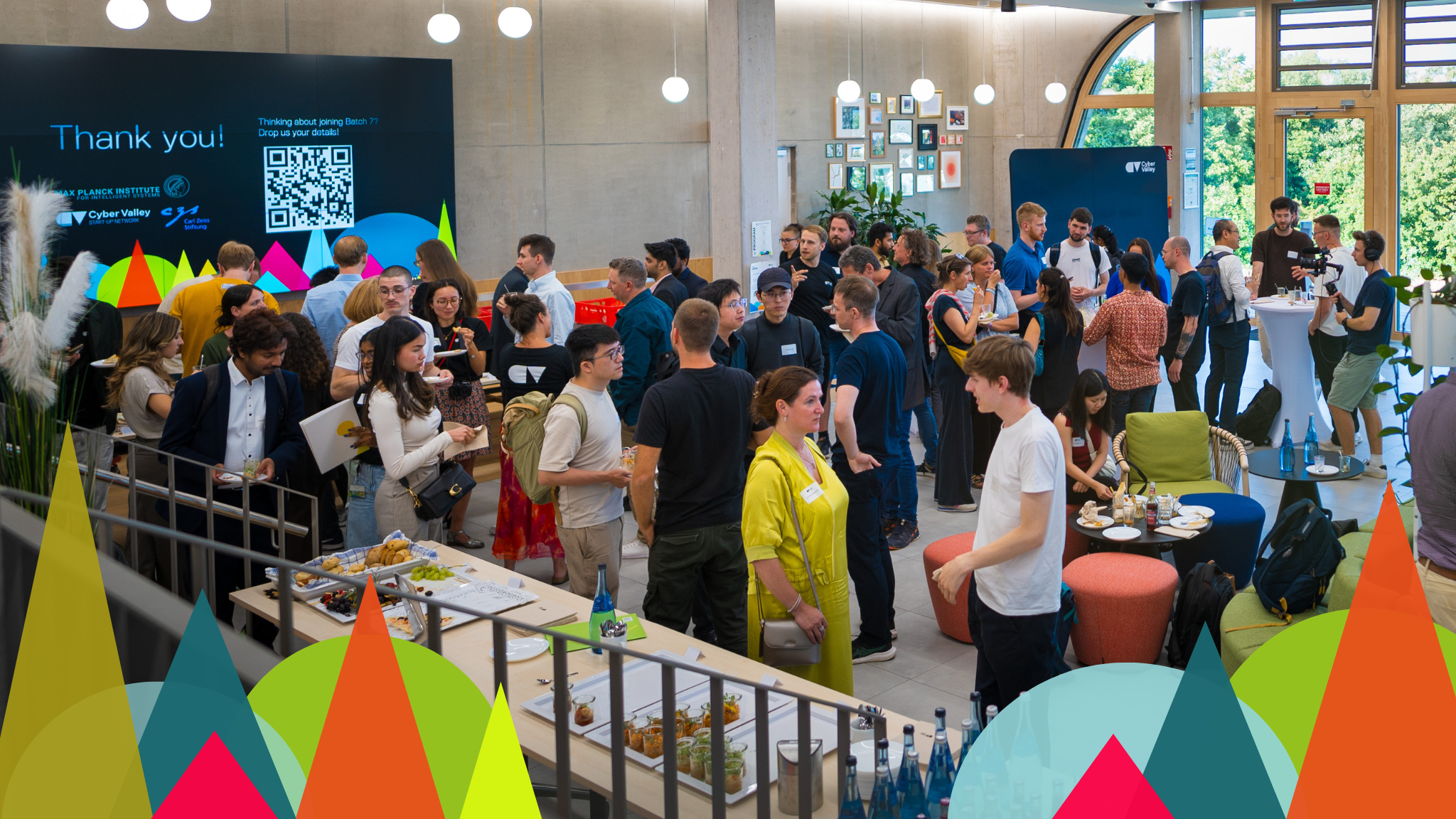
    Over the past six weeks, the Batch #6 teams of the AI Incubator have been working intensively to bring their AI-driven ideas to life, with expert mentorship and support from members of the Cyber Valley Community. Now they will present their final start-up ideas to a jury and an esteemed audience of investors, researchers, corporate leaders, and other entrepreneurs.

    The top teams will be recognized by the jury and have the opportunity to win attractive prizes. This special edition of the event combines the final presentations with a vibrant Summer Meet-up—featuring networking, drinks, finger food, and an energetic atmosphere to celebrate innovation and community.

    When?

    Thursday, July 10, 2025, 16:00–19:45

    Where?

    Amazon Research & Development Center

    Friedrich-Miescher-Straße 4, 72076 Tübingen

    Schedule

    16:00–16:15: Welcome & Drinks

    16:15–16:25: Introduction to Batch #6 of the AI Incubator

    16:25–16:30: Welcome speech by Carl Zeiss Stiftung

    16:30–17:00: Pitches from the AI Incubator Teams

    17:00–17:20: Coffee break

    17:20–17:55: Pitches from the AI Incubator Teams

    17:55–19:00: Keynote & Award ceremony

    19:00: Networking with drinks & fingerfood

    Registration

    Please register via Eventbrite in advance as the number of participants is limited.

    The AI Incubator

    The AI Incubator is a six-week program for AI talents with brilliant ideas. The program encourages scientists, technologists, and business talent to found their own companies, fostering the next generation of AI start-ups. The AI Incubator equips participants with the right knowledge, tools, and skills to transfer their cutting-edge AI and robotics research into products and applications.

    It covers topics such as, AI prototyping, product-market fit, business strategy, and funding. The program also provides participants with access to a network of experts, mentors, founders, and investors who offer guidance and inspiration on their journey into the AI business world.

    The Cyber Valley AI Incubator is organized by the Max Planck Institute for Intelligent Systems, and funded by the Carl-Zeiss-Stiftung.

  • 75 doctoral students join the Cyber Valley Innovation Campus

    75 doctoral students join the Cyber Valley Innovation Campus

    The International Max Planck Research School for Intelligent Systems (IMPRS-IS) has officially concluded its 2025 recruitment round, welcoming 75 new scholars to its esteemed doctoral program. Representing 21 nationalities, the incoming class is the ninth generation of researchers to join the school, reinforcing IMPRS-IS’s position as a hub for global talent in the field of intelligent systems.

    This year’s recruitment process drew remarkable interest, with 888 completed applications submitted from over 70 countries. Following an intensive multi-stage evaluation process involving 128 scientific reviewers, more than 200 candidates were invited to a dynamic nine-day interview symposium. The event featured research presentations, in-depth interviews, and a keynote address by Professor Georg Martius, providing candidates and faculty with an opportunity to connect and collaborate on cutting-edge ideas.

    The selected cohort reflects IMPRS-IS’s ongoing commitment to diversity and inclusion, with 32% of the new scholars identifying as female. The program emphasizes scientific excellence, interdisciplinary collaboration, and global perspectives in advancing the frontiers of machine learning, robotics, computer vision, and related fields.

    The new scholars are expected to contribute to the vibrant research environment across the Max Planck Institute for Intelligent Systems and its partner institutions, including the University of Tübingen and the University of Stuttgart.

    As the new academic year begins, IMPRS-IS looks forward to the fresh perspectives and innovative work this incoming class will bring to the community.

  • The Cyber Valley Research Fund Symposium 2025

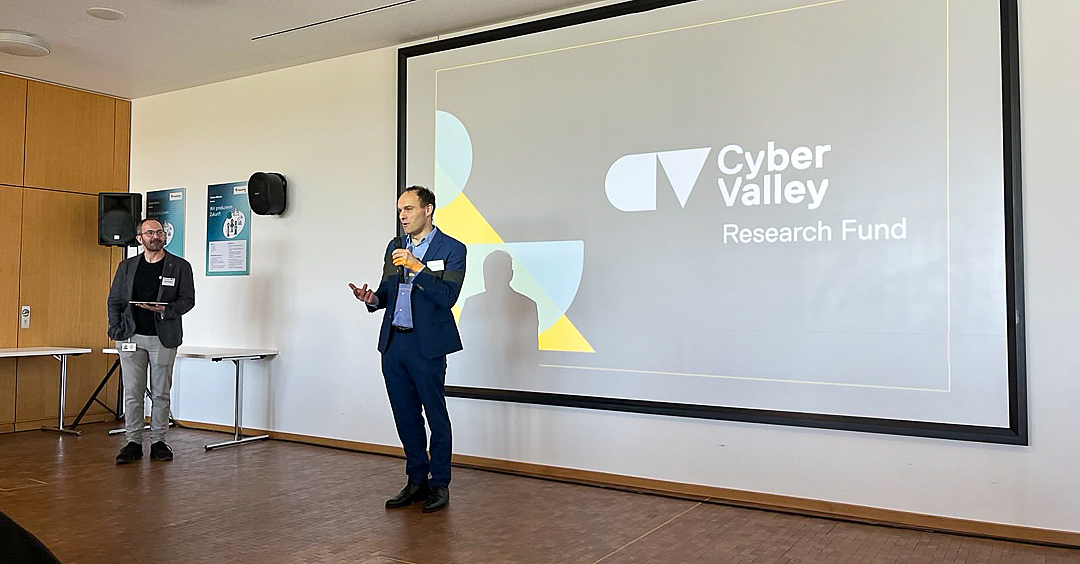
    The Cyber Valley Research Fund Symposium 2025

    Cyber Valley Research Fund Projects 

    The symposium began with a presentation by Dmitry Kobak (Hertie Institute for AI in Brain Health, University of Tübingen) on “Contrastive Learning for Dimensionality Reduction and Visualization of Transcriptomic Data.” He highlighted a new method for visualizing image data using self-supervised learning that combines contrastive learning with neighbor embedding to create clear 2D visualizations. 

    Tian Qiu (Professor at the Dresden University of Technology and Head of Smart Technologies for Tumor Therapy, German Cancer Research Center Dresden) gave the next presentation: “The Cyber-Physical Twin of Human Organs”. His research created digital and physical replicas of human organs that combine the benefits of physical and digital models, which make it easier to collect, analyze, and model difficult-to-obtain medical data. 

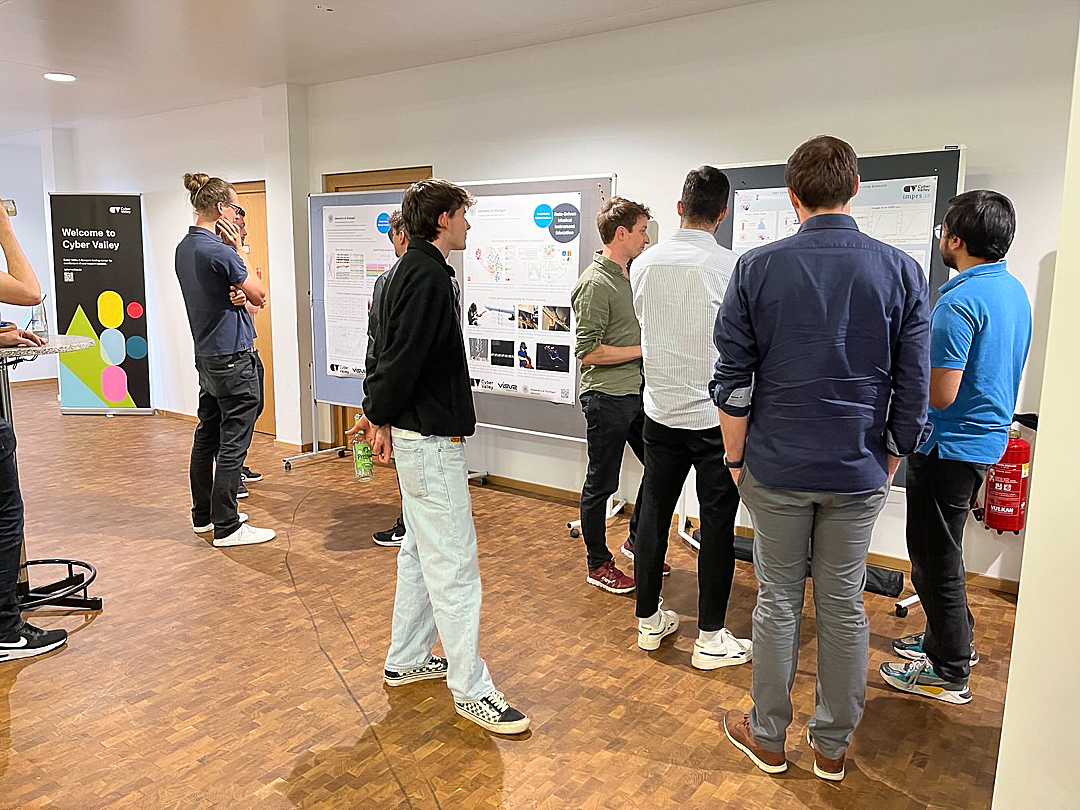
    Poster session at the Cyber Valley Research Fund Symposium. Photo: Cyber Valley

    Fabian Sinz (Professor of Machine Learning, University of Göttingen) presented the third Cyber Valley Research Fund project: “Mechanisms of Representation Transfer”. Sinz discussed the transference of strong visual processing skills between artificial neural networks and biological ones. 

    Fraunhofer covers robotics and GenAI 

    The Cyber Valley Research Fund also welcomed two talks from Fraunhofer IPA and Fraunhofer IAO. Werner Kraus (Head of Robot and Assistive Systems and Leader of the AI Innovation Center, Fraunhofer IPA) presented a review of the European Robotics Forum that took place in March 2025 in Stuttgart – the first time the conference has happened in Germany. Chandan Kumar (Team Leader of Interaction Design and Technologies at Fraunhofer Institute for Industrial Engineering IAO) then gave insights on “Smart Innovation with LLM-Powered Agents”. 

    Cyber Valley Research Fund Projects – (Flight) Robotics 

    Two projects led by Aamir Ahmad (Tenure-track Professor of Flight Robotics and Deputy Director of Research at the Institute of Flight Mechanics and Controls, University of Stuttgart, and Research Group Leader at the Max Planck Institute for Intelligent Systems) came next. Ahmad’s first project “WildCap – Autonomous Animal Motion Capture for Wildlife Conservation” developed autonomous flying robots that monitor wild animals using onboard sensors and wireless communication. He highlighted that AI methods enable them to detect, track, and interpret behavior, and how they adapt based on monitoring accuracy. 

    Christian Gall (Research Associate at the University of Stuttgart’s Institute of Flight Mechanics and Controls) is part of Ahmad’s research group and led the second project “Decision Making for Environmental Energy Exploitation with Small Aircraft”. Gall introduced a learning approach that permits aircraft to autonomously detect and exploit thermal updrafts. 

    Cyber Valley Research Fund Industry Partners 

    Four representatives from Cyber Valley’s industry partners shared their research in the first afternoon session. Mohsen Kaboli (Head of AI, Robotics and Cognitive Vehicle Research at BMW Group, and Professor of Embodied AI, Robotics, and Tactile Intelligence at the Eindhoven University of Technology) spoke about “Embodied Interactive Visuo-Tactile Perception and Learning for Robotic Grasp and Manipulation”. Maximilian Rabus (Product Manager and Data Strategist at Porsche AG) subsequently presented on “Data Fuels Performance: Insights into Porsche’s Data-Driven Development”, followed by Alexander Joos (Senior Vice President of Digital Solutions Powertrain at IAV GmbH) on “The Modern Development in the Age of AI”. 

    Cyber Valley Research Projects from Clusters of Excellence 

    The afternoon continued with a talk from Paul-Christian Bürkner (Professor of Computational Statistics at TU Dortmund University) on “Meta-uncertainty in Bayesian model comparison”. He highlighted the methods to quantify meta-uncertainty – the uncertainty over model probabilities in Bayesian model comparison – using theory and simulations to better understand the limits of scientific inference. 

    Next, Nicolas Kubail-Kalousdian (Institute of Computational Design and Construction, University of Stuttgart) gave his talk “Task and Motion Planning for Collaborative Robotic Construction with Irregular Materials”. His research developed a robotic construction system that combines reinforcement learning and logic-geometric programming to autonomously build with irregular, renewable materials like bamboo. The system showcases a sustainable, adaptive approach to low-carbon construction using mobile robots and intelligent material handling. 

    Cyber Valley Research Fund Projects – Specific research areas 

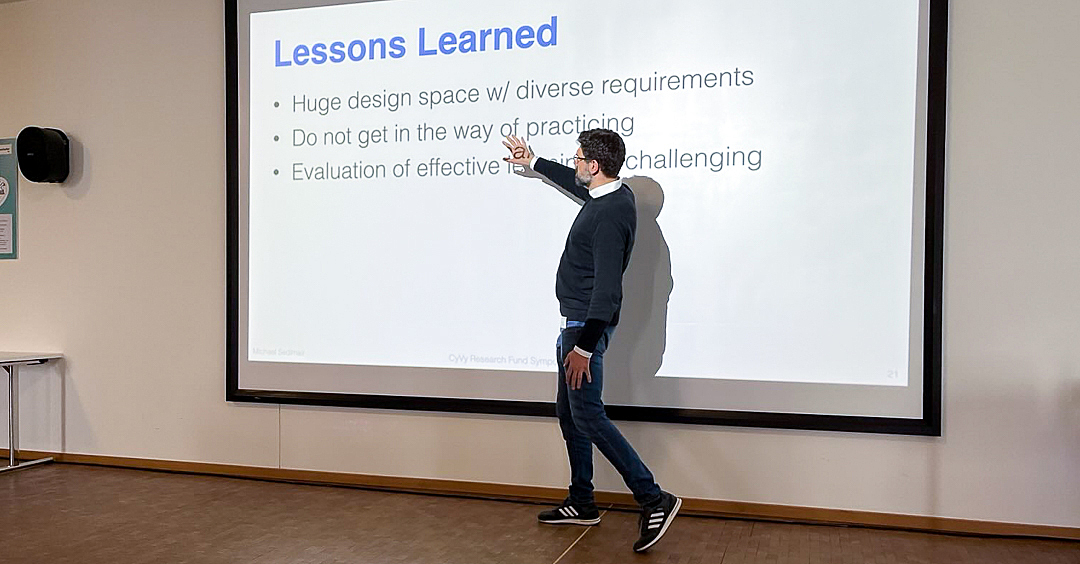
    In the symposium’s concluding session, Michael Sedlmair (Professor for Augmented Reality and Virtual Reality, University of Stuttgart) began by exploring how AI can support musical creativity. In “InstruData – Data-Driven Musical Instrument Education” he discussed how his research project used AI to augment creative processes through human-centered design. 

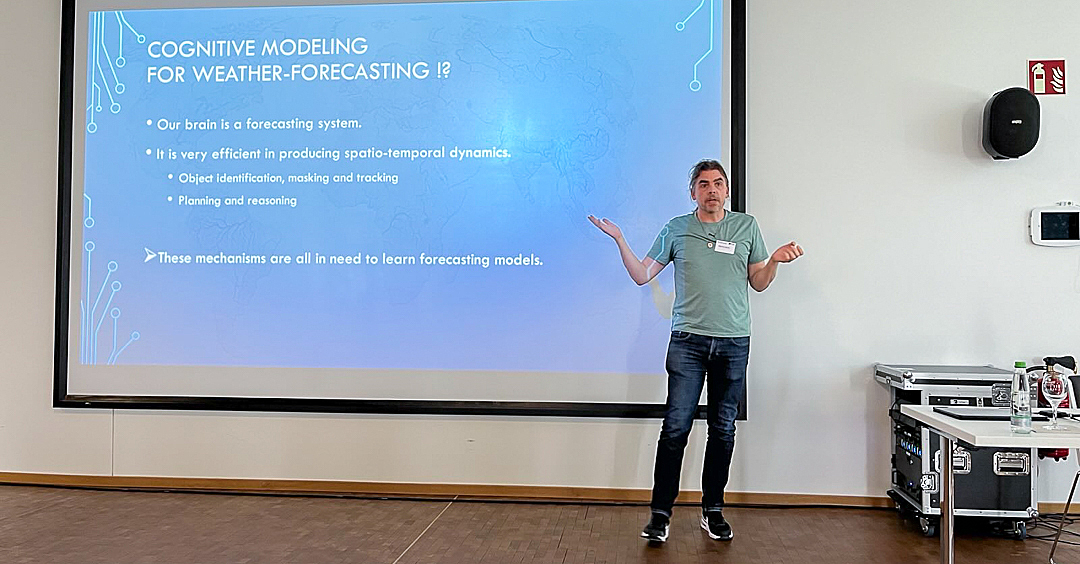
    Next, Martin Butz (Professor in Cognitive Modeling, University of Tübingen) discussed spatiotemporal forecasting models in “Neural Generative Weather Forecasting”. This project developed deep-learning models for forecasting spatiotemporal phenomena, ranging from local precipitation to global weather patterns. It utilized physics-informed, modular architectures and tailored data structures to improve prediction accuracy across diverse environmental scenarios. 

    In the final presentation, Falk Lieder (Assistant Professor of Psychology and Director of the Rational Altruism Lab, University of California Los Angeles) explained how his research has improved human decision-making. His project, “A Scalable Machine Learning Approach to Improving Human Decision Making”, developed computational tools which optimize decision-making strategies that outperform human intuition in areas like education, health, and finance. By integrating these strategies into educational software, they improved the quality of users’ decisions, resulting in smarter, more informed choices in real-world scenarios. 

    The Cyber Valley Research Fund Symposium demonstrated the research excellence in AI and modern robotics generated through the support of Cyber Valley’s founding industry partners. The day was rounded off by a lively networking session, which included discussions on open research questions and future collaborations.