User Group: Journalist:innen

  • Cyber Valley Days: Day 2

    Cyber Valley Days: Day 2

    Apéro & Cyber Valley Days Meet-up

    Cyber Valley is happy to host the Cyber Valley Days – an exceptional three-day forum for the Cyber Valley Community. Focused solely on AI, Cyber Valley Days features a wide program that emphasizes entrepreneurship and scientific innovation originating from Baden-Württemberg.

    Join us for Day 2 of Cyber Valley Days – Apéro & Cyber Valley Days Meet-up.

    We look forward to meeting you, sharing some food, and drinks, and stimulating conversations!


    When

    20 June 2024 | 18:00–20:30


    What

    Apéro & Cyber Valley Days Meet-up


    Where

    MPI Tübingen

    Max-Planck-Ring 4

    72076 Tübingen


    Register for Apéro & Cyber Valley Days Meet-up.


    __________________________________________


    By registering for this event, I grant permission to Cyber Valley GmbH and ELLIS Institute Tübingen gGmbH to use pictures, videos, and electronic media images in any promotional presentation within its community – offline and online, exclusively for non-profit-making purposes.

    During the Cyber Valley Days, pictures will be taken and videos will be recorded. These materials may be sent out to the media and used for internal and external communication purposes. These files will be stored in a secure location and only authorized staff will have access to them. They will be kept as long as they are relevant and after that time, they will be destroyed or archived.

    Further information on Cyber Valley data protection can be found at: https://cyber-valley.de/en/privacy-policy


  • Cyber Valley Days: Day 2

    Cyber Valley Days: Day 2


    ELLIS Institute Tübingen – Scientific Symposium & Opening Ceremony

    We are thrilled to invite you to the grand opening ceremony of the ELLIS Institute in Tübingen!

    Founded on the broader vision of the European Laboratory for Learning and Intelligent Systems (ELLIS), the ELLIS Institute Tübingen is the first ELLIS Institute in Europe, set to become a world-class center for outstanding and free research in machine learning and artificial intelligence.

    We look forward to welcoming you to an engaging program featuring scientific presentations, distinguished guests, and insight into the vision of the ELLIS Institute, as well as the future of AI in Tübingen and Europe.


    When

    20 June 2024 | 09:00–18:00


    What

    09:00 | Arrival & Registration

    09:15 | Scientific Symposium I

    12:00 | Lunch

    13:30 | Scientific Symposium II

    16:30 | ELLIS Institute Tübingen – Opening Ceremony

    18:00 | Apéro & CVD Meet-up (please register here for Apéro)


    Where

    MPI Tübingen

    Max-Planck-Ring 4

    72076 Tübingen


    Register to attend the ELLIS Institute Tübingen Symposium & Opening.

    ______________________________________________________


    By registering for this event, I grant permission to Cyber Valley GmbH and ELLIS Institute Tübingen gGmbH to use pictures, videos, and electronic media images in any promotional presentation within its community – offline and online, exclusively for non-profit-making purposes.

    During the Cyber Valley Days, pictures will be taken and videos will be recorded. These materials may be sent out to the media and used for internal and external communication purposes. These files will be stored in a secure location and only authorized staff will have access to them. They will be kept as long as they are relevant and after that time, they will be destroyed or archived.

    Further information on Cyber Valley data protection can be found at: https://cyber-valley.de/en/privacy-policy


  • Cyber Valley Days: Day 1

    Cyber Valley Days: Day 1


    Connecting AI in the länd

    Cyber Valley is happy to host Cyber Valley Days, an exceptional three-day forum for the Cyber Valley community.

    Focused solely on AI, Cyber Valley Days features a wide program that emphasizes entrepreneurship and scientific innovation originating from Baden-Württemberg.


    When

    19 June 2024 | 09:30 – 17:00


    What

    09:30 | Arrival & Registration

    10:00 | Welcome & Opening

    12:00 | Lunch

    14:00 | AI Incubator Demo Day

    16:00 | Networking


    In parallel, you can meet the Cyber Valley Community at our EXPO from 10:00 to 14:00.


    Where

    MPI Stuttgart

    Heisenbergstraße 1

    70569 Stuttgart


    Register for the Opening, Community Expo & AI Incubator Demo Day.


  • „Cyber and the City“ – Team der Universität Tübingen gewinnt Kommunikationspreis

    „Cyber and the City“ – Team der Universität Tübingen gewinnt Kommunikationspreis

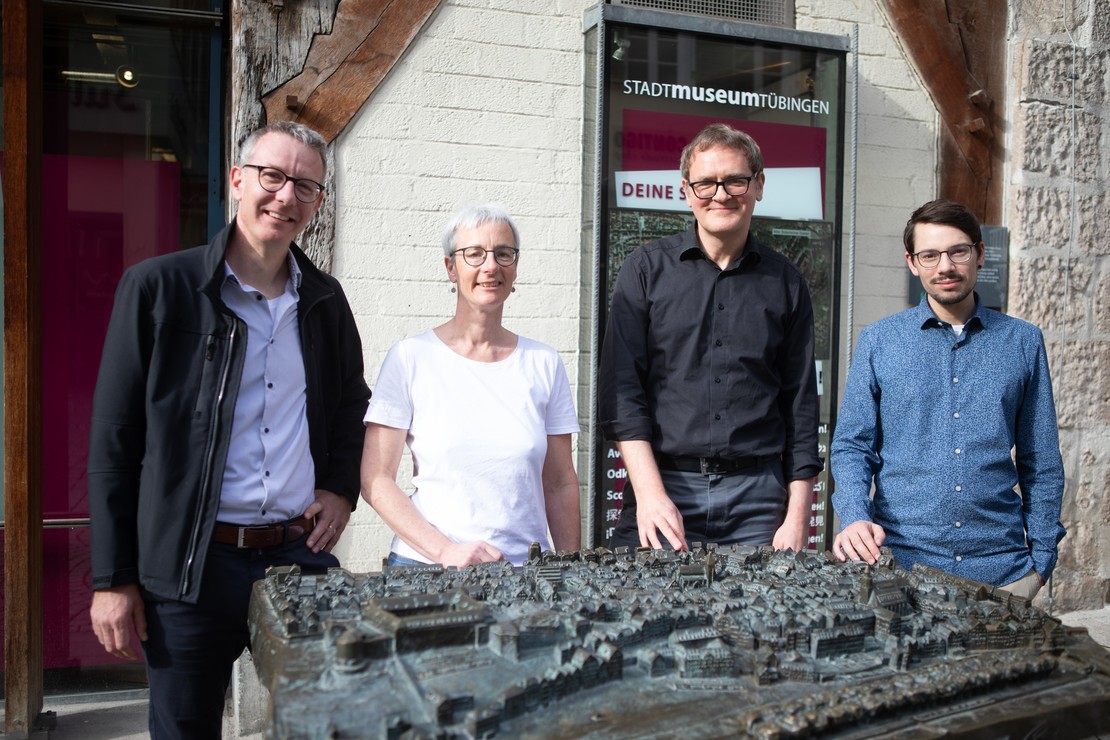
    Die Ausstellung war von Februar 2023 bis Januar 2024 im Stadtmuseum Tübingen zu sehen und ist interdisziplinär und gemeinsam mit dem Stadtmuseum Tübingen, insbesondere dessen Ausstellungskurator Guido Szymanska, konzipiert und umgesetzt worden. Teil des Ausstellungsteams waren außerdem mehr als 30 Studierende der Empirischen Kulturwissenschaft und des Masterstudiengangs Machine Learning der Universität Tübingen.

    Ulrike von Luxburg: „Die Ausstellung konnte nur deshalb so überzeugen, weil wir von Anfang an verschiedene Perspektiven auf das Thema eingebracht und mitgedacht haben. Die Studierenden mit ihren diversen Hintergründen, Meinungen und Herangehensweisen und die langjährige Erfahrung von dem Kurator des Stadtmuseums, Guido Szymanska, wie man abstrakte Ideen in konkrete Exponate umsetzen kann, haben die Ausstellung so erfolgreich gemacht.

    Die Jury aus Wissenschaftsjournalistinnen und -journalisten, Kommunikations- und PR-Fachleuten unter dem Vorsitz von DFG-Vizepräsident Professor Dr. Johannes Grave würdigte bei ihrer Entscheidung, dass das Team „Cyber and the City“ das so abstrakte wie kontroverse Thema Künstliche Intelligenz in die Lebens- und Erfahrungswelt der Menschen holt. Zudem eröffne es einen Dialograum, in dem sehr unterschiedliche Positionen und Interessen verhandelt werden können.

    Dazu habe das Team in einer erfolgreichen interdisziplinären Zusammenarbeit von Informatik und Empirischer Kulturwissenschaft eine Ausstellung im Tübinger Stadtmuseum und ein Begleitprogramm entworfen. Studierende der beiden Disziplinen erarbeiteten die Grundlagen für die Ausstellung und die weiteren Kommunikationsformate und bezogen dabei Interessengruppen, Bürgerinnen und Bürger, Aktivistinnen und Aktivisten oder auch Entscheidungsträgerinnen und Entscheidungsträger in die Konzeption und Umsetzung ein. Auf diese Weise, so die Jury des Communicator-Preises, sei eine Kommunikationsplattform entstanden, die eine gemeinsame Sprache zu Herausforderungen und Chancen von Künstlicher Intelligenz findet und sowohl Befürworterinnen und Befürworter als auch Skeptikerinnen und Skeptiker von KI zu Wort kommen lässt.

    Flankiert wurde die Ausstellung von einem umfangreichen Begleitprogramm, in das sich die an der Ausstellung beteiligten Akteurinnen und Akteure mit eigenen Veranstaltungen einbringen konnten. Zu den Veranstaltungen zählten etwa die „Retro Gaming Night meets KI“ sowie die in Kooperation mit dem SWR veranstaltete Podiumsdiskussion „Wer kontrolliert KI?“. Die Ausstellung zog insgesamt mehr als 40.000 Besucherinnen und Besucher unterschiedlicher Altersgruppen an. Durch Ausstellung und Begleitprogramm entstand so insgesamt ein Dialograhmen, der die am Standort sehr kontrovers geführte Diskussion rund um Künstliche Intelligenz versachlicht hat, ohne dabei Emotionen und Positionierungen zu ignorieren.

    Die Jury für den Communicator-Preis hob hervor, dass die lokale Verortung der Kommunikation bei diesem Projekt eine besondere Bedeutung habe: Künstliche Intelligenz – als global wirksames und zugleich schwer greifbares Thema – wurde hier am konkreten Fall, als Konsequenz von kontroversen Debatten in der Stadt und gemeinsam mit lokalen Akteurinnen und Akteuren verhandelt. Und dies geschah nicht in digitalen Foren, sondern im direkten Austausch der Beteiligten. Damit sei es dem Team hervorragend gelungen, ein schwieriges Thema leicht, humorvoll und dabei sachlich und intelligent umzusetzen. Insgesamt, so die Jury, sehe sie in der Arbeit des Teams den gelungenen Weg einer dialogischen Wissenschaftskommunikation, die weit über den Standort und das konkrete Thema hinausweise. Insbesondere vor dem Hintergrund der aktuellen Dialogkultur, in der verschiedene Argumente und Positionen kaum noch in einen konstruktiven Austausch zu bringen sind, sei dies ein besonders ermutigendes Projekt.

    Der „Communicator-Preis – Wissenschaftspreis des Stifterverbandes“ wird seit dem Jahr 2000 verliehen und gilt als der wichtigste Preis seiner Art in Deutschland. Ausgezeichnet werden Wissenschaftlerinnen und Wissenschaftler, die in ihrer Wissenschaftskommunikation besonders kreativ sind, neue, auch mutige Wege gehen und ihre Zielgruppen auf geeignete und wirksame Weise ansprechen. Sie sollen zudem die gesellschaftliche Dimension ihrer Forschung erkennen und ihr Wissen in öffentliche Debatten, Meinungsbildungsprozesse und Entscheidungen einbringen. Das Preisgeld soll die Ausgezeichneten in ihrem Engagement unterstützen und auch die Umsetzung neuer Projekte ermöglichen.

    Die Jury wählte das nun ausgezeichnete Team in einem mehrstufigen Auswahlprozess aus 38 Be- werbungen und Vorschlägen aus. Verliehen wird der Communicator-Preis im Rahmen der Jahresversammlung der DFG am 1. Juli 2024 in Potsdam.

  • Women in Science

    Women in Science

    Date

    Friday, March 22, 2024


    Time

    14:00


    Location

    Stuttgart, Heisenbergstr. 3, Copper Lecture Hall (2R04)

  • Bewerbt Euch für den Bundeswettbewerb KI 2024!

    Bewerbt Euch für den Bundeswettbewerb KI 2024!

    Der Bundeswettbewerb KI läuft von Frühjahr bis Herbst und findet auf Bundesebene statt. Der Wettbewerb steht unter der Schirmherrschaft von Ministerpräsident Winfried Kretschmann. Hauptförderer ist die Carl-Zeiss-Stiftung.

    Hier der Fahrplan für den #BWKI2024:

    Bis 16. Juni 2024: Meldet euch an, gründet euer Team und reicht euren Ideenvorschlag ein!
    Am 15. September 2024 ist die Frist der Projektabgabe!
    Mitte November 2024 werden die 10 besten Projekte zum Finale eingeladen.

    Der Bundeswettbewerb wurde 2018 am heutigen Tübingen AI Center ins Leben gerufen und ermutigt seitdem Jugendliche, ihr Können aktiv im KI-Forschungsumfeld unter Beweis zu stellen. Weitere Informationen zur Teilnahme am Bundeswettbewerb 2024 sind hier zu finden.

  • Wissenschaftsministerin Olschowski besucht Cyber Valley in Tübingen

    Wissenschaftsministerin Olschowski besucht Cyber Valley in Tübingen

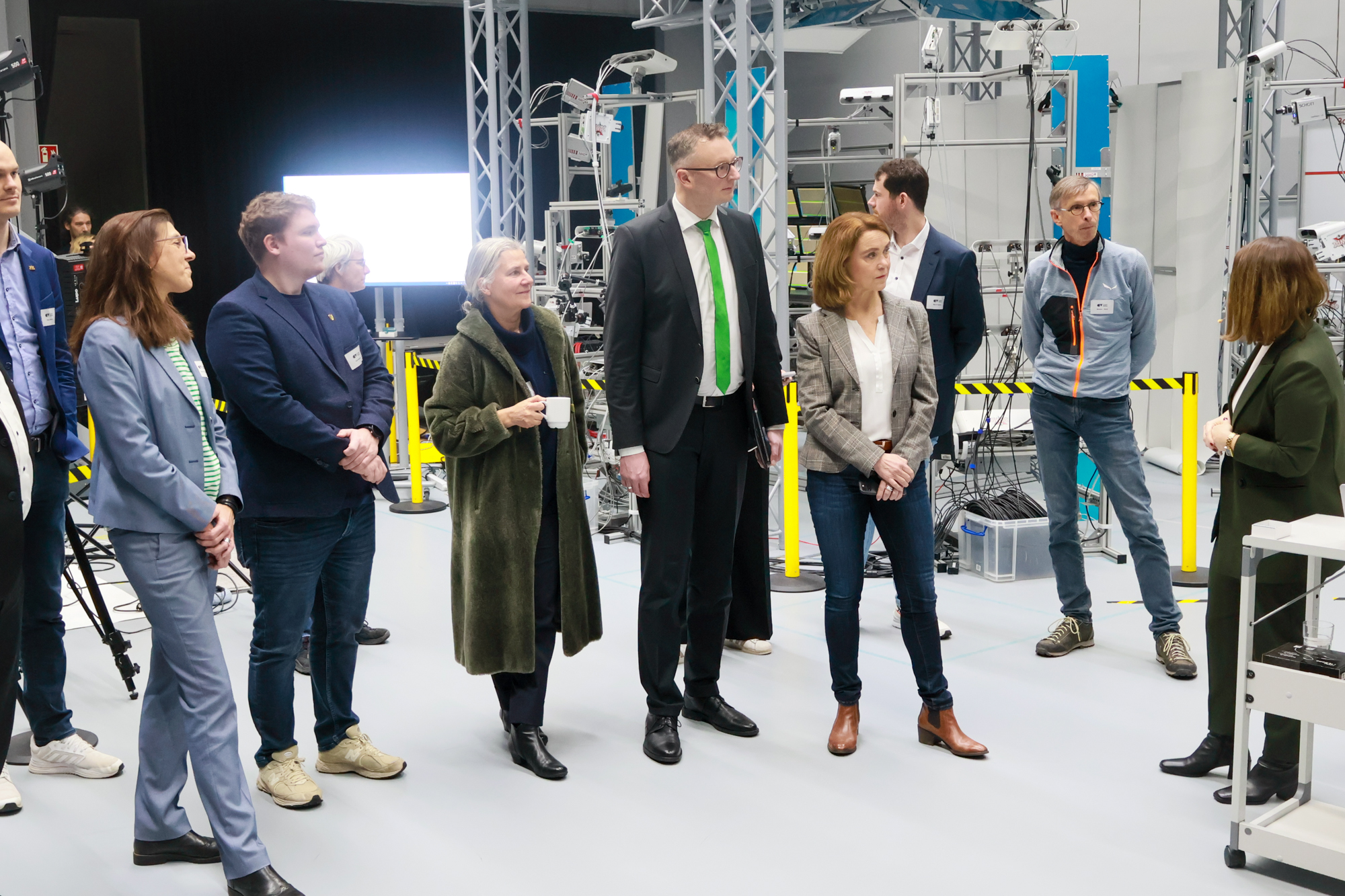
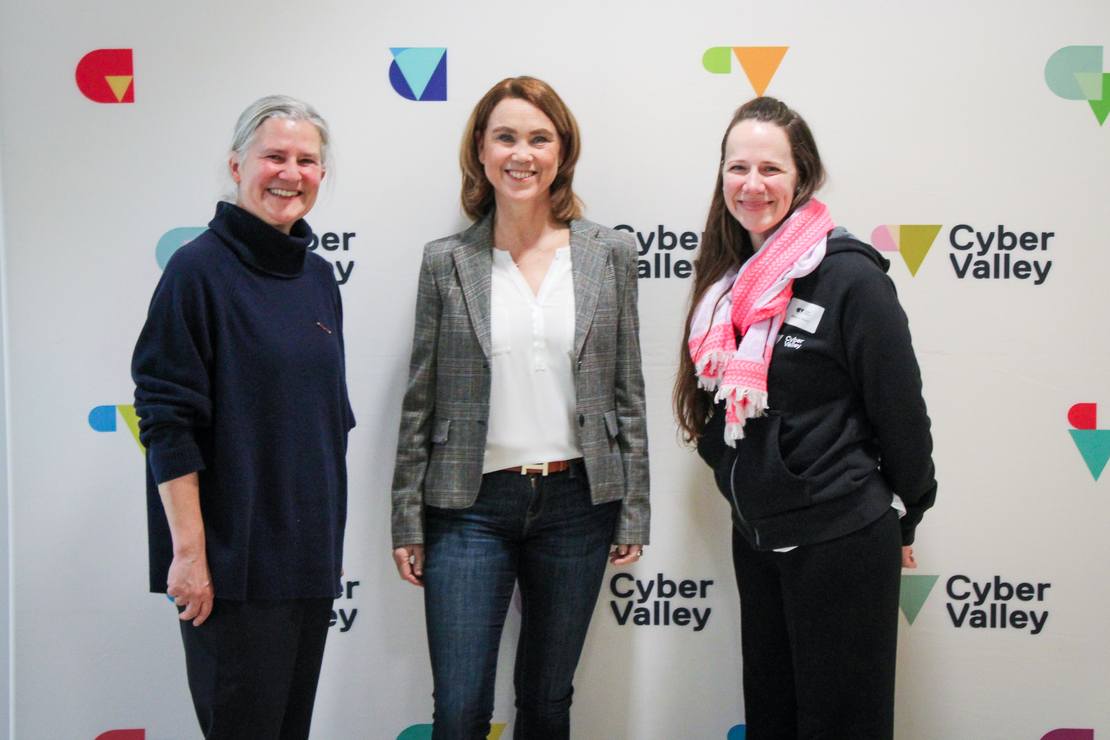
    Tübingen, January 28, 2024 – What will our future look like with AI? Minister of Science and MdL Petra Olschowski, chairman of the State Parliamentary Group of the Greens in Baden-Württemberg Andreas Schwarz, and further guests were able to experience this future at Cyber Valley, Europe’s largest and leading center for excellence in artificial intelligence and modern robotics. The special guests toured Cyber Valley at the Max Planck Institute for Intelligent Systems (MPI-IS) in Tübingen on Friday, January 26, gaining valuable insights into the cutting-edge research underway in the field of AI, modern robotics, and intelligent systems. Cyber Valley presented select projects led by eminent scientists from the Cyber Valley Community, which included the founding members MPI-IS and the University of Tübingen. 

    Rebecca C. Reisch, Cyber Valley Managing Director, provided an insightful overview underscoring the significance of the Cyber Valley Community. With the launch of ICAIN or the AI House Davos during the World Economic Forum, Cyber Valley is now leading the global conversation on AI. The Director of the Perceiving Systems Department at MPI-IS, Prof. Michael J. Black, emphasized: “Cyber Valley developed as a response to a changing world. With our excellence in AI, we have the opportunity to build a new economic foundation for the region. The strong partnership between the state government, industry, and academia has built this into one of the best locations for AI research worldwide.”

    The Rector of the University of Tübingen, Prof. Dr. Karla Pollmann, commented on the overall visit: "I am impressed by the diversity of topics being researched in the Cyber Valley Community and at the University of Tübingen and the interdisciplinarity we showcased. We will further support Cyber Valley, so that we can grow even stronger together. 

    Measuring power and rethinking agriculture with AI  

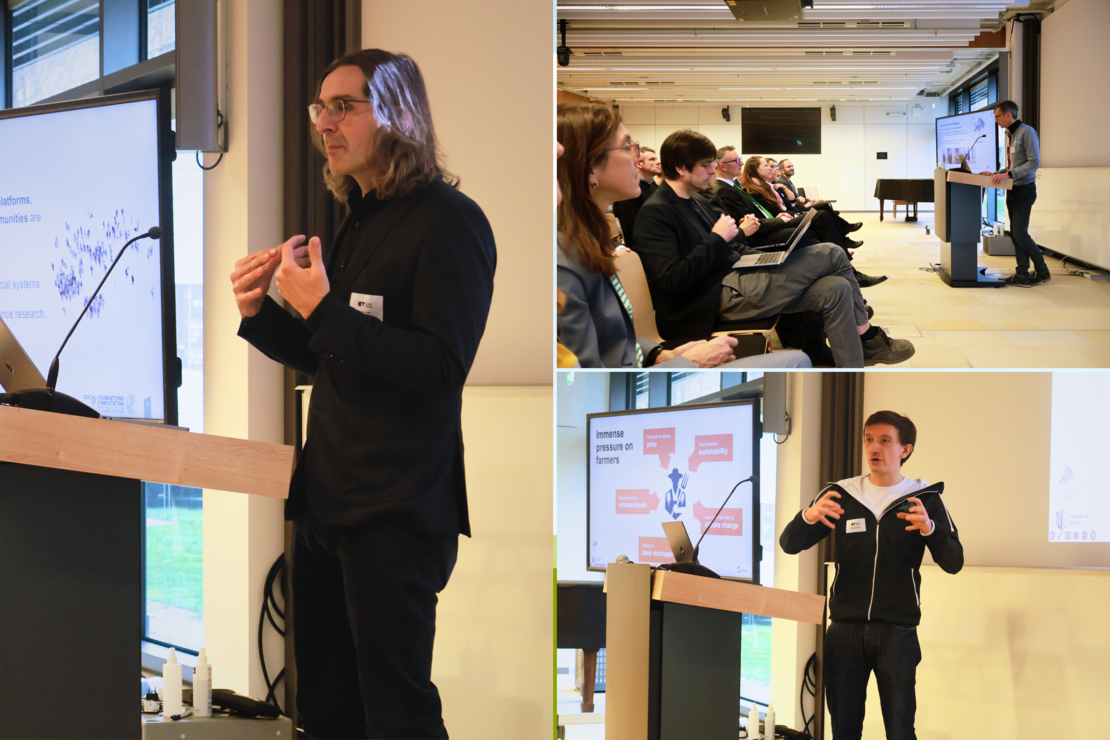
    Prof. Michael J. Black provided an overview of the excellent research at MPI-IS as well as the current status of AI. "Of course, there are limits to current AI systems; for example, they may generate images of people with six fingers. But whenever you think that AI is not going to be able to do a specific task – forget that. It will. And the scale of investment in AI means that it will happen more quickly than people imagine." Furthermore, he emphasized the need for more German venture investment and lower costs for computing resources, so that start-ups can make the transfer from AI research to entrepreneurship.

    By explaining that “AI in the real world is not about observation, but prediction”, Prof. Moritz Hardt, Director of Social Foundations of Computation Department at MPI-IS, elaborated on how to measure the power of social media platforms and the impact of their algorithms. Dr. Wieland Brendel, Research Group Leader for Robust Machine Learning, highlighted his research and technology transfer initiatives, with a focus on the integration of artificial intelligence into agriculture. More specifically, he showcased the Polybot farming robot and its contribution to more sustainable and environmentally friendly farming practices.

    Better together – Interdepartmental initiatives at the University of Tübingen 

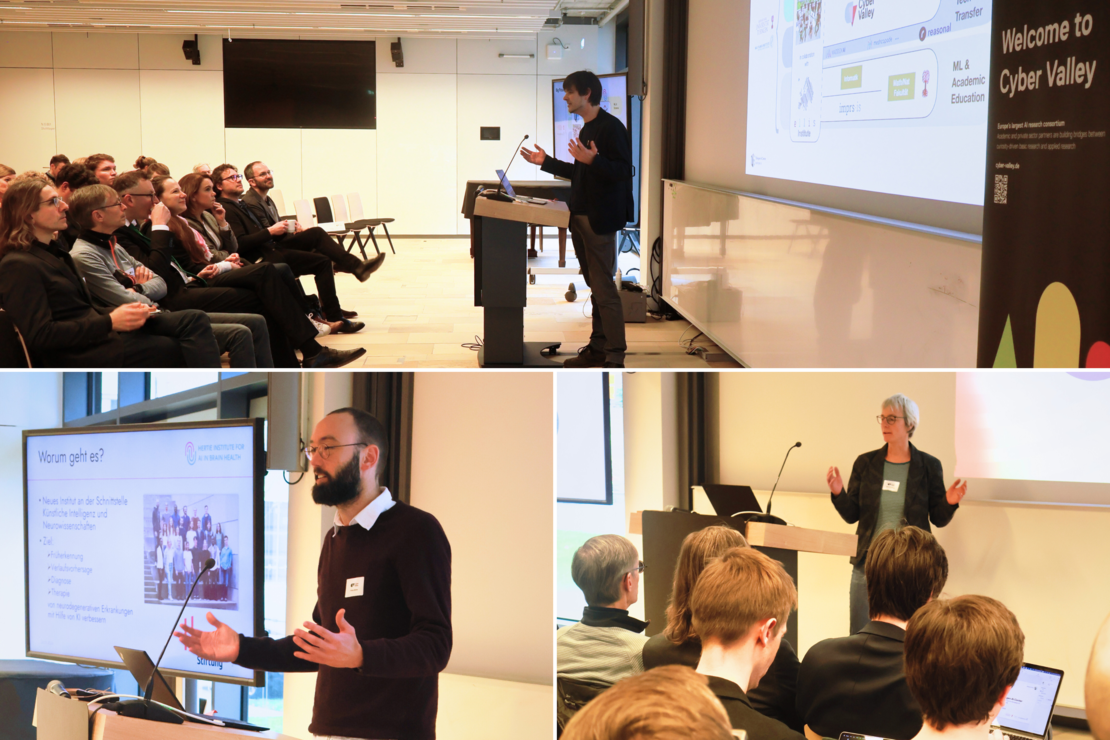
    The University of Tübingen shared detailed insights into their artificial intelligence research and programs, emphasizing their profound societal impact. The Cluster of Excellence, as described by Prof. Dr. Ulrike von Luxburg, is immersed in outstanding research, contributing to a wide variety of applications for AI in science. She further commented; “Simulation of data is currently a major area of application for AI in science. In the social and legal context, the explainability of AI is a major topic of research here in Tübingen, which was also spurred on by the AI Act.”  

    Prof. Dr. Philipp Berens, Director of the Hertie Institute for AI in Brain Health, stressed the significance of artificial intelligence in the medical domain and its crucial role in handling tasks in fields where there is a shortage of medical professionals. As an example, he elaborated on the use of AI in screening eyes for potential diabetes cases. 

    Furthermore, Prof, Dr. Matthias Bethge, Director of the Tübingen AI Center, emphasized the importance of excellent research for the future of technology: "Academia is a laboratory for the future. As researchers, we want to bring our ideas to life in order to make the world a better place. We need faster processes for the recruitment of excellent AI researchers and for spinning off start-ups and building up computing power."

    Modern robotics in action – showcasing practical examples of the future 

    What does the future look like with AI? The visit continued with lab tours at the Tübingen site. Tsvetelina Alexiadis, who leads the Data Team of the Perceiving Systems Department, presented the Capture Hall. She demonstrated the advancement of computer vision research through the digitization of the human body. The equipment teaches computers to understand human poses and motion through images and videos. It can interpret how humans interact with each other and the environment by gathering data, including the motion, shape, and texture of the body, and much more. It offers computers a form of sight, to be used in various industries, including medicine, fashion, and entertainment.  

    A demonstration of the table tennis robot highlighted the dynamic essence of robotics movement and illustrated how a robot can acquire basic skills, such as playing table tennis. This demonstration left a lasting impression on the visitors. Dieter Büchler, Research Group Leader, and Ph.D. student Jan Schneider explained that through reinforcement learning, the robot has acquired successfully over time the ability to play table tennis, progressively refining its skills through the learning process.

    Cyber Valley, the location for AI in Europe 

    Minister of Science and MdL Petra Olschowski expressed great satisfaction with her visit to Cyber Valley and the detailed overview of its associated projects, stating, "AI is shaping the world of tomorrow – impacting fields from manufacturing and engineering to medicine, along with our everyday lives. In Baden-Württemberg, we are leading the way. Excellent research and transfer into practice go hand in hand – that is the idea behind our Cyber Valley innovation campus. I am always impressed by what is created here. Today's visit for example showed the enormous potential in the field of intelligent robotics. At Cyber Valley, researchers together with industry partners are creating the future – which is not only important for our economy, but also for our prosperity and well-being. That is why the state government founded Cyber Valley in 2018 and why we are still supporting this innovation campus today as an investment in our future.”  


    About Cyber Valley

    Cyber Valley is Europe’s largest and leading center for excellence in artificial intelligence and modern robotics. Its mission and public mandate are to advocate for research, development, application, and acceptance of technologies and methods in the field of intelligent systems. Cyber Valley encourages entrepreneurship by uniting scientific excellence with innovation and technology transfer. In addition, Cyber Valley facilitates critical reflection on the ethical and social implications of AI through public engagement. Cyber Valley envisions a future in which the full potential of intelligent systems is leveraged for the greater good of the world.

    Press Contact

  • Join the global forum for AI progress at AI House Davos

    Join the global forum for AI progress at AI House Davos

    • AI House Davos will bring together leaders in industry, civil society, government, the investing community, and academics to drive the global conversation on artificial intelligence.

    • Confirmed speakers include: Yann LeCun (VP of Meta), Kay Firth-Butterfield (CEO of Good Tech Advisory), Amy Webb (CEO of Future Today Institute), Arvind Krishna (CEO of IBM), Jonas Andrulis (CEO of Aleph Alpha), Theresa May (former Prime Minister of the UK), and Christian Lindner (Germany’s Finance Minister). 

    • Cyber Valley, contributor to the AI House program, invites you to its sessions. 

    Davos, Switzerland. We are pleased to announce the upcoming opening of AI House Davos during the World Economic Forum (WEF) Annual Meeting from January 15-19, 2024. Registration for a packed calendar of events is now open on the AI House website.

    Understanding AI’s current and future capabilities has never been more important. AI will undoubtedly be the dominant discussion at this year’s WEF Annual Meeting, and AI House Davos will be a crucial global forum to bring the deepest discussions on AI to life, from how AI can benefit humankind to how world economies can provide a catalyst for sustainable innovation. 

    The AI House will bring together leaders across diverse sectors — from academics to industry, as well as government, and entrepreneurship — to facilitate deep discussions and collaboration geared toward safeguarding the future of artificial intelligence. The AI House is a dedicated platform with a multidisciplinary and multi-stakeholder approach working to address the challenges and opportunities facing the artificial intelligence ecosyste. This includes conversations surrounding responsible growth, scaling, and regulation. 

    Speakers at AI House include Yann LeCun (VP of Meta), Kay Firth-Butterfield (CEO of Good Tech Advisory), Amy Webb (CEO of Future Today Institute), Arvind Krishna (CEO of IBM), Jonas Andrulis (CEO of Aleph Alpha), Theresa May (former Prime Minister of the UK), Christian Lindner (Germany’s Finance Minister), and many more. Confirmed speakers can be found on the website.


    Cyber Valley events at AI House Davos

    AI House Davos events with Cyber Valley contributions

    Five major themes will be covered throughout the week. Monday will focus on the current state of AI. An Opening Ceremony will take place where the AI House initiators will discuss the activities planned for the week. On Tuesday, a dive into AI’s opportunities and risks will take place. Wednesday will focus on applications of AI. Thursday will look toward the next frontier. On Friday, the program will conclude with a review of the week and a look ahead to the future.

    Members of the press should join the waitlists for the specific sessions at AI House they wish to attend. Invitations are at the discretion of the session organizer. Press inquiries about AI House should be sent to steven.perlberg@merantix.com. 

    AI House is a joint initiative led by Merantix, ETH AI Center, Swisscom, UTokyo Institute for AI and Beyond, Hewlett Packard Enterprise (HPE), and G42. AI House partners and sponsors include the European Commission, European Innovation Council, European AI Forum, Automation Anywhere, EPFL, EY, TÜV AI Lab, Cyber Valley and many more. Forbes, Handelsblatt, and Devex are the media partners. 

    The AI House is perfectly positioned in the heart of the Davos promenade. Just 750 meters from the congress center, this central location ensures seamless access to all the key events in Davos. Find AI House on Promenade 68, Davos Platz.

    Faheem Ahamed, Group CMO of G42, said: “At G42, we embrace a global, inclusive approach to the future of AI. As the Initiator Partner of AI House Davos, we eagerly anticipate engaging with organizations and individuals who share our dedication to leading-edge scientific research, transformative AI applications, and effective regulation. Together, we can accelerate AI's positive impact on society and the global economy, cultivating an ecosystem that fuels innovation while steadfastly upholding ethical standards in the advancement and integration of this transformative technology.”

    Masami Hagiya, Director of UTokyo Institute for AI and Beyond, said: “As AI technologies spread, all aspects of human society are affected and need to change to build a better world. The multi-stakeholder approach of AI House is a suitable framework for discussing issues from different perspectives of human society. The panel on ‘AI Governance and Safety: G7 Hiroshima AI process’ is a typical topic involving multiple stakeholders. Also, UTokyo Institute for AI and Beyond will host ‘AI and Higher Education,’ focusing on how higher education should evolve as generative AI gradually replaces many aspects of human intelligence. ‘Harmony of Coexistence’ will touch on human intelligence and AI from various perspectives.”

    Dr. Rasmus Rothe, CTO and Co-Founder of Merantix, said: “What the AI landscape really needs now in order to thrive is a vibrant community bringing together all the different stakeholders, from investors, startups, academics, regulators, government leaders, and corporates, to discuss AI’s future, learn about AI’s current application in the real world, and create some meaningful new collaborations leveraging AI’s potential. That’s why we initiated AI House, and it’s why Davos is the perfect venue for these discussions.”

    Evan Sparks, Vice President and General Manager for AI Solutions and Supercomputing Cloud, Hewlett Packard Enterprise, said: “AI will have a transformative societal impact. As a fundamental technology, AI will solve complex scientific challenges and make breakthroughs in drug discovery, provide accurate medical diagnosis faster, predict and prevent catastrophic weather events, and advance renewable energy to help us transition to a net-zero world. However, to make AI beneficial to humanity, we must make it accessible, sustainable, and responsible, and the power of collaboration will help us get there. As co-initiators of AI House Davos, we look forward to being a part of an important initiative that will bring together stakeholders across private and public sectors to design, develop, and deliver efficient and ethical AI solutions to benefit the greater good.”

    Dr. Alexander Ilic, Founder and Executive Director of ETH AI Center, said: “In the imminent future, we anticipate many breakthroughs in AI research to catalyze significant advancements towards achieving the Sustainable Development Goals – marking a new era of progress and innovation. From education to healthcare to sustainability, AI is a technology that should be accessible, trustworthy, and safe for everybody. The AI House Davos therefore serves as a central hub, fostering and expediting collaboration between global key stakeholders from academia, industry, NGOs, start-ups, and civil society, all dedicated to realizing our shared vision.”

    Laure Willemin, Executive Vice President of Data, Analytics & AI at Swisscom, said: “The AI House Davos is the start of a joint journey towards a common understanding of AI. Switzerland is the right place to host the AI pioneers from all over the world to meet, connect and shape AI. As one of the most competitive and innovative countries, with its renowned universities, Switzerland plays a leading role in AI research and AI development. Swisscom is excited to be part of this journey and committed to develop trusted AI solutions to the benefit of Switzerland.”

    More information about the AI House and its initiators, partners, and sponsors can be found here. 

    Media contact:
    Steven Perlberg
    Head of Communications at Merantix
    steven.perlberg@merantix.com 

    Media contact for Cyber Valley at AI House Davos:
    Hazel Rowland
    Cyber Valley Media Manager
    Hazel.Rowland@cyber-valley.de