User Group: Gesellschaft

  • Bernhard Schölkopf receives Frontiers of Knowledge Award

    Bernhard Schölkopf receives Frontiers of Knowledge Award

    The BBVA Foundation Frontiers of Knowledge Award in the Information and Communications Technology category has gone in this twelfth edition to Bernhard Schölkopf as well as to Isabelle Guyon and Vladimir Vapnik for their “fundamental contributions to machine learning,” in the words of the committee. The methods they developed in artificial intelligence are “transforming the everyday world, improving fields as diverse as medical diagnosis, computer vision, natural language processing and the monitoring of climate change.”


    “Vapnik, Guyon and Schölkopf,” the citation continues, “have collectively performed ground-breaking research that transcends traditional boundaries in computer science, and deservedly rank among the world’s leading innovators.”


    The awardees have developed methods that endow machines with the essential human skill of recognizing patterns in large volumes of data, enabling them to be sorted into categories. The goal is for the machine to learn through being presented with numerous examples.
    Vapnik and Guyon came up with the mathematical tools known as support vector machines (SVM), while Schölkopf extended their range and power through the use of kernel methods, which allow for the input of much more specific categories, thereby multiplying applications. These models are described by the committee as representing “a major machine learning paradigm in both research and applications.”


    Thanks to SVM and kernel methods, intelligent machines can now be trained to classify data sets with human precision, or at times even better, enabling them to recognize everything from voices, handwriting or faces to cancer cells or the fraudulent use of credit cards.
    SVMs are now being used in genomics, cancer research, neurology, diagnostic imaging, and even in HIV drug cocktail optimization, as well as finding diverse applications in climate research, geophysics and astrophysics.


    Schölkopf, Director at the Max Planck Institute for Intelligent Systems in Tübingen (Germany), has recently been employing these methods to analyze data from the NASA satellite Kepler 2. This has helped with the discovery of 21 extrasolar planets, including one with an atmosphere in which signs of water vapor have been detected for the first time.


    In the words of one of the nominators, Martin Stratmann, President of the Max Planck Society, machine learning is a core discipline of modern artificial intelligence, consisting of “the study of how to extract patterns or regularities from empirical data.” And Vapnik, Guyon and Schölkopf, he adds in his letter, are “the three scientists who have jointly shaped the field.”

    Machines that learn from examples

    The three laureates coincided at America’s Bell Laboratories in the early 1990s. Yet their backgrounds had little in common. Vapnik, born in 1936 in the former USSR, had worked until 1990 at the Institute of Control Sciences in Moscow, where he and his then pupil Alexey Chervonenkis – who died in 2014 – laid the mathematical foundations for automated pattern recognition methods. Vapnik is now widely recognized, the committee remarks, as “a living legend in machine learning.”


    Isabelle Guyon (Paris, France, 1961) was a postdoctoral researcher when she met Vapnik in 1991. Together they two would create the first proven method enabling optimal classification of data, the support vector machine. In 1994 they were joined in their efforts by one of Vapnik’s doctoral students, Bernhard Schölkopf, who expanded the application range of SVMs.


    For Vapnik, speaking on the phone after hearing of the award, “the main problem in artificial intelligence is how to get the machine to recognize things, how to distinguish, for instance, between men and women or between different medical diagnoses. You cannot give the machine the rule, the machine has to learn the rule. The support vector machine was developed precisely to fulfil this condition. The aim of all these methods of machine learning is simply so the machine can learn from examples.”


    “Machine learning technology is the foundation of almost everything in AI-related business, and will become more and more important in future,” affirms Vapnik, who confesses that he too has been greatly surprised at how much the field has expanded in the past few decades.
    The awardee also recalled the initial problem that gave rise to the machine learning field “over fifty years ago,” when he was asked “to solve a small, practical problem that consisted of distinguishing between oil and water, so as to achieve greater precision during prospections based on geological observations.”


    In search of cause-effect


    Although their paths have diverged, the three laureates have continued to collaborate. Specifically, Guyon and Schölkopf are working on what is seen as one of the key problems in the area: how to identify not just statistical correlations in a forest of data but also relations of causality. Advances in this terrain could tell us, for example, whether a genetic mutation is the cause or consequence of a cancerous process.


    The committee says in this respect that “Schölkopf and Guyon have independently and cooperatively advanced the science of causal discovery, uncovering cause-and-effect relationships in observed data, a problem considered by many to be unsolvable.”


    In conversation yesterday, Schölkopf explained how his work on causality aided in the discovery of exoplanets: “We had a causal model to distinguish between the signals coming from the star and planet, and the noise produced by the space telescope itself. With this model we managed to filter out the ‘noise’ and determine which signals really originated in outer space.”


    A fan of astronomy since childhood, Schölkopf cannot hide his satisfaction at the fact that one of the 21 exoplanets discovered with his aid lies in the habitable zone, and has been found to have water vapor in its atmosphere.


    Guyon, meantime, has founded not-for-profit educational initiatives, developed crowd-sourced research and worked on the application of AI techniques to address problems in electricity transmission.


    The future of AI


    Both Vapnik and Schölkopf are convinced that the AI-led transformation of society is only just starting, and that many of the tasks now performed by humans will be taken over by machines. But this is not to say that machines will actually surpass us in intelligence.
    “The machine can already do better than humans at recognizing things, for example, in cases of medical diagnosis or facial recognition,” says Vapnik. “But for me that doesn’t mean that the machine is intelligent. Intelligence is a whole lot more, and we are only just beginning to understand what it is.”


    Schölkopf agrees that “we are extremely far away from a machine being more intelligent than a human being.” It is true, he adds, that “in very specific applications, like playing chess or Go, or perhaps in optical recognition scenarios like the diagnosis of skin cancer, machines can do better than humans.” Like Vapnik, however, Schölkopf does not believe that pattern recognition “should really be defined as intelligence,” since what we are talking about is “performance in one very restricted task.”


    “What is interesting about our intelligence,” Schölkopf continues, “is that we can play Go then get up from the table and make dinner, which a machine cannot do.” By this general standard of intelligence, the German scientist insists that “machines are still much more stupid than humans.” That said, advances in machine learning are compelling enough, he believes, to cause “legitimate concern that the technology may in future take some kinds of jobs away,” and this is something “we should begin to think about as a society.”


    Laureate bio note
    Bernhard Schölkopf (Stuttgart, Germany, 1968) studied physics, mathematics and philosophy at the Universities of London and Tübingen (1988-1994), before going on to earn a Ph.D. in Computer Science at TU Berlin in 1997. After spells as a researcher and group leader at the National Research Center for Computer Science (Berlin), Microsoft Research (Cambridge) and Biowulf Technologies (New York), in 2001 he was appointed a Director at the Max Planck Institute for Biological Cybernetics in Tübingen. He remained there until 2010, and the following year took up the post of Director at the Max Planck Institute for Intelligent Systems, where he heads the Department of Empirical Inference.


    Author of more than 460 publications, he is also an Affiliated Professor at ETH Zurich and an Amazon Distinguished Scholar. He is one of three Editors-in-Chief of the Journal of Machine Learning Research and a Series Editor of Information Science and Statistics, as well as serving on the boards of the Neural Information Processing Systems Foundation and of the International Machine Learning Society.

    About the BBVA Foundation Frontiers of Knowledge Awards

    The BBVA Foundation centers its activity on the promotion of world-class scientific research and cultural creation, and the encouragement of talent.


    The BBVA Foundation Frontiers of Knowledge Awards, established in 2008, recognize and reward contributions of singular impact in diverse fields of science, technology, social sciences and the humanities that have demonstrably expanded the frontiers of the known world, opening up new paradigms and knowledge fields. Their eight categories are reflective of the knowledge map of the 21st century, encompassing basic research in Physics, Chemistry and Mathematics, Biology and Biomedicine, Information and Communication Technologies, Humanities and Social Sciences, Economics, Finance and Management, Ecology and Conservation Biology, Climate Change, and, within the arts, the supremely creative realm of music.


    The BBVA Foundation is aided in the evaluation process by the Spanish National Research Council (CSIC), the country’s premier public research organization. The Foundation and CSIC jointly appoint the evaluation support panels charged with undertaking an initial assessment of the candidates proposed by numerous institutions across the world and drawing up a reasoned shortlist for the consideration of the award committees. CSIC is also responsible for designating the chair of each committee, formed by eminent authorities in the subject area.
  • The Alan Turing Institute meets with scientists from the Cyber Valley ecosystem

    The Alan Turing Institute meets with scientists from the Cyber Valley ecosystem

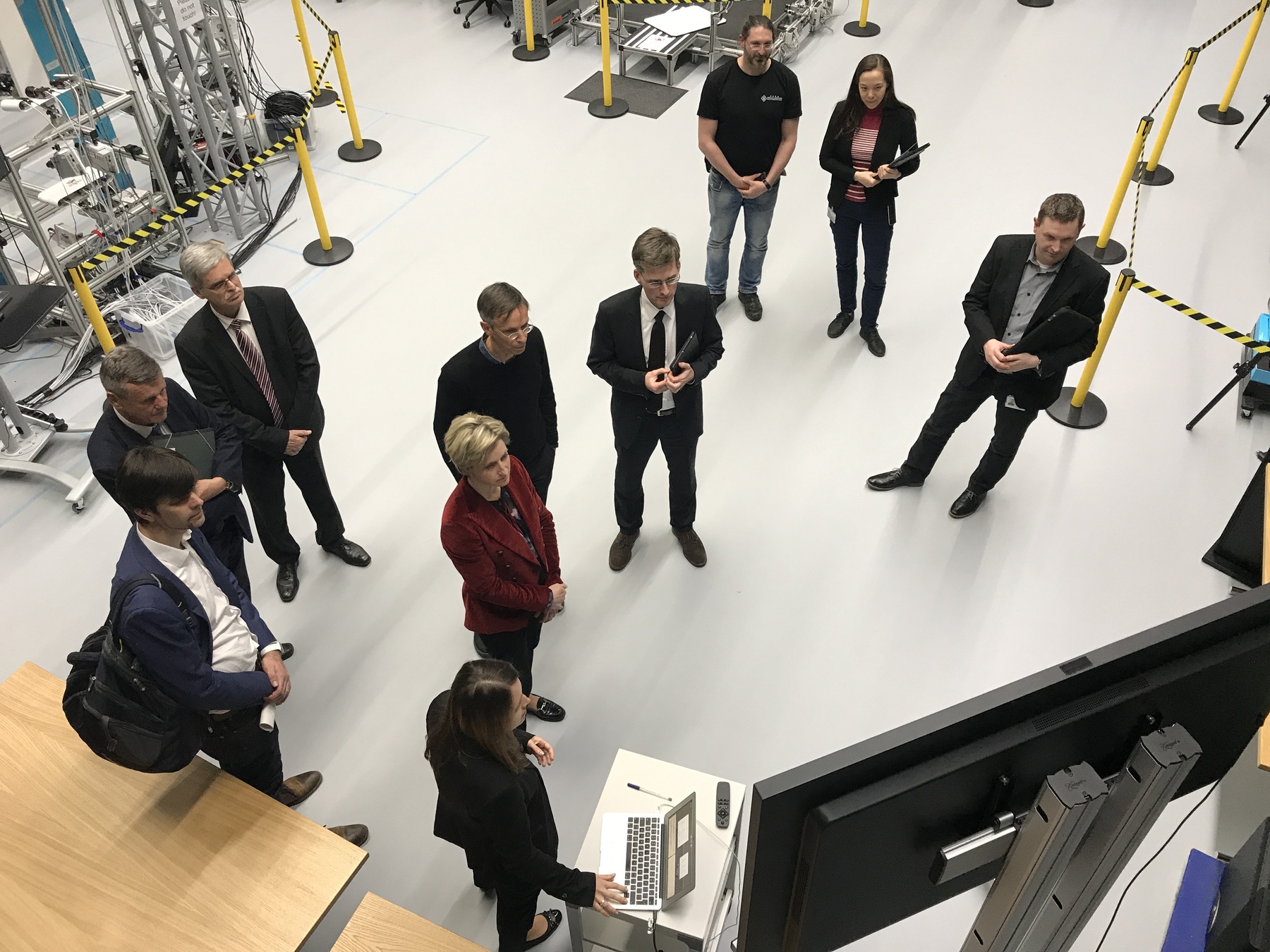
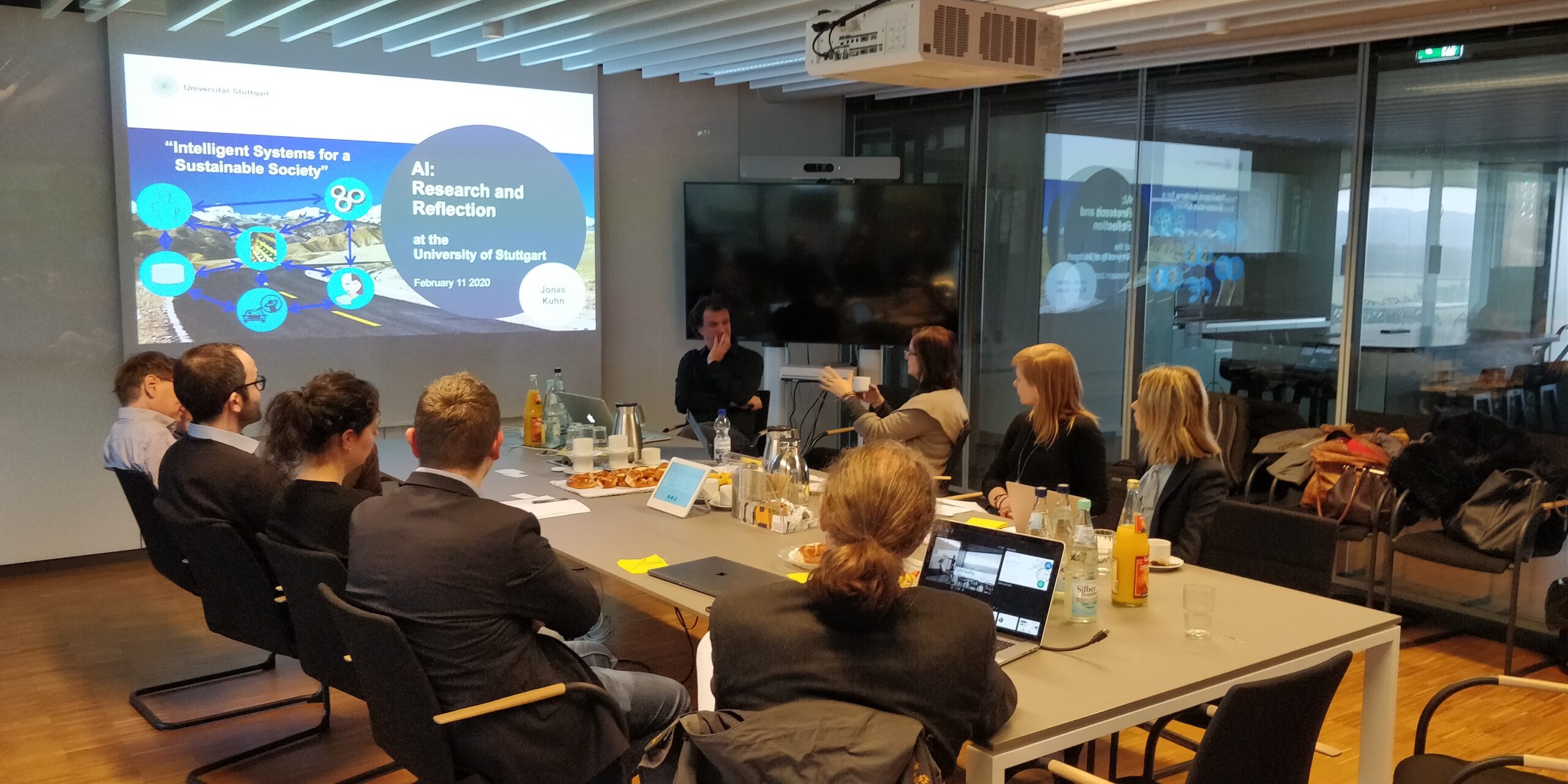
    Tübingen – Representatives of the Alan Turing Institute, the UK’s national institute for data science and artificial intelligence, on Tuesday visited the Max Planck Institute for Intelligent Systems in Tübingen, where they met with scientists and gained insights into Cyber Valley.
     “The Cyber Valley model is very impressive in the way it combines the region’s academic and industrial strengths.” said Dr. Allaine Cerwonka, Director of Academic Research Programmes at the Alan Turing Institute. “I look forward to coming back in another five years to see how it’s developed. It’s clearly on an upward trajectory.”

    The Cyber Valley partnership is Europe’s largest research consortium in the field of modern AI with partners from science, industry, and society. Since it was founded at the end of 2016, the initiative has gained significant momentum and developed into a unique research ecosystem comprising world-class teaching and basic research as well as applied and industrial research.

    As the Alan Turing Institute’s visit demonstrated once again, the European research community’s interest in the model is very high. 

  • Chancen und Risiken der Künstlichen Intelligenz

    Chancen und Risiken der Künstlichen Intelligenz

    EINLADUNG zu "Chancen und Risiken der Künstlichen Intelligenz" mit der Vorsitzenden der Enquete-Kommission KI im Bundestag, Daniela Kolbe MdB, am Donnerstag, den 6. Februar 2020

    Welche Chancen bietet Künstliche Intelligenz für unser zukünftiges Leben und Zusammenleben? Welchen Einfluss hat sie auf unsere Wirtschaft und unsere Arbeitswelt? Und welche Risiken gehen von ihr aus?

    Der Bundestag hat mit der Enquete-Kommission "Künstliche Intelligenz – Gesellschaftliche Verantwortung und wirtschaftliche, soziale und ökologische Potenziale" eine der zentralen Debatten unserer Zeit aufgegriffen. Wir freuen uns sehr, dass wir die Vorsitzende dieser Enquete-Kommission, die SPD-Bundestagsabgeordnete Daniela Kolbe, für eine öffentliche Diskussion in Tübingen gewinnen konnten.

    Wir möchten Sie hierzu herzlich am 6. Februar um 18.30 Uhr in die Universität Tübingen, Hörsaal 24 im Kupferbau einladen.

    Mit ihr diskutieren:
    – Tanja-Silvana Grzesch, Erste Bevollmächtigte der IG Metall Reutlingen-Tübingen
    – Prof. Dr. Ulrike von Luxburg, Vertreterin des Cyber Valleys Tübingen
    – Dr. Bernd Villhauer, Geschäftsführer des Weltethos-Instituts


  • AI Monday in Cyber Valley

    AI Monday in Cyber Valley

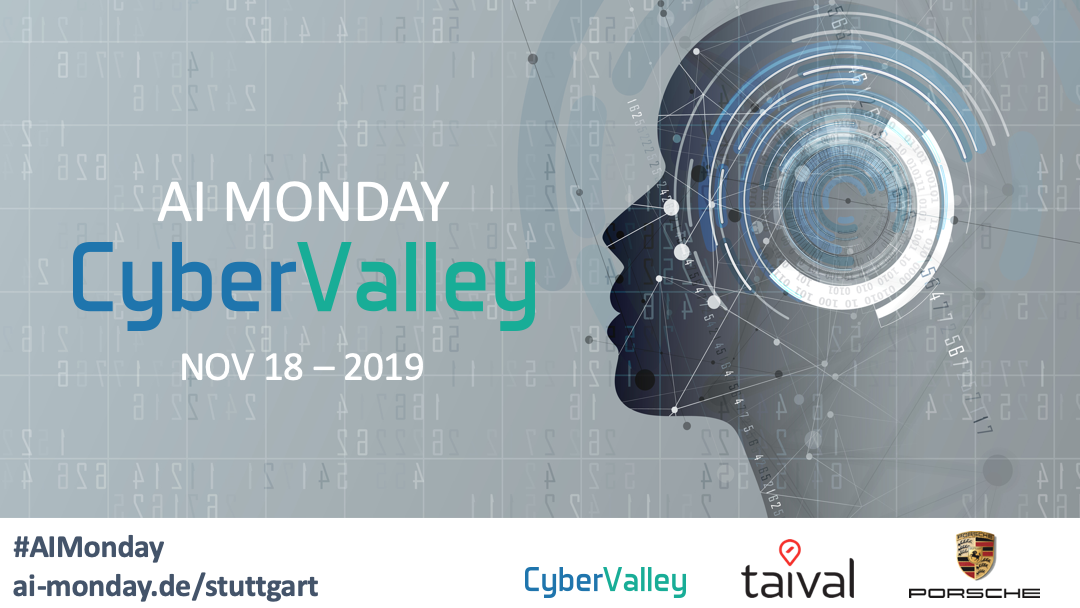
    In 2017, the founders of Taival launched the AI Monday event series in Helsinki. Since then, they have expanded to Berlin and Stuttgart. The popular series aims to bring together AI experts and enthusiasts for evenings of talks and knowledge sharing.

    In cooperation with Taival and Porsche AG, Cyber Valley is now bringing the event to Tübingen for the first time. Join us on November 18 at the Max Planck Institute for Intelligent Systems, where several AI experts will be presenting their research and activities in the broad field of artificial intelligence.

    Please note the event is registration only. For more details and to register for the event, please consult the AI Monday website: https://ai-monday.de/stuttgart

  • Forscher*innen aus dem Cyber Valley bei den französischen Filmtagen

    Forscher*innen aus dem Cyber Valley bei den französischen Filmtagen

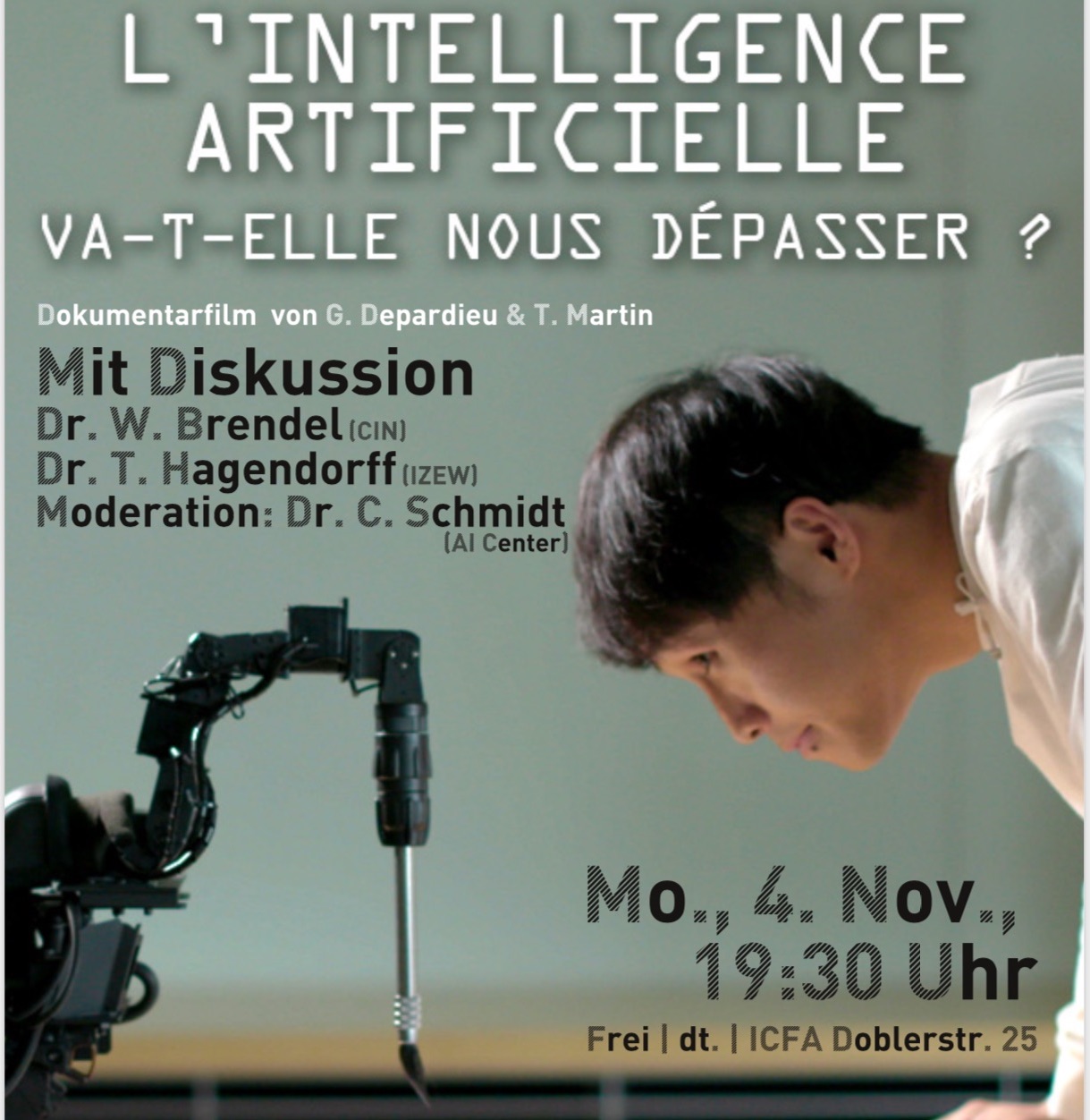
    Am 04. November lädt das Deutsch-Französische Kulturinstitut Tübingen e.V. zu einer Vorführung des ARTE Dokumentarfilms "KI: Schlauer als wir?" ein. Nach dem Film werden Wissenschaftler*innen der Universität Tübingen ihre Forschung im Bereich KI vorstellen. Im Anschluss diskutieren sie über wissenschaftliche und ethische Themen und beantworten die Fragen des Publikums.


    Referenten: 

    Wieland Brendel, Experte für Maschinelles Lernen am Center for Integrative Neuroscience der Universität Tübingen


    Thilo Hagendorff, Medien- und Technikethiker im Exzellenz-Cluster "Machine Learning: New Perspectives for Science" der Universität Tübingen


    Moderatorin: 

    Caroline Schmidt, Koordinatorin, Bundeswettbewerb künstliche Intelligenz und IT4Kids an der Universität Tübingen 


    Sprache: Deutsch


    Eintritt: frei 


    Ort: ICFA, Doblerstr. 25 in Tübingen


  • AI Research in Cyber Valley: Talks on Science and Society

    AI Research in Cyber Valley: Talks on Science and Society

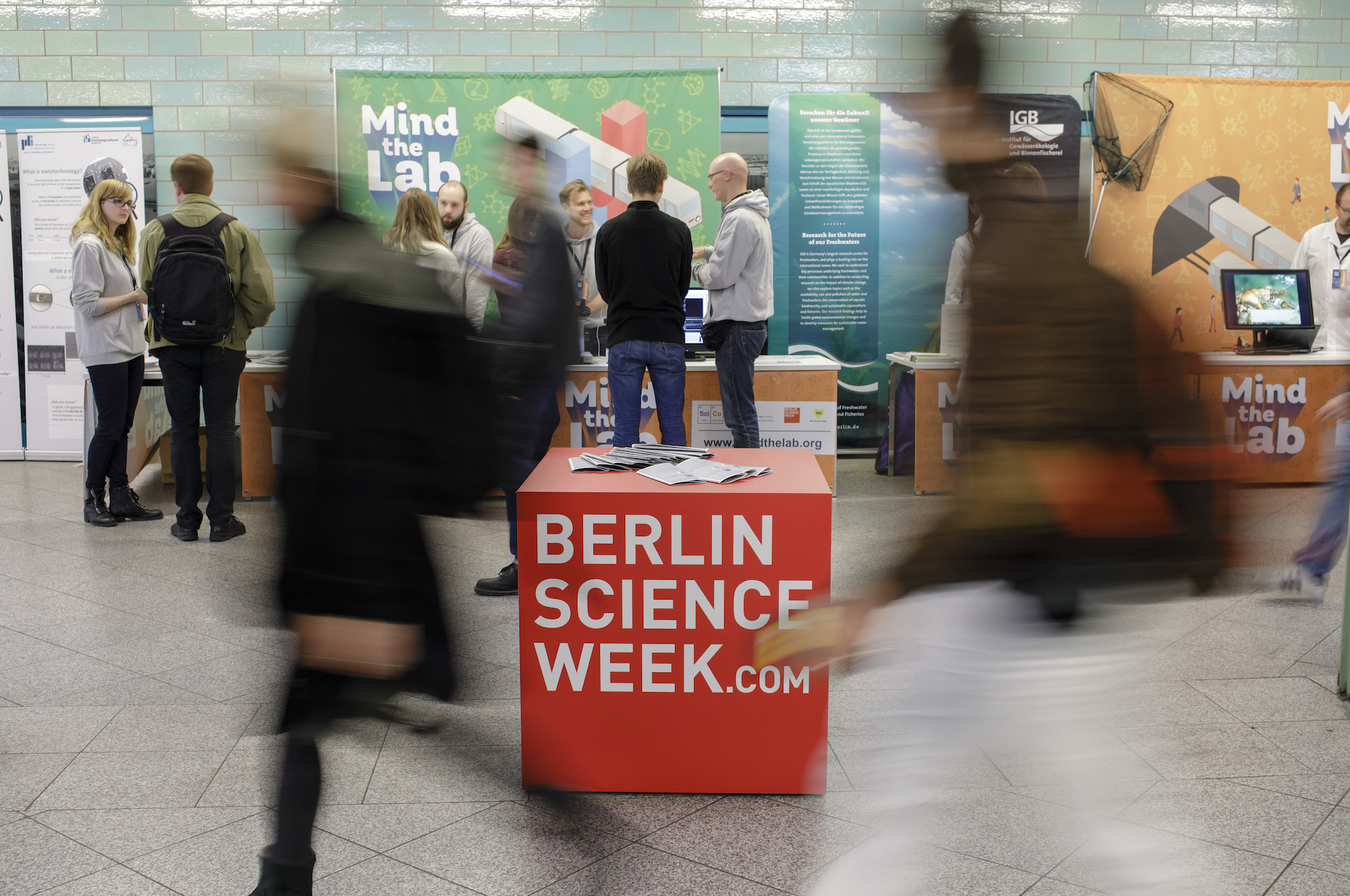
    Tübingen/Stuttgart: On November 6, 2019, Cyber Valley will be hosting an afternoon of public lectures at Berlin Science Week, where scientists from the research consortium’s partner institutions will present their research in the field of artificial intelligence (AI). At the "AI Research in Cyber Valley: Talks on Science and Society" event, scientists from the Max Planck Institute for Intelligent Systems, the University of Tübingen, and the University of Stuttgart will discuss topics ranging from nanorobots for surgery and brain-computer interfaces, to fairness in machine learning and the ethics of AI. The researchers aim to illustrate the interdisciplinary nature of the field, while at the same time addressing how AI will change society.

    Event: "AI research in Cyber Valley: Talks on Science and Society"

    Date: November 6, 2019

    Time: 4:00 p.m. – 7:30 p.m.

    Location: Berlin Museum of Natural History, New Lecture Hall, Invalidenstrasse 43, 10115 Berlin

    Language: English

    Admission: Free

    Speakers:

    Tian Qiu

    Tian Qiu was recently appointed leader of the new Cyber Valley Biomedical Systems Research Group at the University of Stuttgart. Prior to this, he completed his post-doctoral work at the Max Planck Institute for Intelligent Systems in Stuttgart. His research focuses on creating new devices and microsystems for biomedical applications. The aim is to integrate actuation, sensing, and computation to advance minimally invasive medical procedures.

    Talk: Nanorobots Inside Us – How Nanotechnology could Change Surgery

    Fabian Sinz

    Fabian Sinz is an award-winning scientist whose research interests lie in the combination of machine learning, computational neuroscience, and neural data. In 2018, he was appointed leader of the newly established independent Cyber Valley Neuronal Intelligence Research Group at the University of Tübingen. He is also currently an Adjunct Assistant Professor at the Baylor College of Medicine’s Center for Neuroscience and Artificial Intelligence in Houston, Texas.

    Talk: Real inception – Gaining Insights into the Brain by Controlling Real Neurons with AI

    Matthias Hohmann

    Matthias Hohmann is a PhD student in the Empirical Inference Department at the Max Planck Institute for Intelligent Systems in Tübingen. His research focuses on making participation in neuroscience more accessible, especially for people with rare diseases. The goal is to improve quality of life, support caregivers, and break down barriers in basic research. For his current project, he developed an app that makes participation in large-scale neuroscientific studies from home possible, without expert supervision.

    Talk: From the Lab into the Wild: A Platform for At-Home Participation in Neuroscientific Studies

    Caterina De Bacco

    Caterina De Bacco leads the Cyber Valley Physics for Inference and Optimization Research Group at the Max Planck Institute for Intelligent Systems in Tübingen. In her research, she develops models and algorithms based on the principles of statistical physics. The aim is to understand, optimize, and predict relations between the properties of complex large-scale interacting systems. Before joining MPI-IS, she was a postdoc at Columbia University’s Data Science Institute in New York.

    Talk: Physics for Inference and Optimization

    Isabel Valera

    Isabel Valera leads the Probabilistic Learning Research Group at the Max Planck Institute for Intelligent Systems in Tübingen. Her research focuses on the development of machine learning methods that are flexible, robust, and fair. She obtained her PhD in 2014 in Multimedia and Communications from the University Carlos III in Madrid, and then worked at the MPI for Software Systems as a postdoctoral fellow, and at the University of Cambridge as an associated researcher.

    Talk: Fairness in Artificial Intelligence: Challenges and Recent Advances

    Thilo Hagendorff

    Thilo Hagendorff is a media and technology ethicist. He received his doctorate in sociology in 2013 and has since been a research associate at the University of Tübingen’s International Center for Ethics in the Sciences and Humanities (IZEW). In 2019, he began working for the "Machine Learning: New Perspectives for Science" Excellence Cluster. He is also a lecturer at the University of Tübingen and at the University of Potsdam’s Hasso Plattner Institute.

    Talk: A Comprehensive Overview of AI Ethics

  • Tag der Wissenschaft

    Tag der Wissenschaft

    Eintauchen in die Welt der Wissenschaft, sich begeistern lassen, staunen und selber zum Forscher werden: So lautet die Devise beim Tag der Wissenschaft der Universität Stuttgart am 29. Juni 2019. Rund 140 Institute, wissenschaftliche Einrichtungen und Gäste bieten von 13 bis 19 Uhr auf dem Uni-Campus in Stuttgart-Vaihingen ein spannendes Programm für Groß und Klein. 

    Das Programm finden Sie unter unter www.uni-stuttgart.de/tag und kann dort auch bestellt werden. 
    Ansprechperson: Claudia Berardis 
    E-Mail: tdw@uni-stuttgart.de

    Viel Spaß!

  • Podiumsdiskussion zu Künstliche Intelligenz: Was kann sie, was soll sie, was darf sie?

    Podiumsdiskussion zu Künstliche Intelligenz: Was kann sie, was soll sie, was darf sie?

    Das Cyber Valley läd ein zu einer Podiumsdiskussion mit dem Titel „Künstliche Intelligenz: Was kann sie, was soll sie, was darf sie?" am 1. Juli um 18 Uhr im

    Neuen Schloss,

    Weißer Saal, 

    Schlossplatz 4,

    70173 Stuttgart

    Es handelt sich um eine Veranstaltung des Internationalen Zentrums für Kultur- und Technikforschung (IZKT) der Universität Stuttgart in Kooperation mit dem Ministerium für Wissenschaft, Forschung und Kunst des Landes Baden-Württemberg, dem Cyber Valley und der Landeshauptstadt Stuttgart, im Rahmen des Ersten Stuttgarter Wissenschaftsfestivals Smart und Clever. Dieses findet auf Initiative von Stuttgarts Oberbürgermeister Fritz Kuhn vom 26. Juni bis 6. Juli 2019 an vielen verschiedenen Orten in der Landeshauptstadt statt. Das Diskussionsthema wurde auch deshalb gewählt, weil das Land das Ziel verfolgt, sich zu einem wesentlichen Treiber für Künstliche Intelligenz mit internationaler Strahlkraft zu entwickeln.

    Auf dem Podium werden sitzen:

    • Theresia Bauer MdL, Ministerin für Wissenschaft, Forschung und Kunst des Landes Baden-Württemberg
    • Prof. Dr. Philipp Hennig, Inhaber der Cyber Valley Professur „Methoden des Maschinellen Lernens“ an der Universität Tübingen.
    • Prof. Dr. Cordula Kropp, Professorin an der Uni Stuttgart am Institut für Sozialwissenschaften mit dem Schwerpunkt Risiko- und Technikforschung.
    • Prof. Dr. Michael Resch, Direktor des Höchstleistungsrechenzentrum Stuttgart (HLRS) und Leiter des Instituts für Höchstleistungsrechnen

    Um Anmeldung wird bis 24.06.2019 gebeten:
    anmeldungen@izkt.uni-stuttgart.de

  • Minister of Economy Hoffmeister-Kraut visits Cyber Valley

    Minister of Economy Hoffmeister-Kraut visits Cyber Valley

    Tübingen – During a visit to the Max Planck Institute for Intelligent Systems (MPI-IS) in Tübingen on 15th April 2019, Dr. Nicole Hoffmeister-Kraut, Baden-Württemberg's Minister of Economic Affairs, Labour and Housing, once again emphasised the state's support for Cyber Valley, Europe's largest research cooperation in the field of artificial intelligence (AI) with partners from politics, science and industry.

    "Cyber Valley is already one of the world's top locations for AI research and thus a flagship for Baden-Württemberg as a high-tech hot spot. We want to further develop this potential. It is also a question of bringing the already existing excellence even more specifically to small and medium-sized companies," said Minister Hoffmeister-Kraut.

    During several lab visits and talks with leading AI scientists from the Max Planck Institute for Intelligent Systems and the University of Tübingen, Minister Hoffmeister-Kraut and a delegation from the Ministry of Economic Affairs discussed research topics as well as milestones and developments of the Cyber Valley Initiative.

    "We are delighted to have this opportunity to introduce our activities to Minister Hoffmeister-Kraut," said Professor Bernhard Schölkopf, Managing Director of the Max Planck Institute for Intelligent Systems and one of the world's leading researchers in the field of machine learning. "Machine learning and artificial intelligence will change the world. We want Europe to play a leading role in this. The support from policymakers will be crucial." He also stressed that the key motivation behind the Cyber Valley was to create an ecosystem for spin-offs, i.e. to offer doctoral students the opportunity to found start-ups in order to harness knowledge. This will boost the domestic economy and strengthen southern Germany as a business location. "In addition, we want the Cyber Valley to create a radiance and attract more companies and top talents. It works, as the current figures for our doctoral program show. In just two years, we have attracted over 100 doctoral students from all over the world to our International Max Planck Research School for Intelligent Systems. That's just the beginning."

    On 26th March 2019, the State Cabinet approved a €20 million package of measures to further strengthen artificial intelligence, in addition to the €100 million already earmarked in 2018 for co-financing federal projects on artificial intelligence and battery research. The goal is to make Baden-Württemberg a pioneer in the field of AI. Cyber Valley is expected to play an important role in this.

    The research network was founded at the end of 2016. The founding partners are the MPI-IS, the University of Stuttgart, the University of Tübingen, the State of Baden-Württemberg and the following seven industrial partners: Amazon, the BMW Group, IAV GmbH, Daimler AG, Porsche AG, Robert Bosch GmbH and ZF Friedrichshafen AG. Cyber Valley is also supported by the Christian Bürkert Foundation, the Gips-Schüle Foundation, the Vector Foundation and the Carl Zeiss Foundation. Together, the partners want to support the region by strengthening research activities, creating an ecosystem for start-ups and technology transfer and increasing the visibility of Baden-Württemberg as a global hotspot for AI research and development.

    As core elements of the Cyber Valley initiative, new research groups have been established at the Max Planck Institute for Intelligent Systems (MPI-IS), the University of Stuttgart and the University of Tübingen. The Cyber Valley Partners and the foundations finance these groups.

    In addition to the three existing Cyber Valley professorships, additional chairs will be established at the universities in the coming years.

    Another focus of the project is the promotion of young researchers with an internationally renowned, interdisciplinary doctoral programme: the International Max Planck Research School for Intelligent Systems. The IMPRS-IS is a key element of the Cyber Valley research cooperation, which aims, among other things, to offer the world's best young researchers in the field of artificial intelligence a first-class education.

    www.cyber-valley.de

  • Professor Matthias Hein auf dem Digitalgipfel 2019 in der Carl Benz Arena

    Professor Matthias Hein auf dem Digitalgipfel 2019 in der Carl Benz Arena

    Der Digitalgipfel 2019 – Wirtschaft 4.0 BW findet am 11. April in der Carl Benz Arena in Stuttgart statt. Er wird organisiert vom Ministerium für Wirtschaft, Arbeit und Wohnungsbau Baden-Württemberg, die Teilnahme ist kostenlos.

    Wo?

    Carl Benz Arena
    Mercedesstraße 73D
    70372 Stuttgart

    Mit dabei ist Cyber Valley Bosch-Stiftungsprofessor für Maschinelles Lernen an der Universität Tübingen, Matthias Hein. Er wird einen Impulsvortrag halten zum Thema "Kann KI Ethik?"

    Hier finden Sie das Programm.

    Und hier alle Informationen rund um den Gipfel.