News Category: Press Release

  • BinDoc and Field 33 join start-up network

    BinDoc and Field 33 join start-up network

    “The Cyber Valley Start-up Network continues to grow and support the innovative AI companies”, says Michael J. Black, Director of the Perceiving Systems department at the Max Planck Institute for Intelligent Systems and Cyber Valley speaker. “We are delighted to welcome BinDoc and Field 33 to the elite community of entrepreneurs that will reshape the economy of Baden-Württemberg.”

    BinDoc is a start-up from Tübingen, that analyzes high-dimensional data from the healthcare sector with AI algorithms to create more transparency for hospitals and their stakeholders and drive progress in the industry. “Our AI-powered analytics software supports hospitals in the areas of market analytics, hospital processes and clinical outcomes optimization”, says BinDoc CEO Manuel Heurich. “A particular focus here is on predictive as well as retrospective analysis of clinical and economic outcomes and risk analysis. We support medical technology and life science companies with a real-world evidence platform that enables AI-supported big data analyses for clinical studies.”

    The Stuttgart-based start-up Field 33 creates multi-dimensional maps of organizations based on pre-rendered information and knowledge that are populated with specific data over time for true data driven management. The maps provide transparency on what drives value in an organization and allow for simulation and prediction of strategies and tactical cross-domain initiatives and market changes. “The complexity of the digital economy is pushing people and organizations to their cognitive and economic limits. We need methods and technologies that enable a real leap in productivity also for established companies, and this is precisely where we come in with Field 33”, says Sebastian Wohlrapp, founder and CEO of Field 33. “Being part of the Cyber Valley Start-up Network brings us even closer to the leading edge of research in artificial intelligence that we benefit from and help to apply in the industry.”

    Cyber Valley regularly hosts networking events such as talks, meet-ups and tech workshops. The next event of the Cyber Valley Entrepreneurship series is scheduled for September 16 and will feature high-profile speakers on the topic of “AI and Gaming”. More information about the event and how to attend can be found at cyber-valley.de/events/ai-gaming.

  • Geckos glide, crash-land, but don’t fall thanks to tail

    Geckos glide, crash-land, but don’t fall thanks to tail

    Geckos’ impressive climbing abilities give them agility rarely surpassed in nature. With their highly specialized adhesive lamellae on their feet, geckos can climb up smooth vertical surfaces with ease and even move on a ceiling hanging upside down. Their ability to run on water adds is another superpower. Now another can be added.

    A scientific study published on September 2nd 2021 in Nature Communications Biology by researchers who work at the intersection between robotics and biology shows the geckos are capable of even more. In the publication titled Tails stabilize landing of gliding geckos crashing head-first into tree trunks, the authors Rob Siddall, Greg Byrnes, Robert Full, and Ardian Jusufi present footage showing that geckos with no major specializations for flight are in fact capable gliders. Experiments with a gecko-inspired robot confirm the reptile’s locomotion abilities are not entirely down to its feet. The tail plays just as much a pivotal role, the team from the Max Planck Institute for Intelligent Systems in Stuttgart, Siena College in New York, and the University of California at Berkeley discovered.

    In their work, the scientists begin by showing that the multi-talented lizard known as Hemidactylus platyurus is capable of gliding. In its natural habitat, it lives in trees and can jump many meters from one tree trunk to the next to avoid predators. When trees are close and the jump is short, the gecko is still accelerating so that everything between jump and landing happens at the blink of an eye. The gecko experiences an unbraked collision. Surprisingly, the gecko can cope with smashing full-on into a tree trunk.

    Ardian Jusufi, who initiated the study, set up several experiments in a wildlife reserve in the rainforests of Singapore. At the Max Planck Institute for Intelligent Systems, he leads the Cyber Valley research group “Locomotion in Biorobotic and Somatic Systems”. He has spent many years investigating geckos and their many locomotion abilities. In the tree canopy, Jusufi explored a situation where reptiles both with and without a tail face the challenge of a short accelerating glide.

    Placed on a platform seven meters above the ground, a tail-equipped gecko leaps down into the deep and glides to a nearby tree. High-speed cameras capture the fall and show that the jumping gecko reaches 6 m/s, just over 21 kph. Unlike a car that would be heavily dented after driving into a tree at this speed, the footage shows the gecko lands on the trunk without falling off. It moves away as if nothing happened. With tailless animals, it was quite the opposite. Geckos who had naturally lost their tails couldn’t maintain their grip after the crash and, consequently, fell off the tree trunk after landing.

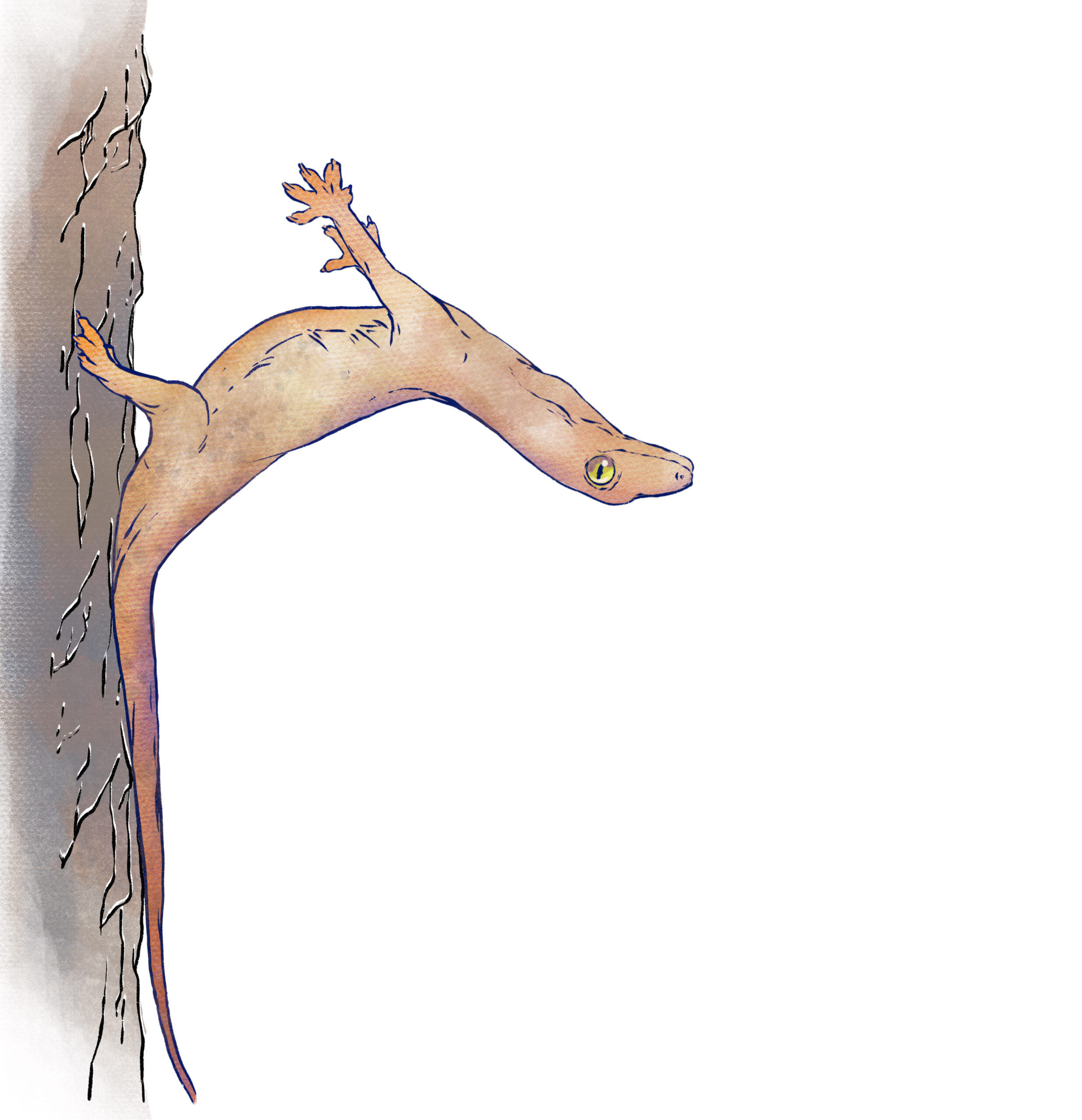
    As can be seen in the corresponding video, the mechanism the animal applies to cushion the impact is bending its torso backward as far as 100 degrees. During the bend, the front feet lose grip. Only the rear legs remain attached. This pitch-back of the torso dissipates energy as it pushes the tail hard into the trunk. Animals that have lost tails could not dissipate sufficient energy and fell. The tail acts as a fifth leg, helping the gecko stabilize after the impact, they believed. But without a control experiment can one conclusively show that the tail has this stabilizing effect? Hence, they set off to the lab.

    The scientists created a physical model of a gecko to better understand the forces the animal experiences. Their gecko-inspired robot features a soft torso, where the tail can be taken off and put back on. When the front foot hits a surface, the robot is programmed to bend its tail just like the reflex that Jusufi discovered previously in climbing geckos. The information is processed via a microcontroller on the shoulder. This signal activates the motor to pull on a tendon and hence pushes the tail into the wall to slow the head over heels pitchback.

    Back in the Locomotion in Biorobotic and Somatic Systems lab, Robert Siddall and Ardian Jusufi began by catapulting a soft robotic lizard onto a wall with an embedded force-sensitive scale (the simulated tree trunk) which is lined with felt, to which the robot’s Velcro-lined feet can stick. The robot hit the force plate as abruptly as the geckos hitting the tree, tilting back its torso at a right angle to the surface. The roboticists then measured the force the front and back feet of the robot endured upon impact. The longer the tail, they discovered, the lower the force pulling the back feet away from the surface. The lower that force, the easier it is for the robot (and likely the animal) to hold on. Without a tail, however, the forces on the back feet become too high – the robot loses grip, bounces off, and falls. This experiment validated the scientists’ hypothesis that the tail is essential for the gecko to be able to stabilize itself on a vertical surface after colliding with it at high speed – findings that could make a significant contribution to robot landings and beyond.

    “This field discovery on the perching behavior of geckos has important implications for our understanding of tails as multi-functional appendages that animals can rely on. Ranging from inertial to contact tails, they facilitate the most extreme transitions, such as from gliding flight to collision with a wall,” says Ardian Jusufi, the senior and corresponding author.

    “One of the most dramatic transitions we can think of in multi-modal locomotion is to alight on a vertical surface from high-speed gliding flight to a standstill,” continues Ardian Jusufi.

    Larger gliding specialists appear to avoid engaging in short glides, as there is not sufficient vertical drop height to reach terminal velocity, stop accelerating, and begin a dedicated landing maneuver with a stall prior to impact. Smaller animals may be able to use mechanically mediated solutions to negotiate such situations.

    However, no one had ever quantified this amazing animal’s gliding behavior before. Such video material from the rainforest is hard to come by. “Our attempts to film the small, camouflaged lizard in the rainforest revealed a fall arresting response nobody thought these geckos could do and showed us their tails were entirely underestimated. Previously contact tails were thought to be used to maintain grip during rapid wall-running, while the findings presented here suggest that geckos exhibit exaptation of the behavior to improve the success of landing in the wake of their directed aerial descent,” says Jusufi.

    “With the robot, we were able to measure something we could not with geckos in the field. The wall reaction forces at the impact upon landing confirmed that the tail is an essential part facilitating the landing in subcritical glides. Our soft robotic lander not only helps to make an impact in another field, but it can also help improve robot locomotion by increasing robustness and simplifying control,” explains Ardian Jusufi.

    "Nature has many unexpected, elegant solutions to engineering problems – and this is wonderfully illustrated by the way geckos can use their tails to turn a head-first collision into a successful perching maneuver. Landing from flight is difficult, and we hope our findings will lead to new techniques for robot mobility – sometimes crashes are helpful," Robert Siddall describes.

    Gliding flight has evolved repeatedly in the Indomalayan lowland tropical rainforest of Southeast Asia.


  • Research meets gaming

    Research meets gaming

    The games publisher Square Enix, the venture capital firm IT-Farm, and Cyber Valley are launching AI GameDev, a competition for start-ups and scientists who think their ideas could contribute to, or whose work focuses on, developing the most exciting artificial intelligence (AI) technologies for the entertainment and gaming industry.

    AI GameDev is Europe’s first competition that aims to facilitate technology and knowledge transfer from European AI research to the many possible applications in game development. “AI can help improve video games in many ways, for instance by creating better, more realistic virtual environments or scenarios”, says Michael J. Black, Director of the Perceiving Systems department at the Max Planck Institute for Intelligent Systems and Cyber Valley speaker. “We want to make the full potential of the European AI research and start-up scene visible and reward the best ideas.”

    The event partners have launched the www.aigame.dev website, where start-ups and AI researchers can submit their ideas by September 26, 2021 in the form of a pitch deck, a video, or a scientific paper. The application process will officially start on August 11, 2021. The best ten ideas will be selected for the competition, and their creators will be given the opportunity to present their concepts at an award ceremony on December 2, 2021. While Cyber Valley will honor the most promising scientific performance, IT-Farm will present the Audience Award. The Main Award will go to the most innovative AI solution. Sponsored by Square Enix, the prize includes a trip to Tokyo, Japan.

    “In the realm of gaming, AI technologies show great promise and could potentially lead to fundamental changes in terms of game design,” says Youichiro Miyake, Lead AI Researcher at Square Enix Co., Ltd. “Combining AI technologies with game design is the key to the future of digital games. I hope many young people and new companies will rise to this challenge.”

    Shinya Kasuga, Partner at IT-Farm Corporation, says: “Gaming and interactive entertainment are the frontier markets for technologies that capture, model, discover, enhance, and render the interaction between human beings and the world. It’s all about the ‘world’. The automotive sector, smart cities, healthcare, manufacturing, agriculture, education, and many other large sectors are now leveraging gaming and entertainment technologies to innovate their core business. In the AI GameDev contest, we are truly excited to meet with and support the AI entrepreneurs who are addressing the world’s major challenges.”

  • Fraunhofer IPA presents disinfection robot “DeKonBot”

    Fraunhofer IPA presents disinfection robot “DeKonBot”

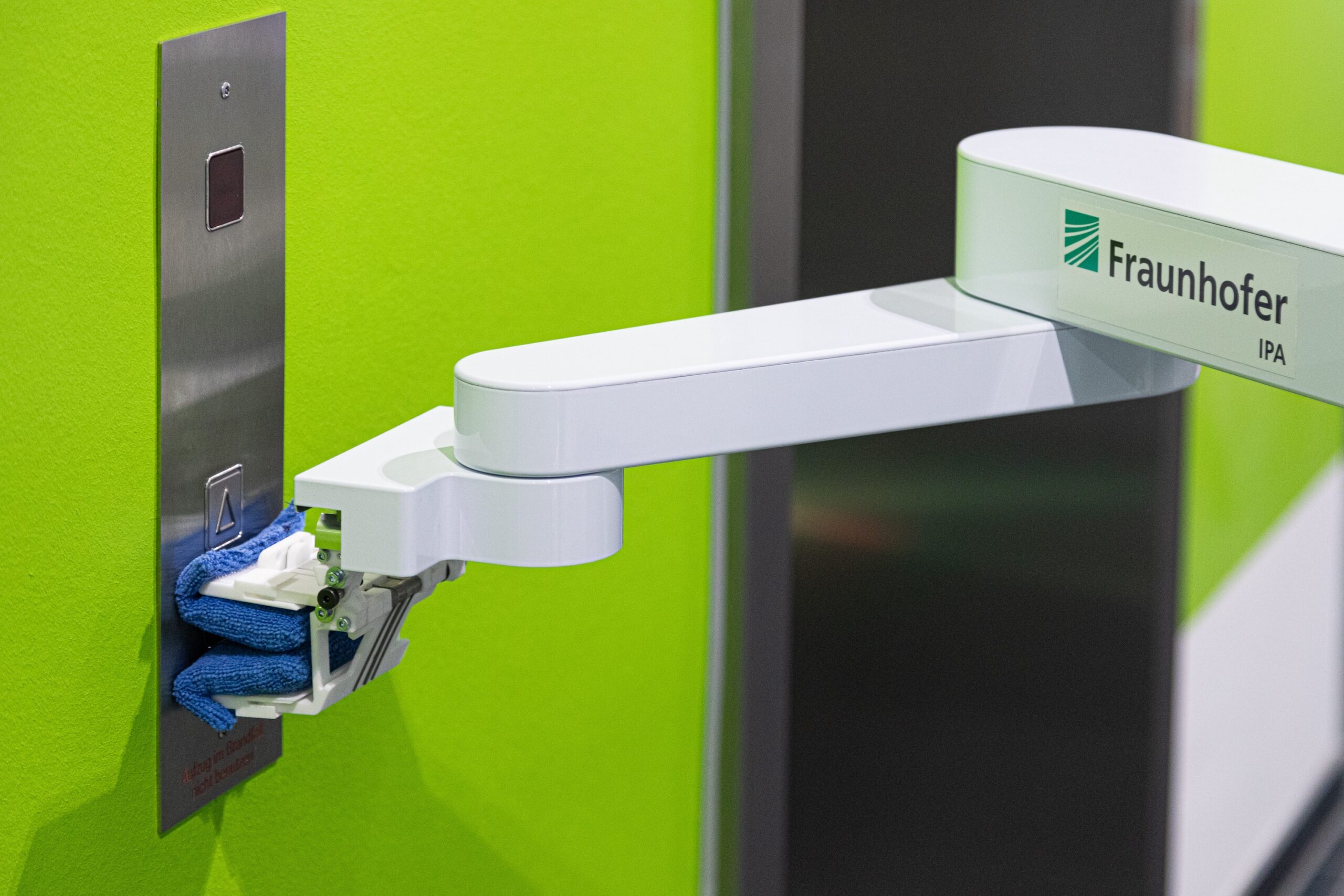
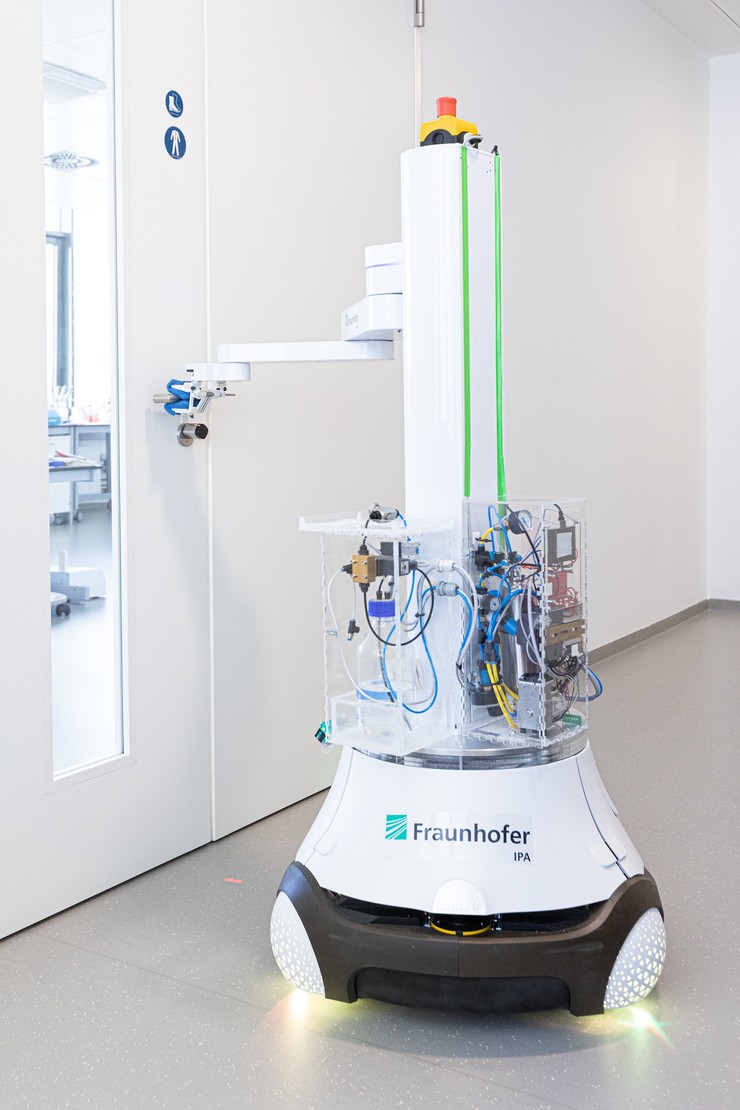
    The new prototype of the mobile disinfection robot “DeKonBot” is an automation solution that independently cleans and disinfects potentially contaminated areas such as door handles, light switches, or elevator buttons. Compared to cleaning by hand, the use of robots reduces the risk of infection for the cleaning staff and at the same time ensures that the cleaning task is carried out reliably and traceably. The continuous use of the robot, even during the night, means that cleaning jobs can be performed more frequently than if carried out manually.

    Targeted and safe disinfection

    Compared to available robot solutions on the market, DeKonBot has a few different features. On the one hand, it cleans relevant surfaces in a targeted and direct manner and does not spray the disinfectant over large areas in the room like some other robots. This not only saves on disinfectants and time because the surface to be cleaned is limited to the essentials, but also prevents hazards such as slipping on damp surfaces or inhaling potentially harmful chemicals. On the other hand, DeKonBot can be used safely in the presence of people. For safety reasons, disinfection robots that use UV rays to kill viruses, for example, require an environment where no people are present.

    In order for DeKonBot to work successfully, it is initially trained in its new operating environment with the help of a tablet that can be operated without expert robotics knowledge. First of all, the member of operating staff navigates the robot once through the environment, during which it independently creates a map of its operating environment. In addition, the user “shows” the robot the objects to be cleaned and the cleaning movement to be performed: For this purpose, the user guides the robot arm with the disinfection tool to the door handle, for example, and moves the tool as required to clean it. The robot saves the path and is subsequently able to repeat it independently.

    The objects to be cleaned are currently still recognized by means of so-called “tags”, i.e. small, black-and-white labels. The robot positions itself relative to these tags. In the future, tags will no longer be needed. Instead, methods recently developed at Fraunhofer IPA will be used, which on the one hand enable these objects to be automatically recognized in camera data. On the other hand, a new 3D sensor, which was developed in the course of the project, recognizes the objects to be cleaned and their position in the room better than other sensors available on the market, even if these objects have a metallic, reflective surface. Based on these recognition functions, in the final stage of development, the robot will be able to automatically plan and execute the required cleaning movements.

    Rapid joint development

    The prototype is the result of a joint development of the IPA departments “Robot and Assistive Systems”, “Laboratory Automation and Biomanufacturing Engineering” together with “Ultraclean Technology and Micromanufacturing”. DeKonBot received funding from the Fraunhofer-Gesellschaft's internal “Anti-Corona” program, in which it is carrying out comprehensive research and innovation activities to combat the pandemic.

    The development of the service robot proceeded rapidly. Already in April of this year, a first feasibility study was carried out, in which a simple spray tool was still used for disinfection. “Just four months later, we were able to put the disinfection robot with its new wiping tool into operation – despite the limitations that the coronavirus pandemic also caused for us Fraunhofer employees”, explains Dr. Birgit Graf, Manager of the “Household and Assistive Robotics” group and manager of the DeKonBot project.

    The development of the prototype profited from extensive preliminary work carried out by the institute in the field of mobile service and cleaning robotics. For example, the mobile platform of the robotic home assistant Care-O-bot® 4 was used, which is already being sold as a serial product by an IPA spin-off. Existing software modules for navigation, 3D object recognition and manipulation could be further developed specifically for the application. Currently, first field tests are being performed with the robot in the offices at Fraunhofer IPA. Later, employees from a cleaning company will test the robot in an external building. Until the end of the project in February 2021, the robot will be further optimized based on the test results. Measurements of the bacterial load in the disinfected areas will be used to verify the benefit of the robot.

    In addition, the research project “Mobile Disinfection” (MobDi), also funded by the Fraunhofer-Gesellschaft and starting in October this year, will be focusing on and further developing DeKonBot technologies. In particular, new disinfection methods and tools, as well as more complex detection and planning methods, will be developed in the course of the one-year project period, thus enabling disinfection robots to plan the cleaning and disinfection process systematically.

    Production readiness in view

    DeKonBot has not yet reached its full range of functions but researchers at Fraunhofer IPA have already developed a concept for a later serial product. “Together with interested companies, we would like to put the service robot into practice and thus make a contribution to restarting public life even in times of the coronavirus,” says Graf, stating the next goals. Several cleaning companies that were actively involved in the development of the robot have already expressed their interest in using DeKonBot.

  • Cyber Valley adds five shooting stars to its Start-up Network

    Cyber Valley adds five shooting stars to its Start-up Network

    “We’ve noted consistent and growing interest among start-ups in Baden-Württemberg in joining our network,” says Michael J. Black, Director of the Perceiving Systems department at the Max Planck Institute for Intelligent Systems and Cyber Valley speaker. “While we are eager to expand, we are very selective when it comes to accepting new members. The profiles of these five new member start-ups speak for themselves: each of them has a strong team, deep technology, and offers highly innovative AI-based products that are very competitive in their respective markets.”

    Aleph Alpha is an AI R&D company based in Heidelberg that researches, develops and operationalizes large generalizable artificial intelligence models for text, vision and strategy to ensure the digital sovereignty for public and private sector partners.

    DeepScenario is an AI start-up based in Munich that provides highly accurate real-world traffic data for the development of automated driving. The company’s product helps automotive industry customers train, test, and validate their self-driving algorithms in critical scenarios.

    MARKT-PILOT is a start-up from Esslingen am Neckar. The company provides market, competitive, and price transparency for mechanical engineering companies worldwide. With their Software as a Service solution (SaS), they offer an automated pricing system based on intelligent algorithms that provides insight and a paradigm shift from cost-plus to competition-oriented pricing of spare parts for mechanical engineering companies.

    NODE offers plug-and-play software solutions for autonomous intralogistics. The focus is on driverless transport vehicles and mobile robots, which are turned into multi-vendor, autonomous and collaborative fleets by our software solutions. In so doing, the start-up from Stuttgart provides the basis for the widespread use of autonomous mobile robots (AMR) in production and intralogistics.

    FreshIndex, powered by the Stuttgart-based company tsenso, is a B2B hardware cloud solution for food producers, traders, and retailers to rapidly assess the true quality, freshness, and shelf-life of food. Using a digital twin approach combined with uncertainty quantification, the properties of single individual food units, packages, or pallets can be reliably evaluated.

  • Better decisions, more control: “Best Paper Award” for Tübingen researchers

    Better decisions, more control: “Best Paper Award” for Tübingen researchers

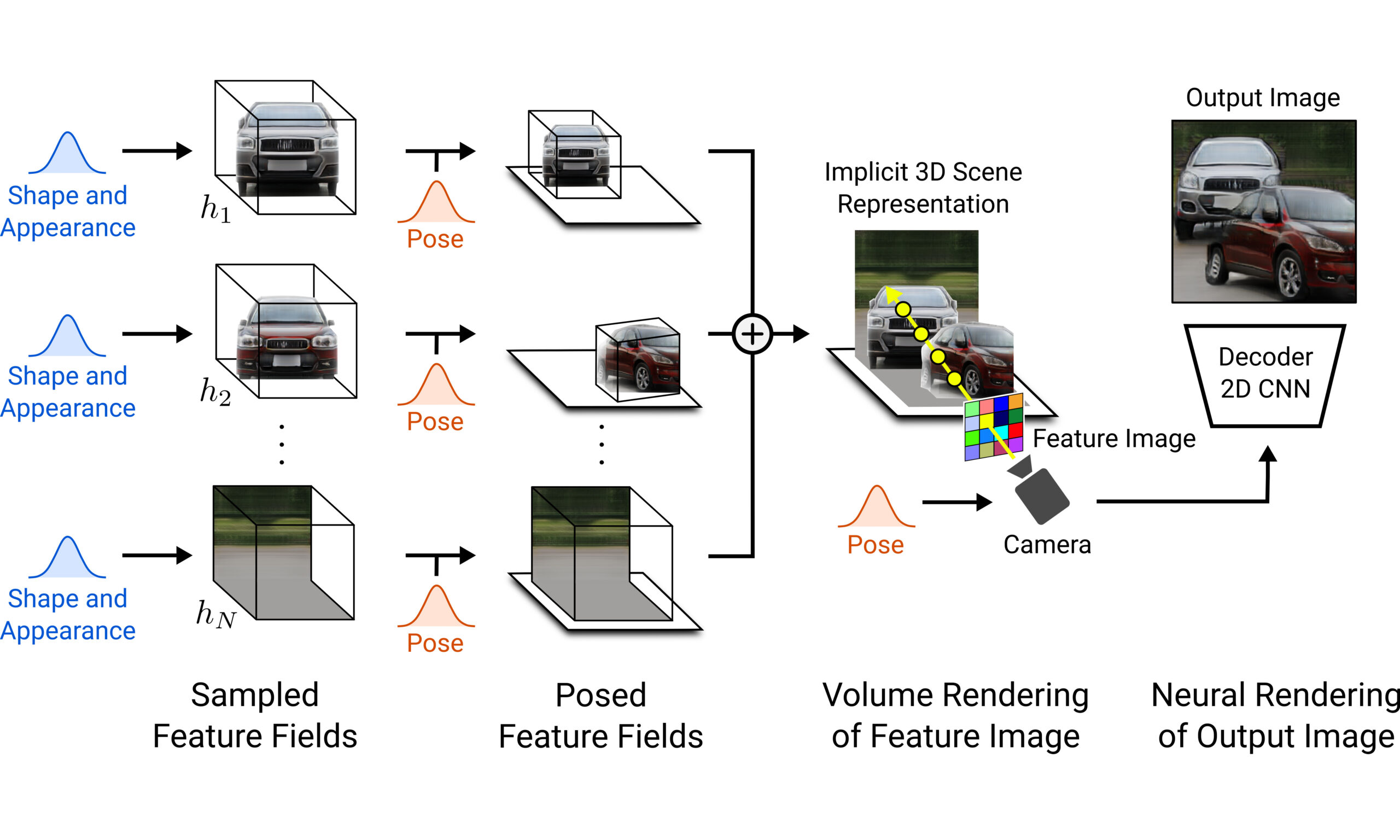
    The paper of the two scientists from Tübingen is basic research in the field of computer vision. In it, Niemeyer and Geiger describe a method they developed that for the first time now makes it possible for computers to independently identify various three-dimensional objects on two-dimensional images (e.g., photographs).

    “Our goal is for computers to learn for themselves how images – we’re talking about scenes here – are constructed,” says Niemeyer, lead author of the paper and a scholar at the International Max Planck Research School for Intelligent Systems (IMPRS-IS), the Cyber Valley graduate school. “So, the computer should recognize which three-dimensional objects are present in a photo, that is, how a scene is structured.” While most current approaches rely on two-dimensional datasets and do not capture the imaged scenes in three dimensions, Niemeyer and Geiger’s new model, GIRAFFE, recognizes the imaged objects in three dimensions, allowing for all sorts of different perspectives on the same scene.

    In concrete terms, this means that a simple photo showing a car parked in front of a house, for example, can serve as a basis for viewing the car not only from the front, but also from other angles in front of the house. In addition, the position of the car in the image can be shifted as desired, thereby obscuring or revealing different parts of the house in each case. “This is what we mean by ‘compositional’ – our computer model captures the structure of the scene being depicted. It recognizes the car in the foreground as one object and the house in the background as another,” Niemeyer says.

    GIRAFFE also offers more control over image generation. For example, the shape of an imaged object can be changed at will. In the future, this could provide a much more realistic representation when generating virtual environments, among other things. “Our paper is a basic work,” Niemeyer emphasizes. “Other researchers could use this as a basis for constructing safer AI applications, since they can now make better decisions thanks to a better understanding of their environment.” One conceivable field of application here, for example, would be autonomous driving, where the computer systems of cars could in the future better detect which objects are present in their environment – and thus draw more precise conclusions about the properties and behaviors of these objects. In addition, Niemeyer and Geiger’s model enables improved artificial generation of data because it requires only two-dimensional photos as a starting point. Accordingly, AI systems could be trained in an artificially generated environment in the future.

    CVPR is one of the most prestigious international research conferences and is considered the most important conference in the field of computer vision. Only about a quarter of the approximately 7,000 papers submitted are accepted to the conference. With a total of 27 accepted papers and four best paper nominations, Cyber Valley researchers are particularly well represented among the world leaders in basic AI research at CVPR this year.

    “My research group has already published several papers that address learning appropriate 3D representations with neural networks, which have received widespread attention in the computer vision community,” Geiger says. “The paper that has now won the award also built on that.” Still, Geiger and Niemeyer didn’t expect this particular award at CVPR 2021. Niemeyer: “The fact that our paper was accepted to the conference was an achievement in itself. We are really very surprised that our scientific paper has now been recognized as the best among all the submissions. We are all the more pleased about this outstanding recognition!”

  • What is the impact of AI on education?

    What is the impact of AI on education?

    The emergence of artificial intelligence (AI) and data use in education and training has triggered a discussion on its role and ethical implications. For example, AI-powered techniques can be used to record and assess details of students’ development, social relationships, behaviour, and educational performance in order to improve learning processes based on these data. This can be achieved by finding repetitive patterns of failure or success and by detecting areas for improvement. These approaches have led to a discussion about ethics and privacy in the context of AI and education-related data, as well as risks related to fundamental rights such as the right to non-discrimination, including gender equality. “Algorithms function like boxes. They are based on standards that are set by people and can therefore also be afflicted with their stereotypes. These stereotypes are often unconscious and thus find their way into the development of technology without being reflected upon. We need to be aware of this,” Wirzberger says. She is also newly appointed spokesperson for the Interchange Forum for Reflecting on Intelligent Systems (IRIS) which aims at answering the question what the impact of intelligent systems on society is.

    As the use of AI systems and thus the use of big data in education advances rapidly, there is a growing need to equip educators and students with a basic understanding of these technologies. This is essential to enable them to engage positively, but critically with questions about AI and data material in education and the ethics surrounding their implementation. To address these issues, the European Commission’s Directorate-General for Education, Youth, Sports and Culture (DG EAC) set up a group of experts on AI and data in education and training together with the Commission’s Directorate-General for Communications Networks, Content and Technology (DG CNECT). 

    What are the tasks of the expert group?

    The group’s primary task will be to assist DG EAC and DG CNECT with the preparation of practical guidelines for educators with concrete practices on the ethical implications of AI and data use in education and training. Members of the group will support cooperation and the exchange of information, expertise and best practices between the Commission and relevant stakeholders. The group will also help to raise awareness within education and training sectors about the opportunities and risks of the use of AI and education related data. 

    Background

    With the Digital Education Action Plan, the European Commission presented its strategic view on addressing the impact of the COVID-19 crisis, as well as the long-term digital transformation of education and training systems. The first strategic priority of the Action Plan – ‘fostering the development of a high-performing digital education ecosystem’ – which seeks to promote understanding of emerging technologies and their application education foresees the creation of ethical guidelines on AI and data use in education and training. The guidelines will be accompanied by a training programme for researchers and students on the ethical aspects of AI. The Digital Education Action Plan is a key initiative under the Commission’s European Education Area initiative, which outlines its vision for the future of education and training in the EU until 2025 and beyond.

  • Electrohydraulic arachno-bot a fascinating lightweight

    Electrohydraulic arachno-bot a fascinating lightweight

    It is not the first time that spiders have served as biological models in the research field of soft robotics. The hydraulic actuation mechanisms they apply to move their limbs when weaving their web or hunting for prey give them powers many roboticists and engineers have drawn inspiration from.

    A team of researchers at the Max Planck Institute for Intelligent Systems and at the University of Colorado Boulder in the US has now found a new way to exploit the principles of spiders’ joints to drive articulated robots without any bulky components and connectors, which weigh down the robot and reduce portability and speed. Their slender and lightweight simple structures impress by enabling a robot to jump 10 times its height. At the end of May, the team’s work titled “Spider-inspired electrohydraulic actuators for fast, soft-actuated joints” was published in Advanced Science.

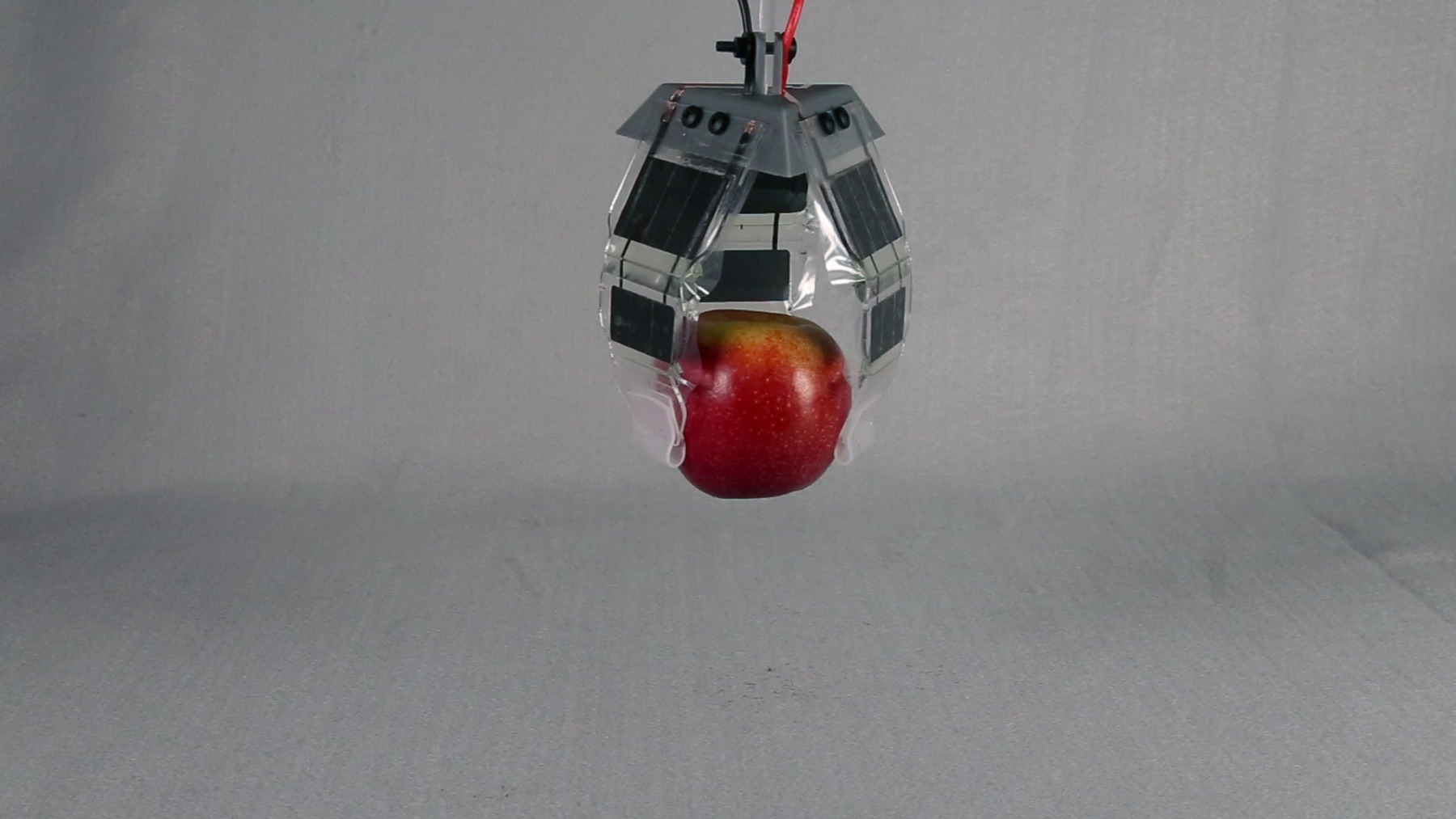
    The high performance is enabled by Spider-inspired Electrohydraulic Soft-actuated joints—SES joints in short. The joints can be used in many different configurations—not just when creating an arachno-bot. In their paper, the scientists demonstrate a bidirectional joint, a multi-segmented artificial limb, and a three-fingered gripper, which can easily pick up delicate objects. All creations are lightweight, simple in their design, and exhibit high performance making them ideal for robotic systems that need to move rapidly and interact with many different environments.

    The researchers developed their SES joints based on the HASEL technology which had previously been invented by the team to build artificial muscles. SES joints mimic a spider-inspired exoskeletal mechanism comprised of both rigid and softer elements, which function similarly to the animal’s leg extension through the use of hydraulic forces.

    They built a flexible pouch made of thin plastic films (either polyester or polypropylene will do) which they filled with a liquid dielectric—a vegetable-based oil. They then placed electrodes on each side of the pouch. These liquid-filled pockets serve as actuators, in which the hydraulic power is generated through electrostatic forces. The pouch is attached to a rotary joint. When a high voltage is applied between the electrodes, the electrostatic forces cause the liquid dielectric to shift inside the pouch and the joint to flex. SES joints are capable of rotating up to 70 degrees, causing high torques, and can easily restore back to the starting position.

    “The SES joints are very simple and light, as there are no peripheral components which weigh down the robot,” says Christoph Keplinger, Director of the Robotic Materials Department at the Max Planck Institute for Intelligence Systems. “Many applications for soft robots require versatile actuators. These spider-inspired joints allow for high functionality and consume only little power, they are easy and cheap to make—the plastics we are using are for food packaging—and their production is easily scalable. These are all qualities that are critical for the design of robots, which can move in many different ways and manipulate a variety of objects without breaking them.”

    A three-fingered gripper was one application for which the team used SES joints to showcase their versatility. If the team had equipped the gripper with a muscle-like structure, it would have been in the way of the object that the gripper is grabbing. Using SES joints as the hinges of the gripper required much less space.  

    “The research stands out because we can use a wide variety of materials, even the plastic used to make chips bags to create the pouches,” the first author of the publication Nicholas Kellaris says. “That way we can implement SES in a wide variety of geometries with specifically tuned actuation characteristics.”

    “The ultimate goal of our research was not to make a spider robot,” Philipp Rothemund, the second author of the publication, adds. “We wanted to develop a state-of-the-art, active joint that you can put in any type of robot.”

    Especially for small-scale robotic systems of only a few centimeters in size, where the limited space severely restricts the choice of actuator technologies, the SES-joints will come in very useful. For the soft robotics community, this invention is truly a leap forward.

  • A modular building platform for the most ingenious of robots

    A modular building platform for the most ingenious of robots

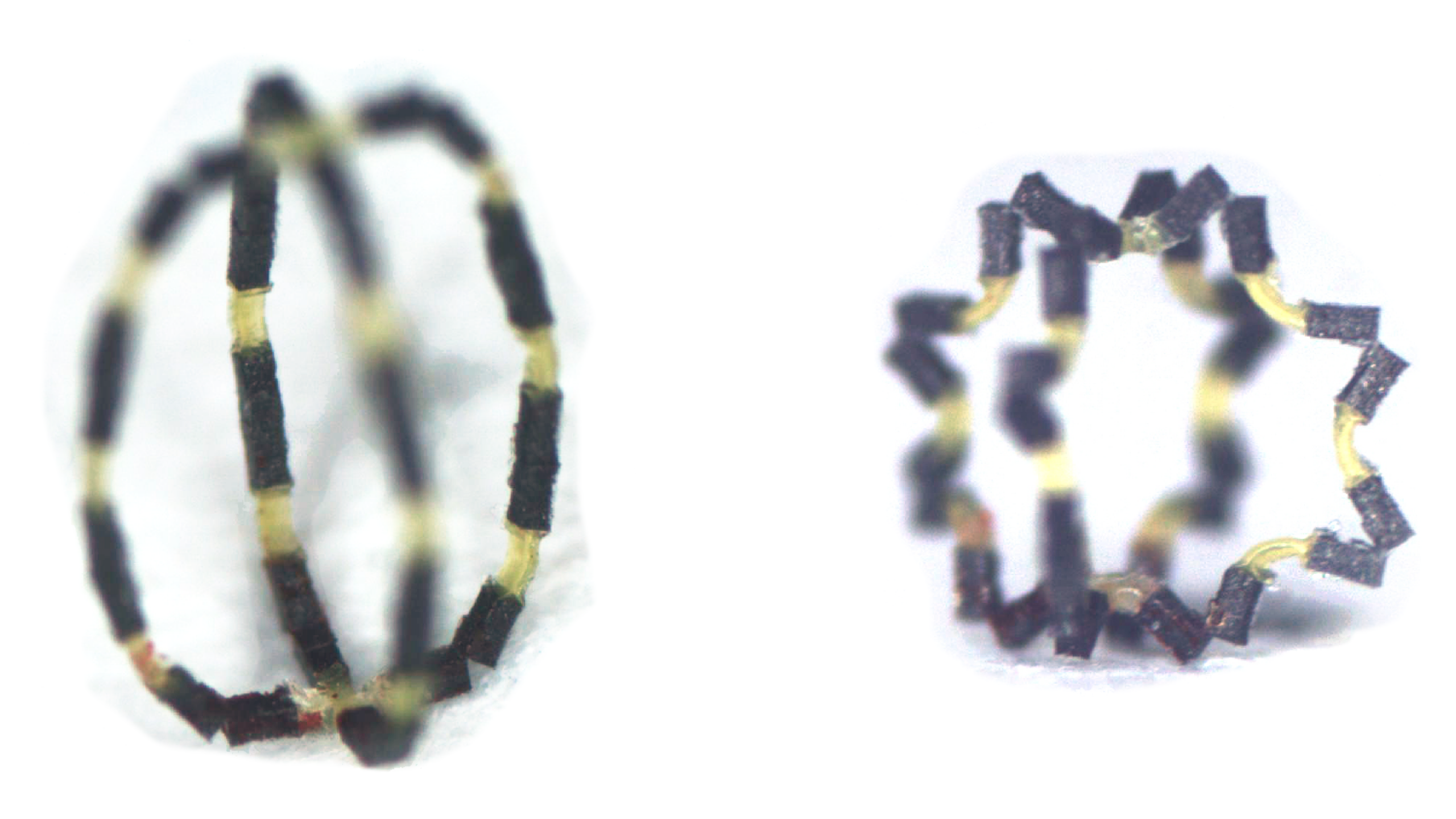
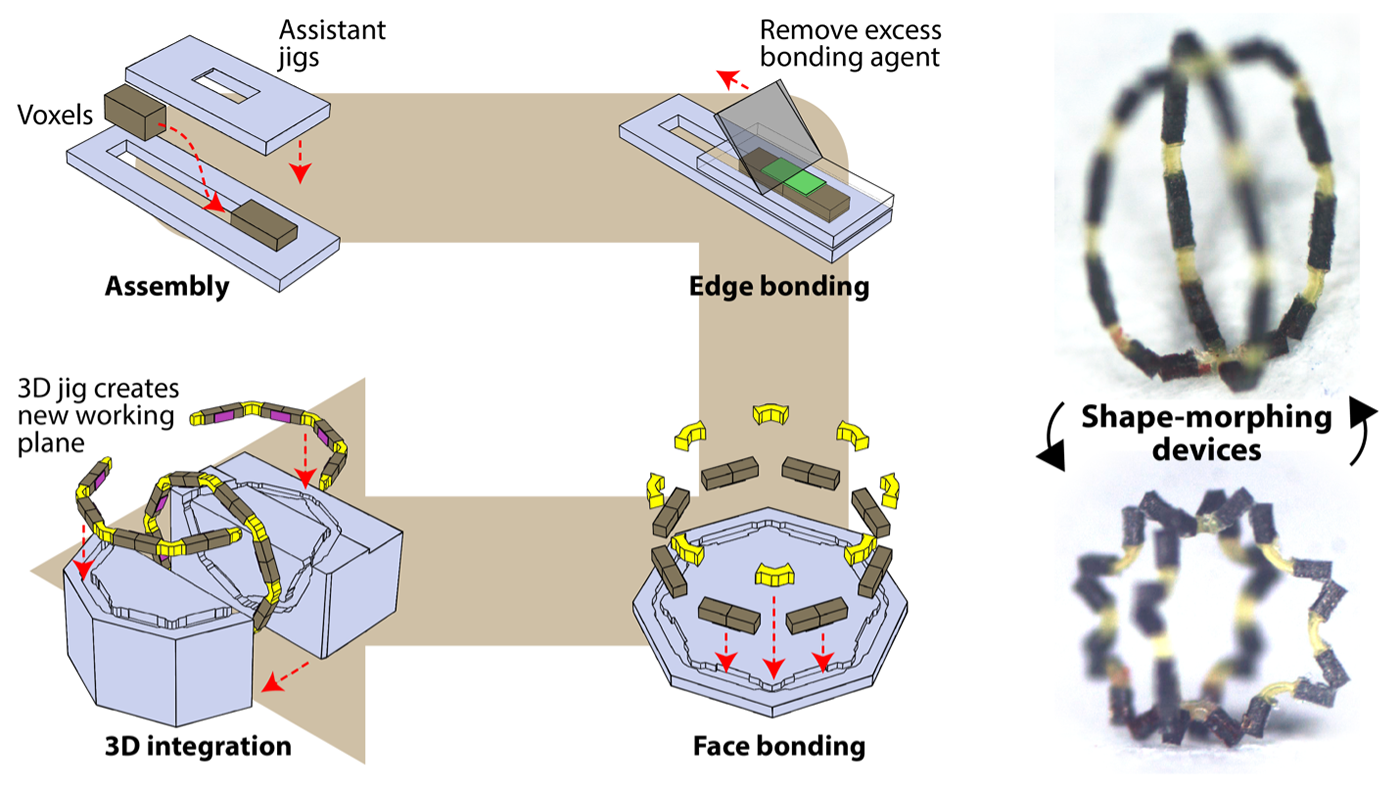
    As one would do with a Lego system, the scientists can randomly combine individual components. The building blocks or voxels – which could be described as 3D pixels – are made of different materials: from basic matrix materials that hold up the construction to magnetic components enabling the control of the soft machine. “You can put the individual soft parts together in any way you wish, with no limitations on what you can achieve. In this way, each robot has an individual magnetisation profile,” says Jiachen Zhang. Together with Ziyu Ren and Wenqi Hu he is first author of the paper entitled “Voxelated three-dimensional miniature magnetic soft machines via multimaterial heterogeneous assembly”. The paper was published in Science Robotics on April 28, 2021.

    A submillimeter small soft machine that can change its shape.

    A submillimeter small soft machine that can change its shape.

    The project is the result of many previous projects conducted in the Physical Intelligence Department at MPI-IS. For many years, scientists there have been working on magnetically controlled robots for wireless medical device applications at the small scale, from millimeters down to micrometers size. While the state-of-the-art designs they have developed to date have attracted attention around the world, they were limited by the single material with which they were made, which constrained their functionality.

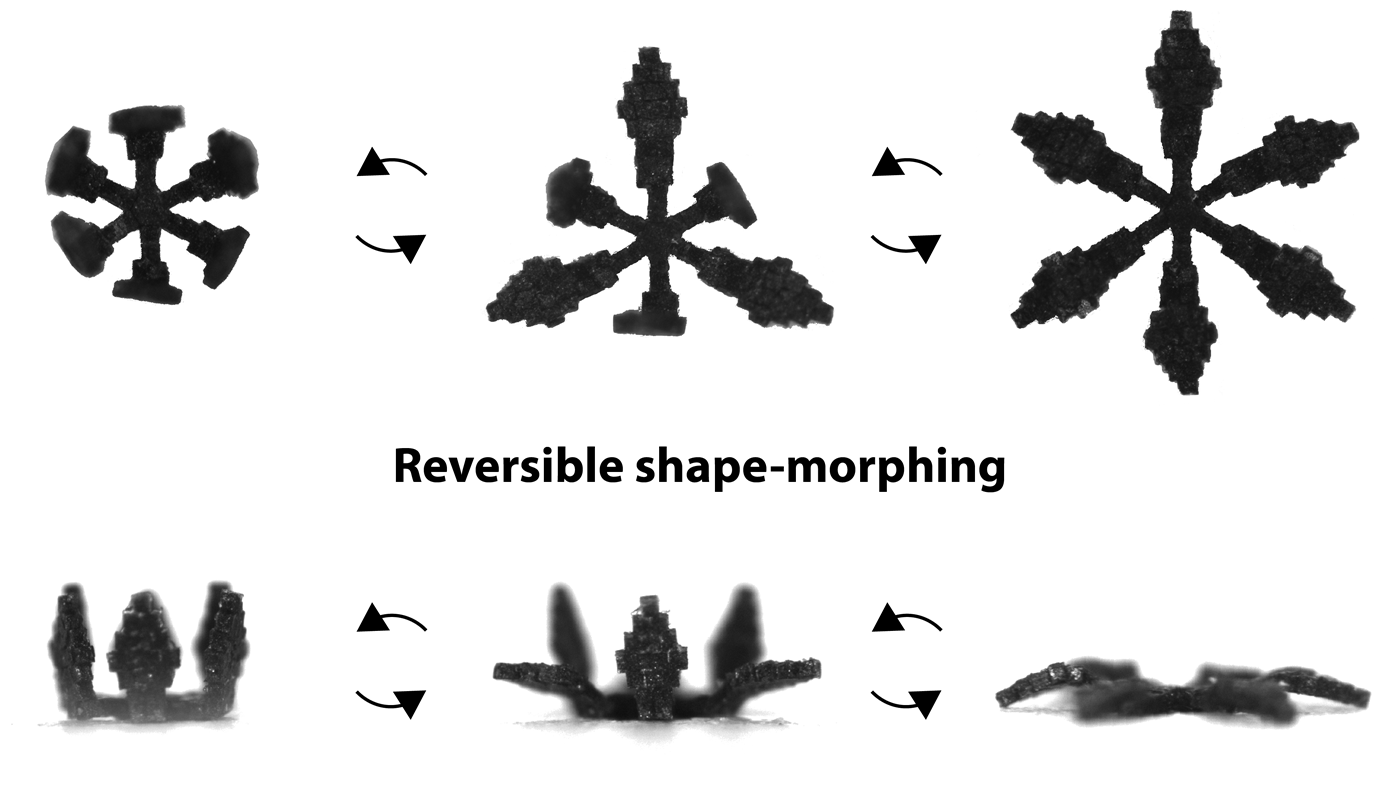
    The heterogeneous assembly approach fabricates a flower-shaped soft machine with complex stiffness distribution and reversible shape-morphing. Three of its petals bloomed first in lower magnetic field strength and the rest three bloomed later as the field strength increased.

    The heterogeneous assembly approach fabricates a flower-shaped soft machine with complex stiffness distribution and reversible shape-morphing. Three of its petals bloomed first in lower magnetic field strength and the rest three bloomed later as the field strength increased.

    “When building soft-bodied miniature robots, we have many different and often complex designs. As a result of their small size, the available fabrication capability is very limited, and this poses a major challenge. For years, researchers have been trying to develop an innovative fabrication platform that provides scientists with completely new capabilities. Our team has now succeeded in demonstrating a new way to construct much more complex soft robots with different components rather than just one. By mixing and matching, we enable tailor-made functionalities and complex robot morphologies. Our new modular building platform will pave the way for many new functional wireless robots, some of which could potentially become the minimally-invasive medical devices of the future,” says Metin Sitti, who leads the Physical Intelligence Department and has pioneered many wireless medical and bio-inspired miniature robots.

    “We have seen 3-D printing or mold casting of voxels with only one material. That limits the functionality – a single material can only do so many things,” says Ziyu Ren. “If you want more functionality like we did and a unique magnetisation profile, you have to introduce a whole set of different materials, for instance by mixing various non-magnetic and magnetic materials.

    “Previously, each robot’s magnetisation profile was limited to certain patterns due to the strong coupling with the geometry of the robot. Now, we have created a platform that can achieve a flexible magnetisation profile. We can do so by freely integrating multiple magnetic parts together in one system,” Jiachen Zhang adds.

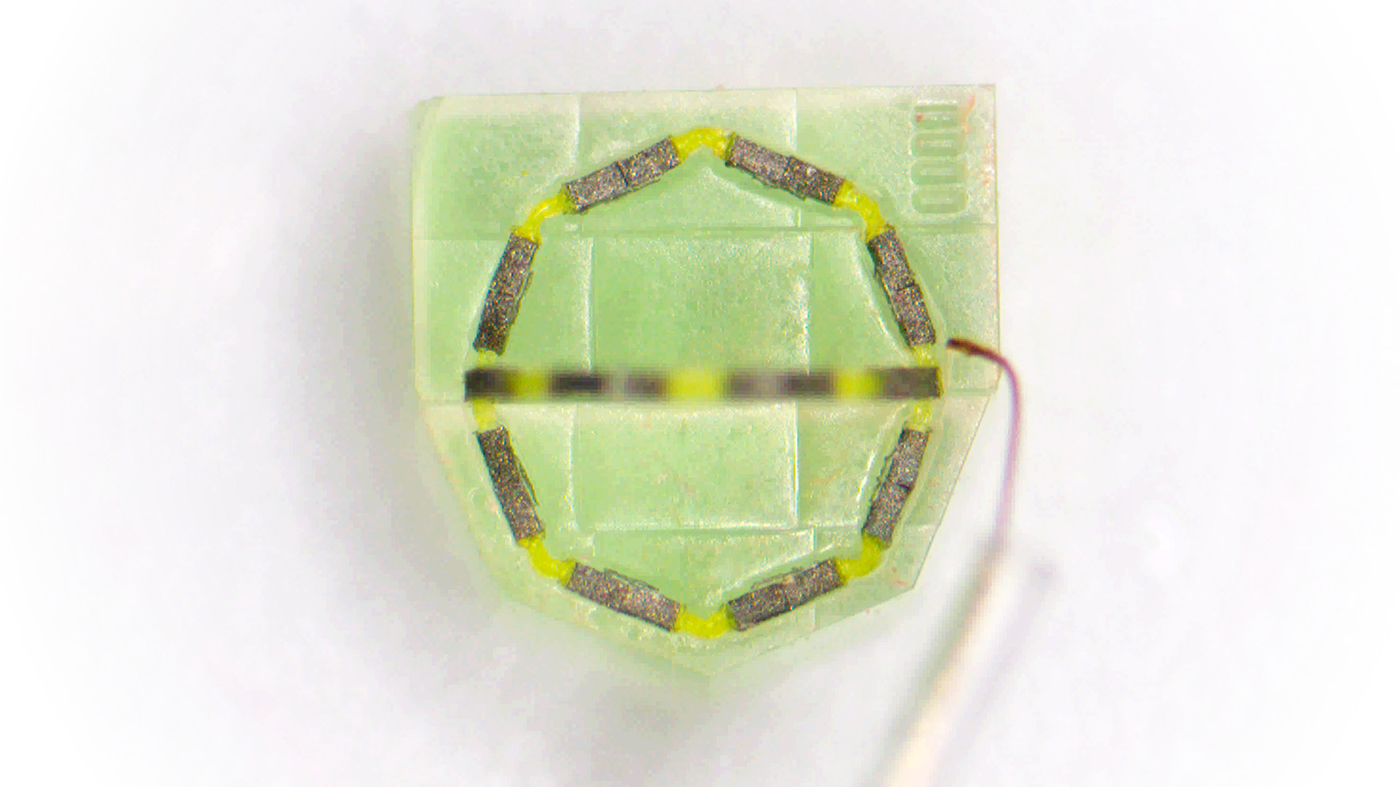
    Illustrations of shape-morphing miniature robots fabricated using the heterogeneous assembly platform. Voxels made of multimaterials are freely integrated together to create robots with arbitrary 3D geometries and magnetization profiles.

    Illustrations of shape-morphing miniature robots fabricated using the heterogeneous assembly platform. Voxels made of multimaterials are freely integrated together to create robots with arbitrary 3D geometries and magnetization profiles.

    The new building platform enables many new designs and is an important milestone in the research field of soft robotics. The Physical Intelligence Department has already developed a wide variety of robots, from a crawling and rolling caterpillar-inspired robot, a spider-like construct that can jump high, to a robotic grasshopper leg and magnetically-controlled machines that swim as gracefully as jellyfish. The new platform will accelerate the momentum and open up a world of new possibilities to construct even more state-of-the-art miniature soft-bodied machines.

    The scientists base each construction on two material categories. The base is mainly a polymer that holds up the matrix. But also other kinds of soft elastomers, including biocompatible materials like gelatin, are used. The second category comprises materials embedded with magnetic micro- or nanoparticles that make the robot controllable and responsive to a magnetic field.

    A heterogeneous assembly platform fabricates multimaterial shape-morphing miniature robots.

    A heterogeneous assembly platform fabricates multimaterial shape-morphing miniature robots.

    Thousands of voxels are fabricated in one step. Like dough being distributed in a cookie tray, the scientists use tiny mold casts to create the individual blocks – each of which is no longer than around 100 micrometers. The composition then happens manually under a microscope, as automating the process of putting the particles together is still too complex. While the team integrated simulation before building a robot, they took a trial and error approach to the design until they achieved perfection. Ultimately, however, the team aims for automation; only then can they reap the economies of scale should they commercialize the robots in the future. “In our work, automated fabrication will become a high priority,” Jiachen Zhang says. “As for the robot designs we do today, we rely on our intuition based on extensive experience working with different materials and soft robots."

  • Ready, steady, go!

    Ready, steady, go!

    Please find the full article below in German.

    KI lernen und verstehen!

    Das Team rund um den Bundeswettbewerb KI hat in den vergangenen Monaten am KI-Online Kurs gefeilt und geschliffen: neuer Look, neue Inhalte und neue Möglichkeiten das Mysterium KI zu verstehen. Wie baue ich eine KI?, Woher kommt KI? und Wie gehe ich mit KI um? sind die zentralen Fragen, die im Online Kurs, im Unterricht, der AG oder in der Freizeit, bearbeitet werden können. Brandneu: ein ehemaliges BWKI Finalisten-Projekt wurde als Tutorial aufgearbeitet und bietet dem Nutzer die Möglichkeit ein KI-basiertes Recycling tool zu entwickeln. Am besten einfach mal reinschauen: www.ki-kurs.org

    KI Schule des Jahres.

    Auch in diesem Jahr ist das Rennen um die KI Schule des Jahres eröffnet. Die Schule, welche mit den meisten Schüler*innen aktiv am Online KI-Kurs (www.ki-kurs.org) teilnimmt, wird im November bei der Abschlussveranstaltung des Wettbewerbes mit dem Titel ausgezeichnet.

    Teamwork rocks!

    Schüler:innen weiterführender Schulen haben zusätzlich die Möglichkeit, allein oder im Team, ihr eigenes KI-Projekt zu bearbeiten und beim Wettbewerb einzureichen. Egal ob ein KI-basierter Lösungsansatz für ein Alltagsproblem oder ein Algorithmus zur Überwachung von ökologischen Phänomenen entwickelt wird – den Ideen für ein Projekt sind keine Grenzen gesetzt. Alle Information rund um den Wettbewerb sind unter www.bw-ki.de zu finden.

    Poster auf Bestellung.

    In diesem Jahr verzichtet der BWKI aus Nachhaltigkeitsgründen auf flächendeckende Printwerbung. Werbematerialien (Poster und Postkarten) werden ausschließlich auf Anfrage (info@bw-ki.de) versendet.

    Nichts verpassen.

    Auf den Social-Media-Kanälen (Instagram, Twitter und Facebook) wird man neben den wichtigen Eckdaten des Wettbewerbes, auch über hot topics und fun facts aus dem Bereich KI informiert.

    Kontakt

    Dr. Caroline Schmidt

    Bundeswettbewerb Künstliche Intelligenz

    Tel: +49 7071 29 70880

    info@bw-ki.de