News Category: Press Release

  • Gap in AI education addressed

    Gap in AI education addressed

    “With ‘AISA’, students from a wide range of disciplines are given the excellent opportunity to train to become top AI software experts. The talents gained in this way can work on future-oriented and practical solutions in the development of AI software and thus further advance the international appeal of Cyber Valley,” says Baden-Württemberg’s Science Minister Theresia Bauer. “Through the AI Software Academy, we are accelerating our international competitiveness in terms of digitalization and artificial intelligence across all disciplines by closing a previously unaddressed gap in education,” continues Prof. Wolfram Ressel, Rector of the University of Stuttgart. “In this way, AISA makes a twofold contribution to our vision of intelligent systems for a sustainable society.” Prof. Stefan Wagner, Head of the AISA Board of Directors and Director at the Institute of Software Engineering at the University of Stuttgart confirms, “Through our innovative education and research concept in combination with the powerful AISA infrastructure, we will significantly advance artificial intelligence and its use by means of powerful software.”

    AISA is dedicated to the challenges in business and science

    Rapidly advancing digitization and the extensive use of AI are influencing our everyday lives, as well as business and science. This results in many new types of challenges:

    • How is software for AI applications developed efficiently?
    • How do you make AI software robust and flexible?
    • How do you apply AI software in business and academia?
    • And how do you build didactics that is able to transfer knowledge about the development, use and maintenance of AI software into many different disciplines and thus shape the AI experts of tomorrow?
    In AISA Research, projects from a wide variety of fields are funded

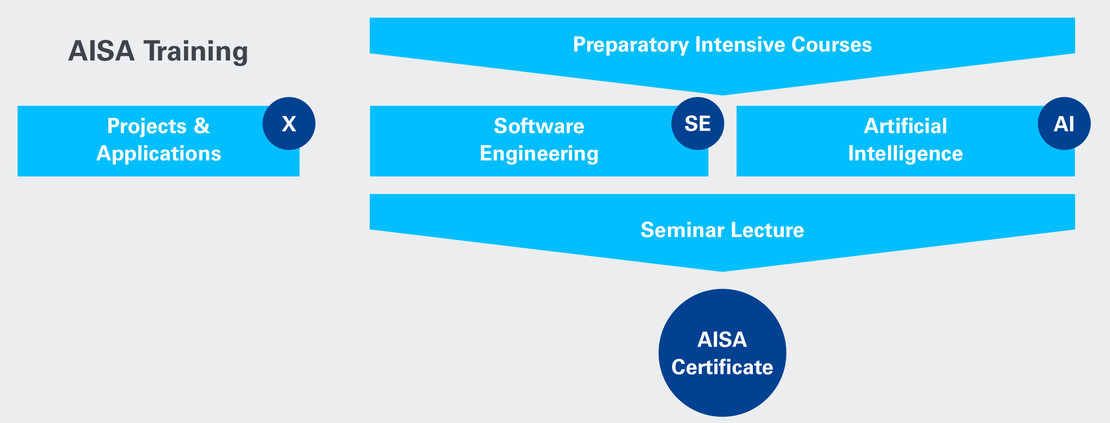
    In AISA Research, interdisciplinary research projects around the topic of AI are funded. Applications (X), software development (SE) and their didactics are linked with AI to the following: AI+SE+X. The AISA Board of Directors selected the first eleven Ph.D. projects for AISA Research in August 2021. The integration of the different fields can be seen in the funded projects: Researchers from architecture, biology, chemistry, didactics, computer science, mechanical engineering and environmental engineering cooperate. Projects closely related to the Clusters of Excellence SimTech and IntCDC are also represented.

    The doctoral researchers from AISA Research offer targeted teaching content for students in the master's area and for Cyber Valley doctoral students by means of AISA Training. In addition, project work, seminars and hackathons are organized and supervised here. The additional qualification is structured by an innovative, multi-level certificate program, which allows for a precise match to individual qualification needs, from thematically focused microcredentials to the Diploma of Advanced Studies.

    AISA consists of three components: Research, Training and Infrastructure
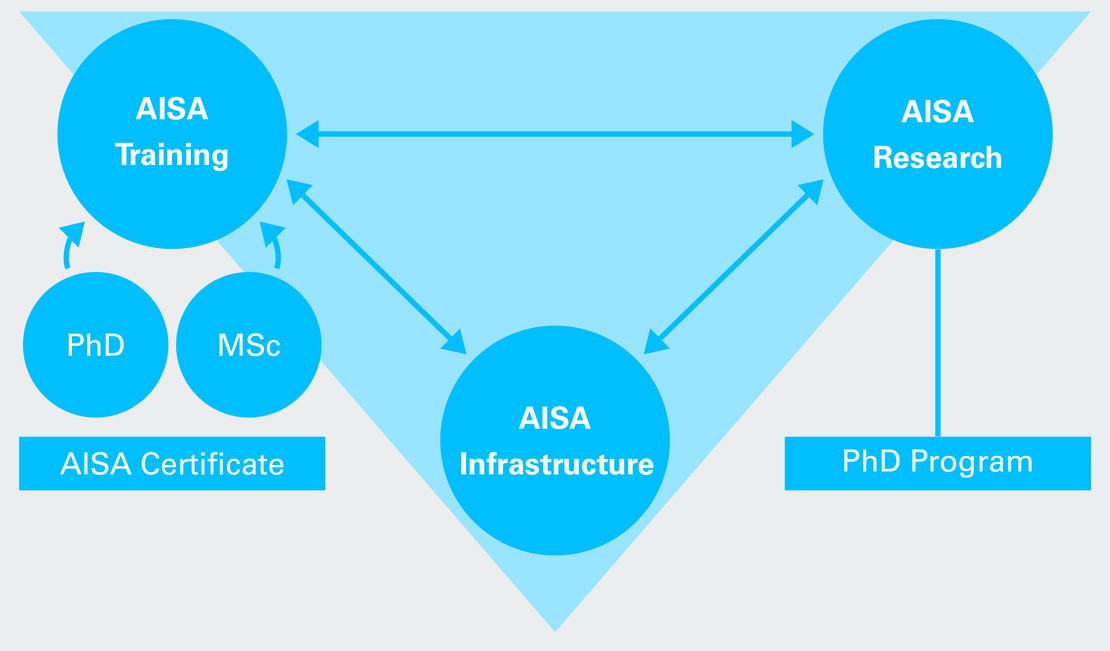
    The structure of AISA is based on the three elements of research (AISA Research), training (AISA Training) and a powerful infrastructure (AISA Infrastructure), which form the AISA Triangle. Both AISA Research and AISA Training rely on the AISA Infrastructure, which provides AI-specific high-performance computing. Good availability and easy access allow methods and AI pipelines to be developed efficiently. AISA is managed by a board of directors consisting of Prof. Stefan Wagner (chair), Tenure-Track Prof. Maria Wirzberger, Prof. Steffen Becker, Prof. Steffen Staab, and Prof. Felix Fritzen, who in turn represent the different disciplines in AISA.

    About the funding from the state of Baden-Württemberg

    AISA is another project from the “Zukunftsland BW – Stärker aus der Krise” package of measures. As part of this package, the state government is making targeted investments in important fields of the future, thereby sustainably strengthening the state as a location for business and innovation. The program lays the foundation for Baden-Württemberg to emerge stronger from the corona crisis.

    Related links:

  • Five years of Cyber Valley

    Five years of Cyber Valley

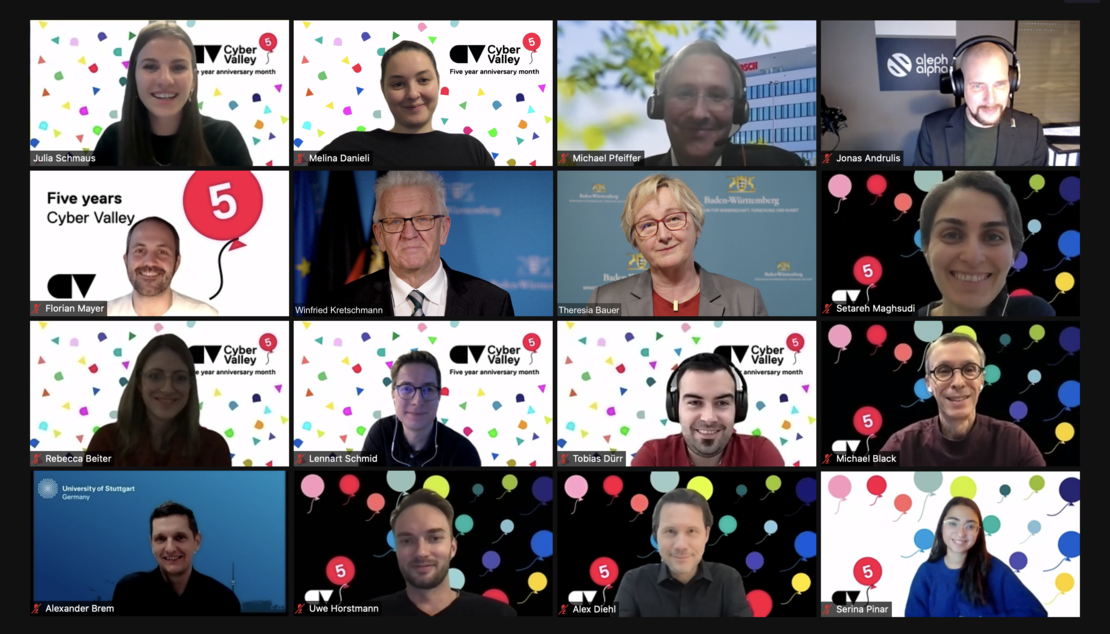
    On the occasion of the fifth anniversary of the official kick-off by Baden-Württemberg’s Minister-President Winfried Kretschmann, the state’s Science Minister Theresia Bauer, the President of the Max Planck Society Martin Stratmann and the other project participants on December 15, 2016, Cyber Valley hosted a special edition of its online event format “Entrepreneurship Series” on Wednesday. After welcoming remarks by Kretschmann and Bauer, keynote speeches on “Igniting the potential of AI” were given by Michael Pfeiffer, Global Head of AI Research at the Bosch Center for Artificial Intelligence, and Michael J. Black, Cyber Valley speaker and Director at the Max Planck Institute for Intelligent Systems (MPI-IS) in Tübingen, among others.

    “When I think about how it all started, you can say, in a way, Cyber Valley is a start-up itself. At least it was one five years ago,” said Minister-President Kretschmann. “Today, Cyber Valley enjoys respect in Baden-Württemberg, Germany and abroad. The publications of its researchers have vaulted Cyber Valley to the top of the relevant rankings. The federal and state governments regard Cyber Valley as a jewel and make every effort to promote it. Cyber Valley has earned a very important status: as one of the places in our country where the future is happening. I think, for a fifth anniversary, that’s not a bad record. In that spirit, keep up the good work. Happy birthday!”

    “The first phase of Cyber Valley has been primarily about laying the foundations for a thriving AI ecosystem. Scientific excellence and strong support for young scientists form the foundation for this. If you look at Germany today and seek software engineers, there is no better market than the Stuttgart-Tübingen region. The amount of talent here is immense. The quality of life is good, the infrastructure is good, so it’s easy to attract people to the region,” Black said. “We’ve also built a culture of innovation and entrepreneurship, and that’s what we’re pushing now: the next phase of Cyber Valley. It’s about spinning off companies, nurturing them, helping them grow, and making this region in Germany – and hopefully across Europe – the one where you start the next AI company.”

    The state of Baden-Württemberg has invested around 180 million euros in Cyber Valley so far. Added to this are the investments of the research partners – these are the Max Planck Society and the Universities of Stuttgart and Tübingen – in new research buildings, chairs, the International Max Planck Research School for Intelligent Systems (IMPRS-IS) graduate school and nine new Cyber Valley research groups to date. The industry partners support the research groups at MPI-IS and the universities of Stuttgart and Tübingen with a total of 7.5 million euros from 2018 to 2022. In addition, two endowed professorships will be funded by the industry partners: a chair for machine learning in Tübingen, funded by Robert Bosch GmbH, and a chair of entrepreneurship in technology and digitization, endowed by the Daimler Fund in the Stifterverband.

    Last year, the federal and state governments also decided to perpetuate the AI competence centers, securing permanent funding for the Tübingen AI Center as one of these competence centers. The state of Baden-Württemberg is already expanding the center, strengthening it with a coding school that teaches practical skills in programming. In addition, the Hector Foundations have pledged 100 million euros over at least ten years to support the establishment of an institute of the European Laboratory for Learning & Intelligent Systems (ELLIS).

    “When we founded Cyber Valley five years ago, our goals were clear: Artificial intelligence is the technology of the future for all areas, science, business and all of our lives. This is where we must invest if we want to shape digitization. We therefore proceeded quickly, decisively and strategically,” said Theresia Bauer, Baden-Württemberg’s Science Minister. “Cyber Valley benefits from an excellent environment – medicine in Tübingen, engineering sciences as well as high-performance computing in Stuttgart to leading companies, such as Amazon or Bosch, which have set up shop directly on campus. The state of Baden-Württemberg is very proud to have jointly created a shining signal for AI ‘made in the Länd’ with Cyber Valley. Congratulations on the fifth anniversary!”

    In addition to expanding scientific excellence in Stuttgart and Tübingen, Cyber Valley launched a start-up network in November 2019 to foster exchange between AI start-ups within the ecosystem. About two years after its launch, the network counts 30 members – just a few weeks ago, the research consortium’s Executive Board decided to admit the company Black Forest AI. The founding of the Cyber Valley Investor Network followed in September 2020, in which renowned venture capital firms from Germany, the U.S. and Japan engage as mentors for scientists within the Cyber Valley ecosystem, helping them turn research and business ideas into successful companies.

    “I warmly congratulate Cyber Valley on its fifth anniversary and I am delighted that the University of Stuttgart has been involved in Cyber Valley as a partner from academia since its inception. Artificial intelligence and robotics are among the most important research areas of the future,” said Professor Wolfram Ressel, Rector of the University of Stuttgart. “The University of Stuttgart is therefore focusing on these areas and devoting both teaching and research to topics such as nanorobots for medicine, safer software systems, autonomous learning machines and fair decisive artificial intelligence. With intelligent systems, the University of Stuttgart is committed to a sustainable society, and with its recent focus on ‘intelligent robotics’, it helps Stuttgart’s AI location to fully develop its potential in the Cyber Valley research consortium.”

    “Cyber Valley has become a globally visible location for artificial intelligence in just five years thanks to substantial funding from the federal government, the state and foundations, but also thanks to the investments of a growing number of companies,” said Professor Bernd Engler, President of the University of Tübingen. “The conditions are therefore in place to usher in the next phase of development of this AI research network, which is outstanding in its diversity and excellence. For this to succeed, it will be crucial to now press ahead very quickly with the expansion of the necessary infrastructure.”

    The milestones from the first five years of Cyber Valley can be found here. To mark the anniversary, Cyber Valley has also put together a special themed package on a landing page, collecting feature articles on various key research areas.

  • A space for AI in the middle of the city

    A space for AI in the middle of the city

    In addition, the KI-Makerspace invites the exploration of functionalities, techniques, applications and societal impacts of AI. Starting on January 28, 2022, structured programming courses, software and hardware, competent supervision and free space for own project ideas as well as occasions for discussions on the topic of AI will be offered four days a week on almost 250 square meters on the second floor of the casino located directly on the Neckar River. The course spectrum ranges from Scratch and Python courses to design software, podcasting and internet security. Robotics and sensor kits are also scheduled. The goal is to establish a diverse, low-threshold and target-group-oriented offering for young people.
     
    “With the KI-Makerspace, Tübingen is getting a centrally located place where children and young people can explore the opportunities, but also the limits, of artificial intelligence under professional guidance. This is a great benefit for our city as an educational and business location. I look forward to the discussions and projects that will emanate from the AI Makerspace and thank all those involved for their commitment,” says Tübingen’s Mayor Boris Palmer.

    The KI-Makerspace is a joint project of the University of Tübingen, Cyber Valley, the Tübingen Youth Community Council and the Bundeswettbewerb Künstliche Intelligenz (BWKI) of the Tübingen AI Center. It is funded by the Vector Foundation Stuttgart for three years.

    Funding by Vector Foundation

    “Artificial intelligence is anything but a dry technical subject, but a topic with many social facets that, not least, offers young people enormous career opportunities,” says Philipp Hennig, Cyber Valley co-spokesperson and professor for the Methods of Machine Learning at the University of Tübingen. Since going to university buildings is out of the question for many young people, he believes it is crucial “that it has been possible to create a space for learning here in the heart of the city’s society, where people can also meet and discuss things casually.”
     

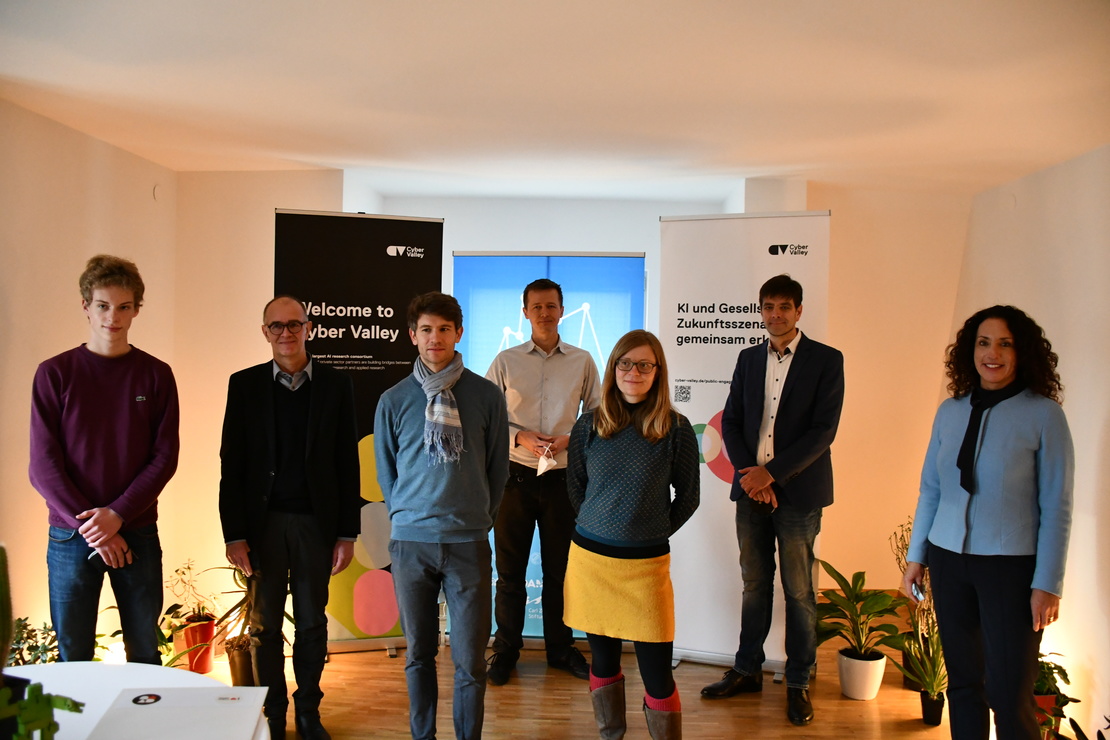
    Left to right: Jonathan Vogel (Tübingen Youth Community Council), Uwe Wulfrath (Gesellschaft für Wohnungs- und Gewerbebau Tübingen GWG), Patrick Klügel (Cyber Valley Public Engagement Manager), Prof. Dr. Philipp Hennig (co-speaker Cyber Valley), Dr. Caroline Schmidt (Coordinator BWKI), Prof. Dr. Matthias Bethge (Head of Tü AI Center), Christina Luger (Vector Foundation) © University of Tübingen/Maximilian von Platen

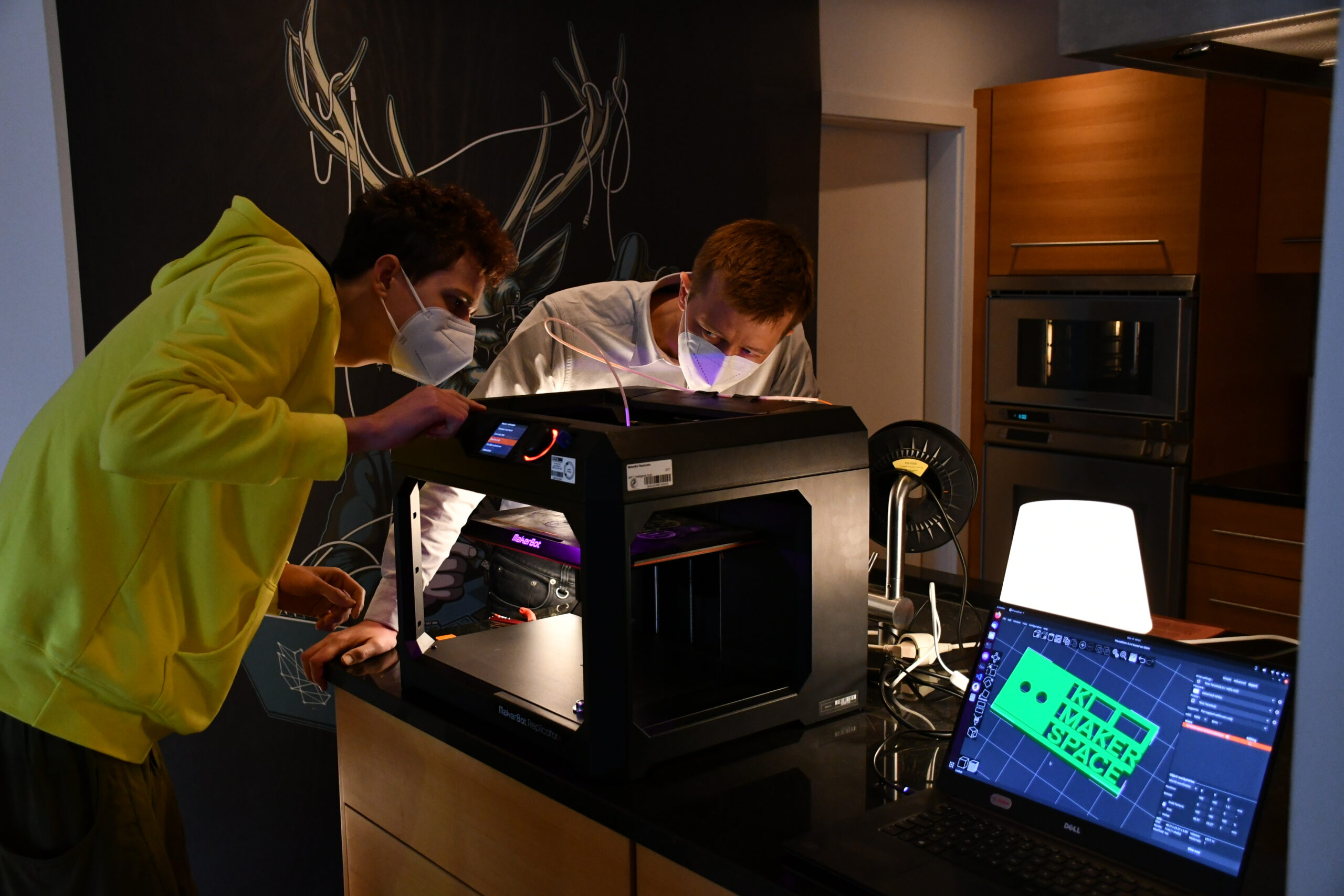
    In preparatory workshops with the Tübingen Youth Community Council, the young people also wanted the opportunity for more classic craft work with wood, screen printing and electronics. In addition to workstations and soldering stations, the rooms will provide the young people with their own servers, a 3D printer, a 3D camera system, a podcast studio, a kitchen for joint cooking activities and a “living room” for science fiction film evenings. A large roof terrace for social activities in summer rounds off the attractiveness of the KI-Makerspace.

    The initiators and coordinators of the KI-Makerspace, Patrick Klügel (Cyber Valley Public Engagement), Dr. Caroline Schmidt (BWKI) and the Tübingen Youth Community Council are focusing on a strategy in which young people can actively participate and take responsibility in the process. This applies both to the implementation and design of the project, in which the young people were involved from the very beginning, and to the pedagogical approach, in that the learners increasingly become the teachers.

    Five years of Cyber Valley

    The KI-Makerspace will be open four days a week in the mornings and afternoons starting January 28, 2022. For more information, visit www.ki-maker.space. There, interested parties can also sign up for a mailing list to receive updates.

    December is a special month for Cyber Valley: five years ago, the research consortium was founded in the Stuttgart-Tübingen region. As an internationally renowned hotspot for AI, Cyber Valley has successfully grown in the areas of research and innovation in recent years: new professorships have been created within the ecosystem, nine Cyber Valley research groups have been founded, and a startup and investor network have been established. In March 2021, the Cyber Valley public engagement formats were also launched – with the aim of enabling more accessibility and exchange between society and AI researchers.

  • Meet the AI GameDev winners

    Meet the AI GameDev winners

    “We will see gaming everywhere in our lives – and at the same time AI. And these two things will become more and more coupled. These intelligent systems will then feed into games and make them smarter and I think there’ll be a virtuous cycle of AI making games better and then games making AI better”, said Michael J. Black, Managing Director at the Max Planck Institute for Intelligent Systems and Cyber Valley spokesperson. “I see the future being much more of a merger of the real world, the virtual world, and AI – providing the interface between the physical and the virtual.”

    Out of the numerous submissions for the gaming competition, seven nominees were selected for the award ceremony as their ideas all had the potential to step up the gaming industry either in terms of creation or interactivity. Out of them, three start-ups and research groups had the possibility to secure one of the three prizes. The winners are:

    Main award for mlxar: generating 3D architecture models for the gaming industry

    The Austrian start-up mlxar (machine learning extended architecture) took the first prize and won the main award powered by Square Enix for the most innovative AI solution. mlxar uses AI to generate 3D architecture models for the gaming industry. “Architecture design is a manual, inefficient and time-consuming process – this is a problem when designing one building, and it’s a huge problem when designing an entire city, level or world, which is exactly what happens in video game design and the film industry”, said Ben James, CEO of mlxar. “Our AI innovation is not a replacement for the designer – it is a way of making expert knowledge scalable and ultimately creating new type of creative tool that helps humans augment their own intuition and sensibilities.”

    Content creation capacity is outnumbered by content demand, which is why this market is already larger than all the other entertainment industries combined. mlxar’s underlying technology innovation allows for the creative generation of architecture assets at a faster pace than the current state-of-the-art competitors. Their algorithms evolve depending on the input, e .g. the desired style preferences and design constraints of the user. This results in infinite architecture solutions, including yet unknown designs. mxlar’s contribution secured the team a visit to Tokyo, Japan, where they now get the chance to examine a potential cooperation with Square Enix on practical use of their technology in production.

    Scientific award for GRAF: 3D-aware image synthesis from 2D images

    Katja Schwarz successfully qualified with GRAF and took home the Scientific Award powered by Cyber Valley for the most promising scientific performance. GRAF (Generative Radiance Fields) is a proposal for a framework for 3D-aware image synthesis from raw unposed 2D images. “The creation of 3D assets is key for developing realistic gaming environments and virtual reality. However, 3D content creation requires a large design effort, making it a time and cost intensive process”, said Katja Schwarz from the Autonomous Vision Group at the University of Tübingen. “Even with large design effort, results are not yet entirely photo-realistic.” GRAF addresses these challenges with a data driven approach. The goal is to learn 3D-consistent assets from data to reduce the cost of manual design efforts and improve photo-realism of the created content. Most existing data driven approaches require 3D assets for training. In contrast, their pipeline learns to generate 3D-consistent assets from raw unposed 2D images. This is particularly important because 3D ground truth data is difficult to obtain in real world settings while images are ubiquitous.

    The initial prize linked to this award was a Cyber Valley tour and meeting with top AI researchers, including a visit to the Max Planck Institute for Intelligent Systems (MPI-IS) Stuttgart and Tübingen, Germany. As the team is part of Cyber Valley, the prize will be adapted in an adequate manner.

    Audience award for Kinetix: Transformation of 2D videos into 3D animated content

    The French start-up Kinetix SAS won the audience award powered by IT-Farm. This project received the most votes during the AI GameDev award show. Kinetix democratizes the character animation using AI and they enable creators to transform any 2D video into 3D animated avatars so that anyone can populate and tell stories in the metaverse. The metaverse is a hypothetical iteration of the internet that supports persistent 3D online virtual environments through traditional personal computers and virtual and augmented reality headsets. As of now, 3D production is limited due to slow and technical animation techniques. “Animating one minute takes four weeks of work, even for trained professional 3D animators. We will allow non-technical creatives to access 3D character animation that is too technical for them today”, said Yassine Tahi, CEO of Kinetix SAS. “We leverage the latest research in deep learning with our research team to go beyond the state of the art.”

    Current 3D animation software requires deep technical expertise and is not accessible to most of the creators. It can only be used offline and lacks the aspect of collaboration. Kinetix seeks to bridge the gap between the rising demand and the cost as well as technical literacy needed to generate 3D animated content. Their solution allows creators to generate and edit 3D animated content through the automation brought by the recent breakthroughs in deep learning. Kinetix will get an exclusive business or fundraising mentorship by IT-Farm covering topics such as fundraising advice, sales pitch reviews, or business plan development.

    About AI GameDev

    During Thursday’s award ceremony, a jury selected the winners of the main award and the scientific award. “The two things we really paid attention to were the novelty and the scientific quality of the work”, said Michael Sedlmair, Professor for Augmented Reality and Virtual Reality at the University of Stuttgart and AI GameDev jury member. “If these two aspects were paired with lots of potential for great impact on the gaming market, that is how we knew we had a worthy AI GameDev award winner.” Along with Sedlmair, Remi Driancourt (GM & Director of Research, Square Enix), Hasegawa Isamu (Senior Manager, Square Enix), Shinya Kasuga (Partner, IT-Farm), Oliver Passek (Advisor for film and media, Ministry of Science, Research and the Arts, Baden-Württemberg), Johanna Pirker (Assistant Professor, Graz University of Technology), and Miyake Youichiro (Lead AI Researcher, Square Enix) were members of the jury.

    For AI GameDev, Cyber Valley joined forces with game developer Square Enix and venture capitalist firm IT-Farm and called for submissions throughout August and September. In October, Cyber Valley researchers as well as representatives of Square Enix and IT-Farm then nominated seven finalists for Thursday’s award ceremony.

    Cyber Valley’s fifth anniversary

    The AI GameDev marked the first festive gathering in the month of December which is a special occasion for Cyber Valley: the research consortium in the Stuttgart-Tübingen region was founded five years ago. Cyber Valley, as an internationally renowned hotspot for AI, has successfully grown in the areas of research and innovation over the past years: professorships within the ecosystem have been appointed, Cyber Valley research groups have been founded and a start-up network as well as an investor network have been set up. AI GameDev marks yet another highlight on an impressive streak of events aiming at applying AI in promising contexts, this time in the format of a gaming competition.

  • AI GameDev award show live on YouTube

    AI GameDev award show live on YouTube

    Their submissions to the gaming competition either point in the direction of supporting creation or enhancing interactivity and the finalists all have either a scientific or entrepreneurial background and come from cities all over Europe. The AI GameDev award ceremony will be streamed live on the Cyber Valley YouTube channel on December 2, 2021, from 10:00 to 12:00 CET.

    The finalists are:

    • Automated Playtesting Algorithm
      Dr. Christian Guckelsberger, Department of Computer Science, Aalto University, Finland; Game AI Research Group, Queen Mary University of London, United Kingdom
    • Evija
      Michael Stettler, Werner Reichardt Centre for Integrative Neuroscience, University of Tübingen, Germany
    • GRAF
      Katja Schwarz, Autonomous Vision Group, Department of Computer Science, University of Tübingen, Germany
    • Kinetix SAS
      Start-up from Paris, France
    • Mlxar
      Start-up from Vienna, Austria
    • NeurCG
      Victoria Fernandez Abrevaya and Partha Ghosh, Perceiving Systems research group, Max Planck Institute for Intelligent Systems, Tübingen, Germany
    • Savitr
      Nitin Saini, Perceiving Systems research group, Max Planck Institute for Intelligent Systems, Tübingen, Germany

    For AI GameDev, Cyber Valley joined forces with game developer Square Enix and venture capitalist IT-Farm and called for submissions throughout August and September. In October, Cyber Valley researchers as well as representatives of Square Enix, and IT-Farm then decided on the finalists of the competition, making use of criteria such as benefit, competition, and progress.

    The seven finalists were recently notified about their successful submission and are now busy preparing for the award ceremony. Their innovative ideas are going to be captured in short videos which are then going to be aired publicly for the first time throughout the live stream. Following up, the finalists are going to answer questions from the jury. These are the jury members: Remi Driancourt (GM & Director of Research, Square Enix), Hasegawa Isamu (Senior Manager, Square Enix), Shinya Kasuga (Partner, IT-Farm), Oliver Passek (Advisor for film and media, Ministry of Science, Research and the Arts, Baden-Württemberg), Johanna Pirker (Assistant Professor, Graz University of Technology), Michael Sedlmair (Professor, University of Stuttgart) and Miyake Youichiro (Lead AI Researcher, Square Enix).

    The awards which can be won are threefold: main award, scientific award, and audience award. The main award is powered by Square Enix for the most innovative AI solution and consists of a visit to Tokyo, Japan, where the respective winners will examine a potential cooperation with Square Enix on practical use of their technology in production. The scientific award is powered by Cyber Valley for the most promising scientific performance and the prize is an exclusive Cyber Valley tour and meeting with top AI researchers, including a visit to the Max Planck Institute for Intelligent Systems in Stuttgart and Tübingen, Germany. The third prize at stake is the audience award powered by IT-Farm. The winners of this prize will be chosen by the audience and receive an exclusive business or fundraising mentorship by IT-Farm covering topics such as fundraising advice, sales pitch review, or business plan development.

    The award ceremony of the AI GameDev also falls within the five-year anniversary month of Cyber Valley and as such marks a special occasion. Cyber Valley as an internationally renowned hotspot for AI has successfully grown in the areas of research and innovation over the past years: professorships within the ecosystem have been appointed, Cyber Valley research groups have been founded and a start-up network as well as an investor network have been set up.

  • ELLIS continues to grow

    ELLIS continues to grow

    “We are very thrilled to welcome the four new units to the ELLIS network,” said Dr. Nuria Oliver, co-founder and vice-president of the ELLIS Society as well as Chief Scientific Advisor at the Vodafone Institute, Berlin. “We have now reached a critical mass at which the units are also effectively starting to collaborate with one another. Instead of speaking of stand-alone units, we’re delighted to see the network of units thrive.”

    The ELLIS unit in Jena, Germany, involves three research institutions: the Friedrich Schiller University Jena, the Max Planck Institute for Biogeochemistry, and the Institute for Data Science of the German Aerospace Center. At the interface between climate and environmental science as well as machine learning (ML) their emphasis lies on scientific knowledge integration in and generation from machine learning approaches. “The ELLIS Unit Jena now being part of the European network offers access to excellent AI expertise in Europe, leading to fantastic new avenues of interdisciplinary collaboration. AI is extremely relevant for earth, environmental and climate science, which are the main themes of our unit,” said Prof. Markus Reichstein, one of the two directors of the ELLIS Unit Jena and director at the Max-Planck-Institute for Biogeochemistry as well as at the Michael-Stifel-Center Jena for Data-driven and Simulation Science Jena. “This unit manifests the successful collaboration of the involved parties over the past ten years. We see the ELLIS Unit Jena as central node in the network, with the potential to foster the scientific breakthroughs which, through linkage to policy and business, eventually contributing to a sustainable development of our planet,” added Prof. Joachim Denzler, director of the Institute for Data Science of the German Aerospace Center and Chair of the Computer Vision Group at the University of Jena. 

    In Stuttgart, Germany, the newly established ELLIS unit is situated at the University of Stuttgart. Here the research focus is on interactive intelligent systems, natural and programming language processing, learning theory, and robot learning. One of the two unit’s founding directors and head of the Institute for Stochastics and Applications at the University of Stuttgart, Prof. Ingo Steinwart, said, “The ELLIS selection process is led by top scientists from different countries and is highly competitive and highly selective. The fact that there is now the ELLIS unit in Stuttgart not only underlines the excellence of the location with its research foci, but also in particular that of the researchers involved.”

    “Being accepted into the ELLIS network is a great success for our location in these important AI future areas, which will significantly increase our visibility within Cyber Valley, nationally and internationally,” added Prof. Andreas Bulling, Professor of Human-Computer Interaction and Cognitive Systems from the Institute of Visualization and Interactive Systems at the University of Stuttgart, and second founding director of the ELLIS unit in Stuttgart. “The chances of success for future research proposals as well as for attracting young researchers at all levels of the scientific career ladder increase.”

    The ELLIS unit in Milan, Italy, brings together excellent researchers from four institutions: Bocconi University, Politecnico di Milano, University of Milan, and University of Milan-Bicocca. The unit's main research areas are interactive learning, statistical learning and non-convex optimization, health and computational biology, as well as natural language processing and computational social sciences. Additional areas they intend to investigate include sequential decision-making and algorithmic game theory, as well as neural networks in connection with classical AI and neuroscience. “The ELLIS Milan unit is the result of a joint effort, combining the research groups of four major universities that have complementary skills and strong interdisciplinary components. Thanks to this recognition, Milan is now firmly on the map of European AI excellence,” said Prof. Nicolò Cesa-Bianchi, director of the ELLIS Unit Milan and Professor of Computer Science at the Department of Computer Science of the University of Milan. “The decision to join forces under the ELLIS framework is also a very timely decision, given that the Italian AI strategy is beginning to unfold. The goal is to fuel collaborations between the research groups, taking advantage of their complementary strengths.”

    The new UK ELLIS unit is located at the University of Manchester. It brings together experts in AI fundamentals with experts in other fields. Their research focus will be probabilistic modelling and Bayesian inference, AI technologies that work better with people, ML for digital health and medicine, and privacy-preserving ML. “The University of Manchester continues to grow as a center of excellence for AI research and the new ELLIS unit will further strengthen this activity,” said Prof. Magnus Rattray, Director of the ELLIS unit Manchester and Professor of Computational & Systems Biology and Director of the Institute for Data Science and AI at The University of Manchester. “Through the ELLIS Unit Manchester we will be able to better link ML researchers across Europe with impactful applications in biomedical and health research.” The University of Manchester has established a strategic partnership in a shared professorship with the director of ELLIS unit Helsinki, Prof. Samuel Kaski from the Aalto University, Finland. This northern link will be utilized in the future to set up the ELLIS unit Manchester and the ELLIS unit Helsinki as a twin unit, with tight collaboration already under way through joint research and exchange, which will be opened up to the rest of the ELLIS network.

    About ELLIS

    ELLIS (European Laboratory for Learning and Intelligent Systems) is a European AI network of excellence initiated in April 2018. Its central goal is to foster European research excellence in machine learning and related fields by offering scientists outstanding opportunities to carry out their research in Europe, and to train the next generation of young European researchers in this field of strategic importance. ELLIS has a three-pillar strategy to maintain and foster European technological sovereignty in this competitive field. The three pillars focus on fellows, students and locations. The aim is to invest in existing talent, foster new talent, and build a network of outstanding European innovation ecosystems. The ELLIS units are selected on the basis of scientific excellence by a committee of leading scientists from several different countries. At the moment, ELLIS consists of 34 units in 14 European countries and Israel. More information about the units and their scope can be found here: https://ellis.eu/units.


    Media contact

    Daniela Diaconu
    c/o Max Planck Institute for Intelligent Systems
    Max-Planck-Ring 4
    72076 Tübingen, Germany
    Email: daniela.diaconu@ellis.eu
    Phone: +49 7071 6011541

  • Four new AI companies

    Four new AI companies

    “The rapid growth of our start-up network to 29 member companies in less than two years is a testament to the region's expanding commercial impact in the field of intelligent systems – and also to the appeal of the Cyber Valley ecosystem”, said Michael J. Black, Cyber Valley spokesperson and Director at the Max Planck Institute for Intelligent Systems in Tübingen. “With the recent addition of BAUTA, DeepCare, Quantum Gaming, and sereact, our community of entrepreneurs has gotten even stronger.”

    BAUTA provides AI-based sensor systems for the anonymous collection of personal and frequency data. The company’s specially developed blind sensors only perceive the information, but not the identity of the persons. In so doing, BAUTA provides data with complete respect for privacy.

    DeepCare has developed its first product “ISA”, a digital health coach for people who work at office desks. The aim is to make deskwork a healthier and happier experience by preventing side effects that derive from wrong sitting habits or low movements, such as musculoskeletal disorders. “ISA” evaluates the user’s upper body by creating a precise 3D model of it through a depth sensor. The device, which does not feature a camera and is not connected to the internet, then analyses the user’s body posture, as well as the user’s movement behavior, over time to provide individual guidance for a healthier behavior via its screen. This analysis relies on a novel deep learning algorithm.

    Quantum Gaming is a spin-off of the University of Tübingen that develops AI agents for the computer gaming sector and its own computer games. With the help of insights from cognitive science, Quantum Gaming wants to raise the level of interaction between humans and game characters. Their first product, “Marbles AI”, will demonstrate how AI characters can learn from the user, contributing to a more dynamic gaming experience.

    sereact is a spin-off of the University of Stuttgart that aims to bring a new era of intelligent robots to commercial viability. By providing AI-powered control software that enables robots to sense, reason and act, sereact empowers machines to understand, learn, and adapt. The product, “capto”, provides customers with the opportunity to close automation gaps and reach a new level of cost efficiency by using AI-driven robots in their supply-chains.

    Cyber Valley regularly hosts networking events such as talks, meet-ups, and tech workshops. The next event of the Cyber Valley Entrepreneurship series is scheduled for October 21 and will feature high-profile speakers on the topic of “start-up support and funding”. More information about the event and how to attend can be found here.

  • ELLIS and Aleph Alpha receive German AI Prize

    ELLIS and Aleph Alpha receive German AI Prize

    With prize money totaling 100,000 euros, the 2021 AI Innovation Prize went to the European Laboratory for Learning and Intelligent Systems (ELLIS), which was co-initiated by scientists from the Tübingen AI Center and the Max Planck Institute for Intelligent Systems in April 2018 as the first European Network of Excellence in artificial intelligence (AI). The ELLIS mission is to create a diverse European network that promotes research excellence and advances breakthroughs in artificial intelligence (AI), as well as a pan-European PhD program to educate the next generation of AI researchers. ELLIS also aims to boost economic growth in Europe by leveraging AI technologies. For this purpose, it aims to create agile research institutions inspired by the Vector institute and EMBL. The initiative shares the prize with the Confederation of Laboratories for Artificial Intelligence Research in Europe.

    “We are honored to receive the shared German AI Prize for ELLIS,” said Nuria Oliver, co-founder and vice-president of ELLIS, in accepting the award. A multiple award-winning scientist, Oliver also co-founded the ELLIS Unit in Alicante, which focuses on research in the area of human-centric artificial intelligence. “From the moment we founded ELLIS in April 2018, our goal was to establish the best possible conditions for research and innovation in European AI. Our grassroots initiative aims to attract and retain the world’s best talent, intensify cross-border collaboration between Europe’s best research institutions, and build partnerships between academia and the private sector. We’ve made great progress in the last three years, and this prize is an important acknowledgement and recognition of our contributions,” said Oliver.

    In the AI User category, the prize was awarded to the AI start-up Aleph Alpha GmbH, a member of the Cyber Valley Start-Up Network. Headquartered in Heidelberg, the company researches and develops AI models for language and image data, as well as for strategies aiming to secure Europe’s digital sovereignty. “We see the German AI User Award not only as an acknowledgement of our work: it also encourages us to be even more determined in our efforts to help secure Europe’s position in the global AI landscape, which is driven by large AI models,” said Jonas Andrulis, founder and Chief Executive Officer of Aleph Alpha.

    Established in 2018, the annual German AI Prize honors outstanding contributions in research and development, as well as achievements and progress in the application and commercialization of AI. The prize winners are selected by an international jury comprising prominent personalities from science, research, and the private sector. In 2020, the AI Innovation Prize was awarded to Bernhard Schölkopf, Director at the Max Planck Institute for Intelligent Systems in Tübingen, co-founder of Cyber Valley, and co-founder of ELLIS. This year, the jury was chaired by the German entrepreneur Chris Boos, founder of the AI company Arago, Chief Technical Officer of the Swiss cybersecurity company Wisekey, and a leading global visionary in the field of artificial intelligence.

  • Organ twin: a “flight simulator” for surgeons

    Organ twin: a “flight simulator” for surgeons

    While young surgeons’ training will always require the guidance and experience of a senior surgeon, artificial intelligence (AI) assisted training methods may one day provide valuable support. By drawing on data, such technologies could enhance training by complementing instruction with information on how a tumor could best be removed from healthy tissue.

    Until now, surgical education has been challenging at multiple levels: not only do young surgeons have limited time to practice, they must be supervised by senior surgeons whose schedules are often tight. At the same time, human tissue is hard to come by, and using animals to train students raises ethical concerns. Practicing on patients is also out of the question, as the risk of something going wrong or not meeting medical standards is too high.

    Development of artificial organs as training environment

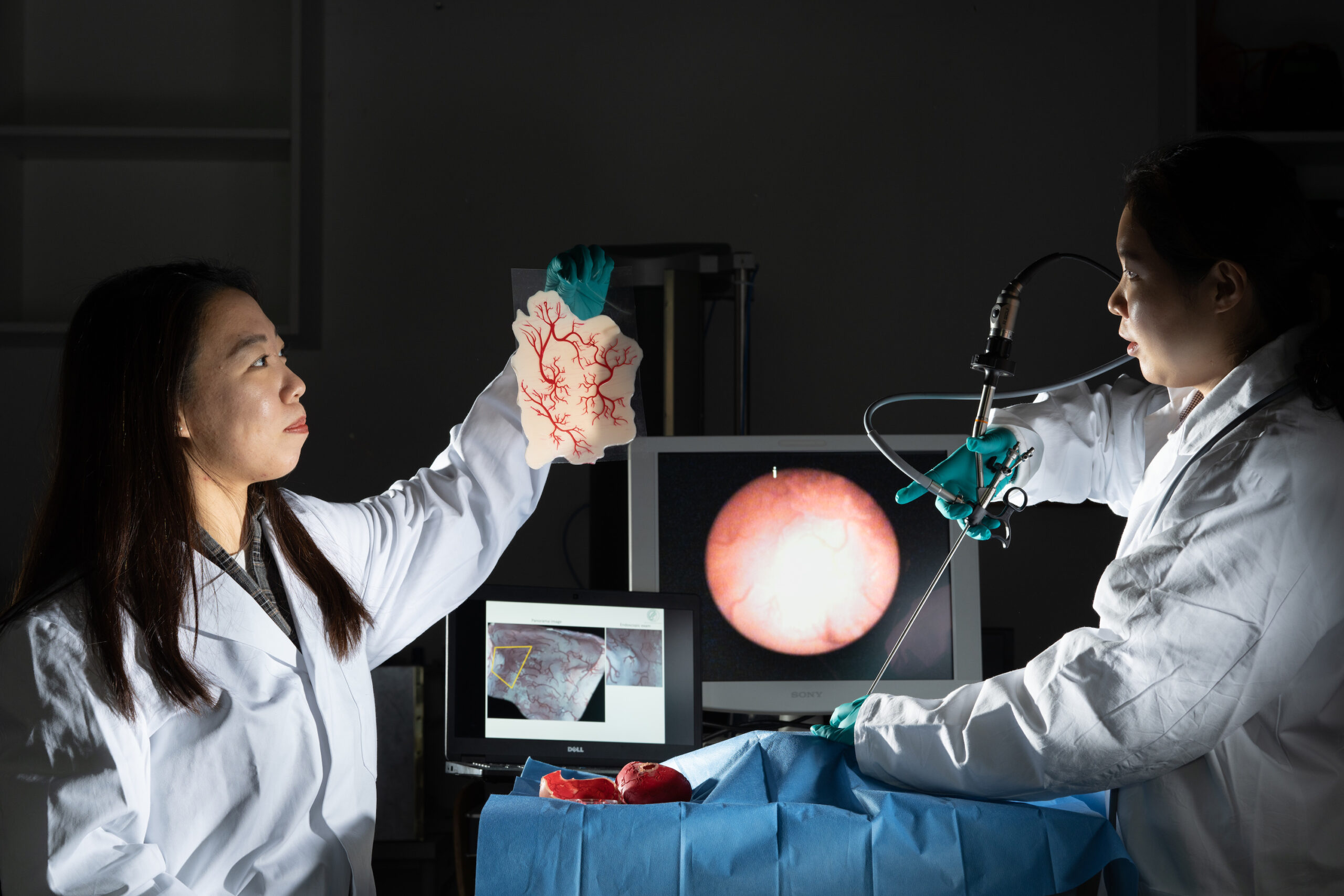
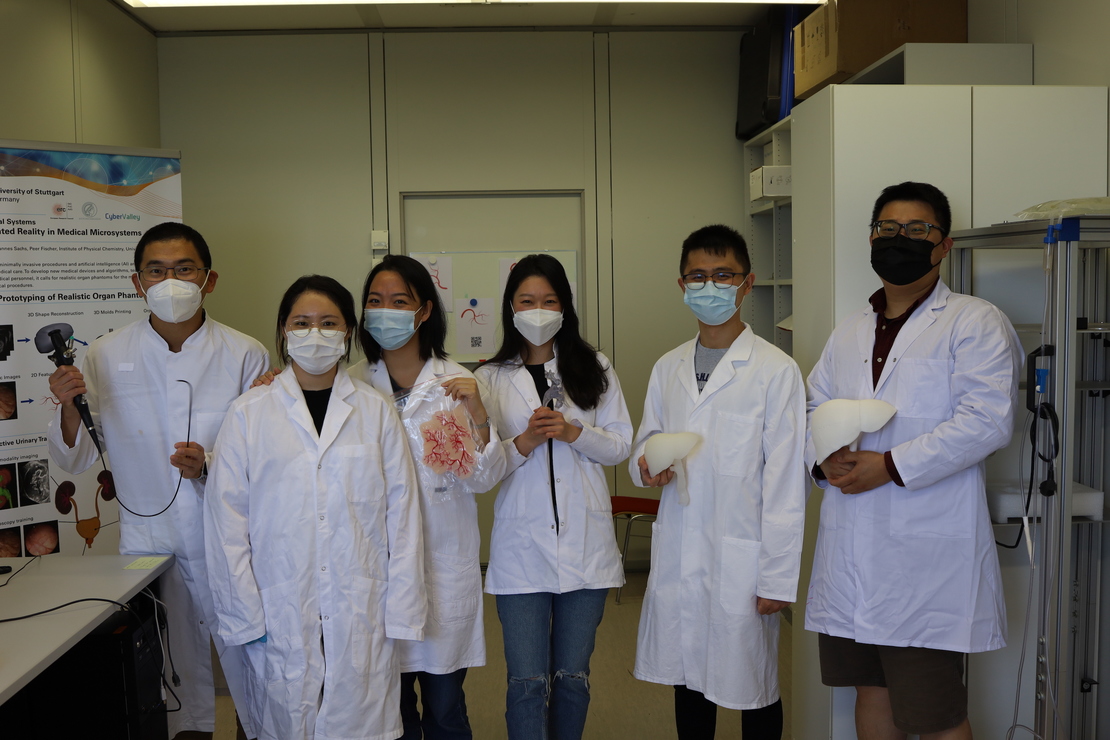
    In response to these challenges, researchers at the University of Stuttgart at the Institute of Physical Chemistry have created educational tools that could one day be used to train surgeons, much like flight simulators train pilots. The team, which comprises engineers and medical doctors, have developed a range of artificial organs – among them a liver, a kidney, and a bladder. With these artificial organs, the scientists aim to create a training platform that provides high-fidelity surgical scenes and a quantitative and objective assessment of a trainee’s skills in real time. Ultimately, the scientists want to develop organs that are easily reproducible and standardized, as this would enable their use in the training of surgeons around the world.

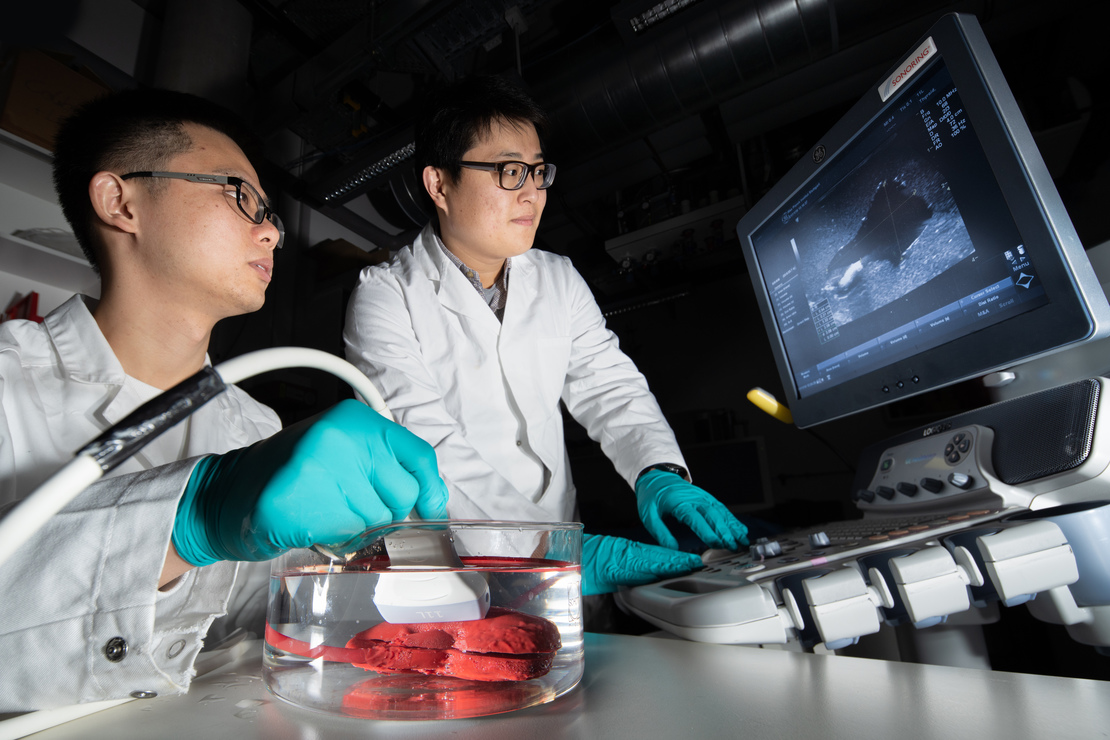
    The artificial organs are known as cyber-physical organ twins, which are physical systems combined with virtual features. The consistency of the tissue, the anatomy, the haptic perception, even the look of the tiny blood vessels are very similar to natural organs. Additionally, sensors measure a range of parameters, including the surgeon’s fine motor skills when moving an endoscope through the organ, whether a needle has punctured correctly at the required location, or the time needed to localize all the tumors. An open-source algorithm that is also applied in self-driving cars to distinguish between objects has been re-trained to detect the lesions, such as carcinomas or kidney stones. Once the endoscope reaches the realistic target, the trainee can simulate a biopsy of the protrusion and try to improve the accuracy and efficiency with each session. All the while, data is collected that would not otherwise be available, even in a real surgical procedure on a patient.

    Training environment makes evaluation of operations possible

    “If we look at computer vision or natural language processing, the data is very rich and structured. But in the area of biomedicine, especially in surgeries, data collection is very difficult. How can the quality of a surgical procedure be quantified? A real-life surgery happens in an environment in which collecting real-time data is almost impossible,” says Tian Qiu, leader of the Cyber Valley Biomedical Microsystems research group at the University of Stuttgart. The group, which focuses on integrating hardware with AI, develops tools that collect large amounts of data in biomedicine in order to learn from it and improve minimally-invasive surgical tools and procedures. The team collaborates closely with physicians from the university hospitals in Freiburg and Tübingen.

    “As we aim to enhance the field of biomedicine with artificial intelligence, we combine physical systems with virtual features. This enables us to collect data on surgical skills. Experienced surgeons lay the foundation and then we compare their skills with those of future surgeons. In each training session, we visualize a trainee’s data, assess how the surgery was performed, and evaluate which skills need to be improved,” says Tian Qiu.

    The team recently published the results of its work in three journal papers and one conference paper. In one of these papers, they present a soft liver phantom that can assess how well an endoscopic inspection and tumor biopsy is performed inside the hollow biliary ducts that weave through the liver. Creating a realistic soft liver replica is a challenging task. “Our organ phantoms offer much more objective evaluations and feedback, much better than virtual reality simulators can, for instance,” says Xiangzhou Tan, who is a physician at the University Hospital Tübingen and brings medical expertise to the Biomedical Microsystems group.

    Manipulating an endoscope, a long and thin instrument, equipped with a miniature camera at the tip, operated outside the patient’s body, is another important part of a surgeon’s training. “One prototype we developed can measure specific endoscopic controlling skills,” explains Do Yeon Kim, a Ph.D. student and engineer in the group. “When a trainee navigates through an organ, many factors are considered. For instance, they must assess how long it takes them to screen all areas inside the organ and make sure they haven’t missed anything and that they have detected all the tumors in a reasonable amount of time.” To evaluate manipulation skills, Do Yeon Kim trained the algorithm with data that experienced doctors provided. A trainee’s performance is then measured against these thresholds. “One could say we have created an advanced flight simulator for surgeons.”

    References of recent publications on the topic of cyber-physical organ twin:

    1. Liver phantom and needle puncture skill assessment
      Tan, X., Li, D., Jeong, M., Yu, T., Ma, Z., Afat, S., Grund, K.-E. & Qiu, T. Soft Liver Phantom with a Hollow Biliary System, Ann. Biomed. Eng. 2021. https://doi.org/10.1007/s10439-021-02726-x
    2. Bladder phantom with blood vessels and tumors for endoscopy
      Choi, E., Waldbillig, F., Jeong, M., Li, D., Goyal, R., Weber, P., Miernik, A., Grüne, B., Hein, S., Suarez-Ibarrola, R., Kriegmair, M. C. & Qiu, T. Soft Urinary Bladder Phantom for Endoscopic Training. Ann. Biomed. Eng. 2021. https://doi.org/10.1007/s10439-021-02793-0
    3. Endoscopic training and skills assessment
      Tan, X., Kim, D. Y., Jeong, M., Li, D., Miernik, A. & Qiu, T., Computer-Assisted Quantitative Assessment of Endoscopic Skills based on a High-fidelity Endourological Phantom. Under revision.
      Kim, D. Y., Tan, X., Jeong, M., Li, D. & Qiu, T., Computer-Assisted Quantitative Assessment of Endoscopic Skills based on a Urological Phantom. 55th DGBMT Ann. Conf. on Biomed. Eng. Accepted.
  • Machine learning improves biological image analysis

    Machine learning improves biological image analysis

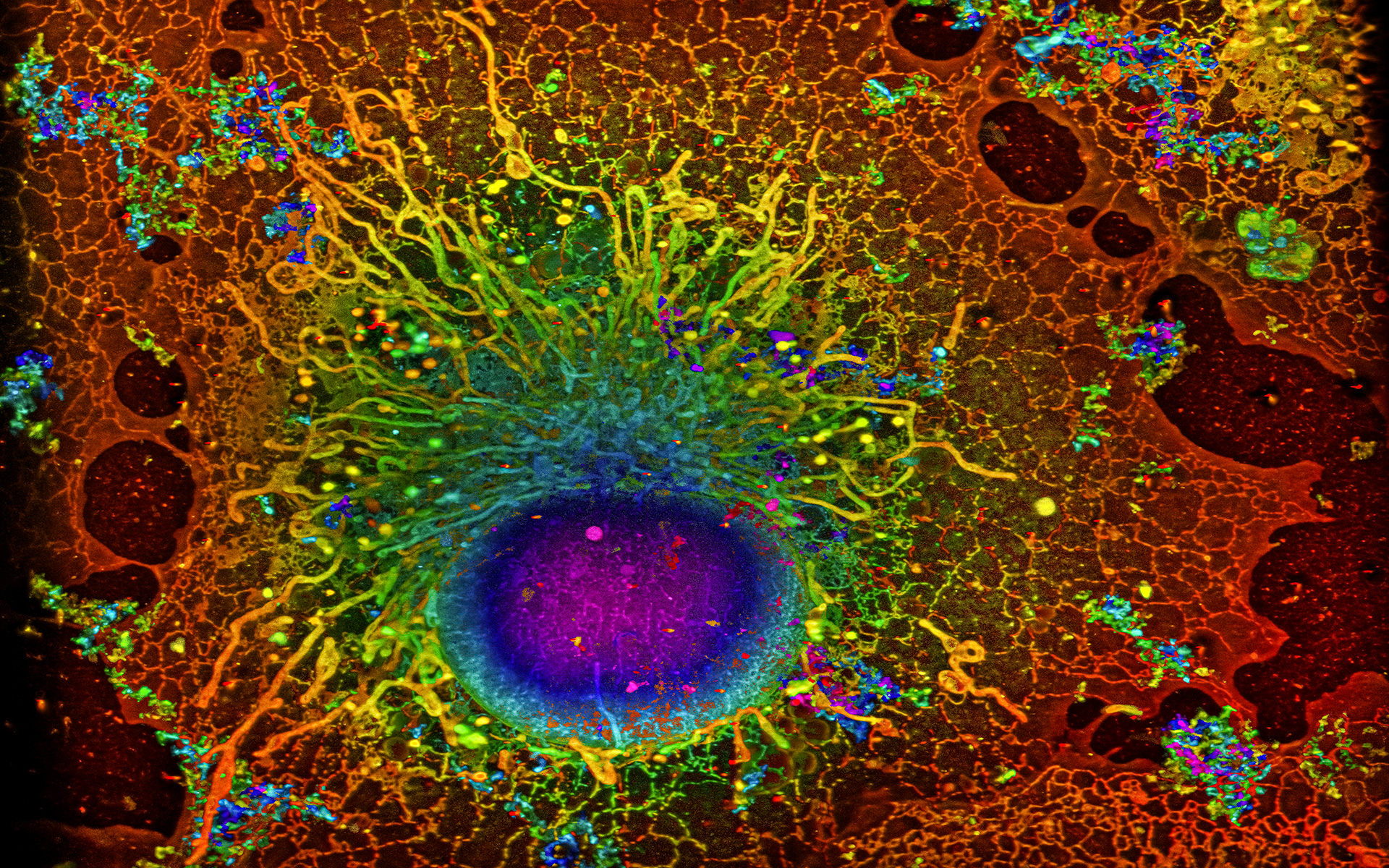
    Scientists use super-resolution microscopy to study previously undiscovered cellular worlds, revealing nanometer-scale details inside cells. This method revolutionized light microscopy and earned its inventors the 2014 Nobel Prize in Chemistry. In an international collaboration, AI researchers from Tübingen have now developed an algorithm that significantly accelerates this technology.

    Single-molecule localization microscopy (SMLM) is a type of super-resolution microscopy. It involves labelling proteins of interest with fluorescent molecules and using light to activate only a few molecules at a time. Using this trick, multiple images of the same sample are acquired. To create a meaningful picture, a computer program unscrambles the data and compiles the complete image. While the technique can be used to locate molecules with high precision, it has one major drawback – it requires scientists to acquire a large number of images, which makes the process very time-consuming.

    In an international collaboration, the team of Jakob Macke, Professor for Machine Learning in Science at the University of Tübingen, has developed a new algorithm that overcomes this limitation of SMLM. The joint work with the Ries Group at the European Molecular Biology Laboratory (EMBL) Heidelberg and Dr. Srinivas Turaga’s team at Janelia Research Campus (Virginia, USA) was published in Nature Methods.

    Deep learning enables highly accurate single-molecule localisation

    The DECODE (DEep COntext DEpendent) algorithm is based on deep learning: It uses a neural network that learns from training data. Instead of using real images, however, the network in this case is trained with synthetic data generated by a numerical simulation. By incorporating information about the microscopic setup and the imaging physics, the researchers achieved simulations that closely matched real-world acquisitions. “The neural network that we trained using simulated data can thus also detect and localize fluorophores in real images,” explains Artur Speiser, who, together with Lucas-Raphael Müller, was the lead author of the paper.

    One of the benefits of DECODE is that it accurately detects and localizes fluorophores at higher densities than were previously possible. This means that fewer images are needed per sample. As a result, imaging speeds can be increased up to tenfold with minimal loss of resolution. In addition, DECODE can quantify uncertainties – so the network itself can detect when it is unsure of its localization.

    Interdisciplinarity expands the perspectives of research

    “This work is indicative of the approach of our Cluster of Excellence ‘Machine Learning: New Perspectives for Science’”, Macke says, whose chair is part of the Tübingen cluster. “We originally developed the ideas underlying the machine learning approach in a very different context, but through collaborating with experts in computational microscopy we were able to turn them into powerful methods for analyzing SMLM data.”

    The team has also built a software package which implements the DECODE algorithm. “The software is simple to install and free to use, so we hope it will be useful for many scientists in the future”, adds Dr. Jonas Ries from EMBL.

    Contact:

    Prof. Dr. Jakob Macke
    University of Tübingen
    Cluster of Excellence – Machine Learning for Science
    jakob.macke@uni-tuebingen.de