News Category: Press Release

  • Degree program combines radiation sciences with AI

    Degree program combines radiation sciences with AI

    The course content includes research areas in radiation therapy, non-invasive imaging and tumor and radiation biology as well as machine learning, computer vision, basics for a better understanding, analysis and visualization of scientific data.

    AI methods are already being used in cancer treatment, including for the evaluation of complex data or in therapy decisions. The knowledge acquired in the master’s profile can be used, for example, to optimize imaging for radiation planning, to contour organs and tumors using deep learning methods, or to better control radiation treatments. Graduates will also be able to contribute to the further development of individualized diagnostic and therapeutic procedures through AI in the future, both in research and in industry.

    Researchers from the Faculty of Medicine and the Faculty of Mathematics and Natural Sciences at the University of Tübingen and the University Hospital Tübingen as well as from Cyber Valley will teach in this profile area. Cyber Valley is Europe’s largest research consortium in the field of AI and it connects partners from politics, science, industry and society. This ecosystem in southwestern Germany is continuously growing with additional multidisciplinary initiatives, making the Stuttgart-Tübingen region a hotspot for research and innovation in the fields of machine learning, robotics and computer vision.

    In addition, the master’s profile is part of the AI in medicine initiative, in which the University of Tübingen, the Faculty of Medicine and the Max Planck Institutes, together with other numerous Cyber Valley partners, are advancing the use of AI in medicine and the life sciences.

  • Estimating the pace of change

    Estimating the pace of change

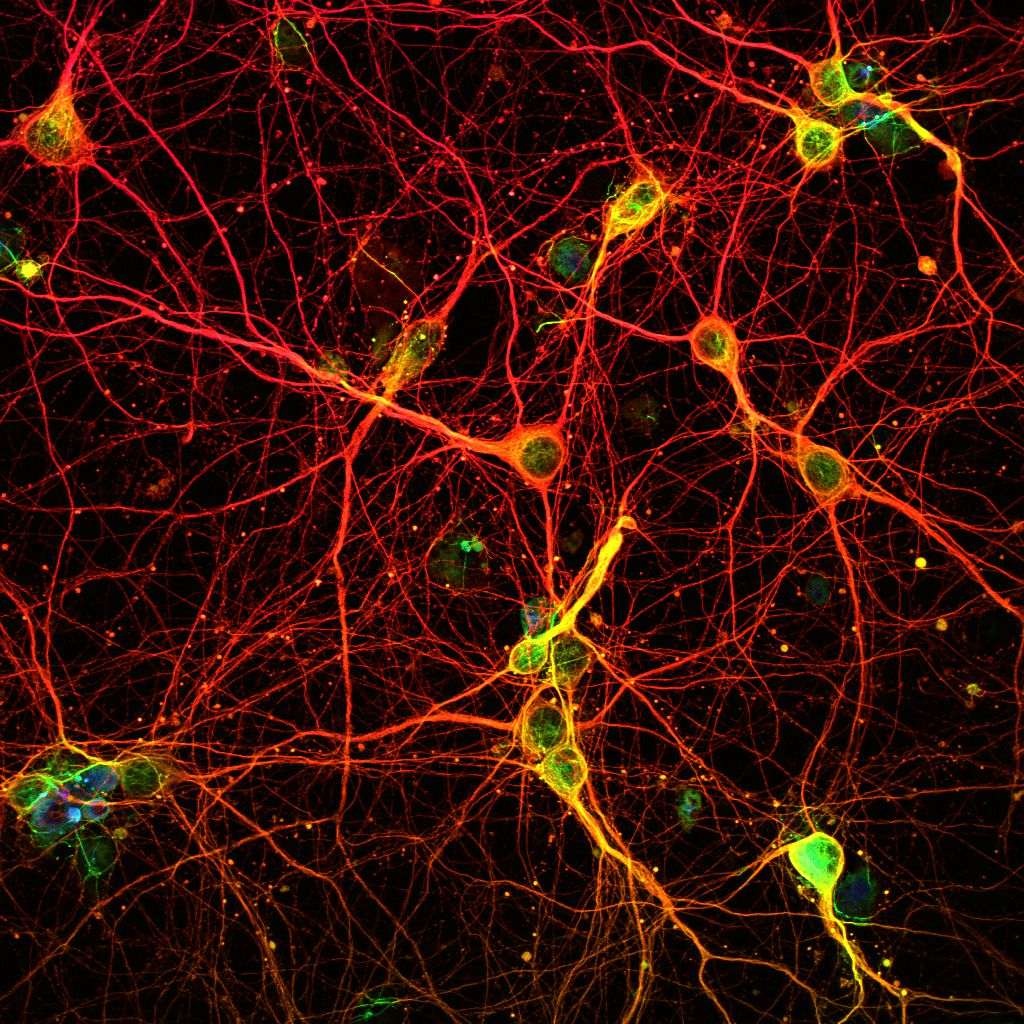
    Each process in nature happens at its own pace: neurons take milliseconds to signal to each other, demographic changes occur over years, and climate change is a matter of decades or even millennia. The period that a process typically needs to undergo a change is known as its timescale, and understanding the timescale is paramount for a deep understanding of the process itself.

    How long does change typically take?

    Statisticians make this idea of a timescale very precise. In the example of neural processes, the state of your brain right now is influenced by the state some time ago. The extent of this influence is captured by the temporal correlation. This correlation decreases over time: the longer the elapsing time, the weaker the dependency. The timescale of your neural processes is just this: a number that indicates how fast this correlation typically decreases and thus how fast the brain forgets its state.

    In practice, determining the timescale from empirical data can be tricky. Typically, one would calculate correlations of the measured brain activity at different times; the decreasing dependency then indicates the timescale.

    Recreating the cake to determine its sugar content

    “Unfortunately, this method of determining timescales is flawed and can create misleading results,” explains Roxana Zeraati, researcher at the University of Tübingen and at the Max Planck Institute for Biological Cybernetics. “The problem is that the empirical data is always measured over finite, often short, time. Because of this, the average dependency between what happens at different points in time is systematically underestimated.” Zeraati stresses how important a correct measurement of timescales is: “A lot of conclusions in neuroscience rely on precise estimates of timescales. To give just one example, we think that aberrant timescales are linked to autism. But people never realized before that they might be estimating timescales incorrectly.”

    This is why Zeraati and her collaborators came up with a novel idea to determine timescales: the scientists propose to generate new, artificial data from a computer model that match closely the empirical data. Anna Levina, assistant professor in Tübingen and Zeraati’s PhD advisor, explains the method with a simple analogy: “If chemically analyzing the sugar content in a cake your grandmother made is tricky – possibly because sugar from the frosting seeps into the cake and messes with your measurements – you can instead try to recreate the cake several times with different amounts of sugar, and the cake that comes closest to the original tells you how much sugar was in your grandmother’s, precisely because you know how much sugar you used for your cakes.”

    Analyses of memory

    The researchers subsequently tested the potential of their new method on data from neural recordings of the visual cortex from a previous study. “We wondered if spontaneous fluctuations of neural activity were ruled by a single timescale, or if maybe the process we observed was the sum of several processes with different timescales,” says Levina. “In that particular case, we saw that the process in the brain involved two different intrinsic timescales – something that never before has been reported.”

    Zeraati adds: “In a similar way, we can analyze almost any intrinsic process in the brain, for example how neurons remember the past. This makes our new estimation method an incredibly valuable and powerful tool for neuroscientists and other researchers.”

  • Exoskeletons: In just two minutes to comfort

    Exoskeletons: In just two minutes to comfort

    Powered exoskeletons are usually not ready for immediate use but have to be adjusted by an expert, so that the different characteristics of the human body, the biomechanics of gait and the wearer’s preferences can be taken into account. Alternatively, this can be done by automatically evaluating quantifiable data such as metabolic rate or muscle activity in order to minimize energy consumption, for example. Or the wearer can be asked to repeatedly compare between different settings in order to find out which one is the most comfortable. However, the setting that leads to a minimum of energy consumption is not necessarily the most comfortable. Letting users choose between numerous settings takes time. Moreover, it does not reveal how the setting parameters interact with each other and affect the user experience.

    The focus is on the user as a person

    Therefore, Dr. Kim Ingraham and Prof. Elliot Rouse at the University of Michigan as well as Prof. David Remy from the Institute for Nonlinear Mechanics and researcher at the cluster of excellence SimTech at the University of Stuttgart are focusing on subjective feedback instead of physiological measurements. They consider the users as the main focus of their research and give them the opportunity to directly change the setting parameters and to take into account preferences that are otherwise difficult to identify or measure. In this way, users can decide quickly and independently, which properties – such as comfort, performance, and stability – are most important for them and choose the setting accordingly, without the need for an expert to readjust. “The users’ ability to decide for themselves how it feels to be supported by an exoskeleton, will increase user satisfaction in the future and thus the acceptance of these devices,” says Kim Ingraham, “because no matter how helpful an exoskeleton might be: “If it’s not comfortable, people won’t wear it.”

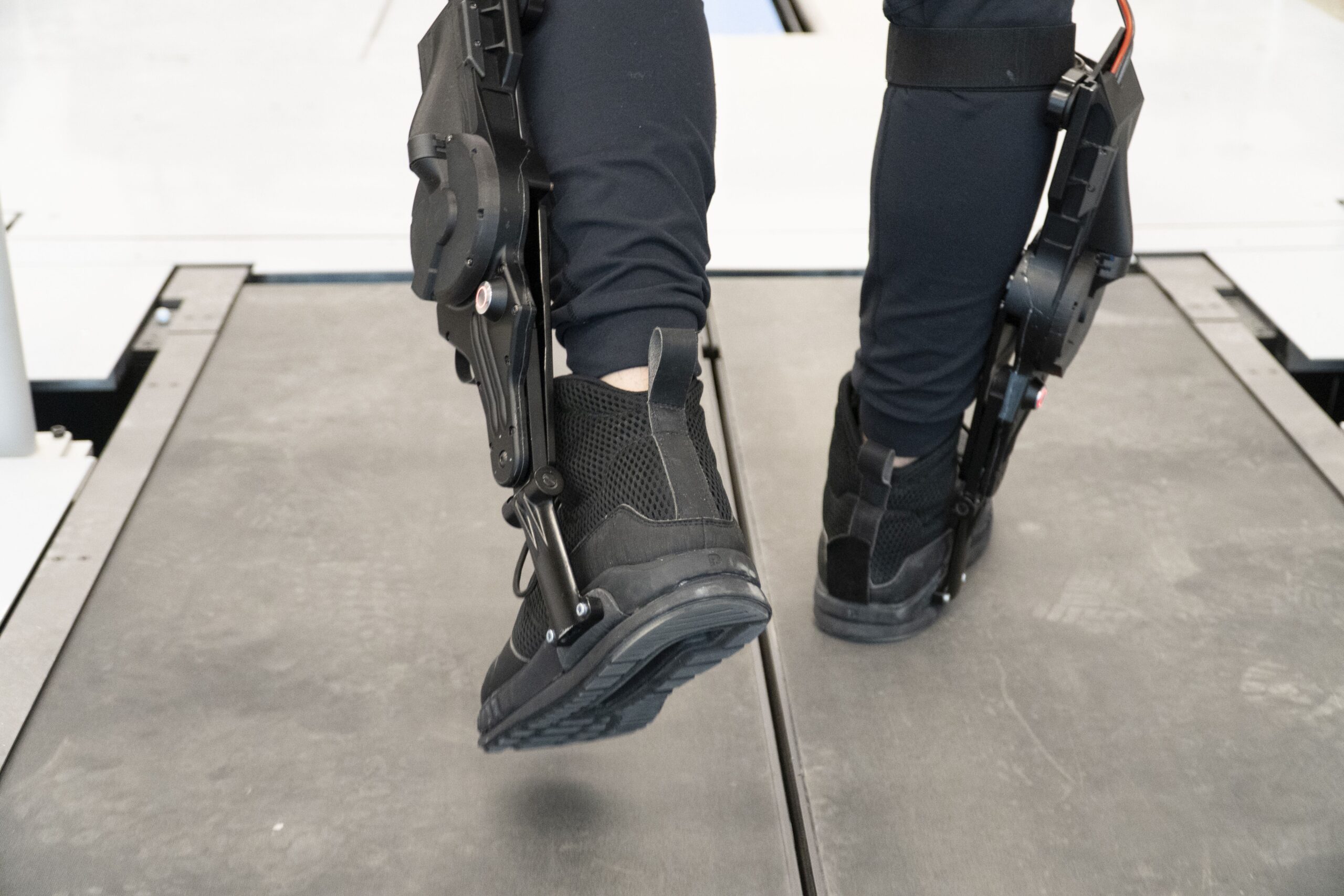
    In order to test the feasibility of the concept, the research team equipped users with ankle exoskeletons and a touchscreen and had them walk on a treadmill. The participants of the study were able to select different points on the touchscreen to change the behavior of the exoskeleton. Without knowing it, they were selecting the exoskeleton’s torque and timing values. These two parameters control what the support feels like.

    from left: Dr. Kim Ingraham, Prof. David Remy und Prof. Elliot Rouse
    © Privat, University of Stuttgart / Uli Regenscheit, UM Robotics/Megan Ocelnik
     

    Reliable data for individual adjustment

    “Although we changed the mapping between the points on the touchscreen and the parameters with each repetition of the experiment, the participants always found their way back to their preferred, individual settings,” says David Remy. “This shows how important individual adjustments are and that users can provide us with very reliable data for this purpose.” The researchers were also surprised at how quickly the users were finding their preferred settings: Even people who had no previous experience with an exoskeleton managed to do so in an average of one minute and 45 seconds – without knowing which parameters they were setting. In addition, preferences changed in the course of the experiment: Users who already have experience with an exoskeleton prefer a significantly higher level of support than users who wear an exoskeleton for the first time.

    The researchers want to fundamentally explore how user preferences can be included in the control of exoskeletons. In the next step, they want to find out why users prefer what they prefer, how these preferences affect their energy consumption, muscle activity, and physiology, and how a preference-based control could be automatically implemented in practice.

    The collaboration between the University of Michigan and the University of Stuttgart was funded by the Carl Zeiss Foundation within the GSO/CZS return program for scientists, which the foundation established in cooperation with the German Scholar Organization. The program supports universities in filling professorships with German scientists from abroad.

  • Meshcapade wins new start-up award

    Meshcapade was founded in 2018 by Naureen Mahmood, Talha Zaman, and Director Michael Black of the Max Planck Institute for Intelligent Systems in Tübingen. Mahmood is the CEO of the company, which now employs around 15 people. “We are proud to be the first team to win the new Max-Planck-Gründungspreis,” she says. “We hope it will get more people interested in our great technology and the innovative work being carried out in our region. We are also grateful to Max Planck Innovation and Cyber Valley for their invaluable support during the pre-launch and early stages of our company.”

    President of the Max Planck Society, Martin Stratmann, is delighted that the prize has been awarded to a Cyber Valley spin-off: “This sends out a positive signal for novel software ‘made in Germany’ in general and ‘in Cyber Valley’ in particular”, he explains. “I hope the award will help to motivate other researchers who want to launch their own companies, so that Cyber Valley will become a ‘Start-up Valley’.”

    The Stifterverband played a key role in supporting the transformation of the original science award for research between basic research and application, to an award for outstanding Max Planck spin-offs. "I’m really pleased that the Stifterverband will be able to use the new Max-Planck-Gründungspreis to make an important contribution to further Max-Planck spin-offs,” says Michael Kaschke, President of the Stifterverband.

    The awarding ceremony for the winning Meshcapade team will take place on June 21, 2022 in Berlin.

    After that, the prize will be awarded to a successful Max Planck spin-off every two years. The winning team will be selected from the applications received by a broad-based jury chaired by Klaus Blaum, Vice President of the Max Planck Society. Prize winners will receive € 50,000.

    The Max-Planck-Gründungspreis des Stifterverbandes is one of the building blocks of the MAXPreneurs Initiative, whose objective is to better exploit the spin-off potential within the Max Planck Society. This new initiative is intended to raise entrepreneurial awareness among Max Planck researchers and to boost the start-up culture within the Max Planck Society and at the Institutes. Another objective is to identify more people who are interested in launching a business, and to motivate them to initiate concrete start-up projects and to provide them with close support. In addition to Max Planck Innovation, the other partners in the MAXPreneurs Initiative are the Planck Academy and the Max Planck Foundation.

    To help achieve these objectives, a new start-up incubation programme known as “MAX!mize” was also launched as one of the core elements of the MAXPreneurs initiative. An experienced team of start-up experts at the Max Planck Innovation technology transfer organization provides entrepreneurial Max Planck researchers with exclusive support during the implementation of their start-up projects and organizes the incubation programme, which includes workshops and networking events with other entrepreneurs, start-up and industry experts as well as investors. In addition to continuous close support, the programme also provides access to funding and experienced mentors who use their entrepreneurial experience to support the budding entrepreneurs throughout the process of launching a successful spin-off.

  • Cyber Valley networks continue to grow

    Cyber Valley networks continue to grow

    “As we enter the next phase of Cyber Valley, we are even more focused on helping new, innovative, AI companies grow”, said Michael J. Black, Cyber Valley spokesperson and Director at the Max Planck Institute for Intelligent Systems. “Consequently, we are expanding both our start-up and our investor networks. In MBG we've added an experienced, powerful and very well connected VC firm to our ecosystem. And with the addition of mxlar, preML and Bergsonne Labs our growing network of entrepreneurs and innovators has gained in strength, breadth, and excellence.”

    Austrian start-up mlxar (machine learning extended architecture) is using AI to create 3D architectural models for the gaming industry. The mlxar technology makes it possible to creatively build architecture assets faster than is currently common – earning the start-up the Main Award at AI GameDev last December, among other accolades. “Architecture design is a manual, inefficient and time-consuming process – this is a problem when designing one building, and it’s a huge problem when designing an entire city, level or world. Our AI innovation is not a replacement for the designer – it is a way of making expert knowledge scalable and ultimately creating new type of creative tool”, said Ben James, CEO of mlxar. “We joined the Cyber Valley Start-up Network because it offers our startup the opportunity to contribute to – and benefit from – an ecosystem in which research and entrepreneurship can further drive our innovations forward.”

    The start-up preML from Lahr in the Black Forest provides AI-based technologies for manufacturing companies to automate their visual quality inspection quickly and cost-effectively. “Our company is very technology-oriented and works at the forefront of the current state of science”, said David Fahrenbach, preML’ls co-founder and managing director. “As a former student of the University of Tübingen, I am particularly pleased about the admission and am looking forward to the contacts and projects that will arise through the network.”

    Bergsonne Labs is a Stuttgart-based company focused on bridging the gap between laboratory science and commercial technology, with a specific focus on the research and development of micro-scale mechatronic solutions for various applications including sports technology, robotics, and consumer products. “As a multi-disciplinary hub bringing together world-class scientists, researchers, entrepreneurs, and businesses from around the region, the Cyber Valley Start-up Network clearly provides the ideal setting in which to grow Bergsonne Labs”, said the company’s founder Jonathan Fiene.

    Investor Network now counts six members

    In addition to the Start-up Network, the circle of venture capital firms is also expanding. MBG joins the Cyber Valley Investor Network. Active in the market as an investment company for more than 50 years, MBG brings experience, network and continuity to start-ups. “Artificial intelligence is going to shape the world of the future. That is why it is important to us to support the growing ecosystem. Having Cyber Valley as a partner and multiplier enables us to get in contact with innovative AI startups that we can support together”, said MBG CEO Dirk Buddensiek.

    Cyber Valley regularly hosts networking events such as talks, meet-ups, and tech workshops. The next event of the Cyber Valley Entrepreneurship series is scheduled for March 31 and will feature high-profile speakers on the topic of “AI and architecture”. More information about the event and how to attend can be found here.

  • Meet BirdBot, the avian-inspired robot

    Meet BirdBot, the avian-inspired robot

    If a Tyrannosaurus Rex living 66 million years ago featured a similar leg structure as an ostrich running in the savanna today, then we can assume bird legs stood the test of time – a good example of evolutionary selection.

    Graceful, elegant, powerful – flightless birds like the ostrich are a mechanical wonder. Ostriches, some of which weigh over 100 kg, run through the savanna at up to 55 kph. The ostriches outstanding locomotor performance is thought to be enabled by the animal’s leg structure. Unlike humans, birds fold their feet back when pulling their legs up towards their bodies. Why do the animals do this? Why is this foot movement pattern energy-efficient for walking and running? And can the bird’s leg structure with all its bones, muscles, and tendons be transferred to walking robots?

    Alexander Badri-Spröwitz has spent more than five years on these questions. At the Max Planck Institute for Intelligent Systems (MPI-IS), he leads the Dynamic Locomotion Group. His team works at the interface between biology and robotics in the field of biomechanics and neurocontrol. The dynamic locomotion of animals and robots is the group’s main focus.

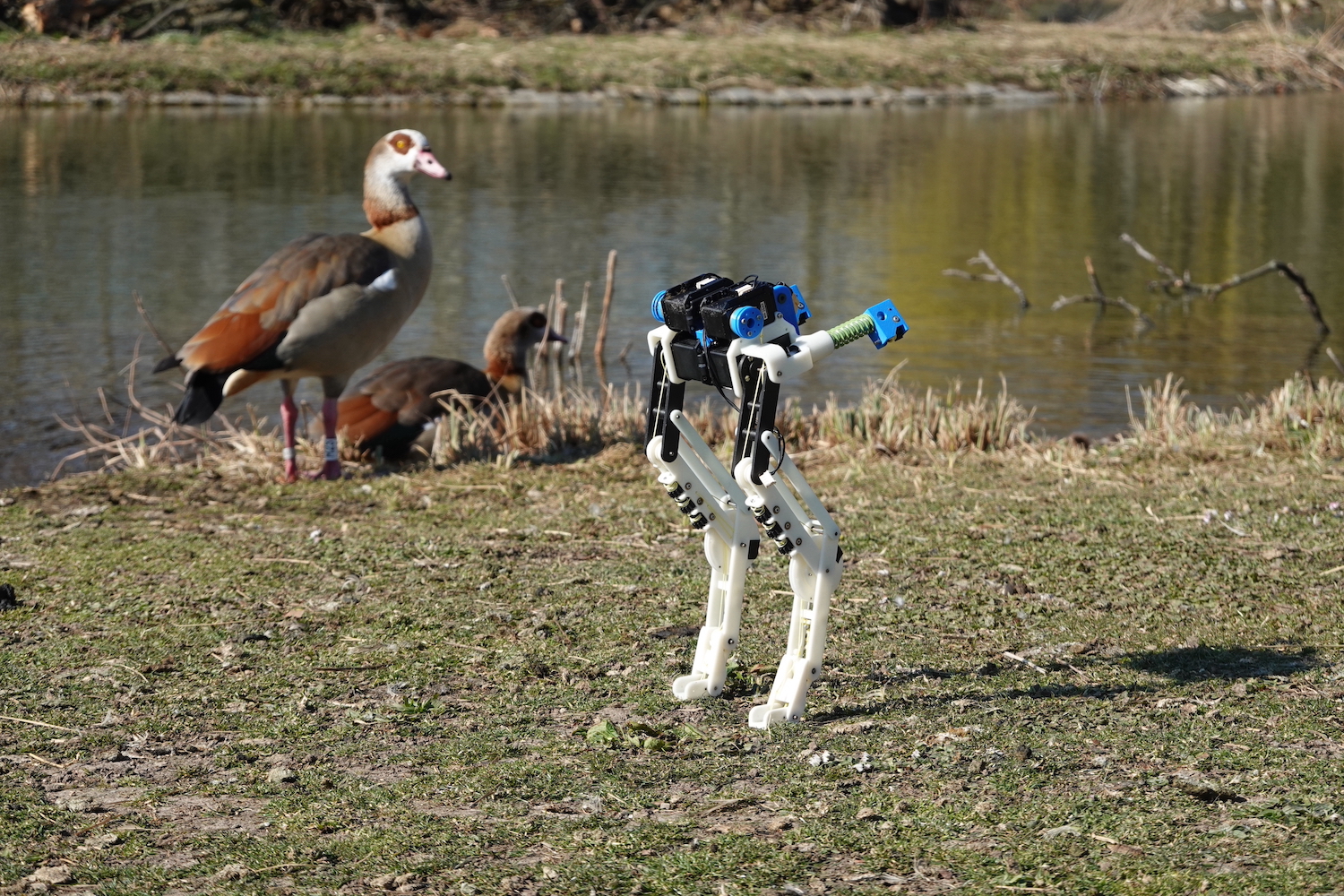
    Together with his doctoral student Alborz Aghamaleki Sarvestani, Badri-Spröwitz has constructed a robot leg that, like its natural model, is energy-efficient: BirdBot needs fewer motors than other machines and could, theoretically, scale to large size. On March 16th, Badri-Spröwitz, Aghamaleki Sarvestani, the roboticist Metin Sitti, a director at MPI-IS, and biology professor Monica A. Daley of the University of California, Irvine, published their research in the renowned journal Science Robotics.

    Compliant spring-tendon network made of muscles and tendons

    When walking, humans pull their feet up and bend their knees, but feet and toes point forward almost unchanged. It is known that Birds are different — in the swing phase, they fold their feet backward. But what is the function of this motion? Badri-Spröwitz and his team attribute this movement to a mechanical coupling. “It’s not the nervous system, it’s not electrical impulses, it’s not muscle activity,” Badri-Spröwitz explains. “We hypothesized a new function of the foot-leg coupling through a network of muscles and tendons that extends across multiple joints. These multi-joint muscle-tendon coordinate foot folding in the swing phase. In our robot, we have implemented the coupled mechanics in the leg and foot, which enables energy-efficient and robust robot walking. Our results demonstrating this mechanism in a robot lead us to believe that similar efficiency benefits also hold true for birds.”

    The coupling of the leg and foot joints and the forces and movements involved could be the reason why a large animal like an ostrich can not only run fast but also stand without tiring, the researchers speculate. A person weighing over 100 kg can also stand well and for a long time, but only with the knees ‘locked’ in an extended position. If the person were to squat slightly, it becomes strenuous after a few minutes. The bird, however, does not seem to mind its bent leg structure; many birds even stand upright while sleeping. A robotic bird's leg should be able to do the same: no motor power should be needed to keep the structure standing upright.

    Robot walks on a treadmill

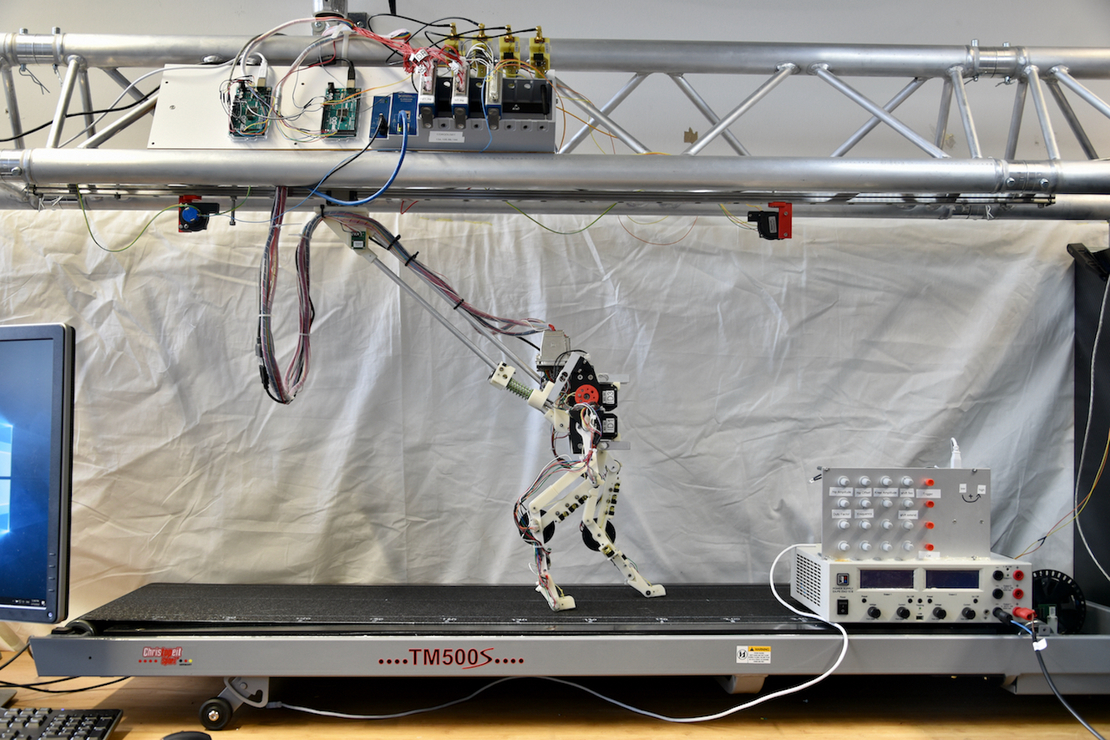
    To test their hypothesis, the researchers built a robotic leg modeled after the leg of a flightless bird. They constructed their artificial bird leg so that its foot features no motor, but instead a joint equipped with a spring and cable mechanism. The foot is mechanically coupled to the rest of the leg’s joints through cables and pulleys. Each leg contains only two motors— the hip joints motor, which swings the leg back and forth, and a small motor that flexes the knee joint to pull the leg up. After assembly, the researchers walked BirdBot on a treadmill to observe the robot’s foot folding and unfolding. “The foot and leg joints don’t need actuation in the stance phase,” says Aghamaleki Sarvestani. “Springs power these joints, and the multi-joint spring-tendon mechanism coordinates joint movements. When the leg is pulled into swing phase, the foot disengages the leg’s spring – or the muscle-tendon spring, as we believe it happens in animals,” Badri-Spröwitz adds. A video shows BirdBot walking in the research group’s laboratory.

    Zero effort when standing, and when flexing the leg and knee

    When standing, the leg expends zero energy. “Previously, our robots had to work against the spring or with a motor either when standing or when pulling the leg up, to prevent the leg from colliding with the ground during leg swing. This energy input is not necessary in BirdBot’s legs,” says Badri-Spröwitz and Aghamaleki Sarvestani adds: “Overall, the new robot requires a mere quarter of the energy of its predecessor.”

    The treadmill is now switched back on, the robot starts running, and with each leg swing, the foot disengages the leg’s spring. To disengage, the large foot movement slacks the cable and the remaining leg joints swing loosely. This transition of states, between standing and leg swing, is provided in most robots by a motor at the joint. And a sensor sends a signal to a controller, which turns the robot’s motors on and off. “Previously, motors were switched depending on whether the leg was in the swing or stance phase. Now the foot takes over this function in the walking machine, mechanically switching between stance and swing. We only need one motor at the hip joint and one motor to bend the knee in the swing phase. We leave leg spring engagement and disengagement to the bird-inspired mechanics. This is robust, fast, and energy-efficient,” says Badri-Spröwitz.
    Monica Daley observed in several of her earlier biology studies that the bird’s leg structure not only saves energy during walking and standing but is also adapted by nature so that the animal hardly stumbles and injures itself. In experiments with guineafowls running over hidden potholes, she quantified the birds’ remarkable locomotion robustness. A morphological intelligence is built into the system that allows the animal to act quickly – without having to think about it. Daley had shown that the animals control their legs during locomotion not only with the help of the nervous system. If an obstacle unexpectedly lies in the way, it is not always the animal’s sense of touch or sight that comes into play.

    “The structure with its multi-jointed muscle-tendons and its unique foot movement can explain why even heavy, large birds run so quickly, robustly, and energy-efficient. If I assume that everything in the bird is based on sensing and action, and the animal steps onto an unexpected obstacle, the animal might not be able to react quickly enough. Perception and sensing, even the transmission of the stimuli, and the reaction cost time,” Daley says.

    Yet Daley’s work on running birds over 20 years demonstrates that birds respond more rapidly than the nervous system allows, indicating mechanical contributions to control. Now that the team developed BirdBot, which is a physical model that directly demonstrates how these mechanisms work, it all makes more sense: the leg switches mechanically if there is a bump in the ground. The switch happens immediately and without time delay. Like birds, the robot features high locomotion robustness.

    Whether it’s on the scale of a Tyrannosaurus Rex or a small quail, or a small or large robotic leg. Theoretically, meter-high legs can now be implemented to carry robots with the weight of several tons, that walk around with little power input.

    The knowledge gained through BirdBot developed at the Dynamic Locomotion Group and the University of California, Irvine, leads to new insights about animals, which are adapted by evolution. Robots allow testing and sometimes confirming hypotheses from Biology, and advancing both fields.


  • Expert advice on getting started in AI and robotics

    Expert advice on getting started in AI and robotics

    The high potential of AI and robotics technologies is undisputed. However, many companies, and medium-sized companies in particular, still have difficulty identifying the most suitable AI technologies for relevant use cases. This has been confirmed by numerous studies, including one by Bitkom in April of last year. According to this study, the lack of money, personnel and time are frequent obstacles to the use of AI. In order to provide companies with the best possible support, an individual expert assessment is required. This is precisely what the AI Innovation Center offers with its low-threshold services. Almost 200 companies have already taken advantage of this opportunity. An overview of the varied results can be found on the website linked below.

    Companies from startups to corporations can apply with their project outline until March 31, 2022. There are two project formats:

    • “AI Explorer”: This format provides basic knowledge for all companies that want to find out about possible uses of AI or robotics but do not yet have a concrete idea. In workshops, Fraunhofer employees offer an assessment of where AI and robotics stand in the company and what the best order of procedure would be to bring the technologies into practice. The experts help to assess the current situation and highlight the potential for process improvements or product and service innovations through AI and robotics applications.
    • “Quick Checks”: This project format allows companies to check the feasibility of an individual AI or robotics application, for example an existing idea. After the company has presented its specific use case, Fraunhofer employees investigate the extent to which the project is feasible. The result is a feasibility statement in the form of a short “proof of principle”.

    The current application deadline addresses companies that have not yet collaborated with the AI Innovation Center. The project formats are free of charge for companies based or located in Baden-Württemberg. This is possible because the AI Innovation Center receives extensive funding from the Ministry of Economic Affairs, Labour and Tourism of Baden-Württemberg.

    Successful project formats

    Both project formats require only a minimal application effort and have proven to be particularly successful in recent years. Together with the Center for Cyber Cognitive Intelligence (CCI), the two Fraunhofer Institutes have carried out the more than 200 projects already mentioned. This not only shows that many companies in Baden-Württemberg have already benefited from them. The projects also give Fraunhofer experts a thorough insight into the companies’ research and development needs – the basis for a targeted and successful technology transfer.

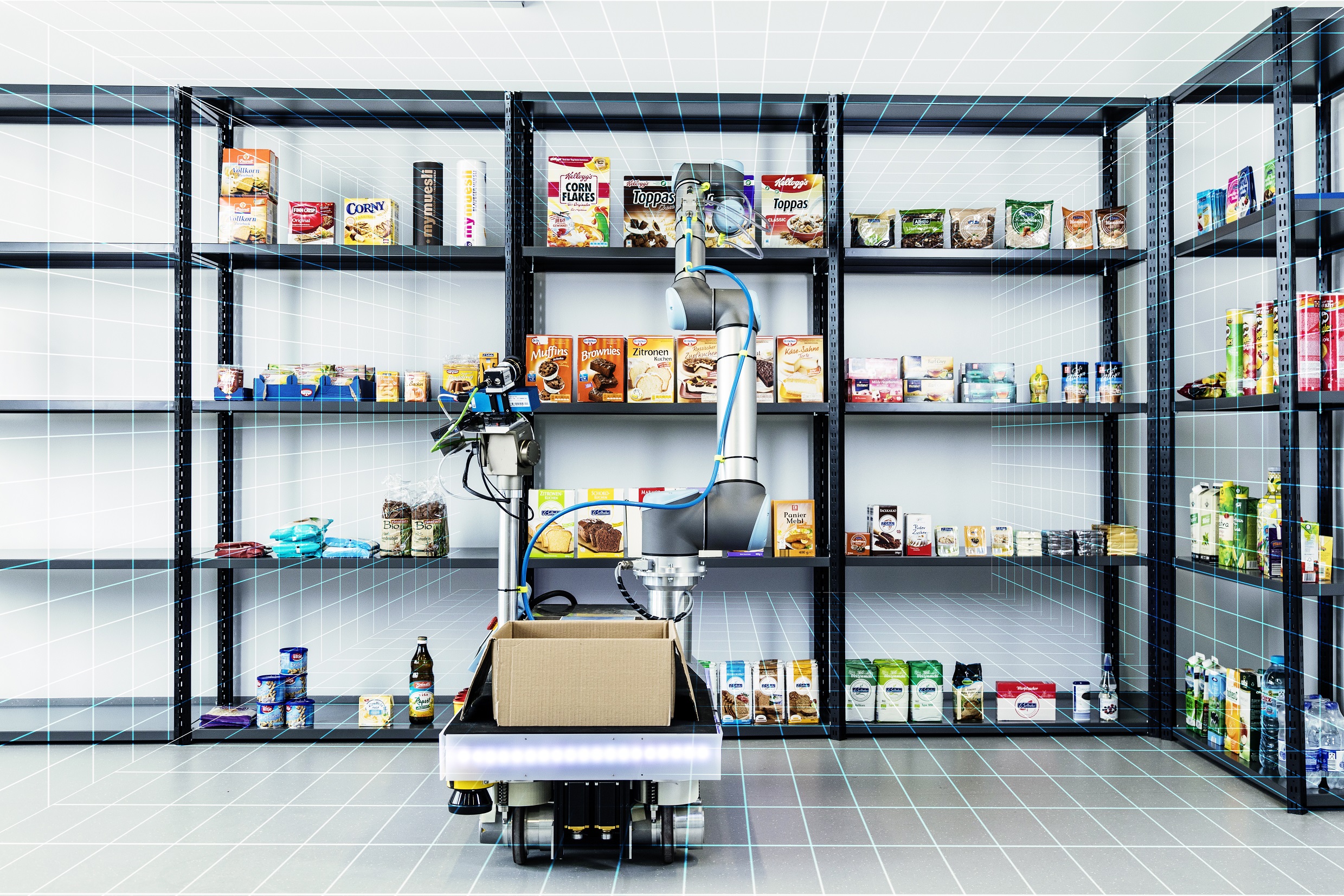
    The topics covered by the AI Innovation Center are very broad. Success stories include the Quick Check for automated end-of-line packaging using AI-based image processing and a robot. It was also examined to what extent image processing and the subfield of machine learning (ML) can be used to automatically detect damage to vehicle bodies, which provides important information to rental car companies or used car dealers, for example. Both Quick Checks led to further collaboration between the companies and Fraunhofer, resulting in the prototyping of the applications. In the context of the service economy, a Quick Check for a book wholesaler was able to demonstrate the possibility of predicting as accurately as possible, using AI, when which products will be ordered and in what quantity.

    Human-centered and application-oriented

    The projects of the AI Innovation Center focus on human-centered AI. This includes the explainability, verifiability, cooperation, integration and robustness of AI technologies. Only when people interact intuitively with new technologies and work together in a trusting manner an optimal utilization of their potential can be achieved. Companies also benefit from the fact that the AI Innovation Center is embedded in Europe's largest AI research network, Cyber Valley, in which it has the task of bridging the gap between top-class fundamental research at various institutions in the Stuttgart-Tübingen area and the technological needs on the user side.

    Statements from project partners

    Company Sick: “The colleagues from Fraunhofer have developed an excellent overview of existing methods for quality assurance of neural networks using the Quick Check. With their expertise, we hope to be able to take further steps in the direction of ‘Safe Artificial Intelligence’.”

    Knorr-Bremse Company: “In the Quick Check, the team at Fraunhofer evaluated the training of models using public datasets to pre-label video scenes. The obtained results are encouraging and form a very good basis for further examination. The very knowledgeable and professional execution of this project was also very well documented by the FhG partners, and we look forward to further possible collaboration with great optimism.”

    Company IDS: “A common goal of Fraunhofer IPA and us is to make AI applicable and explainable. During the Quick Check, Fraunhofer IPA brought us one step closer to this goal through competence and drive. The short project time has already shown that not only the decision of neural networks is important, but also which image features lead to the decision in order to detect data manipulation and distortions. We look forward to continuing this productive collaboration.”

  • Fingertip sensitivity for robots

    Fingertip sensitivity for robots

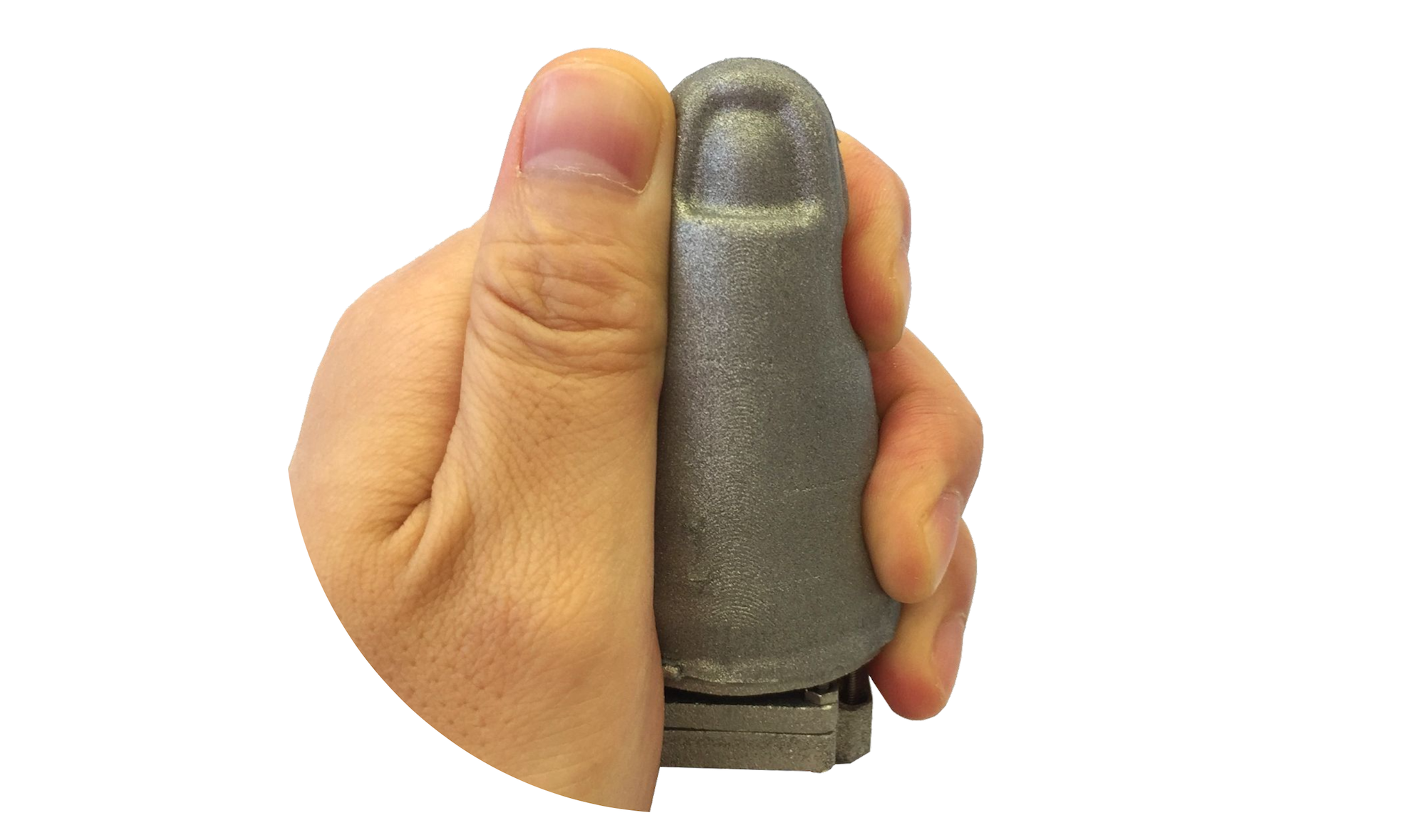
    In a paper published on February 23, 2022 in Nature Machine Intelligence, a team of scientists at the Max Planck Institute for Intelligent Systems (MPI-IS) introduce a robust soft haptic sensor named “Insight” that uses computer vision and a deep neural network to accurately estimate where objects come into contact with the sensor and how large the applied forces are. The research project is a significant step toward robots being able to feel their environment as accurately as humans and animals. Like its natural counterpart, the fingertip sensor is very sensitive, robust, and high resolution.

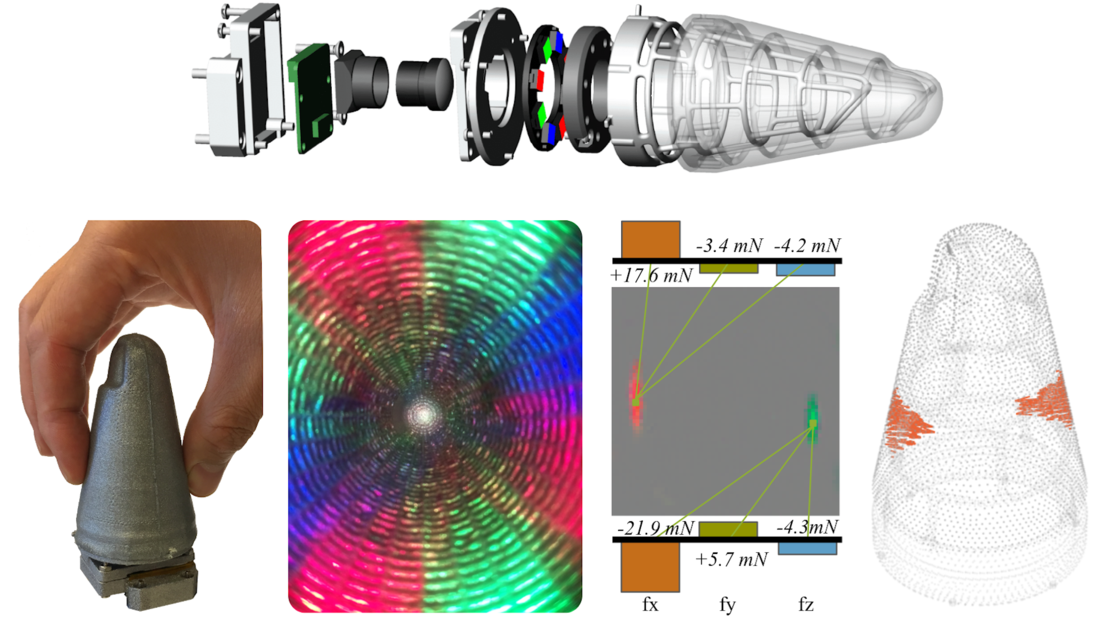
    The thumb-shaped sensor is made of a soft shell built around a lightweight stiff skeleton. This skeleton holds up the structure much like bones stabilize the soft finger tissue. The shell is made from an elastomer mixed with dark but reflective aluminum flakes, resulting in an opaque greyish color which prevents any external light finding its way in. Hidden inside this finger-sized cap is a tiny 160-degree fish-eye camera which records colorful images illuminated by a ring of LEDs.

    When any objects touch the sensor’s shell, the appearance of the color pattern inside the sensor changes. The camera records images many times per second and feeds a deep neural network with this data. The algorithm detects even the smallest change in light in each pixel. Within a fraction of a second, the trained machine-learning model can map out where exactly the finger is contacting an object, determine how strong the forces are and indicate the force direction. The model infers what scientists call a force map: it provides a force vector for every point in the three-dimensional fingertip.

    Figure 1 illustrates the sensor, the camera image generated inside the sensor, and the output of the deep neural network, which shows how accurately the position of contact, the force strength and the force direction can be estimated across the contacting areas. A video also shows the sensor’s functionality.

    “We achieved this excellent sensing performance through the innovative mechanical design of the shell, the tailored imaging system inside, automatic data collection, and cutting-edge deep learning,” says Georg Martius, Max Planck Research Group Leader at MPI-IS, where he heads the Autonomous Learning Group. His Ph.D. student Huanbo Sun adds: “Our unique hybrid structure of a soft shell enclosing a stiff skeleton ensures high sensitivity and robustness. Our camera can detect even the slightest deformations of the surface from one single image.” Indeed, while testing the sensor, the researchers realized it was sensitive enough to feel its own orientation relative to gravity.

    The third member of the team is Katherine J. Kuchenbecker, the Director of the Haptic Intelligence Department at MPI-IS. She confirms that the new sensor will be useful: “Previous soft haptic sensors had only small sensing areas, were delicate and difficult to make, and often could not feel forces parallel to the skin, which are essential for robotic manipulation like holding a glass of water or sliding a coin along a table,” says Kuchenbecker.

    But how does such a sensor learn? Huanbo Sun designed a testbed to generate the training data needed for the machine-learning model to understand the correlation between the change in raw image pixels and the forces applied. The testbed probes the sensor all around its surface and records the true contact force vector together with the camera image inside the sensor. In this way, about 200,000 measurements were generated. It took nearly three weeks to collect the data and another one day to train the machine-learning model. Surviving this long experiment with so many different contact forces helped prove the robustness of Insight’s mechanical design, and tests with a larger probe showed how well the sensing system generalizes.

    Another special feature of the thumb-shaped sensor is that it possesses a nail-shaped zone with a thinner elastomer layer. This tactile fovea is designed to detect even tiny forces and detailed object shapes. For this super-sensitive zone, the scientists choose an elastomer thickness of 1.2 mm rather than the 4 mm they used on the rest of the finger sensor.

    “The hardware and software design we present in our work can be transferred to a wide variety of robot parts with different shapes and precision requirements. The machine-learning architecture, training, and inference process are all general and can be applied to many other sensor designs,” Huanbo Sun concludes.

  • Cyber Valley project awarded funding

    Cyber Valley project awarded funding

    The university competition invites researchers and citizens to actively participate in the research process and work together to meet the challenges of the future. The jury selected the best 15 project ideas from 270 submissions. The Stuttgart-based Cyber Valley project will receive 10,000 euros to run the short story competition until the end of 2022.

    Cyber Storys

    “Should a robot clean your room? Should a computer decide which school you can go to? How do you imagine your life with artificial intelligence? Shape the future with your ideas!” This is the call with which Cyber Storys will be launched from March 28, 2022. Pupils from Baden-Württemberg from the seventh school year onwards can submit their visions for the future with artificial intelligence online, either individually or as a class group, by June 3 and thus provide new impetus for future AI research in the form of narratives. The competition is open to all types of schools and is also aimed at vocational schools. A jury will select the winners at the Stuttgart Science Festival.

    Cyber Storys provides insight into AI research and makes AI ethics tangible with the help of one’s own creativity. The project focuses on young people and young citizens, in line with the motto of the Year of Science 2022 – “Nachgefragt!”. It enables them to contribute their visions of the future to research and science to learn from these impulses. Through the creative form of participation, Cyber Valley aims to awaken young people’s curiosity about AI and impart knowledge. After all, only those who have basic technology skills can classify AI, shape it, and represent their own interests.

    AI teaching materials and writing workshops

    To help create exciting stories, Cyber Storys offers a variety of support. Free educational materials such as an artificial intelligence e-learning course, a workbook, and a teacher’s guide provide basic AI knowledge. The materials will be available at the end of March on the short story contest website. How AI can be addressed in the classroom is the topic of the “Train the trainer” workshops for teachers. In writing workshops in city libraries in the Stuttgart/Tübingen area, young people are supported in the writing process and can meet researchers. Dates will be announced via the project website.

    Networking of institutions in the region

    Cyber Storys is coordinated by Cyber Valley and is created in cooperation with many institutions. The city libraries of Stuttgart, Tübingen, Leinfelden-Echterdingen and Esslingen are participating with, among other things, writing workshops, themed shelves with media related to AI, and readings of the winning stories. The educational materials are offered by Cyber Valley in collaboration with the Stuttgart Research Focus Interchange Forum for Reflecting on Intelligent Systems (SRF IRIS) at the University of Stuttgart and the Landeszentrale für politische Bildung Baden-Württemberg.

    Cyber Valley Public Engagement Manager Rebecca Beiter would like to use the prize money from the university competition for more dialogue: “Not only can we use it to host the writing competition, but we can use the stories as a low-threshold entry point for subsequent readings and dialogue formats between AI researchers and citizens.” Beiter is also excited about the networking and training in science communication, because in addition to financial support, the university competition offers workshops and training for the winning teams. The teams provide regular updates on progress and challenges in project implementation on the university competition blog: www.hochschulwettbewerb.net.

    The university competition is organized annually by Wissenschaft im Dialog (WiD) in cooperation with the German Association of University Communication and the German Rectors’ Conference and is funded by the German Federal Ministry of Education and Research as part of the Year of Science.

  • First ELLIS Institute in Tübingen gets go-ahead

    First ELLIS Institute in Tübingen gets go-ahead

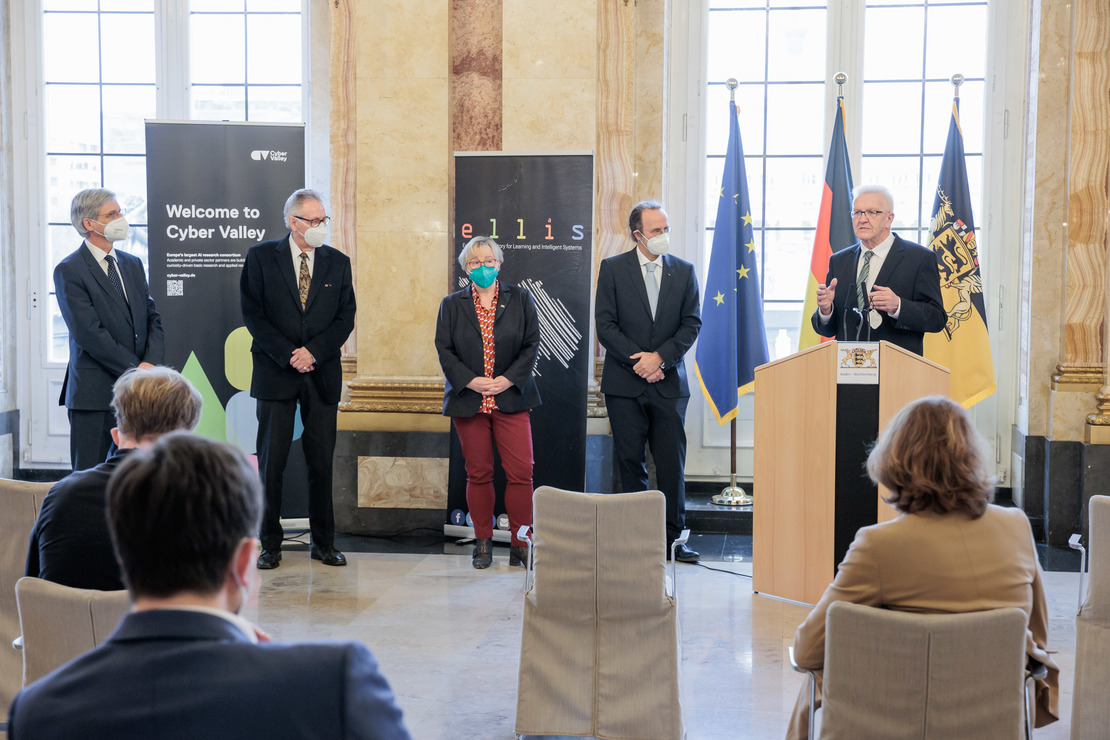
    The ELLIS Institute will be funded by the Hector Foundation with a total of 100 million euros over the next ten years. This will add an institute to the Cyber Valley ecosystem that offers internationally recruited and highly qualified researchers the greatest possible freedom and exceptionally attractive and flexible framework conditions. Due to these framework conditions, the ELLIS Institute will also be perceived internationally as a particularly attractive proposition. The goal is to attract scientific talent from top-level research to move to Baden-Württemberg. The state of Baden-Württemberg is contributing an additional 25 million euros and will provide the structural accommodation and administration for the ELLIS Institute in addition to its previous commitment to Cyber Valley. With the ELLIS Institute, a new European lighthouse with model character is thus being created in Baden-Württemberg for research into artificial intelligence (AI).

    “With the ELLIS Institute, we are igniting the next stage in Cyber Valley. We are making this institute a node in the entire ELLIS network, a network in which top researchers from all over Europe come together. This with exactly one fixed location: the Cyber Valley here in Baden-Württemberg. In the future, the ELLIS Institute will attract the best minds in science from all over the world – the stars of the scene, but just as much our young scientists,” said Minister-President Winfried Kretschmann. “Those who come to the ELLIS Institute can expect the greatest possible legroom, the best possible equipment, an inspiring network of business and science, and the hottest topics on the AI scene. With the Hector Foundation’s generous funding of 100 million euros over the next ten years, ELLIS will be a true research ‘El Dorado’ in Baden-Württemberg.”

    The founder Dr. h. c. Hans-Werner Hector explains his commitment to the ELLIS Institute as follows: “AI is becoming a key technology for many research areas such as medicine, production processes, climate protection and transport – to name just a few. Due to the wide variety of application areas, our lives will be strongly influenced by it in the future. Germany should play an important role in the research field of AI. That’s why we want to support this development with our foundation.”

    Private funding can decisively advance public research

    “The ELLIS Institute is now turning a top European location for artificial intelligence into the top AI location in Europe: Here, experience and vision come together and meet with the outstanding support of the Hector Foundation and the state – we will support the new ELLIS Institute with 25 million euros. With these unique framework conditions, together we will succeed in playing at the very top in the competition for the best minds,” emphasized Science Minister Theresia Bauer.

    Bernhard Schölkopf, who as director at the Max Planck Institute for Intelligent Systems in Tübingen played a key role in the founding of Cyber Valley in 2016 and the European Learning and Intelligent Systems Laboratory (ELLIS) two years later, will chair the new ELLIS Institute as founding director. “Future systems will deal with the complexity of the world by learning from observations – from astronomy to climate research to medicine. We created Cyber Valley and the ELLIS initiative to help shape them. I was very grateful for the opportunity to share extensively with Dr. Hans-Werner Hector about this paradigm shift, and I am now grateful for his generous support. His vision and drive fall on fertile ground here. I hope that the ELLIS Institute will bring many talented people to Baden-Württemberg, radiate far beyond our borders, and contribute to an AI based on our European values,” Schölkopf said.

    “It is great that the Hector Foundation is further expanding its commitment to Tübingen as a research location with its extraordinarily generous support of the ELLIS Institute,” added President Engler. “With the Hector Institute for Empirical Educational Research at the University of Tübingen, which was founded in 2014, the foundation already showed that it is capable of setting forward-looking accents for building the profile of the location and proved that additional private funding can decisively advance public research. The ELLIS Institute is an important step towards positioning Tübingen at the European forefront of a research field that is essential for the further development of society and the economy. In addition, ELLIS will contribute significantly to permanently establish the Cyber Valley ecosystem as a beacon in the EU and beyond.”

    Cyber Valley in Tübingen to be further expanded

    A few weeks ago, the state government of Baden-Württemberg cleared the way for the expansion of the Cyber Valley Campus at the Tübingen site by several buildings with an investment of 180 million euros. One of these planned buildings (“Cyber Valley III”, Maria-von-Linden-Strasse 8) will be the future home of the ELLIS Institute, among others. With Cyber Valley – a central element of the state’s AI strategy – a leading international research location in the field of machine learning, machine vision and robotics has been established since 2016 in a joint initiative of science and industry in cooperation with the state of Baden-Württemberg and the Max Planck Society. With its sites in Stuttgart and Tübingen, Cyber Valley is already one of Europe’s largest research collaborations in the field of artificial intelligence on its fifth birthday in December 2021. Excellent basic research is combined with interdisciplinary and industrial research and a vibrant startup scene to form an innovation ecosystem.

    The research focus in Tübingen is on building learning systems that approach the versatility and robustness of natural intelligent systems. Many AI-based applications are locked into a specific problem, but stop working when that problem changes. They cannot recognize causal relationships. Research is underway in Tübingen on approaches to close this gap.

    ELLIS Institute aims to attract the world’s best AI talent

    One of the goals in Tübingen is also to establish the new ELLIS Institute, a research facility that will attract and retain the world’s top machine learning talent. The “Hector Endowed ELLIS Fellowships” will make it even easier in the future to attract highly qualified and globally sought-after researchers at all career levels, and to offer the greatest possible freedom as well as flexible framework conditions. “Scientists should be offered the best possible conditions to conduct pioneering basic research and to contribute with their research to breakthroughs in application areas,” Schölkopf said.

    The funded Hector Endowed ELLIS Fellows will find an excellent research environment and high-performance commercial enterprises in Cyber Valley. In particular, close cooperation with the Max Planck Institute for Intelligent Systems (MPI-IS) and the University of Tübingen is planned, for example in the form of joint appointments, doctorates and in the use of infrastructure. MPI-IS and the university already operate the Tübingen AI Center, one of Germany’s five AI competence centers, which is jointly funded by the federal and state governments.

    The ELLIS institute in Tübingen is to be followed by other institutes at other locations throughout Europe as part of the ELLIS initiative. The long-term goal of ELLIS is to build a pan-European research organization that can rival the leading AI sites worldwide and whose institutes each act as the nucleus of a highly innovative local ecosystem.

    About ELLIS:

    The European Laboratory for Learning and Intelligent Systems (ELLIS) aims to secure the lasting competitiveness of European AI by pooling the expertise of top researchers in machine learning and related fields across the continent. Founded in 2018, the ELLIS initiative has quickly grown into a pan-European network that counts 34 research units at world-class institutions in 20 countries, four of them in the state of Baden-Württemberg (Freiburg, Heidelberg, Stuttgart, Tübingen). At present, there are 14 ELLIS research programs as well as pan-European PhD program, which was launched in September 2020. With these and other initiatives, the members of the ELLIS network hope to promote excellence in basic research. This will enable European scientists to actively shape the technological and societal revolution of the 21st century with human-centered, beneficial AI.