News Category: Press Release

  • NEURA Robotics joins the Cyber Valley Start-up Network

    NEURA Robotics joins the Cyber Valley Start-up Network

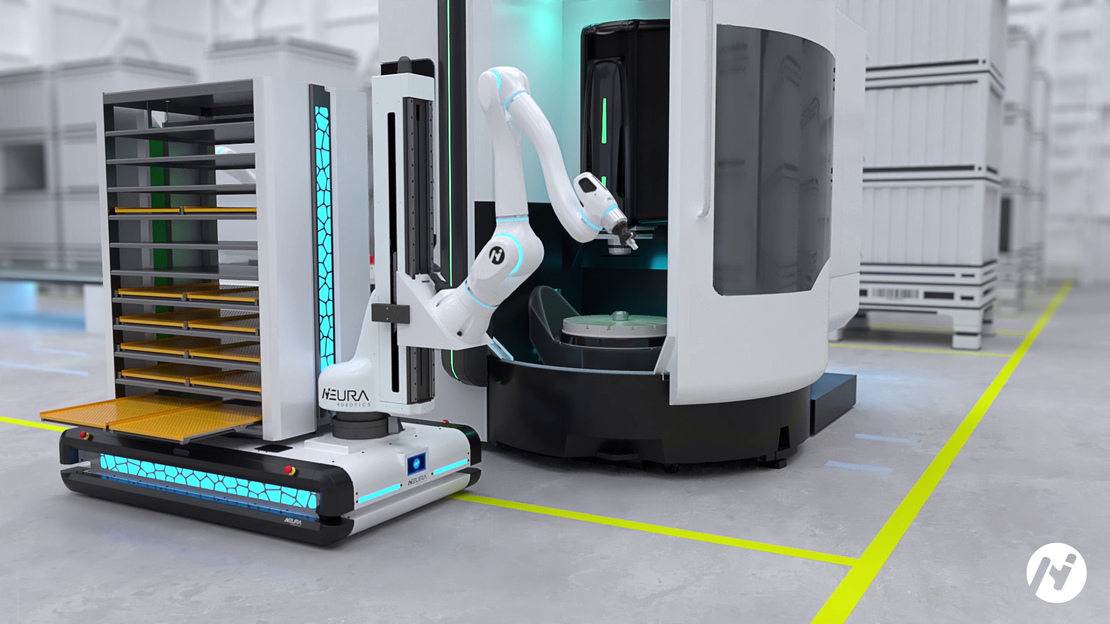
    NEURA Robotics was founded in 2019 in Metzingen near Stuttgart. The start-up builds robotics assistants to collaborate naturally with humans. Among its products is the world’s first commercially available cognitive robot MAiRA, which integrates AI and a Touchless Safe Human Detection sensor technology to perceive its surroundings and easily adapt to different environments. Its other products include:
     

    • LARA, a Lightweight Agile Robotic Assistant that combines a lightweight design with industrial performance.         
    • MAV, a Multi-Sensing Autonomous Vehicle that can autonomously move and load any type of good
    • MiPA, an intelligent, versatile robotic assistant designed to support people in various domains

    MAV MAIRA

    With these robotic assistants, NEURA Robotics has laid the groundwork for humans and robots to work hand-in-hand. By enabling seamless interaction with humans in existing environments, NEURA eliminates the need for complex and expensive safety systems. Their guiding principle, “we serve humanity”, underscores their commitment to creating attractive, safer, and more sociable workspaces.

    NEURA Robotics’ unique approach is to develop key components in-house, including AI, control software, sensors and mechanical parts. Under the leadership of founder David Reger, they have made remarkable advances in environmental perception, control engineering, materials science and artificial intelligence, and are on track to bring the first cognitive humanoid robot to market.

  • Cyber Valley joins forces with Seoul AI Hub and AIIS in historic MOU signing

    Cyber Valley joins forces with Seoul AI Hub and AIIS in historic MOU signing

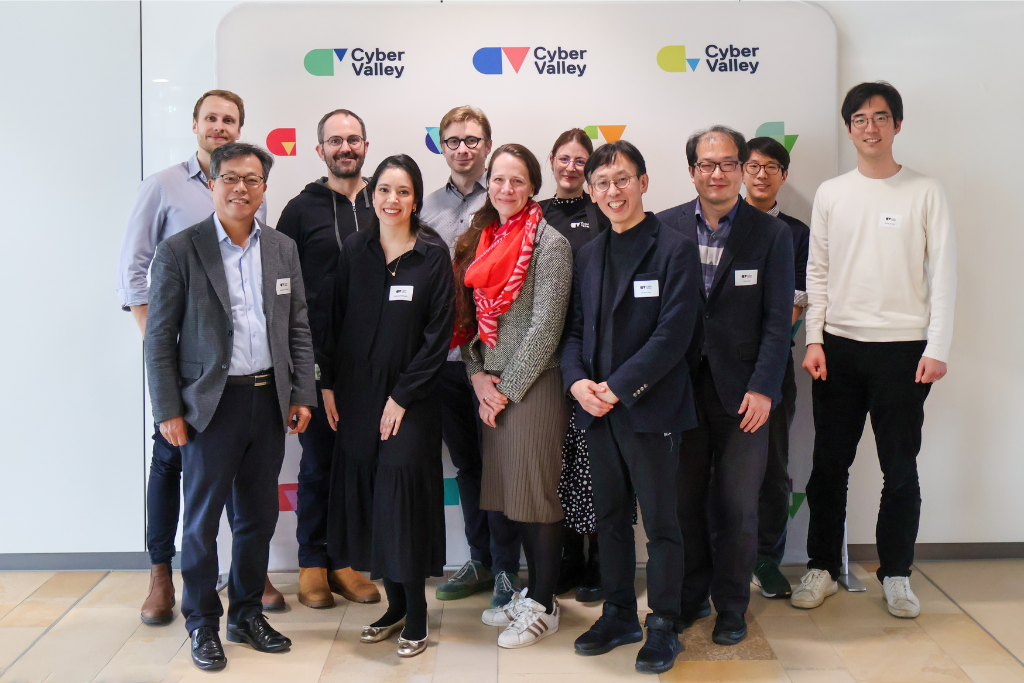
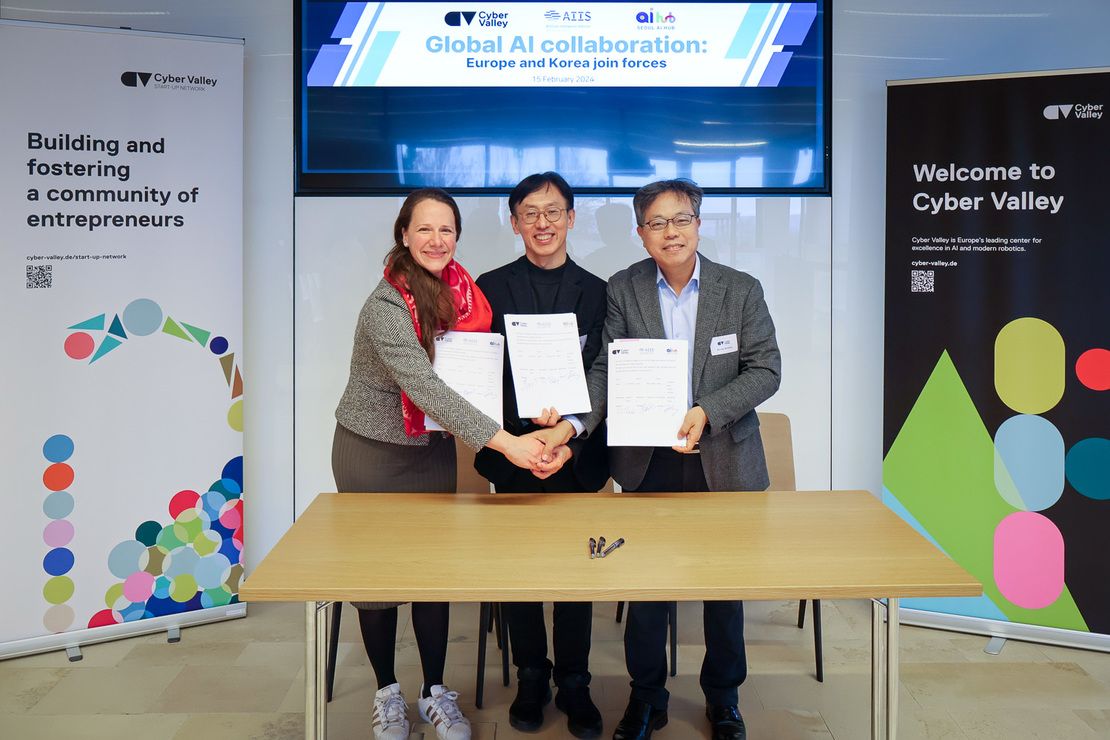
    (Tübingen, 15.02.24) – An official Memoranda of Understanding (MOU) signing ceremony took place on February 15th, 2024, at the Max Planck Institute for Intelligent Systems (MPI-IS) in Tübingen, Germany. This collaboration marks a historic achievement, as it signifies the first official partnership between Cyber Valley and two significant artificial intelligence institutes in Asia.   

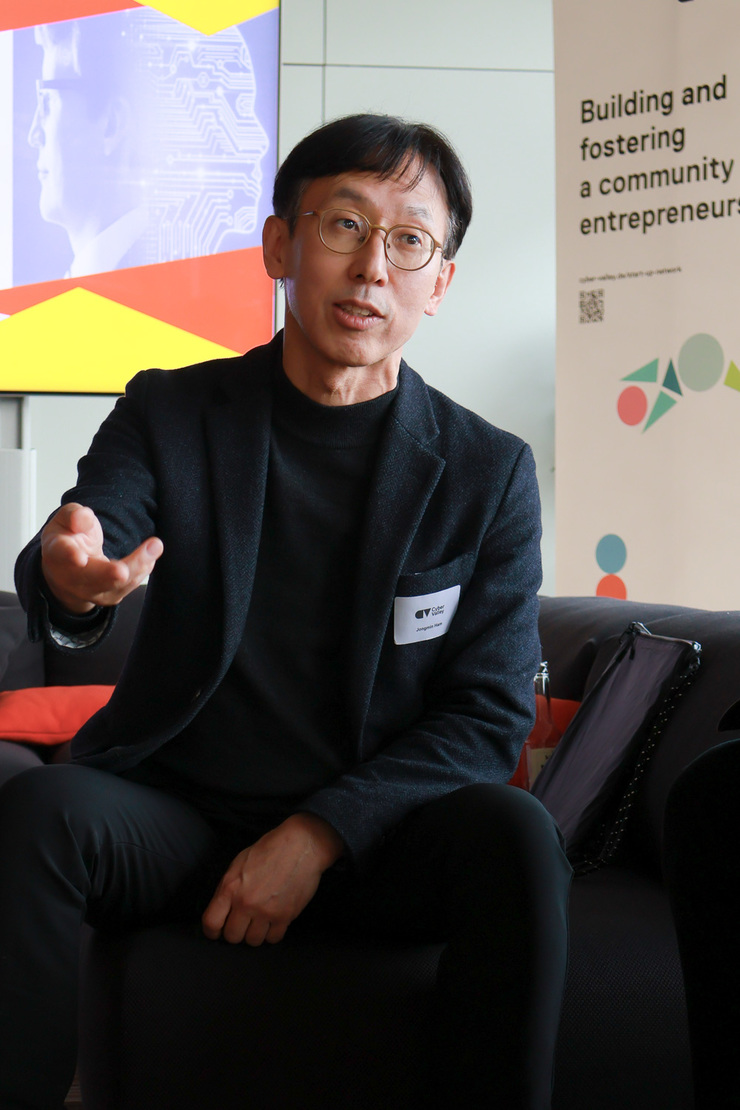
    The ceremony was attended by Rebecca C. Reisch, Managing Director of Cyber Valley, who warmly welcomed the Chief of the Seoul AI Hub, Jong-min Ham, as well as the Director of Artificial Intelligence Institute Seoul National University (AIIS), Byoung-Tak Zhang, highlighting the significance of this unique event. The ceremony featured presentations by two start-ups from the Cyber Valley Community – NeurCG and Tabularis.AI – who underscored the benefits of being situated in Baden Württemberg. Following the ceremony, attendees enjoyed a tour of MPI-IS Tübingen, along with a special lab tour.  


    Strengthening partnership on a global scale  

    The MOU serves as a testament to the commitment of both organizations to foster innovation and collaboration in the field of artificial intelligence. It opens avenues for extensive networking opportunities in Asia and Europe, laying the foundation for future advancements and partnerships.  

    Rebecca C. Reisch elaborates, “The partnership with AI Hub Seoul and the Artificial Intelligence Institute of Seoul National University marks Cyber Valley’s first-ever collaboration between South Korea’s premier AI institutes. This collaboration is poised to transform the artificial intelligence landscape across Asia and Europe, making a lasting impact. The impact of #bettertogether is particularly evident here, where our goal is to advance the growth of start-ups through the collective use of our resources.” 

    Key highlights of the collaboration between the three parties include the sharing of resources, with a specific focus on establishing a funding network and investment avenues for start-ups. Joint research projects and start-up research residencies are also integral components of this partnership, providing a platform for shared exploration and development.

    Innovation and Growth: Seoul AI Hub and AIIS  

    The Seoul AI Hub was established in December 2017 by the city of Seoul and has evolved significantly since then. Thus far, it has facilitated the growth of over 360+ AI start-ups, with particular note on the recent successful IPO of Crowdworks among its portfolio.  

    The Seoul AI Hub plays a role in supporting AI start-ups in Korea. Its assistance spans technical problem-solving, overseas expansion, and management support, among other areas. The strategic location near Gangnam, a pivotal hub in the IT industry with research facilities of major companies, further enhances seamless communication with industry members. The Seoul AI Hub has emerged as a vital stepping stone in the AI start-up realm. 

    Jongmin Ham, Chief of Seoul AI Hub, said, “We have great expectations for jointly fostering and supporting Korean AI start-ups through our collaboration with Cyber Valley and AIIS.” He added, “We hope that our global AI network has paved the way for Korean AI start-ups to thrive in the European market.”

    Established in 2019, the AIIS is an interdisciplinary research institute committed to consolidating and promoting AI-related research. Positioned as a central hub for research in Core AI and X+AI domains, AIIS encourages collaboration among researchers from various disciplines. Their guiding principles include a commitment to AI for All Research, AI for All Industries, and AI for All People. Presently, AIIS boasts approximately 300 affiliated faculty members actively engaged in its initiatives. 

    Byoung-Tak Zhang, Director of the AIIS, said, “ Byoung-Tak Zhang, Director of the AIIS, said, “Since the beginning of the AIIS in 2019, we have always envisioned a global network of specialists in the AI field collaborating with one another to become more than the sum of our parts.” He added, “We are excited to partner with some of the brightest minds in the AI field here at Cyber Valley along with Seoul AI Hub and eagerly anticipate what the future holds for all of us.” 

    Cyber Valley, Seoul AI Hub, and Artificial Intelligence Institute of Seoul National University (AIIS) are excited about the prospects this collaboration brings and anticipate the positive impact it will have on the global AI community.  

    About Cyber Valley  

    Cyber Valley is Europe’s largest and leading center for excellence in artificial intelligence and modern robotics. Its mission and public mandate are to advocate for research, development, application, and acceptance of technologies and methods in the field of intelligent systems. Cyber Valley encourages entrepreneurship by uniting scientific excellence with innovation and technology transfer. In addition, Cyber Valley facilitates critical reflection on the ethical and social implications of AI through public engagement. Cyber Valley envisions a future in which the full potential of intelligent systems is leveraged for the greater good of the world.  

    About Seoul AI Hub  

    Seoul AI Hub is a non-for-profit organization that was established in 2017 by the Seoul Metropolitan Government in order to foster the AI industry. In this regard, Seoul AI Hub now cultivates AI human resources, provides accelerating programs to 250+  membership AI start-ups, and tries to form synergistic connections within the industry. 

    About Artificial Intelligence Institute of Seoul National University (AIIS)  

    Artificial Intelligence Institute of Seoul National University is an intercollegiate research institute established in 2019, committed to integrating and supporting AI-related research. As a hub of AI research both in Core AI and X+AI areas, Seoul National University’s 300+ professors and 2,000+ researchers of diverse disciplines collaborate through AIIS.

  • AI researcher Philipp Hennig receives ERC Consolidator Grant

    AI researcher Philipp Hennig receives ERC Consolidator Grant

    Philipp Hennig is Professor of Machine Learning Methods in the Department of Informatics at the University of Tübingen, part of Cyber Valley, and a member of the board of the Tübingen AI Center and the cluster of excellence Machine Learning: New Perspectives for Science. 

    ANUBIS objectives

    The ANUBIS project aims to manage the computing resources of scientific AI applications comprehensively and consistently. In climate models, geological and neuroscientific simulations, many inference problems occur in which information or a data set is used to indirectly deduce or “infer” the information that is actually being sought. "To solve such inference problems, we need large amounts of data and large computing resources," Hennig explains. "A single partial data set from climate research, for example, can be as large as 100 terabytes (i.e. 100,000 gigabytes)."

    Data processing challenges

    In the project, what a computer does – computing – is regarded as a source of information. This information relates to questions that cannot be answered definitively and perfectly (such as "What will the weather be like in 10 years' time?"). Such questions usually consist of an infinite number of sub-questions that are not fully answered by the calculation. Therefore, while the computer is answering these sub-questions, it should simultaneously keep a record of which parts of the question have already been answered and how well. This is not so easy, because the record-keeping itself is also a calculation. For the whole thing to remain feasible, the record-keeping must therefore be simpler than the calculation itself.

    Innovative approaches to solutions

    To do this, it will be necessary to extend modern machine learning methods so that their functionality harmonizes with the new concept. The advantages of the extended methodology are not only more economical algorithms, but also new functionality. "It will then be easier for researchers from the geosciences, climate sciences and neurosciences, for example, to flexibly incorporate very different types of data such as specific measurements, simulation data and expert knowledge into their code," says Hennig. "The uncertainty of the information from the different data sources must be quantified. Neither was possible with the previous methods."

    Related Links

    Media Contact

    Claudia Brusdeylins
    Tübingen AI Center / Universität Tübingen

  • Cyber Valley scientist Steffen Staab appointed Fellow of ACM

    Cyber Valley scientist Steffen Staab appointed Fellow of ACM

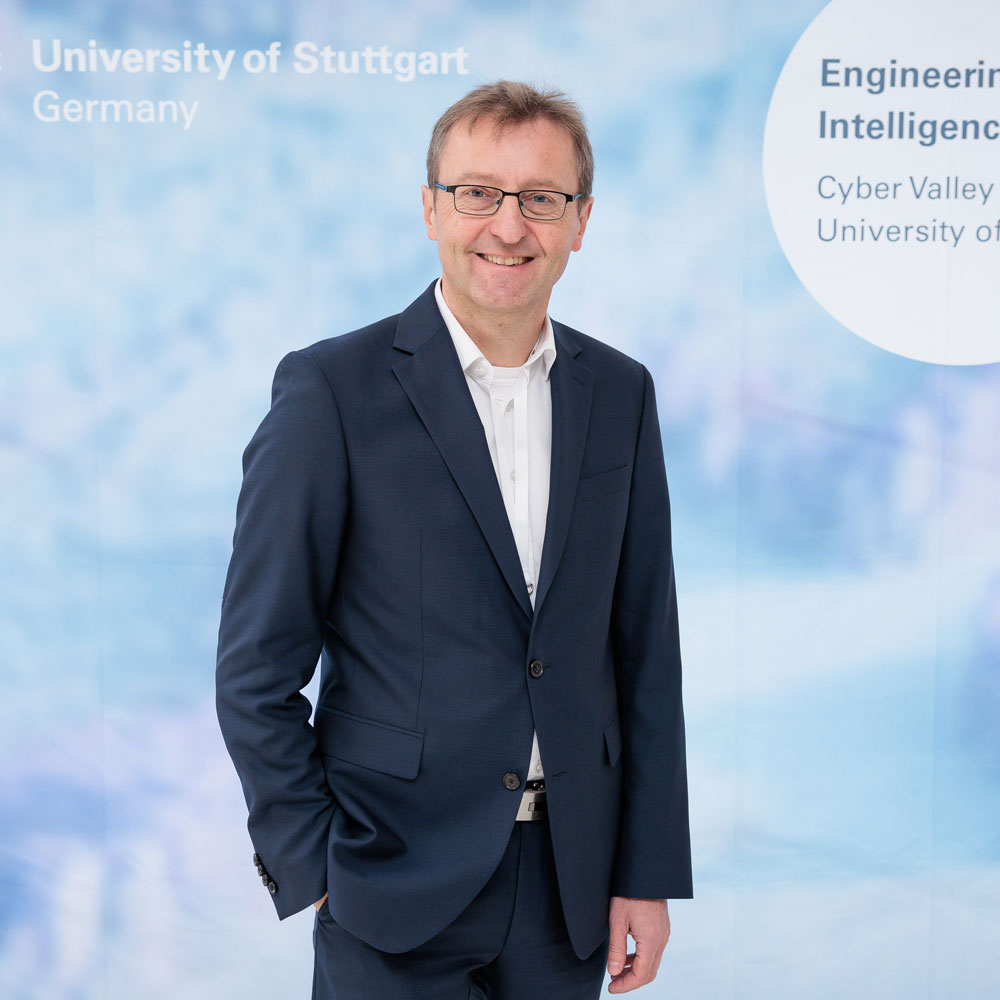
    "I am delighted to have been honored with this title, which has only been awarded to a few German-speaking researchers to date," said Staab. The 54-year-old is researching ways in which computers can be made to solve complex problems through data and knowledge-based learning. "Up to now,” Staab explains, “artificial intelligence algorithms have been trained using datasets, which however, are often insufficient to comprehensively train an algorithm. This is why,” he continues, “my team and I are looking into ways to solve this problem by exploiting existing knowledge, which we have so far made insufficient use of." The computer scientist is pursuing this problem through interdisciplinary collaboration at the University of Stuttgart, within the "Data-integrated Simulation Science" (SimTech) Cluster of Excellence and in Cyber Valley, Europe's leading academic and industry consortium for AI research.

    Better synthetic fertilizer and cancer simulations

    Examples that illustrate Staab's research include artificial fertilizers and cancer. It would be ideal for both the agricultural sector and society in general if only the minimum amount of fertilizer were spread over a field to achieve the necessary concentration in the soil, which is not so easy because soil conditions vary greatly. Cancer is also subject to wide variations: whereas one tumor may grow in a branching form, another may remain compact, which has implications in terms of treatment. Researchers, such as Staab, are currently working at SimTech on the development of simulations that make such complex processes more predictable.

    As Staab explains: "We often don't know which part of the complex mathematical description – which is the starting point for a simulation – is of particular relevance when it comes to achieving meaningful results." Yet this would be important for the simulation. “This,” he continues, “is where AI algorithms can help but we need to train them on existing data, which is often rather scarce. If, however, we could also draw upon existing knowledge, the simulations could be carried out in a more stringent and realistic manner.” In many cases in fact, this knowledge is already available from laboratory studies carried out by other researchers – in some cases many years ago – on both synthetic fertilizers and tumors. "One could also refer to our approach as knowledge-infused simulation science," says Staab.

    About the Association for Computing Machinery

    The ACM is the world's largest and oldest scientific association for computer science. It comprises experts from the fields of education and research and aims to promote computer science both as a science and as a profession. The ACM also awards the Turing Prize, the highest honor in computer science. To be selected as an ACM Fellow, one's personal achievements in the fields studied by the ACM members must be outstanding.

    About Prof. Steffen Staab

    Steffen Staab was born in Würzburg in 1970 and studied Computer Science and Computer Linguistics at both the University of Erlangen-Nuremberg and the University of Pennsylvania. He received his doctorate in Computer Science from the University of Freiburg in 1998. He then went on to work at the University of Stuttgart’s Institute of Human Factors and Technology Management (IAT) as well as at the Fraunhofer Institute for Industrial Engineering (IAO), and later moved to the University of Karlsruhe (now known as KIT). In 2004, Staab was appointed Professor of Databases and Information Systems at the University of Koblenz and Landau, where he founded the Institute for Web Science and Technologies (WeST) in 2009. He has also held the Chair for Web and Computer Science at the University of Southampton since March 2015.

    Staab took up a Cyber Valley Professorship for Analytical Computing at the University of Stuttgart in February 2020. He founded the University's Institute for Artificial Intelligence where he serves as Managing Director and is also one of the two spokespersons for the SimTech Cluster of Excellence.

    Expert contact: 

    Prof. Steffen Staab, University of Stuttgart, Institute for Artificial Intelligence, Phone: +49 711 685-88100, E-Mail: steffen.staab@ki.uni-stuttgart.de

    Media contact:

    Lydia Lehmann, University of Stuttgart, University Communications, 
    Phone: +49 711 685-82297, E-Mail: lydia.lehmann@hkom.uni-stuttgart.de

  • Top supercomputers strengthen UN SDGs and global sustainability

    Top supercomputers strengthen UN SDGs and global sustainability

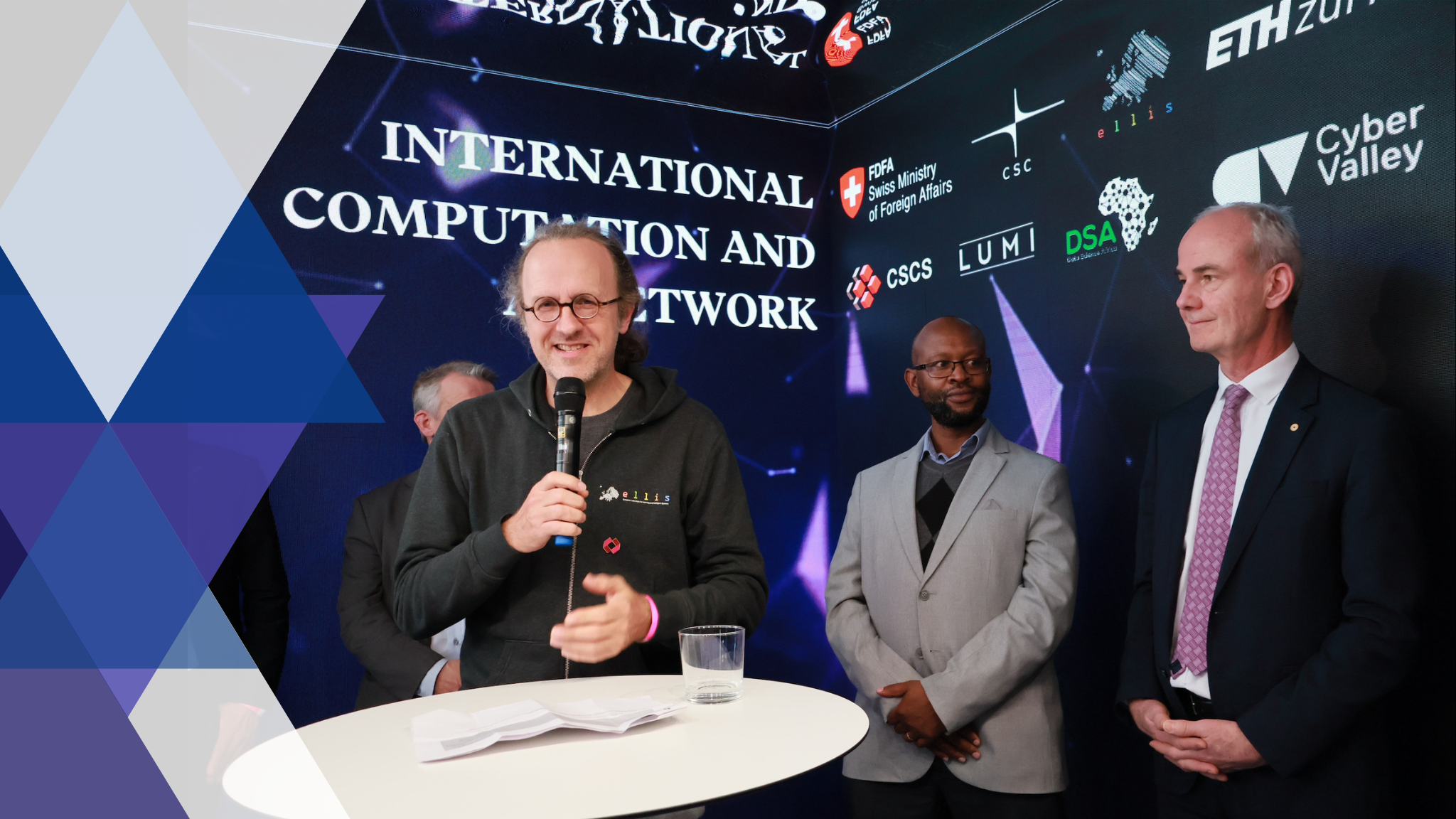
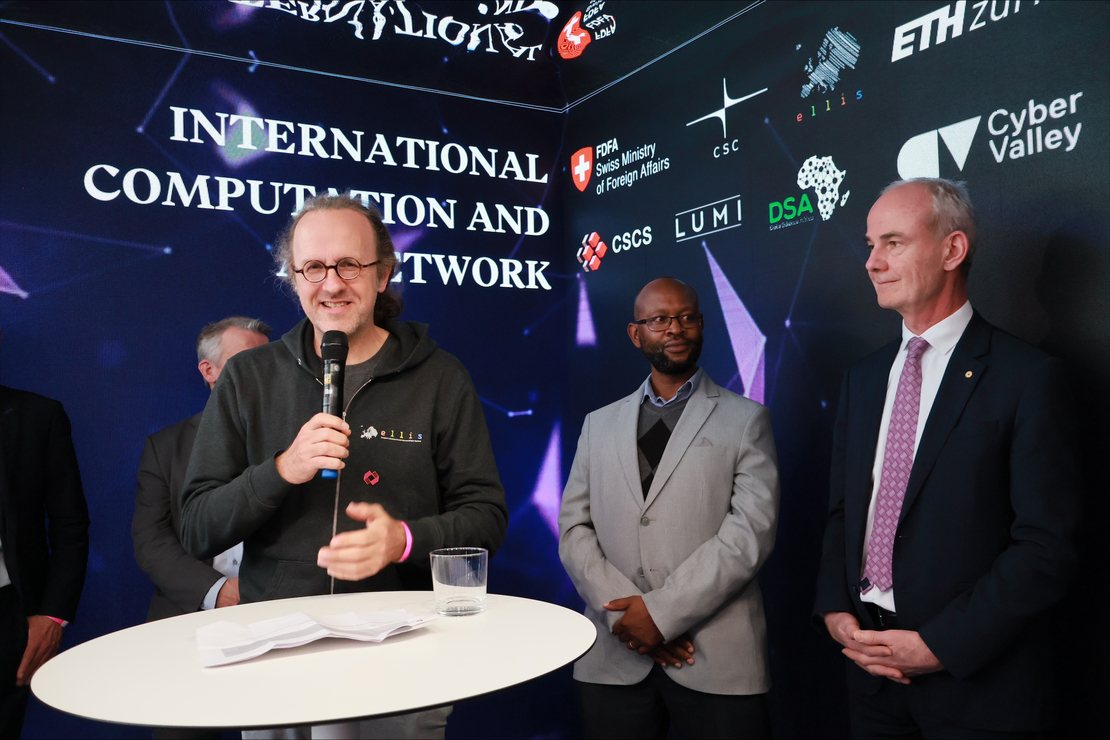
    The new network aims to broaden access to supercomputing, data and software infrastructures, and will operate at the intersection of public and private sectors, academia, and civil society. In addition to ELLIS, ICAIN’s founding members include the Swiss Federal Department of Foreign Affairs, ETH Zurich, the Swiss National Supercomputing Centre, Data Science Africa and the Finnish IT Center for Science, which is the hosting member of the LUMI consortium. 


    Supercomputing facilities is essential for AI-based technologies 

    Artificial intelligence has a profound economic and societal impact on a global scale and can help combat challenges such as climate change and pandemics. However, not all players, especially in the global south, have the same access to expertise and computing resources which are crucial for the development and implementation of innovative AI-based technologies. 

    This is where ICAIN comes in: By broadening access to such resources, the founders of ICAIN aim to enable international research projects that benefit society as a whole and are in line with the United Nations Sustainable Development Goals (SDGs). With the European LUMI and the Swiss ‘Alps’, the new network includes two of the most powerful supercomputers in the world. All founding partners will further contribute to ICAIN by sharing their AI expertise. 

    ICAIN in Davos


    Powering the future of AI excellence internationally 

    ICAIN is set to have a strong impact on AI entrepreneurs and scientists internationally, providing them with the knowledge and necessary tools needed to push their AI advancements to unprecedented heights. This initiative positions Europe as a global leader in AI excellence, fostering innovation and collaboration to drive the capabilities of AI forward.  

    ICAIN is driven by the recognition of artificial intelligence as a crucial technology with the potential to address global challenges. The initiative aims to ensure inclusive participation in AI research and viewing AI solutions as global public goods accessible to all. It prioritizes addressing major scientific and social issues in AI collaboratively and transparently. This also illustrates the importance of collaborative efforts between politics and science to ensure that AI remains at the forefront of future developments. 
     

    Cyber Valley Community Member ELLIS joins forces 

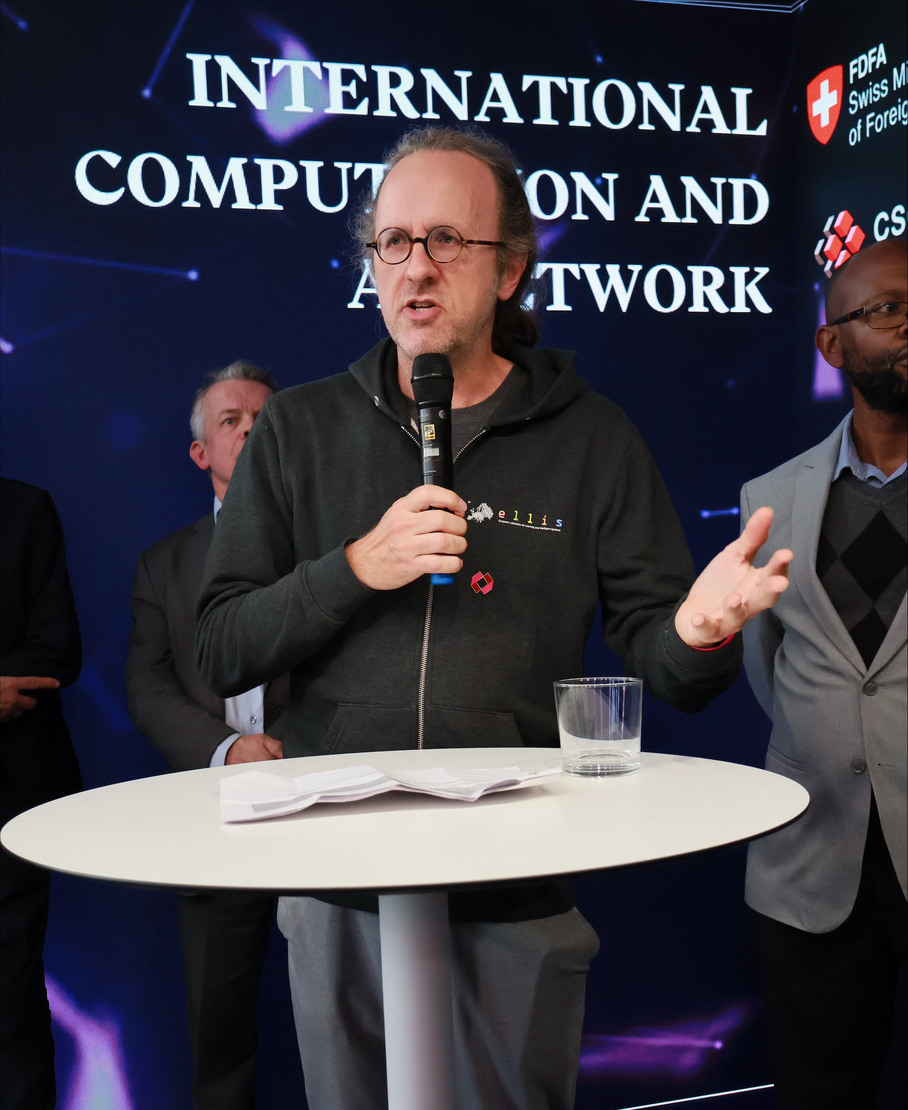
    “ELLIS is a pan-European AI network aiming to create outstanding conditions for AI researchers. More than 1,000 top scientists and leading AI research institutions such as ETH Zurich, Cambridge, Oxford, Paris and Max Planck Institute for Intelligent Systems are part of ELLIS”, says Bernhard Schölkopf, Director of the ELLIS, Director of Max Planck Institute for Intelligent Systems, and Cyber Valley Board Member. “We will contribute our network’s scientific expertise to provide meaningful input on how the compute resources get used, ensuring that the major scientific and social issues of AI are tackled jointly and transparently. We like to think that having ELLIS as a founding partner and co-initiator will be essential to the success of the proposal.”

    Launch highlights  

    ICAIN’s launch was announced at a joint press conference at the World Economic Forum in Davos on January 17, 2024, followed by an inaugural panel discussion:

    Panelists 

    • State Secretary Alexandre Fasel, Swiss Foreign Ministry;   
    • Prof. Bernhard Schölkopf, Director of the ELLIS-Institute, Director Max Planck Institute for Intelligent Systems, and Cyber Valley Board Member 
    • ETH Vice President Prof. Christian Wolfrum;
    • Prof. Ciira Maina, Director of Data Science for Africa 


    Fully operational by 2025

    The ICAIN initiative aims to achieve full completion by 2025. As part of their objectives for the current year, they are actively seeking additional partners, including research institutes, international organizations, companies, or foundations, to join their mission and provide active support. These partners may contribute financial support or offer contributions in kind, such as computing power or specialized expertise.

    Throughout the ongoing incubation phase, governance rule, coordination processes, and financing for ICAIN will be formulated. Simultaneously, the first pilot projects, in collaboration with other entities, will begin to gather valuable experience in partnership collaboration. By 2025, ICAIN aims to have all its organizational structures firmly established.

    Media contact for Cyber Valley at AI House Davos: 

    Hazel Rowland 

    Cyber Valley Media Manager 

    Hazel.Rowland@cyber-valley.de 


    About Cyber Valley  

    Cyber Valley is Europe’s largest and leading center for excellence in artificial intelligence and modern robotics. Its mission and public mandate are to advocate for research, development, application, and acceptance of technologies and methods in the field of intelligent systems. Cyber Valley encourages entrepreneurship by uniting scientific excellence with innovation and technology transfer. In addition, Cyber Valley facilitates critical reflection on the ethical and social implications of AI through public engagement. Cyber Valley envisions a future in which the full potential of intelligent systems is leveraged for the greater good of the world.

    The Cyber Valley Community is a network of AI researchers, entrepreneurs, investors, and start-ups, alongside partners from academia, industry, and society. Cyber Valley GmbH is owned by the State of Baden-Württemberg and the Max Planck Gesellschaft. It acts as the service provider, central organizer, and host for the Cyber Valley Community. While Cyber Valley GmbH is located in Stuttgart and Tübingen, it operates across Baden-Württemberg with a global reach, attracting the best talent from across the world to create the future with AI.


    About ELLIS 

    ELLIS is a pan-European AI network of excellence. It builds upon machine learning as the driver for modern AI and aims to secure lasting international leadership of AI made in Europe by connecting top researchers in this field and by creating a multi-centric AI research laboratory. Founded in 2018, ELLIS has grown into a network that counts 41 ELLIS units at world-class institutions in 16 countries, 16 ELLIS programs and a pan-European PhD program. The members of ELLIS are committed to shaping the future of AI in Europe by pushing the scientific and technological boundaries for human-centered, beneficial and safe AI.

  • Join the global forum for AI progress at AI House Davos

    Join the global forum for AI progress at AI House Davos

    • AI House Davos will bring together leaders in industry, civil society, government, the investing community, and academics to drive the global conversation on artificial intelligence.

    • Confirmed speakers include: Yann LeCun (VP of Meta), Kay Firth-Butterfield (CEO of Good Tech Advisory), Amy Webb (CEO of Future Today Institute), Arvind Krishna (CEO of IBM), Jonas Andrulis (CEO of Aleph Alpha), Theresa May (former Prime Minister of the UK), and Christian Lindner (Germany’s Finance Minister). 

    • Cyber Valley, contributor to the AI House program, invites you to its sessions. 

    Davos, Switzerland. We are pleased to announce the upcoming opening of AI House Davos during the World Economic Forum (WEF) Annual Meeting from January 15-19, 2024. Registration for a packed calendar of events is now open on the AI House website.

    Understanding AI’s current and future capabilities has never been more important. AI will undoubtedly be the dominant discussion at this year’s WEF Annual Meeting, and AI House Davos will be a crucial global forum to bring the deepest discussions on AI to life, from how AI can benefit humankind to how world economies can provide a catalyst for sustainable innovation. 

    The AI House will bring together leaders across diverse sectors — from academics to industry, as well as government, and entrepreneurship — to facilitate deep discussions and collaboration geared toward safeguarding the future of artificial intelligence. The AI House is a dedicated platform with a multidisciplinary and multi-stakeholder approach working to address the challenges and opportunities facing the artificial intelligence ecosyste. This includes conversations surrounding responsible growth, scaling, and regulation. 

    Speakers at AI House include Yann LeCun (VP of Meta), Kay Firth-Butterfield (CEO of Good Tech Advisory), Amy Webb (CEO of Future Today Institute), Arvind Krishna (CEO of IBM), Jonas Andrulis (CEO of Aleph Alpha), Theresa May (former Prime Minister of the UK), Christian Lindner (Germany’s Finance Minister), and many more. Confirmed speakers can be found on the website.


    Cyber Valley events at AI House Davos

    AI House Davos events with Cyber Valley contributions

    Five major themes will be covered throughout the week. Monday will focus on the current state of AI. An Opening Ceremony will take place where the AI House initiators will discuss the activities planned for the week. On Tuesday, a dive into AI’s opportunities and risks will take place. Wednesday will focus on applications of AI. Thursday will look toward the next frontier. On Friday, the program will conclude with a review of the week and a look ahead to the future.

    Members of the press should join the waitlists for the specific sessions at AI House they wish to attend. Invitations are at the discretion of the session organizer. Press inquiries about AI House should be sent to steven.perlberg@merantix.com. 

    AI House is a joint initiative led by Merantix, ETH AI Center, Swisscom, UTokyo Institute for AI and Beyond, Hewlett Packard Enterprise (HPE), and G42. AI House partners and sponsors include the European Commission, European Innovation Council, European AI Forum, Automation Anywhere, EPFL, EY, TÜV AI Lab, Cyber Valley and many more. Forbes, Handelsblatt, and Devex are the media partners. 

    The AI House is perfectly positioned in the heart of the Davos promenade. Just 750 meters from the congress center, this central location ensures seamless access to all the key events in Davos. Find AI House on Promenade 68, Davos Platz.

    Faheem Ahamed, Group CMO of G42, said: “At G42, we embrace a global, inclusive approach to the future of AI. As the Initiator Partner of AI House Davos, we eagerly anticipate engaging with organizations and individuals who share our dedication to leading-edge scientific research, transformative AI applications, and effective regulation. Together, we can accelerate AI's positive impact on society and the global economy, cultivating an ecosystem that fuels innovation while steadfastly upholding ethical standards in the advancement and integration of this transformative technology.”

    Masami Hagiya, Director of UTokyo Institute for AI and Beyond, said: “As AI technologies spread, all aspects of human society are affected and need to change to build a better world. The multi-stakeholder approach of AI House is a suitable framework for discussing issues from different perspectives of human society. The panel on ‘AI Governance and Safety: G7 Hiroshima AI process’ is a typical topic involving multiple stakeholders. Also, UTokyo Institute for AI and Beyond will host ‘AI and Higher Education,’ focusing on how higher education should evolve as generative AI gradually replaces many aspects of human intelligence. ‘Harmony of Coexistence’ will touch on human intelligence and AI from various perspectives.”

    Dr. Rasmus Rothe, CTO and Co-Founder of Merantix, said: “What the AI landscape really needs now in order to thrive is a vibrant community bringing together all the different stakeholders, from investors, startups, academics, regulators, government leaders, and corporates, to discuss AI’s future, learn about AI’s current application in the real world, and create some meaningful new collaborations leveraging AI’s potential. That’s why we initiated AI House, and it’s why Davos is the perfect venue for these discussions.”

    Evan Sparks, Vice President and General Manager for AI Solutions and Supercomputing Cloud, Hewlett Packard Enterprise, said: “AI will have a transformative societal impact. As a fundamental technology, AI will solve complex scientific challenges and make breakthroughs in drug discovery, provide accurate medical diagnosis faster, predict and prevent catastrophic weather events, and advance renewable energy to help us transition to a net-zero world. However, to make AI beneficial to humanity, we must make it accessible, sustainable, and responsible, and the power of collaboration will help us get there. As co-initiators of AI House Davos, we look forward to being a part of an important initiative that will bring together stakeholders across private and public sectors to design, develop, and deliver efficient and ethical AI solutions to benefit the greater good.”

    Dr. Alexander Ilic, Founder and Executive Director of ETH AI Center, said: “In the imminent future, we anticipate many breakthroughs in AI research to catalyze significant advancements towards achieving the Sustainable Development Goals – marking a new era of progress and innovation. From education to healthcare to sustainability, AI is a technology that should be accessible, trustworthy, and safe for everybody. The AI House Davos therefore serves as a central hub, fostering and expediting collaboration between global key stakeholders from academia, industry, NGOs, start-ups, and civil society, all dedicated to realizing our shared vision.”

    Laure Willemin, Executive Vice President of Data, Analytics & AI at Swisscom, said: “The AI House Davos is the start of a joint journey towards a common understanding of AI. Switzerland is the right place to host the AI pioneers from all over the world to meet, connect and shape AI. As one of the most competitive and innovative countries, with its renowned universities, Switzerland plays a leading role in AI research and AI development. Swisscom is excited to be part of this journey and committed to develop trusted AI solutions to the benefit of Switzerland.”

    More information about the AI House and its initiators, partners, and sponsors can be found here. 

    Media contact:
    Steven Perlberg
    Head of Communications at Merantix
    steven.perlberg@merantix.com 

    Media contact for Cyber Valley at AI House Davos:
    Hazel Rowland
    Cyber Valley Media Manager
    Hazel.Rowland@cyber-valley.de
  • Expanding the Cyber Valley Start-up Network: Welcoming mine&make and nuvus

    Expanding the Cyber Valley Start-up Network: Welcoming mine&make and nuvus

    Mine&make GmbH has successfully crafted an AI-based business development platform tailored to individual requirements. The company provides customized insights into business opportunities, empowering each customer to expand across diverse industries. Mine&make not only identifies these opportunities but also undertakes the responsibility of carrying out and implementing them. Leveraging artificial intelligence, the platform analyzes individual products and technical competencies to to unveil prospects such as new applications, adjacent functionalities, new technologies, expansion into untapped market fields, and the formulation of high-potential product strategies.

    The platform, powered by a AI-based Insights Engine, serves multifunctional purposes in research and development (R&D), marketing, and sales. Mine&make is dedicated to maximizing the business potential of its clients, offering avenues for opportunity development through workshops, insights, and projects. 

    Image: mine&make GmbH
    Nuvus GmbH specializes in guiding clients through the seamless implementation and integration of cutting-edge technologies, leveraging AI software testing. Their core expertise lies in testing, integration, and security, complemented by proficiency in software development and automotive engineering.

    As a premier testing service provider, nuvus offers a comprehensive suite of solutions, encompassing verification and validation services, defect management and configuration, error analysis, and traceability. Additionally, they excel in planning and executing test drives. Harnessing the power of artificial intelligence, nuvus provides invaluable support in bug prediction, resource optimization, process automation, and machine learning. 

    Image: nuvus GmbH

    By becoming part of the Cyber Valley Start-up Network, nuvus and mine&make have joined a vibrant AI community dedicated to advancing technology and promoting collaboration among start-ups, researchers, and industry partners. 

  • Cyber Valley welcomes vialytics to its Start-up Network

    Cyber Valley welcomes vialytics to its Start-up Network

    With already over 300 municipalities across seven countries using their system, vialytics is setting the standard for AI-based road management systems. The company's cloud software has proven instrumental in streamlining processes for municipal administrations, providing actionable insights that contribute to more efficient road maintenance strategies.

    One of their contributions to the field is its artificial intelligence system designed for objective, rapid, and accurate analysis of asphalt surfaces. This innovation addresses the significant cost and time associated with traditional road condition assessments. By leveraging AI algorithms, the start-up ensures precise evaluation of asphalt conditions to be able to make informed decisions for optimal road maintenance planning.

    "In the dynamic landscape of road management, vialytics is proud to lead the way with cutting-edge AI solutions that revolutionize the industry," says Co-Founder and Chief Evangelist Danilo Jovicic-Albrecht at vialytics. "Our commitment to innovation through AI and sustainability aligns perfectly with the values of the Cyber Valley Start-up Network. We are excited to collaborate within this growing AI ecosystem in Southern Germany."

    Through joining the Cyber Valley Start-up Network, vialytics is now part of a dynamic AI community that is focused on driving technological advancements and fostering collaboration between start-ups, researchers, and industry leaders.

  • MATVIS joins the Cyber Valley Start-up Network

    MATVIS joins the Cyber Valley Start-up Network

    MATVIS provides expert guidance to customers seeking to integrate AI into their business to optimize processes, increase efficiency, and enhance transparency. The start-up focuses on providing technology solutions for businesses developing regulatory-compliant AI. The company’s academic background in machine learning, computer science, electrical engineering, and economics means that MATVIS can work on implementing compliance processes such as AI risk management and certification systems in high-risk applications. 

    Established in 2023, MATVIS was driven by a growing demand for future-proof AI solutions that adhere to continuously evolving standards in the field of AI development. In response, MATVIS offers a platform solution to address the potential problems that AI companies may encounter in the future.

    “We all felt that some sort of regulation for AI must be coming at some point but we couldn’t imagine what the future of AI will be like”, says Wolfgang Glatz, MATVIS’s co-founder. “From a present perspective, regulatory-compliant AI will be a chance to establish the trademark of trustworthy AI, made in Europe.”


    About Cyber Valley

    Cyber Valley is Europe’s largest and leading research consortium in the field of artificial intelligence (AI) and modern robotics. Cyber Valley has a mission and a public mandate to advocate for entrepreneurship, research, development, application, and acceptance of technologies and methods in the field of intelligent systems. The company envisions a future where the full potential of intelligent systems is leveraged for the greater good of the world.

    The Cyber Valley Community brings together partners from science, industry, and society, along with AI researchers and entrepreneurs. The Cyber Valley GmbH is funded by the state of Baden-Württemberg and acts as the central organizer, service provider, and host for the community. While the GmbH operates from Stuttgart and Tübingen, Cyber Valley has a larger scope: As a national and European driving force, it attracts the best people from all over the world to create the future with AI.

    About the Cyber Valley Start-up Network   

    Cyber Valley's Start-up Network builds and fosters a community of AI entrepreneurs. Members enjoy exclusive access to a wide-ranging network, connecting them with AI researchers, investors, corporations, and fellow start-ups. Members are required to have a connection to Cyber Valley, either by being located in Baden-Württemberg, or by being members or alumni of Cyber Valley partner institutions. The core of their business model must be centered around intelligent systems. The Start-up Network is growing continuously. More information about the current number of start-ups and the application process: cyber-valley.de/start-up-network. 

    About MATVIS

    MATVIS is the reliable partner for transferring future technologies into efficient and reliable solutions for the present so that companies and organizations can achieve their ecological, economic, and social goals in the best possible way. MATVIS’s know-how empowers their partners with the implementation of regulatory-compliant AI. We advise on potentials with Al-based optimization of processes and create sustained compliance concepts that increase efficiency, enhance transparency, and enable the achievement of sustainability goals.