News Category: Press Release

  • Cyber Valley expands start-up and investor networks

    Cyber Valley expands start-up and investor networks

    “The continued growth of our networks underscores the attractiveness and importance that characterizes Cyber Valley as a European AI hotspot,” says Rebecca C. Reisch, Managing Director of Cyber Valley GmbH. “Increasingly, this relates not only to artificial intelligence research, but also to the concrete application of modern AI technologies – including in the areas of health and climate protection, as the latest additions impressively demonstrate.”

    BrainKey quantifies brain health and align patients with the right treatment. For that, multimodal data fusion is used on biomedical data such as genetic and imaging data in order to assess brain health and provide treatment recommendations. “We created BrainKey to create a powerful new tool that can fundamentally improve how we identify, treat, and manage brain health. It’s a personal mission for me but it’s a global problem”, says BrainKey founder Owen Philips, who resides in Tübingen.

    The Stuttgart-based company Concular enables building owners and manufacturers to efficiently reduce emissions, resources and waste and comply with regulations. With digital passports and tools, all stakeholders are capable to identify, trace, measure and circulate material flows. “We are excited to be part of the Cyber Valley Start-up Network to digitally and sustainably transform the construction industry jointly with technology”, says Dominik Campanella, co-founder and CEO of Concular.

    TREEO’s vision is to reverse climate change with smallholder farmers to succeed in harmony with nature. The start-up from Stuttgart wants to empower farmers to monetize their carbon removals. By doing that, the farmers improve their livelihoods and fully capitalize upon their carbon equity, recognizing them as valuable asset holders. “We are excited to infuse the latest AI competence and build an expert network for the young TREEO start-up, an offspring from Fairventures, with the help of Cyber Valley”, says Stefan Ferber, Executive Director and co-founder of TREEO. “Ultimately, this will boost our teams in software development and carbon data analytics, building the bridge between climate technology and real climate action.”

    The investor Plug and Play Tech Center operates from more than 35 locations worldwide investing in future-thinking companies such as PayPal, Danger, Dropbox, and Lending Club. “We want to support the local AI start-up ecosystem by helping them to connect to leading industrial corporations through our innovation platform comprising a network out of more than 600 world’s largest corporations and by funding these innovative start-ups”, says Tim Solle, Plug and Play Tech Center analyst.

  • 1.5 million euros for micro-medical robots 

    1.5 million euros for micro-medical robots 

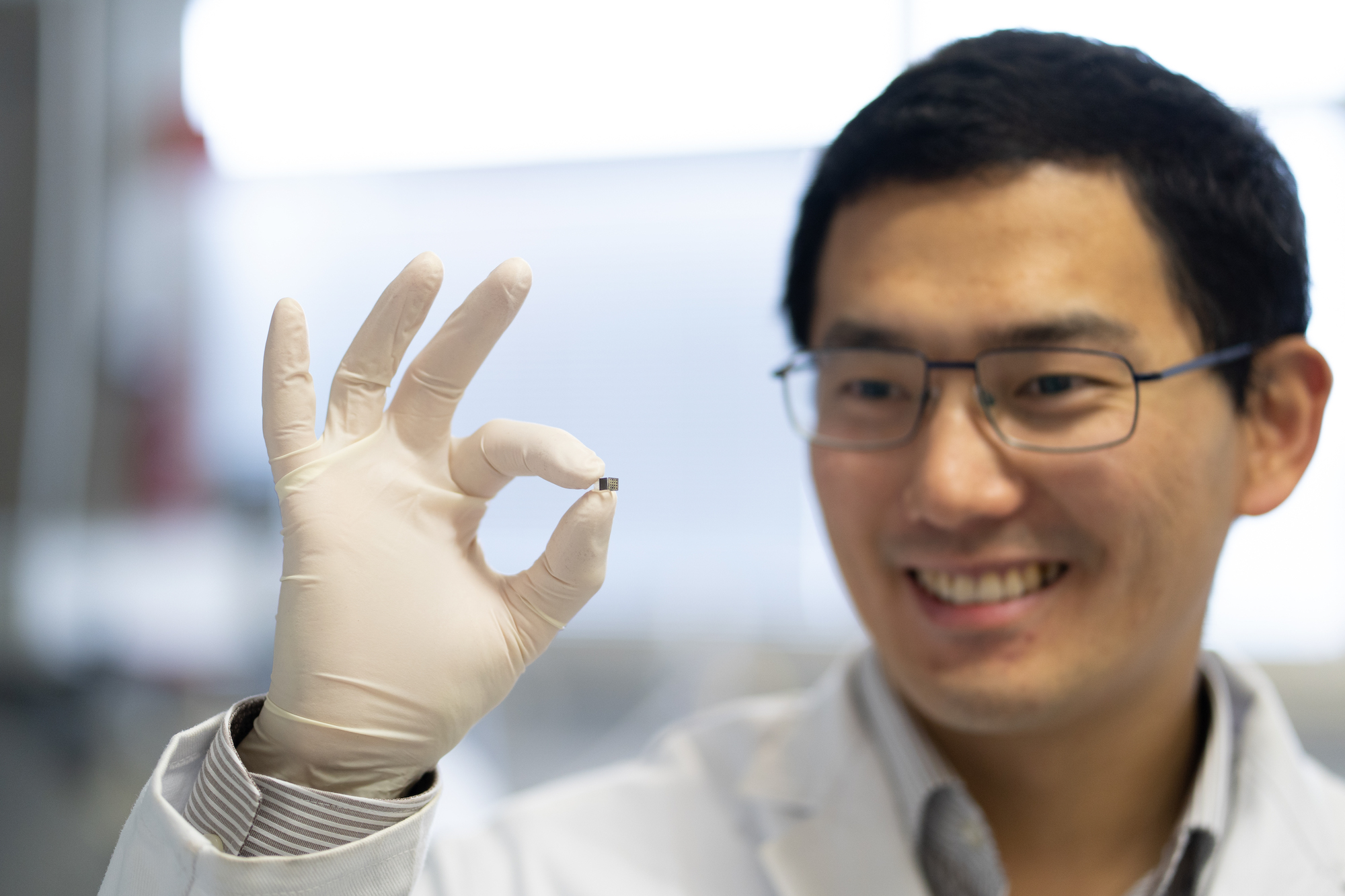
    How could drugs be used in the body in a more targeted way in the future? Biomedicine could provide an answer. Dr. Tian Qiu is researching tiny robots that travel through the human body. Tian Qiu and his team already succeeded in steering nanorobots through the dense tissue of an eyeball for minimally invasive drug delivery, which had never been achieved before.

    In the “VIBEBOT” project, Qiu and his team are taking this approach further: They are going to build the first micro-sized robot that can actively propel and wirelessly sense in deep biological tissues. For the project, Qui was inspired by nature: “We know that worms, for example, can penetrate human skin to infect humans. Why can't we build a similar-sized robotic system that can penetrate soft tissue to treat disease?” Research on this holds enormous potential for future minimally invasive medicine, “such as targeted drug delivery for tumor therapy,” Qiu said.

    Tian Qiu has been Cyber Valley research group leader for “Biomedical Microsystems” since 2019. The group is based at the Institute of Physical Chemistry at the University of Stuttgart. Previously, he studied mechanical and biomedical engineering at Tsinghua University in Beijing, which is considered China's leading technical university. He came to Europe in 2012, earning a PhD in biotechnology and bioengineering at Switzerland's Ecole Polytechnique Fédérale de Lausanne (EPFL) and conducting research at the Max Planck Institute for Intelligent Systems (MPI-IS).

    With the ERC Starting Grants, the European Research Council supports outstanding young scientists for innovative projects in basic research. The ERC evaluates the applications exclusively according to the criterion of scientific excellence. The research project “VIBEBOT” will receive funding of 1.5 million euros; the funding will run for five years. With the new grant, the University of Stuttgart is home to twelve active ERC grants, including six ERC Starting Grants (overview of scientists at the University of Stuttgart who have been awarded an ERC Grant). Two other Cyber Valley researchers were also awarded ERC Grants, an ERC Starting Grant and an ERC Consolidation Grant.

    _______________
    Further information
    From researcher to founder
    Scope of Cyber Valley research expanded to include intelligent biomedical microsystems

  • On a mission to one day battle cancer

    A team of scientists in the Physical Intelligence Department at the Max Planck Institute for Intelligent Systems have combined robotics with biology by equipping E. colibacteria with artificial components to construct biohybrid microrobots. Firstly, as can be seen in Figure 1, the team attached several nanoliposomes to each bacterium. On their outer circle, these spherical-shaped carriers enclose a material (ICG, green particles) that melts when illuminated by near infrared light. Further towards the middle, inside the aqueous core, the liposomes encapsulate water soluble chemotherapeutic drug molecules (DOX).

    The second component the researchers attached to the bacterium is magnetic nanoparticles. When exposed to a magnetic field, the iron oxide particles serve as an on-top booster to this already highly motile microorganism. In this way, it is easier to control the swimming of bacteria – an improved design toward an in vivo application. Meanwhile, the rope binding the liposomes and magnetic particles to the bacterium is a very stable and hard to break streptavidin and biotin complex, which was developed a few years prior and comes in useful when constructing biohybrid microrobots.

    Figure 1: Bacterial biohybrids carrying nanoliposomes (200 nm) and magnetic nanoparticles (100 nm). Nanoliposomes are loaded with chemotherapeutic DOX and photothermal agent ICG, and both cargoes are conjugated to E. coli bacteria (2 to 3 µm in length) via biotin-streptavidin interactions. Akolpoglu et al., Sci. Adv. 8, eabo6163 (2022).

    E.coli bacteria are fast and versatile swimmers that can navigate through material ranging from liquids to highly viscous tissues. But that is not all, they also have highly advanced sensing capabilities. Bacteria are drawn to chemical gradients such as low oxygen levels or high acidity – both prevalent near tumor tissue. Treating cancer by injecting bacteria in proximity is known as bacteria mediated tumor therapy. The microorganisms flow to where the tumor is located, grow there and in this way activate the immune system of patients. Bacteria mediated tumor therapy has been a therapeutic approach for more than a century.

    For the past few decades, scientists have looked for ways to increase the superpowers of this microorganism even further. They equipped bacteria with extra components to help fight the battle. However, adding artificial components is no easy task. Complex chemical reactions are at play, and the density rate of particles loaded onto the bacteria matters to avoid dilution. The team in Stuttgart has now raised the bar quite high. They managed to equip 86 out of 100 bacteria with both liposomes and magnetic particles.
     
    The scientists showed how they succeeded in externally steering such a high-density solution through different courses. First, through an L-shaped narrow channel with two compartments on each end, with one tumor spheroid in each. Second, an even narrower set-up resembling tiny blood vessels. They added an extra permanent magnet on one side and showed how they precisely control the drug-loaded microrobots towards tumor spheroids. And third – going one step further – the team steered the microrobots through a viscous collagen gel (resembling tumor tissue) with three levels of stiffness and porosity, ranging from soft to medium to stiff. The stiffer the collagen, the tighter the web of protein strings, the more difficult it becomes for the bacteria to find a way through the matrix (Figure 2). The team showed that once they add a magnetic field, the bacteria manage to navigate all the way to the other end of the gel as the bacteria had a higher force. Because of constant alignment, the bacteria found a way through the fibers.

    Figure 2: Schematic showing bacterial biohybrid microrobots magnetically guided through fibrous environments. Bacterial biohybrids can release their payload upon NIR irradiation. Akolpoglu et al., Sci. Adv. 8, eabo6163 (2022).

    Once the microrobots are accumulated at the desired point (the tumor spheroid), a near infrared laser generates rays with temperatures of up to 55 degrees Celsius, triggering a melting process of the liposome and a release of the enclosed drugs. A low pH level or acidic environment also causes the nanoliposomes to break open – hence the drugs are released near a tumor automatically.
     
    “Imagine we would inject such bacteria based microrobots into a cancer patient’s body. With a magnet, we could precisely steer the particles towards the tumor. Once enough microrobots surround the tumor, we point a laser at the tissue and by that trigger the drug release. Now, not only is the immune system triggered to wake up, but the additional drugs also help destroy the tumor,” says Birgül Akolpoglu, a Ph.D. student in the Physical Intelligence Department at MPI-IS. She is the first author of the publication titled “Magnetically steerable bacterial microrobots moving in 3D biological matrices for stimuli-responsive cargo delivery” co-led by former postdoctoral researcher in the Physical Intelligence Department, Dr. Yunus Alapan. It was published in Science Advances on July 15, 2022.
     
    “This on-the-spot delivery would be minimally invasive for the patient, painless, bear minimal toxicity and the drugs would develop their effect where needed and not inside the entire body,” Alapan adds.
     
    “Bacteria-based biohybrid microrobots with medical functionalities could one day battle cancer more effectively. It is a new therapeutic approach not too far away from how we treat cancer today,” says Prof. Dr. Metin Sitti, who leads the Physical Intelligence Department and is the last author of the publication. “The therapeutic effects of medical microrobots in seeking and destroying tumor cells could be substantial. Our work is a great example of basic research that aims to benefit our society.”

  • Robot dog learns to walk in one hour

    Robot dog learns to walk in one hour

    A newborn giraffe or foal must learn to walk on its legs as fast as possible to avoid predators. Animals are born with muscle coordination networks located in their spinal cord. However, learning the precise coordination of leg muscles and tendons takes some time. Initially, baby animals rely heavily on hard-wired spinal cord reflexes. While somewhat more basic, motor control reflexes help the animal to avoid falling and hurting themselves during their first walking attempts. The following, more advanced and precise muscle control must be practiced, until eventually the nervous system is well adapted to the young animal’s leg muscles and tendons. No more uncontrolled stumbling – the young animal can now keep up with the adults.

    Researchers at the Max Planck Institute for Intelligent Systems (MPI-IS) in Stuttgart conducted a research study to find out how animals learn to walk and learn from stumbling. They built a four-legged, dog-sized robot, that helped them figure out the details.

    “As engineers and roboticists, we sought the answer by building a robot that features reflexes just like an animal and learns from mistakes,” says Felix Ruppert, a former doctoral student in the Dynamic Locomotion research group at MPI-IS. “If an animal stumbles, is that a mistake? Not if it happens once. But if it stumbles frequently, it gives us a measure of how well the robot walks.”

    Felix Ruppert is first author of “Learning Plastic Matching of Robot Dynamics in Closed-loop Central Pattern Generators”, which was published July 18, 2022 in the prestigious journal Nature Machine Intelligence.

    Learning algorithm optimizes virtual spinal cord

    After learning to walk in just one hour, Ruppert’s robot makes good use of its complex leg mechanics. A Bayesian optimization algorithm guides the learning: the measured foot sensor information is matched with target data from the modeled virtual spinal cord running as a program in the robot’s computer. The robot learns to walk by continuously comparing sent and expected sensor information, running reflex loops, and adapting its motor control patterns.

    The learning algorithm adapts control parameters of a Central Pattern Generator (CPG). In humans and animals, these central pattern generators are networks of neurons in the spinal cord that produce periodic muscle contractions without input from the brain. Central pattern generator networks aid the generation of rhythmic tasks such as walking, blinking or digestion. Furthermore, reflexes are involuntary motor control actions triggered by hard-coded neural pathways that connect sensors in the leg with the spinal cord.

    As long as the young animal walks over a perfectly flat surface, CPGs can be sufficient to control the movement signals from the spinal cord. A small bump on the ground, however, changes the walk. Reflexes kick in and adjust the movement patterns to keep the animal from falling. These momentary changes in the movement signals are reversible, or ‘elastic’, and the movement patterns return to their original configuration after the disturbance. But if the animal does not stop stumbling over many cycles of movement – despite active reflexes – then the movement patterns must be relearned and made ‘plastic’, i.e., irreversible. In the newborn animal, CPGs are initially not yet adjusted well enough and the animal stumbles around, both on even or uneven terrain. But the animal rapidly learns how its CPGs and reflexes control leg muscles and tendons.

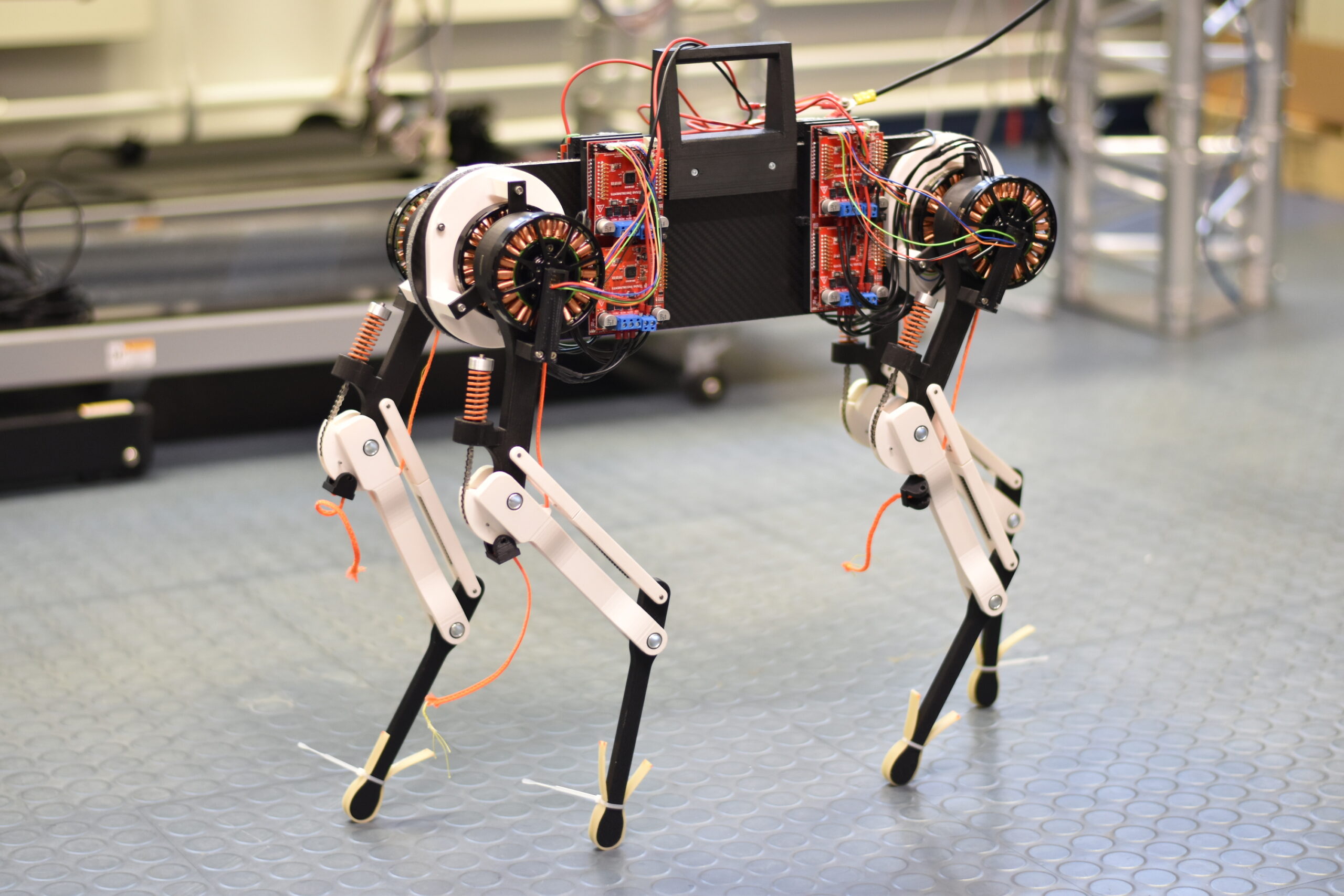
    The same holds true for the Labrador-sized robot-dog named “Morti”. Even more, the robot optimizes its movement patterns faster than an animal, in about one hour. Morti’s CPG is simulated on a small and lightweight computer that controls the motion of the robot’s legs. This virtual spinal cord is placed on the quadruped robot’s back where the head would be. During the hour it takes for the robot to walk smoothly, sensor data from the robot’s feet are continuously compared with the expected touch-down predicted by the robot’s CPG. If the robot stumbles, the learning algorithm changes how far the legs swing back and forth, how fast the legs swing, and how long a leg is on the ground. The adjusted motion also affects how well the robot can utilize its compliant leg mechanics. During the learning process, the CPG sends adapted motor signals so that the robot henceforth stumbles less and optimizes its walking. In this framework, the virtual spinal cord has no explicit knowledge about the robot’s leg design, its motors and springs. Knowing nothing about the physics of the machine, it lacks a robot ‘model’.

    “Our robot is practically ‘born’ knowing nothing about its leg anatomy or how they work,” Ruppert explains. “The CPG resembles a built-in automatic walking intelligence that nature provides and that we have transferred to the robot. The computer produces signals that control the legs’ motors, and the robot initially walks and stumbles. Data flows back from the sensors to the virtual spinal cord where sensor and CPG data are compared. If the sensor data does not match the expected data, the learning algorithm changes the walking behavior until the robot walks well, and without stumbling. Changing the CPG output while keeping reflexes active and monitoring the robot stumbling is a core part of the learning process.”

    Energy efficient robot dog control

    Morti’s computer draws only five watts of power in the process of walking. Industrial quadruped robots from prominent manufacturers, which have learned to run with the help of complex controllers, are much more power hungry. Their controllers are coded with the knowledge of the robot’s exact mass and body geometry – using a model of the robot. They typically draw several tens, up to several hundred watts of power. Both robot types run dynamically and efficiently, but the computational energy consumption is far lower in the Stuttgart model. It also provides important insights into animal anatomy.

    “We can’t easily research the spinal cord of a living animal. But we can model one in the robot,” says Alexander Badri-Spröwitz, who co-authored the publication with Ruppert and heads the Dynamic Locomotion Research Group. “We know that these CPGs exist in many animals. We know that reflexes are embedded; but how can we combine both so that animals learn movements with reflexes and CPGs? This is fundamental research at the intersection between robotics and biology. The robotic model gives us answers to questions that biology alone can't answer.”


  • Foundation stone laid for new Cyber Valley building

    Foundation stone laid for new Cyber Valley building

    “Cutting-edge research is part of our country’s DNA,” said Finance Minister Dr. Danyal Bayaz. “We are creating an innovative building for innovative technologies in the field of artificial intelligence. We want to tap sources of future prosperity. Cyber Valley is a great example of that.”

    Science State Secretary Petra Olschowski added: “Excellent research on artificial intelligence will take place in the new Cyber Valley building. And the Cyber Valley ecosystem is growing and thriving – more and more AI activities are being added. The new building will provide the much-needed space to accommodate these initiatives. In the Cyber Valley I research building, AI scientists from the University of Tübingen and the Max Planck Institute for Intelligent Systems will interact with Cyber Valley business partners, junior groups and startups – an inspiring coexistence of young talents and experienced researchers. The research topics cover a broad spectrum in the fields of machine learning, computer vision and robotics.”

    Construction work on the new Cyber Valley I building, located on the western edge of the “Science and Technology Park,” began back in January. This will be the first time that Cyber Valley on the “Obere Viehweide” in Tübingen will have purpose-built space to provide a home for artificial intelligence (AI) research. The new building will be available to part of the university’s computer science department and the research groups of Cyber Valley, a consortium of science and business. The building will house approximately 7,000 square meters of office space, laboratories, lecture halls, seminar rooms and a conference area, among other facilities. Large accessible experimental laboratories are located at ground level.

    The five-story new building will form a building ensemble with the planned second construction phase and a common open-air area. The new building is a prelude to the targeted expansion of the Cyber Valley innovation campus, which celebrated its successful fifth anniversary in December 2021. Planning for the next two construction phases is already underway.

    The state is investing around 55.8 million euros in the new building. The building is scheduled to be ready by the end of 2024.


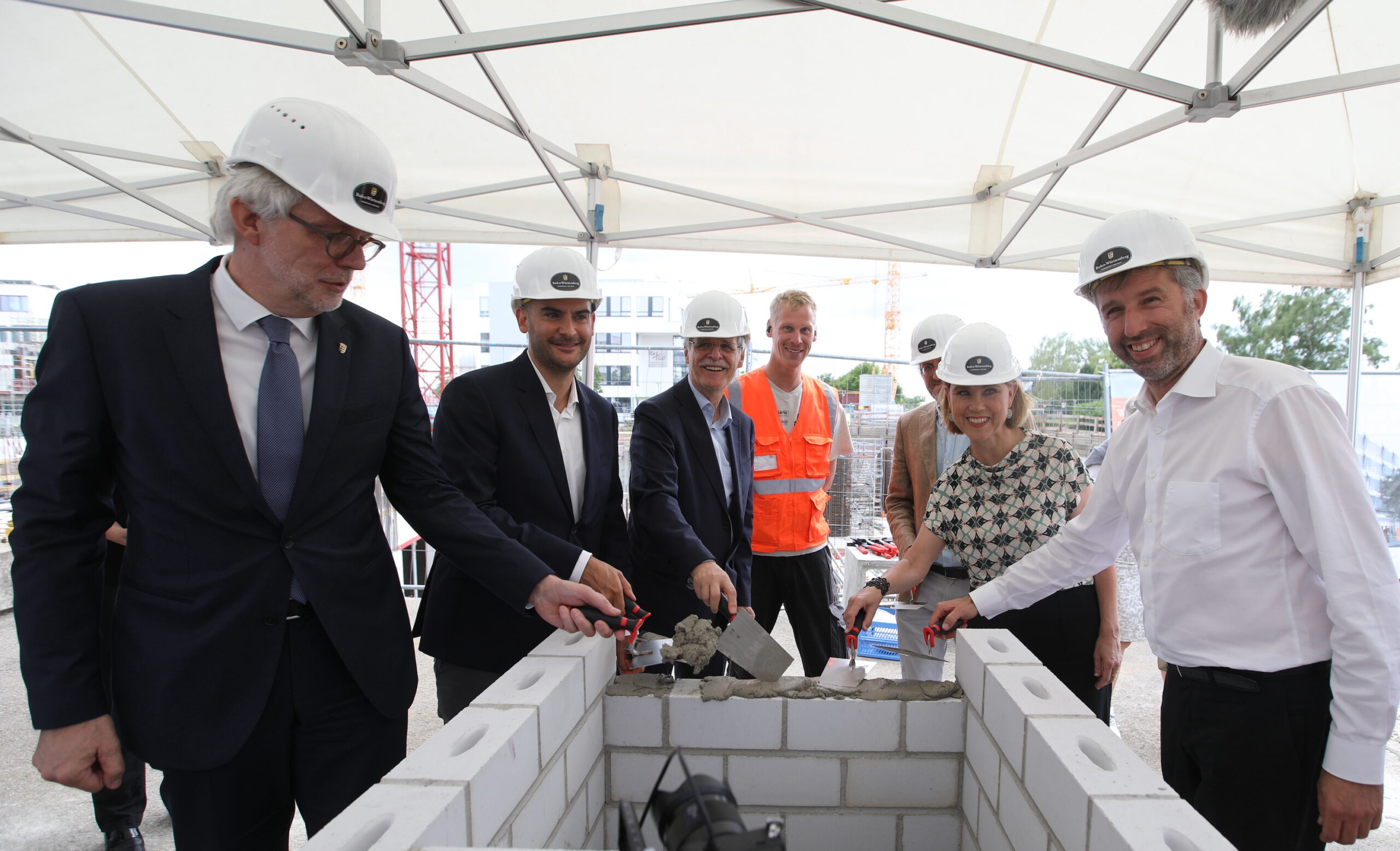
    Mayor Boris Palmer, State Secretary Petra Olschowski, Finance Minister Dr. Danyal Bayaz, Prof. Bernhard Schölkopf, Prof. Bernd Engler, Andreas Hölting (Head of the Property and Construction Office; from left) © Friedhelm Albrecht/Universität Tübingen

    “In recent years, Cyber Valley has developed into one of the world’s most important research locations for artificial intelligence,” said Professor Bernd Engler, President of the University of Tübingen. “This impressive development is the result of a tremendous effort on the part of the scientists involved, but also of the consistent commitment of the state and federal governments, the companies involved and private donors such as the couple Hans-Werner and Josephine Hector.” In the coming years, he said, the network will have to enter a phase of stabilization and further expansion. “The construction of the first of a total of three Cyber Valley buildings, which is now beginning, will make a significant contribution to this.”

    “Artificial intelligence is changing our world. We founded Cyber Valley to actively shape this change from us in Baden-Württemberg, Germany and Europe,” said Prof. Bernhard Schölkopf, Director at the Max Planck Institute for Intelligent Systems. “The new buildings will provide excellent research conditions to further deepen our work both regionally in Cyber Valley and internationally in ELLIS. I thank all those who have worked with foresight to make this happen.”


    Further information:

    Sustainability and resource efficiency are high priorities at the new Cyber Valley campus. For example, extensive use of renewable energy and high energy efficiency are important features of the new Cyber Valley I building, which will feature an extensive green roof and a photovoltaic system. The electricity from the roof and facade photovoltaics will benefit the building’s own power supply.

    In addition to the new Cyber Valley I building, which was approved in 2016, the overall concept for the Tübingen site includes two more new buildings for the Cyber Valley Campus. With the two new buildings Cyber Valley II and III, a total of around 14,800 square meters of additional top AI research space will be created on the campus of the University of Tübingen.

    The AI innovation campus Cyber Valley is a research focus for artificial intelligence and intelligent systems that is unique in Europe. Founded in 2016 in the Stuttgart-Tübingen region, the artificial intelligence research consortium connects partners from politics, business and science.

    Note to editors:

    A visualization of Cyber Valley I can be downloaded from the Ministry of Finance’s media library and used free of charge for editorial purposes with photo credit. Photos of the event can be downloaded here and used free of charge for editorial purposes with the photo credit “Friedhelm Albrecht/Universität Tübingen”.

  • Science & Innovation Days 2022

    Science & Innovation Days 2022

    Lesen Sie die vollständige Meldung hier in deutscher Sprache:

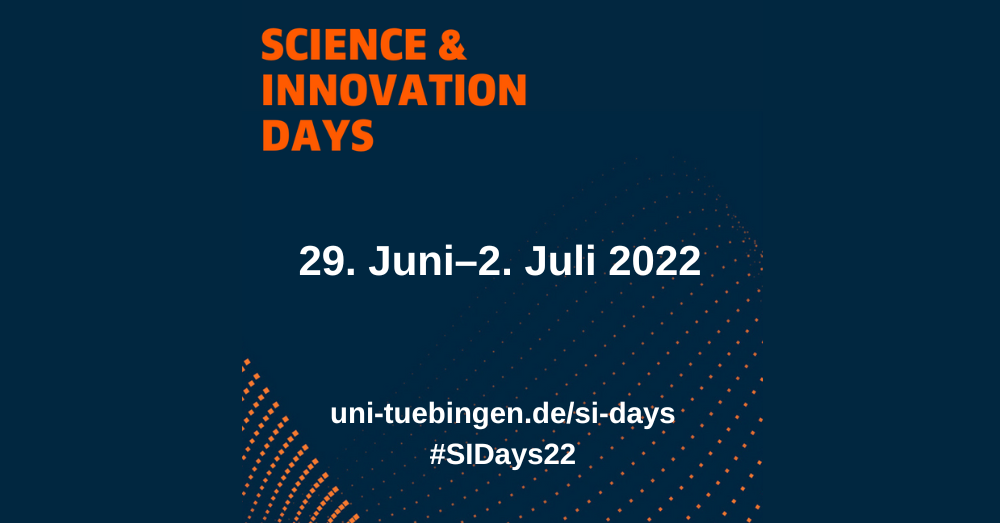
    Mitdiskutieren und Mitmachen erwünscht: Bei den Tübinger Science & Innovation Days vom 29. Juni bis zum 2. Juli 2022 laden die Universität Tübingen, der Max-Planck-Campus, Cyber Valley, das Leibniz-Institut für Wissensmedien und die Technologieförderung Reutlingen-Tübingen erstmals gemeinsam interessierte Bürgerinnen und Bürger der gesamten Region ein. Zum vielseitigen Programm gehören interaktive Veranstaltungen, Vorträge, Workshops und Spaziergänge über den Campus. Alle Programmpunkte sind kostenlos, zu einzelnen Veranstaltungen wird um Anmeldung gebeten. Alle Details zu Programm und Anmeldung unter https://uni-tuebingen.de/si-days:

    Mittwoch, 29. Juni

    • 18:15 Uhr: Kick Off mit Podiumsdiskussion: „Wissen schafft Zukunft – Wissenschaft und Gesellschaft im Dialog“ (Festsaal, Neue Aula, Geschwister-Scholl-Platz)
      Gesellschaftliche Herausforderungen brauchen die Expertise der Wissenschaft ‒ Wissenschaft braucht aber auch die Gesellschaft. Wie kommen BürgerInnen und Forschende noch besser ins Gespräch? Best Practice-Beispiele und Diskussion mit Prof. Peter Grathwohl (Universität Tübingen), Prof. Ulrike Cress (Leibniz-Institut für Wissensmedien Tübingen), Dr. Eric Schulz (Max-Planck-Institut für biologische Kybernetik), Julia Merlot (Magazin „Der Spiegel“, derzeit Cyber Valley Journalist-in-Residence), Prof. Thomas Thiemeyer (LUI Tübingen).

    Weitere Programmpunkte am Mittwoch:

    • „Medizin der Zukunft – ein Werkstattbericht aus dem Tübinger Technologiepark“ mit den UnternehmerInnen (16:15 Uhr, mit Anmeldung, Hörsaal 25, Kupferbau, Hölderlinstr. 4)
    • Lesung mit der Autorin Emma Braslavsky zu „Künstlichen Intelligenzen der Zukunft“ (20:30 Uhr, Cafe Willi, Wilhelmstr. 3/1, 72074 Tübingen)

    Donnerstag, 30. Juni

    • 14:00–16.30 Uhr: Spaziergang im Technologiepark Tübingen-Reutlingen am Standort Tübingen mit Stopps bei den Unternehmen (Treffpunkt: Sternwarte Tübingen, Waldhäuser Str. 70) Auf dem Spaziergang unter Führung von Thorsten Flink (TF R-T GmbH) stellen sich die Unternehmen vor und beantworten Fragen.
    • 17:00–20:00 Uhr: Startup:con Tübingen „Science Edition“ des Startup Centers (Hörsaalzentrum Morgenstelle, Auf der Morgenstelle 16)
      Paneldiskussion „Gründungen aus der Wissenschaft – Chancen und Herausforderungen“ mit Dr. Ingmar Hoerr (CureVac), Dr. Saskia Biskup (CeGat), Dr. Philip Häusser (Ablacon), Prof. Lars Angenent (Universität Tübingen) und Dr. Philipp Lies (eye2you). Im Anschluss präsentieren sich Startups aus der Wissenschaft und Forschungsgruppen. (Anmeldung unter https://uni-tuebingen.de/de/200653)
    • 20:15–22:00 Uhr: Fishbowl-Diskussion „Gemeinschaft in der Krise. Was hält unsere Gesellschaft noch zusammen?“ (DAI, Karlstr. 3, mit Anmeldung)
      Was bedeutet gesellschaftlicher Zusammenhalt? Wie können wir unsere Gesellschaft stärken – und welche Rolle spielt der Dialog zwischen Wissenschaft und Gesellschaft? Prof. Otfried Höffe, Prof. Regina Ammicht-Quinn und Dr. Davina Höll, (alle Universität Tübingen) erörtern dies mit Besucherinnen und Besuchern. Bei einer Fishbowl-Diskussion bleibt ein Stuhl auf dem Podium frei für jede(n), die oder der gerne mitdiskutieren möchte. Musikalische Umrahmung durch Eric Biscalchin.

    Weitere Programmpunkte am Donnerstag:

    • Führungen (jeweils mit Anmeldung): Technologiepark Tübingen-Reutlingen (14:00 Uhr, Sternwarte Tübingen, Waldhäuserstr. 70); iFIT Excellenzcluster (16:00 Uhr, Röntgenweg 11); Geo- und Umweltforschungszentrum (16:00 Uhr, Schnarrenbergstr. 94-96); Zentrum für Molekularbiologie der Pflanzen (17:00 Uhr / 18:00 Uhr, Auf der Morgenstelle 32)
    • Vortrag „Lügen, Fake-News, Propaganda“ mit Prof. Bernhard Pörksen (18:30 Uhr, Audimax)
    • Alumni-Lounge im Hörsaalzentrum Morgenstelle (16:00–20:00 Uhr, mit Anmeldung)

    Freitag, 1. Juli

    • 17:00 Uhr: Die Universität Tübingen verleiht den Preis für Wissenschaftskommunikation an Prof. Carla Cederbaum (Ernst von Sieglin-Hörsaal, Schloss Hohentübingen, Burgsteige 11)
    • 18:00 Uhr: Diskussion „Klimawandel – Vom Wissen zum Handeln: Wo liegen die Schwierigkeiten?“ und im Anschluss Konzert mit Dizzy Krisch im Trio
      Dass der Klimawandel existiert ist unbestritten, dass wir etwas unternehmen müssen, ebenfalls. Wie weit können wir gehen, damit alle mitziehen? Es diskutieren Prof. Reinhard Drews, Prof. Thomas Potthast und Prof. Kira Rehfeld, alle Universität Tübingen. (DAI, Karlstr. 3, mit Anmeldung)

    Weitere Programmpunkte am Freitag

    • 14:00–18:00 Uhr: Tag der offenen Tür im Leibniz-Institut für Wissensmedien (Schleichstraße 6)
      Das IWM erforscht bereits seit 2001, wie digitale Technologien dabei helfen, Wissen in unsere Köpfe zu befördern. An Demo und Mitmach-Stationen demonstriert es, wie das Klassenzimmer der Zukunft aussieht und wie wir mit künstlichen Intelligenzen im Team arbeiten.
    • 16:00 Uhr: Schulstunde mit der Bildungsforscherin: Wie die Schule der Zukunft aussehen könnte, skizziert IWM-Direktorin Prof. Ulrike Cress in einem Vortrag.
    • Offenes Museum MUT – freier Eintritt; Führung und Alumni-Lounge im Rittersaal (ab 14:00 Uhr, Schloss Hohentübingen, Burgsteige 11)
    • Workshop: Einführung in den Sensorjournalismus (ganztags, mit Anmeldung, KI-Makerspace, Wöhrdstr. 25)
    • Vorträge: Aktuelle Forschung aus der Biochemie (14:00 Uhr, IFIB, Auf der Morgenstelle 34); Tübingen – die Wiege der Biochemie (15:15 Uhr, IFIB, Auf der Morgenstelle 34); Cyanobakterien – Zukunft der Plastikindustrie? (15:00 Uhr, DAI, Karlstr. 3); Organisierte Kriminalität (16:00 Uhr, Fürstenzimmer, Schloss Hohentübingen, Burgsteige 11)
    • Film und Diskussion im Kino Arsenal: Wie viel Science steckt in der Fiction? (20:00 Uhr, mit Anmeldung, Kino Arsenal, Hintere Grabenstr. 20)

    Samstag, 2. Juli

    • 10:00–14:00 Uhr: Tag der offenen Tür auf dem Max-Planck-Campus Tübingen
      Die Tübinger Max-Planck-Institute, das Friedrich-Miescher-Laboratorium und Cyber Valley bieten Rundgänge, Ausstellungen und Mitmach-Angebote zu den Themen Genetik, Evolution, Hirnforschung und künstliche Intelligenz an. (Anmeldung für einzelne Veranstaltungen vor Ort erforderlich)
    • ab 20:30 Uhr: Science Notes – Thema Reisen (Parkplatz hinter dem Technischen Rathaus, Brunnenstr. 3, mit Anmeldung)
      An einem lauen Sommerabend begeben wir uns auf Reisen: Wir folgen einem Gletscherforscher auf eine Antarktisexpedition, wandern mit einer Journalistin über den Grund des Atlantiks, reisen mit einer Paläontologin in die Vergangenheit und begleiten mit ihr den frühen Menschen bei seinen ersten Schritten. Außerdem geht es um Jetlags, Fledermäuse und den Klang der Wissenschaft. Brandt Brauer Frick spielt live elektronische Musik.

    Weitere Programmpunkte am Samstag:

    • ab 10:00 Uhr: Kinderuni-Forschertag für Kinder zwischen 7 und 12 Jahren (mit Anmeldung)
    • 11:00–15:00 Uhr: Tag der offenen Tür im Universitätsarchiv (Bonatzbau, Wilhelmstr. 32)
  • 3.4 million euros for IRIS3D

    “I am pleased that we are taking another important step in the right direction with the IRIS3D project at the University of Stuttgart – towards value- and human-centered AI, AI ‘made in THE LÄND’. We want to understand what influence intelligent systems have on our society and how we can use them. One goal is to enter into an intensive dialogue with society beyond the boundaries of universities. Only in this way can artificial intelligence be used as a key technology with the greatest possible added value for everyone,” said Science Minister Theresia Bauer in Stuttgart on Thursday (June 9).

    The area of diversity is about ensuring that stereotypes and prejudices are not transferred to intelligent systems. “One way to achieve this is to enrich the technology with data that is as diverse as possible and thereby also keep in mind special characteristics and support needs of the respective target groups, for example mental or physical limitations,” said tenure-track professor Maria Wirzberger, co-applicant of IRIS3D and spokesperson of the interdisciplinary research forum IRIS.

    Due to demographic change, society is changing and is also becoming increasingly culturally heterogeneous. This brings with it specific requirements for the design of intelligent systems in order to enable intuitive use, for example, also for older users. The area of demography deals with these aspects.

    The third topic area of democracy is particularly significant and deals with how intelligent systems can generally influence our understanding of democracy and thus also public opinion. “So far, we have mainly noted how digitalization is attacking our democracy. With IRIS3D, however, we want to develop procedures for using digitization to strengthen our democracy,” said Professor Steffen Staab, who developed the concept of IRIS3D and is co-spokesperson of IRIS.

    The IRIS3D research project creates structures to bring science, business, educational institutions and society closer together. In the process, ideas are to be developed on how intelligent systems can enrich our future. “The goal is to reflect and analyze together, but also to research and develop. In particular, the focus will be on how AI should look and be used in the future – and how not,” said Science Minister Bauer.

    Top young scientists are to be recruited for the Stuttgart location for the three topic areas. To this end, three junior research groups will be set up at the University of Stuttgart for five years each, which will be led by up-and-coming international researchers and will conduct independent and interdisciplinary research.

    The IRIS3D project is incorporated into the Cyber Valley ecosystem as part of IRIS, the “Interchange Forum for Reflecting on Intelligent Systems”.

    More information about IRIS and its research can be found here.

  • Environment meets app

    Environment meets app

    About 560 native wild bee species are known, and their habits are as varied and diverse as their outward appearance. Some of these species are so-called oligolectic insects that can only attain their food source from very specific plants. If such plants are destroyed over a wide area, the wild bee species depending on them cannot survive either – one of the reasons why approximately half of the native species are on the Red List or have already gone extinct. This is tragic because wild bees are extremely lively and very efficient pollinators. Without them, not only would our gardens be less colorful, but our tables would have a very limited assortment as well.

    To raise awareness of this specific problem, the German Federal Environmental Foundation (DBU) has been funding a joint project at the University of Stuttgart and Chemnitz University of Technology since December 2020, which is specifically targeting a younger age group. “BeeLife can help to spark schoolchildren’s interest in sustainability, environmental protection and bee conservation. This represents education for the best benefit of our planet,” says Dr. Thomas Pyhel, DBU specialist for environmental education. “In this way, environmentally conscious behavior can be promoted as early and sustainably as possible.”

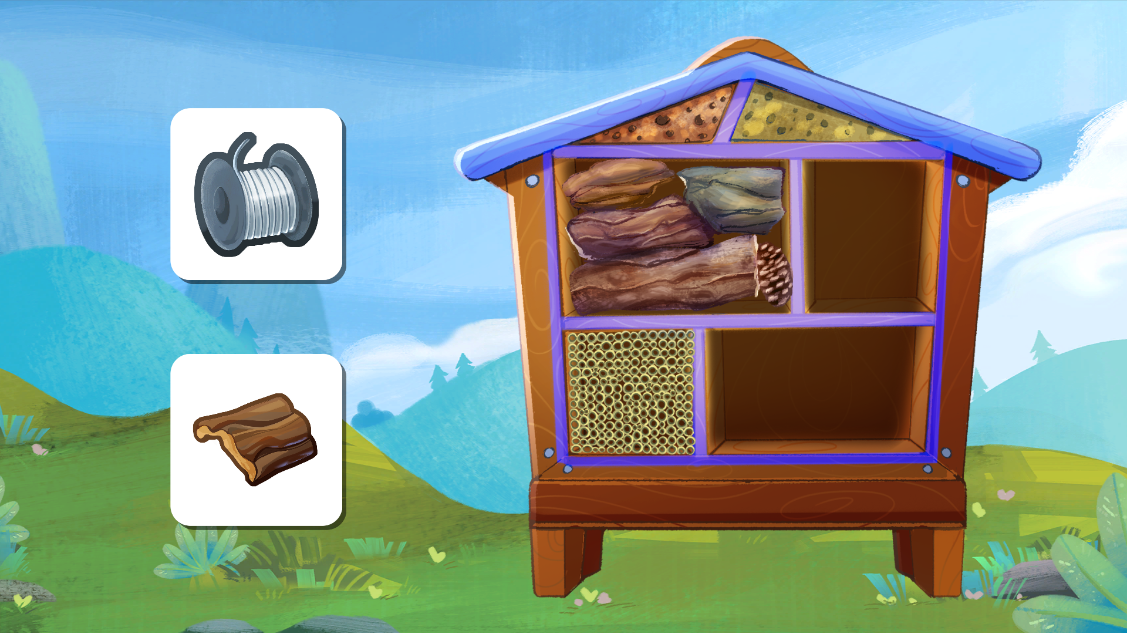
    The project makes particular use of the diversity and fascination of the different wild bee species being represented in the playful app “BeeLife,” which was created by an interdisciplinary development team together with teachers and experts for environmental didactics and species protection. In addition to the project leader, Jun.-Prof. Dr. Maria Wirzberger, this team includes Julia Mönch, Adrian Stock and Oliver Stock at the Stuttgart site, while Felix Krieglstein and Markus Suren work with Prof. Dr. Günter Daniel Rey at the Chemnitz site. The app will be embedded in accompanying environmental activities such as the construction of nesting aids in the school garden. After intense periods of technical development, the concept will be evaluated in selected schools in Baden-Württemberg and Bavaria over the next few months.

    Wild bee protection at the Day of Science of the University of Stuttgart

    On June 25, 2022, the interested public will have the opportunity to try out the app at the Science Day of the University of Stuttgart and to gather practical tips for wild bee protection in everyday life by exciting hands-on activities and lectures from the experts involved in the project, Undine Westphal and Frank Geggus. First insights into the project are provided by the promotional video, which is accessible via the project website.

  • Microrobots display versatile movement patterns

    Microrobots display versatile movement patterns

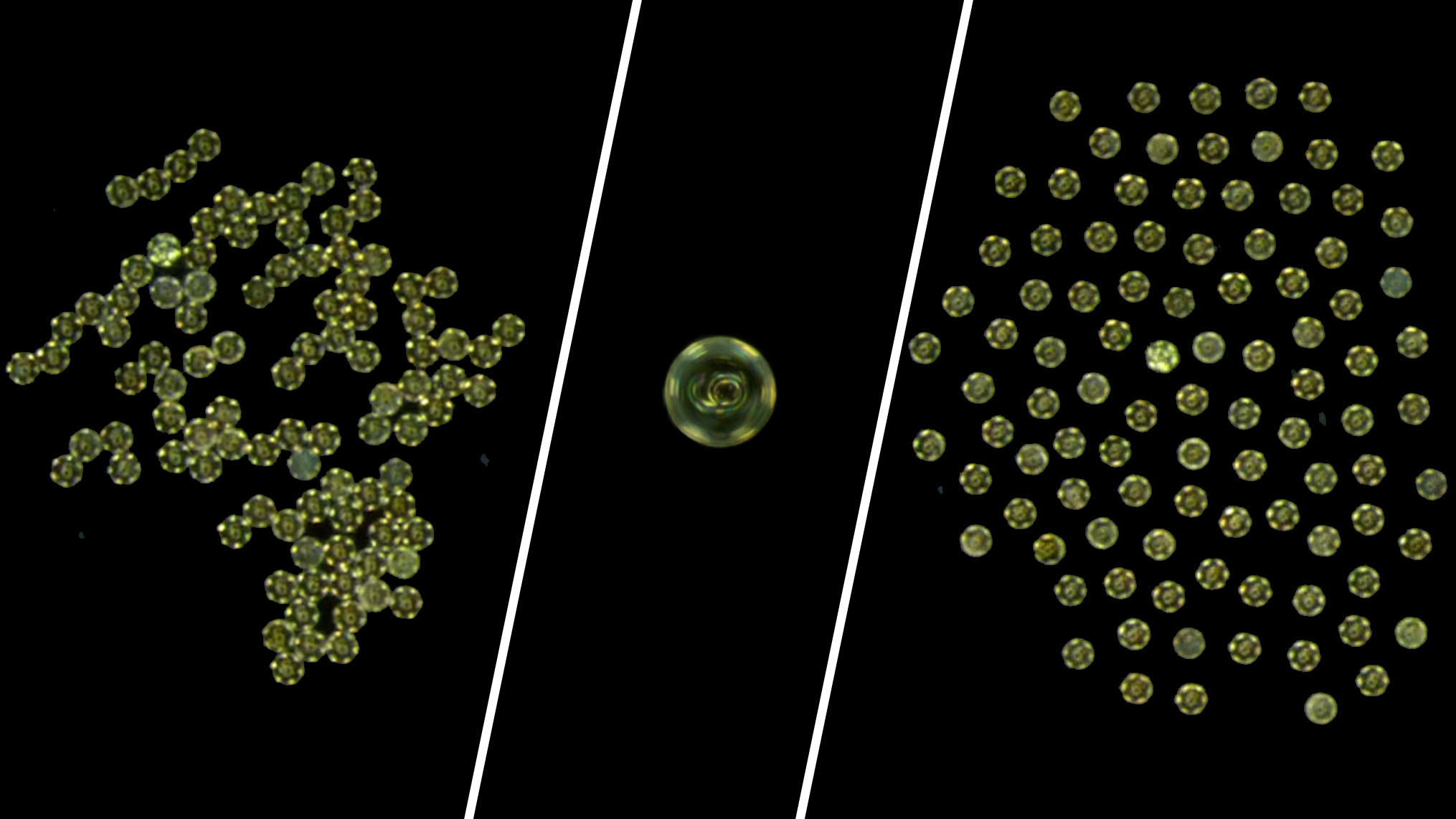
    Researchers at the Max Planck Institute for Intelligent Systems (MPI-IS), Cornell University and Shanghai Jiao Tong University have developed collectives of microrobots which can move in any desired formation. The miniature particles are capable of reconfiguring their swarm behavior quickly and robustly. Floating on the surface of water, the versatile microrobotic discs can go round in circles, dance the boogie, bunch up into a clump, spread out like gas or form a straight line like beads on a string.

    Each robot is slightly bigger than a hair’s width. They are 3D printed using a polymer and then coated with a thin top layer of cobalt. Thanks to the metal the microrobots become miniature magnets. Meanwhile, wire coils which create a magnetic field when electricity flows through them surround the setup. The magnetic field allows the particles to be precisely steered around a one-centimeter-wide pool of water. When they form a line, for instance, the researchers can move the robots in such a way that they “write” letters in the water. The research project of Gaurav Gardi and Prof. Metin Sitti from MPI-IS, Steven Ceron and Prof. Kirstin Petersen from Cornell University and Prof. Wendong Wang from Shanghai Jiao Tong University titled “Microrobot Collectives with Reconfigurable Morphologies, Behaviors, and Functions” was published in Nature Communications on April 26, 2022.

    Collective behavior emerges from the interactions between the robots

    Collective behavior and swarm patterns are found everywhere in nature. A flock of birds exhibits swarm behavior, as does a school of fish. Robots can also be programmed to act in swarms – and have been seen doing so quite prominently. A technology company recently presented a drone lightshow that won the company a Guinness World Record by programming several hundred drones and flying them side-by-side, creating amazing patterns in the night sky. Each drone in this swarm was equipped with computational power steering it in every possible direction. But what if the single particle is so tiny that computation isn’t an option? When a robot is just 300 micrometers wide, one cannot program it with an algorithm.

    Three different forces are at play to compensate for the lack of computation. One is the magnetic force. Two magnets with opposite poles attract. Two identical poles repel each other. The second force is the fluid environment; the water around the discs. When particles swim in a swirl of water, they displace the water and affect the other surrounding particles in the system. The speed of the swirl and its magnitude determine how the particles interact. Thirdly, if two particles float next to each other, they tend to drift towards each other: they bend the water surface in such a way that they slowly come together. Scientists and cereal lovers call this the cheerio effect: if you let two cheerios float on milk, they will soon bump into each other. On the flip side, this effect can also cause two things to repel each other (try a hairpin and a cheerio).

    Three forces allow for reconfigurability

    The scientists use all three forces to create a coordinated, collective pattern of motion for several dozen microrobots as one system. A video (see below) shows how the scientists steer the robots through a parcour, displaying the formation that best suits the obstacle course, e.g. when they enter a narrow passage, the microrobots line up in single file and disperse again when they come out. The scientists can also make the robots dance, alone or as pairs. Additionally, they show how they put a tiny plastic ball into the water container and then aggregate the robots into a clump to push the floating ball along. They can place the tiny particles inside two gears and move the particles in a way that causes both gears to rotate. A more ordered pattern is also possible with each particle keeping an identical distance to its neighbor. All these different locomotion modes and formations are achieved through external computation: an algorithm is programmed to create a rotating or oscillating magnetic field which triggers the desired movement and reconfigurability.

    “Depending on how we change the magnetic fields, the discs behave in a different way. We are tuning one force and then another until we get the movement we want. If we rotate the magnetic field within the coils too vigorously, the force which is causing the water to move around is too strong and the discs move away from each other. If we rotate too slow, then the cheerio effect which attracts the particles is too strong. We need to find the balance between the three,” Gaurav Gardi explains. He is a Ph.D. student in the Physical Intelligence department at MPI-IS and one of the two lead authors of the publication together with Steven Ceron from Cornell University.

    A model for future biomedical and environmental applications

    The future scenario for such microrobotic collectives is to go even smaller. “Our vision is to develop a system that is even tinier, made of particles only one micrometer small. These collectives could potentially go inside the human body and navigate through complex environments to deliver drugs, for instance, to block or unblock passages, or to stimulate a hard-to-reach area,” Gardi says.

    “Robot collectives with robust transitions between locomotion behaviors are very rare. However, such versatile systems are advantageous to operate in complex environments. We are very happy we succeeded in developing such a robust and on-demand reconfigurable collective. We see our research as a blueprint for future biomedical applications, minimally invasive treatments, or environmental remediation,” adds Metin Sitti, who leads the Physical Intelligence Department and is a pioneer in the field of small-scale robotics and physical intelligence.