User Group: Corporate

  • Research team receives 1.5 million euros to develop algorithms that learn with child-like curiosity

    Research team receives 1.5 million euros to develop algorithms that learn with child-like curiosity

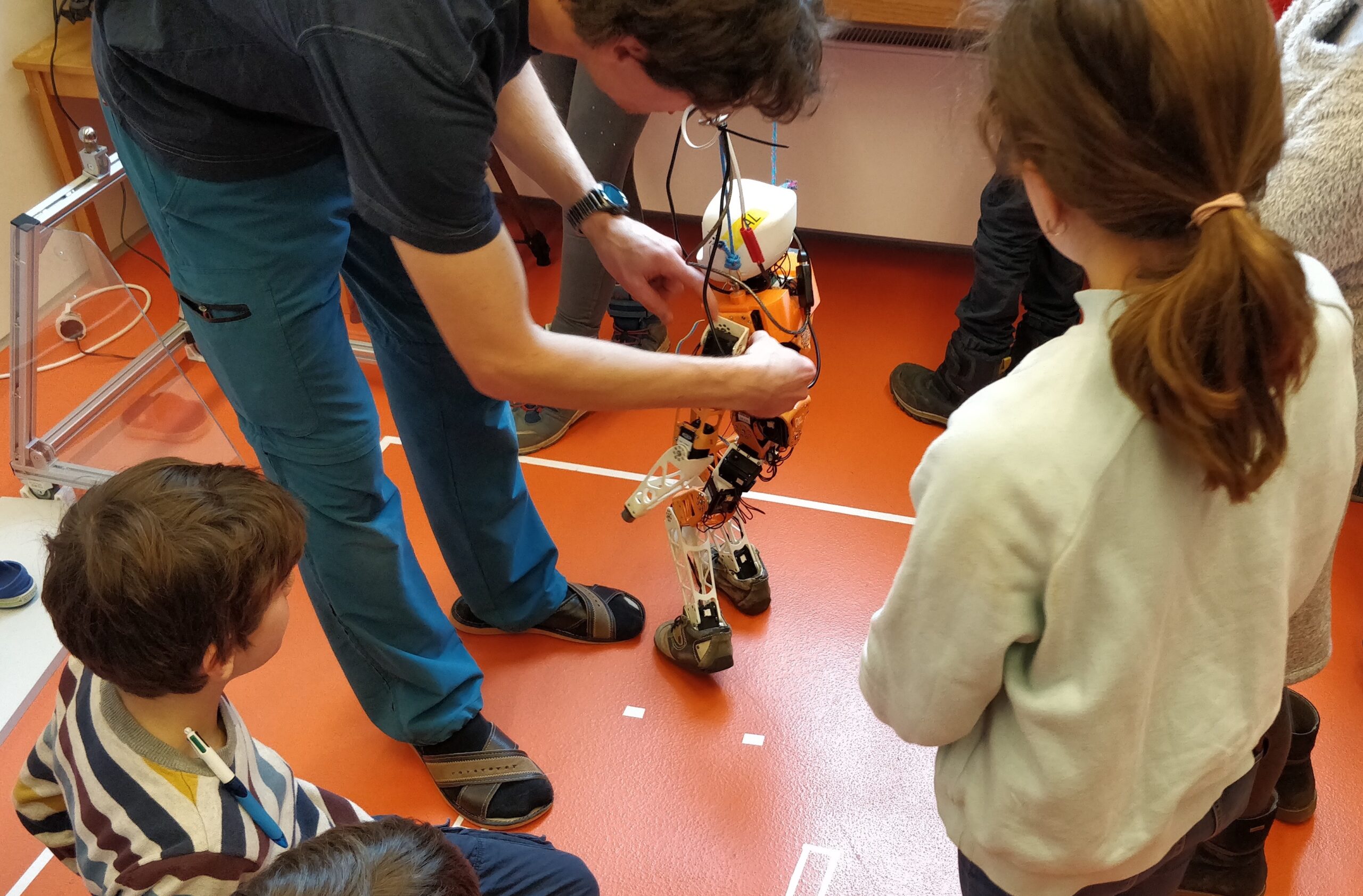
    The scientists first want to find out how children discover and learn to understand the world around them on the basis of their innate curiosity. In a second step, they will use their findings to develop mathematical routines based on human learning processes that could enable intelligent systems to develop childlike curiosity. The scientists will then test ways to equip robotic systems with these novel self-learning algorithms.

    "Even the famous computer scientist Alan Turing believed that true artificial intelligence can only be achieved if you manage to build a machine that learns like a child," said Eric Schulz, leader of the Computational Principles of Intelligence Lab, an independent research group at the Max Planck Institute for Biological Cybernetics. "So far, however, little is known about how children spontaneously explore their environment and how this behavior can be applied to challenging tasks in robotics and machine learning."

    An essential characteristic of human intelligence is the ability to systematically explore and understand one's own environment. In this context, exploration is not based on the traditional understanding of learning as the achievement of an externally imposed set of goals. Rather, children in particular act in a strongly self-motivated way and challenge themselves to learn or create something new again and again while playing.

    "In order to master this scientific challenge, we need even more interdisciplinary collaboration than before. Researchers in developmental psychology often have problems translating their findings on self-motivated learning into suitable mathematical form, while computer scientists have insufficient knowledge about aspects of human psychology. In our project, we want to combine the knowledge of the different disciplines in a holistic approach to develop new methods and achieve new insights," says Georg Martius, leader of the independent Autonomous Learning research group at the Max Planck Institute for Intelligent Systems.

    To this end, the researchers at the three Max Planck Institutes have decided to work together in interdisciplinary teams. Above all, the research project aims to deliver practical results that can either be immediately applied or further developed for computer science and AI applications. To ensure that the new findings can be quickly and fully transferred to science and application, all results and algorithmic codes will be made available to the general public via standard platforms, such as Github or OpenAI.

  • DFG continues funding of Tübingen research centre

    DFG continues funding of Tübingen research centre

    The goal of the Collaborative Research Centre is to uncover the principles of robust vision and to identify its neural basis in the mammalian brain. To this end, scientists from the University of Tübingen, the Max Planck Institute for Intelligent Systems, the Max Planck Institute for Biological Cybernetics and the LMU Munich and from various disciplines such as neuroscience, machine learning and computer vision are working closely together to investigate the differences between the biological visual system and current machine vision algorithms.

    Matthias Bethge, spokesperson for the research center, is very pleased that the research program will continue to receive funding. “We are making great progress in understanding biological vision and in the field of robust machine vision. This also opens the door to the development of more reliable AI applications,” he said.

    In the second funding period starting 2021, the German Research Foundation will fund 12 scientific projects, one infrastructure project and one transfer project with Zeiss Vision with total funding of over €9 million.

    Background

    Human visual perception is amazingly robust: Even in highly variable environments, we are able to make reliable inferences about the spatial arrangement of the world from limited visual information. To achieve this, our brain must perform complex computations. Artificial vision systems, in turn – as used, for example, in self-driving cars – are making steep progress in reproducing the visual skills of humans. The goal of this centre will be to better understand the principles and algorithms that enable robust visual inference both in humans and machines.

  • AIxIA: AI Conference 2020

    AIxIA: AI Conference 2020

    This year’s conference will be held online and focusses on the application of Artificial Intelligence for the benefit of the environment!
    Climate Change is the biggest challenge of this century. We believe that Artificial Intelligence is a powerful technology that can contribute to a greener world, while at the same time driving economic growth for the benefit of humanity. For this we will present keynotes and talks that centre around this topic.

    The AIxIA keynotes, talks, discussions and state-of-the art use cases will cover two topics:

    AI & Industries

    From predicting malfunctions of machines and finding root causes to next-level process automation for production lines – AI technology has led to major improvements in manufacturing. Besides, we see that close human-robot collaboration is in advance. AI can reinforce the collaboration by “humanizing” the robot behavior. At the conference, we will look into how these innovations massively boost business success AND can have a positive environmental impact – the reduction of waste and energy usage are just two examples.
    Another aspect that will be covered is AI within the food industry. According to forecasts, humanity will need around 70 percent more food by 2050, than we produce today. AI solutions can help farmers to grow food more efficiently and at the same time in a more environmentally friendly way.


    AI & Sustainability

    Sustainability is a hot topic. An industry-wide shift is occurring which leads companies to include environmental sustainability goals in their corporate strategies. Companies must be aware of their footprint and what they can do to reduce it. The AI use cases presented in this session focus on these issues with a focus on energy, water, and resources.

    Find out more here: https://aixia.eu/

  • Virtual AI Roadshow: USA – Baden-Württemberg – Canada

    Virtual AI Roadshow: USA – Baden-Württemberg – Canada

    Join the virtual AI Roadshow, starting on November 17 – November 19, 2020 and discuss with experts from Pittsburgh/USA as well as Ontario and Québec/Canada. What to expect: Three days of networking, interesting info sessions, and keynotes.

    Which Topics will be discussed ?

    • AI and Ethics
    • AI and Autonomous Driving
    • AI and Healthcare
    • AI and Robotics

    Why participate?

    • As a company – get information on how to implement AI solutions in your company and find qualified contacts during effective one-to one meetings
    • As a university – find new international counterparts and to discuss new technology and innovative solutions
    • As a start-up – pitch your idea and business solution

    How can you benefit from this event?

    • Publish and showcase your products, projects, services or business needs or research results to event participants
    • Initiate and arrange promising pre-scheduled 1:1 meetings at the event
    • Generate fresh leads and meet new contacts in a time and cost-efficient way
    • Stay one step ahead of your competitors by being seen and visibly present at the event

    Learn more about the program and the speakers of the event here.

  • Mobility & AI

    Mobility & AI

    Schedule

    • Welcome and Introduction – Michael Black  |  Cyber Valley Spokesperson
    • Keynote – Michael Halbherr  |  Co-Founder HERE and Technology Investor
    • Textual Explanations for Self-Driving Vehicles – Zeynep Akata  |  Uni Tübingen
    • Scientific Perspective on Mobility & AI – Andreas Geiger  |  Uni Tübingen / MPI IS
    • Investment – Tobias Jahn  |  BMW i Ventures
    • Companies & Start-ups
      • Kai Przybysz-Herz  |  NAiSE GmbH
      • Martynas Gudonavicius und Jurgis Pašukonis  |  Trafi
      • Philipp Gneiting  |  STARTUP AUTOBAHN / Mercedes Benz AG
    • Discussion

    Registration

    Please register here


  • Cyber Valley expands its Start-up Network with AIRAmed and Computomics

    Cyber Valley expands its Start-up Network with AIRAmed and Computomics

    AIRAmed develops software as a service (SaaS) that compares radiological image data based on neural networks with reference data in the background and extracts measurable disease characteristics. Computomics applies advanced machine learning (ML) methods to analyze genomic data in agriculture more quickly, thus enabling more precise predictions in plant breeding.

    “AIRAmed’s admission to the Cyber Valley Start-up Network highlights the growing importance of AI technology in medical applications,” said Michael Black, Director of the Perceiving Systems Department at the Max Planck Institute for Intelligent Systems and Cyber Valley spokesperson. “As a leader in machine learning-based data analysis, Computomics shows the contribution AI can make to food security – especially in times of climate change and in light of the growing world population. AIRAmed and Computomics are up-and-coming companies that exemplify the Cyber Valley ecosystem’s great potential for innovation.”

    AIRAmed: Reliable measurements for personalized medicine

    In Germany alone, about 350,000 new cases of dementia are diagnosed each year. Imaging technologies are of crucial importance in the diagnosis of dementia and other neurodegenerative diseases such as Alzheimer’s, Parkinson’s, and multiple sclerosis. Imaging-based structural changes precede the clinical symptoms of these diseases by many years. When it comes to prevention and selecting the right drug therapies, the best possible early detection and correct diagnosis are therefore essential. AIRAmed provides reliable measurement values as a basis for individual biomarkers in the context of personalized medicine.

    “We want to bring top university research to the patients. With AIRAmed’s service, treating physicians can recognize specific illnesses much earlier on the basis of quantitative and objective measurement parameters. In turn, this enables them to initiate appropriate therapies at an early stage and monitor their success in the course of the treatment,” said Tobias Lindig, one of the founders and managing directors of AIRAmed. The software uses neural networks to compare radiological image data with a large reference sample of healthy individuals of the same age and gender. It then extracts measurable disease characteristics from these data. Structural changes in the brain are detected almost in real time and in the highest quality and quantified in the background through a comparison with reference data. “The result enables objective and rapid diagnostics as detailed therapy monitoring. This is entirely in the patients’ interest, as it improves quality of life,” said Lindig.

    AIRAmed is a spin-off of the University Hospital Tübingen (UKT) and is located in Tübingen. The start-up has a cooperation agreement with the UKT regarding the acquisition of data for quality assurance, validation, and further development of the software. It is also involved in joint research projects with the Department of High-field Magnetic Resonance at the Max Planck Institute for Biological Cybernetics.

    Computomics: More efficient plant breeding thanks to AI

    Tübingen is also home to Computomics, a start-up that was founded in 2012. Its team comprises leading experts in the fields of machine learning, plant breeding, and bioinformatics. To date, Computomics has more than 100 projects in twelve countries under its belt. Among others, the company cooperates with the University of Tübingen’s Quantitative Biology Center (QBiC).

    “Around the globe, the agricultural sector faces the challenge of supplying new plant varieties for a changing climate and with fewer resources,” said Sebastian Schultheiss, founder and CEO of Computomics. “Until now, it has taken an average of 13 years to breed new varieties. In recent years, more and more data has been incorporated, for example for phenotyping, as well as drone images and climate, soil and marker data. We have developed unique machine learning methods that enable companies to improve traits such as yield, taste, color, texture, and shelf life.” By using AI models, millions of incidents of cross-breeding could be simulated in a very short time without having to plant them in the field. This would make it possible to calculate the yield of agricultural products much more reliably.

  • Seeding and Early Funding Opportunities

    Seeding and Early Funding Opportunities

    Experts from the Universities of Stuttgart and Tübingen and from Max Planck Innovation will participate in the Zoom conference, as will representatives of the Cyber Valley partner Fraunhofer IPA and several business incubators and funds. Just as we have done in other Start-up Network workshops, one successful company founder will once again share their experience with all participants. We are pleased that Sebastian Schultheiss of Computomics GmbH will be speaking at the event this time around.

    If you have a business idea but are not sure which financing opportunities are available in the early stages, this is the right event for you. This workshop aims to help people interested in gaining insights, offer networking opportunities with representatives of funding programs, and provide a forum for participants to exchange ideas with other people interested in starting a company.

    More information on registration, the full program, and the list of speakers can be found here.

    The Cyber Valley Entrepreneurship Series is an event series of the Cyber Valley Start initiative that kicked off in May 2020 with an inaugural event. In July, a workshop on IP rights, licensing, and patents took place. It was followed by an event in September at which researchers, start-up founders, and investors met to exchange ideas on AI and health. The organizers plan to hold one event per month in the future, and every second event will be a topic-specific workshop.

  • Seeding & Early Funding Opportunities

    Seeding & Early Funding Opportunities

    Schedule

    • Welcome and Introduction
    • Overview Early Funding Possibilities
    • Parallel Sessions
      • Univeristy of Tübingen
      • University of Stuttgart
      • Max Planck Innovation
    • Experiences and Programs from the region and Q&A
    • Closing Remarks

    Details below | Please register here.


    Welcome and Introduction

    Alex Diehl and Julia Schmaus

    Senior Advisor Cyber Valley 

    Innovation Manager

    Overview Early Funding Possibilities

    Tobias Dürr

    Innovation Manager

    Parallel Sessions

    University of Tübingen

    Sandra Gässler and Daniel Heblik


    University of Stuttgart

    Jordi Mauri


    Max Planck Innovation

    Florian Kirschenhofer

    Early Funding Opportunities, experiences and programs from the region

    Fraunhofer IPA

    Philipp Topic


    bwcon

    Timothy Earnshaw


    High-Tech Gründerfonds

    Gernot Berger


    Computomics GmbH

    Sebastian Schultheiss

    Closing and final Q&A

    Alex Diehl and Tobias Dürr

    Senior Advisor Cyber Valley 

    Innovation Manager

  • New AI in medicine initiative launched

    New AI in medicine initiative launched

    According to Professor Bernd Engler, President of the University of Tübingen, the new initiative is open to further prominent players from universities, non-university research institutions, and companies. “In particular, we aim to cooperate closely with the University of Stuttgart, which is a world-class institution in areas such as data integration and simulation technology.” Both universities would also benefit from their membership in the Cyber Valley initiative, Europe’s largest research consortium in the field of modern AI. Other important partners are the German Cancer Research Center (DKFZ), the European Molecular Biology Laboratory (EMBL), the University of Heidelberg, and all medical universities in Baden-Württemberg. Companies from Baden-Württemberg’s world-renowned medical technology industry are also on board. Moreover, the research field offers enormous potential for new start-ups in the fields of diagnostics, medical technology, pharmaceuticals, and medical-related services.

    Engler announced that the university and its medical faculty will, in a first step, establish four additional professorships this year in this promising field of research. They will focus on the evaluation of medical image data, sequencing, and meta data, as well as on time series or statistics using machine learning methods, among other things, thus creating new AI-supported instruments for diagnosis, therapy decisions, and the development of new drugs. “With the construction of the Cyber Valley building in the Tübingen Technology Park, which is currently in the planning stage, the Max Planck Society and the university have made provisions for the possible accommodation of the new professorships and their research groups in the second construction phase,” the President said.

    The project of the university, its faculty, and the Max Planck institutes is also supported by the non-profit Hertie Foundation, among others. The foundation has set itself the goal of supporting the establishment of a further scientific lighthouse project on the use of artificial intelligence in the neurosciences in Tübingen. For 20 years, the foundation has supported  the Hertie Institute for Clinical Brain Research in Tübingen, which is now considered a model for the transfer of findings from cutting-edge basic research to clinical application.

    In addition to numerous research groups, some 15 professors in Tübingen are already researching the use of computer science methods in medicine and the life sciences. Funded by the German government, university institutions such as the “Machine Learning for Science” Cluster of Excellence and the AI Competence Center have made Tübingen a leading German location for basic research in machine learning. In addition, a growing number of local medical start-ups are part of the Cyber Valley Start-up Network.

    “With our AI Health Initiative, we will continue to build on an already strong foundation,” said Michael Black, Director of the Max Planck Institute for Intelligent Systems in Tübingen. “From patient care to diagnostics and individualized treatment, the possibilities for enhancing modern medicine with AI and robotics are endless. By pooling our strengths, we aim to make a decisive contribution to driving research in the field of AI and health forward.”

    “Our basic research helps offer a firm foundation for the pioneering translational plans of this excellent initiative,” said Peter Dayan, Managing Director at the Max Planck Institute for Biological Cybernetics. “For instance, work on the advanced analysis of high-resolution magnetic resonance images of the human brain offers new insights that could illuminate normal and dysfunctional neural organization. Cognitive tasks designed in consilience with artificial intelligence principles to index hidden dimensions of human decision-making are being purposed to examine the nature and course of psychiatric disease.”

    The Dean of the Faculty of Medicine, Professor Bernd Pichler, said that the use of modern medical diagnostic procedures generates enormous amounts of data, the evaluation of which can hardly be handled by conventional methods: “Similar challenges arise in the life sciences for a wide range of issues, from basic research to the translation of research results into clinical application, for example in personalized medicine. I am thus convinced that in the coming years and decades, groundbreaking successes in medical research and patient care will be accompanied by the use of artificial intelligence.” The analysis and intelligent interpretation of health data will not only simplify the prognosis of disease progression or improve the prevention and early detection of diseases, but also support the search for new drugs and therapeutic options.


    Media contacts:

    Dr. Karl G. Rijkhoek
    Director Communications University of Tübingen
    Phone: +49 7071 29-76788
    karl.rijkhoek@uni-tuebingen.de

    Valérie Callaghan
    Communications Manager Max Planck Institute for Intelligent Systems
    Phone: +49 7071 601-1832
    valerie.callaghan@tuebingen.mpg.de

    Dr. Daniel Fleiter
    Head of Communications Max Planck Institute for Biological Cybernetics
    Phone: +49 7071 601-777
    daniel.fleiter@tuebingen.mpg.de

  • Cyber Valley launches Investor Network

    Cyber Valley launches Investor Network

    The Cyber Valley initiative has launched the Cyber Valley Investor Network. The Network makes a significant contribution to making Europe’s largest research consortium in the field of artificial intelligence (AI) a breeding ground for successful AI start-ups. The initial five network members are well-known venture capital (VC) firms: Atlantic Labs (Berlin), IT-Farm (Tokyo/Palo Alto), BMW i Ventures (Mountain View/Munich), Grazia Equity (Stuttgart), and Gründermotor (Stuttgart). They are committed to providing mentorship to scientists within the Cyber Valley ecosystem by helping them turn research and business ideas into thriving companies. The VC firms’ guidance will serve as a springboard for future entrepreneurs, creating the AI jobs of the future. For the state of Baden-Württemberg, one of the core Cyber Valley partners, transferring knowledge into successful businesses is a top priority.

    “Cyber Valley has always aimed to bring science and industry together to develop innovative solutions through artificial intelligence,” said Baden-Württemberg’s Science Minister Theresia Bauer. “With the Cyber Valley Investor Network, our start-up scene and its young talent now have even greater support when it comes to commercializing their AI applications. This is where excellent research meets experienced investors: with both sides helping each other, the Cyber Valley ecosystem can reach its full potential. Once again, Cyber Valley has proven that it is not only a hot spot for cutting-edge research, but also an exciting place for forward-thinking investors.”

    The Cyber Valley ecosystem provides optimal conditions for successful start-ups: First, the region boasts the highest density of world-class AI researchers in Germany. Cyber Valley faculty includes more than 50 internationally renowned scientists in the fields of machine learning, computer vision, haptics, and robotics, working at the leading edge of science. Second, the International Max Planck Research School for Intelligent Systems (IMPRS-IS), an interdisciplinary doctoral program, is one of the key elements of the Cyber Valley research consortium. IMPRS-IS provides first-class education to the world’s top young researchers in the broad field of intelligent systems, preparing them for careers in academia and industry. Third, the strong economic infrastructure of the Stuttgart-Tübingen region provides an ideal breeding ground for new ventures.

    “The primary goal of Cyber Valley has always been to create the jobs of the future right here in the Stuttgart-Tübingen region,” said Michael J. Black, Cyber Valley Spokesperson and Director of the Perceiving Systems Department at the Max Planck Institute for Intelligent Systems. “The Investor Network will be a driving force in making this goal a reality. With the launch of the Cyber Valley Start-up Network in 2019, we created a platform for networking and scientific exchange among some the most promising AI companies in the region. With the Investor Network, we are taking the next step: some of the best local and international VC investors are providing our scientists with professional advice. Potential young entrepreneurs need expert guidance to transform an idea into a successful business. And they need financial support to grow.”

    All five initial members of the Cyber Valley Investor Network have extensive experience advising and funding successful start-ups. Like the scientists in the Cyber Valley ecosystem, these VC firms are active on a global scale. Having both local and global investors reflects Cyber Valley’s roots as well as the initiative’s international visibility.

    Venture capital firms support aspiring entrepreneurs with a long-term perspective on sustainable business development. Especially in the early developmental stages of start-ups, the members of the Cyber Valley Investor Network will provide guidance based on their expertise. They will share their knowledge about successfully kickstarting a company at informal and formal gatherings, such as workshops, tutorials and talks.

    “We are very happy to welcome Atlantic Labs, IT-Farm, BMW i Ventures, Grazia Equity and Gründermotor into the Cyber Valley ecosystem. This is just the first step for the Investor Network. We are looking forward to expanding this platform in the future”, said Black.