User Group: PhD Student

  • 119 of the world’s most cited researchers are from Stuttgart

    119 of the world’s most cited researchers are from Stuttgart

    The latest update of a database published by Elsevier provides information on the most cited researchers in 2022 for each scientific field, including extensive figures on publications, citations, self-citation rates, and indices. The dataset contains more than 200,000 authors and takes into account the different publication cultures of the individual subject areas by including the top 2 percent of the world's most frequently cited researchers in their field in the list.

    These include 119 academics from the University of Stuttgart, which are spread across a total of 12 departments and listed as follows.

    Discipline

    # of scientists at the University of Stuttgart in the top 2%

    Physics & Astronomy

    35

    Engineering

    21

    Enabling & Strategic Technologies    

    16

    Information & Communication Technologies    

    11

    Biomedical Research    

    7

    Mathematics & Statistics    

    7

    Built Environment & Design

    3

    Clinical Medicine    

    3

    Psychology & Cognitive Sciences    

    2

    Economics & Business    

    1

    Philosophy & Theology    

    1

    Total number

    119

    Strong individual performances in a global comparison

    Over 20 percent of the University of Stuttgart's current faculty members are accounted for.

    The researchers from the University of Stuttgart, active in the year under review, are listed below as the most frequently cited in their respective fields (in alphabetical order):

    Scientists

     Occupies place # in the field of…

    Allgöwer, Frank 605 of 106.863 in Industrial Engineering & Automation
    Bárdossy, András 148 of 57.175 in Environmental Engineering
    Birkmann, Joern 41 of 21.624 in Strategic, Defence & Security Studies
    Brem, Alexander 209 of 52.318 in Business & Management
    Brink, Stephan ten 310 of 197.500 in Networking & Telecommunications
    Buchmeiser, Michael R. 345 of 108.979 in Polymers
    Bulling, Andreas 60 of 14.370 in Human Factors
    Bürkner, Paul Christian 26 of 21.194 in Statistics & Probability
    Dressel, Martin 1595 of 295.432 in Applied Physics
    Giessen, Harald 205 of 64.789 in Optics
    Hauer, Bernhard 570 of 161.671 in Organic Chemistry
    Hilfer, Rudolf 277 of 50.409 in Fluids & Plasmas
    Jeltsch, Albert 334 of 204.091 in Biochemistry & Molecular Biology
    Kaim, Wolfgang 70 of 72.729 in Inorganic & Nuclear Chemistry
    Kästner, Johannes 271 of 100.804 in Chemical Physics
    Kontermann, Roland E. 646 of 147.556 in Immunology
    Liu, Na 474 of 117.692 in Nanoscience & Nanotechnology
    Lutz, Eric 191 of 73.580 in General Physics
    Menges, Achim 2 of 1.681 in Architecture
    Seifert, Udo 17 of 50.409 in Fluids & Plasmas
    Speck, Thomas 253 of 50.409 in Fluids & Plasmas
    Steinwart, Ingo 1578 of 356.955 in Artificial Intelligence & Image Processing
    Weitkamp, Jens 127 of 38.735 in Physical Chemistry
    Werner, Hans Joachim 97 of 100.804 in Chemical Physics
    Wrachtrup, Jörg 371 of 295.432 in Applied Physics
    Yang, Bin 335 of 197.500 in Networking & Telecommunications

    More names of top-cited scientists can be found in the database.

    Cyber Valley would like to congratulate these and all other researchers on their success!

  • ELLIS Board Members discuss the future of AI in Brussels

    ELLIS Board Members discuss the future of AI in Brussels

    Among the speakers and panelists of the workshop in January were the German Federal Minister of Education and Research Bettina Stark-Watzinger, the French Minister for Higher Education and Research Sylvie Retailleau, the Undersecretary of State at the Polish Ministry of Science and Higher Education Andrzej Szeptycki, as well as representatives from the EU and AI research institutions in Europe. ELLIS was represented by President Bernhard Schölkopf and Board Member Florence d'Alché-Buc, and referred to by multiple other speakers, including German State Secretary Sabine Döring and the Polish representative Andrzej Szeptycki.

    “Too many research programs at national and European levels go in the same direction and create a funding jungle instead of a coordinated program. In order to be attractive to top researchers from all over the world, we therefore need an overarching and networked European initiative”, highlights Sabine Döring. “Our aim is to work with our partners in Europe to create a platform as a contact point for top researchers from all over the world in order to actively promote this idea”, she adds.

    During the high-level meeting, discussions centered around opportunities for organizing, distributing, and financing AI infrastructures at both the European and EU member state levels. The group also explored ideas for jointly promoting young international AI talent in Europe – a topic that is a strategic priority for ELLIS. With the ELLIS PhD Program, the network has implemented a competitive pan-European PhD program aimed at attracting and retaining outstanding young researchers from around the world.

    ELLIS PhD students benefit from joint supervision in the European ELLIS network

    The ELLIS representatives provided insights into the program and outlined its potential for facilitating PhD training in Europe: Since its inception in 2020, the program has attracted more than 7,000 applications from all over the world, around 300 of which successfully secured a PhD position in the program. ELLIS PhD students benefit from joint supervision by two leading AI researchers at different institutions in Europe and are integrated into an international network of top scientists early in their careers. European cooperation is essential for the program: In the challenge of attracting international talent, many European institutions face difficulty when acting alone. ELLIS, however, offers a significant added value by leveraging its extensive research network for the joint training of doctoral students. Moreover, the program’s central application portal has proven to be a key success factor, as it allows PhD candidates to reach many European top AI labs with just a single application.

    “The IDEAS institute in Warsaw has just founded an ELLIS unit, following a rigorous selection process where international reviewers got convinced that the unit will make a major contribution towards strategically developing the ELLIS network. This further extends our talent base, and we are happy to invite Poland to join France and Germany to develop the ELLIS PhD Program into the leading international networking platform for AI talent”, says Bernhard Schölkopf.

    BMBF established ELLIS as an international networking platform for young AI researchers

    As part of its AI Action Plan presented last year, the German Federal Ministry of Education and Research (BMBF) established ELLIS as a European and international networking platform for young AI researchers. The successful use of AI in Europe requires excellence and cooperation on a large scale. At ELLIS, 41 units in 16 countries and more than 1,000 members collaborate to build up a pan-European AI network of excellence. The most recent unit that joined the network is the ELLIS Unit in Warsaw hosted by IDEAS NCBR. IDEAS NCBR was represented at the workshop in Brussels by their Board Member Garzyna Zebrowska.


    About ELLIS

    ELLIS is a pan-European AI network of excellence. It builds upon machine learning as the driver for modern AI and aims to secure lasting international leadership of AI made in Europe by connecting top researchers in this field and by creating a multi-centric AI research laboratory. Founded in 2018, ELLIS has grown into a network that counts 41 ELLIS units at world-class institutions in 16 countries, 16 ELLIS programs and a pan-European PhD program. The members of ELLIS are committed to shaping the future of AI in Europe by pushing the scientific and technological boundaries for human-centered, beneficial, and safe AI.
     

    More Information

    Read the article “German Federal Ministry of Education and Research establishes ELLIS as a European and international networking platform for young AI researchers” here.

    Learn more about the ELLIS PhD Program here. This program has received funding from the European Union’s Horizon 2020 research and innovation programme under ELISE Grant Agreement No. 951847.


    Contact

    For interview requests regarding ELLIS or further information, please contact pr@ellis.eu.

  • Cyber Valley scientist Steffen Staab appointed Fellow of ACM

    Cyber Valley scientist Steffen Staab appointed Fellow of ACM

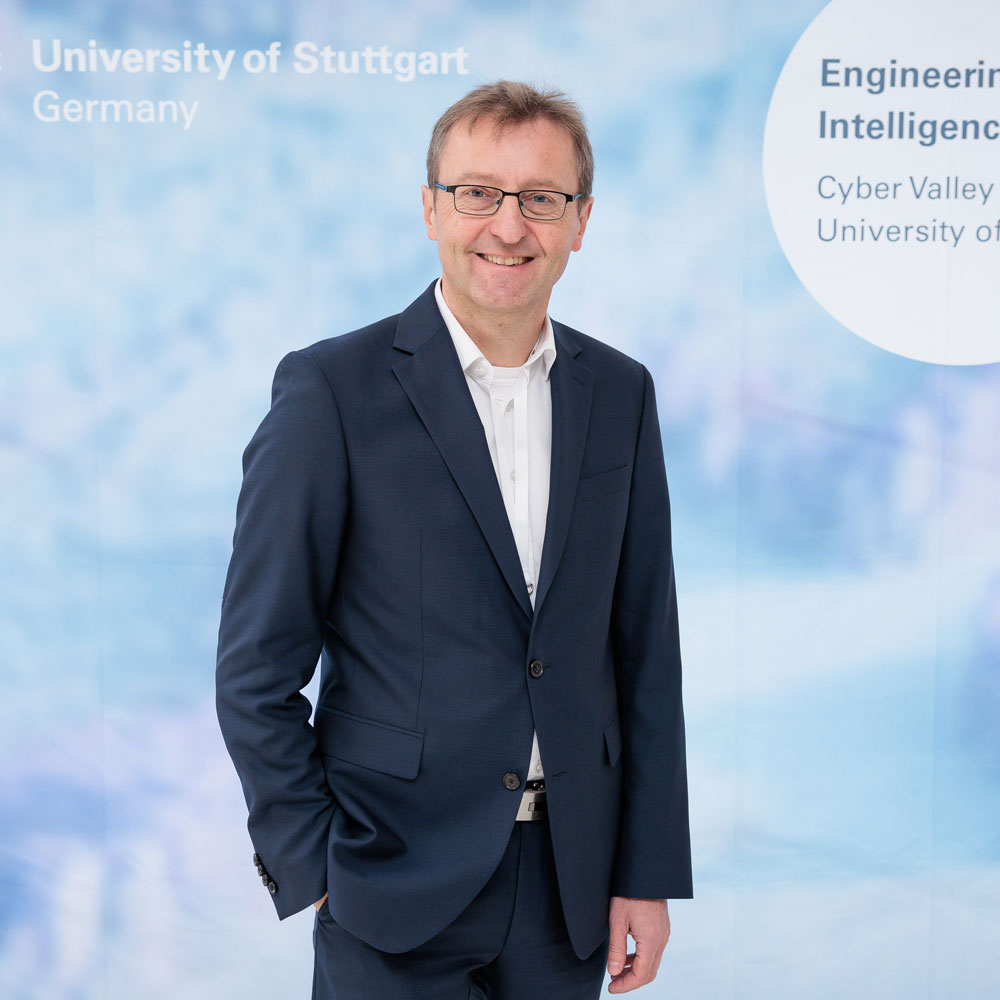
    "I am delighted to have been honored with this title, which has only been awarded to a few German-speaking researchers to date," said Staab. The 54-year-old is researching ways in which computers can be made to solve complex problems through data and knowledge-based learning. "Up to now,” Staab explains, “artificial intelligence algorithms have been trained using datasets, which however, are often insufficient to comprehensively train an algorithm. This is why,” he continues, “my team and I are looking into ways to solve this problem by exploiting existing knowledge, which we have so far made insufficient use of." The computer scientist is pursuing this problem through interdisciplinary collaboration at the University of Stuttgart, within the "Data-integrated Simulation Science" (SimTech) Cluster of Excellence and in Cyber Valley, Europe's leading academic and industry consortium for AI research.

    Better synthetic fertilizer and cancer simulations

    Examples that illustrate Staab's research include artificial fertilizers and cancer. It would be ideal for both the agricultural sector and society in general if only the minimum amount of fertilizer were spread over a field to achieve the necessary concentration in the soil, which is not so easy because soil conditions vary greatly. Cancer is also subject to wide variations: whereas one tumor may grow in a branching form, another may remain compact, which has implications in terms of treatment. Researchers, such as Staab, are currently working at SimTech on the development of simulations that make such complex processes more predictable.

    As Staab explains: "We often don't know which part of the complex mathematical description – which is the starting point for a simulation – is of particular relevance when it comes to achieving meaningful results." Yet this would be important for the simulation. “This,” he continues, “is where AI algorithms can help but we need to train them on existing data, which is often rather scarce. If, however, we could also draw upon existing knowledge, the simulations could be carried out in a more stringent and realistic manner.” In many cases in fact, this knowledge is already available from laboratory studies carried out by other researchers – in some cases many years ago – on both synthetic fertilizers and tumors. "One could also refer to our approach as knowledge-infused simulation science," says Staab.

    About the Association for Computing Machinery

    The ACM is the world's largest and oldest scientific association for computer science. It comprises experts from the fields of education and research and aims to promote computer science both as a science and as a profession. The ACM also awards the Turing Prize, the highest honor in computer science. To be selected as an ACM Fellow, one's personal achievements in the fields studied by the ACM members must be outstanding.

    About Prof. Steffen Staab

    Steffen Staab was born in Würzburg in 1970 and studied Computer Science and Computer Linguistics at both the University of Erlangen-Nuremberg and the University of Pennsylvania. He received his doctorate in Computer Science from the University of Freiburg in 1998. He then went on to work at the University of Stuttgart’s Institute of Human Factors and Technology Management (IAT) as well as at the Fraunhofer Institute for Industrial Engineering (IAO), and later moved to the University of Karlsruhe (now known as KIT). In 2004, Staab was appointed Professor of Databases and Information Systems at the University of Koblenz and Landau, where he founded the Institute for Web Science and Technologies (WeST) in 2009. He has also held the Chair for Web and Computer Science at the University of Southampton since March 2015.

    Staab took up a Cyber Valley Professorship for Analytical Computing at the University of Stuttgart in February 2020. He founded the University's Institute for Artificial Intelligence where he serves as Managing Director and is also one of the two spokespersons for the SimTech Cluster of Excellence.

    Expert contact: 

    Prof. Steffen Staab, University of Stuttgart, Institute for Artificial Intelligence, Phone: +49 711 685-88100, E-Mail: steffen.staab@ki.uni-stuttgart.de

    Media contact:

    Lydia Lehmann, University of Stuttgart, University Communications, 
    Phone: +49 711 685-82297, E-Mail: lydia.lehmann@hkom.uni-stuttgart.de

  • IMPRS-IS 2024 Interview Symposium Keynotes

    IMPRS-IS 2024 Interview Symposium Keynotes

    The International Max Planck Research School for Intelligent Systems (IMPRS-IS) brings together the MPI for Intelligent Systems with the University of Stuttgart and the University of Tübingen to form a highly visible and unique graduate school of internationally recognized faculty, working at the leading edge of the field. This program is a key element of Baden-Württemberg’s Cyber Valley initiative to accelerate basic research and commercial development in artificial intelligence.

    Each year, the program hosts a symposium to interview IMPRS-IS Ph.D. applicants. As the scientific highlight of this year's program, Dr. Wieland Brendel (Max Planck Institute for Intelligent Systems and ELLIS) and Prof. Andreas Bulling (University of Stuttgart) will be featured as keynote speakers for the event.

    Their hybrid keynote talks will take place back-to-back at the two sites of MPI-IS on Thursday, February 8. All community members are encouraged to join these presentations, preferably onsite if possible. 

    Speakers:

    Wieland Brendel – Cracking the black box: how far are we from understanding the inner workings of deep vision models?
    Date: Thursday, Febrary 8, 2024
    Time: 15:30 – 16:15 CET
    Onsite Location: MPI-IS Tübingen, Main Lecture Hall, Room N0.002

    Andreas Bulling – The academic journey – a personal travel report
    Date: Thursday, Febrary 8, 2024
    Time: 16:30 – 17:15 CET
    Onsite Location: MPI-IS Stuttgart, Copper Lecture Hall (Formerly R204)

    Participants can watch these talks on-site in either Stuttgart or Tübingen. One talk will be presented live in each location, and the other will be streamed remotely in real time. Both talks can also be watched online via Webex, which is how most applicants will join.

    Each keynote talk is anticipated to be 30 minutes long plus about 15 minutes for questions and discussion, giving a break of about 15 minutes between them.

    Links to access this event will be distributed via our community mailing lists. 

    With questions about this event or how to join, please contact Sara Sorce (sara.sorce@tuebingen.mpg.de).

    Keep in mind: This event is for internal community members only. 

  • Join the global forum for AI progress at AI House Davos

    Join the global forum for AI progress at AI House Davos

    • AI House Davos will bring together leaders in industry, civil society, government, the investing community, and academics to drive the global conversation on artificial intelligence.

    • Confirmed speakers include: Yann LeCun (VP of Meta), Kay Firth-Butterfield (CEO of Good Tech Advisory), Amy Webb (CEO of Future Today Institute), Arvind Krishna (CEO of IBM), Jonas Andrulis (CEO of Aleph Alpha), Theresa May (former Prime Minister of the UK), and Christian Lindner (Germany’s Finance Minister). 

    • Cyber Valley, contributor to the AI House program, invites you to its sessions. 

    Davos, Switzerland. We are pleased to announce the upcoming opening of AI House Davos during the World Economic Forum (WEF) Annual Meeting from January 15-19, 2024. Registration for a packed calendar of events is now open on the AI House website.

    Understanding AI’s current and future capabilities has never been more important. AI will undoubtedly be the dominant discussion at this year’s WEF Annual Meeting, and AI House Davos will be a crucial global forum to bring the deepest discussions on AI to life, from how AI can benefit humankind to how world economies can provide a catalyst for sustainable innovation. 

    The AI House will bring together leaders across diverse sectors — from academics to industry, as well as government, and entrepreneurship — to facilitate deep discussions and collaboration geared toward safeguarding the future of artificial intelligence. The AI House is a dedicated platform with a multidisciplinary and multi-stakeholder approach working to address the challenges and opportunities facing the artificial intelligence ecosyste. This includes conversations surrounding responsible growth, scaling, and regulation. 

    Speakers at AI House include Yann LeCun (VP of Meta), Kay Firth-Butterfield (CEO of Good Tech Advisory), Amy Webb (CEO of Future Today Institute), Arvind Krishna (CEO of IBM), Jonas Andrulis (CEO of Aleph Alpha), Theresa May (former Prime Minister of the UK), Christian Lindner (Germany’s Finance Minister), and many more. Confirmed speakers can be found on the website.


    Cyber Valley events at AI House Davos

    AI House Davos events with Cyber Valley contributions

    Five major themes will be covered throughout the week. Monday will focus on the current state of AI. An Opening Ceremony will take place where the AI House initiators will discuss the activities planned for the week. On Tuesday, a dive into AI’s opportunities and risks will take place. Wednesday will focus on applications of AI. Thursday will look toward the next frontier. On Friday, the program will conclude with a review of the week and a look ahead to the future.

    Members of the press should join the waitlists for the specific sessions at AI House they wish to attend. Invitations are at the discretion of the session organizer. Press inquiries about AI House should be sent to steven.perlberg@merantix.com. 

    AI House is a joint initiative led by Merantix, ETH AI Center, Swisscom, UTokyo Institute for AI and Beyond, Hewlett Packard Enterprise (HPE), and G42. AI House partners and sponsors include the European Commission, European Innovation Council, European AI Forum, Automation Anywhere, EPFL, EY, TÜV AI Lab, Cyber Valley and many more. Forbes, Handelsblatt, and Devex are the media partners. 

    The AI House is perfectly positioned in the heart of the Davos promenade. Just 750 meters from the congress center, this central location ensures seamless access to all the key events in Davos. Find AI House on Promenade 68, Davos Platz.

    Faheem Ahamed, Group CMO of G42, said: “At G42, we embrace a global, inclusive approach to the future of AI. As the Initiator Partner of AI House Davos, we eagerly anticipate engaging with organizations and individuals who share our dedication to leading-edge scientific research, transformative AI applications, and effective regulation. Together, we can accelerate AI's positive impact on society and the global economy, cultivating an ecosystem that fuels innovation while steadfastly upholding ethical standards in the advancement and integration of this transformative technology.”

    Masami Hagiya, Director of UTokyo Institute for AI and Beyond, said: “As AI technologies spread, all aspects of human society are affected and need to change to build a better world. The multi-stakeholder approach of AI House is a suitable framework for discussing issues from different perspectives of human society. The panel on ‘AI Governance and Safety: G7 Hiroshima AI process’ is a typical topic involving multiple stakeholders. Also, UTokyo Institute for AI and Beyond will host ‘AI and Higher Education,’ focusing on how higher education should evolve as generative AI gradually replaces many aspects of human intelligence. ‘Harmony of Coexistence’ will touch on human intelligence and AI from various perspectives.”

    Dr. Rasmus Rothe, CTO and Co-Founder of Merantix, said: “What the AI landscape really needs now in order to thrive is a vibrant community bringing together all the different stakeholders, from investors, startups, academics, regulators, government leaders, and corporates, to discuss AI’s future, learn about AI’s current application in the real world, and create some meaningful new collaborations leveraging AI’s potential. That’s why we initiated AI House, and it’s why Davos is the perfect venue for these discussions.”

    Evan Sparks, Vice President and General Manager for AI Solutions and Supercomputing Cloud, Hewlett Packard Enterprise, said: “AI will have a transformative societal impact. As a fundamental technology, AI will solve complex scientific challenges and make breakthroughs in drug discovery, provide accurate medical diagnosis faster, predict and prevent catastrophic weather events, and advance renewable energy to help us transition to a net-zero world. However, to make AI beneficial to humanity, we must make it accessible, sustainable, and responsible, and the power of collaboration will help us get there. As co-initiators of AI House Davos, we look forward to being a part of an important initiative that will bring together stakeholders across private and public sectors to design, develop, and deliver efficient and ethical AI solutions to benefit the greater good.”

    Dr. Alexander Ilic, Founder and Executive Director of ETH AI Center, said: “In the imminent future, we anticipate many breakthroughs in AI research to catalyze significant advancements towards achieving the Sustainable Development Goals – marking a new era of progress and innovation. From education to healthcare to sustainability, AI is a technology that should be accessible, trustworthy, and safe for everybody. The AI House Davos therefore serves as a central hub, fostering and expediting collaboration between global key stakeholders from academia, industry, NGOs, start-ups, and civil society, all dedicated to realizing our shared vision.”

    Laure Willemin, Executive Vice President of Data, Analytics & AI at Swisscom, said: “The AI House Davos is the start of a joint journey towards a common understanding of AI. Switzerland is the right place to host the AI pioneers from all over the world to meet, connect and shape AI. As one of the most competitive and innovative countries, with its renowned universities, Switzerland plays a leading role in AI research and AI development. Swisscom is excited to be part of this journey and committed to develop trusted AI solutions to the benefit of Switzerland.”

    More information about the AI House and its initiators, partners, and sponsors can be found here. 

    Media contact:
    Steven Perlberg
    Head of Communications at Merantix
    steven.perlberg@merantix.com 

    Media contact for Cyber Valley at AI House Davos:
    Hazel Rowland
    Cyber Valley Media Manager
    Hazel.Rowland@cyber-valley.de

  • Call for applications for the State Research Prize 2024

    Call for applications for the State Research Prize 2024

    Since 1989, the Ministry of Science, Research and the Arts, in cooperation with the Heidelberg Academy of Sciences and Humanities, has been awarding the Baden-Württemberg Research Prize. The research prize is endowed with 200,000 euros and is divided into two categories: a prize for fundamental research (100,000€) and a prize for applied research (100,000€). The two halves can be awarded in equal parts to one or more researchers.

    The State Research Prize stands as the most highly endowed research award among all the German states. It recognizes outstanding research by a scientist at universities or non-university research institutions in the state, regardless of discipline, within an international framework. 

    The prize for courageous scientific research is awarded together with the State Research Prize. The prize is endowed with 30,000€. The aim for this is to recognize excellent researchers at universities and non-university research institutions in Baden-Württemberg who have taken unusual paths and particular risks in their research. With this award, Baden-Württemberg recognizes the extent to which innovative science depends on researchers taking risks.

    Deadline: March 3, 2024.

    More Information (in GER)

  • AI House Davos: AI & Sustainability

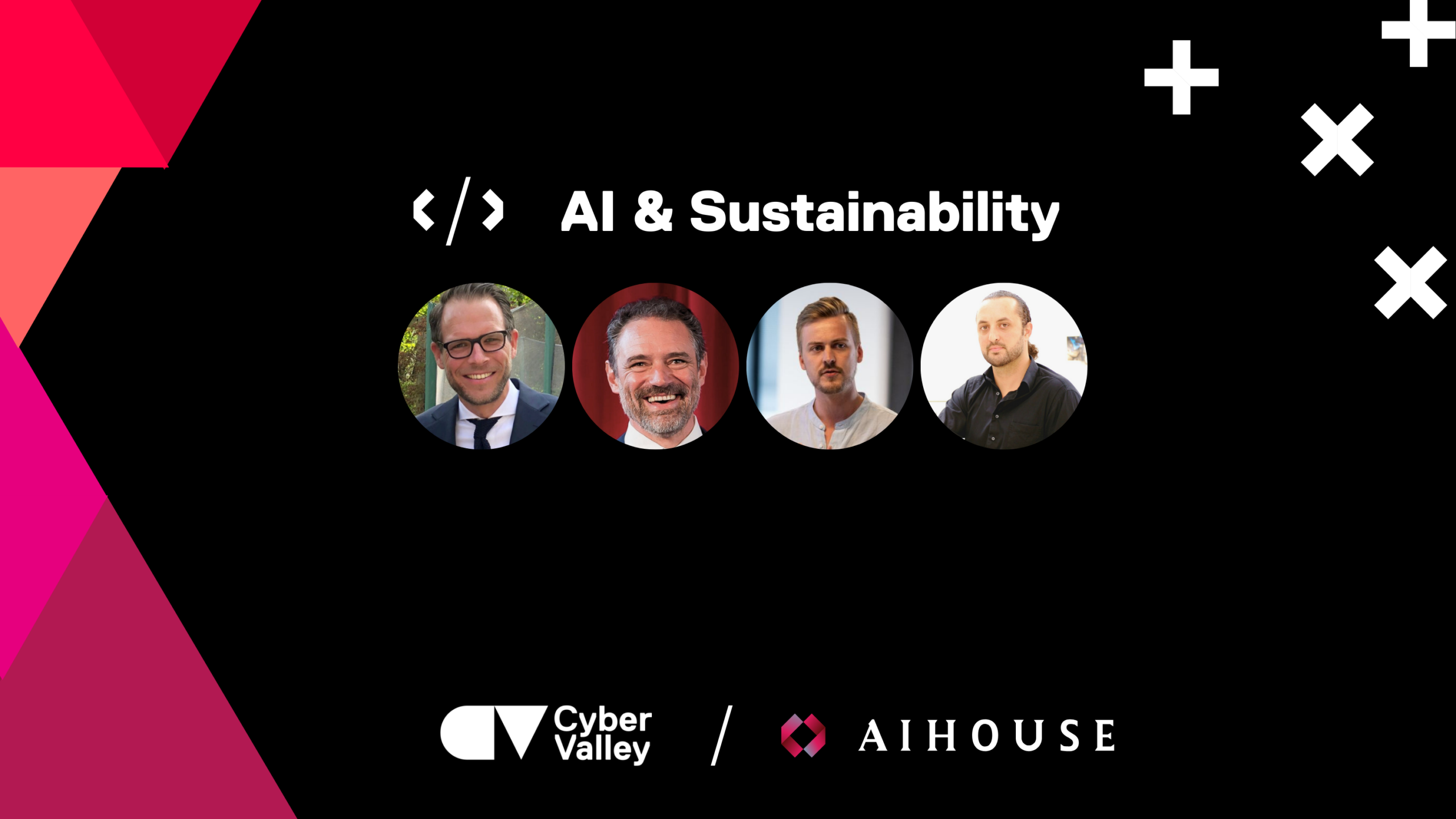
    AI House Davos: AI & Sustainability


    This roundtable will explore how AI technologies are being applied to tackle critical sustainability challenges. Discussions will examine real-world AI innovations in areas such as renewable energy, resource conservation, and climate change mitigation. Emphasizing actionable solutions, we'll consider the role of AI in driving environmental progress, enhancing global sustainability efforts, and the partnerships propelling this mission forward.


    When?

    Wednesday, January 17 2024, 11:30-12:00 CET


    Where?

    Partner Room 2, AI House Davos, Promenade 68, 7270 Davos Platz


    Format

    • Roundtable
    • Open to the press
    • Interactive panel discussion
    • Audience Q&A


    Speakers

    • Christoph Kellenberger, Sustainable Architect
    • Max Gercken, CEO Optocycle
    • Dieter Gerdemann, MD & Partner Sustainability, A.T. Kearney
    • Samuel Widmann, Entrepreneur and ex-Google Maps CEO
       

    Moderators

    • Julian Enz, Director Innovation & Economy (CIO), Cyber Valley
    • Rebecca Beiter, Director Communications & Society (CCO), Cyber Valley


    Further information

    Register


  • AI House Davos: Frontiers of AI & ML

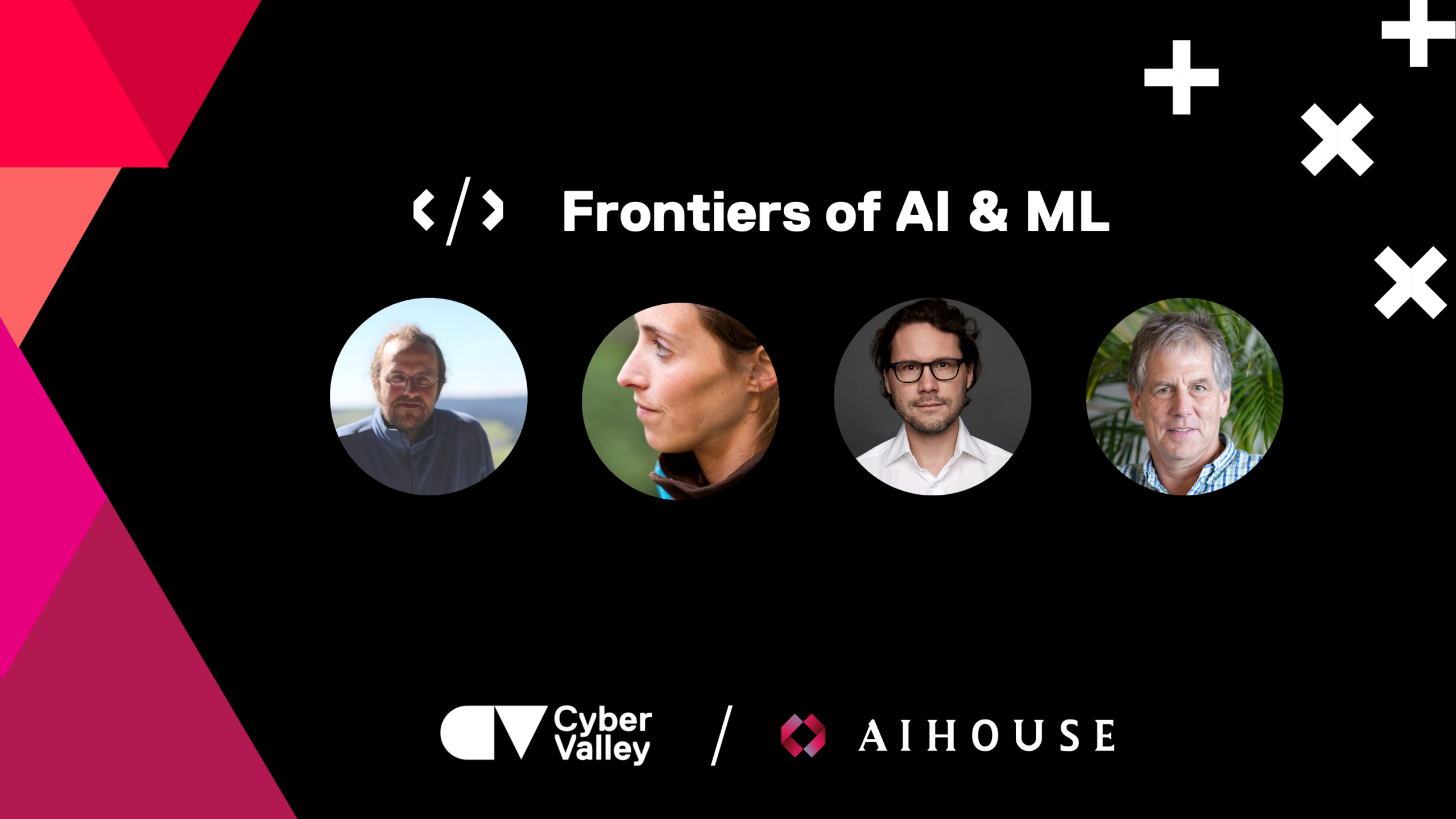
    AI House Davos: Frontiers of AI & ML


    Exploring cutting-edge developments in machine learning and AI, this discussion delves into recent research breakthroughs including related fields like computational neuroscience. Focused on advanced algorithms, neural network innovations, and deep learning techniques, we'll address challenges and future directions in AI, with insights from leading European AI researchers. Emphasis will be on scientific depth, practical applications, and ethical considerations. 


    When?

    Wednesday, January 17, 2024, 16:15-16:45


    Where?

    Partner Room 3, AI House Davos, Promenade 68, 7270 Davos Platz


    Format

    • Round table
    • Open to the press


    Speakers

    • Bernhard Schölkopf, Director of the ELLIS-Institute, Director Max Planck Institute for Intelligent Systems & Cyber Valley Speaker
    • Tobias Bonhoeffer, Director of the Max Planck Institute for Biological Intelligence
    • Auguste von Bayern, Group Leader Max Planck Institute for Biological Intelligence
    • Evan Sparks, Vice President of AI and High Performance Computing at HPI


    Moderator

    • Alexander Diehl, Investor & Entrepreneur, Cyber Valley 


    Further information

    Register