User Group: General Public

  • State government paves the way for Cyber Valley Campus

    State government paves the way for Cyber Valley Campus

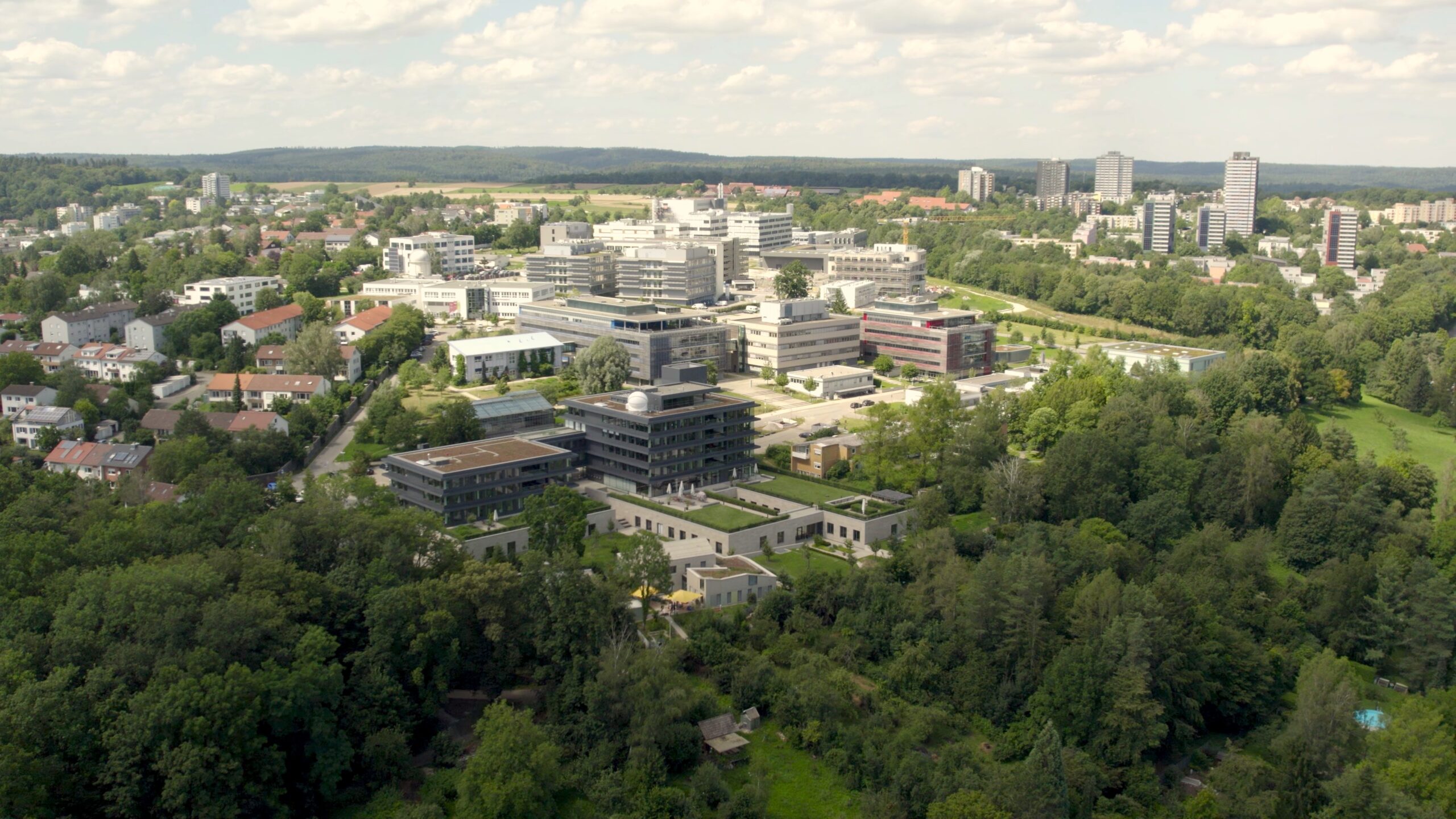
    “As the heart of top AI research in Baden-Württemberg, the campus shall underline the ambition to be Europe’s hotspot for top researchers in global competition, also in terms of building structures,” said Science Minister Theresia Bauer. “Already on its fifth birthday, the growing Cyber Valley is overflowing. With the overall concept, we now have a roadmap so that we can still find working space for our young scientists and researchers after next year. I thank the Minister of Finance and the Rector of the University of Tübingen for enabling us to develop a viable overall concept instead of short-term solutions.”

    Minister of Science Theresia Bauer: “The concept underlines the ambition to be Europe’s hotspot for cutting-edge AI research”

    Finance Minister Danyal Bayaz said: “We are investing to make Baden-Württemberg the California of Europe. We strive to be at the forefront of artificial intelligence, and Cyber Valley is enormously important for that.”

    The Cyber Valley Campus will also host a planned ELLIS Institute, for which the state is currently in coordination with the Hector Foundation, and the University of Tübingen’s AI Competence Center, which is financed by Germany’s federal government and Baden-Württemberg’s state government and jointly operated with the Max Planck Institute for Intelligent Systems. The concept that has now been approved forsees the construction of two additional buildings for research, teaching and seminars, as well as the purchase of an existing building on the future campus site.

    Finance Minister Danyal Bayaz: “We want to become the California of Europe”

    Professor Dr. Bernd Engler, Rector of the University of Tübingen, said: “Cyber Valley has become a magnet for outstanding AI researchers from all over the world. Not only the state of Baden-Württemberg, but also the federal government, companies and private foundations are currently investing large sums in bright minds and will continue to do so in the future. However, the researchers also need office space, laboratories and computing capacity. Therefore, it has been essential to also increase investments in infrastructure and to significantly accelerate the pace of building up Cyber Valley now, in order to realize the enormous potential of the location.”

    ELLIS Institute:

    With outstanding support from funds pledged by the H. W. & J. Hector Foundations to attract top AI scientists, the ELLIS Institute, backed by a scientific association, will be established within the Cyber Valley ecosystem. The foundation's commitment requires financial participation by the state. The state is currently coordinating arrangements with the Hector Foundation in this regard.

    ELLIS stands for European Laboratory for Learning & Intelligent Systems and was founded by leading researchers from Europe who work closely with basic researchers from industry. The overarching goal of ELLIS is to establish European cutting-edge research in the field of artificial intelligence as internationally competitive. Europe should not only contribute to how AI and machine learning are changing the world, but also make an economic impact by creating new jobs.

    More information on ELLIS: https://ellis.eu

  • New podcast episode: Feel the Robot – haptic intelligence

    New podcast episode: Feel the Robot – haptic intelligence

    Our guests

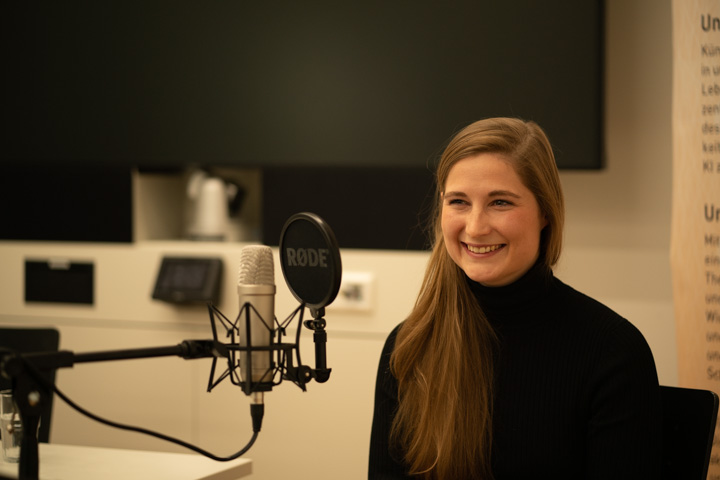
    Katherine J. Kuchenbecker, Director at the Max-Planck-Institute for Intelligent Systems (MPI-IS) in Stuttgart, talks about the challenges and latest developments in haptic intelligence research. She explains why robots have barely been able to touch, how her research is trying to change that, and where that could potentially be useful. An abridged version of this conversation has also been published here for further reading.

    Another perspective on the body and presence of machines is brought in by Ilja Mirsky, dramaturge at the Zimmertheater Tübingen (Institut für theatrale Zukunftsforschung ITZ). He is a Phd student on the topic of human-machine interaction and sees the relationship between humans and machines as a source of inspiration.

    About Direktdurchwahl

    The podcast episode “Feel the robot” is now online on Spotify, Deezer, Amazon Music/Audible as well as Google Podcasts– and most recently on Apple Podcasts and YouTube. In addition, horads 88.6, the campus radio station for the Stuttgart/Ludwigsburg region, broadcasts the podcast every second Sunday at 14:00.

    In our podcast, we clarify what artificial intelligence (AI) scientists are researching. We also present what AI can’t do (yet) or where special challenges currently exist in research and development. Our guests don’t talk about unrealistic visions of the future, but about the real questions that arise in their research. We also ask people from the region for their perspective on the complex topic of AI.

    Direct Dial is one of many formats of Cyber Valley Public Engagement. Cyber Valley wants to see ethically and socially reflective research in the field of AI. If you would like to stay up to date on new podcast episodes, formats, and events related to the dialogue on AI, feel free to sign up for the Public Engagement Newsletter. 


    You are currently viewing a placeholder content from Podigee. To access the actual content, click the button below. Please note that doing so will share data with third-party providers.

    More Information

  • Five years of Cyber Valley

    Five years of Cyber Valley

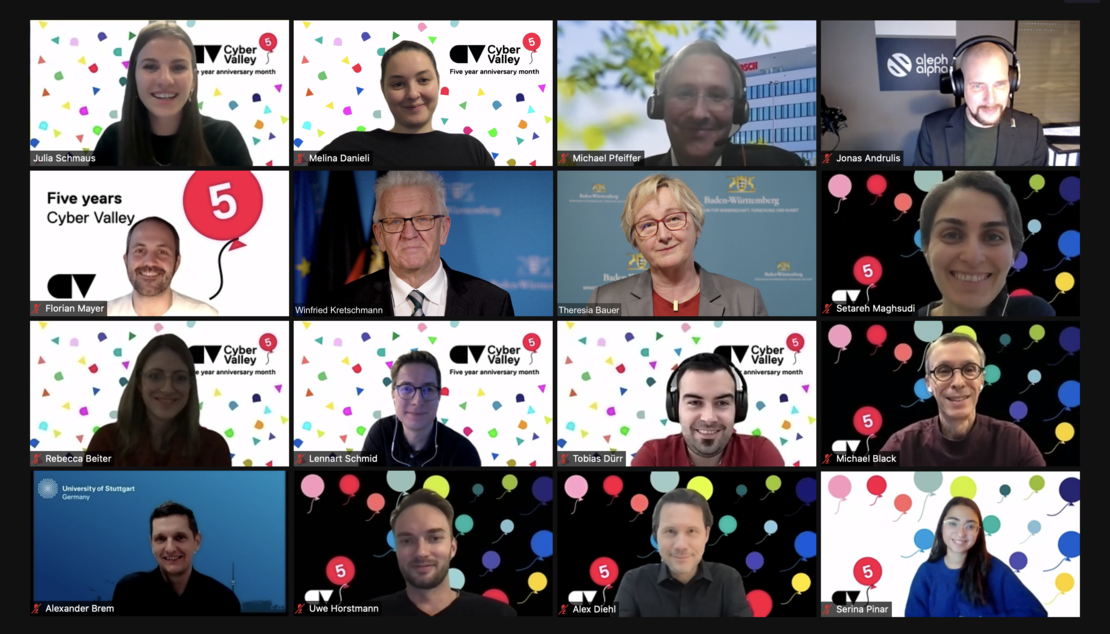
    On the occasion of the fifth anniversary of the official kick-off by Baden-Württemberg’s Minister-President Winfried Kretschmann, the state’s Science Minister Theresia Bauer, the President of the Max Planck Society Martin Stratmann and the other project participants on December 15, 2016, Cyber Valley hosted a special edition of its online event format “Entrepreneurship Series” on Wednesday. After welcoming remarks by Kretschmann and Bauer, keynote speeches on “Igniting the potential of AI” were given by Michael Pfeiffer, Global Head of AI Research at the Bosch Center for Artificial Intelligence, and Michael J. Black, Cyber Valley speaker and Director at the Max Planck Institute for Intelligent Systems (MPI-IS) in Tübingen, among others.

    “When I think about how it all started, you can say, in a way, Cyber Valley is a start-up itself. At least it was one five years ago,” said Minister-President Kretschmann. “Today, Cyber Valley enjoys respect in Baden-Württemberg, Germany and abroad. The publications of its researchers have vaulted Cyber Valley to the top of the relevant rankings. The federal and state governments regard Cyber Valley as a jewel and make every effort to promote it. Cyber Valley has earned a very important status: as one of the places in our country where the future is happening. I think, for a fifth anniversary, that’s not a bad record. In that spirit, keep up the good work. Happy birthday!”

    “The first phase of Cyber Valley has been primarily about laying the foundations for a thriving AI ecosystem. Scientific excellence and strong support for young scientists form the foundation for this. If you look at Germany today and seek software engineers, there is no better market than the Stuttgart-Tübingen region. The amount of talent here is immense. The quality of life is good, the infrastructure is good, so it’s easy to attract people to the region,” Black said. “We’ve also built a culture of innovation and entrepreneurship, and that’s what we’re pushing now: the next phase of Cyber Valley. It’s about spinning off companies, nurturing them, helping them grow, and making this region in Germany – and hopefully across Europe – the one where you start the next AI company.”

    The state of Baden-Württemberg has invested around 180 million euros in Cyber Valley so far. Added to this are the investments of the research partners – these are the Max Planck Society and the Universities of Stuttgart and Tübingen – in new research buildings, chairs, the International Max Planck Research School for Intelligent Systems (IMPRS-IS) graduate school and nine new Cyber Valley research groups to date. The industry partners support the research groups at MPI-IS and the universities of Stuttgart and Tübingen with a total of 7.5 million euros from 2018 to 2022. In addition, two endowed professorships will be funded by the industry partners: a chair for machine learning in Tübingen, funded by Robert Bosch GmbH, and a chair of entrepreneurship in technology and digitization, endowed by the Daimler Fund in the Stifterverband.

    Last year, the federal and state governments also decided to perpetuate the AI competence centers, securing permanent funding for the Tübingen AI Center as one of these competence centers. The state of Baden-Württemberg is already expanding the center, strengthening it with a coding school that teaches practical skills in programming. In addition, the Hector Foundations have pledged 100 million euros over at least ten years to support the establishment of an institute of the European Laboratory for Learning & Intelligent Systems (ELLIS).

    “When we founded Cyber Valley five years ago, our goals were clear: Artificial intelligence is the technology of the future for all areas, science, business and all of our lives. This is where we must invest if we want to shape digitization. We therefore proceeded quickly, decisively and strategically,” said Theresia Bauer, Baden-Württemberg’s Science Minister. “Cyber Valley benefits from an excellent environment – medicine in Tübingen, engineering sciences as well as high-performance computing in Stuttgart to leading companies, such as Amazon or Bosch, which have set up shop directly on campus. The state of Baden-Württemberg is very proud to have jointly created a shining signal for AI ‘made in the Länd’ with Cyber Valley. Congratulations on the fifth anniversary!”

    In addition to expanding scientific excellence in Stuttgart and Tübingen, Cyber Valley launched a start-up network in November 2019 to foster exchange between AI start-ups within the ecosystem. About two years after its launch, the network counts 30 members – just a few weeks ago, the research consortium’s Executive Board decided to admit the company Black Forest AI. The founding of the Cyber Valley Investor Network followed in September 2020, in which renowned venture capital firms from Germany, the U.S. and Japan engage as mentors for scientists within the Cyber Valley ecosystem, helping them turn research and business ideas into successful companies.

    “I warmly congratulate Cyber Valley on its fifth anniversary and I am delighted that the University of Stuttgart has been involved in Cyber Valley as a partner from academia since its inception. Artificial intelligence and robotics are among the most important research areas of the future,” said Professor Wolfram Ressel, Rector of the University of Stuttgart. “The University of Stuttgart is therefore focusing on these areas and devoting both teaching and research to topics such as nanorobots for medicine, safer software systems, autonomous learning machines and fair decisive artificial intelligence. With intelligent systems, the University of Stuttgart is committed to a sustainable society, and with its recent focus on ‘intelligent robotics’, it helps Stuttgart’s AI location to fully develop its potential in the Cyber Valley research consortium.”

    “Cyber Valley has become a globally visible location for artificial intelligence in just five years thanks to substantial funding from the federal government, the state and foundations, but also thanks to the investments of a growing number of companies,” said Professor Bernd Engler, President of the University of Tübingen. “The conditions are therefore in place to usher in the next phase of development of this AI research network, which is outstanding in its diversity and excellence. For this to succeed, it will be crucial to now press ahead very quickly with the expansion of the necessary infrastructure.”

    The milestones from the first five years of Cyber Valley can be found here. To mark the anniversary, Cyber Valley has also put together a special themed package on a landing page, collecting feature articles on various key research areas.

  • Milestones

    Milestones

    December 2016: Go-ahead for Cyber Valley

    Intelligent systems will shape our future: They could chauffeur us as autonomous vehicles, assist us in our daily lives as household helpers, or provide medical services as tiny robots. To drive development in this direction, partners from science and industry are creating Cyber Valley in the Stuttgart-Tübingen area on the initiative of the Max Planck Society and the Max Planck Institute for Intelligent Systems (MPI-IS). Winfried Kretschmann, Minister President of the State of Baden-Württemberg, Theresia Bauer, Minister of Science of the State, and Martin Stratmann, President of the Max Planck Society, as well as the other project participants launch Cyber Valley on Thursday, December 15, 2016, at Stuttgart’s Neues Schloss.

    July 2017: Launch of the IMPRS-IS

    The International Max Planck Research School for Intelligent Systems (IMPRS-IS) includes the Max Planck Institute for Intelligent Systems (MPI-IS) and the Universities of Stuttgart and Tübingen. The Ph.D. program offers young scientists from all over the world the opportunity to complete their studies under the supervision of Europe’s leading researchers in the fields of machine learning, robotics and computer vision. Since its launch, IMPRS-IS has received more than 2,000 applications from around the world. The multidisciplinary Ph.D. program currently has 217 Ph.D. students and approximately 30 associate students. 

    October 2017: Amazon joins Cyber Valley and announces new research center

    Cyber Valley enlists Amazon as an industry partner. In the future, Amazon wants to participate in the research cooperation and establish its own research center in Tübingen. As part of the cooperation, Amazon will also provide support in the form of Amazon Research Awards worth 420,000 euros annually. The research funds will be used to finance the research of doctoral and post-doctoral students at MPI-IS.

    2018: Cyber Valley research groups and professorships start work

    Ten new research groups start their work, more than ten new professorships in the field of AI are established. Today, Cyber Valley counts nearly 100 research groups and professorships.

    April 2018: Initiative to establish a European Lab for Learning & Intelligent Systems

    Scientists from Germany, France, Great Britain, Israel, the Netherlands and Switzerland have called for the rapid establishment of a European Laboratory for Learning and Intelligent Systems (ELLIS). The task of ELLIS must be to integrate the best European researchers from academia and at the same time to work closely with basic researchers from industry, the statement says. The European Molecular Biology Laboratory (EMBL) could serve as a model. Consequently, the ELLIS Society was founded in December 2018.

    September 2018: Approval of clusters of excellence in Stuttgart and Tübingen

    The first funding decision of the Excellence Strategy is made in favor of Cyber Valley; both the University of Stuttgart and the University of Tübingen are able to position themselves in the selection process in the race for the second funding line Excellence Universities: “Data-integrated Simulation Sciences” (SimTech) and “Integrative Computer-based Design and Construction for Architecture” (IntCDC) in Stuttgart, as well as “Machine Learning: New Perspectives for Science” in Tübingen are the names of the Clusters of Excellence.

    October 2018: Tübingen receives competence center for AI

    Tübingen receives a competence center for AI and machine learning. This means that Tübingen has been selected as one of four locations nationwide where the Federal Ministry of Education and Research (BMBF) will bundle science projects on AI. In the “Tübingen AI Center”, research groups from the University of Tübingen and MPI-IS will work on the further development of learning systems. The competence centers are expected to play an important role in the German government’s announced strategy on AI.

    December 2018: Cyber Valley launches federal competition for artificial intelligence

    The University of Tübingen and the Max Planck Institute for Intelligent Systems are launching the Bundeswettbewerb Künstliche Intelligenz (BWKI), the first nationwide student competition for AI, as part of the Cyber Valley initiative. The annual BWKI is aimed at students between the ages of 14 and 19 who have strengths in science subjects such as mathematics, computer science or physics – and are interested in developing creative solutions to the challenges of the future. The competition’s sponsors and supporters include Cyber Valley partners Bosch, Amazon and the Carl Zeiss Foundation.

    July 2019: Bosch announces new AI research center and opening of AI Research Building in Tübingen

    Bosch is stepping up its activities in the field of AI, a technology of the future: in Cyber Valley, the technology company plans to invest around 35 million euros in the construction of the “Bosch AI Campus” in Tübingen. Around 700 experts will work there on application-oriented AI in the future. 

    August 2019: Cyber Valley establishes public advisory board

    The Cyber Valley Public Advisory Board (PAB) is a joint commission of the partners from politics, science and industry. It evaluates scientific projects to be funded by Cyber Valley’s research fund in terms of their ethical and societal implications, creating an additional element of transparency. The fund is used to finance free research projects, i.e. those not specified by industry, although it is the industry partners who fill the funding pot.

    November 2019: Fraunhofer-Gesellschaft joins Cyber Valley

    The Fraunhofer-Gesellschaft joins the Cyber Valley research alliance by establishing a new AI progress center. The state and the Fraunhofer-Gesellschaft are establishing a new center for AI in SMEs. The AI Progress Center “Learning Systems and Cognitive Robotics” is to support companies in exploiting the economic opportunities of the key technology AI for themselves through application-oriented research and technology transfer.

    November 2019: Cyber Valley establishes Start-Up Network

    The Cyber Valley Start-Up Network builds and nurtures a community of start-up entrepreneurs. As members of the network, startups are invited to regularly attend events such as talks and meet-ups. Membership has grown rapidly over the past five years, from the initial seven founding members at the end of 2019 to 30 startups two years later.

    September 2020: Cyber Valley launches Investor Network

    The Cyber Valley Investor Network takes the vision of Europe’s largest AI research consortium as a leading breeding ground for successful AI startups one step further. The five network members engage as mentor:ing researchers within the Cyber Valley ecosystem, helping them turn research and business ideas into successful companies. The venture capital firms’ advice will serve as a springboard for future entrepreneurs, creating AI jobs of tomorrow. 

    September 2020: Inauguration of the first ELLIS units

    The European Laboratory for Learning and Intelligent Systems (ELLIS) inaugurates its first 30 units, where partners bundle their activities at one location. Today, the ELLIS network comprises a total of 34 such units, spread across 14 European countries. These include one unit each in Stuttgart and Tübingen, in which the University and the Max Planck Institute for Intelligent Systems are involved. ELLIS units are to make a decisive contribution to securing Europe’s sovereignty and leading role in the research field of modern AI.

    December 2020: Kick-off for the AI Breakthrough Hub

    The AI Breakthrough Hub project, funded by the federal and state governments, as well as privateers, will be realized around the Tübingen AI Center, the joint competence center for machine learning of the University of Tübingen and MPI-IS. The German government and the state of Baden-Württemberg are massively expanding their support for Tübingen as an AI location. A total of three-digit millions will flow additionally into research and development in the field of AI in the coming years – including 100 million euros from a foundation of SAP founder Hans-Werner Hector, among other things to create “Hector Endowed ELLIS Fellowships” at a new institute in Tübingen.

    March 2021: Launch of public engagement activities – exploring possible futures

    Cyber Valley calls for and promotes ethically and socially reflective research in the field of AI. For this reason, Cyber Valley is dedicated to special public engagement dialogue formats. The term public engagement describes new forms of science dialogue that enable more accessibility and exchange between society and AI researchers. As of March 2021, Cyber Valley Public Engagement has many offerings in its repertoire, currently including, for example, its own podcast, Cyber Valley on the Road, AI Office Hours, and the Journalist-in-Residence program.

    More Public Engagement highlights are in store for 2022: In the short story competition “CyberStories”, students will imagine their future with AI; scientists will then relate these ideas and visions to current research. For this purpose, Cyber Valley designs teaching materials on AI. Cyber Valley will also participate in the Stuttgart Science Festival 2022. In addition, the KI-Makerspace in Tübingen will open its doors. The Makerspace is a platform for sociopolitical discussions and an extracurricular learning space. Here, children and young people can gain their first experience with programming and AI and realize their own projects with software and hardware. 

    December 2021: AI GameDev

    AI GameDev is the first competition in Europe to facilitate the transfer of technology and knowledge from European AI research to the many potential applications in game development. Game developer Square Enix, venture capital firm IT-Farm and Cyber Valley launched AI GameDev as a pan-European competition for ideas and concepts that harness tools from machine learning, computer vision and robotics for improved game development and a more realistic gaming experience. The competition was open to start-ups and AI researchers – as individuals or in teams. More about the winners can be found here.

    January 2022: Start of construction of Cyber Valley building Tübingen

    The groundbreaking ceremony for the first new Cyber Valley building of the state of Baden-Württemberg will take place in the Tübingen Technology Park – in direct proximity to the AI sites of the University of Tübingen, Amazon and the Max Planck Campus. Researchers from the university, the Max Planck Institute for Intelligent Systems and the Cyber Valley Managing Office are expected to be able to move into the Cyber Valley building from the end of 2024. There are also plans to construct additional buildings for the numerous AI researchers at the university, the Tübingen AI Center and the Tübingen ELLIS activities in the immediate vicinity.


  • Communicate and inspire

    Communicate and inspire

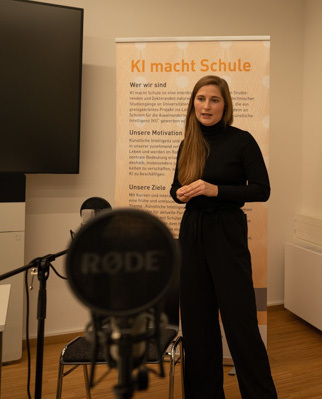
    “Machine learning and artificial intelligence are influencing our lives. Today – and even more so in the future,” Auguste Schulz notes. “People should understand this and reflect on it critically.” The idea behind the “KI macht Schule” (AI in school) initiative is that you can’t start early enough. It brings the discussion about artificial intelligence (AI) into secondary schools and gives students their first practical experience with the technologies and systems behind it.

    Together with eight other students and doctoral students, Schulz founded and coordinates the Tübingen local group of the nationwide project. As a team, they offer small workshops to students in grades 9 and up, which essentially have three components: First, Schulz and her colleagues give a brief introduction to a subarea of AI – for example, an image analysis system that can recognize and analyze faces. This technology is then used in a second step by the students to configure their own application that, for example, recognizes whether the people in selected pictures are wearing masks.

    At the end, the students reflect on the examples they have worked on before. “You have to try out technologies yourself in order to really understand them. And only when you have understood them properly can you deal with them consciously,” Schulz emphasizes. So, questions are discussed such as: What happens when someone wears glasses? What about people with different skin colors? How important is it that such intelligent systems are trained with the right data?

    Cyber Valley and the common mission

    Questions like these are also what drive Schulz beyond the core of her own research. And they connect her with the AI research consortium Cyber Valley. Because initiating social-ethical questions and discussions and thus contributing to the dialogue between researchers and society on the topics of AI and machine learning is a task that the Cyber Valley Public Engagement Team is happy to support.

    “AI systems and machine learning are so prevalent in our society that it’s just important to talk about these issues and engage with society,” Schulz says. The school workshops are a good example of how this can work. Because there the exchange is not a one-way street. Auguste Schulz also takes a lot away from the interaction with the pupils. “It’s really interesting that the students ask questions and don’t let up. Then you realize how well I really understood the topic myself,” says Auguste, whose enthusiasm for this exchange is plain to see.

    From physicist to physicist

    The doctoral student is particularly keen to attract children to scientific and technical subjects, the so-called STEM subjects. Especially children who have perhaps not yet thought about a career in science or technology – or who do not yet have the confidence to do so. Schulz, who studied physics herself, wants to show them that there are also female researchers in these fields. “You still sometimes stand out as a woman in your studies. Or you are often spoken to about the fact that you don’t really look like a physicist,” Schulz notes. That’s why it’s so important to break such thought patterns as early as possible – even before choosing a course of study.

    “It’s always hard to see yourself as a role model,” Schulz says. “But I can talk about my experiences. And just recently I met a young student who was very happy to meet a physicist for once.”

    Encourage exchange

    With her infectious enthusiasm, Auguste Schulz not only wins over students for herself and the topic of AI, she also shares it with colleagues from very different research fields. This collaboration across disciplinary boundaries is another focus for which Schulz finds support in Cyber Valley.

    For Auguste Schulz, interdisciplinary work already began during her physics studies at the University of Heidelberg. During her year abroad in England, she discovered her fascination for neurotechnology, which studies the nervous system and brain activity. Because that is simply more exciting than particle physics, Schulz says with a laugh. A Master’s degree in neuro engineering followed in Munich and then the aforementioned move to Tübingen, where she found a network of many like-minded people in very different research groups in Cyber Valley.

    “We are all united by our desire to develop new statistical methods and use machine learning to learn something from all the scientific data that is being ingested,” says Schulz, describing the bond in Cyber Valley.

    Brave new statistical worlds

    As part of her doctoral thesis, Schulz is currently researching the connections between brain activity and animal behavior. She is investigating what happens in our brain while animals exhibit a certain behavior – and which neuronal activity enables which behavior. Today’s behavior, for example, is also influenced by past behavior.

    If you want to explore and map these relationships, you are confronted with huge amounts of data. Normal static methods reach their limits here. Schulz therefore uses machine learning methods to extract as much as possible from these complex data. And to help the neuroscientists with whom she is working on the project to gain new insights.

    The overarching goal of Schulz’s work is to use machine learning, to develop new methods in exchange with colleagues from other disciplines, and then to make these methods usable for a whole range of other applications. For instead of brain data, health data, climate data or data from quantum physics can just as well be better analyzed in this way.

    Wishes for the future

    And it is precisely this collaboration and cooperation with other disciplines that Auguste Schulz finds particularly enriching. So, it’s hardly surprising what she would like to see in the future in the Cyber Valley network: “The support here is already great. But I would like to see even more interaction and exchange, especially after the pandemic. On campus in bars or cafés, but also in many new initiatives by researchers and students.” So that it will also be easy for new young researchers to arrive here in the future, to find an exciting research climate and to enter into dialogue with society.

  • Inspired by society

    Inspired by society

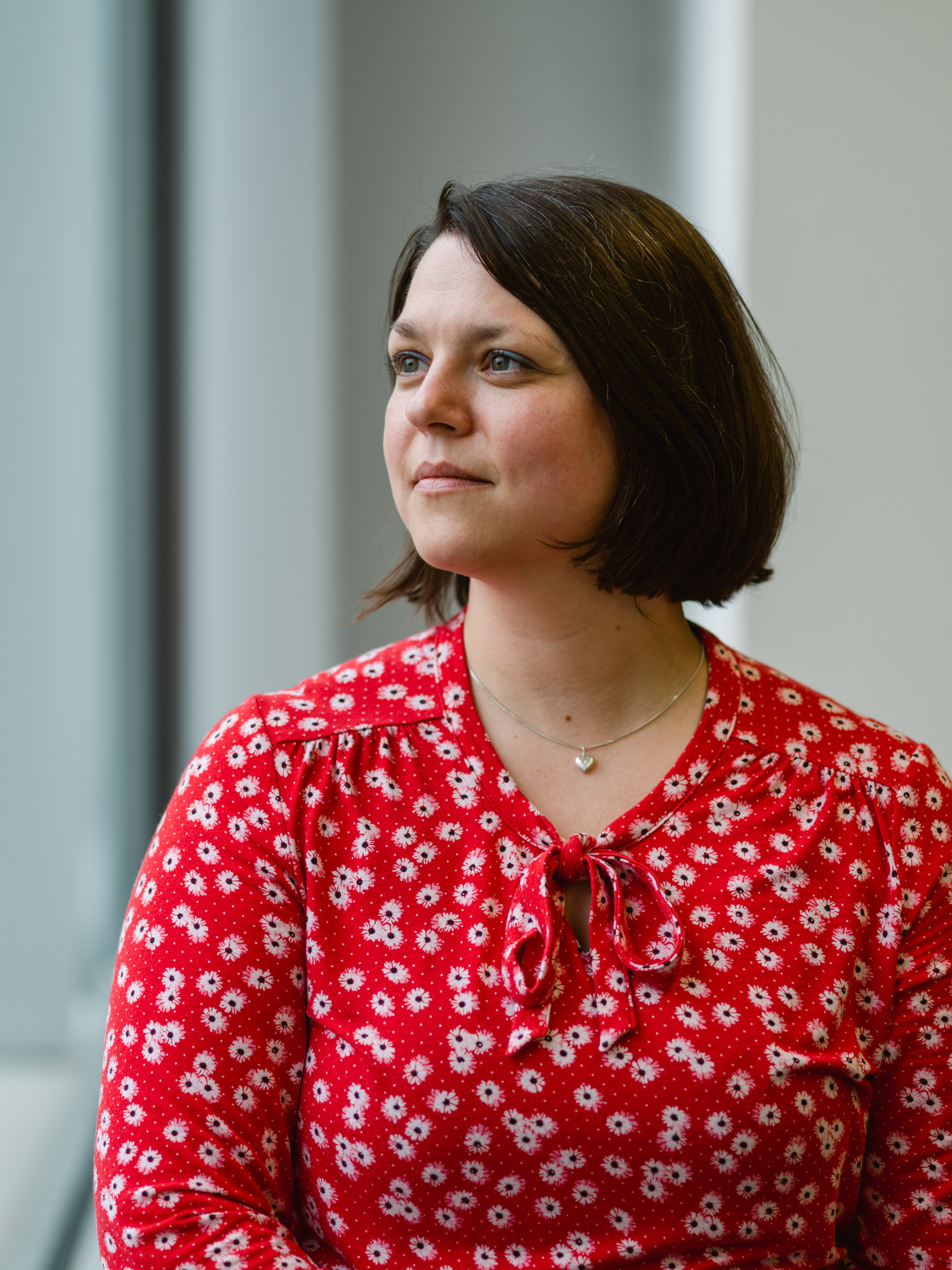
    As a bridge builder, Maria Wirzberger is a perfect fit – if only thanks to her own career. Her own career path offers exciting and very different stages: from inclusive education to training as a personal coach, then a degree in psychology, the step into technology with a degree in human factors, and finally the link with the topic of artificial intelligence (AI). A common thread running through Wirzberger’s biography is the topic of learning.

    “What interested me from the very beginning was the question: How can I support learning when it doesn’t work the way it could,” says Maria Wirzberger, explaining her drive and the kit that holds together the stages of her career to date. It was clear after her bachelor’s thesis that technology would play a central role in this. “Back then, I programmed my first experiment – and since then, the question has been driving me: How can I design technology in such a way that people can use it easily and that, above all, it optimally supports learning?”

    Increased attention thanks to AI

    A concrete example of such intelligent educational technology is an attention training system that Wirzberger co-developed and is currently expanding. The goal of the underlying software is to support people in such a way that they can work on certain tasks focused on a self-defined goal. For example, writing a text within 30 minutes. “If you then get distracted from this task, you get feedback from the system about how valuable it would be to return to the actual task,” says Maria Wirzberger, explaining the principal way it works.

    Currently, the professor is researching further development of the program, which should make it more adaptable. “Because we want to design the system in such a way that the technology is not something that learners are dependent on in order to be able to work in the first place,” she elaborates. Rather, the focus is on skill acquisition: learning to be able to concentrate on your own so that you can then stay focused without the help of technology. That’s why it’s important that the support provided by the system is also gradually withdrawn.
    In this way, the system ultimately fulfills two tasks simultaneously, for which it must be fed with experience and knowledge from different disciplines. Knowledge of attention processes flows in from psychology to support them, and mechanisms of effective training design are contributed by didactics – held together by a sound software architecture and controlled by methods of AI and machine learning in the background.

    One discipline is not enough

    With this example, it quickly becomes clear how important interdisciplinary work across different research areas is if you want to bring AI and education together. “If you focus only on technology, for example, and leave out psychology and didactics, you create systems that may completely miss the needs of learners,” Wirzberger said. To avoid this, however, one must not only work with other disciplines, but also transdisciplinarily involve the people from practice who are to deal with such systems in the educational context and carry them forward.

    This is also how Wirzberger explains her intensive collaboration with educators: “What good is the most colorful app if in the end no one wants to use it because it simply doesn’t meet the need?” That’s why the experiences and challenges from daily school work are directly incorporated into the research. After all, teachers are the experts when it comes to didactics.

    Maria Wirzberger also benefits from the diverse experiences she has had on her educational path, since the disciplines that need to be united are in many cases quite far apart. “From a professional perspective, they often don’t speak the same language,” Wirzberger says, illustrating the challenge. As a tireless shifter between worlds, she mediates, unites the best of all fields and shapes a sustainable exchange.

    Give and take in Cyber Valley

    Maria Wirzberger finds the prerequisites to master this self-imposed task in Cyber Valley with its location in Stuttgart and Tübingen. “Interdisciplinary work is not a foregone conclusion. It needs a certain mindset and openness to other research cultures. And you find all of that in impressive diversity in this ecosystem,” Wirzberger notes.

    Particularly helpful for her is Cyber Valley’s far-flung network. This is characterized by a large number of experts in various fields – all of whom can be reached within a short distance. “It’s like a big menu card on which you can find a lot of different offers. Depending on which piece of the mosaic is missing for my research, I can find the right contact person,” says the tenure-track professor. This made it easier for her to get started in Stuttgart in the middle of the Corona lockdown and helped her to set up her department so quickly.

    In addition, Cyber Valley also helps a lot in becoming known – and thus also becomes a factor for a career in science. For Wirzberger herself, but also for future young scientists. Because researchers with unusual biographies like Wirzberger always give something back as role models and encourage others to follow their own path.

    Commitment at the highest level

    In Maria Wirzberger’s case, this path has led all the way to the European Commission. For there, she is part of an expert group for the University of Stuttgart and Cyber Valley that is developing guidelines for the ethical use of AI and data in education and training, especially for teachers. These are intended to help ensure that the design and use of emerging technologies is done in a responsible manner, based on interdisciplinary and ethical expertise. For Wirzberger, transparency in dealing with AI-based systems is generally key to addressing existing fears about new technologies and reducing reservations. “It is important to explain what AI actually is, what such algorithms do and what they can do – and what they cannot do,” the researcher explains. This, she says, is the best way to counter the many diffuse ideas and fears that are often fed more by science fiction movies than by reality.

    She shares this mission with Cyber Valley and the University of Stuttgart. Both institutions have recognized that a sustainable society cannot do without intelligent technology and systems that span and connect a multitude of disciplines – but which must also be communicated to society in an intensive exchange, many discussions and participatory activities. Accordingly, the diverse commitment to public discourse that is passionately displayed together with researchers at the Cyber Valley sites is valuable.

    Maria Wirzberger puts it this way: “We create systems and technological tools inspired by society – and for society. This means that we also have to engage in an essential dialog with society.” And so, logically, her wish for the future is that even greater and broader bridges be built between research in the field of AI and, in particular, sociopolitical education in the country.

  • A space for AI in the middle of the city

    A space for AI in the middle of the city

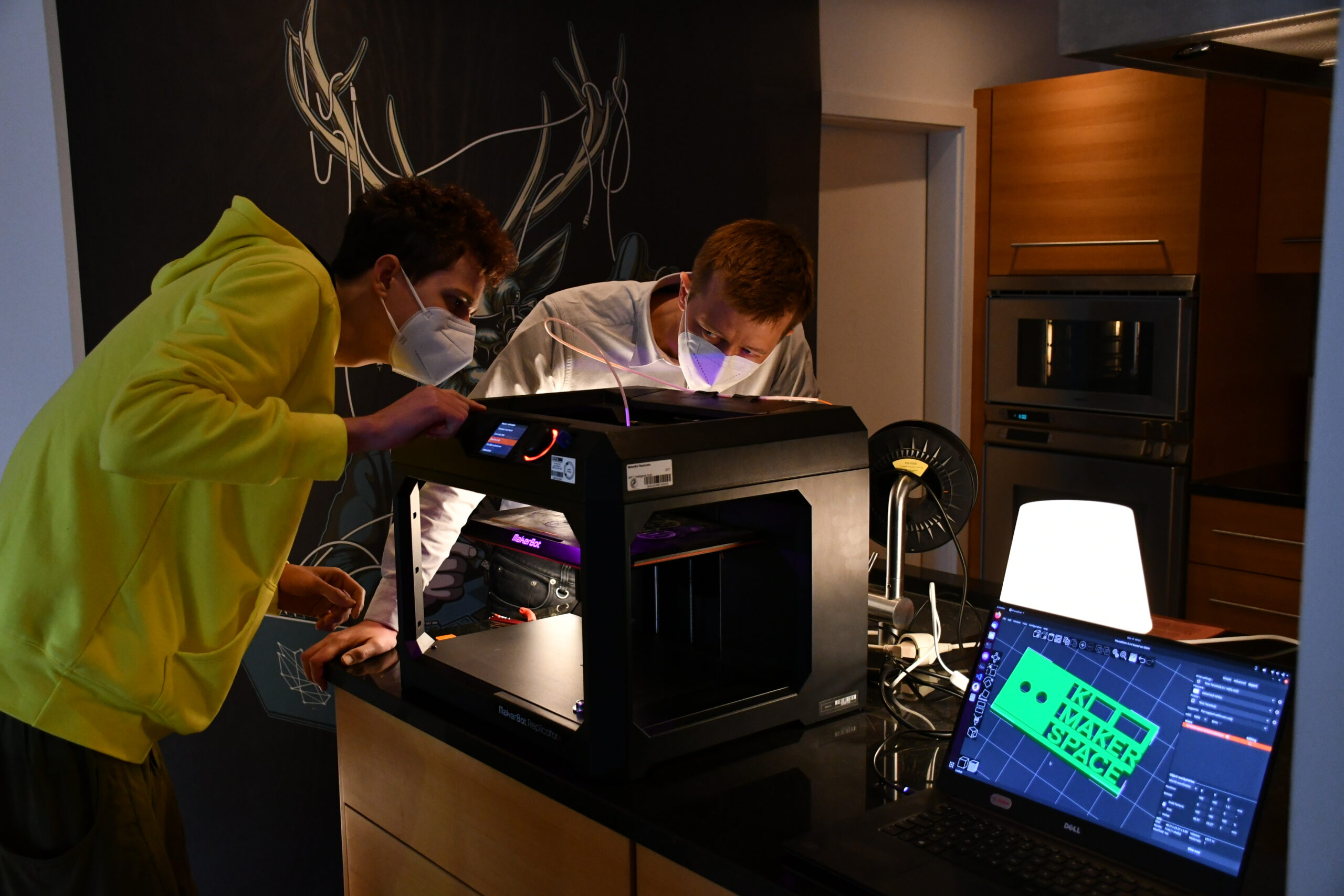
    In addition, the KI-Makerspace invites the exploration of functionalities, techniques, applications and societal impacts of AI. Starting on January 28, 2022, structured programming courses, software and hardware, competent supervision and free space for own project ideas as well as occasions for discussions on the topic of AI will be offered four days a week on almost 250 square meters on the second floor of the casino located directly on the Neckar River. The course spectrum ranges from Scratch and Python courses to design software, podcasting and internet security. Robotics and sensor kits are also scheduled. The goal is to establish a diverse, low-threshold and target-group-oriented offering for young people.
     
    “With the KI-Makerspace, Tübingen is getting a centrally located place where children and young people can explore the opportunities, but also the limits, of artificial intelligence under professional guidance. This is a great benefit for our city as an educational and business location. I look forward to the discussions and projects that will emanate from the AI Makerspace and thank all those involved for their commitment,” says Tübingen’s Mayor Boris Palmer.

    The KI-Makerspace is a joint project of the University of Tübingen, Cyber Valley, the Tübingen Youth Community Council and the Bundeswettbewerb Künstliche Intelligenz (BWKI) of the Tübingen AI Center. It is funded by the Vector Foundation Stuttgart for three years.

    Funding by Vector Foundation

    “Artificial intelligence is anything but a dry technical subject, but a topic with many social facets that, not least, offers young people enormous career opportunities,” says Philipp Hennig, Cyber Valley co-spokesperson and professor for the Methods of Machine Learning at the University of Tübingen. Since going to university buildings is out of the question for many young people, he believes it is crucial “that it has been possible to create a space for learning here in the heart of the city’s society, where people can also meet and discuss things casually.”
     

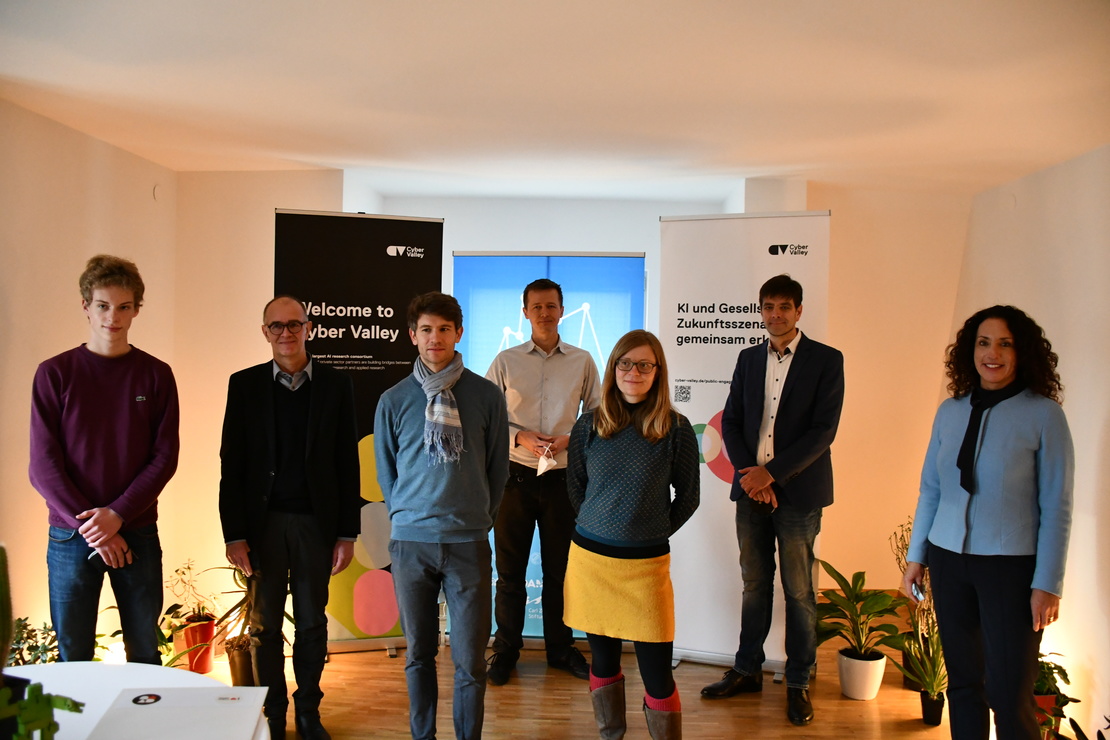
    Left to right: Jonathan Vogel (Tübingen Youth Community Council), Uwe Wulfrath (Gesellschaft für Wohnungs- und Gewerbebau Tübingen GWG), Patrick Klügel (Cyber Valley Public Engagement Manager), Prof. Dr. Philipp Hennig (co-speaker Cyber Valley), Dr. Caroline Schmidt (Coordinator BWKI), Prof. Dr. Matthias Bethge (Head of Tü AI Center), Christina Luger (Vector Foundation) © University of Tübingen/Maximilian von Platen

    In preparatory workshops with the Tübingen Youth Community Council, the young people also wanted the opportunity for more classic craft work with wood, screen printing and electronics. In addition to workstations and soldering stations, the rooms will provide the young people with their own servers, a 3D printer, a 3D camera system, a podcast studio, a kitchen for joint cooking activities and a “living room” for science fiction film evenings. A large roof terrace for social activities in summer rounds off the attractiveness of the KI-Makerspace.

    The initiators and coordinators of the KI-Makerspace, Patrick Klügel (Cyber Valley Public Engagement), Dr. Caroline Schmidt (BWKI) and the Tübingen Youth Community Council are focusing on a strategy in which young people can actively participate and take responsibility in the process. This applies both to the implementation and design of the project, in which the young people were involved from the very beginning, and to the pedagogical approach, in that the learners increasingly become the teachers.

    Five years of Cyber Valley

    The KI-Makerspace will be open four days a week in the mornings and afternoons starting January 28, 2022. For more information, visit www.ki-maker.space. There, interested parties can also sign up for a mailing list to receive updates.

    December is a special month for Cyber Valley: five years ago, the research consortium was founded in the Stuttgart-Tübingen region. As an internationally renowned hotspot for AI, Cyber Valley has successfully grown in the areas of research and innovation in recent years: new professorships have been created within the ecosystem, nine Cyber Valley research groups have been founded, and a startup and investor network have been established. In March 2021, the Cyber Valley public engagement formats were also launched – with the aim of enabling more accessibility and exchange between society and AI researchers.