User Group: General Public

  • New podcast episode online

    New podcast episode online

    “What I think has a future are all support systems,” Liebgott says. “I’m more skeptical about automated diagnoses. While it’s nice to see that we could theoretically have such automated diagnoses in some areas, I don’t think there will be that much social acceptance there either. And I doubt the added value of some automated systems. What does add tremendous value, though, are systems that support doctors.”

    She explains the possibilities being researched at the University of Stuttgart to use machine learning to optimize the process of an MRI scan in the podcast, which is available not only at cyber-valley.de/podcast, but also on Spotify, Deezer, Amazon Music/Audible and Google Podcasts.

    Also out today: the September issue of the Public Engagement Newsletter (in German). In it, Rebecca Beiter and Patrick Klügel present some events and projects and provide food for thought around the topic of AI and society.

    You can receive news and updates from Cyber Valley free of charge and directly by email. Click here to go to the sign-up page for our newsletters and press releases: cyber-valley.de/newsletter. You can unsubscribe at any time.

  • Research Forum

    Research Forum

    Aufgrund der COVID-19-Beschränkungen wird der Workshop online (Zoom) abgehalten. Wenn Sie teilnehmen möchten, registrieren Sie sich bitte hier.


    Schedule
    14:00 Welcome
    14:05 – 14:15

    Prof. Achim Menges

    Institute for Computational Design and Construction, University of Stuttgart, IntCDC

    Title: Introduction to IntCDC

    Abstract: The vision of the Cluster of Excellence Integrative Computational Design and Construction for Architecture (IntCDC) is to harness the full potential of digital technologies in order to rethink design, fabrication and construction based on integration and interdisciplinarity, with the goal of enabling game-changing innovation in the building sector as it can only occur through highly integrative fundamental research in an interdisciplinary, large-scale research undertaking.

    14:15 – 14:35

    Prof. Dr.-Ing Cristina Tarín

    Institute for System Dynamics, University of Stuttgart, IntCDC

    Title: Co-Design for Architecture, Engineering and Construction using Bipartite Graphs

    Abstract: The architecture, engineering and construction (AEC) industry consists of several players from different domains. They usually work in a sequential process, which is slow, costly and problems are identified in late stages. Co-design helps to identify and predict problems in early stages throughout different domains such that the design, engineering, manufacturing and construction process can be improved. We present an approach to enable co-design using bipartite graphs, which are capable to integrate expert knowledge, physical models and machine learning models from different domains. The different models form a computational network, which allows e.g. the architect to automatically analyze the feasibility of manufacturing a design.

    14:35 – 14:55

    Prof. Dr.-Ing. Peter Middendorf

    Institute of Aircraft Design, University of Stuttgart, IntCDC

    Title: Data-driven approaches for fiber composites technologies and simulation

    Abstract: Fibre composites for lightweight and wide-span architecture applications are one research area within IntCDC. The technology focus is laid here on freeform winding using collaborative robotics and the respective winding path is generated in a co-design approach. Whilst this is a collaborative effort from a group of IntCDC PIs, there is also a growing activity of supporting data-driven approaches at the Institute of Aircraft Design to make use of various sensor data along the process chain of a composite structure and thus to overcome limitations of classical modelling and simulation techniques.

    14:55 – 15:15

    Tenure-Track Prof. Dr. Thomas Wortmann

    Chair for Computing in Architecture, Institute for Computational Design and Construction, University of Stuttgart, IntCDC

    Title: AI for AEC

    Abstract: Tenure-Track Prof. Wortmann will present examples of the rich opportunities to apply AI in the Architecture, Engineering and Construction (AEC) sector, including architectural design optimization, modelling design and construction processes, predicting wind flow around buildings, predicting the behavior of heterogenous materials, and adaptive robotic control. Ultimately, these applications contribute to a reimagining of how our built environment is planned and constructed, which is an urgent need in light of the impending climate catastrophe.

    15:15 – 15:35

    Dr. Nicole Ludwig

    Machine Learning in Sustainable Energy Systems, Cluster of Excellence Machine Learning: New Perspectives for Science, University of Tübingen

    Title: Forecasting Sustainable Energy under Uncertain Weather

    Abstract: The increasing share of sustainable energy generation in the electricity system comes with significant challenges. One of the main challenges is the volatility of sustainable energy generation, due to their dependency on the weather. To efficiently integrate sustainable energy into the grid, the expected electricity supply and demand have to be forecast accurately. In this talk I will introduce the challenges we face when forecasting weather-dependent energy supply and demand and how probabilistic machine learning can help alleviate some of these challenges.

    15:35 – 15:55

    Dr. Bedartha Goswami

    Machine Learning in Climate Science, Cluster of Excellence Machine Learning: New Perspectives for Science, University of Tübingen

    Title: Uncovering hidden structure in climate data

    Abstract: The last decades have witnessed an unprecedented increase in data related to climatic processes all around the globe, which contain till yet undiscovered mechanisms of how the climate functions and how it is currently changing. We present the idea of "climate networks," which allow us to reveal non-trivial patterns in databases of climate data, and reveal potentially new climatic mechanisms and connections that have not been studied till date. We will look at how climate networks are estimated, what they can do for us, and three examples of how they are used in practice. Towards the end, we will also talk briefly about other projects that are ongoing in the "Machine Learning for Climate Science" research group, in the hope that we find common interests for cross-pollination of ideas and efforts.

    15:55 – 16:15

    Prof. Dr. Thomas Scholten

    Chair of Soil Science and Geomorphology, Department of Geosciences, University of Tübingen

    Title: Machine Learning in Soil Science

    Abstract: Soils are the most important basis for our nutrition. Their quality determines the food security of the world. Machine learning methods help to determine the underlying soil properties and to predict their spatial distribution on Earth. The presentation will explain the underlying theoretical approach of state factors and address the concept of relevant range of scales for multi-scale contextual spatial modeling of soil properties. Further, I will show results from my research of different parts of the world and demonstrate the potential of data-driven models for geo- and environmental science.

    16:15 – 16:30 Wrap-up
  • AI & Gaming

    AI & Gaming

    Mit der kommenden Veranstaltung der Entrepreneurship Series zum Thema „AI & Gaming“ greift Cyber Valley dieses Potenzial auf. Bei der Veranstaltung diskutieren Wissenschaftler:innen über aktuelle Forschungsherausforderungen. Darüber hinaus werden Start-ups und Investor:innen ihre Erfahrungen und Praxisbeispiele teilen.

    Wissenschaftler:innen, Gründer:innen, Student:innen und alle, die sich für das Thema interessieren, sind herzlich eingeladen, am Donnerstag, den 16. September, von 14:00 bis 15:30 Uhr dabei zu sein.
     
    Wenn du KI-Expert:in und Spielefan bist, lies gern mehr über AI GameDev – Europas ersten forschungsgetriebenen Wettbewerb zur Verbesserung der Spieltechnologie – für KI-Wissenschaftler:innen und Start-ups. Wenn du deine Ideen in diesem Bereich einbringen und wertvolle Erfahrungen sammeln möchtest, kannst du dich bis zum 26. September 2021 bewerben.


    Sprecher:innen für dieses Event

    Ben Cole
    Entrepreneur und Creative Technologist, ehemaliger Head of Software for Technicolor MPC North America, Academy of Motion Picture Arts and Sciences Technical Achievement Award Gewinner

    Christian Becker-Asano
    Professor an der Hochschule der Medien & Direktor des Humanoid Lab

    Judith Baatz, Felix Krieglstein & Julia Mönch
    Wissenschaftliche Mitarbeiter:innen der Universität Stuttgart und TU Chemnitz, Projektteam BeeLife

    Fabian Schrodt
    Gründer & CEO Quantum Gaming GmbH

    Stefan Langefeld
    Investor & Start-up Mentor, ehemaliger Head of TV and Movies Central and Eastern Europe Apple Inc.


    Registrierung

    Bitte hier registrieren. Das Meeting findet via Zoom und in englischer Sprache statt.


    Kontakt

    Oliwia Gust – Cyber Valley Event Manager
    Telefon: +49 7071 601 1554
    Mobil: +49 151 4075 6302 
    E-Mail: oliwia.gust@cyber-valley.de

  • A new look and feel

    A new look and feel

    “With the new website, we’ve taken another step forward in our efforts to communicate with transparency and integrity,” says Philipp Hennig, Professor for the Methods of Machine Learning at the University of Tübingen and Deputy Speaker of the Cyber Valley Executive Board. “Thanks to its modern, user-friendly design and comprehensive content, the new website provides a detailed overview of Cyber Valley and demonstrates just how much the ecosystem has grown since 2016.”

    Complete with new features such as a revamped tagging and teaser system that offers more related content on every page, the updated website serves as a first port of call for anything related to Cyber Valley, from the latest news and general information about the research consortium to job advertisements in the ecosystem. In addition to its website, Cyber Valley has introduced the new visual identity on all its digital communications platforms.

  • What is the impact of AI on education?

    What is the impact of AI on education?

    The emergence of artificial intelligence (AI) and data use in education and training has triggered a discussion on its role and ethical implications. For example, AI-powered techniques can be used to record and assess details of students’ development, social relationships, behaviour, and educational performance in order to improve learning processes based on these data. This can be achieved by finding repetitive patterns of failure or success and by detecting areas for improvement. These approaches have led to a discussion about ethics and privacy in the context of AI and education-related data, as well as risks related to fundamental rights such as the right to non-discrimination, including gender equality. “Algorithms function like boxes. They are based on standards that are set by people and can therefore also be afflicted with their stereotypes. These stereotypes are often unconscious and thus find their way into the development of technology without being reflected upon. We need to be aware of this,” Wirzberger says. She is also newly appointed spokesperson for the Interchange Forum for Reflecting on Intelligent Systems (IRIS) which aims at answering the question what the impact of intelligent systems on society is.

    As the use of AI systems and thus the use of big data in education advances rapidly, there is a growing need to equip educators and students with a basic understanding of these technologies. This is essential to enable them to engage positively, but critically with questions about AI and data material in education and the ethics surrounding their implementation. To address these issues, the European Commission’s Directorate-General for Education, Youth, Sports and Culture (DG EAC) set up a group of experts on AI and data in education and training together with the Commission’s Directorate-General for Communications Networks, Content and Technology (DG CNECT). 

    What are the tasks of the expert group?

    The group’s primary task will be to assist DG EAC and DG CNECT with the preparation of practical guidelines for educators with concrete practices on the ethical implications of AI and data use in education and training. Members of the group will support cooperation and the exchange of information, expertise and best practices between the Commission and relevant stakeholders. The group will also help to raise awareness within education and training sectors about the opportunities and risks of the use of AI and education related data. 

    Background

    With the Digital Education Action Plan, the European Commission presented its strategic view on addressing the impact of the COVID-19 crisis, as well as the long-term digital transformation of education and training systems. The first strategic priority of the Action Plan – ‘fostering the development of a high-performing digital education ecosystem’ – which seeks to promote understanding of emerging technologies and their application education foresees the creation of ethical guidelines on AI and data use in education and training. The guidelines will be accompanied by a training programme for researchers and students on the ethical aspects of AI. The Digital Education Action Plan is a key initiative under the Commission’s European Education Area initiative, which outlines its vision for the future of education and training in the EU until 2025 and beyond.

  • Public Engagement Events in Summer and Fall

    Public Engagement Events in Summer and Fall

    We have now compiled some of them in our new Public Engagement leaflet. It not only provides an overview of our planned dialog formats. It also shows where we stand when we want to achieve more participation and social reflection: still at the very beginning, getting to know each other.

    So join in, get involved, we look forward to your participation!

    By the way: On Monday, the third issue of our Public Engagement Newsletter was published. Here you can subscribe to our newsletters and press releases.

  • Silbersalz AI Media Lab

    Silbersalz AI Media Lab

    The AI Media Lab aims to lead new creative collaborations with artists, technologists and media producers and level up the researchers’ science communication. Where other programmes focus on embedding artists and creatives with scientists in order to inform their creative practice, the AI Media Lab puts scientists in at the forefront of the collaboration.

    The programme will take a group of scientists and develop their research into fully fledged proposals for engaging artworks and experiences that are ready to pitch for investment. Participants will learn to communicate their research in novel and exciting ways under the guidance of expert industry mentors from the worlds of science communications, art, technology, media and impact. Each scientist will develop a creative concept for their research take part in a before taking part in a bespoke matchmaking process toduring which they will forge a new creative collaboration with an artist or media producer who will help them make their engagement project a reality. The final results will be pitched at Silversalz Festival, 17 and 18 September 2021.

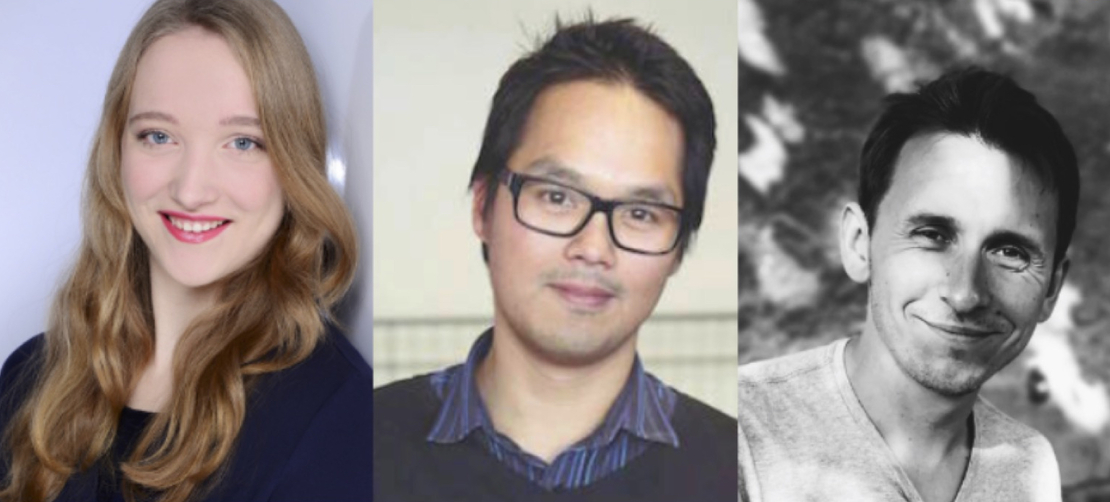
    … and Nicole Ludwig, Krikamol Muandet, and Sergey Prokudin.

    The AI Media Lab kicked off 19th of April 2021with a webinar on science communication projects and is supported by and in collaboration with Cyber Valley, Europe’s largest AI cluster. The lab is produced by Documentary Campus and curated by Crossover Labs who together share over 30 years experience in running media training programmes.

    About Silbersalz Festival:

    “All human beings are born free and equal in dignity and rights”, as stated in the Universal Declaration of Human Rights. However, the reality is often quite different. What can science do to overcome injustice and discrimination in society, politics, and environmental issues? Using the motto “Inequality”, Silbersalz21 is looking for answer along with its audience – from 15 to 19 September 2021 at various locations in Halle (Saale).