User Group: General Public

  • Teilnehmende für COVID-19 Studie gesucht

    Teilnehmende für COVID-19 Studie gesucht

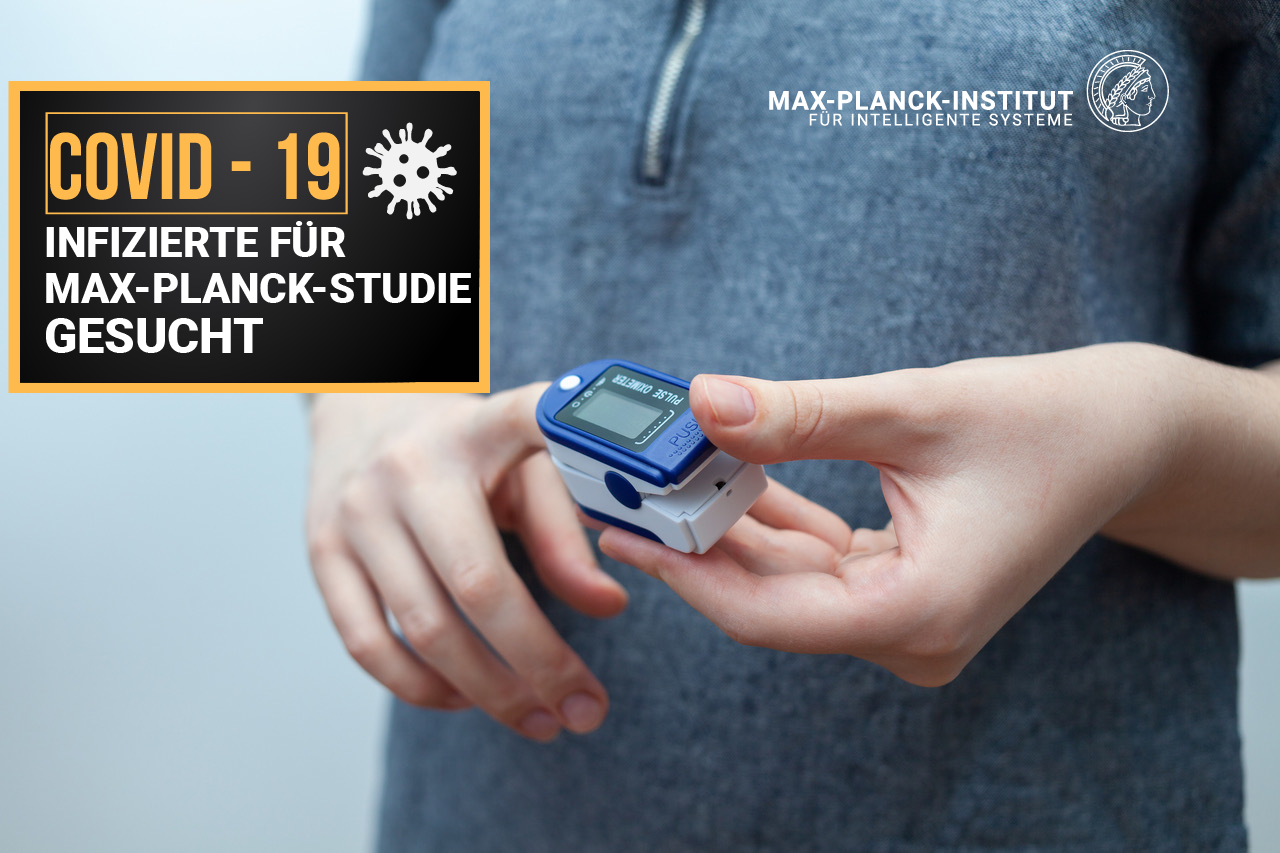
    Grundlagenforschende des Max-Planck-Instituts für Intelligente Systeme (MPI-IS) in Tübingen starten zusammen mit Medizinern des Universitätsklinikums Tübingen und unterstützt durch die Gesundheitsämter der Landkreise Reutlingen, Tübingen und des Zollernalbkreises eine Studie mit dem Titel „Früherkennung einer klinischen Verschlechterung einer SARS-CoV-2 Infektion mithilfe von Maschinellem Lernen“. Dafür suchen die Wissenschaftlerinnen und Wissenschaftler möglichst viele Patienten, bei denen SARS-CoV-2 neu nachgewiesen wurde. Ziel ist es herausfinden, welche Vitalparameter (z.B. Blutdruck, Puls) und Beschwerden und vor allem in welcher Kombination auf einen schweren Krankheitsverlauf hindeuten.

    Die Wissenschaftlerinnen und Wissenschaftler nutzen die Angaben der Patienten, um durch statistische Methoden Muster in diesen Daten zu erkennen. Auch als Maschinelles Lernen bekannt, ist diese Forschungsrichtung ein Teilgebiet der Künstlichen Intelligenz (KI). Maschinelles Lernen ermöglicht, Zusammenhänge in großen, komplexen Datenmengen zu erkennen, was Menschen aufgrund der großen Anzahl an Daten unmöglich ist. Genau diese Fähigkeit soll für die Vorhersage des Krankheitsverlaufes einer COVID-19 Erkrankung genutzt werden. Das Max-Planck-Institut für Intelligente Systeme ist weltweit führend auf diesem Forschungsgebiet.

    „Obwohl wir nach über einem Jahr Pandemie bereits viele Erkenntnisse über das Virus gewonnen haben, so ist es immer noch schwierig, den Krankheitsverlauf einer COVID-19 Erkrankung vorherzusagen. Umso wichtiger ist die Studie, damit in Zukunft Risikopatienten früher identifiziert werden können“, so Privatdozent Dr. Jürgen Hetzel, Pneumologe in der Abteilung Medizinische Onkologie und Pneumologie am Universitätsklinikum Tübingen und klinischer Studienleiter.

    „Vorhersagen treffen zu können aufgrund statistischer Modelle, welche Personen möglicherweise schwer erkranken werden, könnte Ärztinnen und Ärzten helfen, diese Menschen früher medizinisch zu versorgen und ihre Behandlung individueller zu gestalten. Gleichzeitig könnten die Erkenntnisse dazu dienen, die im Gesundheitswesen vorhandenen Ressourcen gezielter einzusetzen, um das Risiko für Engpässe zu verringern“, sagt der Initiator der Studie, Prof. Dr. Bernhard Schölkopf, Direktor der Abteilung für Empirische Inferenz am MPI-IS.

    Die Kreisgesundheitsämter Reutlingen und Tübingen sowie weitere Gesundheitsämter in Baden-Württemberg sind in das Projekt eng eingebunden und unterstützen bei der Suche nach Studienteilnehmenden. Hierbei werden die Gesundheitsämter auf SARS-CoV-2 positiv getestete Personen über die Studie informieren. Interessierte Personen mit neu nachgewiesener Infektion können sich unmittelbar mit der Studienzentrale am Max-Planck-Institut für Intelligente Systeme in Verbindung setzen, um an der Studie teilzunehmen (Kontaktdaten siehe unten).

    „Wir sind froh, bei solch einer wegweisenden Studie die Forschenden zu unterstützen und gemeinsam mit weiteren Gesundheitsämtern einen zusätzlichen Beitrag zur langfristigen Eindämmung der Pandemie zu leisten”, so Dr. Gottfried Roller, ehemaliger Leiter des Gesundheitsamtes Reutlingen und derzeit Leiter des Landesgesundheitsamtes Baden-Württemberg.

    Neben bestehenden Vorerkrankungen dokumentieren die Studienteilnehmer und -teilnehmerinnen täglich ihre Beschwerden während der COVID-19 Erkrankung. Zudem messen die Personen zweimal täglich ihren Blutdruck, Puls und die Sauerstoffsättigung im Blut. Hierzu werden ihnen ein Blutdruckmessgerät und ein Pulsoxymeter von der Studienzentrale kostenlos zur Verfügung gestellt. Die erhobenen Daten werden dann in der Studienzentrale pseudonymisiert gesammelt und analysiert.

    Die Studienzentrale können Patientinnen und Patienten per E-Mail erreichen covid19-studie@tuebingen.mpg.de oder telefonisch unter 07071 601-535 (Mo-Fr zwischen 9-12 Uhr und 14-16 Uhr).
    Alle Informationen finden Interessierte zudem auf dieser Webseite: https://ei.is.mpg.de/covid-19-studie


    Nach der Anmeldung erhalten Teilnehmende weitere Informationen. Die Messgeräte und Dokumentationsbögen sowie eine ausführliche Patienteninformation werden per Post zugesandt.


    Pressekontakte:

    Linda Behringer        
    Presse- und Öffentlichkeitsarbeit
    Max-Planck-Institut für Intelligente Systeme
    +49 151 2300 1111
    linda.behringer@is.mpg.de
    www.is.mpg.de


    Steven Pohl
    Stabsstelle Kommunikation und Medien
    Universitätsklinikum Tübingen
    Hoppe-Seyler-Straße 3
    72076 Tübingen
    +49 7071 29 88494
    steven.patrick.pohl@med.uni-tuebingen.de
    https://www.medizin.uni-tuebingen.de

  • PR Basics & Good Practices

    PR Basics & Good Practices

    Speakers

    At this event, exciting speakers from our ecosystem will share their knowledge and experiences:

    Lennart Schmid

    Communications Manager, Cyber Valley | Communication Basics for Tech-Start-ups & working together with external service provider

    Linda Behringer

    Communications Manager, Cyber Valley | Working together with Press and Media

    Simone Betz

    Marketing Manager, Computomics GmbH | Tech-Start-up communication insights


    Registration

    Please register here, the meeting will be held in English on Zoom.


    Contact

    Oliwia Gust –  Event Manager for Cyber Valley
    Phone: +49 7071 601 1554
    Mobile: +49 151 4075 6302 
    Mail: oliwia.gust@cyber-valley.de

  • Cyber Valley: “The place to be”

    Cyber Valley: “The place to be”

    “In Baden-Württemberg, we recognized the promise of artificial intelligence early on and have driven it forward with a smart funding policy and major investments. Excellence and breadth are not mutually exclusive in Baden-Württemberg. The state's universities are home to cutting-edge research. At the same time, up-and-coming researchers are being trained here. With our Cyber Valley AI innovation campus in the Stuttgart/Tübingen region, a world-class location has also emerged in a short time,” said Minister-President Winfried Kretschmann.

    “Science is once again setting the pace. We need bright minds at our universities to exploit the opportunities and potential of AI, but also to reflect on undesirable developments – in dialog with society. To achieve this, the field must be firmly rooted in interdisciplinary research and teaching at universities. By consistently establishing permanent professorships, our universities are demonstrating that they are making an active and responsible contribution to shaping the future,” said Theresia Bauer, Minister of Science. Artificial intelligence and digitization are not just topics for computer science. “They permeate all areas of society. It thus makes sense that they are firmly rooted across disciplines at universities,” Bauer emphasized.

    Cyber Valley & ELLIS

    With Cyber Valley in the Stuttgart/Tübingen region, the Ministry of Science, together with the Max Planck Society, the Universities of Stuttgart and Tübingen, and the industrial partners Amazon, BMW, Bosch, Daimler, IAV, Porsche, and ZF Friedrichshafen, launched a research consortium for AI and intelligent systems in 2016 that is unique in Europe. By promoting research excellence, networking with global companies, and a culture of entrepreneurship that focuses on knowledge transfer and start-ups, Cyber Valley has quickly established itself as one of the world’s top locations for modern and learning-based AI. As EU Digital Commissioner Margrethe Vestager said in December 2020 during her joint virtual visit with German Chancellor Angela Merkel and Minister-President Kretschmann: “Cyber Valley is the place to be.” The consortium’s stated goal is to rapidly bring the results of research to application, for instance by helping researchers commercialize their findings in start-ups.

    Starting in 2022, the Cyber Valley AI innovation campus will be further expanded: The Tübingen AI Center of Excellence for Machine Learning, one of five AI centers of excellence in Germany, will in future receive permanent funding in equal parts from the federal and state governments. The state is already further expanding the center, strengthening it with a coding school that will teach practical skills in programming, providing a total of 13.5 million euros for this purpose from 2021 to 2023. Moreover, the Hector Foundations will provide 100 million euros over a period of at least ten years to support the establishment of an ELLIS Institute (“European Laboratory for Learning & Intelligent Systems”) at the University of Tübingen. The investment will provide top scientists with attractive research conditions at the new ELLIS institute.

    “Only with the necessary critical mass can we attract top people to the state and keep them here. That’s why we are reinforcing our strengths and providing support for European networking, which includes doctoral students in the European AI network ELLIS,” Bauer said.

  • Women in Tech Entrepreneurship

    Women in Tech Entrepreneurship

    In Germany, only 15 percent of all start-ups have at least one woman on the founding team, and just four percent of tech start-ups were founded by women only. In the AI & Robotics start-up scene, the numbers are even lower, and female founders and scientists can face gender bias.
     
    At this event, women will share their experiences and talk about female tech entrepreneurship. 

    Vivian Chu, Ph.D.

    Co-founder and CTO, Diligent Robotics

    Ksenia Keplinger, Ph.D.

    Group Leader, Max Planck Institute for Intelligent Systems, Group: Organizational Leadership & Diversity

    Katherine J. Kuchenbecker, Ph.D.

    Director, Max Planck Institute for Intelligent Systems, Department: Haptic Intelligence

    Co-founder and Chief Science Advisor, Tactai, Inc.

    Eva Wolfangel

    Science Journalist

    Registration

    Please register here, people of all gender identities are welcome. The meeting will be held in English on Zoom.

    Contact

    Oliwia Gust –  Event Manager for Cyber Valley
    Phone: +49 7071 601 1554
    Mobile: +49 151 4075 6302 
    Mail: oliwia.gust@cyber-valley.de 


    The event is taking place in the context of International Women's Day on March 8.

  • Bosch AI Con 2021

    Bosch AI Con 2021

    What is the AI CON 2021 about?

    Industrial AI or how to bring AI to the real world: A topic that not only Bosch is affected by. Learn about the Bosch way in this field through an exciting Keynote of Bosch’s CTO Michael Bolle on the AIoT Cycle and on the importance of Hybrid Models. You will also get insights into how other industrial companies handle this exciting field. But there is even more! You will have the chance to learn from renown researchers and AI experts from the industry sector like Raquel Urtasun (Uber ATG), Zico Kolter (Carnegie Mellon University), Jun Zhu (Tsinghua University), Nuria Oliver (MIT) or George Em Karniadakis (Brown University) about the latest findings and hot topics in the field of AI.

    Listen to exciting keynotes about various AI hot topics

    Experience what is possible through AI at our virtual exhibition

    Meet in instructive technical deep dives our AI experts and renowned researchers from the AI Community on innovative and hot topics

    Exchange with like-minded people to get new impulses and enable future collaborations

    From 13:00 – 17:00 Cyber Valley representatives will be available for virtual coffee breaks during BOSCH AI Con. If you’re interested in finding out about research and founding opportunities in Europe’s largest ecosystem for research and innovation in modern AI, please feel free to join for one of these 20-minute sessions. Our representatives will be talking about their experiences and answering questions about life as a researcher or entrepreneur in Cyber Valley.


    Be excited about what awaits you at the 2021 virtual AI CON!