User Group: Researcher

  • Understanding the significance of data

    Understanding the significance of data

    Prof. Wolfram Ressel, Rector at the University of Stuttgart, warmly welcomed Prof. Steffen Staab. “By focusing on information systems and data analysis, Prof. Staab will make the research into intelligent systems carried out at the University of Stuttgart and in Cyber Valley even stronger. It makes us particularly happy that Staab also decided on the University of Stuttgart because of the interdisciplinary nature of our university. This confirms the particular profile of the University of Stuttgart as the “Stuttgarter Weg (Stuttgart Way)”, which stands for a consistent interdisciplinary network of complementary specialist disciplines, as well as the integration of engineering, natural sciences, the humanities and social sciences.”

    Staab himself expects numerous cooperation opportunities while working in Cyber Valley and the University of Stuttgart to further his research in the area of semantic technologies, both in basic and applied research, and in the process also questioning the implications for society. “Cyber Valley is one of the earliest and biggest initiatives in Germany for strengthening research into artificial intelligence. And Computer Science at the University of Stuttgart is also excellently well positioned, which is shown by two Clusters of Excellence among other things, and there is an established culture of interdisciplinary collaboration between technical sciences, the humanities and social sciences”, emphasized the scientist.

    Semantic technologies as a research focus

    Staab’s field of research in semantic technologies is committed to gaining an understanding of the significance of data and information. The significance can be presented in the form of conceptual models and ontologies. They form the basis for knowledge networks, which enable the computer to handle data in a meaningful way.


    In order to find the most meaningful model, algorithm-based analysis procedures are used such as text and data mining, as well as information extraction (e.g. by means of ontology learning and text clustering). Connections between data and how it is used in context (for example by a smartphone) can be investigated in this way. This is how knowledge networks are found in data, which is especially significant in the context of social networks.


    The biggest construct for communicating data of significance is the World Wide Web. Web science investigates how networks of people and knowledge in the Web emerge, as well as how people handle it and what consequences it has for us. “The Web is a machine of significance that I want to come to understand through my research”, says Staab.


    About Prof. Steffen Staab
    Steffen Staab was born in 1970 and studied Computer Science and Computer Linguistics at the University of Erlangen-Nuremberg and at the University of Pennsylvania. In 1998, he graduated from the University of Freiburg with a PhD in Computer Science. Afterwards, he worked at the Institute of Human Factors and Technology Management (IAT) at the University of Stuttgart as well as at the Fraunhofer Institute for Industrial Engineering (IAO), and later moved to the University of Karlsruhe (now known as KIT). In 2004, Staab was appointed as Professor of Databases and Information Systems at the University of Koblenz and Landau, where he founded the Institute for Web Science and Technologies (WeST) in 2009. Since March 2015 he has also held a Chair for Web and Computer Science at the University of Southampton.


    Four Cyber Valley scientists at the University of Stuttgart
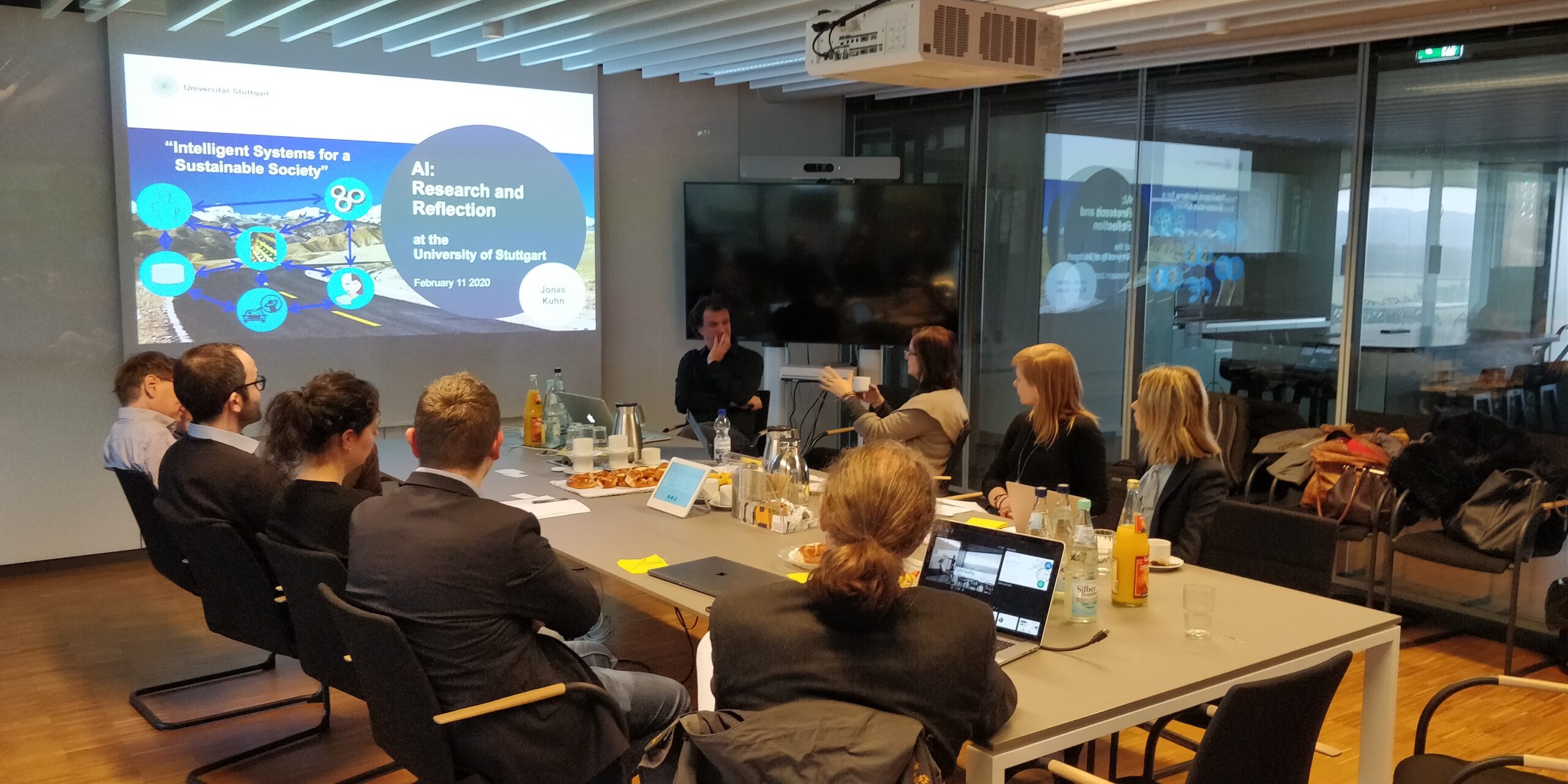
    With Prof. Steffen Staab, there are now four Cyber Valley scientists working at the University of Stuttgart. Michael Sedlmair, who is junior professor at the Institute for Visualization and Interactive Systems (VIS), works in the department of Augmented and Virtual Reality. Dr. Tian Qiu leads the Cyber Valley research group “Biomedical Microsystems” at the Institute of Physical Chemistry (IPC). Since January 2020, Prof. Alexander Brem has held the chair for ‘Entrepreneurship in technology and digitalisation’.
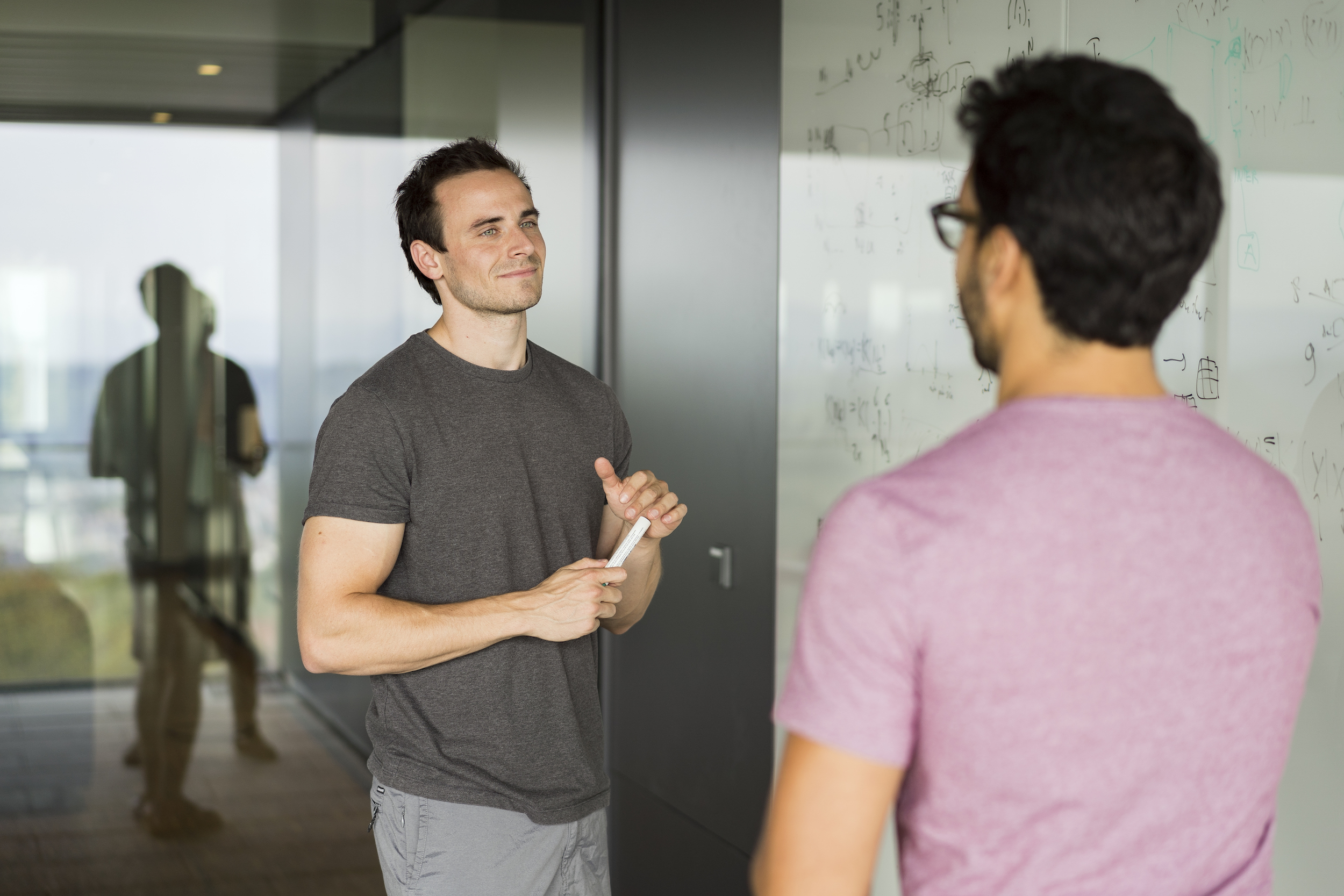
    Image: Max Kovalenko
  • The Alan Turing Institute meets with scientists from the Cyber Valley ecosystem

    The Alan Turing Institute meets with scientists from the Cyber Valley ecosystem

    Tübingen – Representatives of the Alan Turing Institute, the UK’s national institute for data science and artificial intelligence, on Tuesday visited the Max Planck Institute for Intelligent Systems in Tübingen, where they met with scientists and gained insights into Cyber Valley.
     “The Cyber Valley model is very impressive in the way it combines the region’s academic and industrial strengths.” said Dr. Allaine Cerwonka, Director of Academic Research Programmes at the Alan Turing Institute. “I look forward to coming back in another five years to see how it’s developed. It’s clearly on an upward trajectory.”

    The Cyber Valley partnership is Europe’s largest research consortium in the field of modern AI with partners from science, industry, and society. Since it was founded at the end of 2016, the initiative has gained significant momentum and developed into a unique research ecosystem comprising world-class teaching and basic research as well as applied and industrial research.

    As the Alan Turing Institute’s visit demonstrated once again, the European research community’s interest in the model is very high. 

  • Chancen und Risiken der Künstlichen Intelligenz

    Chancen und Risiken der Künstlichen Intelligenz

    EINLADUNG zu "Chancen und Risiken der Künstlichen Intelligenz" mit der Vorsitzenden der Enquete-Kommission KI im Bundestag, Daniela Kolbe MdB, am Donnerstag, den 6. Februar 2020

    Welche Chancen bietet Künstliche Intelligenz für unser zukünftiges Leben und Zusammenleben? Welchen Einfluss hat sie auf unsere Wirtschaft und unsere Arbeitswelt? Und welche Risiken gehen von ihr aus?

    Der Bundestag hat mit der Enquete-Kommission "Künstliche Intelligenz – Gesellschaftliche Verantwortung und wirtschaftliche, soziale und ökologische Potenziale" eine der zentralen Debatten unserer Zeit aufgegriffen. Wir freuen uns sehr, dass wir die Vorsitzende dieser Enquete-Kommission, die SPD-Bundestagsabgeordnete Daniela Kolbe, für eine öffentliche Diskussion in Tübingen gewinnen konnten.

    Wir möchten Sie hierzu herzlich am 6. Februar um 18.30 Uhr in die Universität Tübingen, Hörsaal 24 im Kupferbau einladen.

    Mit ihr diskutieren:
    – Tanja-Silvana Grzesch, Erste Bevollmächtigte der IG Metall Reutlingen-Tübingen
    – Prof. Dr. Ulrike von Luxburg, Vertreterin des Cyber Valleys Tübingen
    – Dr. Bernd Villhauer, Geschäftsführer des Weltethos-Instituts


  • Cyber Valley Research Fund Board issues second call for proposals

    Cyber Valley Research Fund Board issues second call for proposals

    Tübingen – The Cyber Valley Research Fund Board (RFB) recently issued a second call for proposals from the nine Cyber Valley research groups. Eight projects were recently approved for funding in the first round, and decisions on the second round are scheduled for the first quarter of 2020. 

    The Cyber Valley Research Fund has a total volume of five million euros and comprises contributions from six of the research consortium’s industry partners. Its aim is to fund independent basic research projects in the multidisciplinary field of AI. Only Cyber Valley research groups are eligible to submit proposals.

    “The projects that received funding in the first round are as diverse as the Cyber Valley research groups themselves,” said Matthias Tröndle of the Cyber Valley Managing Office. “Our scientists are already conducting world-class research in their respective fields, and we look forward to seeing the ideas they come up with next.” 

    While the Cyber Valley Plenary Assembly and the research consortium’s industry partners suggest research themes that may serve as inspiration for potential projects, scientists are completely free to choose which research topics they propose and pursue.

    Once submitted, the RFB evaluates the proposals and funding is allocated based on scientific excellence and originality. Effective immediately, Cyber Valley’s Public Advisory Board (PAB) assesses the societal and ethical implications of each project idea. Where necessary, the PAB expresses concerns, makes recommendations, and engages in debate with the RFB.

    A full list of the current Cyber Valley Research Fund projects can be found here: https://cyber-valley.de/en/websites/cyber-valley/pages/research-projects

    Further information on the Cyber Valley Research Groups can be found here: https://cyber-valley.de/en/research-groups

    Further information about the Cyber Valley Public Advisory Board can be found here: https://cyber-valley.de/en/public-advisory-board

  • Cyber Valley ends third year on a high note at leading global Machine Learning conference

    Cyber Valley ends third year on a high note at leading global Machine Learning conference

    Stuttgart/Tübingen – With 27 accepted papers, researchers from the Cyber Valley ecosystem are set to make a strong showing at the upcoming 33rd Conference on Neural Information Processing Systems (NeurIPS). The world’s leading conference for machine learning is set to take place in Vancouver, Canada from December 8-14.


    Submissions to NeurIPS have doubled since 2017, reflecting rapid growth in the field of machine learning. This year, a record-breaking 6743 papers were submitted to the conference, of which 1428 were accepted.


    “Our solid presence at one of the world’s most competitive machine learning conferences clearly shows that scientists from Cyber Valley are among the very best,” said Professor Bernhard Schölkopf, Managing Director at the Max Planck Institute for Intelligent Systems in Tübingen and Director of the institute’s Empirical Inference department. “As Cyber Valley approaches its third anniversary, our success at NeurIPS unequivocally demonstrates the momentum the Stuttgart-Tübingen region has gained as a global hotspot for AI research.”


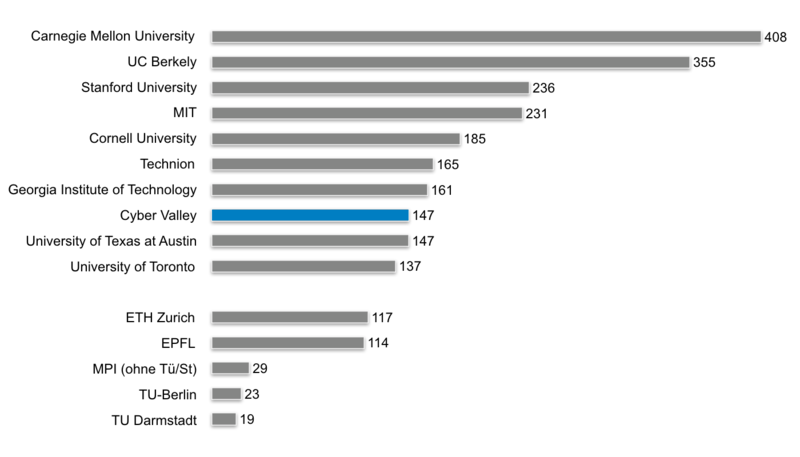
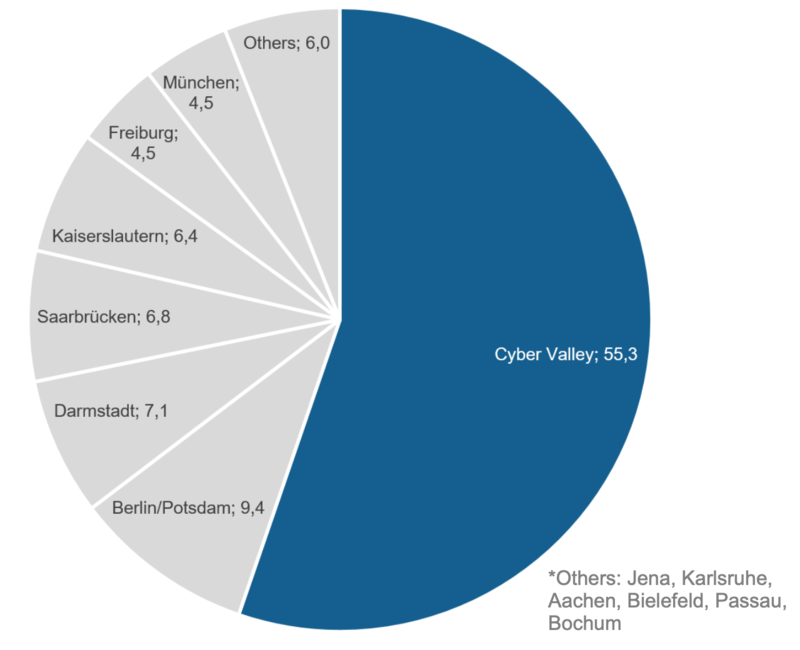
    Founded in December 2016 in southwestern Germany, the Cyber Valley initiative is Europe’s leading research consortium in the field of artificial intelligence. According to a ranking based on the number of publications at the top global conferences in machine learning NeurIPS and ICML from 2009 to 2019, Cyber Valley’s academic partners currently place eigth worldwide, and take first place in Europe and Germany.

    Leading research institutions worldwide, based on the number of publications at the two major machine learning conferences (NeurIPS/NIPS & ICML)1 (2009-2019)

    Contributions from German research locations to the most important conferences for machine learning (NeurIPS/NIPS & ICML)2, in percent (2009 – 2019)

    1. Quelle: dlpb, 2. Quelle: interne Analyse


    “Research excellence is the main reason why the Cyber Valley initiative has grown in leaps and bounds since it was founded three years ago. An AI ecosystem has emerged in the heart of Baden-Württemberg that is unparalleled in Europe,” says Schölkopf. This ecosystem has seen several major milestones in the past month alone, among them the accession of Fraunhofer Gesellschaft; the launch of the new Cyber Valley Start-Up Network; additional investments by industrial partners Robert Bosch GmbH and Amazon in Tübingen; and the successful close of a third round of applications at the International Max Planck Research School for Intelligent Systems, the PhD program which was founded as part of the Cyber Valley initiative. 

    NeurIPS 2019: Accepted Submissions from the Cyber Valley Ecosystem (alphabetical)

    1. Provably robust boosted decision stumps and trees against adversarial attacks
      Maksym Andriushchenko (EPFL) Matthias Hein (University of Tübingen)
       
    2. Control What You Can: Intrinsically Motivated Task-Planning Agent
      Sebastian Blaes (Max Planck Institute for Intelligent Systems) Marin Vlastelica Pogan (Max-Planck Institute for Intelligent Systems, Tübingen) Jia-Jie Zhu (Max Planck Institute for Intelligent Systems) Georg Martius (MPI for Intelligent Systems)
       
    3. Accurate, reliable and fast robustness evaluation
      Wieland Brendel (AG Bethge, University of Tübingen) Jonas Rauber (University of Tübingen) Matthias Kämmerer (University of Tübingen) Ivan Ustyuzhaninov (University of Tübingen) Matthias Bethge (University of Tübingen)
       
    4. Disentangled behavioural representations
      Amir Dezfouli (Data61, CSIRO) Hassan Ashtiani (McMaster University) Omar Ghattas (CSIRO) Richard Nock (Data61, the Australian National University and the University of Sydney) Peter Dayan (Max Planck Institute for Biological Cybernetics) Cheng Soon Ong (Data61 and ANU)
       
    5. Foundations of Comparison-Based Hierarchical Clustering
      Debarghya Ghoshdastidar (University of Tübingen) MichaÎl Perrot (Max Planck Institute for Intelligent Systems) Ulrike von Luxburg (University of Tübingen)
       
    6. On the Role of Inductive Bias From Simulation and the Transfer to the Real World: a new Disentanglement Dataset
      Muhammad Waleed Gondal (Max Planck Institute for Intelligent Systems) Manuel Wuthrich (Max Planck Institute for Intelligent Systems) Djordje Miladinovic (ETH Zurich) Francesco Locatello (ETH Zürich – MPI Tübingen) Martin Breidt (MPI for Biological Cybernetics)  Valentin Volchkov (Max Planck Institute for Intelligent Systems) Joel Akpo (Max Planck Institute for Intelligent Systems) Olivier Bachem (Google Brain) Bernhard Schölkopf (MPI for Intelligent Systems) Stefan Bauer (MPI for Intelligent Systems)
    7. Grid Saliency for Context Explanations of Semantic Segmentation
      Lukas Hoyer (Bosch Center for Artificial Intelligence) · Mauricio Munoz (Bosch Center for Artificial Intelligence) · Prateek Katiyar (Bosch Center for Artificial Intelligence) · Anna Khoreva (Bosch Center for Artificial Intelligence) · Volker Fischer (Robert Bosch GmbH, Bosch Center for Artificial Intelligence)
       
    8. Causal regularization
      Dominik Janzing (Amazon)
       
    9. Convergence Guarantees for Adaptive Bayesian Quadrature Methods
      Motonobu Kanagawa (EURECOM) Philipp Hennig (University of Tübingen and MPI for Intelligent Systems Tübingen)
       
    10. On Tractable Computation of Expected Predictions
      Pasha Khosravi (UCLA) YooJung Choi (UCLA) Yitao Liang (UCLA) Antonio Vergari (Max Planck Institute for Intelligent Systems) Guy Van den Broeck (UCLA)

       
    11. Limitations of the empirical Fisher approximation
      Frederik Kunstner (EPFL) Philipp Hennig (University of Tübingen and MPI for Intelligent Systems Tübingen) Lukas Balles (University of Tuebingen)
       
    12. Learning from brains how to regularize machines
      Zhe Li (Baylor College of Medicine) Wieland Brendel (AG Bethge, University of Tübingen) Edgar Walker (Baylor College of Medicine) Erick Cobos (Baylor College of Medicine) Taliah Muhammad (Baylor College of Medicine) Jacob Reimer (Baylor College of Medicine) Matthias Bethge (University of Tübingen) Fabian Sinz (University Tübingen) Zachary Pitkow (BCM/Rice) Andreas Tolias (Baylor College of Medicine)
       
    13. On the Fairness of Disentangled Representations
      Francesco Locatello (ETH Zürich – MPI T¸bingen) Gabriele Abbati (University of Oxford) Tom Rainforth (University of Oxford) Stefan Bauer (MPI for Intelligent Systems) Bernhard Schölkopf (MPI for Intelligent Systems) Olivier Bachem (Google Brain)
       
    14. Stochastic Frank-Wolfe for Composite Convex Minimization
      Francesco Locatello (ETH Zürich – MPI Tübingen) Alp Yurtsever (EPFL) Olivier Fercoq (Telecom ParisTech) Volkan Cevher (EPFL)
       
    15. The Functional Neural Process
      Christos Louizos (University of Amsterdam) Xiahan Shi (Bosch Center for Artificial Intelligence) Klamer Schutte (TNO) Max Welling (University of Amsterdam / Qualcomm AI Research)
       
    16. Fisher Efficient Inference of Intractable Models
      Song Liu (University of Bristol) Takafumi Kanamori (Tokyo Institute of Technology/RIKEN) Wittawat Jitkrittum (Max Planck Institute for Intelligent Systems) Yu Chen (University of Bristol)
       
    17. Generalized Matrix Means for Semi-Supervised Learning with Multilayer Graphs
      Pedro Mercado (University of Tübingen) Francesco Tudisco (University of Strathclyde) Matthias Hein (University of Tübingen)
       
    18. Selecting causal brain features with a single conditional independence test per feature
      Atalanti Mastakouri (Max Planck Institute for Intelligent Systems) Bernhard Schölkopf (MPI for Intelligent Systems) Dominik Janzing (Amazon)
       
    19. Beating SGD Saturation with Tail-Averaging and Minibatching
      Nicole Muecke (University of Stuttgart) Gergely Neu (Universitat Pompeu Fabra) Lorenzo Rosasco (University of Genova – MIT – IIT)
       
    20. Perceiving the arrow of time in autoregressive motion
      Kristof Meding (Max Planck Institute for Intelligent Systems) Dominik Janzing (Amazon) Bernhard Schölkopf (MPI for Intelligent Systems) Felix A. Wichmann (University of Tübingen)
       
    21. DeepUSPS: Deep Robust Unsupervised Saliency Prediction via Self-supervision
      Tam Nguyen (Freiburg Computer Vision Lab) Maximilian Dax (Bosch GmbH) Chaithanya Kumar Mummadi (Bosch Center for Artificial Intelligence) Nhung Ngo (Bosch Center for Artificial Intelligence) · Thi Hoai Phuong Nguyen (Karlsruhe Institute of Technology (KIT))  Zhongyu Lou (Robert Bosch Gmbh) Thomas Brox (University of Freiburg)
       
    22. Practical and Consistent Estimation of f-Divergences
      Paul Rubenstein (Max Planck Institute for Intelligent Systems) Olivier Bousquet (Google Brain (Zurich)) Josip Djolonga (Google Research, Brain Team) Carlos Riquelme (Google Brain) Ilya Tolstikhin (MPI for Intelligent Systems)
       
    23. Kernel Stein Tests for Multiple Model Comparison
      Jen Ning Lim (Max Planck Institute for Intelligent Systems) Makoto Yamada (Kyoto University / RIKEN AIP) Bernhard Schölkopf (MPI for Intelligent Systems) Wittawat Jitkrittum (Max Planck Institute for Intelligent Systems)
       
    24. Invert to Learn to Invert
      Patrick Putzky (University of Amsterdam, Max Planck Institute for Intelligent Systems), Max Welling (University of Amsterdam)
       
    25. Approximate Bayesian Inference for a Mechanistic Model of Vesicle Release at a Ribbon Synapse
      Cornelius Schröder (University of Tübingen) Ben James (University of Sussex) Leon Lagnado (University of Sussex) Philipp Berens (University of Tübingen)
       
    26. Are Disentangled Representations Helpful for Abstract Visual Reasoning?
      Sjoerd van Steenkiste (The Swiss AI Lab – IDSIA) Francesco Locatello (ETH Zürich – MPI Tübingen) Jürgen Schmidhuber (Swiss AI Lab, IDSIA (USI & SUPSI) – NNAISENSE) Olivier Bachem (Google Brain)
       
    27. Progressive Augmentation of GANs
      Dan Zhang (Bosch Center for Artificial Intelligence) · Anna Khoreva (Bosch Center for Artificial Intelligence)
  • Niki Kilbertus ist “Newcomer des Jahres” 

    Niki Kilbertus ist “Newcomer des Jahres” 

    Berlin, 29. November 2019 (Text der GI) – Im Rahmen des Projektes #KI50: Künstliche Intelligenz in Deutschland – gestern, heute, morgen im Wissenschaftsjahr 2019 – Künstliche Intelligenzdes Bundesministeriums für Bildung und Forschung (BMBF) zeichnet die Gesellschaft für Informatik 10 herausragende junge KI-Forscherinnen und Forscher aus.

    Mit den KI-Newcomer*innen werden nun 10 junge KI-Nachwuchsforscherinnen und -forscher in fünf Kategorien geehrt, die bereits heute die KI-Entwicklung in Deutschland und darüber hinaus vorantreiben. Neben der Informatik stammen die Ausgezeichneten aus den Lebenswissenschaften, den Gesellschafts- und Sozialwissenschaften, den Naturwissenschaften sowie den Technik- und Ingenieurswissenschaften.

    Niki Kilbertus ist einer von zwei Newcomer des Jahres in der Kategorie "Informatik". Sein Anspruch als PhD Student in maschinellem Lernen am Max-Planck-Institut für Intelligente Systeme und der Unversität Cambridge ist es KI beizubringen, sich in schwerwiegenden Entscheidungen fair zu verhalten: Sei es bei der Frage wer einen Kredit bekommt, zum Jobinterview eingeladen wird, oder sogar wer auf Bewährung entlassen wird. Insgesamt zielt seine Arbeit darauf ab schon heute innovative Lösungen für bevorstehende Herausforderungen wie Diskriminierung, Verlust von Privatsphäre und Verstärkung von Ungleichheit zu entwickeln. 

    Die KI-Newcomer*innen wurden in einem offenen Online-Abstimmungsprozess ausgewählt, bei dem mehr als 11.000 Stimmen abgegeben wurden. Zuvor wurden die 30 Jungforscherinnen und -forscher bereits aus über 100 Bewerberinnen und Bewerbern in die engere Vorauswahl ausgewählt.

     Die Nachwuchswissenschaftlerinnen und -wissenschaftler werden auf dem KI-Camp am 5.12.2019 in Berlin offiziell ausgezeichnet. 

  • Amazon gründet Lablet zur Forschung an Künstlicher Intelligenz in Tübingen

    Amazon gründet Lablet zur Forschung an Künstlicher Intelligenz in Tübingen

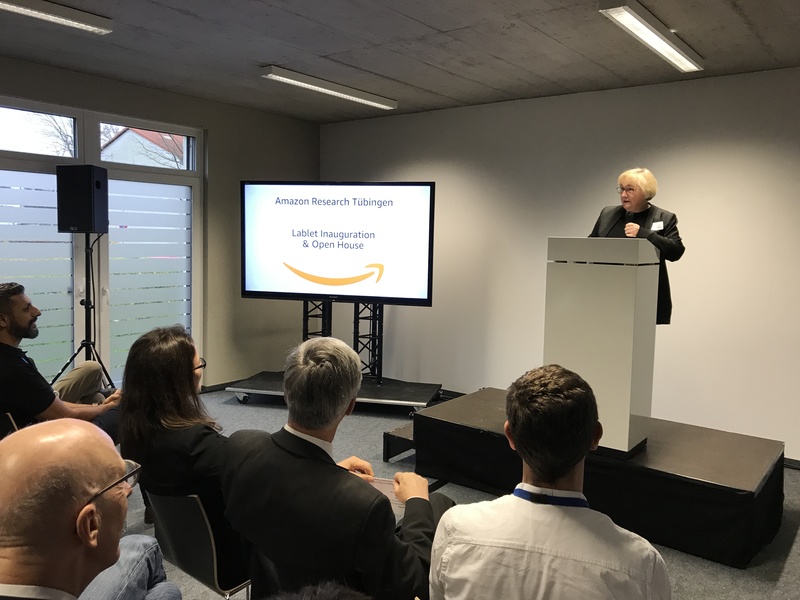
    Tübingen – Amazon hat die Gründung eines Lablets in Tübingen angekündigt. Diese neue Art einer Forschungsabteilung widmet sich der offenen Forschung in der Künstlichen Intelligenz (KI) und ihren Anwendungen, um an den langfristigen Fragestellungen im Bereich KI zu forschen. Ab Dezember 2019 arbeiten Wissenschaftler und Wissenschaftlerinnen verschiedener Fachrichtungen, darunter Informatik, Softwareentwicklung und Mathematik, an der KI Grundlagenforschung. Ihr besonderes Interesse gilt dabei der Erklärbarkeit, der Kausalität und der Erforschung von KI, die ihre Umgebung erfasst. Um den wissenschaftlichen Fortschritt und die Reproduzierbarkeit zu fördern, wird das Lablet-Team seine Forschungsergebnisse publizieren und in Form von Open-Source-Code oder als Datensatz bereitstellen.

    „Mit der Gründung des Lablets setzen wir auf einen Paradigmenwechsel. Anstatt darauf zu zielen, Produkte und Anwendungen schrittweise zu verbessern, ist die Forschung im Lablet neugiergetrieben. Die Freiheit der Forschung und vor allem die Freiheit zu wählen, was wissenschaftlich untersucht werden soll, sind nur die ersten beiden Schritte zu einer unvoreingenommenen, fairen und offenen KI,“ sagte Bernhard Schölkopf, Schirmherr des Tübinger Lablets und Direktor am Max-Planck-Institut für Intelligente Systeme. „Ein weiterer wichtiger Schritt ist der konstante Austausch mit Wissenschaft, Politik und Gesellschaft. Wir sind davon überzeugt, dass KI der Allgemeinheit dienen muss. Um das zu erreichen, müssen wir Vertrauen in KI schaffen, und das können wir nur erreichen, wenn wir KI so transparent und verständlich wie möglich machen.“ Amazon plant, weitere Lablets einzurichten, um weltweit KI-Grundlagenforschung zu betreiben.

    Schwerpunkt auf Austausch mit Wissenschaft und Stadtöffentlichkeit

    Die KI-Forschung im Tübinger Lablet wird sich auf folgende Bereiche konzentrieren: Kausalität und Erklärbarkeit,  Fairness, Datenschutz, Robustheit, Reinforcement Learning sowie Bildverarbeitung. Die Wahl des Standorts spiegelt diesen inhaltlichen Fokus wider. Als weltweit renommierter Forschungsstandort in Deutschland zeichnen sich Tübingen und die lokale Cyber-Valley-Initiative durch eine lebhafte und intensive Diskussionskultur aus. Amazon nutzt dieses Potenzial, um sowohl die wissenschaftliche Gemeinschaft als auch die Öffentlichkeit an der Forschung des Lablets teilhaben zu lassen. Das Forschungszentrum begrüßt einen offenen Dialog und lebhafte Diskussionen mit Vertretern aus Politik, Wissenschaft, Wirtschaft und Gesellschaft, beispielsweise in öffentlichen Veranstaltungen.

    „Amazon stellt langfristige Ergebnisse über den kurzfristigen Nutzen, was genau das ist, was wir für neugiergetriebene, langfristige Forschung benötigen,“ sagte Yasser Jadidi, operativer Leiter des Amazon Lablets in Tübingen. „Mit einer Mischung aus angewandten Wissenschaftlern, Softwareentwicklern, Doktoranden, Praktikanten und Amazon Scholars wollen wir die KI verstehen und die KI ihr Umfeld verstehen lassen. Unser Ziel ist es, den Menschen zu befähigen, datenbasierte Entscheidungen zu hinterfragen, zu erklären und kausale Erklärungen für das Verhalten eines Algorithmus zu liefern.“ Im Rahmen des lokalen Engagements in Tübingen arbeitet Amazon eng mit dem Max-Planck-Institut für Intelligente Systeme und der Universität Tübingen zusammen. Im Lablet steht diese Zusammenarbeit auch Wissenschaftlern anderer Institutionen offen.

    Neues Gebäude für die Forschung von Amazon

    2017 hatte Amazon angekündigt, ein Forschungszentrum in Tübingen zu eröffnen und innerhalb von fünf Jahren 100 hochqualifizierte Mitarbeiter einzustellen. Das Unternehmen trat außerdem der Cyber Valley-Initiative bei, die die Forschungsaktivitäten von internationalen Key-Playern aus Wissenschaft und Industrie auf dem Gebiet der bündelt. Der Standort in Tübingen ist nach Berlin, Dresden und Aachen das vierte Forschungs- und Entwicklungszentrum von Amazon in Deutschland. Das neue Lablet wird Teil dieses Forschungszentrums von Amazon in Tübingen.

    Mitte November genehmigte der Gemeinderat der Stadt Tübingen den Verkauf eines Grundstücks nahe des Max-Planck-Instituts für Intelligente Systeme an einen Projektentwickler, der darauf bis 2021 ein Gebäude errichten wird. Amazon wird dieses Gebäude mieten und es als neues Forschungszentrum in Tübingen nutzen. Das Gebäude wurde in enger Abstimmung mit dem Baubürgermeisteramt der Stadt Tübingen geplant und soll die räumlichen Anforderungen der Forschungsteams von Amazon erfüllen. Es wird außerdem ein Café, eine Veranstaltungsfläche und einen Co-Working Space beinhalten. Diese Bereiche werden für die Öffentlichkeit zugänglich sein, um den wissenschaftlichen Austausch und die Diskussion mit der Stadtgesellschaft zu fördern.

    Hier geht es zu der Pressemeldung im Amazon Newsroom.

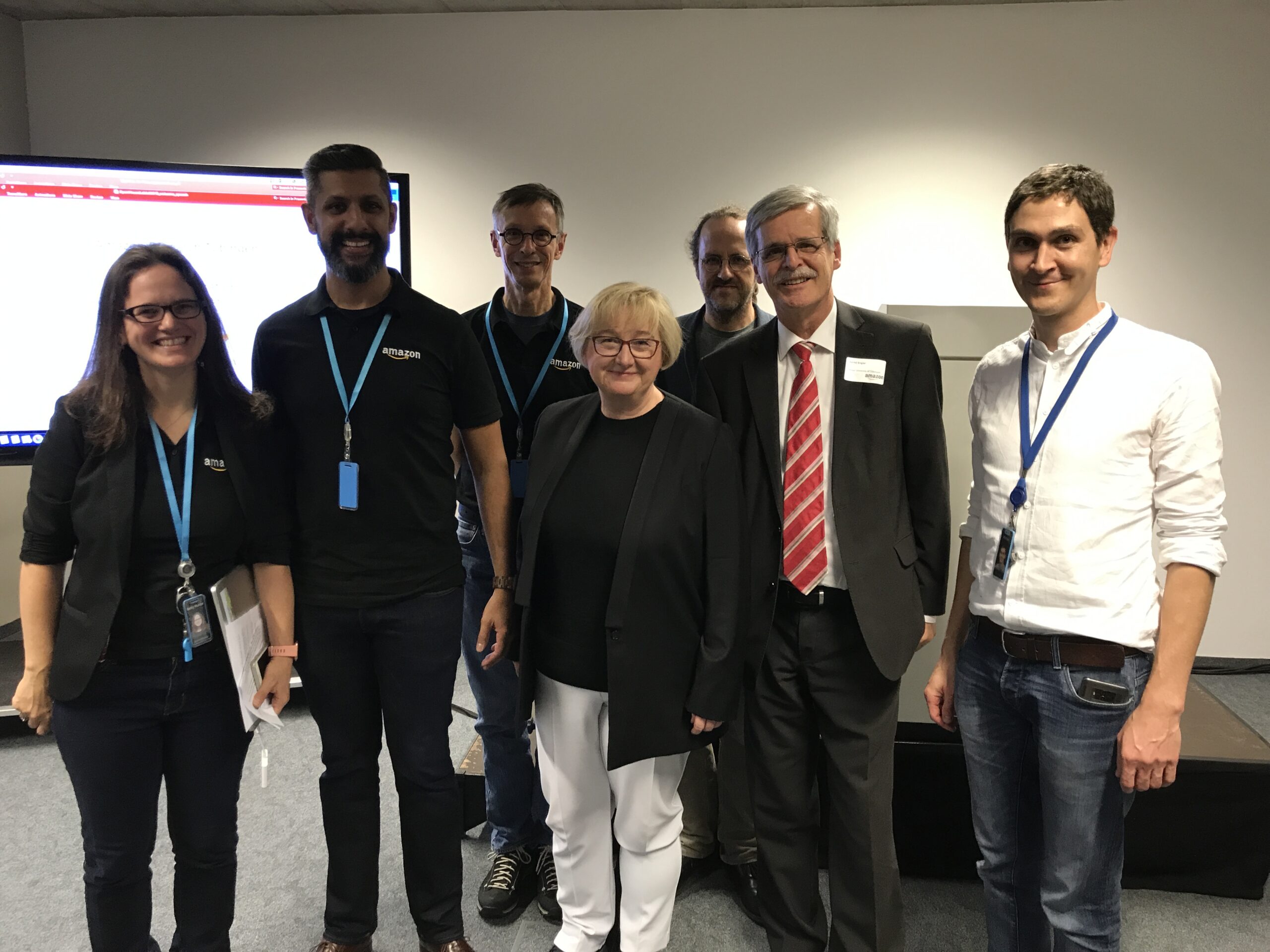
    From left to right: Amazon researcher Betty Mohler, Yasser Jadidi, Operative Head of Lablet at Amazon Tübingen, Michael Black, Director at the Max Planck Institute for Intelligent Systems (MPI-IS) and Cyber Valley Spokesperson, Theresia Bauer, Baden Württemberg’s Minister for Science, Research and Arts, Bernhard Schölkopf, Director at the MPI-IS, Bernd Engler, Rector of the University of Tübingen and Michael Hirsch, Research Science Manager & Site Lead at Amazon Tübingen.

  • Fraunhofer Gesellschaft joins Cyber Valley

    Fraunhofer Gesellschaft joins Cyber Valley

    Stuttgart – The Fraunhofer Institute for Manufacturing Engineering and Automation IPA and the Fraunhofer Institute for Industrial Engineering IAO have joined Cyber Valley, further strengthening Europe’s largest research consortium in the field of artificial intelligence (AI). The tie-up demonstrates once again that Baden-Württemberg is the AI hotspot in Europe, on a par with some of the world’s leading centers, for instance in North America.

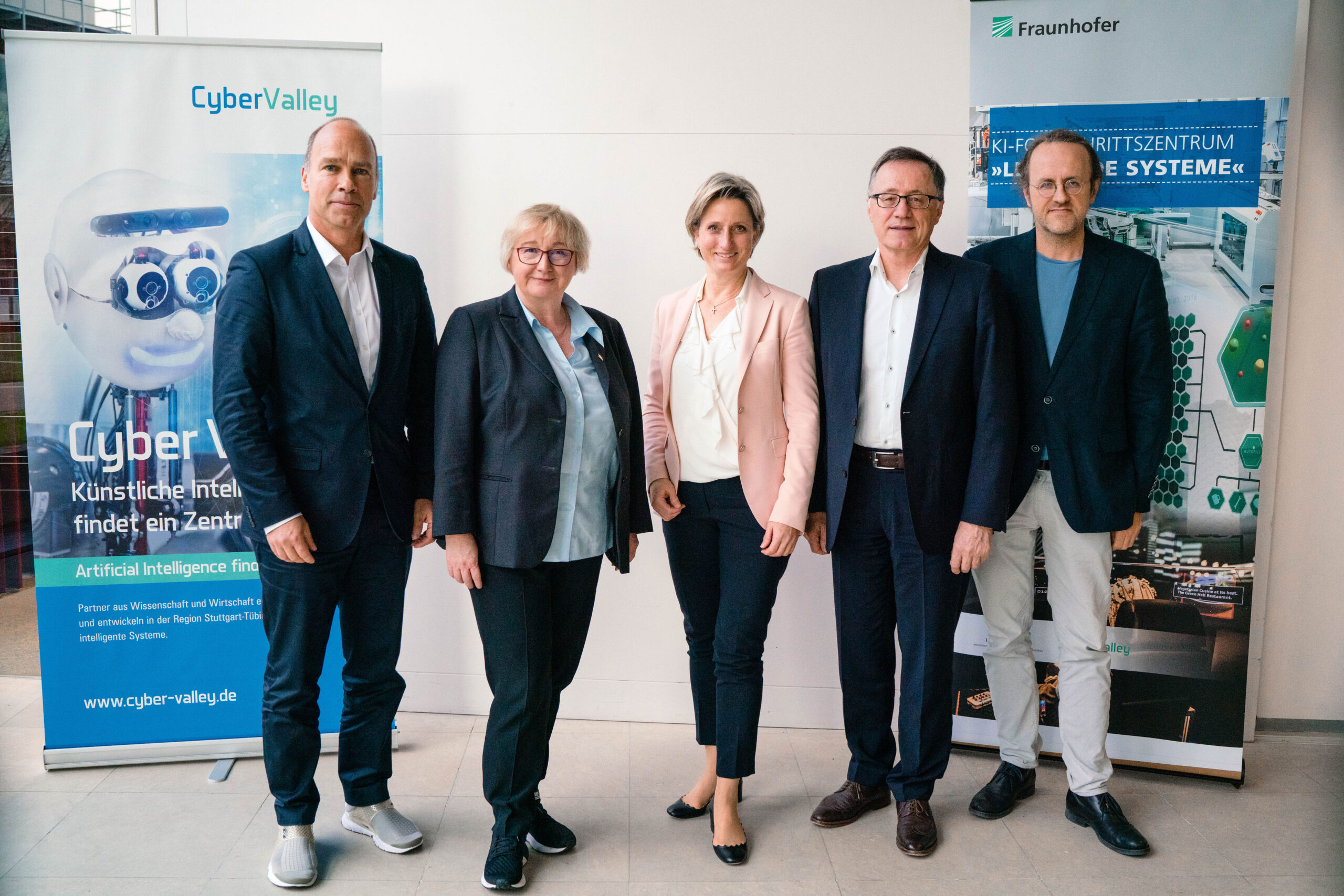
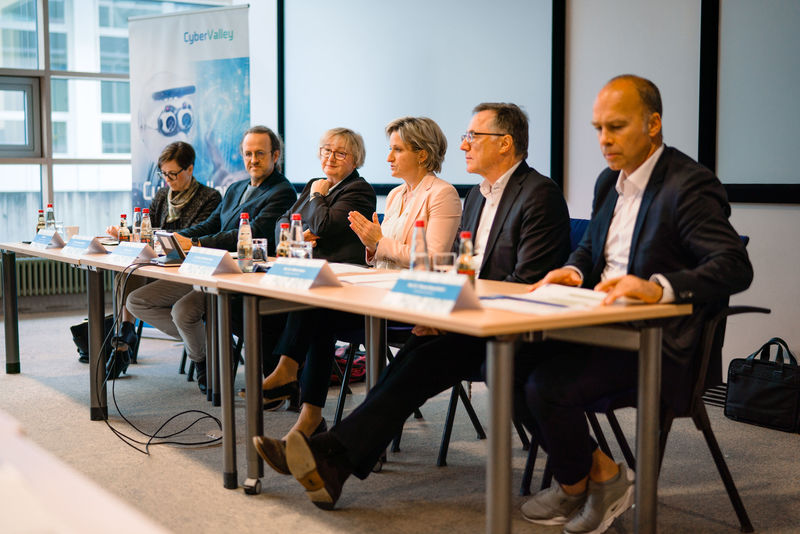
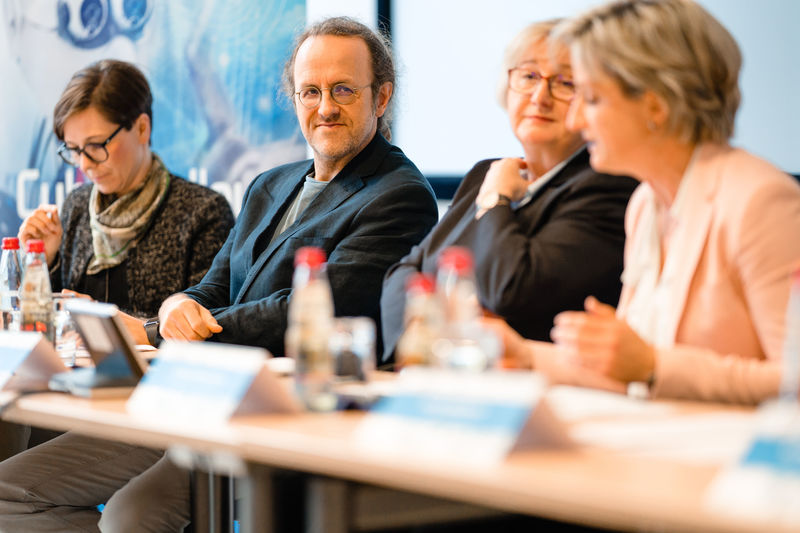
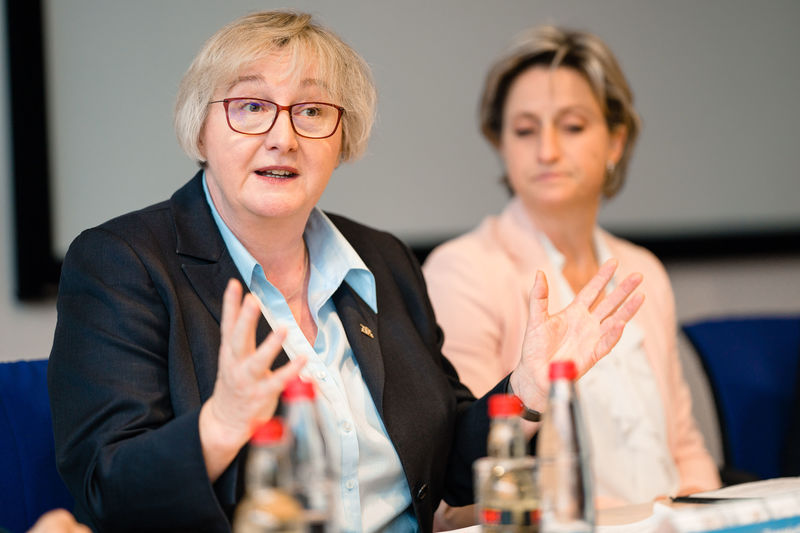
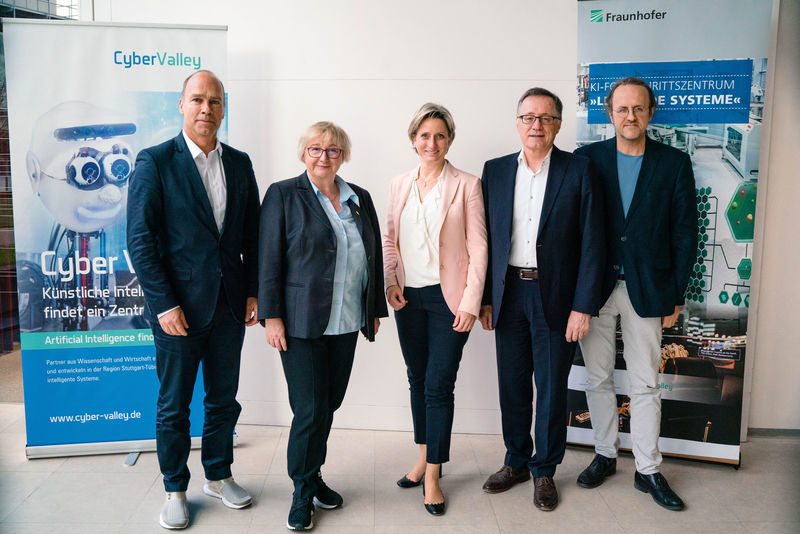
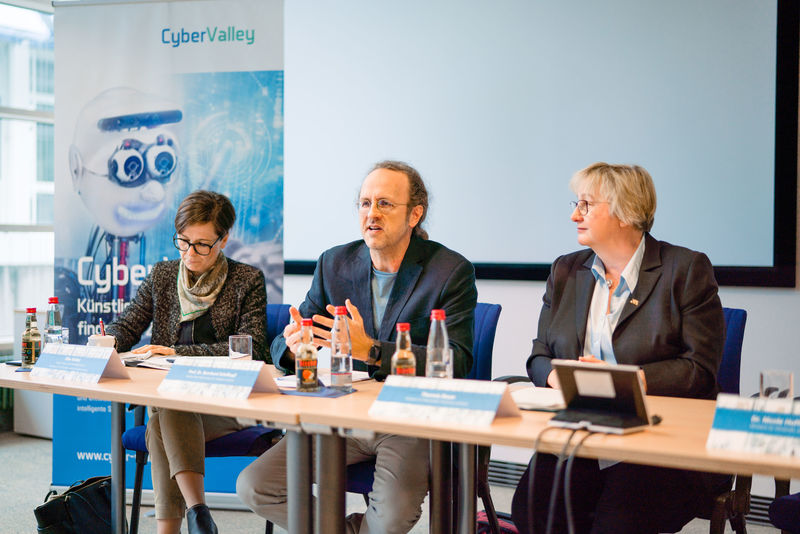
    From left to right: Silke Walter, press spokesperson Ministry of Economy, Prof. Bernhard Schölkopf, Baden-Württembergs Science Minister Theresia Bauer, Minister of Economy Dr. Hoffmeister-Kraut, and from Fraunhofer Prof. Wilhelm Bauer und Prof. Thomas Bauernhansl.

    “Artificial intelligence is a key driver of innovation and economic growth and holds enormous economic potential for our small and medium-sized enterprises,” said Baden-Württemberg's Minister of Economic Affairs, Labour and Housing Dr. Nicole Hoffmeister-Kraut. “We need more 'AI made in Baden-Württemberg' and we need to bring the results of our cutting-edge research even better and faster into the practical application of our companies. To this end, we must make massive progress in the research, development, and commercialisation of artificially intelligent systems.

    Baden-Württemberg's Science Minister Theresia Bauer added: “An internationally visible AI hotspot is created here. We warmly welcome the Fraunhofer-Gesellschaft to the ever-growing circle! The Cyber Valley research network is developing very dynamically and is attracting more and more scientists, young talents from all across the world, companies, and foundations. The boom has created the need to establish reliable management structures for the Cyber Valley network in order to effectively manage the growing organizational tasks.”

    "With their application-oriented focus, the Fraunhofer Institutes ideally complement the research of the Max Planck Institute for Intelligent Systems and the Universities of Tübingen and Stuttgart," said Professor Martin Stratmann, President of the Max Planck Society. "Fraunhofer’s engagement makes it easier to bridge the gap to the industrial partners within Cyber Valley: in this way, findings from basic research can be applied more quickly."
     
    Professor Reimund Neugebauer, President of the Fraunhofer-Gesellschaft, emphasized: "Artificial intelligence is one of the central digital issues of the future and will change our lives from the ground up. For the international economy and industrial value chains, it means a fundamental structural change. By joining Cyber Valley, together with our partners we will advance research and transfer from science to the market in order to fully exploit the potential of this key technology and strengthen Germany as a location for international competition.”

    "We very much welcome the Fraunhofer Gesellschaft’s participation, as it will help us apply the methods of modern AI, especially in small and medium-sized enterprises," said Professor Bernhard Schölkopf, Director at the Max Planck Institute for Intelligent Systems and co-founder of Cyber Valley.

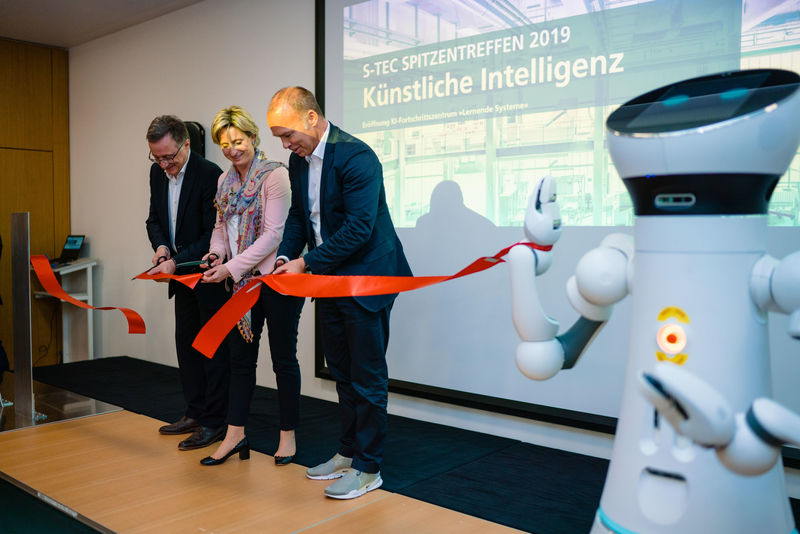
    Baden-Württemberg’s Ministry of Economic Affairs and the Fraunhofer Gesellschaft are co-financing the AI innovation center Learning Systems (KI-Fortschrittszentrum “Lernende Systeme”), which was incorporated into the Cyber Valley research consortium from October 1, 2019. The center is a laboratory with an initial team of 20 researchers and planned funding of ten million euros until the end of 2022.

    Central point of contact for application-oriented AI research

    For companies in Baden-Württemberg, the AI innovation center is a central point of contact for application-oriented research on artificial intelligence. The center explores applied research projects relevant to the manufacturing and service industries. It also acts as an interface between industry and the fundamental research conducted within the Cyber Valley consortium (the Universities of Tübingen and Stuttgart, the Max Planck Institute for Intelligent Systems, and several industry partners). The aim is to enable technology transfer to industry beyond the existing partners.

    As another component, joint research labs will be set up in which fundamental researchers will cooperate with more application-focused scientists at IPA or IAO. The projects will not be initiated by companies, but rather based on assessments of what the market needs. These joint research labs may thus bear the greatest potential for future start-ups.

    Direct cooperation with industry is a central focus of the AI innovation center. Feasibility studies and the development of prototypes of AI applications are partly financed by the innovation center’s budget. To establish strategic partnerships, industrial companies have the opportunity to operate and finance Enterprise Labs. At these labs, one or more researchers within the innovation center can give their full attention to the respective company’s specific needs. In all its activities, the AI innovation center Learning Systems aims to implement human-centered AI that people trust and accept. The full potential of AI can only be realized once people interact and work closely with new technology. To realize human-centered AI, research activities focus on topics such as explainability, privacy, safety, and the robustness of AI technologies.

    Benefit to industry and society

    With Cyber Valley, partners from science, business, and society are building a unique research ecosystem in the Stuttgart-Tübingen region. Supported by the state of Baden-Württemberg, Cyber Valley promotes an active exchange between science and industry. The initiative also focuses on training the best minds in the field of AI and creating a breeding ground for start-ups. The aim is to combine cutting-edge research with entrepreneurial spirit to promote spin-offs and technology transfer.

    The cooperation of the two Fraunhofer institutes and Cyber Valley is thus a major source of potential for all parties involved. Fraunhofer Gesellschaft has a 70-year history of excellence in business-oriented research. Its 72 institutes work closely with small and medium-sized enterprises, commonly referred to as the “German Mittelstand”, as well as with larger local and international enterprises. This expertise in realizing projects in close cooperation with industry is of immense value to Cyber Valley. With its proven track record of many successful start-ups, Fraunhofer Gesellschaft joining Cyber Valley will further enhance the research consortium's innovative and entrepreneurial strength. Fraunhofer Gesellschaft actively supports researchers who want to start their own companies based on the intellectual property they have developed while working with Fraunhofer. The mission of bringing technological pro-gress to companies and society is firmly anchored in the Fraunhofer mission statement.

    www.fraunhofer.de | www.iao.fraunhofer.de | www.ipa.fraunhofer.de

    Cyber Valley is Europe's largest research cooperation in the field of artificial intelligence with partners from politics, science, business, and society. The partnership strengthens research and teaching in the fields of machine learning, computer vision, and robotics as well as the links between these fields. Partners are the Max Planck Institute for Intelligent Systems, the University of Stuttgart, the University of Tübingen, the State of Baden-Württemberg and seven industrial partners: Amazon, the BMW Group, IAV GmbH, Daimler AG, Porsche AG, Robert Bosch GmbH and ZF Friedrichshafen AG. Cyber Valley is also supported by the Christian Bürkert Foundation, the Gips-Schüle Foundation, the Vector Foundation, and the Carl Zeiss Foundation.

    www.cyber-valley.de

  • AI Monday in Cyber Valley

    AI Monday in Cyber Valley

    In 2017, the founders of Taival launched the AI Monday event series in Helsinki. Since then, they have expanded to Berlin and Stuttgart. The popular series aims to bring together AI experts and enthusiasts for evenings of talks and knowledge sharing.

    In cooperation with Taival and Porsche AG, Cyber Valley is now bringing the event to Tübingen for the first time. Join us on November 18 at the Max Planck Institute for Intelligent Systems, where several AI experts will be presenting their research and activities in the broad field of artificial intelligence.

    Please note the event is registration only. For more details and to register for the event, please consult the AI Monday website: https://ai-monday.de/stuttgart

  • Endoscopic prostate surgery performed on a first human-like phantom

    Endoscopic prostate surgery performed on a first human-like phantom

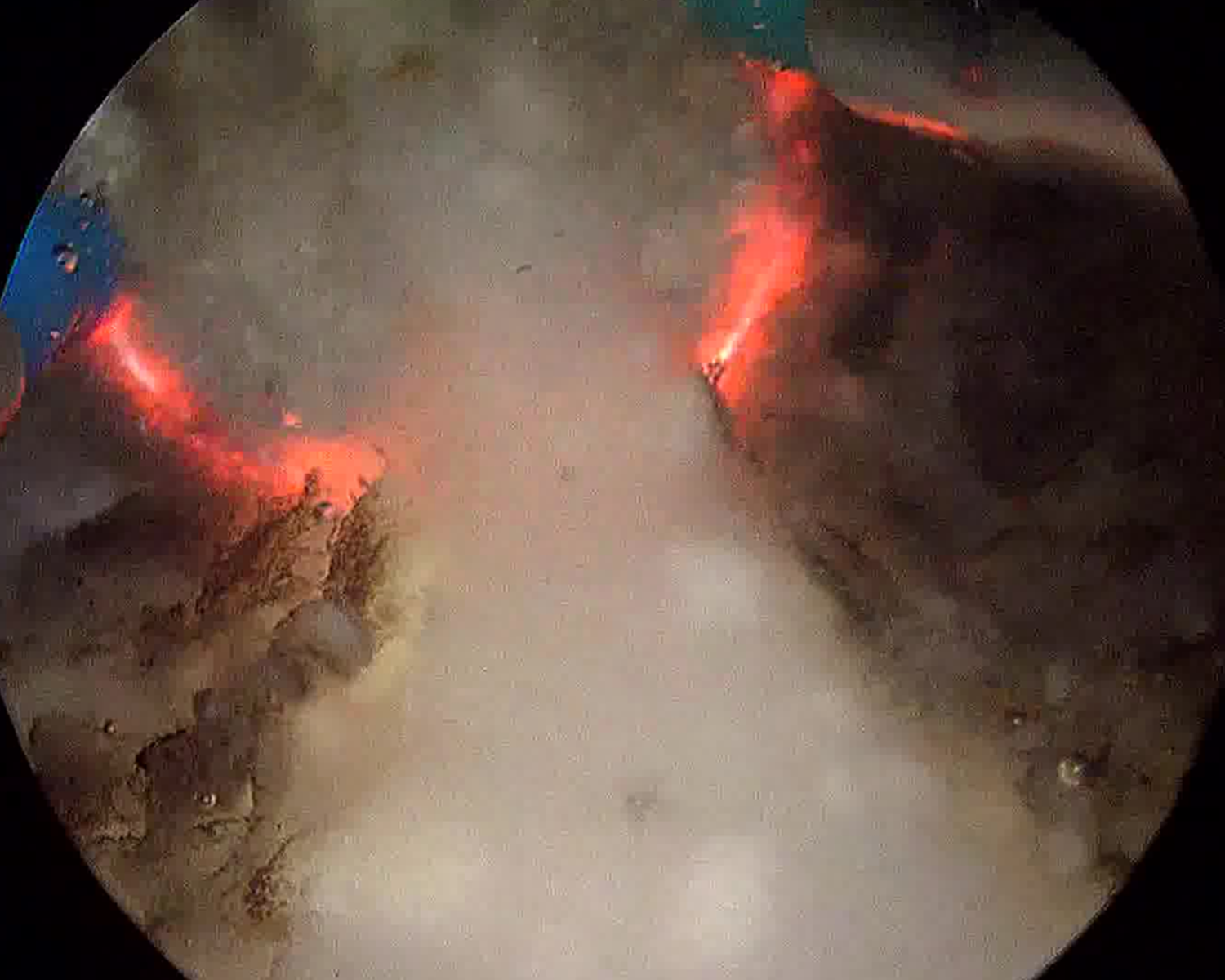
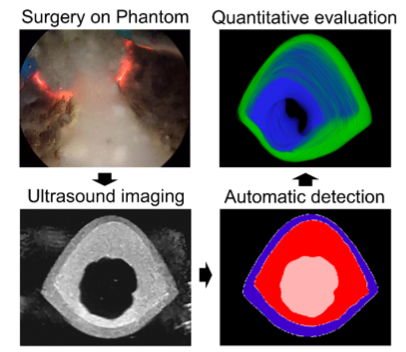
    Stuttgart/Freiburg – Airline pilots train many hundreds of hours in a flight simulator before they take to the skies. In contrast, surgeons have very limited access to simulators, and the simulators that are available do not offer sufficiently realistic conditions. To improve the situation and allow for surgical procedures to be optimized and quantitatively evaluated, scientists from the Max Planck Institute for Intelligent Systems in Stuttgart and the University of Stuttgart have developed the first organ model that can be used for a realistic transurethral resection of the prostate. In collaboration with the Division of Urotechnology at the Medical Center – University of Freiburg, a team of doctors used the same surgical set-up and equipment routinely used on patients to perform surgery on the organ phantom, which is made of materials that behave like real tissue. With the phantom, the surgery’s outcome can be clearly visualized, which is impossible on real patients. The team has developed an automatic system to evaluate surgical performance and provide feedback to the trainee surgeon immediately after the training session.

    At some point in their lives, 80% of men suffer from the enlargement of the prostate, which is known as benign prostate hyperplasia (BPH). BPH can be treated surgically, most commonly in a minimally invasive procedure called transurethral resection of the prostate (TURP). During the surgery, a rigid endoscope is inserted through the patient’s urethra and prostate tissue is cut out from the inside with a wire loop that is heated with an electrical current. While the prostate’s central zone should be removed, the peripheral zone must be preserved. An experienced surgeon is capable of distinguishing the inner and outer zones based on the tactile feedback from the endoscope and appearance of the tissue. Developing this ability requires a great deal of practice.

    The new prostate phantom can help in this regard. It provides a unique opportunity for surgical training without the risk of patients being harmed. The realistic phantom was fabricated by 3D printing and molding, and the researchers used special biomimetic materials to provide the correct level of softness, the right appearance, and the appropriate response to the surgical resection instrument. In addition, imaging contrast agents were added that became visible only after the surgery and made the two different zones clearly visible. As a result, the surgeon can obtain feedback on the accuracy of the resection for the first time.

    Figure: Endoscopic surgery on the human-like phantom of the prostate. For the first time, the intelligent surgical simulator makes it possible to quantitatively evaluate the surgery’s outcome. Copyright: E. Choi/MPI-IS.

    “The organ phantom feels very realistic and the surgery feels like operating on a real patient”, says Professor Arkadiusz Miernik, a senior urology consultant and the head of the Division of Urotechnology at the Medical Center – University of Freiburg. “The phantom will transform surgical training. Compared with cadaver or animal models, it is much more pleasant to use, saves time and money, and can be designed for special procedures. The phantom also provides valuable feedback on how to improve one’s surgical skills.”

    The research team headed by Tian Qiu, leader of the Cyber Valley Biomedical Microsystems research group at the University of Stuttgart, and Peer Fischer, Professor of Physical Chemistry at the University of Stuttgart and leader of the Micro, Nano and Molecular Systems Lab at the Max Planck Institute for Intelligent Systems in Stuttgart, is also developing other organ phantoms. In so doing, the researchers aim to make it possible to teach, optimize, and systemically validate more surgical procedures, including new robotic surgeries. Their ultimate goal is to develop a comprehensive and realistic surgical simulator.

    Reference

    Eunjin Choi, Fabian Adams, Stefano Palagi, Anina Gengenbacher, Daniel Schlager, Philippe-Fabian Müller, Christian Gratzke, Arkadiusz Miernik, Peer Fischer, Tian Qiu. A High-Fidelity Phantom for the Simulation and Quantitative Evaluation of Transurethral Resection of the Prostate. Annals Biomedical Engineering (2019). https://doi.org/10.1007/s10439-019-02361-7

    Contact
    Dr. Tian Qiu
    Cyber Valley Group Leader
    University of Stuttgart
    Pfaffenwaldring 55, 70569 Stuttgart, Germany
    Tel: +49 (0) 711 685 64482
    Email: tian.qiu@ipc.uni-stuttgart.de