User Group: General Public

  • Virtuelles S-TEC Spitzentreffen 2021

    Virtuelles S-TEC Spitzentreffen 2021

    Die Stuttgarter Fraunhofer-Institute IAO und IPA laden herzlich zum virtuellen S-TEC Spitzentreffen am 25. Februar 2021 ein, um gemeinsam mit Ihnen und Baden-Württembergs Wirtschaftsministerin Dr. Nicole Hoffmeister-Kraut einen Blick auf die laufenden Entwicklungen und Forschungserkenntnisse zum Thema KI und Robotik zu werfen. Ein besonderer Fokus liegt hierbei auf dem KI-Fortschrittszentrum »Lernende Systeme« und dem Zentrum für Cyber Cognitive Intelligence (CCI) der Stuttgarter Fraunhofer-Institute IAO und IPA. Das KI-Fortschrittszentrum »Lernende Systeme« schließt durch Technologietransfer die Lücke zwischen KI-Spitzenforschung und der breiten Anwendung in der produzierenden Industrie.

    Neben dem Grußwort der Ministerin bietet Ihnen die Veranstaltung einen umfassenden Einblick in die Erfahrungsberichte konkreter KI-Praxisbeispiele kooperierender Unternehmen aus der Region. Freuen Sie sich zudem auf Keynotes, Pitches und eine Podiumsdiskussion, in der Sie Ihre Erfahrungen, Ideen und Fragen mit den KI-Expertinnen und Experten teilen dürfen.

  • A real “gamechanger” for AI in the next decade

    A real “gamechanger” for AI in the next decade

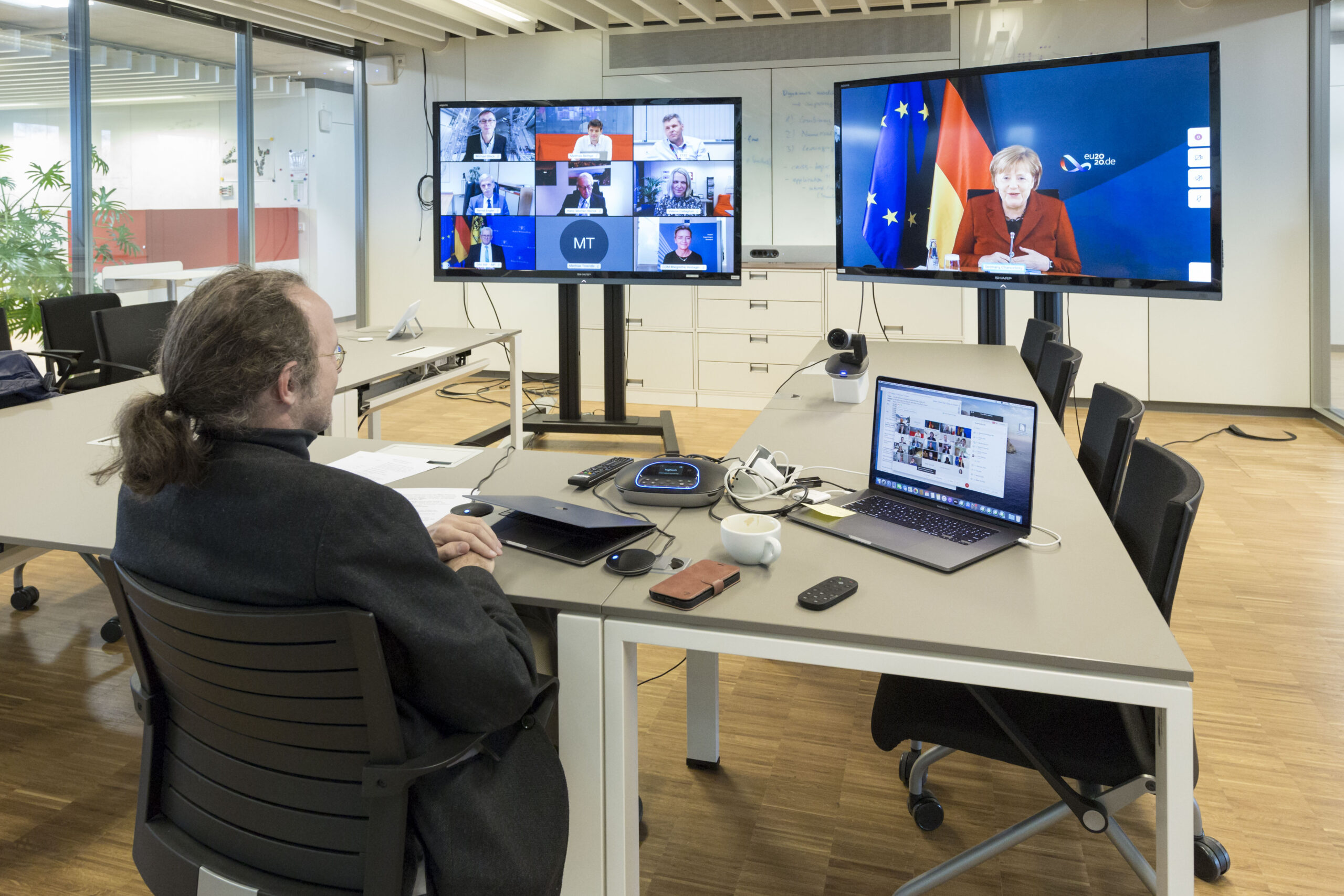
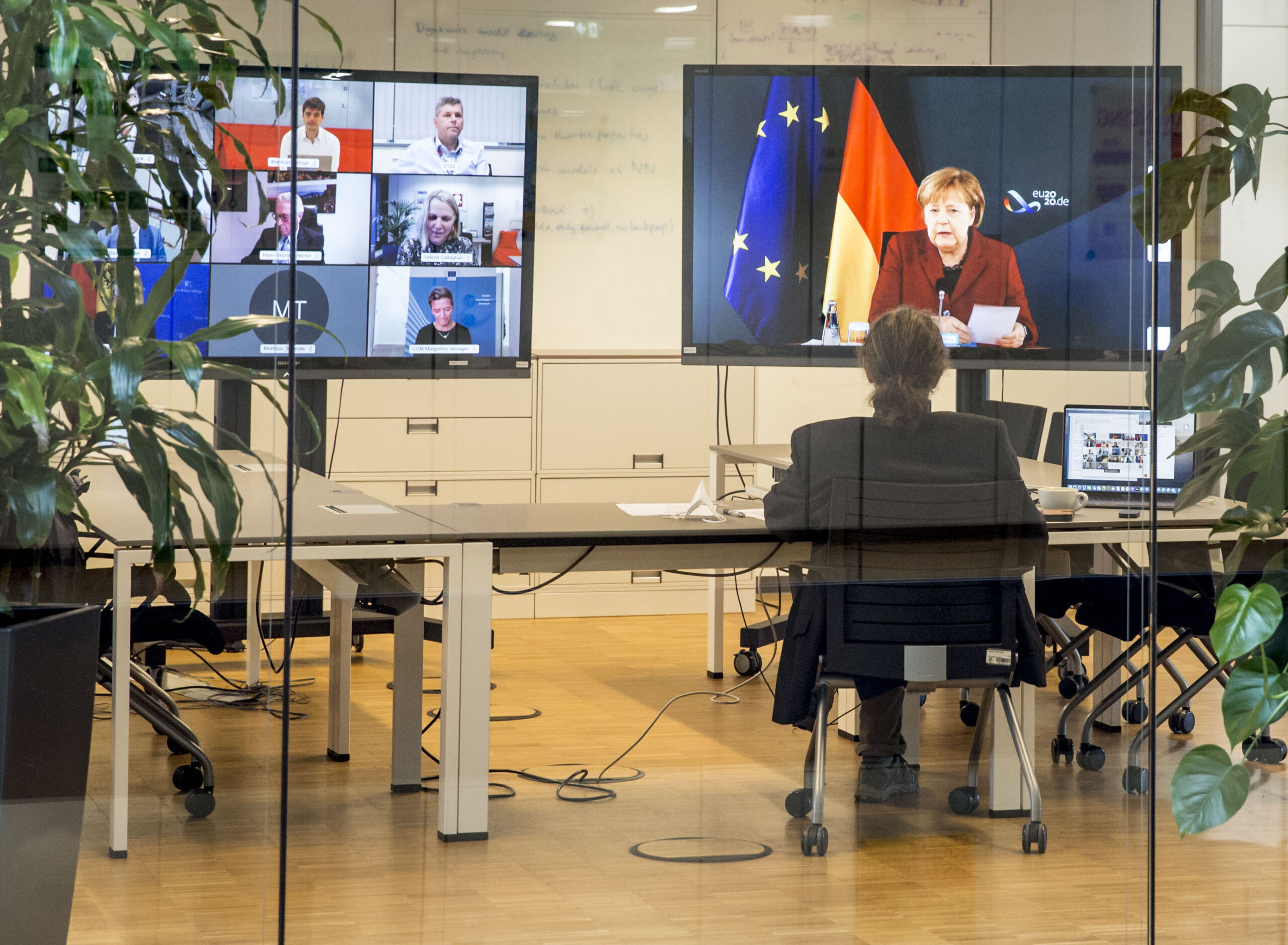
    “The German government will continue to support AI research as well as the transfer to application intensively,” said Federal Chancellor Angela Merkel on Thursday at a virtual event that marked the launch of the AI Breakthrough Hub. “We decided to update the German AI strategy. As part of the Future Package, we have pledged an additional two billion euros for AI. The investment should serve as a catalyst for state-of-the-art computing infrastructures, attractive conditions for top talent, and forward-looking AI ecosystems.”

    The AI Breakthrough Hub project, funded by the federal and state governments as well as the private sector, will be developed at the Tübingen AI Center, the joint competence center for machine learning of the University of Tübingen and the Max Planck Institute for Intelligent Systems. This growing AI ecosystem, which includes Cyber Valley and the European Laboratory for Learning and Intelligent Systems (ELLIS), is expected to significantly increase Germany’s appeal to international talent in the field of artificial intelligence. Planned measures include a fellowship program for high-level visiting scientists, an increase in computing power, a coding school for programming education, the establishment of a platform for future AI start-ups, and increased research in the field of AI applications for medicine.

    EU Vice President Margrethe Vestager pointed to the need to bring industrial applications into the AI era: “Connecting the industrial foundation to cutting-edge research in artificial intelligence is the best way forward. We also need to increase cooperation, which is the core of this new Breakthrough Hub. Our European approach is based on our values and this new hub will be a cornerstone to bring European artificial intelligence forward.”

    “Today, Cyber Valley is one of the largest research collaborations in Europe and an international beacon in AI research. And this is thanks to a joint show of strength by the federal government, the state, academia, industry and private donors,” said Minister President Winfried Kretschmann. The state of Baden-Württemberg has already invested 140 million euros into Cyber Valley’s successful path, he added. “Most recently, this Tuesday, an amount in the tens of millions of euros was earmarked to secure the joint funding of the AI Competence Center by the federal and state governments. Together with the federal government and Cyber Valley, we have created an excellent concept for promoting AI in this country with the ‘AI Breakthrough Hub’. In addition, I am pleased that the Hector Foundation will also support the training of top AI scientists in Cyber Valley with an amount of up to 100 million euros.”

    “In just a few years, Cyber Valley has managed to attract the best international AI talent and establish excellent networks with the top locations for AI research in the world,” said Baden-Württemberg’s Minister of Science Theresia Bauer. “With a major joint effort, we can now achieve a breakthrough, bringing Cyber Valley into the top league worldwide and keeping it there. Because we want to make rapid progress in the development of a European AI.”

    “For four years, we have been building something new here with outstanding colleagues. We founded Cyber Valley, a regional AI ecosystem with international appeal. Then we became part of the federal government's AI strategy – and in the past two years we set out to become a driver of European AI as well,” said Professor Bernhard Schölkopf, Director at the Max Planck Institute for Intelligent Systems. “The official launch of the first 30 ELLIS research facilities in September, including Tübingen, was a milestone on the road toward enabling Europe to compete with the world's AI hotspots, especially the United States and China. With the establishment of the new AI Breakthrough Hub, the federal government and the state of Baden-Württemberg are now kicking off a new era. I personally feel it is a privilege that we are allowed to further develop excellence in research and innovation together in order to advance Baden-Württemberg, Germany, and Europe.”

    Robert Bosch GmbH is planning an AI Campus in Tübingen, in which the global corporation will invest 100 million euros in the coming years. The company is planning an open campus that will also offer space for AI startups and external research groups. In addition, the Bosch Center for Artificial Intelligence (BCAI) will support the ELLIS units in Tübingen, Freiburg, and Amsterdam.


  • Kickoff AI Breakthrough Hub

    Kickoff AI Breakthrough Hub

    Die Teilnehmenden der Videokonferenz sind:

    Startschuss des „AI Breakthrough Hub“

    • Dr. Angela Merkel
      Bundeskanzlerin
    • Winfried Kretschmann
      Ministerpräsident
    • Margrethe Vestager
      Exekutiv-Vizepräsidentin der EU-Kommission und Kommissarin für Digitales und Wettbewerb
    • Prof. Dr. Matthias Bethge
      Direktor des Kompetenzzentrums Tuebingen.AI, Professor an der Universität Tübingen
    • Dr. Michael Black
      Direktor am Max-Planck-Institut für Intelligente Systeme, Sprecher Cyber Valley
    • Prof. Dr. Bernhard Schölkopf
      Direktor am Max-Planck-Institut für Intelligente Systeme, Co-Direktor des Kompetenzzentrums Tuebingen.AI
    • Dr. Katherine Kuchenbecker
      Geschäftsführende Direktorin des Max-Planck-Instituts für Intelligente Systeme
    • Dr. Michael Bolle
      CTO/CDO Bosch GmbH

    Panel I: „Excellence in Research and Talent“

    • Anja Karliczek
      Bundesministerin für Bildung und Forschung
    • Theresia Bauer
      Landesministerin für Wissenschaft, Forschung und Kunst
    • Prof. Dr. Martin Stratmann
      Präsident der Max-Planck-Gesellschaft
    • Dr. h.c. Hans-Werner Hector
      Gründer der der Hector Stiftung
    • Prof. Dr. Bernd Engler
      Rektor der Universität Tübingen

    Panel II: „Excellence in Transfer and Venture“

    • Alex Diehl
      Senior Advisor Cyber Valley
    • Prof. Dr. Matthias Bethge
      Direktor des Kompetenzzentrums Tuebingen.AI
    • Dr. Raquel Urtasun
      ATG Uber, Chief Scientist, Vector Institute Toronto
    • Dr. Ulrich Quay
      Managing Director BMW iVentures, Mountain View
    • Naureen Mahmood
      CEO, Co-Founder Meshcapade GmbH
    • Dr. Benedikt Battke
      Partner Grazia

    Weitere Links

  • Public Advisory Board publishes mission statement

    Public Advisory Board publishes mission statement

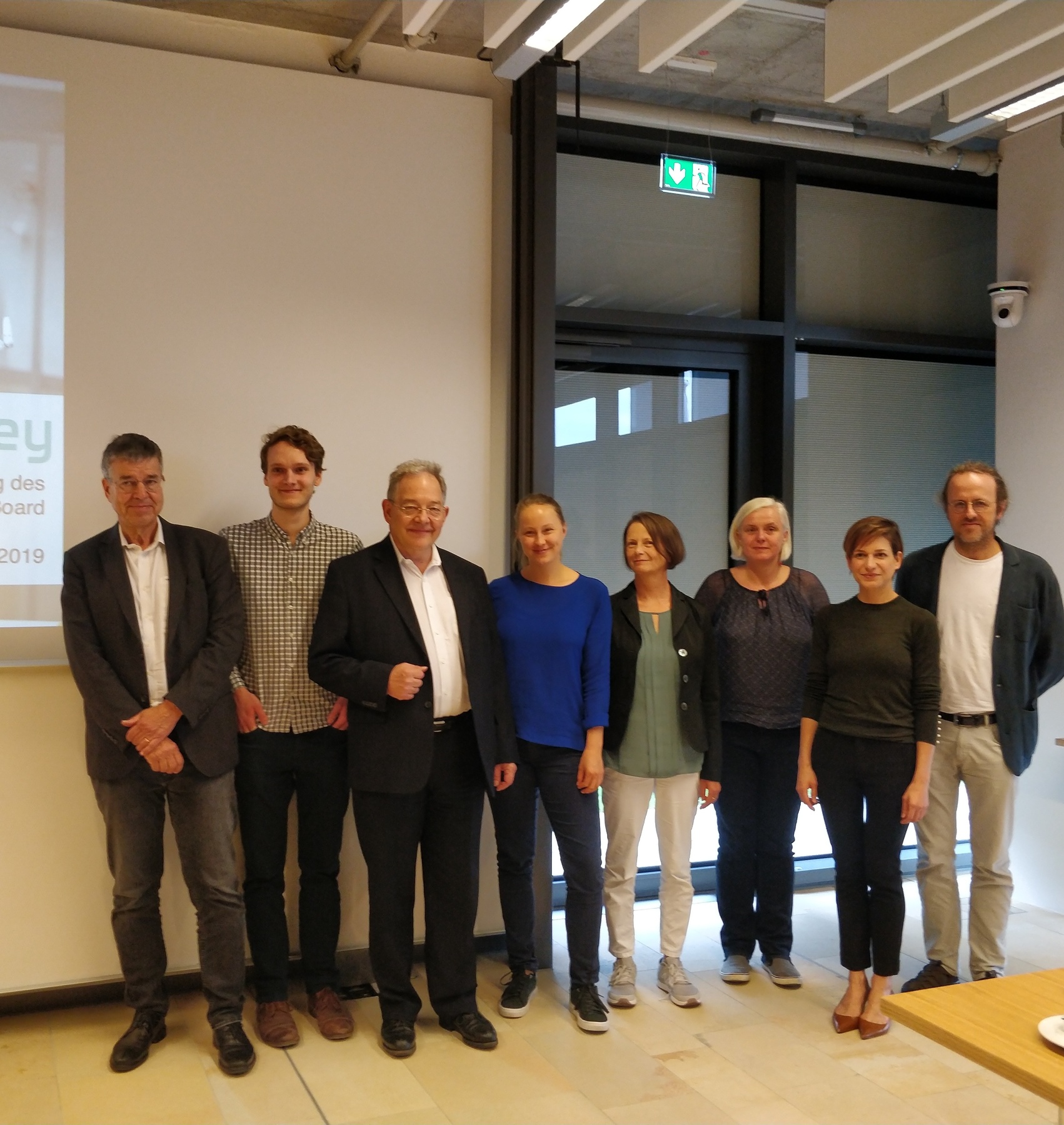
    The PAB is assigned the task of reviewing project proposals from Cyber Valley research groups prior to their approval by the Cyber Valley Research Fund Board (RFB). The members of the PAB have access to all funding applications and can thus see how the funds are going to be spent. Moreover, the PAB advises the RFB and can request further information, express concerns, and engage in debate. Its members were appointed by Baden-Württemberg’s science minister Theresia Bauer. They represent a broad spectrum of relevant disciplines and backgrounds.

    You can find the PAB’s mission statement, as well as a list of its members, on this page.

  • DFG continues funding of Tübingen research centre

    DFG continues funding of Tübingen research centre

    The goal of the Collaborative Research Centre is to uncover the principles of robust vision and to identify its neural basis in the mammalian brain. To this end, scientists from the University of Tübingen, the Max Planck Institute for Intelligent Systems, the Max Planck Institute for Biological Cybernetics and the LMU Munich and from various disciplines such as neuroscience, machine learning and computer vision are working closely together to investigate the differences between the biological visual system and current machine vision algorithms.

    Matthias Bethge, spokesperson for the research center, is very pleased that the research program will continue to receive funding. “We are making great progress in understanding biological vision and in the field of robust machine vision. This also opens the door to the development of more reliable AI applications,” he said.

    In the second funding period starting 2021, the German Research Foundation will fund 12 scientific projects, one infrastructure project and one transfer project with Zeiss Vision with total funding of over €9 million.

    Background

    Human visual perception is amazingly robust: Even in highly variable environments, we are able to make reliable inferences about the spatial arrangement of the world from limited visual information. To achieve this, our brain must perform complex computations. Artificial vision systems, in turn – as used, for example, in self-driving cars – are making steep progress in reproducing the visual skills of humans. The goal of this centre will be to better understand the principles and algorithms that enable robust visual inference both in humans and machines.

  • NeurIPS 2020

    NeurIPS 2020

    Monday, 7. December, 21:00-21:30 CET

    Katja Schwarz 

    Katja Schwarz is a PhD Student at Tuebingen University and scholar at the International Max Planck Research School (IMPRS) for Intelligent Systems (IS). She started her PhD in 2019 and is supervised by Prof. Andreas Geiger. Katja works at the intersection of Machine Learning, Deep Learning and Computer Vision. Currently, she is particularly interested in geometric scene understanding and 3D generative models.

    REGISTRATION

    Tuesday, 8. December, 21:00-21:30 CET

    Junhyung Park

    Junhyung Park has been a PhD student in the Empirical Inference Department at the Max Planck Institute for Intelligent Systems since November 2019. His work focuses primarily on reproducing kernel Hilbert space embeddings and causal inference. Outside work, he plays football and the piano, and also enjoys reading, traveling, and learning new languages.

    REGISTRATION

    Wednesday, 9. December, 21:00-21:30 CET

    Yiyi Liao

    Yiyi Liao is a postdoctoral researcher in the Autonomous Vision Group, which is affiliated with the University of Tübingen and the Max Planck Institute for Intelligent Systems. Her research interests include 3D scene understanding, reconstruction, and 3D-aware generative models.

    REGISTRATION

    Thursday, 10. December, 21:00-21:30 CET

    Fabian Sinz

    Fabian Sinz's research interests lie in the combination of machine learning and neuroscience. In 2018, he was appointed leader of the newly established independent Cyber Valley Neuronal Intelligence Research Group at the University of Tübingen. He is also currently an Adjunct Assistant Professor at the Baylor College of Medicine’s Center for Neuroscience and Artificial Intelligence in Houston, Texas.

    REGISTRATION

    Friday, 11. December, 21:00-21:30 CET

    Wieland Brendel 

    Wieland Brendel is a team lead at the University of Tübingen. His research focuses on robust and interpretable machine vision algorithms and the theory of representation learning. He studied theoretical physics and completed a PhD in computational neuroscience. Later, he switched to machine learning at the start of his postdoc. In addition to his position at the university, Wieland co-founded Layer7 AI in 2018, and was recently named one of Germany’s “Top 40 under 40” by Capital Magazin.

    REGISTRATION

  • AIxIA: AI Conference 2020

    AIxIA: AI Conference 2020

    This year’s conference will be held online and focusses on the application of Artificial Intelligence for the benefit of the environment!
    Climate Change is the biggest challenge of this century. We believe that Artificial Intelligence is a powerful technology that can contribute to a greener world, while at the same time driving economic growth for the benefit of humanity. For this we will present keynotes and talks that centre around this topic.

    The AIxIA keynotes, talks, discussions and state-of-the art use cases will cover two topics:

    AI & Industries

    From predicting malfunctions of machines and finding root causes to next-level process automation for production lines – AI technology has led to major improvements in manufacturing. Besides, we see that close human-robot collaboration is in advance. AI can reinforce the collaboration by “humanizing” the robot behavior. At the conference, we will look into how these innovations massively boost business success AND can have a positive environmental impact – the reduction of waste and energy usage are just two examples.
    Another aspect that will be covered is AI within the food industry. According to forecasts, humanity will need around 70 percent more food by 2050, than we produce today. AI solutions can help farmers to grow food more efficiently and at the same time in a more environmentally friendly way.


    AI & Sustainability

    Sustainability is a hot topic. An industry-wide shift is occurring which leads companies to include environmental sustainability goals in their corporate strategies. Companies must be aware of their footprint and what they can do to reduce it. The AI use cases presented in this session focus on these issues with a focus on energy, water, and resources.

    Find out more here: https://aixia.eu/

  • Cyber Valley Tech Clinic

    Cyber Valley Tech Clinic

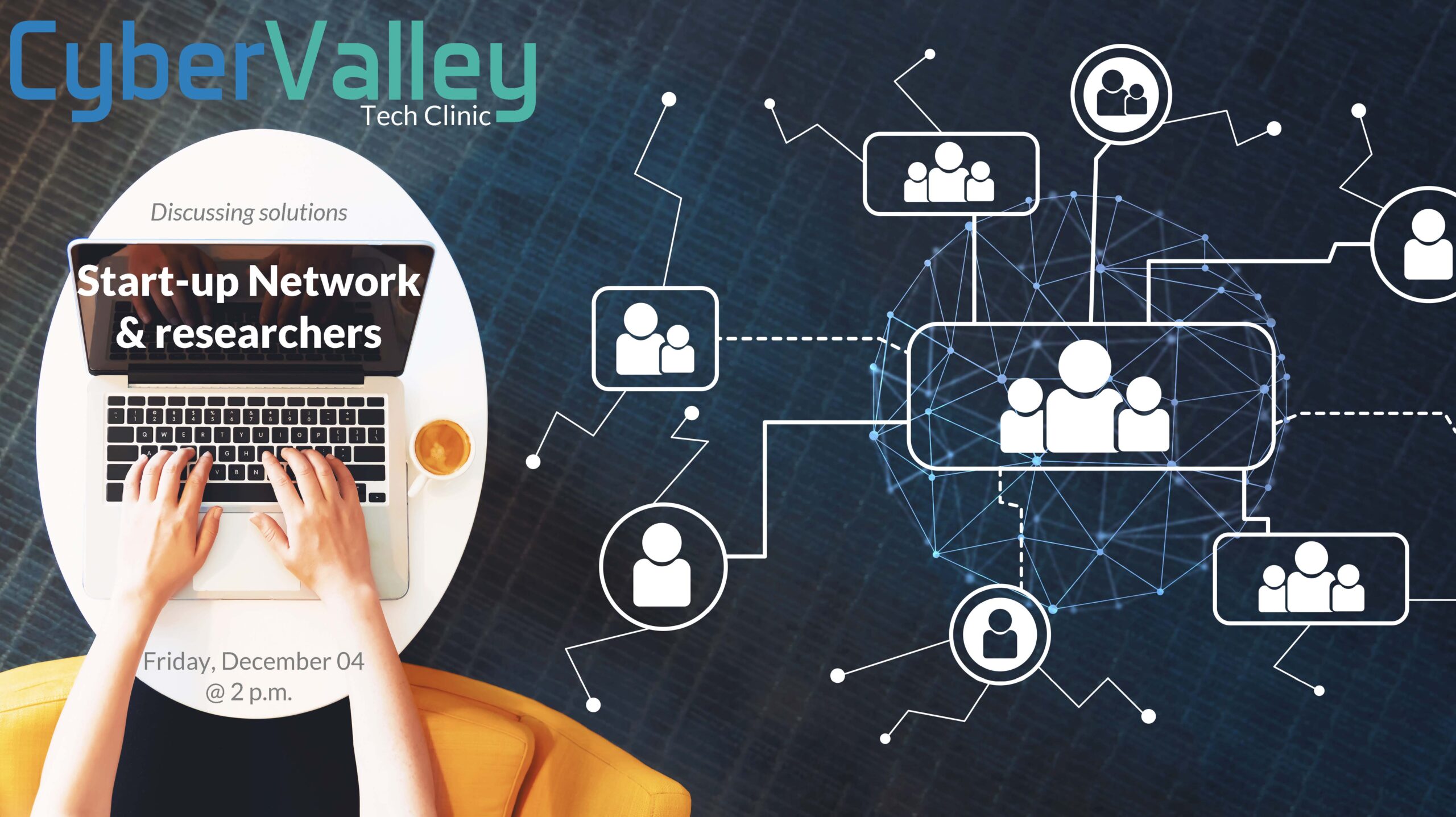
    On Friday, December 4th a computer vision problem regarding “6d Pose Estimation of Boxes and Trailers in Logistics” will be discussed. 

  • Representatives of the Swiss border cantons visit Cyber Valley

    Representatives of the Swiss border cantons visit Cyber Valley

    After working meetings with the state government, which emphasized the importance of cross-border cooperation in areas such as artificial intelligence and digitization, the delegation went on a virtual tour of Cyber Valley, which was hosted by Professor Bernhard Schölkopf, Director at the Max Planck Institute for Intelligent Systems (MPI-IS) and co-founder of the European Laboratory for Learning and Intelligent Systems (ELLIS). He was accompanied by Professor Detlef Günther, the Vice President of Research and Corporate Relations at ETH Zurich. Besides discussing MPI-IS and the Swiss ELLIS units, Schölkopf and Günther's presentations focused on the Center for Learning Systems, a joint doctoral program between the Max Planck Society and ETH Zurich.

    "Cooperation at the European level is essential to ensuring our long-term competitiveness," said Schölkopf. "Since 2015, we have engaged a strategic partnership between the Max Planck Society and ETH Zurich with the Max Planck ETH Center for Learning Systems, which has recently been further strengthened by joint appointments. With newly founded ELLIS units in Zurich and Lausanne, cooperation with Switzerland, plays a central role for us."

    Theresia Bauer, Minister of Science, Research and the Arts, attended the event, as did Manfred Lucha, Minister of Social Affairs and Integration, Gisela Erler, State Councillor for Civil Society and Citizen Participation, Dr. Paul Seger, Ambassador of Switzerland, and Ernst Steinmann, Consul General of the Swiss Confederation. Dr. Urs Hofmann, Cantonal Councillor of Aargau, Elisabeth Ackermann, President of the Canton of Basel-Stadt, Isaac Reber, Cantonal Councillor of Basel-Landschaft, Martin Kessler, President of the Canton of Schaffhausen, Fredy Fässler, Cantonal Councillor of St. Gallen, Walter Schönholzer, President of the Canton of Thurgau and Dr. Martin Neukom, Cantonal Councillor of Zurich were also part of the delegation.

    "The importance of cross-border cooperation between the State of Baden-Württemberg and the Swiss border cantons suddenly became clear to us once again in the wake of the COVID-19 pandemic. Constant cultivation of relations and ongoing dialogue are important prerequisites for this cooperation," said Dr. Urs Hofmann, member of the cantonal government, on behalf of the Swiss partners. "The Swiss border cantons are pleased that this exchange can be maintained and deepened again and again on occasions such as today and in the future – in the interests of the population, society and economy in our common border region.

  • Virtual AI Roadshow: USA – Baden-Württemberg – Canada

    Virtual AI Roadshow: USA – Baden-Württemberg – Canada

    Join the virtual AI Roadshow, starting on November 17 – November 19, 2020 and discuss with experts from Pittsburgh/USA as well as Ontario and Québec/Canada. What to expect: Three days of networking, interesting info sessions, and keynotes.

    Which Topics will be discussed ?

    • AI and Ethics
    • AI and Autonomous Driving
    • AI and Healthcare
    • AI and Robotics

    Why participate?

    • As a company – get information on how to implement AI solutions in your company and find qualified contacts during effective one-to one meetings
    • As a university – find new international counterparts and to discuss new technology and innovative solutions
    • As a start-up – pitch your idea and business solution

    How can you benefit from this event?

    • Publish and showcase your products, projects, services or business needs or research results to event participants
    • Initiate and arrange promising pre-scheduled 1:1 meetings at the event
    • Generate fresh leads and meet new contacts in a time and cost-efficient way
    • Stay one step ahead of your competitors by being seen and visibly present at the event

    Learn more about the program and the speakers of the event here.