The Cyber Valley initiative has launched the Cyber Valley Investor Network. The Network makes a significant contribution to making Europe’s largest research consortium in the field of artificial intelligence (AI) a breeding ground for successful AI start-ups. The initial five network members are well-known venture capital (VC) firms: Atlantic Labs (Berlin), IT-Farm (Tokyo/Palo Alto), BMW i Ventures (Mountain View/Munich), Grazia Equity (Stuttgart), and Gründermotor (Stuttgart). They are committed to providing mentorship to scientists within the Cyber Valley ecosystem by helping them turn research and business ideas into thriving companies. The VC firms’ guidance will serve as a springboard for future entrepreneurs, creating the AI jobs of the future. For the state of Baden-Württemberg, one of the core Cyber Valley partners, transferring knowledge into successful businesses is a top priority.
“Cyber Valley has always aimed to bring science and industry together to develop innovative solutions through artificial intelligence,” said Baden-Württemberg’s Science Minister Theresia Bauer. “With the Cyber Valley Investor Network, our start-up scene and its young talent now have even greater support when it comes to commercializing their AI applications. This is where excellent research meets experienced investors: with both sides helping each other, the Cyber Valley ecosystem can reach its full potential. Once again, Cyber Valley has proven that it is not only a hot spot for cutting-edge research, but also an exciting place for forward-thinking investors.”
The Cyber Valley ecosystem provides optimal conditions for successful start-ups: First, the region boasts the highest density of world-class AI researchers in Germany. Cyber Valley faculty includes more than 50 internationally renowned scientists in the fields of machine learning, computer vision, haptics, and robotics, working at the leading edge of science. Second, the International Max Planck Research School for Intelligent Systems (IMPRS-IS), an interdisciplinary doctoral program, is one of the key elements of the Cyber Valley research consortium. IMPRS-IS provides first-class education to the world’s top young researchers in the broad field of intelligent systems, preparing them for careers in academia and industry. Third, the strong economic infrastructure of the Stuttgart-Tübingen region provides an ideal breeding ground for new ventures.
“The primary goal of Cyber Valley has always been to create the jobs of the future right here in the Stuttgart-Tübingen region,” said Michael J. Black, Cyber Valley Spokesperson and Director of the Perceiving Systems Department at the Max Planck Institute for Intelligent Systems. “The Investor Network will be a driving force in making this goal a reality. With the launch of the Cyber Valley Start-up Network in 2019, we created a platform for networking and scientific exchange among some the most promising AI companies in the region. With the Investor Network, we are taking the next step: some of the best local and international VC investors are providing our scientists with professional advice. Potential young entrepreneurs need expert guidance to transform an idea into a successful business. And they need financial support to grow.”
All five initial members of the Cyber Valley Investor Network have extensive experience advising and funding successful start-ups. Like the scientists in the Cyber Valley ecosystem, these VC firms are active on a global scale. Having both local and global investors reflects Cyber Valley’s roots as well as the initiative’s international visibility.
Venture capital firms support aspiring entrepreneurs with a long-term perspective on sustainable business development. Especially in the early developmental stages of start-ups, the members of the Cyber Valley Investor Network will provide guidance based on their expertise. They will share their knowledge about successfully kickstarting a company at informal and formal gatherings, such as workshops, tutorials and talks.
“We are very happy to welcome Atlantic Labs, IT-Farm, BMW i Ventures, Grazia Equity and Gründermotor into the Cyber Valley ecosystem. This is just the first step for the Investor Network. We are looking forward to expanding this platform in the future”, said Black.
Eigentlich wäre Potsdam dieses Jahr Schauplatz eines Bürgerfestes geworden, um das Jubiläum der deutschen Wiedervereinigung zu feiern. Aufgrund der COVID-19-Pandemie verwandelt sich ein Teil der Innenstadt nun stattdessen in eine weiträumige Ausstellung unter freiem Himmel. Die Partner der Bundesländer, aus den Verfassungsorganen und weitere stellen sich jeweils auf 30 Quadratmetern im innerstädtischen Raum dar – entweder mit Installationen, anderen Aufbauten oder einem sogenannten City-Cube, einem rundum verglasten Container.
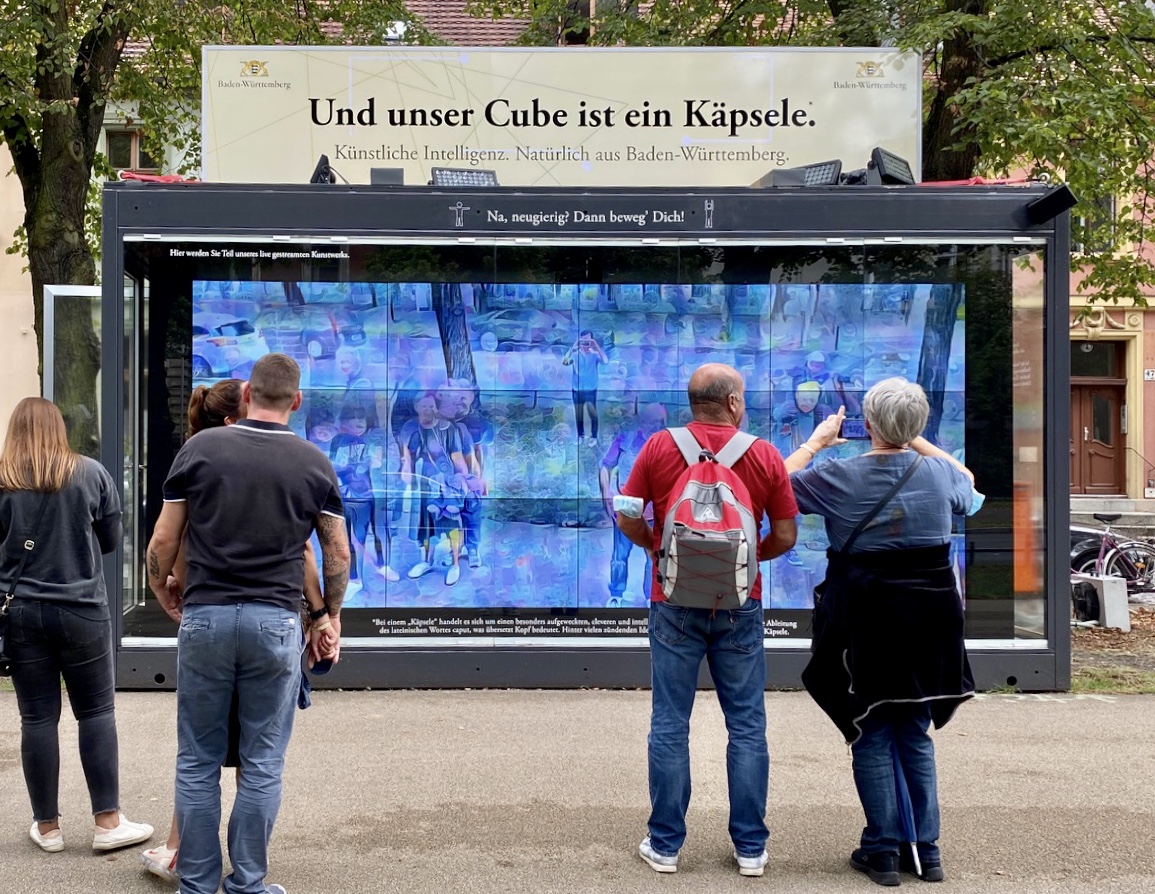
Der Cube von Baden-Württemberg empfängt die Besucherinnen und Besucher mit der Kunstinstallation Grenzauflösung der Gruppe Lunar Ring, dem Künstlerkollektiv des Tübinger Start-ups Colugo. Auf einer großen Videowand auf der Vorderseite des Cube wird der kreative Prozess neuronaler Netzwerke erfahrbar. KI interpretiert das Geschehen vor dem Kubus in Echtzeit künstlerisch neu und ermöglicht es den Betrachterinnen und Betrachtern, sich aktiv einzubringen. Die drei anderen Seiten des Kubus liefern mit ihren einordnenden Texte Hintergrundinformationen rund um KI und die Attraktivität Baden-Württembergs als KI-Hotspot.
Zusätzlich gibt es auf der Informationsplattform kreative-ki.de die Möglichkeit, die Interaktion und die Interpretation der KI auch bundesweit im Livestream zu verfolgen. Die Webseite beleuchtet zudem gesellschaftliche und wirtschaftliche Auswirkungen von KI und wird in Kooperation mit der Cyber Valley-Initiative inhaltlich gestaltet. Die Auseinandersetzung mit den gesellschaftlichen Auswirkungen, die durch intelligente Systeme entstehen, sind ein zentrales Anliegen der Wissenschaftlerinnen und Wissenschaftler der Cyber Valley-Initiative. Das Cyber Valley-Start-up Colugo möchte mit seinen Kunstprojekten den Dialog mit der Gesellschaft zu Themen rund um KI erleichtern.
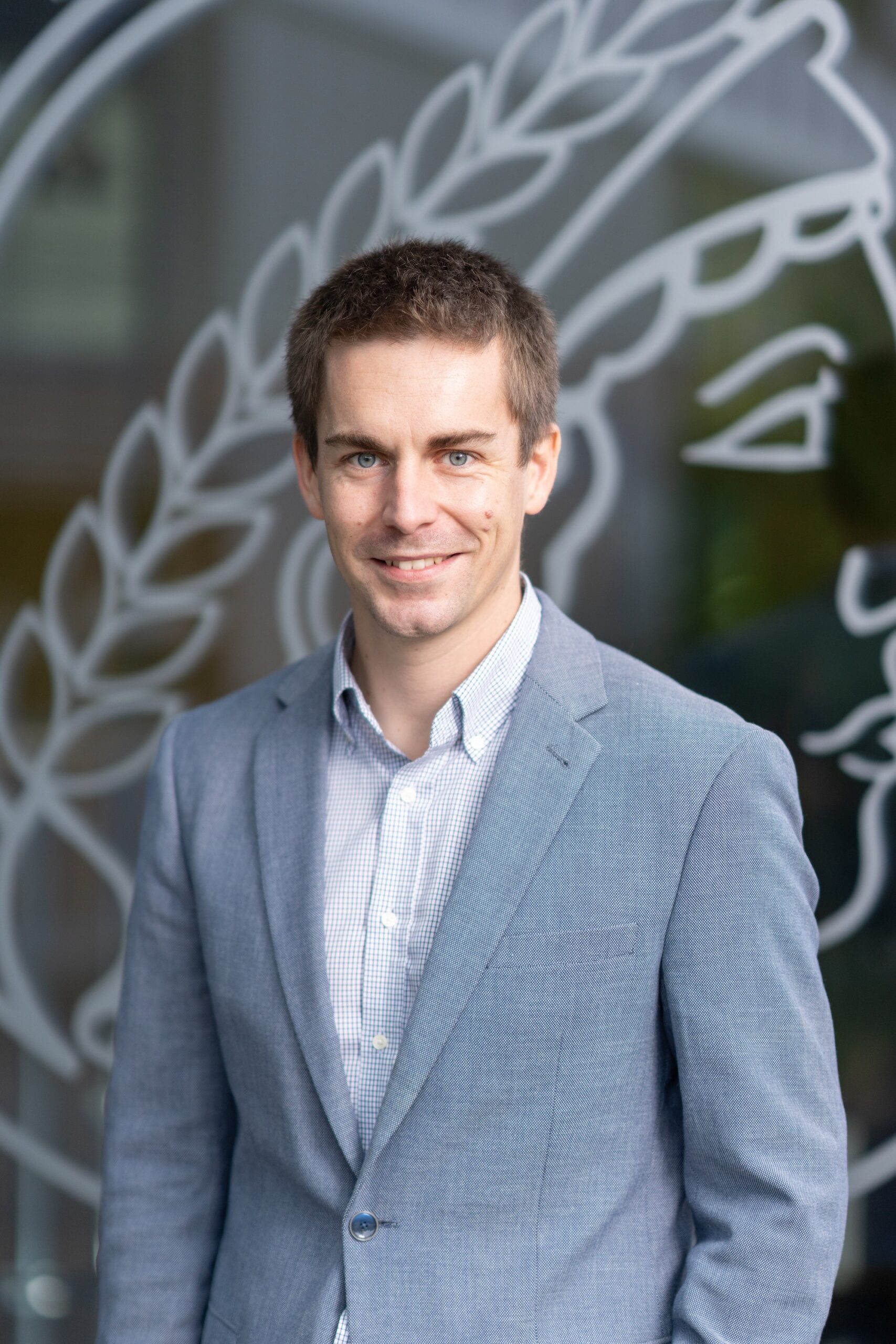
„Ohne unser Interesse für die ästhetischen Aspekte von KI hätten wir manche Geschäftslösung nicht entdeckt. Die neuen Ansätze in den Unternehmen inspirieren uns wiederum in der Kunst. Es ist eine wunderbare Symbiose, die den komplexen KI-Begriff für den Menschen erleb- und begreifbar macht“, sagt Colugo-Geschäftsführer Dr. Johannes Stelzer.
Stuttgart – The Max Planck Society has appointed Christoph Keplinger as a director at the Stuttgart location of the Max Planck Institute for Intelligent Systems (MPI-IS). He will lead the newly established “Robotic Materials” department to pursue research on soft robotics, functional polymers and energy capture – three interrelated areas that are critical to robotic materials, a new class of material systems that tightly integrate actuation, sensing and even computation to provide physical building blocks for the intelligent systems of the future. Keplinger joins MPI-IS from the University of Colorado Boulder in the US, where he was an Assistant Professor of Mechanical Engineering and a Fellow of the Materials Science and Engineering Program, and where he held an endowed appointment serving as Mollenkopf Faculty Fellow. He earned his Ph.D. (Dr. techn.) in physics from the Johannes Kepler University Linz in Austria, and he did his postdoctoral research at Harvard University in the US. Outside academia, he co-founded the start-up Artimus Robotics in 2018 and currently serves as its Chief Scientist.
In parallel to receiving his offer to join the Max Planck Society as a director, Dr. Keplinger was also selected for a 2021 Alexander von Humboldt Professorship at TU Dresden. He declined this prestigious appointment during the negotiations process in order to focus on his activities at MPI-IS.
“I feel honored that the Max Planck Society puts its trust in me,” says Dr. Keplinger. “I am thrilled about the prospect of true academic freedom, curiosity-driven research and the generous amount of long-term funding that comes with being a director at a Max Planck Institute. Clearly, this is a once-in-a-lifetime professional opportunity that will enable me to pursue a bold scientific agenda and to produce a higher level of creative research output than in any other institution that I am aware of. Here, I will be able to establish a large, world-leading research group in the field of robotic materials that can simultaneously address questions in the underlying materials science using tools from physics or chemistry, with lots of opportunities to collaborate with other groups on the Stuttgart campus, as well as work on new designs of robots that are based on intelligent materials systems, and that can tap into the rapidly growing toolkit from the areas of learning and perception, emerging from the Tübingen campus. Thus, my team and I can go from inventing new materials to testing these in complex robotic systems that make use of the latest discoveries in machine learning in an extremely short period of time, thereby creating a cutting-edge research ecosystem that will rapidly advance the state of the art.”
“I truly couldn’t be happier about the fact that Christoph Keplinger has joined our Board of Directors,” says Katherine J. Kuchenbecker, who heads the Haptic Intelligence Department and is currently Managing Director of MPI-IS. “Christoph started his first faculty position only five years ago but shows remarkable maturity as a scientist, a mentor, and a leader. I can’t wait to see the fundamental insights and clever innovations that he and his team create here in Stuttgart in the coming decades.”
“Prof. Keplinger is a remarkably creative and well-rounded scientist and a demonstrated leader in the robotic materials field,” says Metin Sitti, who heads the Physical Intelligence Department at the MPI-IS. “He has achieved international distinction and a reputation for scholarly excellence already very early in his independent career, with multiple highly influential publications in key areas of robotics and materials science that are critical for the future of intelligent systems.”
Challenging the status quo of how we build robots
Robots today rely on rigid components and electric motors based on metal and magnets, making them heavy, unsafe near humans, expensive and ill-suited for unpredictable environments. Nature, in contrast, makes extensive use of soft materials, such as muscle and skin, and has produced organisms that drastically outperform robots in terms of agility, dexterity, and adaptability. Christoph Keplinger’s research aims to fundamentally challenge current limitations of robotic hardware, using an interdisciplinary approach that synergizes concepts from soft matter physics and chemistry with advanced engineering technologies to introduce robotic materials that enable creation of intelligent machines that mimic the astonishing capabilities of organisms in nature.
The Robotic Materials Department at the Max Planck Institute for Intelligent Systems in Stuttgart, Germany.
For Keplinger’s first research focus of soft robotics, one central theme of research is the development of new classes of actuators – a key component of all robotic systems – that replicate the sweeping success of biological muscle, a masterpiece of evolution featuring astonishing all-around actuation performance, the ability to self-heal after damage, and seamless integration with distributed sensing. Areas of application for soft robotics will span from industrial automation, over medical and wearable robotics all the way to new types of human-machine interfaces. A second theme of research is functional polymers with unusual combinations of properties, such as electrical conductivity paired with stretchability, transparency, biocompatibility and the ability to self-heal from mechanical and electrical damage – key features for future biologically inspired robotic systems. A third theme of research is the discovery of new energy capture principles that can provide power to intelligent autonomous systems, as well as – on larger scales – enable sustainable solutions for the use of waste heat from industrial processes or the use of untapped sources of renewable energy, such as ocean waves.
“Looking at my future career here in Stuttgart, my long-term goal is to continuously push boundaries and explore new frontiers, and in particular, to completely transform the capabilities of humanity to build complex intelligent machines that rival or exceed the capabilities of organisms found in nature. I personally draw a lot of energy and excitement from envisioning the practical applications that will be triggered by the creation of new knowledge in my lab. In particular, my research program has impact on multiple areas that are directly tied to human quality of life, including aging, where wearable soft robotic devices will allow older people to maintain mobility and autonomy for longer parts of their lives, and also health, where my research will have applications in medical robotics. Our research will also make it possible to automate household chores and enable the creation of household robots based on inexpensive and adaptive robotic materials. Another important aspect we will work on is the development of intelligent material systems for use in energy, where new energy-capture principles will enable the economically viable use of untapped sources of renewable energy. I am mentioning the exciting practical applications that will be enabled by my research because I am fully aware of the responsibility that comes with having control over a large amount of public funding. As a research leader, I will continuously strive to give back to society by creating knowledge, by stimulating prosperity through innovation and creation of startup companies, by inspiring and mentoring the next generation of emerging research leaders, and by engaging the public into the celebration of scientific progress through outreach activities. I hope that many young people from many different backgrounds will join me and my team on this exciting journey and help shape the future of robotics by introducing new concepts inspired by nature.”
With the focus on robotics materials, Christoph Keplinger perfectly complements and extends the spectrum of research at MPI-IS. With campuses in Tübingen and Stuttgart, MPI-IS combines theory, software, and hardware expertise in a single interdisciplinary center. The Stuttgart site in particular concentrates on research on physically intelligent systems such as humans, robots, and animals. The “Haptic Intelligence” department led by Katherine J. Kuchenbecker deals with robot and human interaction through the sense of touch. The “Physical Intelligence” department led by Metin Sitti aims to understand the principles of design, locomotion, control, perception, and learning of small-scale mobile robots made of smart and soft materials. These two existing departments in Stuttgart are complemented by research groups that focus on biomechanics and neurocontrol of legged robots; the interaction of optical, electric, and magnetic fields with matter at small length scales; and on research at the intersection of biology and robotics, exploring the behavioral and morphological adaptations of natural systems to achieve robust locomotion.
The Stuttgart area is a great fit for Christoph Keplinger to advance his career. Several research centers at the University of Stuttgart and the two Fraunhofer Institutes IPA and IAO are in close proximity to the Stuttgart site of MPI-IS. These academic institutions are surrounded by several of the world’s top industry players, creating Europe’s largest ecosystem in the field of artificial intelligence (AI): Cyber Valley, founded in 2016, with partners from politics, science, business and society. This partnership strengthens research and teaching in the fields of machine learning, computer vision and robotics as well as the links between these fields. “Yes, that’s one thing I would like to help strengthen: Cyber Valley’s efforts in robotics. There is already a strong focus on computer science and AI, and I would like to significantly expand and strengthen the area of material science and robotics. I will continuously strive to promote the close integration of basic research and the development of new applications,” Keplinger says.
About
Christoph Keplinger is Austrian and 36 years old. Before joining the Max Planck Society as a director at the Max Planck Institute for Intelligent Systems (MPI-IS), he was an Assistant Professor of Mechanical Engineering and a Fellow of the Materials Science and Engineering Program at the University of Colorado Boulder in the US, where he also held an endowed appointment serving as Mollenkopf Faculty Fellow. Before joining CU Boulder, he did his postdoctoral research in mechanics and chemistry at Harvard University in the US, and he earned his Ph.D. in physics from the Johannes Kepler University Linz in Austria. His research has been published in top journals including Science, Science Robotics, PNAS, Advanced Materials and Nature Chemistry, as well as highlighted in popular outlets such as National Geographic and on TED.com.
In November 2018, he co-founded Artimus Robotics, a spin-out commercializing the HASEL artificial muscle technology invented in the Keplinger Research Group at CU Boulder. He has served as Chief Scientist of Artimus since its founding.
Dr. Keplinger has already won many awards for his outstanding research. In 2019, he received the Young Scientist Award at the International Conference on Active Materials and Soft Mechatronics, AMSM, for “very significant contributions to the field of soft sensors, actuators, and robotics”. In 2017, he received the Packard Fellowship for Science and Engineering, one of the most prestigious awards given to early-career scientists; this award provides funding over 5 years “to think big and look at complex issues with a fresh perspective”. In 2013, he received the EAPromising European Researcher Award from the European Scientific Network for Artificial Muscles, and in 2012, he received both the Loschmidt Award from the Chemical-Physical Society of Austria as well as the Erwin Wenzl Award for his outstanding dissertation; in 2011 he received the Award of Excellence from the Austrian Federal Ministry for Science and Research.
Tübingen – On August 3, the Max Planck Institute for Intelligent Systems (MPI-IS) in Tübingen, Germany, will launch the first global real-world robotics manipulation challenge in the cloud. The robotics challenge aims to democratize research by giving researchers around the globe access to advanced robotic systems. Until now, this access has generally been limited to top academic and industrial labs in the US, Europe, and Japan.
“We hope that this competition will lead to a more inclusive robotic learning community, foster exchange across academic and industry labs, and spark cooperation,” says Stefan Bauer, a research group leader in the Empirical Inference Department at the MPI-IS. “But we also want to create a benchmark to know what algorithm works best. We can collect much more data than what is possible in individual labs, as we have standardized tasks on a standardized platform.” Manuel Wüthrich, who is also part of the challenge’s organizing team, adds: “Since the robotic systems run around the clock, they generate enough data to actually use deep learning.”
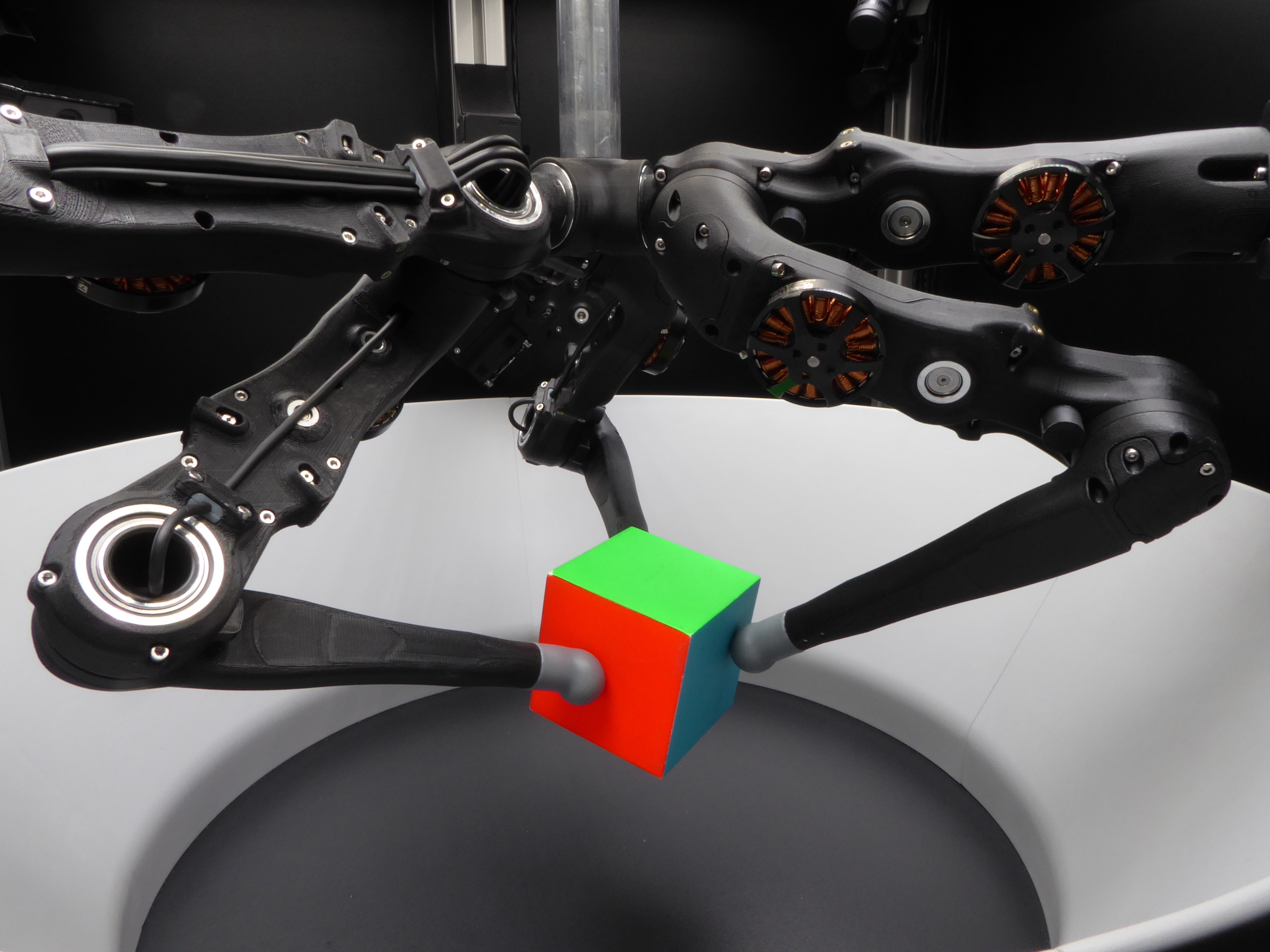
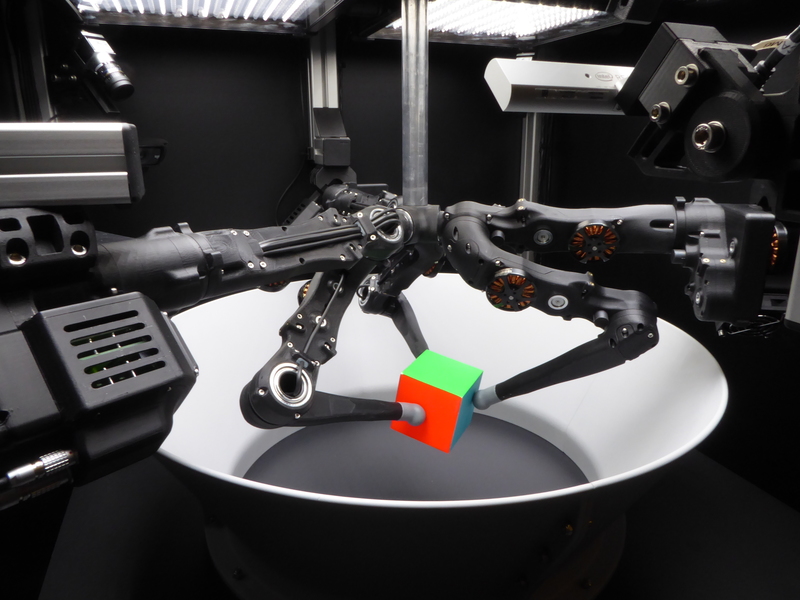
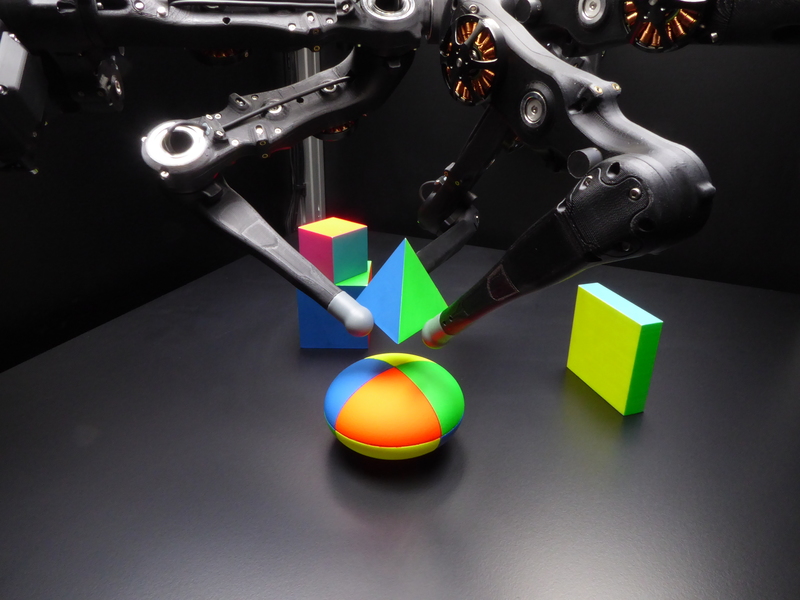
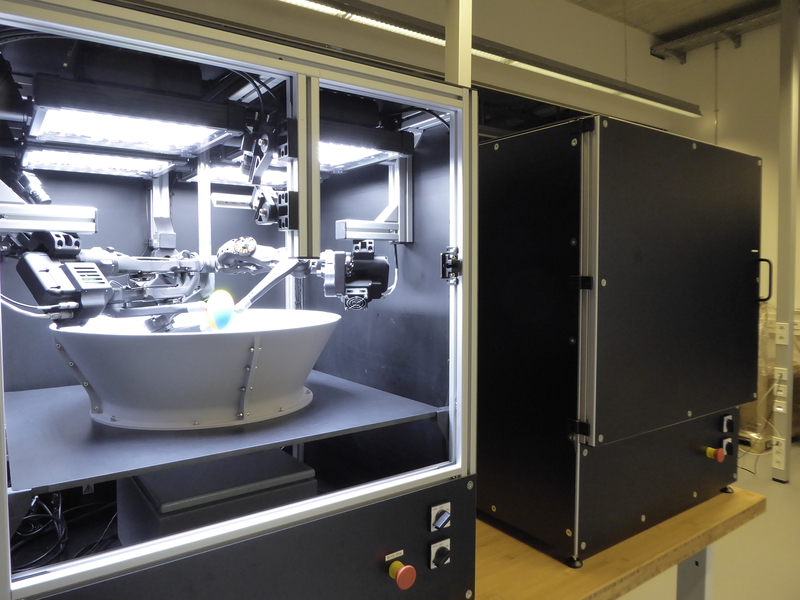
The robotic platform resembles a hand with three fingers. It is surrounded by three cameras that provide images to measure the results. Several identical robotic platforms have been set up around the robotic lab at the MPI-IS in Tübingen to run the learning algorithms the participating teams submit. Participants can execute their algorithms remotely thanks to a convenient and simple interface. Each team will have a budget of more than 100 real robot hours on one of the high-performing robotic platforms, without any restrictions on the algorithms they execute.
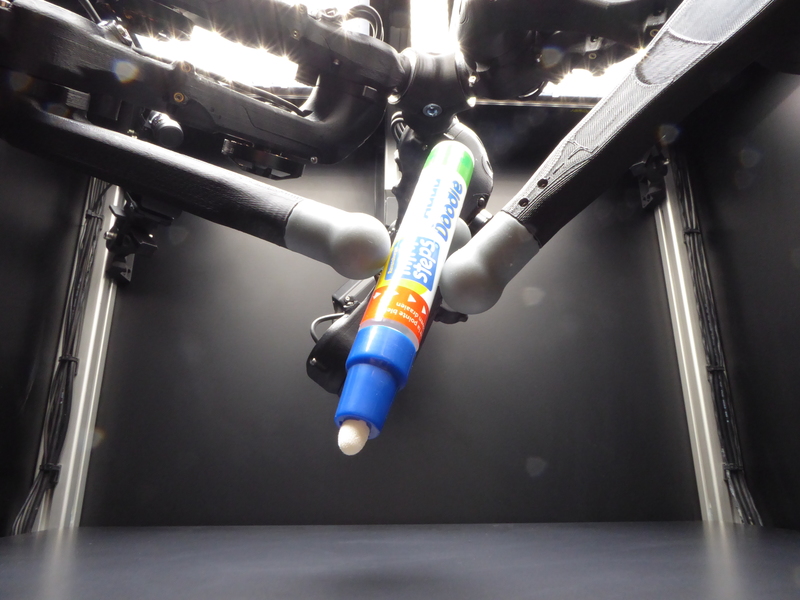
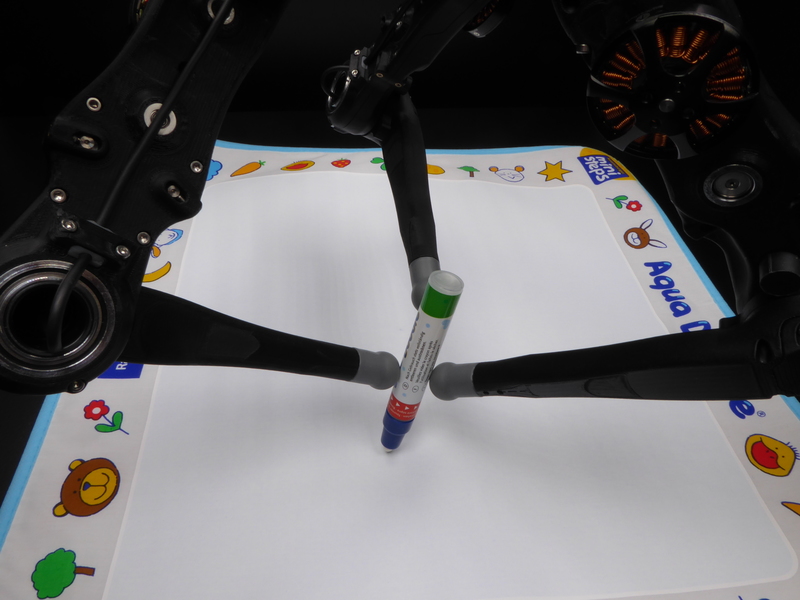
The challenge comprises three stages. First, participants familiarize themselves with the overall setup and aim to solve a task in a physical simulator. Next, they solve simple real-world tasks: specifically, they are required to train the robot to pick up an object and perform in-hand manipulation with a cube. In the final stage, the robot has to pick up a pen and write a short phrase like “I won!”.
To achieve these tasks, participants need to design advanced control or reinforcement learning algorithms. “We want to see the extent to which the teams are able to tune their algorithms to fulfill these very difficult tasks. Using a learning-based algorithm for writing with a pen can probably be considered a breakthrough in robotic manipulation,” says Wüthrich.
“For the first time, we can benchmark all these algorithms on real robots, making them comparable,” says Bauer. “Before, this kind of benchmarking was done mainly in simulation. There is no noise or friction, and contacts are simplified, which makes very impressive results in simulation possible. However, these insights do not typically translate to real robots, in particular for tasks that involve contact and complex interactions with the environment.” Wüthrich adds: “Now, a relatively large number of people who previously didn’t have access to such an advanced robotic platform are able to participate. While some top-notch universities may have extraordinarily good and advanced robots, for most researchers, it is very difficult to gain access to real robotic systems. It is very costly in terms of time and money. Our goal is thus to give a greater number of people access and an opportunity to achieve impressive manipulation results.”
The Real Robotic Challenge will run for 16 weeks. Ultimately, it will help advance the state of the art in dexterous manipulation, which has myriad applications. These include, for instance, construction, cleaning, patient and elder care, agriculture, and product assembly.
Professor Dayan, you came to the Max Planck Institute for Biological Cybernetics and the University of Tübingen about a year and a half ago. How’s life in Tübingen?
Coming from London, it was obviously a big move. Before I came here, I was actually in San Francisco on sabbatical. Tübingen is lovely. I haven’t got a car, so walking up and down the hills takes a lot of effort. I hope I am a little bit fitter than I was before. In terms of its strong academic and intellectual environment, the University of Tübingen is fantastic. My wife works both at the university and the MPI, as well, and we have enjoyed our time here. One of the big differences coming from a big place to a smaller town is that you cannot even get on the bus without meeting someone you know – be it a student or a colleague. Of course, during the coronavirus pandemic, we have been very lucky to be in Germany because I think the country has handled the situation very well.
How has your work been affected by the COVID-19 pandemic?
Since my work is mainly theoretical and most of the experiments we do can be done online, these aspects of my work have not been dramatically impacted. Of course, not being able to meet in person has affected people in the group in various ways. Luckily, we are not a very big institute and we were still able to conduct experiments on site, provided that we practiced social distancing. On the whole, we have been very successful in keeping the disease away, which testifies to the hard work of everyone involved. At the beginning of the pandemic there were lots of uncertainties. But now, since the situation has stabilized, people are anxious to get back to work at the institute.
How have you settled in to your new working environment at the University of Tübingen and the Max Planck Institute for Biological Cybernetics?
In regards to my work at Max Planck, there are lots of change processes evolving over a period of time. We are moving from the institute’s second generation to the third generation. Building the team in my lab in the Computational Neuoscience department and slightly re-focusing the things that I’m working on has been great.
“We are trying to build an integrated PhD program”
And what are your main projects at the University of Tübingen?
At the university, one main effort has been the International Max Planck Research School (IMPRS), where we successfully applied for new funding together with Professors Cornelius Schwarz, Marc Himmelbach and the GTC (Graduate Training Centre of Neuroscience). We are trying to build an integrated PhD program, which can recruit students with bachelor’s degrees and ultimately lead to a PhD. This is not a common German or Bologna model. It’s been interesting to work in very close cooperation with the university and trying to generate a program that meets the needs of both students and research institutions, and which is also consistent with the principles of excellence that were set up by the GTC, and the strictures of German regulations. The first cohort will start in the autumn.
In terms of my Humboldt chair – that work has not fully started yet because it was meant to begin around the time the pandemic began. It is very hard to recruit people when you cannot meet them in person – especially since some of them would be coming from abroad. Nevertheless, the university, the President’s office and the whole administration have been incredibly supportive. I’m really looking forward to building those Humboldt groups once the impact of the virus decreases.
Your research focuses on decision-making processes in the brain, the role of neuromodulators – chemical substances that influence the functioning of the neural system – as well as neuronal malfunctions on psychiatric diseases. You are also regarded as a pioneer in the field of artificial intelligence (AI). Why did you choose these fields? What inspired you to go in this direction with your research?
When I was an undergraduate, I was actually a mathematician. However, I had already been interested in the early days of home computers at the challenges of developing systems that could simulate intelligence. When I was just finishing my undergraduate studies, a very influential book was published, called “Parallel Distributed Processing” by David Rumelhart and Jay McClelland. I was very lucky to grow up as a graduate student around that time. It was one of these epochal changes in thinking about both neuroscience and neural networks. Then I met some of the people who were involved in that work and I did my PhD at what we would now see as the computational neuroscience interface between biology, psychology and AI. I became interested in animal behavior and the ways we and other creatures make good and bad decisions and choices. When I started my postdoc, I was much more directly associated with neuroscience. Decision-making is one of few areas in neuroscience which we can tie together different levels of analysis: addressing the computational or perhaps ethological goals of choosing, the algorithms or psychological processes involved, and then the neural substrates. AI is mostly interested in the first two of these – and there are rich synergies with natural systems.
“To make good decisions, you have to be able to make good predictions”
Lately, you have also been looking at bad decisions…
After about 20 years of looking at good quality decision-making, it seemed like a good time to start thinking about what happens when people, other animals and machines make decisions that are sub-optimal, from either a subjective or objective perspective. That’s what got me thinking about psychiatry. This partly coincided with the fact that people I was working with in London at that time were actively studying neurological and psychiatric disease. And it coincided with the observation made by many psychiatrists that the tests and analyses that are available are insufficiently predictive in terms of prognosis, or the choice, or optimization of treatment, and are often not strongly based on the sort of multi-level analysis we were just talking about. Of course, not everything in psychiatry comes down to unfortunate decisions – but we are starting there.
So, what’s the common thread in your research? The connection between the ability to make predictions and decision-making?
Coarsely speaking: to make good decisions, you have to be able to make good predictions. You need to predict the effect of your decisions – not only in the short term but also in the long term. So, predictions are a central part of how you go about your decision-making. Another aspect of this is representation, the way the brain encapsulates those aspects of the external and internal worlds in the conjoint activity of populations of neurons, and that is intimately involved in how we generalize from one situation to another.
“Incredible concentration of people and collaborative energy”
How is this field of research connected to the research in the Cyber Valley ecosystem?
The Cyber Valley ecosystem has a lot of people interested in exactly this boundary between different aspects of natural intelligence and artificial intelligence. There are too many to name!
What makes the Cyber Valley ecosystem so special?
The incredible concentration of people and the collaborative energy is what makes the Max Planck Institutes and the institutions around our campus and the university such excellent places. Hats off to the mothers and fathers of this success! Another good example is the IMPRS, which has long been a critical component of interaction between the institute and the university. We have this fantastic partnership. At the same time, Tübingen has really invested in the field of neuroscience. That makes for a perfect environment for our work. The people you directly interact with are most important. Of course, it takes a while to build up collaborations and contacts. We are recruiting new groups that will have a big impact. The first group of recruits at the Max Planck Institute for Biological Cybernetics has already brought in fantastic skills and energy.
The term artificial intelligence is still quite abstract for most people outside the world of computer science. How would you describe it?
Like many words or concepts repeated too frequently, the meaning of AI is perhaps in danger of leeching out. On one hand, there are behaviors in which humans engage that seem to require flexible problem solving, exploiting past information and previously acquired skills in an adaptive manner. AI aspires to port this capacity into computers and robots and to enhance it dramatically, since there’s no obvious sense in which humans are the pinnacle of intelligence, any more than we are, for instance, the pinnacle of arithmetical calculators. On another hand, there are behaviors such as running gracefully over rough terrain, that we find simple – perhaps provided we don’t think about them too hard. AI would also like these to be accomplished by artificial systems – even though this is probably a different sort of capacity and certainly engages partly different neural systems. In both cases, AI will generate a new set of tools that enable us or help us to do things that we could not do or automate before.
What could be an example for an area in everyday life where big innovations can be achieved with AI?
I’m a basic researcher, so I’ll give you my opinion as a regular person rather than as a professional. One example that seems clear to me is automated mobility – self-driving cars for example, the bailiwick of Cyber Valley’s Professor Andreas Geiger. My children have held off learning to drive – so they are hoping for expeditious progress!
The Cyber Valley ecosystem is one such powerful AI hub. Different universities and university hospitals, research institutes and industry are working closely together in an integrated approach. All partners have contributed to integrating this thriving research center into a globally recognised European network, the European Laboratory for Learning and Intelligent Systems, also known as Ellis.
Bernhard Schölkopf, Director of the Empirical Inference Department at the Max Planck Institute for Intelligent Systems, is the co-founder of Cyber Valley and of the Ellis Society. He held a keynote speech at an online event hosted by the Representation of the State of Baden-Württemberg to the European Union in Brussels. The event is among the first held after Germany took on the EU's rotating six-month presidency on July 1st. The panelists who contributed to the “No one size fits all: Artificial Intelligence as Key Technology for Personalised Medicine” event discussed the various interfaces between AI and medicine, the cooperation between science and industry as well as the future funding instruments for health and AI planned by the European Commission. Schölkopf particularly stressed the importance of creating an ideal research environment to help keep and attract the best AI talents from all over the world.
The event was moderated by Dr. Julia Stamm, Founder and Director of Berlin based Science Leads. She was also joined by
Bodo Lehmann, Head of the Representation of the State of Baden-Württemberg to the European Union
Theresia Bauer, Minister of Science, Research and Arts of the State of Baden-Württemberg,
Dr. Karim Berkouk, Deputy Head of Unit Combatting Diseases, DG Research and Innovation, European Commission
Dr. Nuria Oliver, Chief Data Scientist, Data-Pop Alliance, Member of the Board of ELLIS Society (European Laboratory for Learning and Intelligent Systems) and ELLIS Unit Alicante
Dr. Oliver Stegle, Head of Division, Computational Genomics and Systems Genetics, German Cancer Research Center Heidelberg and European Molecular Biology Laboratory Heidelberg
Artificial intelligence is one of the technologies that are key to Europe’s future. The areas of application are manifold, but not yet fully anchored in society. In the field of healthcare, the crucial role that data collection and analysis can play in the treatment of diseases has already been recognised. Personalised medicine is one out of many key applications of this modern data-driven approach to healthcare. Cross-disciplinary collaboration and a strong European network of AI hubs are needed to lever the full potential of AI.
With the Cyber Valley, Baden-Württemberg has created a powerful hub for AI. Different universities and university hospitals, research institutes and industry are working closely together in an integrated approach, having established a globally recognised European network.
We will discuss with our distinguished panellists the interfaces between AI and medicine, the cooperation between science and industry as well as the future funding instruments for health and AI planned by the European Commission.
Programme
01:30 p.m.
Welcome
Bodo Lehmann, Head of the Representation of the State of Baden-Württemberg to the European Union
Introduction
Dr. Julia Stamm, Founder and Director, Science Leads, Berlin
01:35 p.m.
Keynote speech
Minister Theresia Bauer MdL, Ministry of Science, Research and Arts of the State of Baden-Württemberg
afterwards
Keynote speech
Prof. Dr. Bernhard Schölkopf, Director, Max Planck Institute for Intelligent Systems, Co-Founder of the Cyber Valley and Member of the Board of ELLIS Society (European Laboratory for Learning and Intelligent Systems)
01:45 p.m.
Panel discussion with
Dr. Karim Berkouk, Deputy Head of Unit Combatting Diseases, DG Research and Innovation, European Commission
Dr. Nuria Oliver, Chief Data Scientist, Data-Pop Alliance, Member of the Board of ELLIS Society (European Laboratory for Learning and Intelligent Systems) and ELLIS Unit Alicante
Dr. Oliver Stegle, Head of Division, Computational Genomics and Systems Genetics, German Cancer Research Center Heidelberg and European Molecular Biology Laboratory Heidelberg
Moderator: Dr. Julia Stamm, Founder and Director, Science Leads, Berlin
afterwards
Q&A with the audience
02:45 p.m.
Outlook
Priorities in research and innovation under the German EU Council Presidency
Michael Vorländer, Head of Unit Education and Research, Permanent Representation of Germany to the European Union
02:55 p.m.
Closing remarks
Dr. Julia Stamm, Founder and Director, Science Leads, Berlin
Please use this link for your registration.
You will receive the link for the online stream in your registration confirmation by email.
We look forward to your participation!
Yours sincerely,
Bodo Lehmann
Head of the Representation of the State of Baden-Württemberg
to the European Union
Please see attached for information on our data protection policy according to the General Data Protection Regulation.
Note:
With your registration, you give permission to publish photos and videos that will be taken or recorded during the event and you agree with the storage of your personal data.
“To address her very challenging research question, Mila had to fundamentally question current assumptions that are used to build and optimize machine learning systems and process the necessary data. She had to re-examine and re-evaluate these assumptions from the perspective of fairness,” said Jan Hofmann, Vice- President Top Program Lead AI at Deutsche Telekom, in his laudatory speech at the virtual award ceremony. “Not only is Mila Gorecki making a special contribution to the field of artificial intelligence, she is also making a broader contribution that is very socially relevant.”
“Understanding your data is super important,” said Gorecki, in summarizing the main message of her work. “Where does the data come from? How has it been generated? To identify sources of unfairness, answering these questions is decisive.” The social significance of the topic was one of the reasons Gorecki chose to work on it. “Algorithmic decisions have a profound effect on people’s lives.” At present, algorithms are used to make decisions in a broad range of areas, from online advertising to determining credit scores and criminal prosecution. “There is a risk that certain groups could be disadvantaged by algorithmic decisions,” says Gorecki. This is an issue that will become even more widespread with the increased use of algorithms in everyday life.
The Women’s STEM Award is awarded jointly by Deutsche Telekom, the audimax Medien student magazine, and the “MINT Zukunft schaffen” initiative. It honours female students who have submitted a thesis in the fields of Artificial Intelligence, Cloud, Cyber Security, Internet of Things or Networks of the Future. The first prize is endowed with 3,000 euros.
“This prize is an incentive for me to continue my research in this direction,” Gorecki says. She also hopes to become a role model. “I would like to encourage young women to study STEM subjects because I strongly believe that technology will help shape society in the long term. Join in and help shape technology!”
Tübingen. June 16, 2020 – Michael J. Black, Director at the Max Planck Institute for Intelligent Systems (MPI-IS) and Distinguished Amazon Scholar, has been awarded the 2020 Longuet-Higgins Prize at the IEEE Conference on Computer Vision and Pattern Recognition (CVPR). The award was announced today at the conference, which is being held online until June 18.
The prize is awarded annually by the IEEE Pattern Analysis and Machine Intelligence (PAMI) Technical Committee for “Contributions in Computer Vision that Have Withstood the Test of Time.” It recognizes CVPR papers from ten years ago that have made a significant impact on computer vision research. Black shares the award with his former students Deqing Sun (Google) and Professor Stefan Roth (TU Darmstadt) for their paper “Secrets of optical flow estimation and their principles”.
“I am deeply honored to have worked with great students and collaborators like Deqing and Stefan and I thank the Technical Committee for recognizing our work,” said Black, who is now the only researcher to have won all three major test-of-time prizes in the field of computer vision. In 2010, he received the Koenderink Prize at the European Conference on Computer Vision (ECCV). He was also awarded the Helmholtz Prize at the International Conference on Computer Vision (ICCV) in 2013.
The paper addressed the problem of computing motion in video sequences, that is, “optical flow”. It was presented at CVPR in 2010 and has since been widely cited. The researchers carefully evaluated many of the dominant techniques in the field to understand which ones were most important. This revealed that a simple heuristic was a key to accuracy. By formalizing this heuristic, the scientists were able to improve upon it and incorporate it into a principled optical flow algorithm called “Classic+NL”, which was state-of-the-art at the time.
Over the past decade, Michael J. Black has continued to drive groundbreaking research in the field of computer vision forward. He and his Perceiving Systems department have had 57 papers published at CVPR since 2010.
While masterpieces from the Kunsthalle Emden in Tübingen were meant to be on display this month as part of “Herzstücke”, the exhibit had to be postponed until next year because of the COVID-19 pandemic. Lunar Ring, a group of media artists from Tübingen, came to the rescue with an alternate solution. On the basis of the masterpieces from Emden, they generated new visual phenomena that extend the expressive line of 20th century art laid out in the exhibit to the present day.
Mirko Franjic, Niklas Fricke, Alexander Loktyushin, and Johannes Stelzer are Lunar Ring. The four scientists from Tübingen explore the creative and expressive potential of AI technology. With their company Colugo, they are also members of the Cyber Valley Start-up Network.
As the description of the Kunsthalle Tübingen explains, the media artists have created a living, breathing work of art:
For the Herzstücke exhibit, Lunar Ring used computers to generate new visual phenomena based on masterpieces from the Kunsthalle Emden. Using an AI process based on neural style transfer, the collection’s highlights were linked to digital visuals. Like a stream of consciousness, the visuals for the period of 1902-2012, for example, reflect Expressionist streams, as well as the CoBrA and SPUR artists and the young savages of the 1990s. Technology has “liquefied” the paintings of Max Pechstein, Asger Jorn, or Salomé. Not only has this given the works a life-like presence, it also seems to have a life of its own, which makes the magic of self-learning systems vivid in a fascinating way.
Lunar Ring’s visuals can be seen at the Kunsthalle Tübingen until June 14.