User Group: Researcher

  • Die neue KollegIn KI

    Die neue KollegIn KI

    In einem medialen Umfeld voller Utopien und Dystopien wollen wir versuchen, mit ExpertInnen eine nüchterne Analyse der Veränderungen, der Chancen und Risiken zu leisten. Denn längst zeichnen sich disruptive Veränderungen ab, die einer interdisziplinären Reflexion und einer gesellschaftlichen Debatte bedürfen.

    Grußwort: Prof. Dr.-Ing. Wolfram Ressel, Rektor der Universität Stuttgart

    Podiumsdiskussion mit Dipl.-Ing. Wilfried Porth, ehem. Vorstand Daimler AG und Mitglied des Hochschulrates der Universität Stuttgart, Prof. Dr. Bettina Kohlrausch, Professorin für gesellschaftliche Transformation und Digitalisierung der Universität Paderborn und Welf Schröter, Leiter des Forum Soziale Technikgestaltung beim DGB Baden-Württemberg.

    Moderation: Prof. Dr. Alexander Mäder, Hochschule der Medien

    Veranstaltung der Reihe „Fragen an KollegIn KI“ im Rahmen des „Wissenschaftsjahres 2022 – Nachgefragt!“, gefördert vom Bundesministerium für Bildung und Forschung (BMBF).
    Ein Projekt der Universität Stuttgart: Interchange Forum for Reflecting on Intelligent Systems (IRIS), Internationales Zentrum für Kultur- und Technikforschung (IZKT) und der Hochschule der Medien: Studiengang Crossmedia-Redaktion/Public Relations in Kooperation mit der Stadtbibliothek Stuttgart.

  • IRIS Coffee Chat

    IRIS Coffee Chat

    Demokratien suchen nach Wegen mit Desinformation umzugehen. KI scheint uns zuweilen, ein geeignetes Mittel zu sein, um Desinformation zu identifizieren, markieren und unter Umständen sogar zu beseitigen. In unserem Gespräch möchte ich zeigen, was die Voraussetzungen dafür sind. Dazu werde ich drei grundlegende Strategien vorstellen, mit Desinformation umzugehen und deren Leistungen und Grenzen diskutieren. 

    Diskussion: Dr. Kathrin Braun (ZIRIUS)
    Moderation: PD Dr. Felix Heidenreich (IZKT)

  • Mit KollegIn KI auf dem Acker

    Mit KollegIn KI auf dem Acker

    Kann KI dazu beitragen, das Tierwohl zu verbessern, die Landwirtschaft klimafreundlicher zu machen, Böden schonender zu nutzen? Und wie verändert sich die Arbeit in der Landwirtschaft? Entlastet oder überfordert die neue KollegIn KI unsere Bauern? Um dieses große Themenfeld zu erschließen und sich stellende Fragen zu präzisieren, haben wir Expertinnen aus verschiedenen Bereichen eingeladen.

    Podiumsdiskussion mit Prof. Dr. Hans W. Griepentrog, Leiter des Fachgebiets für Verfahrenstechnik in der Pflanzenproduktion an der Universität Hohenheim, und Oliver Martin, Geschäftsführer von FarmBlick, einem Anbieter von Technik und Beratung für Smart Farming, sowie einem Special Guest.

    Veranstaltung der Reihe „Fragen an KollegIn KI“ im Rahmen des „Wissenschaftsjahres 2022 – Nachgefragt!“, gefördert vom Bundesministerium für Bildung und Forschung (BMBF).

    Ein Projekt der Universität Stuttgart: Interchange Forum for Reflecting on Intelligent Systems (IRIS), Internationales Zentrum für Kultur- und Technikforschung (IZKT) und der Hochschule der Medien: Studiengang Crossmedia-Redaktion/Public Relations in Kooperation mit der Stadtbibliothek Stuttgart.

  • Heilen mit Algorithmen?

    Heilen mit Algorithmen?

    Einen Impuls über die rechtlichen Fragen des KI-Einsatzes in der (Bio-)Medizin gibt Fruzsina Molnár-Gábor. Anschließend kommt Cordula Kropp mit ihr und dem Arzt Götz Martin Richter ins Gespräch.

    Prof. Dr. jur. Fruzsina Molnár-Gábor, Heinz-Maier-Leibnitz-Preisträgerin (2020) ist Professorin an der Universität Heidelberg, Mitglied der Jungen Akademie der Berlin-Brandenburgischen Akademie der Wissenschaften und der Nationalen Akademie der Naturforscher Leopoldina sowie des Europäischen Ethikrats. Ihre Forschungsschwerpunkte liegen u.a. im Bereich des Medizin- und Datenschutzrechts.
    Prof. Dr. med. Götz Martin Richter ist Ärztlicher Direktor der Klinik für Diagnostische und Interventionelle Radiologie am Klinikum Stuttgart. Er setzt im Rahmen einer Studie Künstliche Intelligenz beim Auffinden von Brust- und Prostatakrebs ein.
    Prof. Dr. Cordula Kropp ist Soziologin mit dem Schwerpunkt Risiko- und Technikforschung. am Institut für Sozialwissenschaften der Universität Stuttgart. Unter ihrer Leitung untersuchte das TechnikRadar 2021 die Einstellungen der Deutschen zur Digitalisierung des Gesundheitssystems.

    Eine Veranstaltung des Internationalen Zentrums für Kultur- und Technikforschung (IZKT) und des Zentrums für Interdisziplinäre Risiko- und Innovationsforschung (ZIRIUS) der Universität Stuttgart im Rahmen des Stuttgarter Wissenschaftsfestivals 2022.

    Zugleich in der Reihe „Fragen an KollegIn KI“ im Rahmen des „Wissenschaftsjahres 2022 – Nachgefragt!“, gefördert vom Bundesministerium für Bildung und Forschung (BMBF). Ein Projekt der Universität Stuttgart: Interchange Forum for Reflecting on Intelligent Systems (IRIS), Internationales Zentrum für Kultur- und Technikforschung (IZKT) und der Hochschule der Medien in Kooperation mit der Stadtbibliothek Stuttgart.

  • Degree program combines radiation sciences with AI

    Degree program combines radiation sciences with AI

    The course content includes research areas in radiation therapy, non-invasive imaging and tumor and radiation biology as well as machine learning, computer vision, basics for a better understanding, analysis and visualization of scientific data.

    AI methods are already being used in cancer treatment, including for the evaluation of complex data or in therapy decisions. The knowledge acquired in the master’s profile can be used, for example, to optimize imaging for radiation planning, to contour organs and tumors using deep learning methods, or to better control radiation treatments. Graduates will also be able to contribute to the further development of individualized diagnostic and therapeutic procedures through AI in the future, both in research and in industry.

    Researchers from the Faculty of Medicine and the Faculty of Mathematics and Natural Sciences at the University of Tübingen and the University Hospital Tübingen as well as from Cyber Valley will teach in this profile area. Cyber Valley is Europe’s largest research consortium in the field of AI and it connects partners from politics, science, industry and society. This ecosystem in southwestern Germany is continuously growing with additional multidisciplinary initiatives, making the Stuttgart-Tübingen region a hotspot for research and innovation in the fields of machine learning, robotics and computer vision.

    In addition, the master’s profile is part of the AI in medicine initiative, in which the University of Tübingen, the Faculty of Medicine and the Max Planck Institutes, together with other numerous Cyber Valley partners, are advancing the use of AI in medicine and the life sciences.

  • Estimating the pace of change

    Estimating the pace of change

    Each process in nature happens at its own pace: neurons take milliseconds to signal to each other, demographic changes occur over years, and climate change is a matter of decades or even millennia. The period that a process typically needs to undergo a change is known as its timescale, and understanding the timescale is paramount for a deep understanding of the process itself.

    How long does change typically take?

    Statisticians make this idea of a timescale very precise. In the example of neural processes, the state of your brain right now is influenced by the state some time ago. The extent of this influence is captured by the temporal correlation. This correlation decreases over time: the longer the elapsing time, the weaker the dependency. The timescale of your neural processes is just this: a number that indicates how fast this correlation typically decreases and thus how fast the brain forgets its state.

    In practice, determining the timescale from empirical data can be tricky. Typically, one would calculate correlations of the measured brain activity at different times; the decreasing dependency then indicates the timescale.

    Recreating the cake to determine its sugar content

    “Unfortunately, this method of determining timescales is flawed and can create misleading results,” explains Roxana Zeraati, researcher at the University of Tübingen and at the Max Planck Institute for Biological Cybernetics. “The problem is that the empirical data is always measured over finite, often short, time. Because of this, the average dependency between what happens at different points in time is systematically underestimated.” Zeraati stresses how important a correct measurement of timescales is: “A lot of conclusions in neuroscience rely on precise estimates of timescales. To give just one example, we think that aberrant timescales are linked to autism. But people never realized before that they might be estimating timescales incorrectly.”

    This is why Zeraati and her collaborators came up with a novel idea to determine timescales: the scientists propose to generate new, artificial data from a computer model that match closely the empirical data. Anna Levina, assistant professor in Tübingen and Zeraati’s PhD advisor, explains the method with a simple analogy: “If chemically analyzing the sugar content in a cake your grandmother made is tricky – possibly because sugar from the frosting seeps into the cake and messes with your measurements – you can instead try to recreate the cake several times with different amounts of sugar, and the cake that comes closest to the original tells you how much sugar was in your grandmother’s, precisely because you know how much sugar you used for your cakes.”

    Analyses of memory

    The researchers subsequently tested the potential of their new method on data from neural recordings of the visual cortex from a previous study. “We wondered if spontaneous fluctuations of neural activity were ruled by a single timescale, or if maybe the process we observed was the sum of several processes with different timescales,” says Levina. “In that particular case, we saw that the process in the brain involved two different intrinsic timescales – something that never before has been reported.”

    Zeraati adds: “In a similar way, we can analyze almost any intrinsic process in the brain, for example how neurons remember the past. This makes our new estimation method an incredibly valuable and powerful tool for neuroscientists and other researchers.”

  • Exoskeletons: In just two minutes to comfort

    Exoskeletons: In just two minutes to comfort

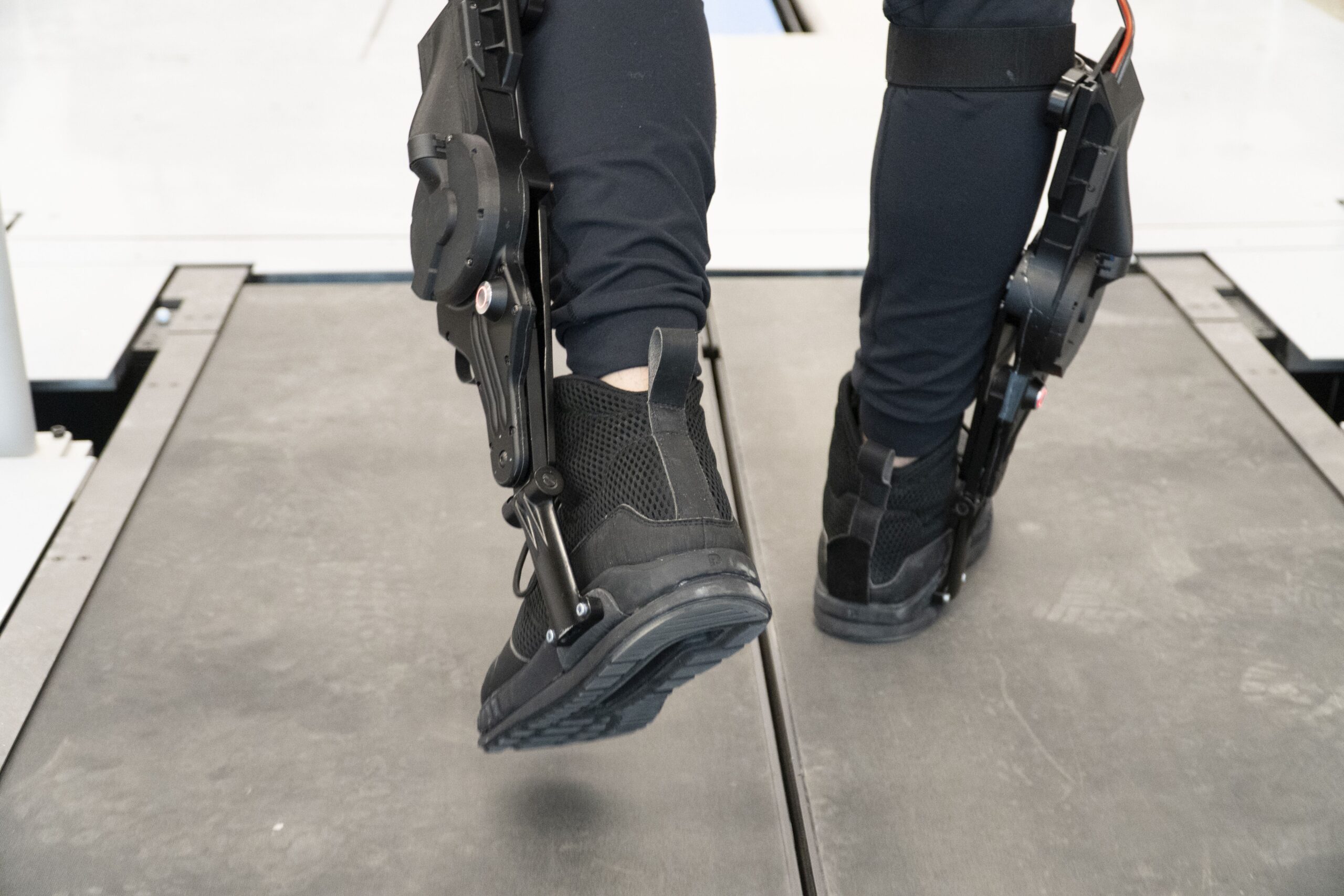
    Powered exoskeletons are usually not ready for immediate use but have to be adjusted by an expert, so that the different characteristics of the human body, the biomechanics of gait and the wearer’s preferences can be taken into account. Alternatively, this can be done by automatically evaluating quantifiable data such as metabolic rate or muscle activity in order to minimize energy consumption, for example. Or the wearer can be asked to repeatedly compare between different settings in order to find out which one is the most comfortable. However, the setting that leads to a minimum of energy consumption is not necessarily the most comfortable. Letting users choose between numerous settings takes time. Moreover, it does not reveal how the setting parameters interact with each other and affect the user experience.

    The focus is on the user as a person

    Therefore, Dr. Kim Ingraham and Prof. Elliot Rouse at the University of Michigan as well as Prof. David Remy from the Institute for Nonlinear Mechanics and researcher at the cluster of excellence SimTech at the University of Stuttgart are focusing on subjective feedback instead of physiological measurements. They consider the users as the main focus of their research and give them the opportunity to directly change the setting parameters and to take into account preferences that are otherwise difficult to identify or measure. In this way, users can decide quickly and independently, which properties – such as comfort, performance, and stability – are most important for them and choose the setting accordingly, without the need for an expert to readjust. “The users’ ability to decide for themselves how it feels to be supported by an exoskeleton, will increase user satisfaction in the future and thus the acceptance of these devices,” says Kim Ingraham, “because no matter how helpful an exoskeleton might be: “If it’s not comfortable, people won’t wear it.”

    In order to test the feasibility of the concept, the research team equipped users with ankle exoskeletons and a touchscreen and had them walk on a treadmill. The participants of the study were able to select different points on the touchscreen to change the behavior of the exoskeleton. Without knowing it, they were selecting the exoskeleton’s torque and timing values. These two parameters control what the support feels like.

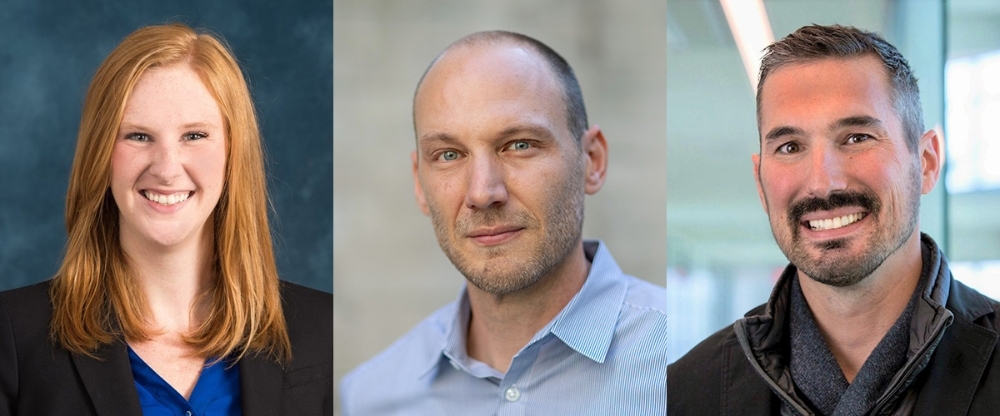
    from left: Dr. Kim Ingraham, Prof. David Remy und Prof. Elliot Rouse
    © Privat, University of Stuttgart / Uli Regenscheit, UM Robotics/Megan Ocelnik
     

    Reliable data for individual adjustment

    “Although we changed the mapping between the points on the touchscreen and the parameters with each repetition of the experiment, the participants always found their way back to their preferred, individual settings,” says David Remy. “This shows how important individual adjustments are and that users can provide us with very reliable data for this purpose.” The researchers were also surprised at how quickly the users were finding their preferred settings: Even people who had no previous experience with an exoskeleton managed to do so in an average of one minute and 45 seconds – without knowing which parameters they were setting. In addition, preferences changed in the course of the experiment: Users who already have experience with an exoskeleton prefer a significantly higher level of support than users who wear an exoskeleton for the first time.

    The researchers want to fundamentally explore how user preferences can be included in the control of exoskeletons. In the next step, they want to find out why users prefer what they prefer, how these preferences affect their energy consumption, muscle activity, and physiology, and how a preference-based control could be automatically implemented in practice.

    The collaboration between the University of Michigan and the University of Stuttgart was funded by the Carl Zeiss Foundation within the GSO/CZS return program for scientists, which the foundation established in cooperation with the German Scholar Organization. The program supports universities in filling professorships with German scientists from abroad.

  • ATTENTION project to improve road safety

    ATTENTION project to improve road safety

    The funding is being provided by Germany’s Federal Ministry for Economic Affairs and Climate Action in response to its call for funding applications in the area of “Artificial intelligence as a key technology for the vehicle of the future”.

    Urban traffic has limited space, varying flows and different road users. Despite increasing automation and traffic networking, the fact that traffic areas are used by multiple parties is and will continue to be a major risk for vulnerable road users (“VRUs”). VRUs are road users whose risk is higher because they are not inside a protective enclosure like the body of a car. They include pedestrians and cyclists. To maximize safety in automated traffic, the severity of the injuries sustained by vulnerable parties in unavoidable collisions needs to be minimized. ATTENTION’s aim is to develop a method that uses learning algorithms to predict VRU injury in real time.

    Data-driven artificial intelligence (AI) methods are being used to determine the risk of injury for a specific situation based on video data from the automated vehicle, virtual tests and digital human models. This will help make traffic safer and more efficient thanks to risk minimization strategies for the automated vehicle. Prof. Dr. Syn Schmitt and his team at Stuttgart University’s Institute for Modelling and Simulation of Biomechanical Systems are concentrating specifically on this aspect. The research on a digital human model also reflects the vision of the SimTech Cluster of Excellence as well as creating a connection between the field of simulation science and the focus of Cyber Valley research. The work uses the whole-body and body-part human models developed by Schmitt’s team and combines them with AI methods to generate the models’ movements and thus synthetic training data. The latter will then be used for an injury prediction model that can be evaluated quickly and covers a variety of collisions. An important aspect of this modeling is the need to consider who the parties to the collision are. “The project enables us to start testing our models and computation methods under real conditions in an applied research environment, the aim being for our industry partners to drive the transfer to real-world application. I’m looking forward to it and can’t wait to see the results,” said Syn Schmitt.

    One of the main outcomes of the project will be a position and movement database for pedestrians and cyclists. This will draw on an analysis of data from Bosch’s accident research and will serve as the basis for biomechanical and AI-based prediction of movements. This will be followed by a crash simulation that will supply potential injury patterns. These will be compared against real accident data and stored in another collision and injury database. To predict injuries, AI will be used to create an injury risk index, which will provide the basis for determining action to be taken. The action will then be implemented in a virtual demonstrator.

    The project is being administered by TÜV Rheinland. Other partners are Robert Bosch GmbH and QualityMinds GmbH, representing industry. The research institutes involved are the Fraunhofer Institute for High-Speed Dynamics (EMI) and Stuttgart University’s Institute for Modelling and Simulation of Biomechanical Systems. Mercedes-Benz AG is an associate partner on the project.

    At a glance:

  • Call for papers: Artificial Intelligence and Sustainability

    Call for papers: Artificial Intelligence and Sustainability

    Research on the relationships between AI and sustainability has mostly emphasized on machine learning models and algorithms on the environmental pillar of sustainability with a particular focus on climate change, transportation and mobility, sustainable agriculture, waste management, biodiversity, energy or pollution management. However, the literature sheds light on contradictory inputs from AI with both positive impacts by, for instance, reducing the effects of climate crisis or predicting climate change and negative consequences as being a source of pollution. Moreover, only few studies focus on the link between AI and societal or economic aspects of sustainability, and the existing results appear equally ambiguous.

    Therefore, in a world where AI and sustainability are of prime importance, further research is needed, and researchers are invited to explore and uncover the potential synergies and interactions between AI and sustainability, taking into consideration the triple bottom line and using a multi-scale approach. Emerging questions pertain to the role of firms as transmitters, mediators and/or users of information, governmental programs and policies, intellectual property and open access, demand-side interventions, such as influential consumer collectives, or citizenship and political social awareness. Papers could treat sectors such as (but not limited to) agriculture, education and training, space, finance, biochemistry, energy or health.

    Papers proposed could include following topics (not limited to):

    • Compatibility and interactions between AI and sustainability
      Are AI and sustainability compatible? What are the links between AI and sustainability (roles and impacts)? Can AI be sustainable? What are the limits of AI in a sustainable environment? What are the most appropriate theoretical frameworks to address AI-sustainability issues?

    • Role, functions, and interactions between AI actors in relation to sustainable development
      Who are the AI actors? How are they organized? To what extent does the current AI ecosystem support sustainability? What are AI actors’ main challenges? How do they apprehend sustainability?

    • Exploration of the artificial intelligence-sustainability relationship from a multi-scale perspective
      What are the acceptance factors of AI in a sustainable environment? What are the economic and social implications for customers, citizens, companies, governments, or international institutions? What are the implications specifically for small-and medium sized companies and startups? What are the regulatory implications? What are the main challenges for the future?

    • Responsible research and innovation in the context of AI and sustainability
      How can AI transform and foster sustainable research and innovation? How can AI promote a sustainable innovation?

    Submission deadline is November 30, 2022. For further information on the call for papers and the submission process, please refer to the attached PDF or to the website linked to below.

  • Cyber Valley networks continue to grow

    Cyber Valley networks continue to grow

    “As we enter the next phase of Cyber Valley, we are even more focused on helping new, innovative, AI companies grow”, said Michael J. Black, Cyber Valley spokesperson and Director at the Max Planck Institute for Intelligent Systems. “Consequently, we are expanding both our start-up and our investor networks. In MBG we've added an experienced, powerful and very well connected VC firm to our ecosystem. And with the addition of mxlar, preML and Bergsonne Labs our growing network of entrepreneurs and innovators has gained in strength, breadth, and excellence.”

    Austrian start-up mlxar (machine learning extended architecture) is using AI to create 3D architectural models for the gaming industry. The mlxar technology makes it possible to creatively build architecture assets faster than is currently common – earning the start-up the Main Award at AI GameDev last December, among other accolades. “Architecture design is a manual, inefficient and time-consuming process – this is a problem when designing one building, and it’s a huge problem when designing an entire city, level or world. Our AI innovation is not a replacement for the designer – it is a way of making expert knowledge scalable and ultimately creating new type of creative tool”, said Ben James, CEO of mlxar. “We joined the Cyber Valley Start-up Network because it offers our startup the opportunity to contribute to – and benefit from – an ecosystem in which research and entrepreneurship can further drive our innovations forward.”

    The start-up preML from Lahr in the Black Forest provides AI-based technologies for manufacturing companies to automate their visual quality inspection quickly and cost-effectively. “Our company is very technology-oriented and works at the forefront of the current state of science”, said David Fahrenbach, preML’ls co-founder and managing director. “As a former student of the University of Tübingen, I am particularly pleased about the admission and am looking forward to the contacts and projects that will arise through the network.”

    Bergsonne Labs is a Stuttgart-based company focused on bridging the gap between laboratory science and commercial technology, with a specific focus on the research and development of micro-scale mechatronic solutions for various applications including sports technology, robotics, and consumer products. “As a multi-disciplinary hub bringing together world-class scientists, researchers, entrepreneurs, and businesses from around the region, the Cyber Valley Start-up Network clearly provides the ideal setting in which to grow Bergsonne Labs”, said the company’s founder Jonathan Fiene.

    Investor Network now counts six members

    In addition to the Start-up Network, the circle of venture capital firms is also expanding. MBG joins the Cyber Valley Investor Network. Active in the market as an investment company for more than 50 years, MBG brings experience, network and continuity to start-ups. “Artificial intelligence is going to shape the world of the future. That is why it is important to us to support the growing ecosystem. Having Cyber Valley as a partner and multiplier enables us to get in contact with innovative AI startups that we can support together”, said MBG CEO Dirk Buddensiek.

    Cyber Valley regularly hosts networking events such as talks, meet-ups, and tech workshops. The next event of the Cyber Valley Entrepreneurship series is scheduled for March 31 and will feature high-profile speakers on the topic of “AI and architecture”. More information about the event and how to attend can be found here.