User Group: Researcher

  • Cyber Valley Start-up Incubation Program

    Cyber Valley Start-up Incubation Program

    Inhalt

    Ihr braucht kein Team, keine Vorkenntnisse und kein Gründungsprojekt. Alle Werkzeuge, die ihr für eine erfolgreiche Gründung benötigt, werden euch zur Verfügung gestellt. Gemeinsam mit erfahrenen Start-up Coaches erhaltet ihr Einblicke in Themen wie Team Building, Marktanalyse, Proto- und Pretotyping, Businessmodelle und Start-up Pitches. Am Ende bekommt ihr die Chance, euer Start-up Projekt vor einer hochklassigen Jury zu präsentieren und ihr könnt wertvolle Preise gewinnen.

    Zielgruppe

    Der Inkubator richtet sich an alle Wissenschaftler:innen aus dem Cyber Valley Ökosystem – und darüber hinaus. Doktorand:innen der International Max Planck Research School for Intelligent Systems (IMPRS-IS) erhalten darüber hinaus 3 Credit Points, wenn sie den Kurs erfolgreich absolvieren.

    Ablauf und Termine

    Der Inkubator ist als sechswöchiges Programm geplant mit jeweils einem Vor-Ort-Workshop pro Woche (10:00–18:00). Die einzelnen Termine werden abwechselnd in Stuttgart und Tübingen stattfinden. Es wird einen Shuttlebus für Teilnehmer:innen des jeweils anderen Standortes geben. Sollte die Pandemie Vor-Ort-Veranstaltungen nicht erlauben, wird die Veranstaltung virtuell stattfinden. Die Termine sind:

    • Freitag, 1. April 2022
    • Freitag, 8. April 2022
    • Freitag, 22. April 2022
    • Freitag, 29. April 2022
    • Freitag, 6. Mai 2022
    • Freitag, 13. Mai 2022 (finales Pitch Event)

    Bewerbung

    Um sich für das Cyber Valley Start-up Incubation Program zu bewerben, wird ein Lebenslauf und ein Motivationsschreiben benötigt. Aus dem Motivationsschreiben (ca. eine Seite) soll hervorgehen, warum die Bewerber:innen sich für das Programm interessieren und welches Problem aus ihrem (Forschungs-)Alltag sie mit einem Start-up gerne lösen möchten. Doktorand:innen benötigen außerdem eine schriftliche Erlaubnis ihrer Doktormutter oder ihres Doktorvaters, dass sie an den sechs Terminen teilnehmen dürfen (eine E-Mail genügt).

    Nur noch wenige Plätze verfügbar. Bitte sendet euren Lebenslauf, euer Motivationsschreiben und die schriftliche Erlaubnis eurer Doktormutter bzw. eures Doktorvaters an tobias.duerr@cyber-valley.de.

    Sprache

    Das Programm wird in englischer Sprache angeboten.

    Fragen?

    Wendet euch gerne an Tobias Dürr, wenn ihr Fragen habt.


  • ML deployed to fast-track industrial optimization process

    ML deployed to fast-track industrial optimization process

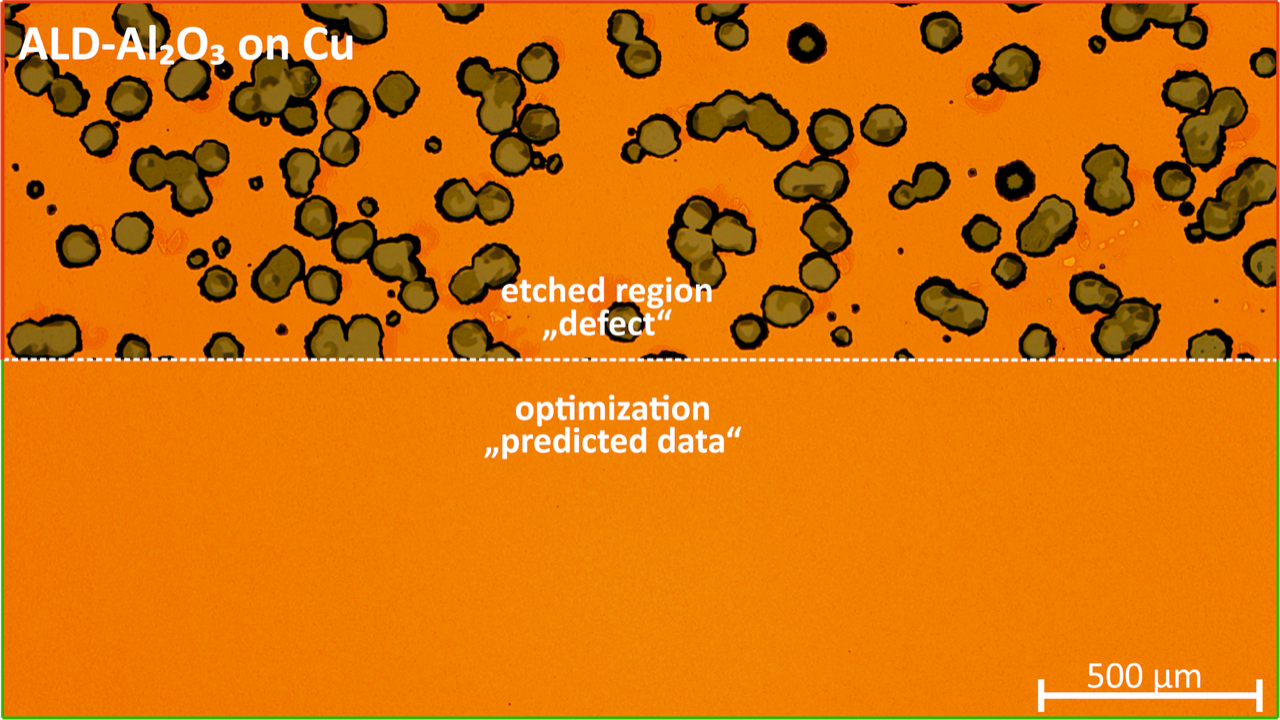
    Microchips are a building component of practically every electrical product. One metal very common in the production of these chips is copper. This soft metal is essential in the manufacturing of microchip-based products, as it offers both electrical and thermal conductivity. However, for copper to unleash its full potential, its corrosion must be avoided. In the production process of microchips, it is therefore necessary to coat the copper with a thin layer of ceramic material: aluminum oxide. This encapsulating process is called Atomic Layer Deposition or ALD in short.

    The optimization of the coating process is tedious and costly

    The coating of copper is not a dip-and-go process. It takes a lot of engineering expertise, many hours of manual labor, and tedious trials to find the optimum deposition parameters for the layer to be defect-free (i.e., without any holes, dents, or gaps) and to be as thin as possible. Firstly, because there is little space in microchips often the size of a dust mite. Secondly, aluminum oxide is costly: scaled up to the production of thousands if not millions of microchips, even a few nanometers more width of the coating layer puts a dent in the margin. And thirdly, gaps and dents are the back door for corrosion to find its way in after all. 

    An interdisciplinary team of researchers at the Max Planck Institute for Intelligent Systems, the Max Planck Institute for Solid State Research, the Technical University of Munich, and Robert Bosch GmbH – an industrial partner in the Cyber Valley research network – has found a way to minimize defects in the layer, to fast-track the optimization process and to reduce the costs resulting from coating copper used in microchips. They deployed Bayesian Machine Learning methods and found that the optimization process can be speeded up fifteenfold compared to taking a conventional optimization approach.

    Bayesian optimization

    “Imperfections in the coating layer can be reduced by having a thicker coating film, however then it costs more and the layer takes up more space. Many iterations are necessary for engineers to find the ideal coating with little to few defects. On an industrial scale, it takes even more time, weeks maybe months, and hence it costs thousands of euros for each iteration. Therefore, reducing the optimization process from 30 or 40 steps to only two or three through Bayesian optimization is quite an achievement,” says Gül Dogan, a Ph.D. student both in the Modern Magnetic Systems Department at the Max-Planck-Institute for Intelligent Systems (MPI-IS) and with Robert Bosch GmbH. She is the first author of Bayesian Machine Learning for Efficient Minimization of Defects in ALD Passivation Layers, recently published in the journal Applied Materials and Interfaces.

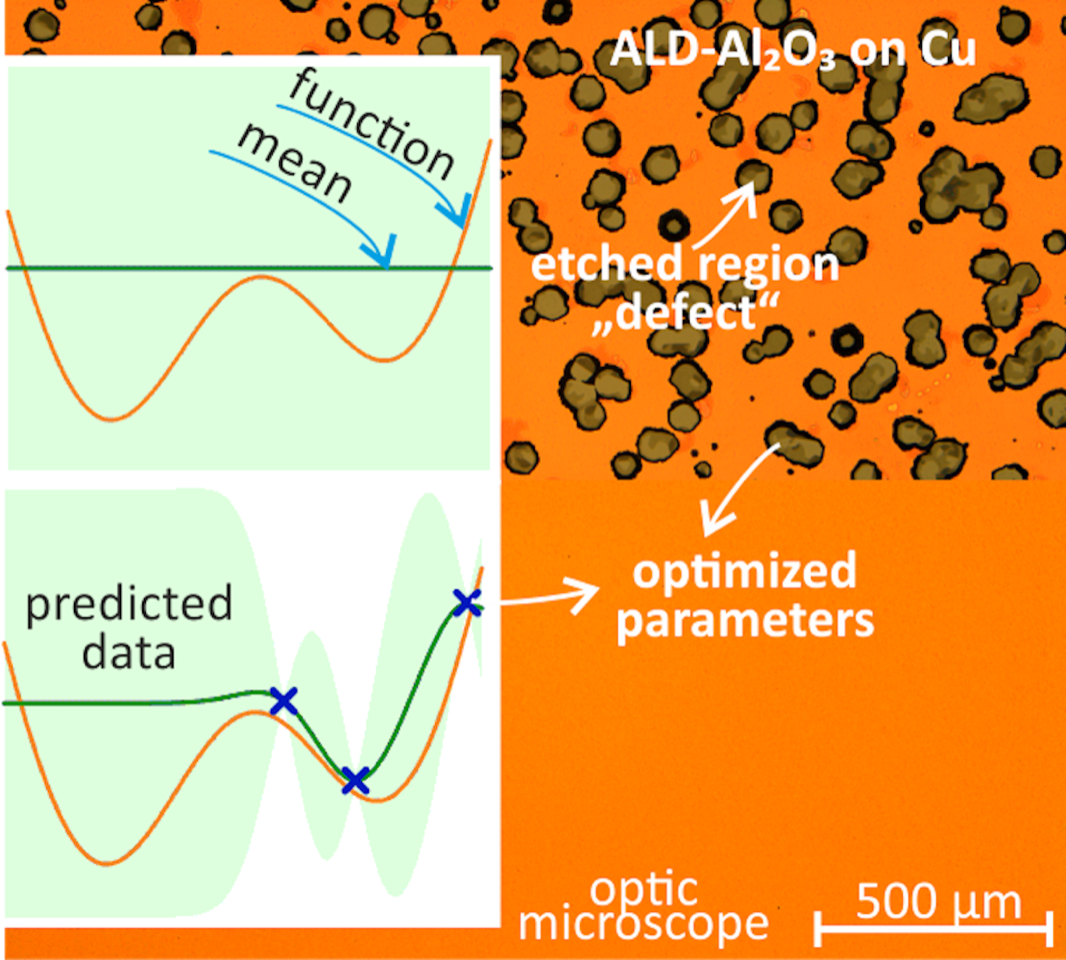
    Figure 1: As the system collects new data points – the blue markers in the lower image – it updates the prediction about the system and based on this prediction, Bayesian optimization suggests a new parameter set to be tested.

    “We use machine learning to perform better than exhaustive conventional search and optimization methods. Our algorithm collaborates with the experts and learns from their experience – with success: We have virtually no film-porosity and hence significantly reduce the corrosion,” Sinan Demir adds, who is a Ph.D. student in the Physical Intelligence Department at MPI-IS, led by Prof. Metin Sitti.

    Several parameters determine how good the coating outcome is: how long the copper surface is pretreated using Ar/H2 plasma to clean the material, the deposition temperature above 200 °C, and a 60 ms pulse time applying the aluminum oxide. All parameters and their interplay influence the corrosion resistance. The algorithm was capable of finding the optimal parameter set in only a few iterations.

    Learnings can be transferred

    “Let’s assume the system performance is defined by this orange function seen in Figure 1. Just assume that our parameters affect the production process according to this function. We start with no knowledge at all. As we collect new data points – the blue markers in the lower image – we update the prediction about the system and based on this prediction, Bayesian optimization suggests a new parameter set to be tested, which can improve the performance of the system. Then, we do the experiment by using this new parameter set. We continue testing and choosing new parameters sets until we reach our final goal or design criteria,” Demir continues.

    The coating of copper is one optimization challenge. In materials science, there are many more. “This is the advantage of Bayesian Machine Learning methods. The learnings you gain from one optimization process can be transferred to different materials and processes in all areas of materials science. You don’t start at zero, you can scale it up,” Demir concludes.

  • Young talent for artificial intelligence

    Young talent for artificial intelligence

    Matthias Hein, Professor of Machine Learning at the University of Tübingen, is looking forward to the next steps of the graduates. Some are currently looking for doctoral positions, many are staying at the university, while others are going into business. For the professor, this underscores the importance of the intensive training in the master’s program: “Training good people is actually the most important component of how we can ensure a transfer between science and society. With the knowledge from their studies, they can now go into industry and apply their knowledge the way they learned it here.” And to ensure that the training in the program is truly excellent, it has a very specific curriculum that offers students many options.

    Modular study plan

    “In our master’s program, students are very free to choose the direction in which they want to specialize,” Hein explains. As a result, the study plan includes only a few compulsory subjects. “There is, of course, a broad introduction to fundamentals. But then you can shape your studies the way you want – and you’re basically completely free to bring in your own topics.” For example, students can also take lectures from completely different subject areas, such as ethics, philosophy, law or business administration.

    On the one hand, Hein and his colleagues want to take into account the nature of AI as a cross-sectional discipline, which is now used in a whole range of different research fields. On the other hand, it promotes an intensive and, above all, critical examination of AI, its limits and the challenges it poses to society.

    This open orientation makes the first and so far, only university program in Germany in the field of machine learning unique. In addition, the English-language program has a broad, international orientation. This is intended to promote exchange with researchers from other countries and cultures.

    Talking – with each other instead of about each other

    The researchers are also trying to engage in an exchange with society on a broad level, especially against the backdrop of the ethical debates that keep arising around the topic. For Matthias Hein, these are really important activities, because sometimes it is simply not yet entirely clear how things work in research reality and what AI is really all about. “Through direct conversations, many questions can often be clarified quickly,” says the professor. Accordingly, he is also positive about the support provided by the Cyber Valley Public Engagement Team, which decidedly helps mediate between the public and researchers in the field of AI.

    “It’s a super thing that Cyber Valley is so active here. Other locations are still at the beginning of the ethics debate in some cases – we are at least already in the thick of it as a result,” Hein notes. Hein can judge this particularly well from his own research. Among other things, his work covers two aspects that are often at the center of ethical disputes surrounding AI: the robustness and explainability of the decisions of these systems.

    Reliability and fairness as keys to acceptance

    In a new research project, Hein is now exploring questions in the medical field about how to improve the reliability and accuracy of AI applications in the diagnosis of diseases, in other words, how to make these systems more robust. The project is being funded by the Carl Zeiss Foundation for more than five years with a total of five million euros. “Our aim is to create a set of rules that ensures that AI systems then function in practice in the way we expect them to,” is how Hein formulates the goal. After all, the challenges and relevance for machine learning are particularly high in safety-critical areas such as medicine. This is the only way to ensure acceptance for the use of such systems on a broad social basis in the long term.

    An equally exciting social exchange is the discussion of the topic of fairness of AI. After all, even supposedly neutral systems can make unfair decisions – for example, if they have been trained with biased and unbalanced data. But this always raises the fundamental question of what a society considers fair – as a common denominator, so to speak. “It’s important that we create an awareness that certain issues need to be discussed and evaluated socially. After all, it cannot be the task of those developing AI systems to define what is fair – that is a societal question,” says Matthias Hein, emphasizing the importance of an intensive social exchange.

    Humans make it

    For Hein, Cyber Valley, with its locations in Stuttgart and Tübingen, provides the best conditions for holding such debates. “Cyber Valley has brought very good scientists here, who in turn attract very good people,” says the professor, describing the positive dynamics and the special appeal of Cyber Valley far beyond the state’s borders.

    The environment was also enticing for Matthias Hein himself, who moved from Saarbrücken to the University of Tübingen in 2018 and took over an endowed professorship established by Cyber Valley and Bosch. With the master’s program in machine learning, he is now helping to further strengthen the diversity and quality of the location.

    Always questioning

    Accordingly, Matthias Hein is also very optimistic when asked about the future of Cyber Valley and the AI ecosystem in the heart of Baden-Württemberg. “We are on a very good path here,” says Hein, who is certain that the location can continue to grow at a very high level. However, he said, it is important to always keep an eye on the continuous exchange and transfer from research to society and the economy. And above all, to absorb the impulses from these areas.

    Just as Hein does in his work with young scientists: “It’s exciting when you’re challenged by students. When considerations are questioned and you also have to question things yourself again and again and justify them well.” And that doesn’t just advance the next generation. It also helps to anchor AI and machine learning in society with joint strength and a critical eye.

  • From researcher to founder

    From researcher to founder

    Organ models as a safe testing environment

    Every day, people lie on operating tables. According to the German online portal Statista, doctors performed more than 15 million operations on inpatients in hospitals nationwide in 2020. Vast amounts of data have been generated in the process. It is difficult for artificial intelligence (AI) researchers to obtain it. There are legal, ethical and technical reasons for this. In contrast, the situation is quite different for interventions on artificial organ models: There, for example, there are no reservations when data and possible deficits are recorded. Tian Qiu has created such organ models. In his vision, all hospitals and medical faculties will soon have them. He is sure that biomedical engineers as well as medical practitioners can learn from them. Now he wants to found a company.

    Tian Qiu has been Cyber Valley research group leader for “Biomedical Microsystems” since 2019. The group is based at the Institute of Physical Chemistry at the University of Stuttgart. Previously, he studied Mechanical and Biomedical Engineering at Tsinghua University in Beijing, which is considered China’s leading technical university. In 2012, he came to Europe, earned a Ph.D. in Biotechnology and Bioengineering at the Swiss Ecole Polytechnique Fédérale de Lausanne (EPFL), and conducted research at the Max Planck Institute for Intelligent Systems (MPI-IS). There he developed microrobots that could move through the body and perform minimally-invasive procedures. The only problem was: how to practice? There was no realistic test environment for such robots. “I'm an engineer, I know technology, I can build things. Why not an organ?” Qiu said to himself. The exciting thing about this is that, up to now, surgical training has lacked training opportunities that come close to an operation situation on humans.

    In cooperation with the Department of Urology at the University Hospital in Freiburg, the researchers have therefore developed a series of artificial organs, including the kidney, bladder and prostate – the model of a urinary tract. Surgeons can use it to practice endoscopies inside the bladder or to detect kidney stones. The hardware is flanked by software. During the procedure, sensors on the organ models measure, for example, how precisely and quickly the surgeons proceed. The data serves as feedback for their work – at the same time, researchers can feed it into AI algorithm and train the computer to automatically evaluating the surgical performance, for example. Augmented Reality Surgical Simulator is the name of this computer-based training assistant for surgeons. After years of basic research, the model for urologists is ready for series production. “If there is demand, we can bring the system to market,” says Qiu. However, mass production is no longer a task for an academic research group. Industry is needed for that.

    From research to business?

    Together with Prof. Peer Fischer from the MPI-IS in Stuttgart, Prof. Arkadiusz Miernik from the University Hospital in Freiburg and Dr. Kurt Ruffieux serial entrepreneur in the medical industry, Qiu now wants to found a start-up. But how does one go from being a scientist to an entrepreneur? “It is not enough to have an idea and prove in publications that the technology works,” says Qiu. Founding has far more challenges – and raises questions whose answers are not part of an engineering degree: Where will funding come from? Who wants to invest? Where to position yourself in the market? Who should buy? What do customers want? Qiu: “We believe in our technology. But is it really the technology the market needs?”

    He finds like-minded people and expertise in unfamiliar business territory in the Cyber Valley ecosystem. Its start-up network, with its regular events, helps to drive his project forward, says Qiu. At symposiums, for example, existing startups have presented and shared what promises success – and what went wrong. The start-up coaches from Prof. Alexander Brem’s Institute for Entrepreneurship and Innovation Research at the University of Stuttgart also provided significant support. The Max-Planck-Innovation GmbH, an organization of the Max Planck Society that promotes the transfer of inventions into company foundations, is helping Qiu and his partners apply for funding from the federal research ministry, as well as with patenting and licensing. The team has applied for patents in the European Union, the U.S. and China – the largest markets for the medical industry. Scientists at German universities and research institutions are not necessarily concerned with the spin-off of their ideas, even if their research would actually allow them to do so. In Silicon Valley in the USA, for example, or in Israel, the start-up culture is more pronounced and less conservative, says Qiu. Cyber Valley could change that, he believes.

    However, with IAV, BMW, ZF, Bosch, Daimler and Porsche, six of the current seven Cyber Valley industrial partners are carmakers or suppliers. “It could really help us if more partners from the medical industry were to join,” says Qiu. The industry is strongly represented in the region; Qiu points, for example, around 400 medical instrument companies in Tuttlingen, and also strong biomedical industry in the region Tübingen.

    The response to the cyber-physical organ twins is promising. Qiu and his partners are currently in contact with ten medical technology companies, some of them international, that have expressed interest. For example, Tian and his team recently sent their EndoUroTrainer to Canada to train urological surgeries. At a workshop in Canada, urologists tested a new surgical method for the treatment of prostate enlargement, a condition that affects around a quarter of men over the age of 50 and increases with age up to 90 percent. So, the need seems to be there.

    The urinary tract model is only the beginning

    The principle of the artificial urinary tract can be transferred to other specialties such as neurosurgery. Qiu could also imagine designing an artificial brain, for example. But therein lies the crux. “There are so many medical departments and organs that we won't run out of work,” says the founder. “But as a young startup, we don't have the resources to tackle all the organs. We have to carefully choose the right one.” Another sticking point: On the one hand, they say, it's a matter of getting through the initial phase and filling current voids in the market – while at the same time inventing new things to take medical education to a new level in the long term. For the beginning, the founders plan to employ three to five people. First and foremost, they are looking for a project manager with a technical background and experience in the industry.

    The data from the artificial organs make surgical work measurable and assessable. They can provide instructors with clues as to who is ready for real operating rooms and patients. Junior surgeons can see what they need to improve in their performance. In Qiu’s ideal, the Augmented Reality Surgical Simulator has become the standard training system in a few years. He believes that AI is indispensable in medicine – and that its potential is far from exhausted. He does not share the concern that doctors could possibly lose their jobs: Highly qualified doctors would be difficult to replace completely by robots. However, many are skeptical as to whether AI is already developed enough to work just as well as a human assistant. For patients, on the other hand, the idea of robots operating on their own could stir up fears, says Qiu. As with self-driving cars, there are still many questions to be answered, such as ethical as well as legal questions. What is important to him is that his development should support medical professionals rather than replace them. “The AI can do its job and then be checked by a human surgeon. What’s the problem there?“

  • Scientific Symposium

    Scientific Symposium

    Schedule (CET)

    Wednesday January 12
    12:45-1:00 pm Opening remarks
    1:00-2:30 pm Presentations | Part One
    2:30-3:00 pm Break
    3:00-4:30 pm Presentations | Part Two
    Thursday January 13
    8:45-9:00 am Opening remarks
    9:00-10:30 am Presentations | Part Three
    10:30-11:00 am Break
    11:00 am – 12:30 pm Presentations | Part Four

    Presentations:

    Towards Machines that See the World like Humans

    In the past few years, deep neural networks have surpassed human performance on a range of complex cognitive tasks. However, unlike humans, these models can be derailed by almost imperceptible perturbations, often fail to generalize beyond the training data and require large amounts of data to learn novel tasks. A core reason for this behavior is shortcut learning, i.e. the tendency of neural networks to pick up statistical signatures sufficient to solve a given task instead of learning the underlying causal structures and mechanisms in the data. My research ties together adversarial machine learning, disentanglement, interpretability, self-supervised learning, and theoretical approaches like nonlinear Independent Component Analysis to develop theoretically grounded yet empirically successful visual representation learning techniques that can uncover the underlying structure of our visual world and close the gap between human and machine vision.

    An Algorithmic Safety View of Learning in Human-centered Domains

    Machine Learning advances have revolutionized many domains such as machine translation, complex game playing, and scientific discovery. On the other hand, ML has only enjoyed modest successes in human-centered applications. To improve the utility, reliability, and robustness of Machine Learning (ML) models in human-centered domains, we need to address several foundational challenges. In this talk, I will demonstrate how an algorithmic-safety perspective can motivate specific technical challenges for learning in human-centered domains such as healthcare. Specifically, I will discuss the need to improve the utility of ML-robustness, explainability with an emphasis on decision-making, and post-hoc algorithmic safety to prevent harm. I will discuss my contributions on i) novel methods to improve causal robustness of ML methods designed for practical generative settings, ii) aiding safe decision-making in non-IID settings using time-series explainability intended to address clinicians’ requirements, and iii) novel learning algorithms to optimize for post-deployment safety in sequential decision-making settings. I will conclude with an overview of my future research vision on novel safety-based objectives for explainability in ML, expanding ML-based solutions to general and practical generative settings, and outlining novel ways of validating ML models targeting safety-based objectives.

    On Inferential Challenges in Modern Machine Learning

    Machine learning (ML) can be viewed as solving two types of inferential tasks: inferring models from data and inferring knowledge from models. Central to this perspective is the development of fast, accurate inference methods for model parameters and latent variables. In this talk, I will present my work on addressing inferential challenges in modern ML which are characterized by enhanced model complexity and massive datasets that demand algorithms at scale. I will focus on 1) theory and methods of score estimation, an emerging tool for dealing with intractable probability densities in today's highly expressive ML models, and 2) orthogonal inducing points, an inferential idea that advanced the state-of-the-art of scalable uncertainty models in ML. Finally, I will discuss future directions that connect these ideas to generative modeling, continual learning, and how they could help us understand deep learning.

    Computer Vision for Global-scale Biodiversity Monitoring

    We require a real-time, modular earth observation system that unites efforts across research groups in order to provide the vital information necessary for global-scale impact in sustainability and conservation in the face of climate change. The development of such systems requires collaborative, interdisciplinary approaches that translate diverse sources of raw information into accessible scientific insight. For example, we need to monitor species in real time and in greater detail to quickly understand which conservation efforts are most effective and take corrective action. Current ecological monitoring systems generate data far faster than researchers can analyze it, making scaling up impossible without automated data processing. However, ecological data collected in the field presents a number of challenges that current methods, like deep learning, are not designed to tackle. These include strong spatiotemporal correlations, imperfect data quality, fine-grained categories, and long-tailed distributions. My work seeks to overcome these challenges, and includes methods which can learn from imperfect data, systematic frameworks for measuring and overcoming performance drops due to domain shift, and the deployment of efficient human-AI systems that have made significant real-world conservation impact. My future research agenda will expand upon the strong foundation built by my past and current research. It will seek to make effective use of all available modalities of data, incorporate expert knowledge systematically, and ensure these systems are equitable and ethical – all fundamental and unresolved challenges for CV&ML.

    Open-World Learning for Biomedicine

    Biomedical data poses multiple hard challenges that break conventional machine learning assumptions. In this talk, I will highlight the need to move beyond our prevalent machine learning paradigms and methods to enable them to drive novel biomedical discoveries. I will focus on open-world deep learning methods that generalize to new scenarios never seen during training and demonstrate the impact they have in single-cell genomics. I will first present a method that transfers knowledge across heterogeneous datasets generated under different distributions, and then describe the paradigm needed to discover previously unobserved phenomena. I will discuss the biological findings enabled by these methods and the conceptual shift they bring in annotating comprehensive single-cell atlas datasets. Altogether, my work demonstrates that generalization to never-before-seen scenarios is not only possible, but it is a necessary component in developing next-generation methods that can reveal new scientific insights.

    Social Robots for Health and Education

    I build innovative social robots that address important challenges in health care and education. A unifying challenge that I address in my work is that most of the existing resources that treat complex health and learning problems are developed for professionals. My vision is to democratize health care and education by using social robots to break barriers of access to these critical domains. Towards this, I designed, developed, fabricated, and deployed robots capable of reciprocal interactions with humans to be used as valuable sources of knowledge and assistance that empower people to make decisions about their mental health, social-emotional learning, and creativity. My work probes the intersection of the fields of Human-Robot Interaction, Human-Centered Design, and Artificial Intelligence as essential building blocks for creating social robots that can empower human health and education.

    Intelligent Soft Systems – How Fundamental Physical Principles Enable Function

    Functional soft materials promise to revolutionize robotics hardware by providing entirely new functions and by allowing robots to perform better than traditional robots made from materials such as metals and electromagnetic motors. Over the last decade a large variety of intelligent systems based on functional soft materials have been successfully demonstrated. However, only the surface of the capabilities of these new types of materials has been skimmed, because the fundamental materials behavior, from which they derive their functionality, is often not sufficiently understood.

    In this talk, I discuss fundamental physical principles of soft materials, which can enable function in high-performing soft devices. First, I describe how snap-through instabilities in elastomeric structures can be exploited for electronics-free control of robots. Then, I discuss how the electromechanical coupling between electric fields and soft structures enables electroactive devices and artificial muscles. Finally, I outline nonlinear and thermomechanical effects, which have the potential to serve as the basis for the next generation of intelligent soft systems.

    Advanced Multimodal Locomotion and Multifunctionality of Soft-bodied Millirobots

    Large individually-controlled degrees of freedom (DOF) in animal epidermises enable the animals to dynamically and dexterously interact with their natural environment for diverse functions. This capability still holds at small length scales: flatworms, starfish larvae, corals, comb jellyfishes, and millipedes utilize their numerous individually-controlled cilia, tube feet, or tiny legs for highly adaptable locomotion and multiple functions, such as nutrient transportation, predation, and bio-mixing. Despite their significant future potential applications and numerous recent advances, current miniature (centi-/millimeter) robots still do not have similar tiny cilia, feet, or legs in their epidermises to dynamically and dexterously interact with their operation environment, which severely limits their locomotion capabilities and functionalities.

    The presentation will first walk through my previous projects of using physical intelligence, such as soft design, flow structure interaction, and metachronal coordination, to enhance miniature robots' locomotion capability and functions. Then, I will briefly discuss how I support these investigations on robotics by innovating on micro-fabrication and novel materials. At last, I will propose a new methodology to address the prementioned scientific challenge directly. Such an approach would immediately augment the functional interaction of various miniature robots with their surrounding environments, leading to disruptive locomotion and manipulation capabilities for various future applications.

    Structured Learning – Encoding Structure from Physics, Algorithms, and Geometry into Machine Learning for Robotics and Computer Vision

    This talk focuses on the interaction of structural assumptions and machine learning. While modern machine learning (aka deep learning) is able to leverage large amounts of data and computation to achieve important results, I believe that the recent shift of the community towards ever more general learning approaches is flawed. The progress of deep learning so far has relied heavily on advances in computation, data collection, and software libraries. But as such improvements are plateauing, future progress in AI requires us to reevaluate the role of structure in learning and to tightly integrate both for better data efficiency, generalization, and explainability. In this talk, I will present how structure from physics, algorithms, and geometry can be encoded in learning approaches to robotics and computer vision and why we need a better fundamental understanding of the interaction of structure, learning, and optimization.

    Towards Democratic Learning and Collective Intelligence

    An ability to generalize to unseen environments is of paramount importance in machine learning. In order to equip artificially intelligent systems with such capability, it is necessary to deal with various forms of distributional shifts and to distinguish between spurious correlations and genuine ones in the observed data. To this end, the first part of this talk will be about the Hilbert space embedding of distributions, or kernel mean embedding (KME) for short, which is a nonparametric kernel-based framework to represent probability distributions and model changes thereof. In particular, I will focus on how this framework can help improve the credibility of algorithmic decision making based on observational data by enabling us to reason about higher-order causal effects of policy interventions as well as by removing the effect of unobserved confounders through the use of an instrumental variable (IV) and a proxy variable. In the second part of this talk, we will take a sober look at the foundation of learning and generalization. In order to build intelligent systems that can truly generalize to the real world, we must take a step back and question the traditional definition of generalization and standard procedures in machine learning. Since society is made up of a set of diverse individuals, demographic groups, and institutions, learning and deploying algorithmic models across heterogeneous environments face a set of various trade-offs. I will argue that in such heterogeneous environments, creating machine learning frameworks that allow for real-world generalization is reminiscent of designing algorithms that respect the democratic principle.

    Diversity and Inequality in Social Networks

    Online social networks often mirror inequality in real-world networks, from historical prejudice, economic or social factors. Such disparities are often picked up and amplified by algorithms that leverage social data for the purpose of providing recommendations, diffusing information, or forming groups. In this talk, I discuss an overview of my research involving explanations for algorithmic bias in social networks, briefly describing my work in information diffusion, grouping, and general definitions of inequality. Using network models that reproduce inequality seen in online networks, we'll characterize the relationship between pre-existing bias and algorithms in creating inequality, discussing different algorithmic solutions for mitigating bias.

    Towards Principled Algorithmic Support of Human Decision-Making

    Many important applications such as hiring, healthcare, and scientific peer review rely on human decision-making. Recently, the scale of many of these applications has increased dramatically which is both an opportunity and a challenge. On the one hand, the large amount of data generated in these applications opens up an opportunity to take a novel data-centric perspective on the classical problems of human decision-making. On the other hand, the large scale makes it hard or even impossible for humans to do all the work manually; hence, there is a challenge of developing principled algorithmic tools to support human decision-makers. In this talk, I will discuss my work on exploring the opportunities and addressing the challenges in the context of scientific peer review. In that, I will talk about empirical and theoretical work that has impacted major Computer Science conferences such as NeurIPS and ICML. I will then outline ideas for future work.

  • Building and Habitats object Model

    Building and Habitats object Model

    Ein Schlüsselaspekt, der diskutiert werden wird, ist die Möglichkeit, mehrere analytische Darstellungen eines beliebigen Entwurfs zu erstellen und miteinander zu verknüpfen – was die Entwurfskoordinierung erleichtert, wo dies erforderlich ist –, aber auch Flexibilität und Anpassungsfähigkeit bietet, was bei komplexen Entwurfsabläufen unerlässlich ist.

    Das BHoM wurde zudem von Grund auf mit Blick auf eine breite Beteiligung und eine vielfältige Mitautorenschaft entwickelt. Diese Arbeitsweise, sowohl bei der Erstellung als auch bei der Nutzung der Werkzeuge, ermöglicht eine leistungsstarke, transdisziplinäre, leistungsorientierte Planung in großem Maßstab.

    Es werden Beispiele für Anwendungen in den Bereichen Strukturanalyse, Lebenszyklusanalyse und Umweltdesign gezeigt.

    Dr. Al Fisher – Technischer Direktor und Leiter der rechnergestützten Entwicklung bei Buro Happold

    Al Fisher leitet die Computerentwicklung von Buro Happold weltweit. Er hat einen Master und einen Doktortitel in Bau- und Architekturingenieurwesen von der University of Bath und kam 2007 zu Buro Happold. Seitdem hat er sich auf leistungsorientierte Planung und Optimierung konzentriert und diese Prinzipien bei Projekten wie dem Louvre Abu Dhabi und dem Umbau des Londoner Olympiastadions angewandt.

    Die Veranstaltung findet digital über WebEx und in englischer Sprache statt. Um an der Veranstaltung teilzunehmen, klicken Sie hier.

    Über IntCDC

    Die Vision des Exzellenzclusters Integrative Computational Design and Construction for Architecture (IntCDC) der Universität Stuttgart ist es, das volle Potenzial digitaler Technologien zu nutzen, um Design, Fertigung und Konstruktion auf der Grundlage von Integration und Interdisziplinarität neu zu denken. Ziel ist es, bahnbrechende Innovationen im Bausektor zu ermöglichen, wie sie nur durch hochintegrative Grundlagenforschung in einem interdisziplinären, groß angelegten Forschungsvorhaben entstehen können.

    Das Cluster will die methodischen Grundlagen für ein tiefgreifendes Umdenken im Planungs- und Bauprozess und den damit verbundenen Bausystemen schaffen, indem es einen integrativen rechnerischen Ansatz verfolgt, der auf interdisziplinärer Forschung aus den Bereichen Architektur, Bauingenieurwesen, Bauphysik, Ingenieurgeodäsie, Fertigungs- und Systemtechnik, Informatik und Robotik sowie Sozial- und Geisteswissenschaften basiert. Ziel ist es, die international anerkannten Kompetenzen der Universität Stuttgart und des Max-Planck-Instituts für Intelligente Systeme in diesen Bereichen zu bündeln, um den Forschungsauftrag zu erfüllen.

    Das IntCDC beherbergt mehr als 120 Forscherinnen und Forscher der Universität Stuttgart und des Max-Planck-Instituts für Intelligente Systeme und wird seit 2019 von der Deutschen Forschungsgemeinschaft (DFG) gefördert.

  • Kick-off for AI in higher education

    Kick-off for AI in higher education

    With the funding initiative, the federal and state governments are striving to effectively develop the key technology of AI across the breadth of the higher education system. On the one hand, measures are supported that contribute to the qualification of future academic specialists. For example, universities will receive support in the development of degree courses or individual modules in the field of artificial intelligence. On the other hand, universities are supported in the design of AI-supported learning and examination environments.

    The project “Integrated AI in Teaching at the University of Stuttgart” (Integrierte KI in der Lehre der Universität Stuttgart, IKILeUS) aims to bundle the existing expertise of many collaborating departments on AI in order to both communicate AI to the breadth of the student body in an interdisciplinary view and to use AI-based technologies in teaching to relieve the burden on teachers and to improve teaching. The topics will be addressed with a focus on specific courses and software solutions, while at the same time looking at further potential of other user groups and areas.

    The Tübingen AI Training (Tübinger KI-Training, TüKIT) has set itself the goal of developing sustainable effective and curriculum-accompanying innovative teaching formats for students of medicine and medical-related life science courses. TüKITZ Med is designed to teach basic concepts and methods of artificial intelligence competently, effectively, compactly and in a way that accompanies the studies to students who are not familiar with AI.

    “AI is one of the key technologies that we are also working hard to advance in Baden-Württemberg. It is crucial for the economic success of our companies and the innovative strength of our state. Our universities, students and society as a whole will benefit from the new federal-state funding, in that university teaching can be improved through the use of artificial intelligence or future academic specialists can be better qualified for new professional fields,” said Science Minister Theresia Bauer. “I am thrilled by the diversity of the projects from Baden-Württemberg – it shows the commitment and innovative drive with which our universities are dedicating themselves to this topic of the future.”

    About the funding initiative “Artificial Intelligence in Higher Education”

    The legal basis for the funding initiative is the federal-state agreement “Artificial Intelligence in Higher Education” adopted by the Joint Science Conference (GWK) on December 10, 2020. The federal and state governments will provide up to around 133 million euros in funding. The funding will be provided in a ratio of 90:10 by the federal government and the respective state. The agreement runs until December 31, 2025, and an independent evaluation of the funding initiative is scheduled for 2024.

  • Cyber Valley again at the top of the list at NeurIPS

    Cyber Valley again at the top of the list at NeurIPS

    The number of papers submitted to NeurIPS for 2021 is 9,112, of which 2,334 papers successfully passed the review process and were accepted. This includes 50 papers from Cyber Valley researchers that are now being presented as posters, spotlights, and talks as part of the virtual event. While the number of submissions as well as accepted papers remained similar to last year, the number of papers by researchers from the Cyber Valley consortium which successfully advanced for presentations at the conference has nearly doubled.

    “Cyber Valley celebrates its fifth anniversary in December. The fact that more and more of our work is accepted at NeurIPS each year is a measurable success for the advancement of our ecosystem,” said Professor Bernhard Schölkopf, Director at the Max Planck Institute for Intelligent Systems (MPI-IS) in Tübingen, Germany. “To perform like this at one of the world’s leading machine learning conferences clearly shows that the Stuttgart-Tübingen region is a hotspot for internationally first-class AI research.”

    Cyber Valley was founded five years ago in December 2016 in southwestern Germany and is Europe’s leading research consortium in the field of AI. The authors of the 50 papers from the Cyber Valley ecosystem accepted by NeurIPS can be attributed to researchers from the University of Tübingen in 31 cases, to MPI-IS in 29 cases, to the Bosch Center for Artificial Intelligence (BCAI) in nine cases, and the University of Stuttgart and the Max Planck Institute for Biological Cybernetics in one case each. Many of the papers originated from the collaboration of researchers at the individual institutions, so the papers appear multiple times in the breakdown. A complete list of papers, author, and their affiliations is available here.

    Cyber Valley has continued to grow in 2021, shining in the glory of its fifth anniversary. For example, the Cyber Valley Start-up Network is now 29 members strong, the fifth round of applications for the International Max Planck Research School for Intelligent Systems (IMPRS-IS) graduate program has been completed, and the Tübingen Center for Rhetorical Science Communication Research on Artificial Intelligence (RHET AI) has been established. The University of Stuttgart has also launched the Artificial Intelligence Software Academy (AISA) and the European Lab for Learning and Intelligent Systems (ELLIS) has launched four new units, including one in Stuttgart.

    About NeurIPS

    NeurIPS is one of the three main conferences with high impact on machine learning and AI, along with the International Conference on Machine Learning (ICML) and the International Conference on Learning Representations (ICLR). The conference was first held in 1987 and is now a multi-level interdisciplinary annual conference that includes invited talks, demonstrations, symposia, and oral and poster presentations of papers that successfully emerge from a rigorous review process. In addition to the conference, there is a technical exhibition focused on machine learning in practice, a series of tutorials, and topical workshops that provide a less formal setting for the exchange of ideas.

  • Cyber Valley on the Road

    Cyber Valley on the Road

    On this page, you will find an overview of our topics and FAQs about the process. Together with you, we will discuss which topic and format best suits your group and agree on a date. Simply drop us an email at: public.engagement@cyber-valley.de.


    Topics

    Workshop: Who determines what artificial intelligence should be able to do?
    An overview of current AI regulations

    What concerns do you have when you think of artificial intelligence (AI)? And what would an AI algorithm need to accomplish to make you feel good? Based on these questions, we provide an overview of current AI regulatory approaches, the ethical considerations behind them, and the relevant players. We explain in an easy-to-understand way how something as diverse as AI can be politically regulated and standardized, and show opportunities for citizens and companies to participate in this process. 

    Target group: The workshop is suitable for citizens without prior knowledge of AI as well as for people who would like to delve deeper into the current regulation of AI. 
    Duration: flexible, min. 45 minutes, max. 2.5 hours


    Offers in planning

    These offers are currently still being designed. Contact us if you are interested.

    (planned) The new form of science dialogue: public engagement

    As a growing and new orientation of science communication, public engagement aims to improve the dialogue between science and society and to interactively involve the public in research. The goal: a constructive-critical dialogue between society and researchers to bring in as many perspectives as possible for ethical, socially reflective and society-oriented research. Our public engagement managers provide insight into the Cyber Valley Public Engagement formats and their experiences. They will also present the Public Engagement Professional Code of Conduct project.

    Target audience: researchers and early career scientists, (science) journalists, and people working in science communication. 


    (planned) What is artificial intelligence?

    This workshop explains in an easy-to-understand way what artificial intelligence is and which topics are currently being researched in Cyber Valley. Afterward, participants can test some publicly available AI systems themselves. Previous knowledge is not necessary. More information will follow in due course.


    (planned) Artificial Intelligence in the working world

    Further information will follow in due course.


    FAQs

    What is the purpose of “Cyber Valley on the road”?
    Cyber Valley wants to encourage a dialog between science and society on the topic of AI. To this end, our public engagement managers regularly receive requests for topics and inquiries, which “Cyber Valley on the road” aims to bundle. We would like to offer our expertise to as many people as possible in the most uncomplicated way  and have developed this workshop concept for this purpose. 

    Who leads the workshops and gives the presentations?
    Our Cyber Valley Public Engagement Managers Rebecca Beiter and Patrick Klügel. 

    What does it cost to book a workshop or lecture?
    “Cyber Valley on the road” is free of charge. In-person events at your location may incur travel expenses and material costs.

    Who can book “Cyber Valley on the road”?
    Everyone who is interested and ideally already represents an interested group, e.g. youth groups or student groups, associations, educational institutions or NGOs. Interested private-sector corporations may also contact us. Preferably, more than eight people should register for the event. In the spirit of non-partisanship, we cannot offer workshops for individual political parties. 

    How do I book a workshop?
     Write us an email with the topics you would like to cover, the target group and the approximate date of the workshop at public.engagement@cyber-valley.de. We will contact you as soon as possible.

  • How does a robot learn to touch?

    How does a robot learn to touch?

    I would like you to concentrate on your hands. What do you feel right now?

    Actually, my hands are a little bit cold because it's winter. But beyond that, the sensations in my hands are most fascinating to me when I bring my hands into contact with objects in the world. Our hands are exquisitely sensitive to all kinds of different mechanical information and motions. Through our hands we accomplish just about everything we do in the world, whether it's picking up a glass of water, typing on a keyboard, driving a car, or hugging a loved one. All that physical interaction with the world passes through our sense of touch.

    When talking about the sense of touch, about “haptics”, what exactly do we talk about?

    I usually divide haptics into two main categories. The first category is about what you feel with your skin. Skin has little cells, mechanoreceptors, pain receptors and more that measure and detect what's happening, for example if the air is cooling or something is pressing, hurting, vibrating, or shifting back and forth. All those sensations are flowing through your peripheral nervous system up to your brain. And in the same way that all the little parts of an image are put together, your brain is making sense of this constant stream of different tactile sensations. 

    The other half of haptics is more about motion: Where is your body in space? If you curl your hand around, say a spoon, you feel its smoothness, coldness and edges against your skin. But how are your fingers shaped around it? Knowing the pose of your hand helps you interpret what your skin feels. These two categories of touch work together to both give you control over your body to accomplish what you want and help you understand the things that you're touching and doing in the world.

    If we build a robot with today’s technology, would its sense of touch be as good as that of a human?

    Definitely not. There are huge limitations. Most robots, whether it's a robot in a factory or a robot helping in a hospital, have almost no sense of touch. They have cameras and can see the world around them, and maybe they have other sensors, a network connection, access to data. Often the robot knows about its own body pose, but it almost never has skin. 

    That's because it's very expensive and difficult to fabricate artificial skin to make it both sensitive and robust. When things touch each other, they tend to get damaged, especially if they have little wires. And you do not only measure if something is touching you and where, but the vibrations, the transients, and the changes, like texture sliding over your skin. All of that happens really fast. So, we need a lot of measurements every second; it is not easy to fit that in the skin of a robot! 

    But if the human skin is already better than anything we can build right now, why should we build it? 

    Humans can do many jobs, but some jobs are dangerous, for example a disaster rescue, with radiation, or tasks deep under the ocean. And perhaps a human can do a task 
    once, but if you're going to do it thousands of times, this might be harmful and not the most stimulating or interesting job for humans. My father is a surgeon, and over his entire lifetime, his wrists and hands have started hurting because he's done repetitive motions. Robots tend to be good at that. So where could we use a robot to help? And can we automate pieces of the workflow? But still, in my systems, a human is usually in control of what's happening. 

    When you're at a party, how do you briefly explain to someone – who is not a scientist – what you are doing?

    Sometimes I give an example. Some people have seen in the press some of the projects we've done. For example, HuggieBot, a robot that can give good hugs to humans. 
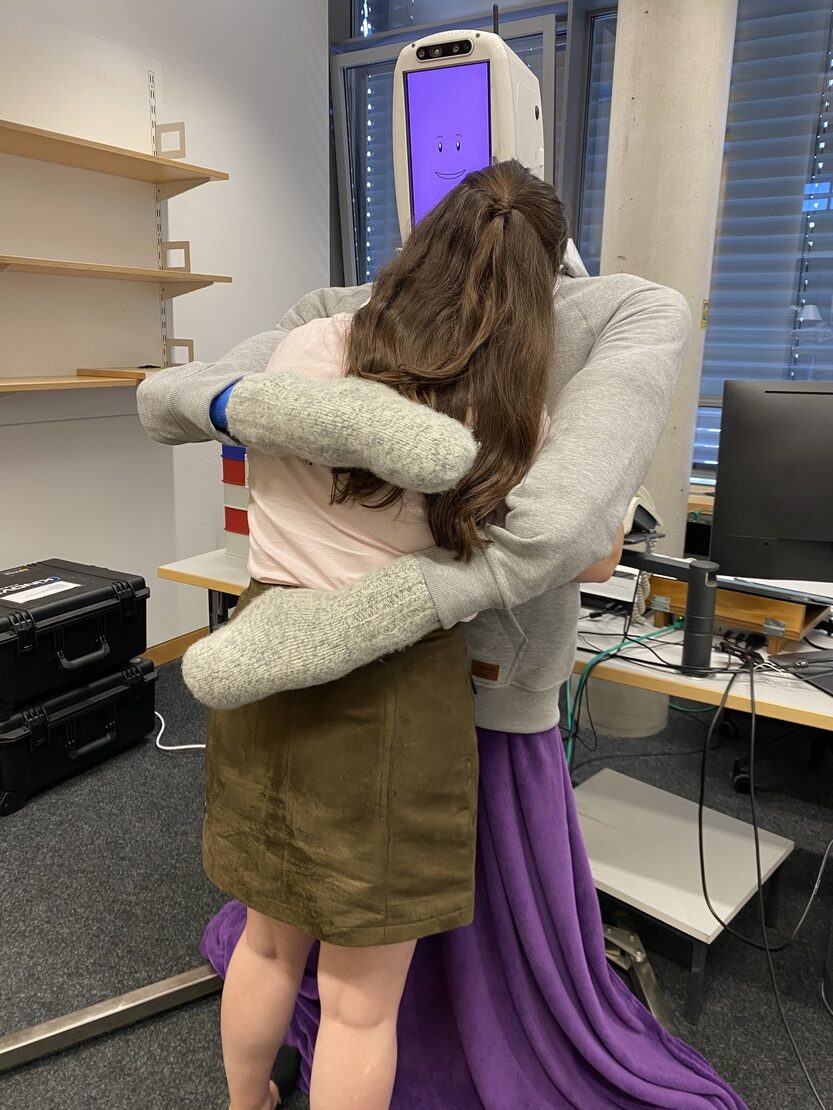
    HuggieBot

    Photo of HuggieBot; Max Planck Institute for Intelligent Systems

    Why should it do that?

    Creating an artificial system that simulates or replicates this interaction is highly beneficial. Hugs calm you down. They lower your stress, decrease your cortisol levels, and increase your oxytocin. During the pandemic we had to physically distance from our loved ones, but physical contact is a natural human need. By creating a hugging robot and adjusting how it behaves, we can test which factors are truly important. We varied how it physically reacted: We programed it to let go as soon as you let go, so it respects your wishes. We programed the robot also to proactively squeeze you gently. It was amazing to see how positively people responded then; they felt like the robot really cared about them.

    So, do we want robots to touch us as human-like as possible and or do we want a new way of interacting with machines, so we are not that much emotionally connected to something without feelings or emotions?

    Most of us have never hugged a robot before. This is the first robot of its kind, and I think you really have to try it to understand what it's like. In our studies, people actually hug much longer, like 20 seconds, whereas a typical hug with a friend is only two or three seconds long. We compared that to hugging a human. Many people mentioned feeling guilty about the actress we had hired to hug them. They said that she might feel uncomfortable at how long they would want to hug. With a robot, you don't have that. You don't have to worry about how the robot feels. 

    Haptic interaction is one way to interact with a robot. But you can also use speech, for example. Isn't it easier to just make the robot react to what you're saying it should do?

    It seems counterintuitive to humans because we're all so good at tasks like chopping up a carrot. But it is actually much easier for a robot to hear you say “robot, please chop the carrot” versus actually physically chopping the carrot. First, you have a dangerous thing, a knife. And a carrot is a natural material that is different every time. We have not yet mastered haptic intelligence nearly to the level of understanding speech. A robot can also look at the world and better understand what it's seeing compared to touching things or manipulating objects in the world.

    When I looked at your department’s research areas at the Max Planck Institute for Intelligent Systems and saw that one area was “understanding tactile contact”, I was actually a little bit surprised. I thought we already understand what touch is.

    Yes, we take our sense of touch for granted. Even think about how clumsy you become if your hand goes to sleep or if the dentist applies an anesthetic locally. You almost cannot talk or drink because you don't have this feedback of how your body is moving, which is tightly connected to how you activate your muscles. I guess touch is an under-appreciated sense because we're all so good at it through practice. Babies and children gain this experience through direct practice, and it takes years. I mean, I would not trust my four-year-old niece to chop a carrot. 

    How would you describe your department “Haptic Intelligence”, at the intersection of robotics and machine learning?

    That's close. We use machine learning in many aspects of our work, but I might say we're at the intersection of robotics and human-computer interaction. We're also trying to do curiosity-driven fundamental research to give some insights about how the human sense of touch works. 
     

    So where does the artificial intelligence come in?

    AI and machine learning are used for interpreting the signals. Let’s say I have a sensor on a robot, a fingertip sensor. There's some transformation which is often nonlinear and complicated. That's where the pattern recognition capabilities of machine learning really help. I chose the name of my department to be “Haptic Intelligence” because I believe that to create intelligent robot systems, we need not only the software side, but also improvements on the physical side.

    If someone wants to work in the field of tactile intelligence, what should they study?

    You should always follow your heart. Try a few things early in your career. If you know someone who's a computer scientist, ask them what they do. I think I could have been very happy as a computer scientist or as an electrical or a biomedical engineer. All of my degrees are in mechanical engineering, but I took a lot of classes in these other disciplines. A professor at Stanford used to tell us that we should try to be shaped like the letter “T”: broad, but then specialized in one area. You need to be able to speak to the other experts in relevant areas, so you can really build complex systems that are not only mechanical, but also involve electronics and a computer program. To me, it's very meaningful to create these integrated systems. It's complicated, it's tricky, but it's also fascinating.

    The interview has been edited and shortened for the written version. You can hear the longer version in the Cyber Valley Podcast Direktdurchwahl, Episode 06. Further information about the topic can be found here. 

    Graphic representation of a robot. Graphic: Cyber Valley / Beiter