User Group: Researcher

  • Research meets gaming

    Research meets gaming

    The games publisher Square Enix, the venture capital firm IT-Farm, and Cyber Valley are launching AI GameDev, a competition for start-ups and scientists who think their ideas could contribute to, or whose work focuses on, developing the most exciting artificial intelligence (AI) technologies for the entertainment and gaming industry.

    AI GameDev is Europe’s first competition that aims to facilitate technology and knowledge transfer from European AI research to the many possible applications in game development. “AI can help improve video games in many ways, for instance by creating better, more realistic virtual environments or scenarios”, says Michael J. Black, Director of the Perceiving Systems department at the Max Planck Institute for Intelligent Systems and Cyber Valley speaker. “We want to make the full potential of the European AI research and start-up scene visible and reward the best ideas.”

    The event partners have launched the www.aigame.dev website, where start-ups and AI researchers can submit their ideas by September 26, 2021 in the form of a pitch deck, a video, or a scientific paper. The application process will officially start on August 11, 2021. The best ten ideas will be selected for the competition, and their creators will be given the opportunity to present their concepts at an award ceremony on December 2, 2021. While Cyber Valley will honor the most promising scientific performance, IT-Farm will present the Audience Award. The Main Award will go to the most innovative AI solution. Sponsored by Square Enix, the prize includes a trip to Tokyo, Japan.

    “In the realm of gaming, AI technologies show great promise and could potentially lead to fundamental changes in terms of game design,” says Youichiro Miyake, Lead AI Researcher at Square Enix Co., Ltd. “Combining AI technologies with game design is the key to the future of digital games. I hope many young people and new companies will rise to this challenge.”

    Shinya Kasuga, Partner at IT-Farm Corporation, says: “Gaming and interactive entertainment are the frontier markets for technologies that capture, model, discover, enhance, and render the interaction between human beings and the world. It’s all about the ‘world’. The automotive sector, smart cities, healthcare, manufacturing, agriculture, education, and many other large sectors are now leveraging gaming and entertainment technologies to innovate their core business. In the AI GameDev contest, we are truly excited to meet with and support the AI entrepreneurs who are addressing the world’s major challenges.”

  • Cyber Valley research group leader wins prestigious award

    Cyber Valley research group leader wins prestigious award

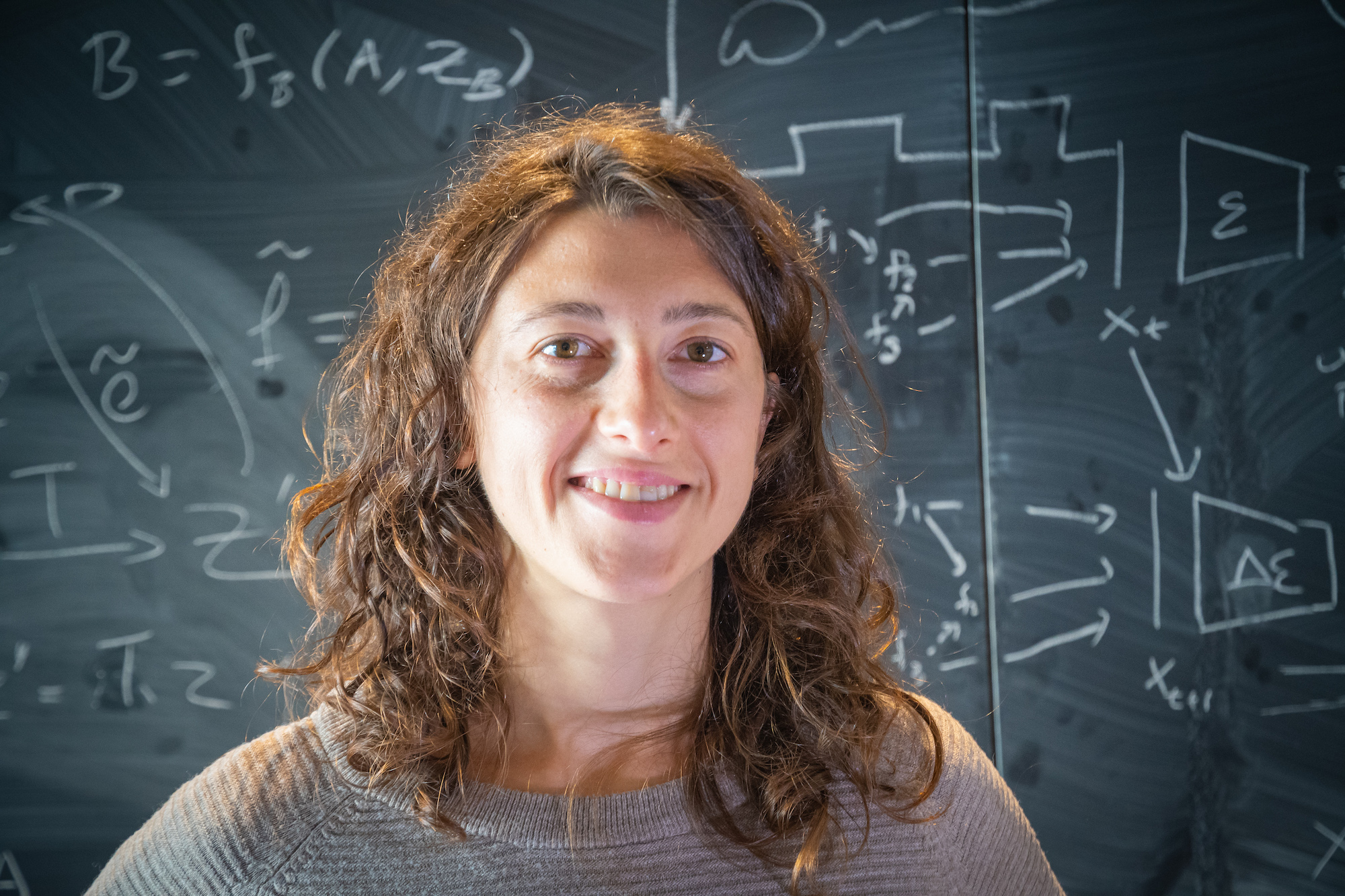
    The prize is awarded to scientists who have completed their PhDs no more than six years prior to the nomination. It acknowledges outstanding research contributions in the areas of statistical physics, nonlinear physics, complex systems, and complex networks. The nominees are generally proposed by current or previous advisors, and a committee assesses the nominations based on top quality research findings that have been published in international journals and widely cited.

    “I am honored not only that the committee selected me as the winner, but also that three of my previous advisors collaborated to nominate me,” said De Bacco. “I would like to thank everyone involved for this great recognition of my work.”

    The prize is set to be awarded on September 9 at the Statistical Physics of Complex Systems conference in Trieste, Italy.

    More Information on the European Physical Society can be found here.

  • Cyber Valley stands out at leading conference

    Cyber Valley stands out at leading conference

    With a total of 23 papers at ICML, the Cyber Valley partner institutions have doubled their number of papers accepted to the conference over 2020. This clearly illustrates the growing momentum of southwestern Germany’s hotspot for research in machine learning and related fields.

    “Our consistent success at leading global conferences testifies to the quality of the research being conducted at Cyber Valley partner institutions, and this has had a very positive effect on the growth of the regional research ecosystem,” says Philip Hennig, Professor for the Methods of Machine Learning at the University of Tübingen and Deputy Speaker of the Cyber Valley Executive Board. “Over the past year, Cyber Valley partner institutions have seen an increase in interest among up-and-coming and established scientists alike, with record numbers of applications for our PhD programs and several new faculty members.”

    Since the Cyber Valley consortium was founded at the end of 2016, it has grown into a dynamic ecosystem in the Stuttgart/Tübingen region, with newly established professorships, research groups, industry research labs, doctoral programs, and Germany’s first international master’s program in machine learning. The initiative has attracted a growing number of talented young people from around the world, and has quickly built an international reputation as a top research location in the field of modern AI.

    A full list of papers and authors is available here.

  • Fraunhofer IPA presents disinfection robot “DeKonBot”

    Fraunhofer IPA presents disinfection robot “DeKonBot”

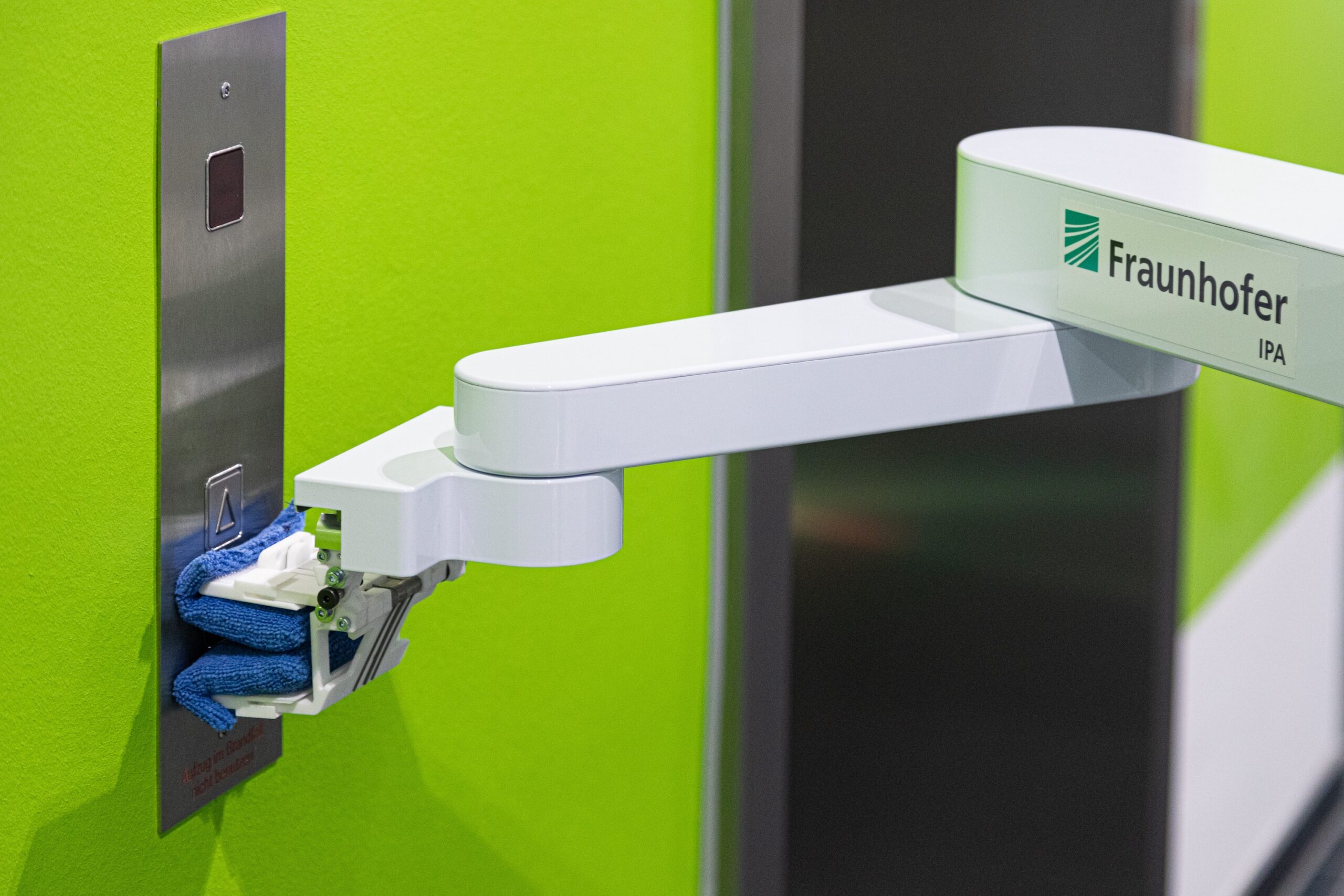
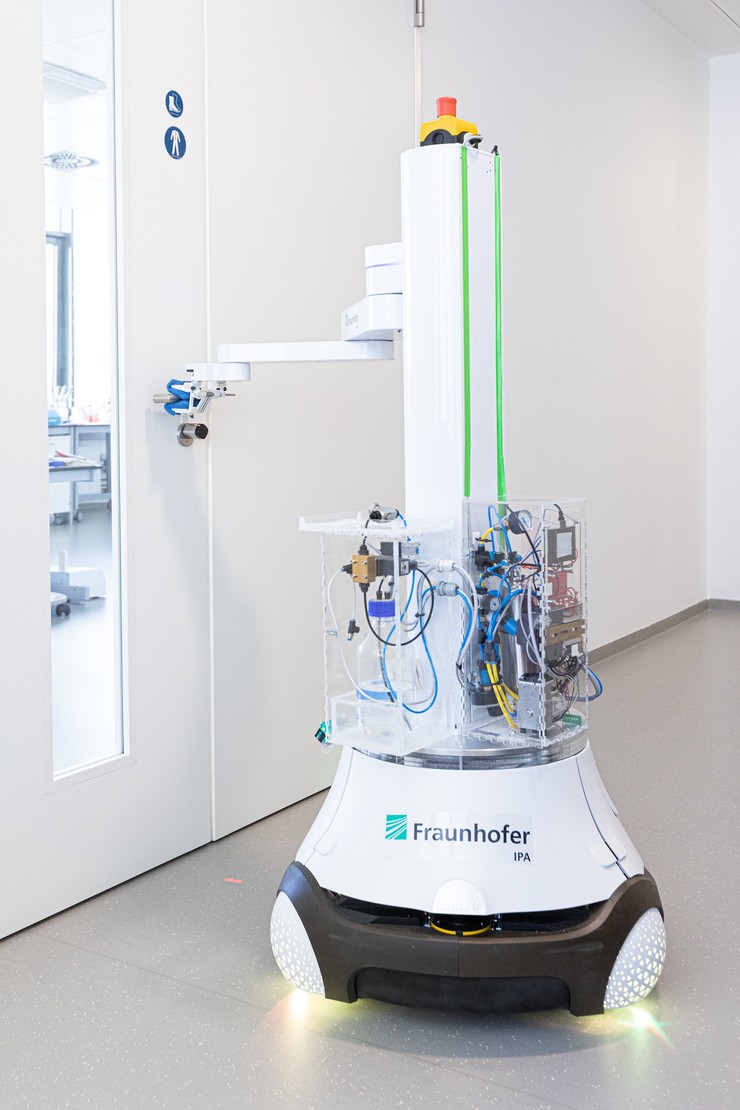
    The new prototype of the mobile disinfection robot “DeKonBot” is an automation solution that independently cleans and disinfects potentially contaminated areas such as door handles, light switches, or elevator buttons. Compared to cleaning by hand, the use of robots reduces the risk of infection for the cleaning staff and at the same time ensures that the cleaning task is carried out reliably and traceably. The continuous use of the robot, even during the night, means that cleaning jobs can be performed more frequently than if carried out manually.

    Targeted and safe disinfection

    Compared to available robot solutions on the market, DeKonBot has a few different features. On the one hand, it cleans relevant surfaces in a targeted and direct manner and does not spray the disinfectant over large areas in the room like some other robots. This not only saves on disinfectants and time because the surface to be cleaned is limited to the essentials, but also prevents hazards such as slipping on damp surfaces or inhaling potentially harmful chemicals. On the other hand, DeKonBot can be used safely in the presence of people. For safety reasons, disinfection robots that use UV rays to kill viruses, for example, require an environment where no people are present.

    In order for DeKonBot to work successfully, it is initially trained in its new operating environment with the help of a tablet that can be operated without expert robotics knowledge. First of all, the member of operating staff navigates the robot once through the environment, during which it independently creates a map of its operating environment. In addition, the user “shows” the robot the objects to be cleaned and the cleaning movement to be performed: For this purpose, the user guides the robot arm with the disinfection tool to the door handle, for example, and moves the tool as required to clean it. The robot saves the path and is subsequently able to repeat it independently.

    The objects to be cleaned are currently still recognized by means of so-called “tags”, i.e. small, black-and-white labels. The robot positions itself relative to these tags. In the future, tags will no longer be needed. Instead, methods recently developed at Fraunhofer IPA will be used, which on the one hand enable these objects to be automatically recognized in camera data. On the other hand, a new 3D sensor, which was developed in the course of the project, recognizes the objects to be cleaned and their position in the room better than other sensors available on the market, even if these objects have a metallic, reflective surface. Based on these recognition functions, in the final stage of development, the robot will be able to automatically plan and execute the required cleaning movements.

    Rapid joint development

    The prototype is the result of a joint development of the IPA departments “Robot and Assistive Systems”, “Laboratory Automation and Biomanufacturing Engineering” together with “Ultraclean Technology and Micromanufacturing”. DeKonBot received funding from the Fraunhofer-Gesellschaft's internal “Anti-Corona” program, in which it is carrying out comprehensive research and innovation activities to combat the pandemic.

    The development of the service robot proceeded rapidly. Already in April of this year, a first feasibility study was carried out, in which a simple spray tool was still used for disinfection. “Just four months later, we were able to put the disinfection robot with its new wiping tool into operation – despite the limitations that the coronavirus pandemic also caused for us Fraunhofer employees”, explains Dr. Birgit Graf, Manager of the “Household and Assistive Robotics” group and manager of the DeKonBot project.

    The development of the prototype profited from extensive preliminary work carried out by the institute in the field of mobile service and cleaning robotics. For example, the mobile platform of the robotic home assistant Care-O-bot® 4 was used, which is already being sold as a serial product by an IPA spin-off. Existing software modules for navigation, 3D object recognition and manipulation could be further developed specifically for the application. Currently, first field tests are being performed with the robot in the offices at Fraunhofer IPA. Later, employees from a cleaning company will test the robot in an external building. Until the end of the project in February 2021, the robot will be further optimized based on the test results. Measurements of the bacterial load in the disinfected areas will be used to verify the benefit of the robot.

    In addition, the research project “Mobile Disinfection” (MobDi), also funded by the Fraunhofer-Gesellschaft and starting in October this year, will be focusing on and further developing DeKonBot technologies. In particular, new disinfection methods and tools, as well as more complex detection and planning methods, will be developed in the course of the one-year project period, thus enabling disinfection robots to plan the cleaning and disinfection process systematically.

    Production readiness in view

    DeKonBot has not yet reached its full range of functions but researchers at Fraunhofer IPA have already developed a concept for a later serial product. “Together with interested companies, we would like to put the service robot into practice and thus make a contribution to restarting public life even in times of the coronavirus,” says Graf, stating the next goals. Several cleaning companies that were actively involved in the development of the robot have already expressed their interest in using DeKonBot.

  • Better decisions, more control: “Best Paper Award” for Tübingen researchers

    Better decisions, more control: “Best Paper Award” for Tübingen researchers

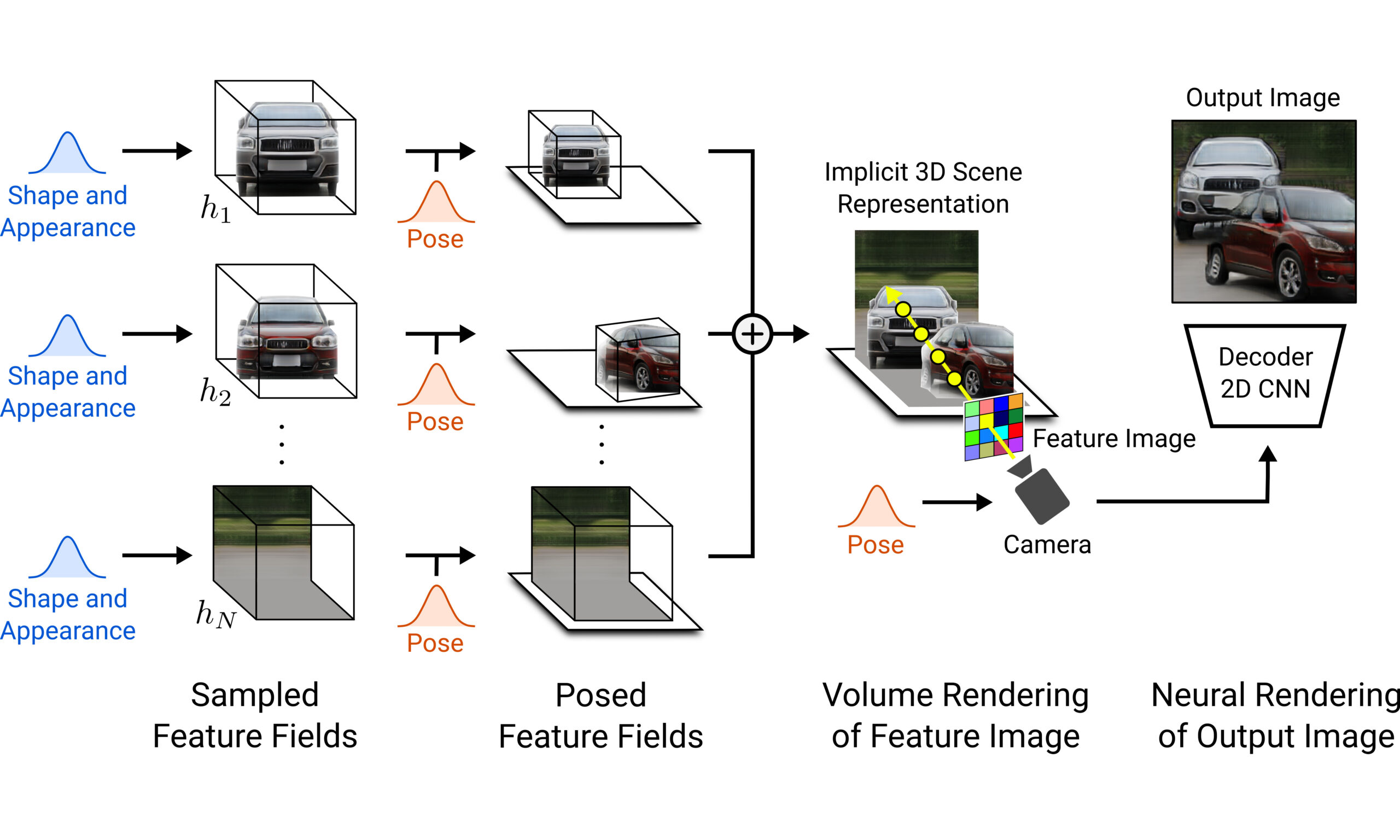
    The paper of the two scientists from Tübingen is basic research in the field of computer vision. In it, Niemeyer and Geiger describe a method they developed that for the first time now makes it possible for computers to independently identify various three-dimensional objects on two-dimensional images (e.g., photographs).

    “Our goal is for computers to learn for themselves how images – we’re talking about scenes here – are constructed,” says Niemeyer, lead author of the paper and a scholar at the International Max Planck Research School for Intelligent Systems (IMPRS-IS), the Cyber Valley graduate school. “So, the computer should recognize which three-dimensional objects are present in a photo, that is, how a scene is structured.” While most current approaches rely on two-dimensional datasets and do not capture the imaged scenes in three dimensions, Niemeyer and Geiger’s new model, GIRAFFE, recognizes the imaged objects in three dimensions, allowing for all sorts of different perspectives on the same scene.

    In concrete terms, this means that a simple photo showing a car parked in front of a house, for example, can serve as a basis for viewing the car not only from the front, but also from other angles in front of the house. In addition, the position of the car in the image can be shifted as desired, thereby obscuring or revealing different parts of the house in each case. “This is what we mean by ‘compositional’ – our computer model captures the structure of the scene being depicted. It recognizes the car in the foreground as one object and the house in the background as another,” Niemeyer says.

    GIRAFFE also offers more control over image generation. For example, the shape of an imaged object can be changed at will. In the future, this could provide a much more realistic representation when generating virtual environments, among other things. “Our paper is a basic work,” Niemeyer emphasizes. “Other researchers could use this as a basis for constructing safer AI applications, since they can now make better decisions thanks to a better understanding of their environment.” One conceivable field of application here, for example, would be autonomous driving, where the computer systems of cars could in the future better detect which objects are present in their environment – and thus draw more precise conclusions about the properties and behaviors of these objects. In addition, Niemeyer and Geiger’s model enables improved artificial generation of data because it requires only two-dimensional photos as a starting point. Accordingly, AI systems could be trained in an artificially generated environment in the future.

    CVPR is one of the most prestigious international research conferences and is considered the most important conference in the field of computer vision. Only about a quarter of the approximately 7,000 papers submitted are accepted to the conference. With a total of 27 accepted papers and four best paper nominations, Cyber Valley researchers are particularly well represented among the world leaders in basic AI research at CVPR this year.

    “My research group has already published several papers that address learning appropriate 3D representations with neural networks, which have received widespread attention in the computer vision community,” Geiger says. “The paper that has now won the award also built on that.” Still, Geiger and Niemeyer didn’t expect this particular award at CVPR 2021. Niemeyer: “The fact that our paper was accepted to the conference was an achievement in itself. We are really very surprised that our scientific paper has now been recognized as the best among all the submissions. We are all the more pleased about this outstanding recognition!”

  • What is the impact of AI on education?

    What is the impact of AI on education?

    The emergence of artificial intelligence (AI) and data use in education and training has triggered a discussion on its role and ethical implications. For example, AI-powered techniques can be used to record and assess details of students’ development, social relationships, behaviour, and educational performance in order to improve learning processes based on these data. This can be achieved by finding repetitive patterns of failure or success and by detecting areas for improvement. These approaches have led to a discussion about ethics and privacy in the context of AI and education-related data, as well as risks related to fundamental rights such as the right to non-discrimination, including gender equality. “Algorithms function like boxes. They are based on standards that are set by people and can therefore also be afflicted with their stereotypes. These stereotypes are often unconscious and thus find their way into the development of technology without being reflected upon. We need to be aware of this,” Wirzberger says. She is also newly appointed spokesperson for the Interchange Forum for Reflecting on Intelligent Systems (IRIS) which aims at answering the question what the impact of intelligent systems on society is.

    As the use of AI systems and thus the use of big data in education advances rapidly, there is a growing need to equip educators and students with a basic understanding of these technologies. This is essential to enable them to engage positively, but critically with questions about AI and data material in education and the ethics surrounding their implementation. To address these issues, the European Commission’s Directorate-General for Education, Youth, Sports and Culture (DG EAC) set up a group of experts on AI and data in education and training together with the Commission’s Directorate-General for Communications Networks, Content and Technology (DG CNECT). 

    What are the tasks of the expert group?

    The group’s primary task will be to assist DG EAC and DG CNECT with the preparation of practical guidelines for educators with concrete practices on the ethical implications of AI and data use in education and training. Members of the group will support cooperation and the exchange of information, expertise and best practices between the Commission and relevant stakeholders. The group will also help to raise awareness within education and training sectors about the opportunities and risks of the use of AI and education related data. 

    Background

    With the Digital Education Action Plan, the European Commission presented its strategic view on addressing the impact of the COVID-19 crisis, as well as the long-term digital transformation of education and training systems. The first strategic priority of the Action Plan – ‘fostering the development of a high-performing digital education ecosystem’ – which seeks to promote understanding of emerging technologies and their application education foresees the creation of ethical guidelines on AI and data use in education and training. The guidelines will be accompanied by a training programme for researchers and students on the ethical aspects of AI. The Digital Education Action Plan is a key initiative under the Commission’s European Education Area initiative, which outlines its vision for the future of education and training in the EU until 2025 and beyond.

  • Cyber Valley’s computer vision research community shines at leading global conference

    Cyber Valley’s computer vision research community shines at leading global conference

    As Cyber Valley partner institutions, the Max Planck Institute for Intelligent Systems (MPI-IS), the University of Tübingen, and the Bosch Center for Artificial Intelligence have consistently attracted outstanding computer vision researchers from around the globe, making the Stuttgart/Tübingen region one of the world’s top research locations in the field. In particular, Tübingen’s computer vision community has continued to grow in the past year, with impressive results.

    Scientists from both institutions are making a strong showing at this week’s Conference on Computer Vision and Pattern Recognition (CVPR), with a total of 27 accepted papers and four best paper nominations. CVPR is one of the most competitive international conferences in the field, with an acceptance rate of around 25 percent. Due to the ongoing COVID-19 pandemic, the conference is running online until June 25.

    “Over the past year, we’ve established new professorships and group leader positions in the field of computer vision. In so doing, we’ve expanded the scope of our research and further strengthened the Cyber Valley community. Our repeated success at major conferences like CVPR clearly shows that we are on the right path,” says Michael J. Black, Cyber Valley spokesperson and Director at the MPI-IS, where he heads the Perceiving Systems Department.

    Since the Cyber Valley consortium was founded at the end of 2016, the dynamic ecosystem in the Stuttgart/Tübingen region has consistently gained momentum in the fields of machine learning, robotics, and computer vision. In addition to attracting world-class senior scientists, Cyber Valley’s graduate programs have quickly gained a solid international reputation among young researchers in the field of modern AI.

    A full list of papers and authors is available here.

  • Zweiter Workshop, Mental Effort

    Zweiter Workshop, Mental Effort

    Detaillierte Beschreibung des Workshops, der in englischer Sprache abgehalten wird:

    We can all feel exhausted after a day of work, even if we have spent it sitting at a desk. The intuitive concept of mental effort pervades virtually all domains of human information processing and has become an indispensable ingredient for general theories of cognition. However, inconsistent use of the term across cognitive sciences, including cognitive psychology, education, human-factors engineering and artificial intelligence, makes it one of the least well-defined theoretical constructs across fields.

    The purpose of our two-day workshop is to bridge this gap by (a) offering hands-on tutorials on different computational approaches used to model mental effort and by (b) fostering discussion about the operationalization of mental effort among scientists from different research communities and modeling backgrounds.

    Key questions of discussion will include (but are not limited to):

    ● What are the experimental phenomena that lay a foundation for theories of mental effort?

    ● What is the common ground in operationalizing mental effort across different domains of cognitive science?

    ● Which modeling approach(es) is (are) best suited to answer which questions regarding mental effort?

    The workshop is specifically designed to attract scholars with expertise in different modeling

    Call for abstracts and registration

    Are you working on a project or thesis related to mental effort and want to discuss your ideas?

    If so, we are inviting you to present a poster during our virtual poster session.

    Registration and Call for Submission Closes: July 15, 2021

  • Silbersalz AI Media Lab

    Silbersalz AI Media Lab

    The AI Media Lab aims to lead new creative collaborations with artists, technologists and media producers and level up the researchers’ science communication. Where other programmes focus on embedding artists and creatives with scientists in order to inform their creative practice, the AI Media Lab puts scientists in at the forefront of the collaboration.

    The programme will take a group of scientists and develop their research into fully fledged proposals for engaging artworks and experiences that are ready to pitch for investment. Participants will learn to communicate their research in novel and exciting ways under the guidance of expert industry mentors from the worlds of science communications, art, technology, media and impact. Each scientist will develop a creative concept for their research take part in a before taking part in a bespoke matchmaking process toduring which they will forge a new creative collaboration with an artist or media producer who will help them make their engagement project a reality. The final results will be pitched at Silversalz Festival, 17 and 18 September 2021.

    … and Nicole Ludwig, Krikamol Muandet, and Sergey Prokudin.

    The AI Media Lab kicked off 19th of April 2021with a webinar on science communication projects and is supported by and in collaboration with Cyber Valley, Europe’s largest AI cluster. The lab is produced by Documentary Campus and curated by Crossover Labs who together share over 30 years experience in running media training programmes.

    About Silbersalz Festival:

    “All human beings are born free and equal in dignity and rights”, as stated in the Universal Declaration of Human Rights. However, the reality is often quite different. What can science do to overcome injustice and discrimination in society, politics, and environmental issues? Using the motto “Inequality”, Silbersalz21 is looking for answer along with its audience – from 15 to 19 September 2021 at various locations in Halle (Saale).