User Group: Researcher

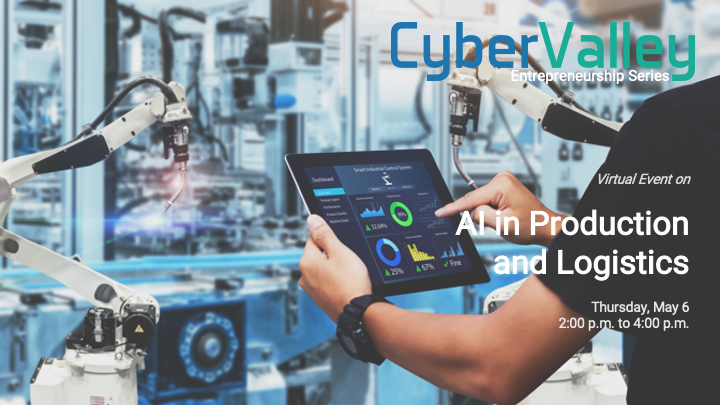
  • AI in Production & Logistics

    AI in Production & Logistics

    Speakers

    At this event, exciting speakers incude:

    Marco Huber

    Professor at University of Stuttgart and Head of Center for Cyber Cognitive Intelligence at Fraunhofer IPA

    Marcus Müller

    Co-Founder Smart Site Solutions GmbH

    Felix Müller

    Co-Founder plus10

    Gitte Bedford

    Vice President at Robert Bosch Venture Capital GmbH


    Registration

    Please register here, the meeting will be held in English on Zoom.


    Contact

    Oliwia Gust –  Event Manager for Cyber Valley
    Phone: +49 7071 601 1554
    Mobile: +49 151 4075 6302 
    Mail: oliwia.gust@cyber-valley.de

  • AI for rent

    AI for rent

    Please find the full article below in German.

    Künstliche Intelligenz (KI) hilft dabei, Produktionsabläufe zu optimieren und so Geld zu sparen. Kleinen und mittleren Unternehmen fehlt allerdings oft die Expertise, um diese Zukunftstechnologie zu nutzen. Sie können zwar die nötigen Daten sammeln, scheitern jedoch an deren Analyse. Hier helfen große Cloud-Anbieter. Sie bieten einfache digitale Werkzeuge, die große Datensätze verarbeiten und KI-Lösungen liefern. Experten sprechen von »Machine-Learning-as-a-Service-Plattformen«. So kann jedes Unternehmen ohne große Erfahrung in die Künstliche Intelligenz einsteigen und sich Modelle entwickeln lassen, die etwa fehlerhafte Werkstücke automatisch erkennen.

    Gängigste Anwendungsfälle auf vier Plattformen im Vergleich

    Aber welche Plattform ist für welche Aufgabe geeignet? Die Stuttgarter Fraunhofer-Institute für Produktionstechnik und Automatisierung IPA und für Arbeitswirtschaft und Organisation IAO haben die Ansätze der vier größten Anbieter – AWS, Google, IBM und Microsoft – verglichen. Sie setzten Lösungen für vier Anwendungsfälle um, die in der Praxis häufig vorkommen und vier Kategorien von Daten umfassen: Tabellarische Daten, Text-, Bild- und Zeitreihendaten:

    • Kundenabwanderung: Für Hotels ist es vorteilhaft, frühzeitig zu wissen, bei welchen Gästen eine Stornierung droht. Möglicherweise steckt in den tabellarischen Buchungsdaten bereits ein Hinweis. KI kann ihn aufspüren und einen entsprechenden Algorithmus entwickeln.
    • Textkategorisierung: Texte können verschiedenen Sparten zugewiesen werden, etwa Kultur, Sport und Politik. So kann zum Beispiel eine Presseagentur automatisch ein Archiv pflegen.
    • Bilderkennung: Bei der Produktion spielt die Bildanalyse eine wichtige Rolle. So lassen sich mit Kamerasystemen Defekte auf dem Werkstück feststellen. KI hilft dabei, diese Kontrolle zu automatisieren. Aus einer Vielzahl mit Metadaten versehener, sogenannter annotierter Bilder lernt die KI, Fehler zu erkennen.
    • Werkzeugabnutzung: Einen Fräskopf zum richtigen Zeitpunkt auszutauschen, spart Geld. Wer zu früh eingreift, verschenkt Material, wer zu spät eingreift, riskiert einen langen Stillstand der Produktion. KI lernt, die Zeitreihendaten von Vibrationen und Stromverbrauch zu deuten, um den Zustand des Fräskopfs richtig abzuschätzen.

    In der Regel gilt für KI-Lösungen: Je mehr Daten zur Verfügung stehen und umso besser die Qualität der Daten ist, desto zuverlässiger arbeitet das gewonnene Modell. Beim Vergleich der Plattformen haben die Fraunhofer-Wissenschaftler stets den zugänglichsten Lösungsweg gewählt. Dabei mussten oft lediglich die Datensätze hochgeladen und mit einer Annotation versehen werden: Bei der Bildverarbeitung hieße das etwa, jedes Bild mit dem Zusatz korrekt oder fehlerhaft zu versehen. Die Plattform lieferte dann das gewünschte Modell samt der Vorhersagegenauigkeit.

    Ergebnisse

    Die Fraunhofer-Studie hat ergeben, dass die Lösungen aller Anbieter Stärken aufzeigen und kein tiefes Fachwissen voraussetzen. Natürlich gibt es den einen oder anderen Unterschied. So lassen sich manche Plattformen intuitiver bedienen als andere. Auch laufen manche KI-Modelle nur auf der Cloud des Anbieters, andere können auch exportiert und auf unternehmenseigenen Servern installiert werden.

    Welche Plattform für welchen Anwendungsfall empfohlen werden kann, wird in der Studie »Cloudbasierte KI-Plattformen – Chancen und Grenzen von Diensten für Machine Learning as a Service« dargestellt.

    Pressekontakt:

    Juliane Segedi

    Presse und Öffentlichkeitsarbeit des Fraunhofer IAO

    Telefon +49 711 970-2343

    presse@iao.fraunhofer.de

  • Kickoff AI!

    Kickoff AI!

    Please find the full article below in German.

    Potenzial erkannt, Umsetzung verkannt? Künstliche Intelligenz und Maschinelles Lernen sind Schlüsseltechnologien für die Zukunft des Digitalstandorts Deutschland. Ihre Einführung und Umsetzung in praxistaugliche Anwendungen, die wirtschaftlich nutzbar sind, erfordern jedoch eine strategische Transformation auf verschiedenen Ebenen. Das KI-Fortschrittszentrum des Fraunhofer-Instituts für Arbeitswirtschaft und Organisation IAO sowie des Fraunhofer-Instituts für Produktionstechnik und Automatisierung IPA unterstützt Unternehmen als Teil des Cyber-Valley-Konsortiums an der Schnittstelle zwischen anwendungsorientierter Wissenschaft und exzellenter Forschung dabei, innovative KI-Anwendungen und menschzentrierte KI-Lösungen zu entwickeln.

    Technologie verstehen, Menschen befähigen, Prozesse gestalten

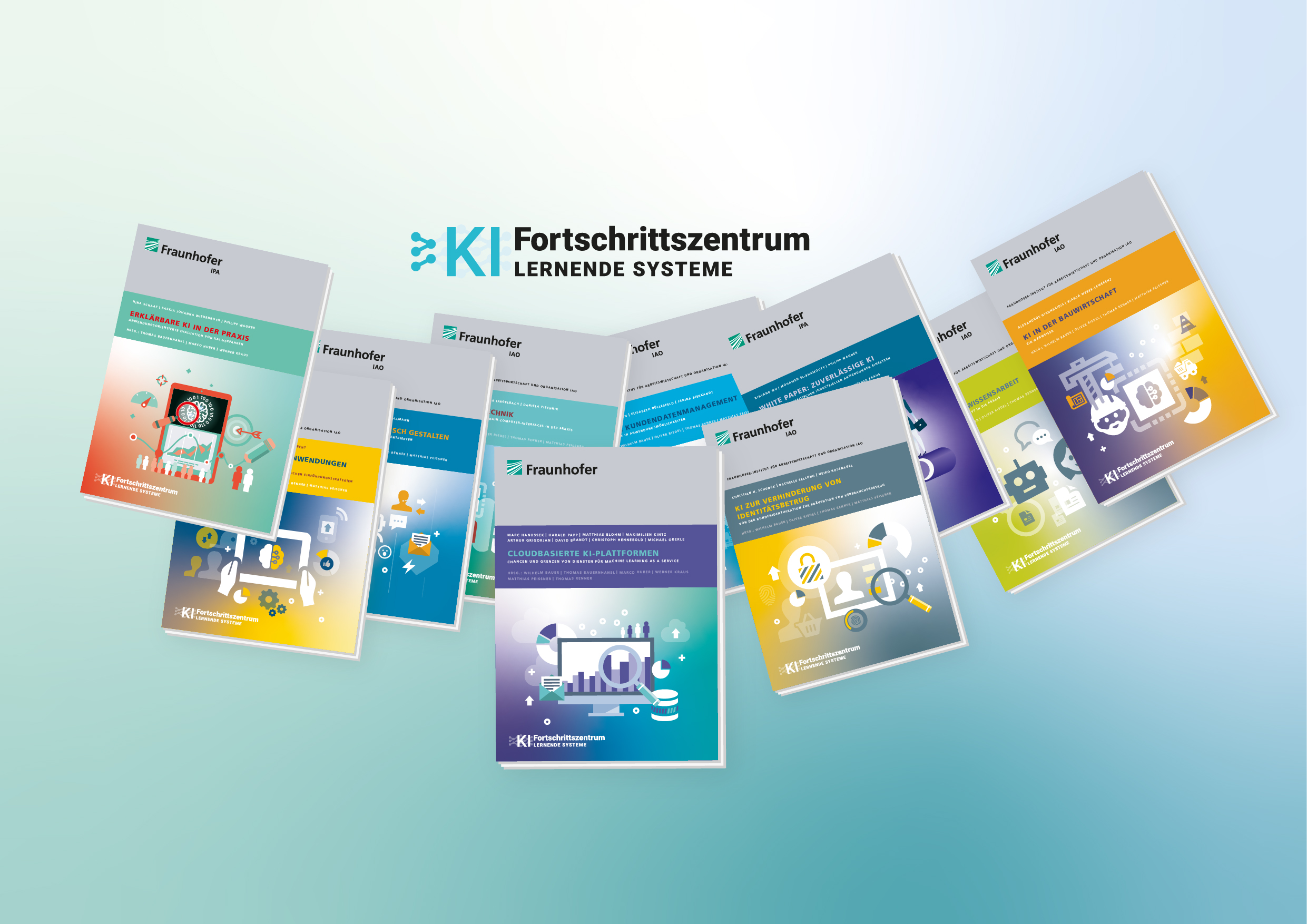
    Mit der Studienreihe »Lernende Systeme« gibt das KI-Fortschrittszentrum Einblick in die Potenziale und die praktischen Einsatzmöglichkeiten von KI. Die zehn Publikationen führen zum einen in übergreifende KI-Themen wie Zuverlässigkeit, Erklärbarkeit (xAI) oder Cloud-basierte Plattformen ein, zum anderen beleuchten sie detailliert Anwendungsbeispiele und Einführungsstrategien. Im Fokus stehen die Bereiche Wissensarbeit, Bauwirtschaft, Produktion und Kundenservice. Die Studienreihe umfasst folgende Publikationen und Themenschwerpunkte:

    • Cloudbasierte KI-Plattformen
      Chancen und Grenzen von Diensten für »Machine-Learning-as-a-Service«
    • Menschzentrierte KI-Anwendungen in der Produktion
      Praxiserfahrungen und Leitfaden zu betrieblichen Einführungsstrategien
    • Zuverlässige KI
      KI in sicherheitskritischen industriellen Anwendungen einsetzen
    • KI in der Bauwirtschaft
      Einsatzmöglichkeiten für Planung, Realisierung und Betrieb von Bauwerken
    • Erklärbare KI in der Praxis
      Anwendungsorientierte Evaluation von xAI-Verfahren
    • KI im Kundendatenmanagement
      Einblicke in Anwendungsmöglichkeiten
    • KI zur Verhinderung von Identitätsbetrug
      Von der Kundenidentifikation zur Prävention von Verbraucherbetrug
    • Kundenservice empathisch gestalten
      Mit intelligenten Systemen zu einer nutzerzentrierten Kundeninteraktion
    • Feinfühlige Technik
      Praxiseinsatz von Neuroergonomie und Brain-Computer-Interfaces
    • KI für die Wissensarbeit
      Algorithmen, Modelle und Technologien zur Unterstützung von Wissensarbeit

    »Wir verfolgen das Ziel, mit und für Unternehmen KI-Anwendungen zu entwickeln, denen die Menschen vertrauen und die sie akzeptieren. Nur wenn Menschen mit neuen Technologien intuitiv interagieren und vertrauensvoll zusammenarbeiten, kann ihr Potenzial optimal ausgeschöpft werden« betont Dr. Matthias Peissner, Leiter des KI-Fortschrittszentrum am Fraunhofer IAO. Die Studienreihe nimmt daher besonders Themen wie Zuverlässigkeit, Erklärbarkeit (xAI), Technologien und Einführungs­strategien in den Blick. »Niedrigschwellige Angebote für Unternehmen sind seit jeher ein Eckpfeiler des KI-Fortschrittszentrums als Transfereinrichtung des Cyber Valley. Diesem Anspruch kommen wir auch mit der Studienreihe nach«, ergänzt Prof. Marco Huber, Leiter des KI-Fortschrittszentrums am Fraunhofer IPA.

    Kickoff KI! Niederschwellige Angebote für den Einstieg für Unternehmen

    Die Studien stehen ab sofort zum Download auf der Webseite des KI-Fortschrittszentrums zur Verfügung. In den nächsten Wochen werden die einzelnen Studien in verschiedenen Formaten vom Blogbeitrag bis hin zum Videoformat »Unboxing Science« näher vorgestellt. Weitere Leistungsangebote und Handlungshilfen rund um Künstliche Intelligenz sind zudem auf den Webseiten des Fraunhofer IAO zu finden.


    Zu den Studien

    Die Studienreihe »Lernende Systeme« des KI-Fortschrittszentrums gibt Einblick in die Potenziale und die praktischen Einsatzmöglichkeiten von KI. Dabei werden übergreifende Themen wie Zuverlässigkeit, Erklärbarkeit (xAI), cloud-basierte Plattformen, Technologien und Einführungsstrategien diskutiert. Hier geht's zur Studienseite.

    Pressekontakt:

    Juliane Segedi

    Presse und Öffentlichkeitsarbeit des Fraunhofer IAO

    Telefon +49 711 970-2343

    presse@iao.fraunhofer.de

  • Making the virtual world even more realistic

    Making the virtual world even more realistic

    Tübingen – Justus Thies will start a position as a Max Planck Research Group Leader on April 1, 2021. His “Neural Capture & Synthesis” group will be situated at the Tübingen site of the Max Planck Institute for Intelligent Systems (MPI-IS). Previously a postdoctoral scientist at the Technical University of Munich (TUM), Thies plans to push the boundaries in the research field of capturing and synthesizing the real world, which includes people, objects, rooms, and even entire scenes. His goal is to synthesize and model the human body and objects so realistically that a viewer will no longer notice the difference. With the rise of deep learning methods in general and neural rendering in particular, Thies’s facial reenactment method has reached a quality that raised a great deal of attention in academia, industry, and media. By combining novel findings in machine learning with classical computer graphics and computer vision approaches, his technology shows promising results.

    Creating ever more realistic avatars

    Thies’ research could be applied in a broad range of fields, from autonomous vehicles or household robots to medical applications and video post-production. However, his main goal is to revolutionize telecommunications. “I want to change the way people interact with each other at a distance,” he says. “In the future, if we want to speak to a person who is elsewhere, we will wear a virtual or augmented reality lens that projects a photorealistic 3D avatar of that person right in front of us. The person will be digitally reconstructed in a way that feels like they are in the same room. This will be an amazing experience, but only once the digital human and their appearance, expressions, and natural movements are indistinguishable from the real person. Hence, I aspire for everyone to be able to create a realistic 3D avatar of themselves whose movement is realistic.”

    Thies’ goal is for users to capture themselves with cameras that are commonly available, without having to rely on a complex setup to create their own avatar. Placing people in a 4D body scanner would be much too complex and expensive. “One idea is to work with the cameras of game consoles, for example, whose Kinect sensors record color and depth. A built-in distance sensor measures how long it takes for light to travel from the camera to the scene and back. This gives me a three-dimensional point-cloud of a person from which I can then create an avatar.”

    Syncing the movement of a face with the input audio

    Revolutionizing the way people communicate is one potential area of application. Another is in video post-production, where dubbed films would show the actors' lips moving in the target language. “To learn the expressions and appearance of a target face, our algorithm only needs a short video clip of about two minutes,” Thies says.

    Also known as real-time facial reenactment, audio-driven facial video synthesis, or neural voice puppetry, this technology is only just beginning to gain momentum. It is driven by a deep neural network that employs a latent 3D face model space. In this way, a video can be created showing a celebrity speaking in a different voice or even showing the person saying things in their own voice that they never said in real life.

    “This is the negative side of facial reenactment, as the generation of photorealistic imagery can be misused. The algorithms applied when dubbing and lip-syncing a film can also be used to create a speech by a head of state, putting words in their mouth that are fake and untrue. If people don’t notice the hoax, this could potentially cause confusion, disruption, and even undermine a society. Deep fakes are increasingly popping up on the internet, and they can be difficult to recognize. Digital multi-media forensics is thus another pillar of my research. Here, I aim to develop algorithms that automatically detect whether a video sequence is synthetic or has been manipulated.”

    Understanding deep fake technology in order to detect it

    Multi-media forensics is about training an AI algorithm with a large dataset so it can identify fake videos based on the artifacts visible in a video sequence – often occurring along the seam between the synthesized face and the real background. The algorithm also examines the colors’ noise behavior and assesses whether it is realistic. In this way, artificial intelligence can detect relatively easily if there has been a manipulation. “This is exactly the kind of technique that can then be automated,” Thies says. “There are already attempts to offer this deep-fake detection technique as a browser plug-in for anyone surfing the internet, which automatically recognizes and flags fake images and videos. This would protect against fake news.”

    It’s a game of cat and mouse, as deep fakes are continuously improving. Nowadays, it is relatively easy to recognize a deep fake. In the near future, however, it will become increasingly difficult. Creating ever-more photorealistic video content thus comes with a huge responsibility. “My work raises the bar so that not just anyone can fake a video that remains unnoticed. By gaining knowledge about the creation process, we can design the most advanced forgery detection algorithms. You have to be at the forefront of this technology in order to detect, flag, and reveal the fakes,” Thies concludes.


    About

    Justus Thies is formerly a postdoctoral researcher at the Technical University of Munich. In September 2017, he joined Prof. Matthias Nießner’s Visual Computing Lab. Previously, he completed his Ph.D. at the University of Erlangen-Nürnberg under the supervision of Gunther Greiner. Thies received his master of science from the University of Erlangen-Nürnberg. During the time as a doctoral student, he collaborated with other institutions, with internships at Stanford University and the Max Planck Institute for Informatics in Saarbrücken.

    A medical project marked the beginning of Justus Thies’s research on capturing and synthesizing image and video content. The aim was to capture the faces of patients with cleft palates. For several decades, patients were photographed again and again, allowing scientists to see how their faces changed over the course of treatment and how their wounds healed. With the approach he developed, patients with a cleft palate can now see the results of particular treatment methods in ten years’ time.

    His research can be watched on this Youtube channel.

  • “We’d like to make complex dynamical systems better able to adapt to changing conditions”

    “We’d like to make complex dynamical systems better able to adapt to changing conditions”

    Tübingen – Michael Mühlebach developed an interest in machine learning early on in his career. Over the course of his PhD, he designed learning and control algorithms for a balancing robot and a flying machine. While such research projects were based on hand-crafted solutions for the reliable operation of small-scale systems in a confined environment, Mühlebach is now looking to expand his research to the next frontier: as leader of the independent Learning and Dynamical Systems research group at the Max Planck Institute for Intelligent Systems (MPI-IS) in Tübingen, Mühlebach plans to focus his attention on large-scale dynamical systems that interact with complex environments. He joined MPI-IS on February 1, 2021.

    “There is a lot of exciting research to be done at the intersection between machine learning, optimization, and control theory.” Mühlebach says. “We would like to make systems such as power grids or autonomous transportation systems better at adapting and responding to changing conditions and circumstances. Here, the challenge lies in developing algorithms that not only detect patterns in the data to continuously improve performance, but that are also capable of functioning reliably when something unexpected happens, like an extreme weather event or a sudden change in traffic, for example.”

    At present, machine learning and control methods are widely applied to dynamical systems that have a few degrees of freedom and that work in a confined environment. For example, these methods are very effective at stabilizing an autonomous flying vehicle and ensuring it can adapt to crosswinds or the wear-and-tear of its propellers. However, hand-crafted solutions are still needed to reliably handle major and sudden changes, such as the loss of a propeller or a sudden and large change in payload.  Another significant challenge lies in dealing with larger systems. To make machine learning algorithms more capable of succeeding in more complex scenarios, Mühlebach would like to pursue the approach of better incorporating prior knowledge in the form of physical laws, for instance. “Ultimately, the idea is to eliminate misleading patterns in the data, because these have a negative effect on a system’s ability to make accurate predictions. And even if something unexpected happens that the data doesn’t capture, the system still has to be able to cope, adapt, and function nonetheless. With systems that can affect people’s lives, the stakes are very high and reliability is crucial,” Mühlebach says.

    Another central challenge in this field of research lies in developing approaches that can effectively handle the sheer amount of data, while still operating in real time. “As our sensing capabilities increase, we are able to collect more and more data and create very precise models. However, we would like to update our models and use them to take sensible action in real time. It is therefore decisive that our algorithms do their jobs in a short amount of time and effectively use the available computational resources.” For this reason, Mühlebach is expanding on his past research in the area of optimization algorithms. These are computer programs that can decide, for example, which action is favorable or even the best among a set of alternatives. “Ultimately, most machine learning, statistical inference, and control algorithms are based on mathematical optimization.”

    As he builds his team, Mühlebach looks forward to taking advantage of the benefits that the MPI-IS and the Tübingen research community offer. “Tübingen is one of the leading places for machine learning, and I chose MPI-IS because there are excellent people here doing both theoretical and experimental work. The infrastructure is amazing; there aren’t many places like this in the world,” he says.

    Mühlebach’s research is supported by the prestigious Branco Weiss and Emmy Noether Fellowships, which he received in 2018 and 2020, respectively. The Branco Weiss Fellowship supports outstanding and interdisciplinary research projects that depart from mainstream research. The Emmy Noether Fellowsip, a programme of the German Research Foundation DFG, provides outstanding early career researchers funding for a period of six years to build independent research groups. Previously, Mühlebach was a postdoctoral researcher at the University of California, Berkeley and completed his master’s degree and PhD at ETH Zurich.

  • Underwater swimming robot responds with feedback from soft ‘lateral line’

    Underwater swimming robot responds with feedback from soft ‘lateral line’

    Their work “Modeling and Control of a Soft Robotic Fish with Integrated Soft Sensing” was published in Wiley’s Advanced Intelligent Systems journal, in a special issue on “Energy Storage and Delivery in Robotic Systems”.

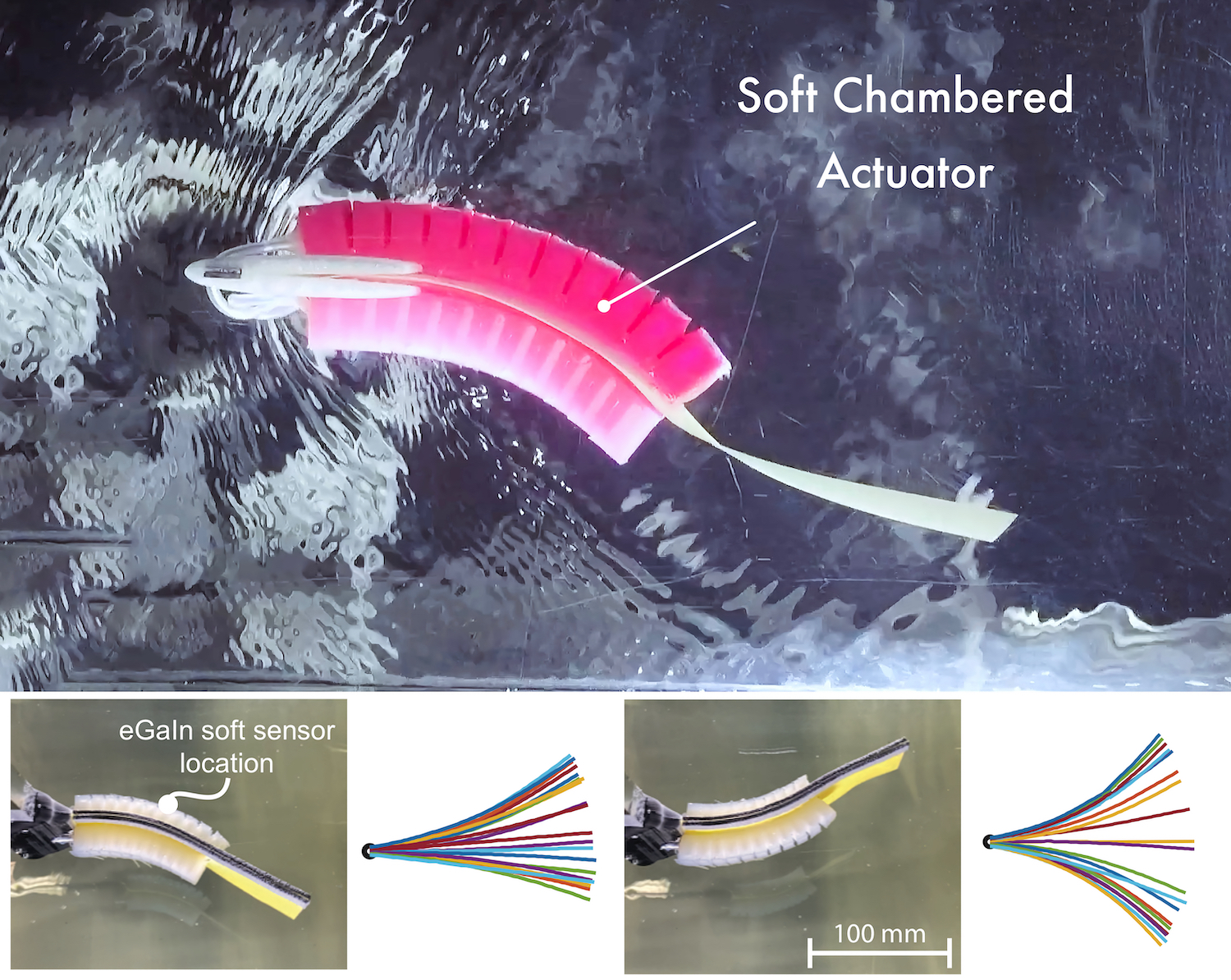
    Each side of the robotic fish is lined with soft artificial muscles made of rubber-like small silicone chambers. Through these pockets, the researchers pumped air alternately on each side. While the air pockets on one side expand, they create a curvature, contracting the air pockets on the other side. This causes the robotic fish to bend right and left, swinging its tail, resembling the wave-like movement pattern seen by real fish.

    To measure the bending, the scientists embedded state of the art soft strain sensors, consisting of a thin layer of windy microchannels filled with liquid metal and encapsulated in silicone. What was now like a wire, could stretch like a phone cord to a length of 900%. The more the air pressurized each silicone chamber of the actuator, the more the sensor placed atop bends, and its liquid metal ‘wire’ was elongated. The scientists then connected the sensor to an Ohmmeter to measure the electrical resistance. The greater the stretching elongation, the higher the electrical resistance within the ‘wire’. This number provided the scientists with data of how the curvature of their robotic fish changed given a certain change of air pressure.

    The scientists then put this robotic fish platform under water in a flow tank. In several experiments they tested how the air pressure controller took the reading from the sensor to measure the swimming performance of the robot – an information loop that was feeding a self-learning algorithm inside the controller to push just the right amount of air through the pneumatic pockets so the swimming perfectly matched the different water flow velocities.

    “We developed a hydrodynamic model that can predict how our soft robotic fish will behave. This builds upon previous findings where we measured peak thrust during swimming with co-contraction and body stiffening, and tested soft sensors in feedforward undulatory motion. Closing the loop with proprioceptive soft sensory feedback allows the robot to respond to different flow conditions”, Ardian Jusufi explains. He is the corresponding author of the publication and specializes on soft active materials, biomimetics, and robotics. Jusufi is the head of the Max Planck Cyber Valley research group for “Locomotion in Biorobotic and Somatic Systems” at the MPI-IS. “Our project builds upon several previous collaborative papers on soft robots and biorobotic modeling of swimming robots. To advance modeling and closed-loop control, our team has combined soft robotics expertise from three continents.”

    “In this work, we have used a simple approach to build a data-driven model of a soft robotic fish, and extended it with the controller design. This model could also be easily extended without the need of completely rebuilding it, for example to study the scaling effects of robots or testing different types of sensing techniques”, describes Yu-Hsiang Lin of the “Locomotion in Biorobotic and Somatic Systems” group at the MPI-IS, and first author.

    In their publication, the scientists describe the sensors as a completely new design technique, labelling them “hyper-elastic liquid metal strain sensors.” Developed by Prof. Yong-Lae Park and his team at Seoul National University, and Daniel Vogt from Harvard University, they are a true innovation. “In biology as well as in soft robotics, with an entirely soft robot, we have infinite degrees of freedom. That means any part of the body can deform. It is hard to estimate how the fish’s shape changes, because we cannot put an indefinite number of sensors onto its body, as it would be possible with rigid robots with a limited number of joints,” Park says.

    “This robot will allow us to test and refine hypotheses regarding the neuromechanics of swimming animals as well as help us improve future underwater robots,” Jusufi continues. “In addition to characterizing the soft strain sensor under submerged dynamic conditions for the first time, we also developed a simple and flexible data-driven modelling approach in order to design our swimming feedback controller. The model will be of interest to the scientific community and will help accelerate future work in design and operation of soft robots. In forthcoming research, we will also utilize soft strain sensors in terrestrial robots that climb and can overcome complex obstacles.”

    Understanding the underlying mechanisms how soft animals like fish swim helps in designing artificial soft structures and make it possible to use them to build robots. Such animal-inspired robots could one day be used to explore the depths of the sea and provide valuable data of marine life, avoiding noise and reducing the risk of entanglement that rigid, conventionally propelled submarines face. Swimming robots could also become a more energy-efficient option, which is why more and more scientists have shown a great deal of effort in developing soft actuators and sensors that constantly improve the capabilities of swimming robots by replicating the locomotion of aquatic vertebrates.

    What could one-day serve as a more advanced under-water vehicle also serves another purpose: the fish replica with sensory feedback offers important insights into fish neuromechanics and their morphological intelligence, advancing the field of biology.

  • Teilnehmende für COVID-19 Studie gesucht

    Teilnehmende für COVID-19 Studie gesucht

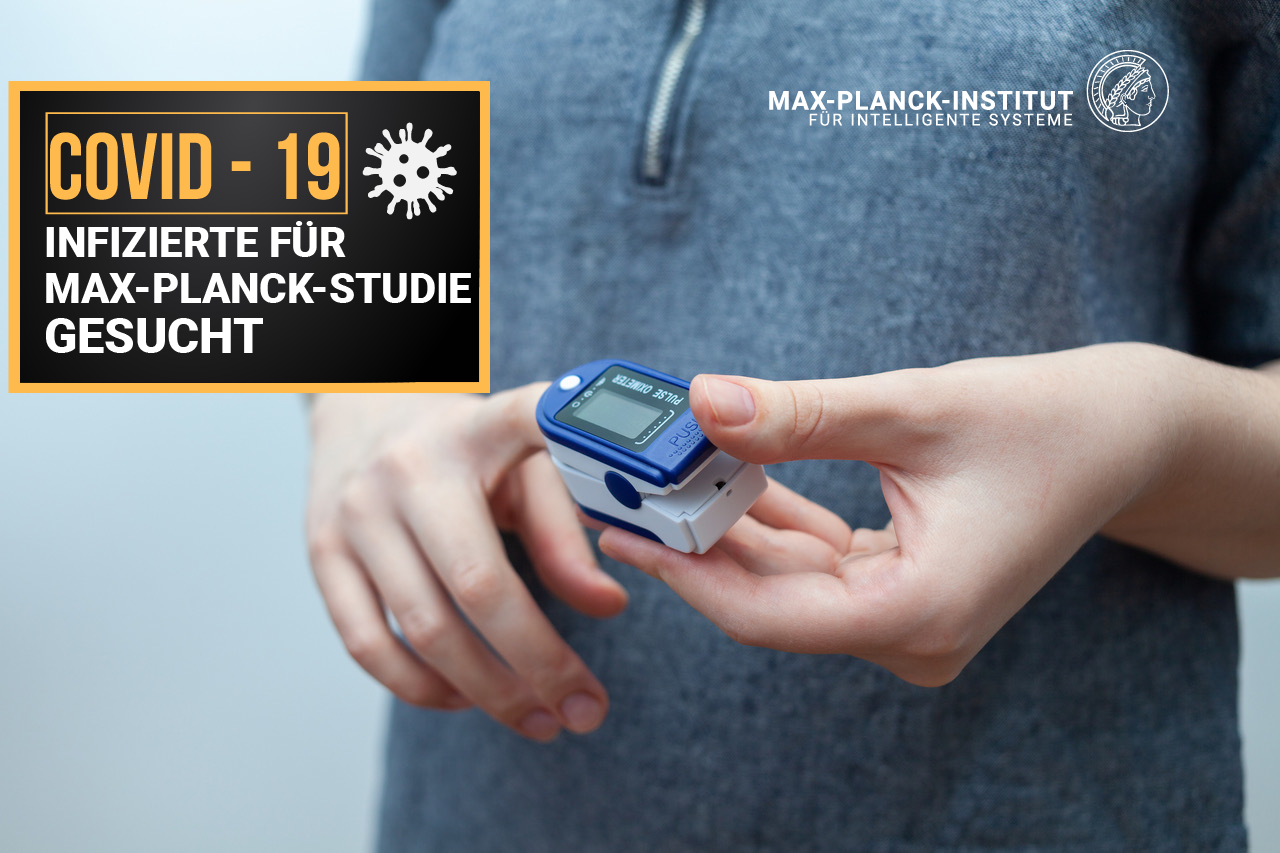
    Grundlagenforschende des Max-Planck-Instituts für Intelligente Systeme (MPI-IS) in Tübingen starten zusammen mit Medizinern des Universitätsklinikums Tübingen und unterstützt durch die Gesundheitsämter der Landkreise Reutlingen, Tübingen und des Zollernalbkreises eine Studie mit dem Titel „Früherkennung einer klinischen Verschlechterung einer SARS-CoV-2 Infektion mithilfe von Maschinellem Lernen“. Dafür suchen die Wissenschaftlerinnen und Wissenschaftler möglichst viele Patienten, bei denen SARS-CoV-2 neu nachgewiesen wurde. Ziel ist es herausfinden, welche Vitalparameter (z.B. Blutdruck, Puls) und Beschwerden und vor allem in welcher Kombination auf einen schweren Krankheitsverlauf hindeuten.

    Die Wissenschaftlerinnen und Wissenschaftler nutzen die Angaben der Patienten, um durch statistische Methoden Muster in diesen Daten zu erkennen. Auch als Maschinelles Lernen bekannt, ist diese Forschungsrichtung ein Teilgebiet der Künstlichen Intelligenz (KI). Maschinelles Lernen ermöglicht, Zusammenhänge in großen, komplexen Datenmengen zu erkennen, was Menschen aufgrund der großen Anzahl an Daten unmöglich ist. Genau diese Fähigkeit soll für die Vorhersage des Krankheitsverlaufes einer COVID-19 Erkrankung genutzt werden. Das Max-Planck-Institut für Intelligente Systeme ist weltweit führend auf diesem Forschungsgebiet.

    „Obwohl wir nach über einem Jahr Pandemie bereits viele Erkenntnisse über das Virus gewonnen haben, so ist es immer noch schwierig, den Krankheitsverlauf einer COVID-19 Erkrankung vorherzusagen. Umso wichtiger ist die Studie, damit in Zukunft Risikopatienten früher identifiziert werden können“, so Privatdozent Dr. Jürgen Hetzel, Pneumologe in der Abteilung Medizinische Onkologie und Pneumologie am Universitätsklinikum Tübingen und klinischer Studienleiter.

    „Vorhersagen treffen zu können aufgrund statistischer Modelle, welche Personen möglicherweise schwer erkranken werden, könnte Ärztinnen und Ärzten helfen, diese Menschen früher medizinisch zu versorgen und ihre Behandlung individueller zu gestalten. Gleichzeitig könnten die Erkenntnisse dazu dienen, die im Gesundheitswesen vorhandenen Ressourcen gezielter einzusetzen, um das Risiko für Engpässe zu verringern“, sagt der Initiator der Studie, Prof. Dr. Bernhard Schölkopf, Direktor der Abteilung für Empirische Inferenz am MPI-IS.

    Die Kreisgesundheitsämter Reutlingen und Tübingen sowie weitere Gesundheitsämter in Baden-Württemberg sind in das Projekt eng eingebunden und unterstützen bei der Suche nach Studienteilnehmenden. Hierbei werden die Gesundheitsämter auf SARS-CoV-2 positiv getestete Personen über die Studie informieren. Interessierte Personen mit neu nachgewiesener Infektion können sich unmittelbar mit der Studienzentrale am Max-Planck-Institut für Intelligente Systeme in Verbindung setzen, um an der Studie teilzunehmen (Kontaktdaten siehe unten).

    „Wir sind froh, bei solch einer wegweisenden Studie die Forschenden zu unterstützen und gemeinsam mit weiteren Gesundheitsämtern einen zusätzlichen Beitrag zur langfristigen Eindämmung der Pandemie zu leisten”, so Dr. Gottfried Roller, ehemaliger Leiter des Gesundheitsamtes Reutlingen und derzeit Leiter des Landesgesundheitsamtes Baden-Württemberg.

    Neben bestehenden Vorerkrankungen dokumentieren die Studienteilnehmer und -teilnehmerinnen täglich ihre Beschwerden während der COVID-19 Erkrankung. Zudem messen die Personen zweimal täglich ihren Blutdruck, Puls und die Sauerstoffsättigung im Blut. Hierzu werden ihnen ein Blutdruckmessgerät und ein Pulsoxymeter von der Studienzentrale kostenlos zur Verfügung gestellt. Die erhobenen Daten werden dann in der Studienzentrale pseudonymisiert gesammelt und analysiert.

    Die Studienzentrale können Patientinnen und Patienten per E-Mail erreichen covid19-studie@tuebingen.mpg.de oder telefonisch unter 07071 601-535 (Mo-Fr zwischen 9-12 Uhr und 14-16 Uhr).
    Alle Informationen finden Interessierte zudem auf dieser Webseite: https://ei.is.mpg.de/covid-19-studie


    Nach der Anmeldung erhalten Teilnehmende weitere Informationen. Die Messgeräte und Dokumentationsbögen sowie eine ausführliche Patienteninformation werden per Post zugesandt.


    Pressekontakte:

    Linda Behringer        
    Presse- und Öffentlichkeitsarbeit
    Max-Planck-Institut für Intelligente Systeme
    +49 151 2300 1111
    linda.behringer@is.mpg.de
    www.is.mpg.de


    Steven Pohl
    Stabsstelle Kommunikation und Medien
    Universitätsklinikum Tübingen
    Hoppe-Seyler-Straße 3
    72076 Tübingen
    +49 7071 29 88494
    steven.patrick.pohl@med.uni-tuebingen.de
    https://www.medizin.uni-tuebingen.de

  • PR Basics & Good Practices

    PR Basics & Good Practices

    Speakers

    At this event, exciting speakers from our ecosystem will share their knowledge and experiences:

    Lennart Schmid

    Communications Manager, Cyber Valley | Communication Basics for Tech-Start-ups & working together with external service provider

    Linda Behringer

    Communications Manager, Cyber Valley | Working together with Press and Media

    Simone Betz

    Marketing Manager, Computomics GmbH | Tech-Start-up communication insights


    Registration

    Please register here, the meeting will be held in English on Zoom.


    Contact

    Oliwia Gust –  Event Manager for Cyber Valley
    Phone: +49 7071 601 1554
    Mobile: +49 151 4075 6302 
    Mail: oliwia.gust@cyber-valley.de

  • Harnessing the power of AI for robotics

    Harnessing the power of AI for robotics

    Since November 2019, the Stuttgart-based Fraunhofer Institute for Industrial Engineering IAO and Fraunhofer Institute for Manufacturing Engineering and Automation IPA have formed part of Cyber Valley, the largest research cooperation network in Europe for Artificial Intelligence (AI), with the AI Innovation Center “Learning Systems”. For companies located in Baden-Württemberg, the Center represents the main point of contact for application-oriented AI research, implementing research and transfer projects for production and services. It also acts as an interface between industry and basic research within the existing Cyber Valley consortium, which comprises several research institutes located in the Stuttgart-Tübingen area in addition to reputable industrial partners. In addition, the AI Innovation Center facilitates technology transfers to industrial settings by leveraging the strengths of existing partners.


    Broad spectrum of AI and robotic technologies


    As part of the virtual S-TEC summit held on 25 February 2021 under the motto “AI – Made in the Ländle”, Dr Nicole Hoffmeister-Kraut, Minister of Economic Affairs, Labour and Housing for the state of Baden-Württemberg, announced additional financial backing for the AI Innovation Center: “The combination of Artificial Intelligence and robotics opens up major opportunities for the economy of Baden-Württemberg. By expanding the Innovation Center, we are making a decisive contribution to strengthening the long-term development and successful commercialisation of these key technologies in our state. Our overall aim is to transform the latest research expertise into innovative products and business models even more effectively and rapidly. In so doing, our intention is to also contribute to ensuring that the economy is in a position to overcome the negative impacts of the coronavirus pandemic as quickly as possible, before ultimately emerging even stronger from the crisis.”

    In the second funding phase, the Center will be expanded to include Fraunhofer IPA services in the area of “Cognitive Robotics”. Rebranded as the AI Innovation Center “Learning Systems and Cognitive Robotics” Center, the facility will now also support companies in their efforts to fully exploit the potential of service and industry robotics in addition to finding answers to megatrends such as demographic change, individualisation, sustainability and digitalisation. The Center will focus on generating technological developments from four key research areas:


    •    Human-machine interactions: By enabling machines to perceive, understand, imitate and actively support humans, machines will become intuitive and easy to operate.
    •    Cyber-physical robot systems: Services should help to put existing robot systems into operation more quickly, make them more precise and enable them to be programmed and commissioned more easily.
    •    Perception and interaction: With the help of AI, robots should be able to carry out tasks autonomously even in unstructured and partially unknown environments.
    •    Networked robotics: Networking serves the purposes of knowledge transfer, mutual learning and teamwork among robots, but also between humans and robots.

    Helping companies to exploit technological benefits


    All of these developments help to facilitate, simplify and render more economical an initial foray into the world of robotics in addition to the further development and quality improvement of existing applications. “With cognitive robotics, we are developing pioneering automation solutions for production processes as well as the retail, healthcare and agricultural sectors”, comments Dr Werner Kraus, Head of the Robot and Assistive Systems department at Fraunhofer IPA and Co-Director of the AI Innovation Center. The institute is therefore underlining its aim to become one of the leading institutes for cognitive robotics in the Fraunhofer-Gesellschaft.

    As of now, any interested companies can submit applications to the AI Innovation Center for project funding in the area of AI for services and production as well as cognitive robotics. In so doing, they can determine the potential of the technologies for their individual application. The application deadline closes on 18 March 2021. All further information can be found on the website.

     
    Practical applications of AI: 13 application projects completed

    The topic of “Learning Systems” and the direct cooperation with industrial firms as well as networking and knowledge transfer within Cyber Valley remain important components of the AI Innovation Center. Since October 2019, Fraunhofer’s expert AI teams have already implemented 13 different AI applications in the form of prototypes as part of ‘exploring projects’. These cover a broad spectrum of application scenarios for AI: from text mining and processing for legal documentation and demand forecasts for an online bookseller or the combined automation solution for quality control and robot-supported packing all the way through to hazardous goods analyses. These application examples show that AI offers added value in a multitude of different areas. “For this, we are not only using the latest technology in the area of machine learning, but also prioritising efforts to ensure that these processes are robust and reliable and, in particular, we improve the ways in which these can be explained and understood”, comments Prof. Marco Huber, Head of the Center for Cyber Cognitive Intelligence at Fraunhofer IPA and Co-Director of the AI Innovation Center. He continues: “After all, this is often the primary basis for ensuring that the technology is actively embraced.” Dr Matthias Peissner, Head of the Human-Technology Interaction research unit at Fraunhofer IAO, also explains: “The Center offers companies a safe space to test ideas for AI applications without any financial risk. In this way, they learn to appreciate and exploit the potential of machine learning.”

    Studies on human-centric AI at the interface of business and elite-level research

    A total of ten studies developed at the AI Innovation Center provide an overview of which industries and topics are particularly well-suited to innovative AI applications for operational practice and how these can be effectively implemented. Over the next few weeks, these will gradually be made available on the website of the AI Innovation Center free of charge.

  • Cyber Valley: “The place to be”

    Cyber Valley: “The place to be”

    “In Baden-Württemberg, we recognized the promise of artificial intelligence early on and have driven it forward with a smart funding policy and major investments. Excellence and breadth are not mutually exclusive in Baden-Württemberg. The state's universities are home to cutting-edge research. At the same time, up-and-coming researchers are being trained here. With our Cyber Valley AI innovation campus in the Stuttgart/Tübingen region, a world-class location has also emerged in a short time,” said Minister-President Winfried Kretschmann.

    “Science is once again setting the pace. We need bright minds at our universities to exploit the opportunities and potential of AI, but also to reflect on undesirable developments – in dialog with society. To achieve this, the field must be firmly rooted in interdisciplinary research and teaching at universities. By consistently establishing permanent professorships, our universities are demonstrating that they are making an active and responsible contribution to shaping the future,” said Theresia Bauer, Minister of Science. Artificial intelligence and digitization are not just topics for computer science. “They permeate all areas of society. It thus makes sense that they are firmly rooted across disciplines at universities,” Bauer emphasized.

    Cyber Valley & ELLIS

    With Cyber Valley in the Stuttgart/Tübingen region, the Ministry of Science, together with the Max Planck Society, the Universities of Stuttgart and Tübingen, and the industrial partners Amazon, BMW, Bosch, Daimler, IAV, Porsche, and ZF Friedrichshafen, launched a research consortium for AI and intelligent systems in 2016 that is unique in Europe. By promoting research excellence, networking with global companies, and a culture of entrepreneurship that focuses on knowledge transfer and start-ups, Cyber Valley has quickly established itself as one of the world’s top locations for modern and learning-based AI. As EU Digital Commissioner Margrethe Vestager said in December 2020 during her joint virtual visit with German Chancellor Angela Merkel and Minister-President Kretschmann: “Cyber Valley is the place to be.” The consortium’s stated goal is to rapidly bring the results of research to application, for instance by helping researchers commercialize their findings in start-ups.

    Starting in 2022, the Cyber Valley AI innovation campus will be further expanded: The Tübingen AI Center of Excellence for Machine Learning, one of five AI centers of excellence in Germany, will in future receive permanent funding in equal parts from the federal and state governments. The state is already further expanding the center, strengthening it with a coding school that will teach practical skills in programming, providing a total of 13.5 million euros for this purpose from 2021 to 2023. Moreover, the Hector Foundations will provide 100 million euros over a period of at least ten years to support the establishment of an ELLIS Institute (“European Laboratory for Learning & Intelligent Systems”) at the University of Tübingen. The investment will provide top scientists with attractive research conditions at the new ELLIS institute.

    “Only with the necessary critical mass can we attract top people to the state and keep them here. That’s why we are reinforcing our strengths and providing support for European networking, which includes doctoral students in the European AI network ELLIS,” Bauer said.