User Group: Researcher

  • KI: Implikationen für Innovation und Entrepreneurship

    KI: Implikationen für Innovation und Entrepreneurship

    Künstliche Intelligenz (KI) ist ein aufstrebendes Technologiefeld mit einem immensen Transformationspotenzial. Dies zeigt sich in vielen neuen Produkten und Dienstleistungen, sowie in neuen Prozessen und Abläufen. In diesem Zusammenhang zeigt dieser Beitrag anhand verschiedener Anwendungsbeispiele auf, wie digitale Technologien zum einen das Management von Innovationen verändern, und zum anderen unser Bild von Entrepreneuren neu definieren.

    Das Event wird digital via WebEx abgehalten. Um dem Event beizutreten, klicken Sie hier.


    Diese Veranstaltung ist Teil der Ringvorlesung „Intelligente Systeme für eine zukunftsfähige Gesellschaft – Wirtschafts-, sozial-, erziehungs- und rechtswissenschaftliche Perspektiven“ der Fakultät Wirtschafts- und Sozialwissenschaften der Universität Stuttgart. Weitere Veranstaltungen dieser Reihe finden Sie hier.

  • Intelligente Systeme in der Bildung

    Intelligente Systeme in der Bildung

    Künstliche Intelligenz begleitet unseren Alltag, ist Bestandteil technischer Innovationen und auch Teil unserer Bildungswelt. Aus der Verbindung pädagogischer Theorien mit psychologischen Methoden und Algorithmen aus der künstlichen Intelligenz entsteht ein großes Potenzial, Lernende wirksam und nachhaltig zu unterstützen. In der Vorlesung stellt Jun.-Prof. Maria Wirzberger, Institut für Erziehungswissenschaft, am Beispiel ausgewählter Forschungsprojekte ihrer Abteilung vor, wie dies gelingen kann und mit welchen kritischen Fragen wir uns dabei auseinandersetzen müssen.

    Das Event wird digital via WebEx abgehalten. Um dem Event beizutreten, klicken Sie hier.


    Diese Veranstaltung ist Teil der Ringvorlesung „Intelligente Systeme für eine zukunftsfähige Gesellschaft – Wirtschafts-, sozial-, erziehungs- und rechtswissenschaftliche Perspektiven“ der Fakultät Wirtschafts- und Sozialwissenschaften der Universität Stuttgart. Weitere Veranstaltungen dieser Reihe finden Sie hier.

  • Four new AI companies

    Four new AI companies

    “The rapid growth of our start-up network to 29 member companies in less than two years is a testament to the region's expanding commercial impact in the field of intelligent systems – and also to the appeal of the Cyber Valley ecosystem”, said Michael J. Black, Cyber Valley spokesperson and Director at the Max Planck Institute for Intelligent Systems in Tübingen. “With the recent addition of BAUTA, DeepCare, Quantum Gaming, and sereact, our community of entrepreneurs has gotten even stronger.”

    BAUTA provides AI-based sensor systems for the anonymous collection of personal and frequency data. The company’s specially developed blind sensors only perceive the information, but not the identity of the persons. In so doing, BAUTA provides data with complete respect for privacy.

    DeepCare has developed its first product “ISA”, a digital health coach for people who work at office desks. The aim is to make deskwork a healthier and happier experience by preventing side effects that derive from wrong sitting habits or low movements, such as musculoskeletal disorders. “ISA” evaluates the user’s upper body by creating a precise 3D model of it through a depth sensor. The device, which does not feature a camera and is not connected to the internet, then analyses the user’s body posture, as well as the user’s movement behavior, over time to provide individual guidance for a healthier behavior via its screen. This analysis relies on a novel deep learning algorithm.

    Quantum Gaming is a spin-off of the University of Tübingen that develops AI agents for the computer gaming sector and its own computer games. With the help of insights from cognitive science, Quantum Gaming wants to raise the level of interaction between humans and game characters. Their first product, “Marbles AI”, will demonstrate how AI characters can learn from the user, contributing to a more dynamic gaming experience.

    sereact is a spin-off of the University of Stuttgart that aims to bring a new era of intelligent robots to commercial viability. By providing AI-powered control software that enables robots to sense, reason and act, sereact empowers machines to understand, learn, and adapt. The product, “capto”, provides customers with the opportunity to close automation gaps and reach a new level of cost efficiency by using AI-driven robots in their supply-chains.

    Cyber Valley regularly hosts networking events such as talks, meet-ups, and tech workshops. The next event of the Cyber Valley Entrepreneurship series is scheduled for October 21 and will feature high-profile speakers on the topic of “start-up support and funding”. More information about the event and how to attend can be found here.

  • Detect diabetes with whole-body MRI

    Detect diabetes with whole-body MRI

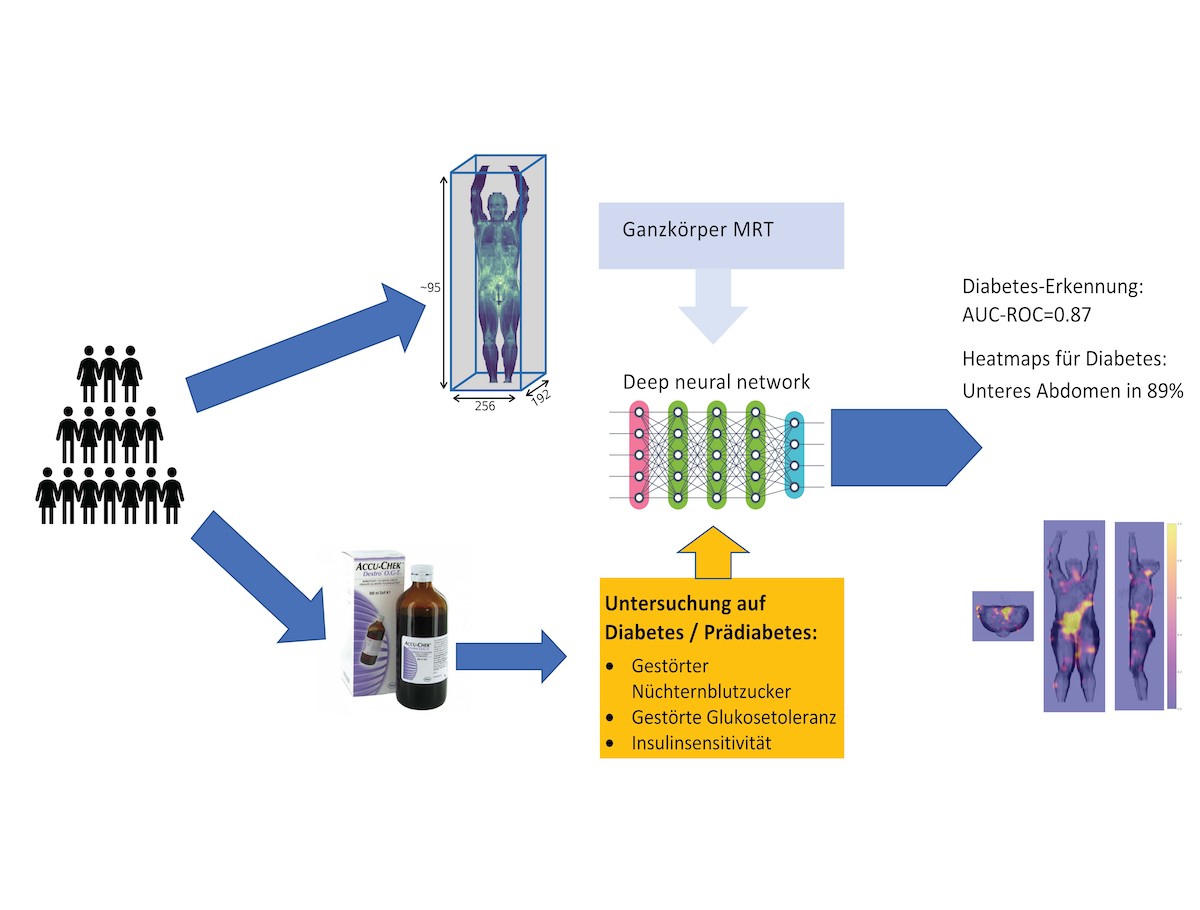
    Obesity and high body fat increase the risk of diabetes. But not every overweight person also develops the disease. The decisive factor is where the fat is stored in the body. If fat is stored under the skin, it is more harmless than fat in deeper areas of the abdomen (known as visceral fat). How fat is distributed throughout the body can be easily visualized with whole-body magnetic resonance imaging. “We have now investigated whether type 2 diabetes could also be diagnosed on the basis of certain patterns of body fat distribution in MRI,” said last author Prof. Robert Wagner, explaining the researchers’ approach.

    Deep learning trained with over 2000 MRI images

    To detect such patterns, the researchers used artificial intelligence (AI). They trained deep-learning (machine learning) networks with whole-body MRI scans of 2000 people who had also undergone screening with oral glucose tolerance testing (abbreviated oGTT). The oGTT, also called the sugar load test, can detect impaired glucose metabolism and diagnose diabetes. This is how AI learned to detect diabetes.

    Fat accumulation in lower abdomen important clue to diabetes development

    “An analysis of the model results showed that fat accumulation in the lower abdomen plays a crucial role in diabetes detection,” Wagner said. Further additional analysis also showed that a proportion of people with pre-diabetes, as well as people with a diabetes subtype that can lead to kidney disease, can also be identified via MRI scans.

    Researchers are now working to decipher the biological control of body fat distribution. One goal is to identify the causes of diabetes through new methods, such as the use of AI, to find better prevention and treatment options.

  • Moritz Hardt appointed a Director at MPI-IS

    Moritz Hardt appointed a Director at MPI-IS

    Computer scientist Moritz Hardt, Ph.D., has accepted a call to the Max Planck Institute for Intelligent Systems (MPI-IS). He joined the institute part-time in July 2021, and will start working full-time in Tübingen as of January 2022. His newly established department “Social Foundations of Computation” aims to build foundations of computation that thrive on social context. The research is intended to contribute to a paradigm shift within computer science that treats computer science from the ground up as a social science that takes into account the role of society as a whole, as well as the actions and dynamic behavior of individuals – especially when algorithms influence people's life chances.

    Computation as a form of social action

    “Our research will examine the interplay between algorithms and society,” says Moritz Hardt. “Not only looking at isolated consequences of the technology, our research aims to develop computational methods that are built on social foundations from the outset. The goal is to develop a social perspective on computer science that extends the discipline itself to a social science.”

    In a world increasingly permeated by algorithms, only recently, a research community in computer science has been growing, questioning how often sensitive data leads to decisions, and foregrounding people who produce and consume data. The topic of fairness, for example, became a central focus of research within the machine learning community only about five years ago. An active field of research emerged that is receiving ever more attention. With Hardt’s appointment, the Max Planck Society is strengthening basic research within computer science that considers the role of society as well as norms and values as an integral part of computation. Every statistical model, prediction or calculation should be based on a social foundation; especially when a computer, rather than a human, makes decisions, Hardt claims.

    “Moritz Hardt has made fundamental mathematical and algorithmic contributions to the interaction between machine learning methods and their social embedding. We are very pleased that he will continue his research at the MPI-IS, working together to develop an artificial intelligence that brings to the fore its responsibility for shaping our future,” says Bernhard Schölkopf, Managing Director at the MPI-IS.

    “Computer science had neglected society”

    Hardt, who received his doctorate from the University of Princeton in 2011, became intrigued with the topic of privacy and fairness in sensitive data analysis early on in his doctoral work, when the topic had little to no support within the community. “I got into social issues through my work on differential privacy. I realized it wasn’t just about privacy, but many other questions that computer scientists had previously ignored over the decades. Computer science had neglected society. Even today, social problems are often categorized as a consequence of the technology rather than a central object of research,” says Hardt.

    Social Foundations of Computation has four focus research areas: Applying machine learning in social and economic contexts, formulating social and dynamic actions as mathematical models, as well as examining the validity and reliability of statistical methods and the construction of datasets within scientific communities. Another focus is the pursuit of normative goals and, in particular, how to formulate values and norms mathematically. “My goal as a director at the institute is to make it easier for other researchers to work on forward-looking questions that are currently underappreciated,” Hardt says.

    Celestine Mendler-Dünner, a group leader who is helping to build up the new department, has already started her work at the Tübingen site of MPI-IS. Her research focuses on modeling social dynamics and how to incorporate them into the design of machine learning algorithms. She has previously worked with Moritz Hardt in Berkeley and contributed to shaping the department’s research direction. Additional appointments will follow in a timely manner. The department is expected to grow to a total of about two dozen scientists.

    Prior to his appointment as director at MPI-IS, Moritz Hardt was an Assistant Professor in the Department of Electrical Engineering and Computer Sciences at the University of California, Berkeley. He received his Ph.D. from the Department of Computer Science at Princeton University with a dissertation on privacy and fairness in the classification of sensitive data. He subsequently worked at IBM Research and Google. Hardt is co-founder of the conference “Fairness, Accountability, and Transparency in Machine Learning.” He is co-author of “Fairness and Machine Learning: Limitations and Opportunities” (MIT Press, 2022) and “Patterns, Predictions, and Actions: A Story About Machine Learning” (Princeton University Press, 2022).


  • Cyber Valley attracts attention at ICCV

    “With a high number of papers both from the Max Planck Institute for Intelligent Systems and the University of Tübingen, scientists from Cyber Valley partner institutions have shown once again that this ecosystem is a powerhouse for research in computer vision,” said Michael J. Black, director of the Perceiving Systems department at the Max Planck Institute for Intelligent Systems (MPI-IS) and speaker of the Cyber Valley Executive Board. “This year, we’ve continued to attract new professors and group leaders from top institutions around the world. We’re confident that our consistent visibility at leading international conferences will help attract even more outstanding researchers at all stages of their careers.”

    As it approaches the fifth anniversary of its founding, the Cyber Valley consortium looks back on five years of dynamic growth in the Stuttgart/Tübingen region. Today, its partner institutions count some 1,000 researchers in the fields of machine learning, robotics, and computer vision, among them more than 100 faculty. With newly established professorships, research groups, industry research labs, doctoral programs, and Germany’s first international master’s program in machine learning, the initiative has quickly established itself as a European leader in the field of modern AI.

    A full list of papers and authors is available here.

  • First comprehensive atlas of neuron types in the brain

    First comprehensive atlas of neuron types in the brain

    For more than a hundred years, neuroscientists have been studying the properties of neurons in the brain. A key question here is how the different types of nerve cells differ from one another and how this affects brain activity. The BRAIN Initiative Cell Census Network (BICCN), a large international research collaboration including scientists from the University of Tübingen has now published groundbreaking results: They have created a cell atlas providing an overview of the different neuron types and their respective properties in the motor cortex, the brain region that controls movement, in the brains of mice, monkeys and humans. The atlas is described in a special package of 17 articles published today in the journal Nature, including a single flagship paper that describes the entire atlas.

    The BICCN collaboration sought to describe the neural types in the motor cortex as fully as possible. Its goal was to provide a catalogue based on a “Cell Census”, that similar to a population census would define the neural types, their distribution in the brain and their defining characteristics.

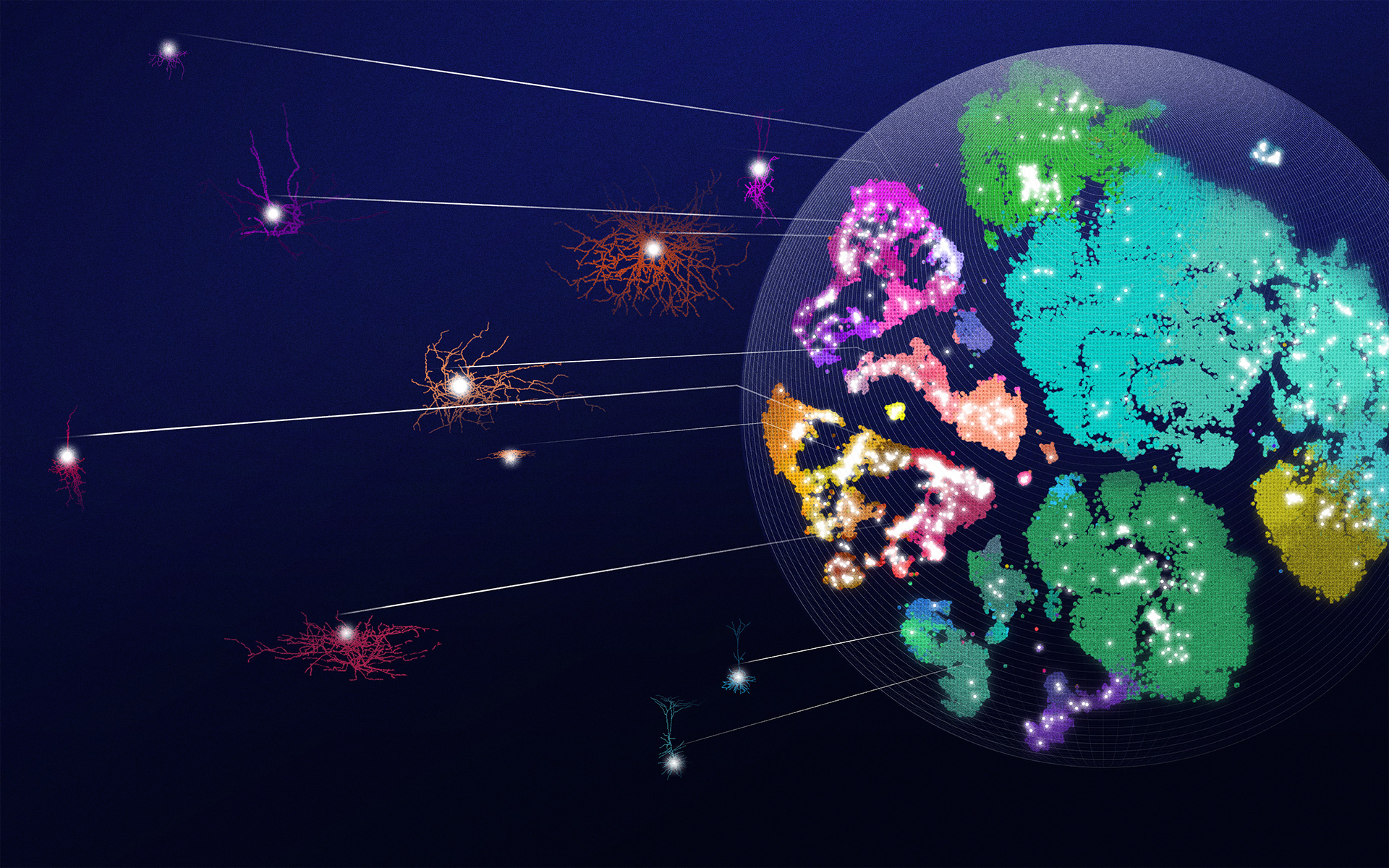
    Using novel experimental and data analysis methods the scientists were able to collect information from over a million cells. For a part of the cells, they recorded their spatial location, their shape, their genetic activity, their electrical properties, and traced their connections to other neurons in other brain areas. Since this was done in mice, in marmosets, and in humans, it even allowed them to reconstruct the evolutionary development of neural types. The result is a cell catalogue that gives a unique overview of the brain cortex and its evolution.

    Scientists from the University of Tübingen contributed to this joint effort with a paper on a multimodal characterization of the different cell types in the mouse motor cortex, integrating different types of data. The work was led by Prof. Philipp Berens, Professor at the Institute for Ophthalmic Research at the University of Tübingen and speaker of the Cluster of Excellence “Machine Learning”, Prof. Andreas Tolias from Baylor College of Medicine in Houston, Texas (USA), and Prof. Rickard Sandberg from Karolinska Institutet in Stockholm (Sweden). It provides one of the most complete characterizations of the diversity of neural types in the mouse brain so far. The paper, which had already been published online, is part of Nature’s special issue.

    Neuroscientists mostly use three fundamental features to describe neurons: their anatomy or how they look under a microscope, their physiology or how they respond when stimulated, and their transcriptome, which are the genes they express. The team used an experimentally challenging technique called “Patch-seq” to collect a large database including anatomical, physiological, and genetic information from cells in the mouse motor cortex.

    Gathering these three fundamental features from more than 1000 cells at the same time was the key that enabled them to get a deep understanding of how neurons in the motor cortex are related to each other. Using machine learning approaches, they integrated the anatomical, physiological, and genetic information and revealed relations between the neurons that had not been known before. “While the broad genetic families of neurons had distinct anatomical and physiological properties, within each family the neurons exhibited continuous anatomical and physiological diversity”, Dr. Dmitry Kobak from University of Tübingen explains. He and Federico Scala from Baylor College of Medicine are the lead authors of the study.

    By drawing an analogy with the evolutionary tree which describes the relationships between the various species, the researchers came to the following conclusions: Neurons follow a hierarchy consisting of distinct, non-overlapping branches at the level of families. Within each family, however, they show continuous changes in their genetic, anatomical, and physiological features. This view suggests a fundamentally different model to describe the diversity of neurons we find in the brain.

    “The data from the new cell atlas of our collaboration will be a tremendous resource for neuroscience,” says Philipp Berens. “Bringing our machine learning expertise to the table, we provide the links from genetics to the neurons’ physiology and anatomy, which may be crucial to understand brain-related diseases at the cell type level.”

  • New Cyber Valley Research Group Leader

    Lee’s research group focuses on intelligent tactile systems and studies the sensing and perception mechanisms of biological systems. “With Dr. Hyosang Lee, we now have a second Cyber Valley research group leader at the University of Stuttgart, who brings us up to speed in the field of both sensory technology and machine learning,” says Prof. Dr. Wolfram Ressel, Rector of the University of Stuttgart, welcoming him. “The Nobel Prize for the identification of the very receptor that lets us perceive touch has just been awarded. Transferring that to autonomous systems is a considerable challenge.” Lee's research group is made possible by a grant from the Christian Bürkert Stiftung.

    The group is part of the Institute of Smart Sensors (IIS) and develops artificial tactile systems that are then applied in contact-rich environments. In order to do so, the group is going to conduct interdisciplinary research at both the hardware and software levels, including research into new materials, sensor design, multiphysics simulation, sensor fabrication, signal processing, and machine learning. Their research has the potential to produce autonomous systems for contact-rich systems. These systems could, in perspective, be able to recognize contact as such and take advantage of their body’s surface for manipulation, motion planning, and nonverbal communication.

    Most recently, Lee was a postdoctoral researcher in the Haptic Intelligence Department at the Max Planck Institute for Intelligent Systems (MPI-IS). There, he developed whole-body tactile sensors with sensing mechanisms inspired by biological systems. Previously, he was awarded his Ph.D. in mechanical engineering from the Korea Advanced Institute of Science and Technology (KAIST), South Korea, in 2017. He also obtained his master’s degree in robotics and mechanical engineering there. He earned his bachelor’s degree in mechanical engineering from Korea University, South Korea.

    About the Christian Bürkert Stiftung

    The special purpose of the Christian Bürkert Stiftung is the advancement of young people in the natural sciences and technology who stand out due to their professional skills, sense of responsibility and dynamics. The charitable foundation which is company-affiliated with Bürkert Fluid Control Systems supports the exchange of scientific experience, in addition to other non-profit tasks, and promotes in particular science and research as well as education.

  • Call for Papers

    Call for Papers

    IRIS aims to explore literature and culture both in relation to intelligent systems and as intelligent systems in a workshop. Representations of intelligent systems in literary texts will be discussed, as well as the extent to which literature and culture can themselves be considered intelligent systems. Contributions are welcome from scholars all career stages, backgrounds, and disciplines.

    Deadline is October 29.

    More information is available on the IRIS website.

  • ELLIS and Aleph Alpha receive German AI Prize

    ELLIS and Aleph Alpha receive German AI Prize

    With prize money totaling 100,000 euros, the 2021 AI Innovation Prize went to the European Laboratory for Learning and Intelligent Systems (ELLIS), which was co-initiated by scientists from the Tübingen AI Center and the Max Planck Institute for Intelligent Systems in April 2018 as the first European Network of Excellence in artificial intelligence (AI). The ELLIS mission is to create a diverse European network that promotes research excellence and advances breakthroughs in artificial intelligence (AI), as well as a pan-European PhD program to educate the next generation of AI researchers. ELLIS also aims to boost economic growth in Europe by leveraging AI technologies. For this purpose, it aims to create agile research institutions inspired by the Vector institute and EMBL. The initiative shares the prize with the Confederation of Laboratories for Artificial Intelligence Research in Europe.

    “We are honored to receive the shared German AI Prize for ELLIS,” said Nuria Oliver, co-founder and vice-president of ELLIS, in accepting the award. A multiple award-winning scientist, Oliver also co-founded the ELLIS Unit in Alicante, which focuses on research in the area of human-centric artificial intelligence. “From the moment we founded ELLIS in April 2018, our goal was to establish the best possible conditions for research and innovation in European AI. Our grassroots initiative aims to attract and retain the world’s best talent, intensify cross-border collaboration between Europe’s best research institutions, and build partnerships between academia and the private sector. We’ve made great progress in the last three years, and this prize is an important acknowledgement and recognition of our contributions,” said Oliver.

    In the AI User category, the prize was awarded to the AI start-up Aleph Alpha GmbH, a member of the Cyber Valley Start-Up Network. Headquartered in Heidelberg, the company researches and develops AI models for language and image data, as well as for strategies aiming to secure Europe’s digital sovereignty. “We see the German AI User Award not only as an acknowledgement of our work: it also encourages us to be even more determined in our efforts to help secure Europe’s position in the global AI landscape, which is driven by large AI models,” said Jonas Andrulis, founder and Chief Executive Officer of Aleph Alpha.

    Established in 2018, the annual German AI Prize honors outstanding contributions in research and development, as well as achievements and progress in the application and commercialization of AI. The prize winners are selected by an international jury comprising prominent personalities from science, research, and the private sector. In 2020, the AI Innovation Prize was awarded to Bernhard Schölkopf, Director at the Max Planck Institute for Intelligent Systems in Tübingen, co-founder of Cyber Valley, and co-founder of ELLIS. This year, the jury was chaired by the German entrepreneur Chris Boos, founder of the AI company Arago, Chief Technical Officer of the Swiss cybersecurity company Wisekey, and a leading global visionary in the field of artificial intelligence.