User Group: Researcher

  • Electrohydraulic arachno-bot a fascinating lightweight

    Electrohydraulic arachno-bot a fascinating lightweight

    It is not the first time that spiders have served as biological models in the research field of soft robotics. The hydraulic actuation mechanisms they apply to move their limbs when weaving their web or hunting for prey give them powers many roboticists and engineers have drawn inspiration from.

    A team of researchers at the Max Planck Institute for Intelligent Systems and at the University of Colorado Boulder in the US has now found a new way to exploit the principles of spiders’ joints to drive articulated robots without any bulky components and connectors, which weigh down the robot and reduce portability and speed. Their slender and lightweight simple structures impress by enabling a robot to jump 10 times its height. At the end of May, the team’s work titled “Spider-inspired electrohydraulic actuators for fast, soft-actuated joints” was published in Advanced Science.

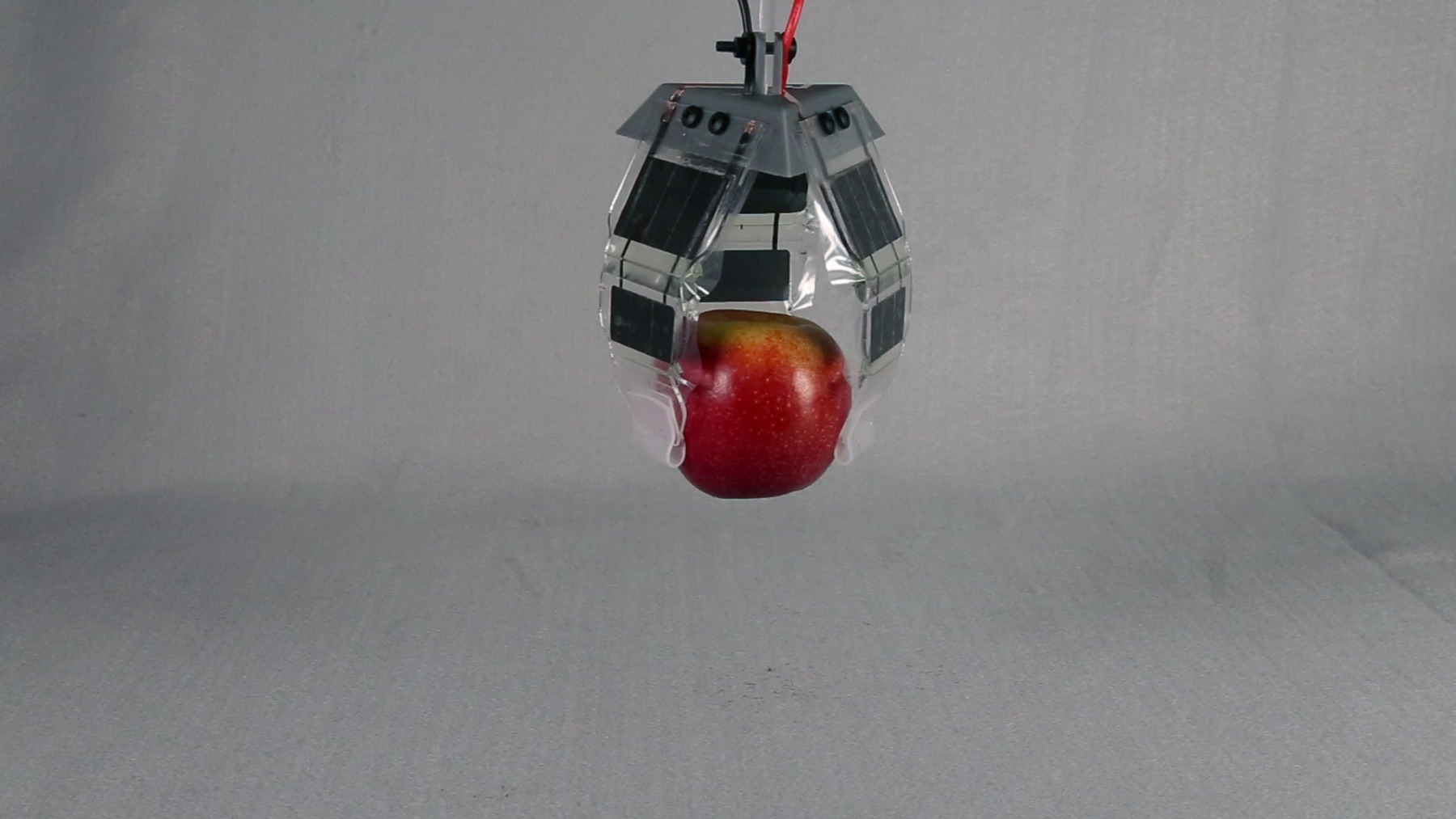
    The high performance is enabled by Spider-inspired Electrohydraulic Soft-actuated joints—SES joints in short. The joints can be used in many different configurations—not just when creating an arachno-bot. In their paper, the scientists demonstrate a bidirectional joint, a multi-segmented artificial limb, and a three-fingered gripper, which can easily pick up delicate objects. All creations are lightweight, simple in their design, and exhibit high performance making them ideal for robotic systems that need to move rapidly and interact with many different environments.

    The researchers developed their SES joints based on the HASEL technology which had previously been invented by the team to build artificial muscles. SES joints mimic a spider-inspired exoskeletal mechanism comprised of both rigid and softer elements, which function similarly to the animal’s leg extension through the use of hydraulic forces.

    They built a flexible pouch made of thin plastic films (either polyester or polypropylene will do) which they filled with a liquid dielectric—a vegetable-based oil. They then placed electrodes on each side of the pouch. These liquid-filled pockets serve as actuators, in which the hydraulic power is generated through electrostatic forces. The pouch is attached to a rotary joint. When a high voltage is applied between the electrodes, the electrostatic forces cause the liquid dielectric to shift inside the pouch and the joint to flex. SES joints are capable of rotating up to 70 degrees, causing high torques, and can easily restore back to the starting position.

    “The SES joints are very simple and light, as there are no peripheral components which weigh down the robot,” says Christoph Keplinger, Director of the Robotic Materials Department at the Max Planck Institute for Intelligence Systems. “Many applications for soft robots require versatile actuators. These spider-inspired joints allow for high functionality and consume only little power, they are easy and cheap to make—the plastics we are using are for food packaging—and their production is easily scalable. These are all qualities that are critical for the design of robots, which can move in many different ways and manipulate a variety of objects without breaking them.”

    A three-fingered gripper was one application for which the team used SES joints to showcase their versatility. If the team had equipped the gripper with a muscle-like structure, it would have been in the way of the object that the gripper is grabbing. Using SES joints as the hinges of the gripper required much less space.  

    “The research stands out because we can use a wide variety of materials, even the plastic used to make chips bags to create the pouches,” the first author of the publication Nicholas Kellaris says. “That way we can implement SES in a wide variety of geometries with specifically tuned actuation characteristics.”

    “The ultimate goal of our research was not to make a spider robot,” Philipp Rothemund, the second author of the publication, adds. “We wanted to develop a state-of-the-art, active joint that you can put in any type of robot.”

    Especially for small-scale robotic systems of only a few centimeters in size, where the limited space severely restricts the choice of actuator technologies, the SES-joints will come in very useful. For the soft robotics community, this invention is truly a leap forward.

  • AI in Social Innovation & Impact

    AI in Social Innovation & Impact

    In dieser Veranstaltung zeigen unsere Referent:innen Ansätze und Möglichkeiten auf, wie KI-Expertise in diesem Kontext genutzt werden kann und präsentieren Beispiele, wie KI-Forschung in innovative Bereiche oder sogar einem Start-up integriert werden kann.
     

    Sprecher:innen für dieses Event sind:


    Lorena Jaume-Palasí
    Founder and Executive Director,The Ethical Tech Society


    Lynn Kaack
    Researcher ETH Zürich, Chair and Co-Founder of Climate Change AI


    Raphael Menges
    Postdoc Associate University of Stuttgart and Founder Semanux


    Jörn-Philipp Lies
    CEO & Co-Founder eye2you


    Zhijing Jin
    Ph.D. student MPI-IS, Empirical Inference


    Wissenschaftler:innen, Gründer:innen, Studierende und alle, die sich für dieses Thema interessieren, sind am Donnerstag, 15. Juli, von 14:00 bis 15:30 Uhr herzlich eingeladen!


    Registrierung

    Bitte hier registrieren. Das Meeting findet via Zoom und in englischer Sprache statt.


    Kontakt

    Oliwia Gust – Cyber Valley Event Manager
    Telefon: +49 7071 601 1554
    Mobil: +49 151 4075 6302 
    E-Mail: oliwia.gust@cyber-valley.de

  • Life Improvement Science Conference

    Life Improvement Science Conference

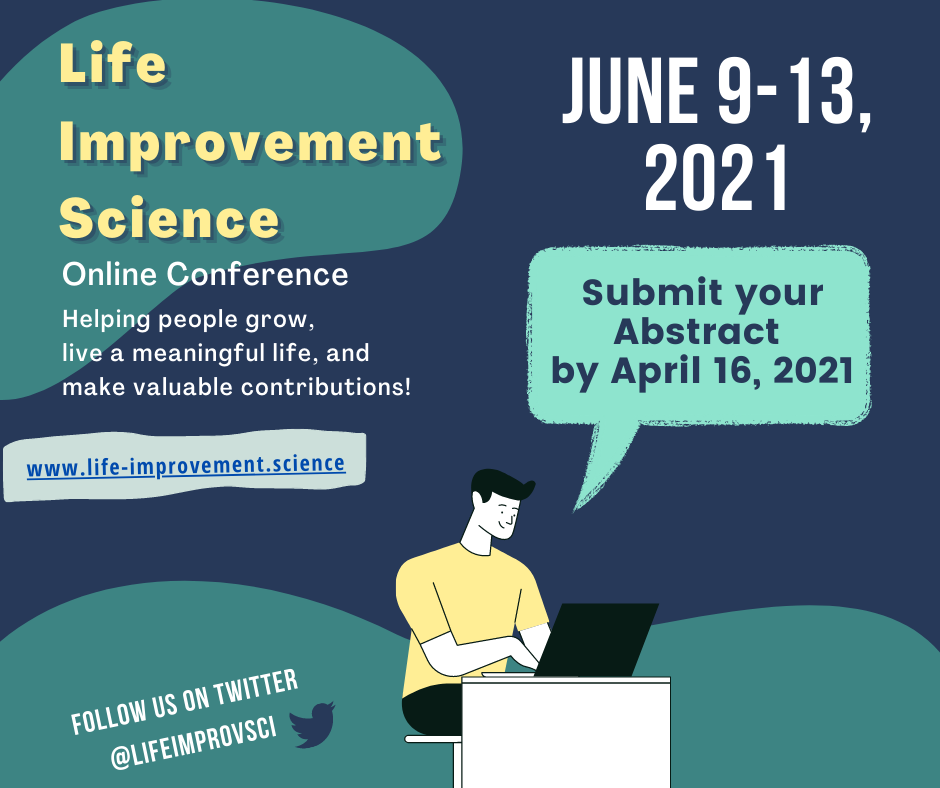
    The first Life Improvement Science conference will be held online between June 9 to June 13, 2021. The conference aims to:

    1. Build a supportive community of researchers and practitioners interested in life improvement science and its applications.

    2. Work towards a shared understanding of the most important open questions of the field and how they can be answered.

    3. Provide an overview of some of the most important research that has been done in different areas of life improvement science.

    4. Foster intellectual exchange and collaboration across different fields.

    The conference is open to the general public. Registration is currently open on the event website. The conference will include talks about promising approaches to life improvement science and its future directions, interactive discussions, a look at the field's most important open questions, presentations of recent work, and opportunities for scientists to collaborate on developing new ideas and establishing life improvement science. 

  • Michael J. Black is elected member of Leopoldina

    Michael J. Black is elected member of Leopoldina

    Founded in 1652, Leopoldina plays a prominent role in promoting scientific and public debate around the world. The academy is dedicated to the advancement of science for the benefit of humankind and to the broader the goal of shaping a better future. With more than 1,500 members, Leopoldina brings together outstanding scientists from Germany around the world. As Germany’s National Academy, Leopoldina has represented German science in international bodies since 2008 and takes an independent position on the scientific foundations of political and social issues. Along with other members of the Academy, Black will participate in studies and expert reports on topics of importance to science policy and represent Leopoldina at relevant events, both nationally and internationally.

    “As an American scientist in Germany, I am honored to become a member of Leopoldina. Germany has been good to me and I am always looking for ways to give back. The Academy offers me another avenue to contribute my expertise to benefit society,” said Black.  An award-winning scientist from the United States, who moved to Germany in 2011, Black has played a decisive role in making southwestern Germany a hub for European AI research.

    Black’s research interests in computer vision focus on training computers to “see” and, in particular to, understand humans and their behavior in images and videos. Using novel motion capture and scanning systems his team uses machine learning to create detailed 3D human avatars and then develops algorithms to estimate human body shape and motion from video. The technology is widely used in industry and the team is developing applications related to human health.

    In addition to his new membership at Leopoldina, Black is also a foreign member of the Royal Swedish Academy of Sciences. He is the only researcher to have won all three major test-of-time awards in the field: the 2010 Koenderink Prize (ECCV), the 2013 Helmholtz Prize (ICCV), and the 2020 Longuet-Higgins Prize (CVPR). His work has won several paper awards including the IEEE Computer Society Outstanding Paper Award (CVPR’91) and Honorable Mention for the Marr Prize in 1999 and 2005.

    Black is also active in commercializing scientific results. In 2013, he co-founded Body Labs Inc., which used computer vision, machine learning, and graphics technology licensed from his lab to commercialize “the body as a digital platform”. Body Labs was acquired by Amazon in 2017. In 2018, he was the founding investor of Meshcapade GmbH, which has created a platform for using digital humans in the clothing, fitness, and entertainment industries.

  • “People want to be able to trust the machine”

    “People want to be able to trust the machine”

    In September 2020, Samadi joined the Max Planck Institute for Intelligent Systems (MPI-IS) and the Tübingen AI Center as leader of the “Human Aspects of ML” research group. The group focuses primarily on two topics. The first relates to ethics and fairness in machine learning, with a particular emphasis on exploring ways to prevent bias and discrimination in decision-making. The second explores ways of building teams between machine learning and humans in order to make better joint decisions.

    One of the central goals of research in the field of artificial intelligence is to design machines that can make decisions in much the same way humans do. However, machine learning algorithms can only make decisions based on the data they’ve been fed – they then reproduce biases in the data in their decision-making. This poses a challenge particularly in areas where the use of machine learning and artificial intelligence have an impact on people’s lives. For instance, many banks use algorithms to determine their customers’ credit scores, and thus to make decisions about loan applications. However, given that these algorithms are trained with historical data that can be both biased and incomplete, the recommendations they make can be unfair or discriminatory. In examining approaches to machine learning that can help ensure fair and unbiased decisions, Samadi collaborates with researchers from other disciplines, including philosophy, economics, and the social sciences.

    “In the past, machine learning applications were generally developed in isolation. People were looking at how they could get the best performance, but they weren’t sufficiently considering how the systems they developed actually affected people,” Samadi says. “In order to develop machine learning algorithms that are ethical and fair, you need to get the perspectives of experts in broad range of disciplines.” This is one of the reasons why she chose to come to Tübingen: the city’s multidisciplinary research community has enabled her to initiate projects with scientists who are just a phone call and a quick walk away.

    In addition to developing machine learning systems that make decisions based on principles of fairness, Samadi also aims to explore methods that will enable a collaborative synergy between humans and machines when they make joint decisions. For instance, in medical diagnosis, the physician might get help from a machine that analyzes all the patient’s historical data and makes a prediction about their medical needs. To build more effective hybrid human-ML models, Samadi builds meta-algorithms that shape the decision-making dynamic between humans and ML.

    Samadi’s research is also motivated by a broader movement of scientists who believe that simple models can result in more interpretability and fairness without necessarily  compromising performance. It challenges a long-held view in the machine learning community that the more complicated the model, the better it is. “People don’t only care about outcomes, but also about their dignity and whether they were treated the right way. They want to feel that the procedure is fair. But unless you understand what’s going on in an ML system, you can’t make sure it’s doing things right.”

  • HR and Talents

    HR and Talents

    Wissenschaftler:innen, Gründer:innen, Studierende und alle, die sich für dieses Thema interessieren, sind am Donnerstag, 17. Juni, von 14:00 bis 15:30 Uhr herzlich eingeladen!

    Speakers

    Sophie Bieber

    Talent Attraction Experience Manager, SAP

    Nadine Roth

    Head of Talent, MARKT-PILOT

    Naureen Mahmood

    CEO, Meshcapade

    Registrierung

    Bitte hier registrieren. Das Meeting findet via Zoom und in englischer Sprache statt.

    Kontakt

    Oliwia Gust – Cyber Valley Event Manager
    Telefon: +49 7071 601 1554
    Mobil: +49 151 4075 6302 
    E-Mail: oliwia.gust@cyber-valley.de


  • A modular building platform for the most ingenious of robots

    A modular building platform for the most ingenious of robots

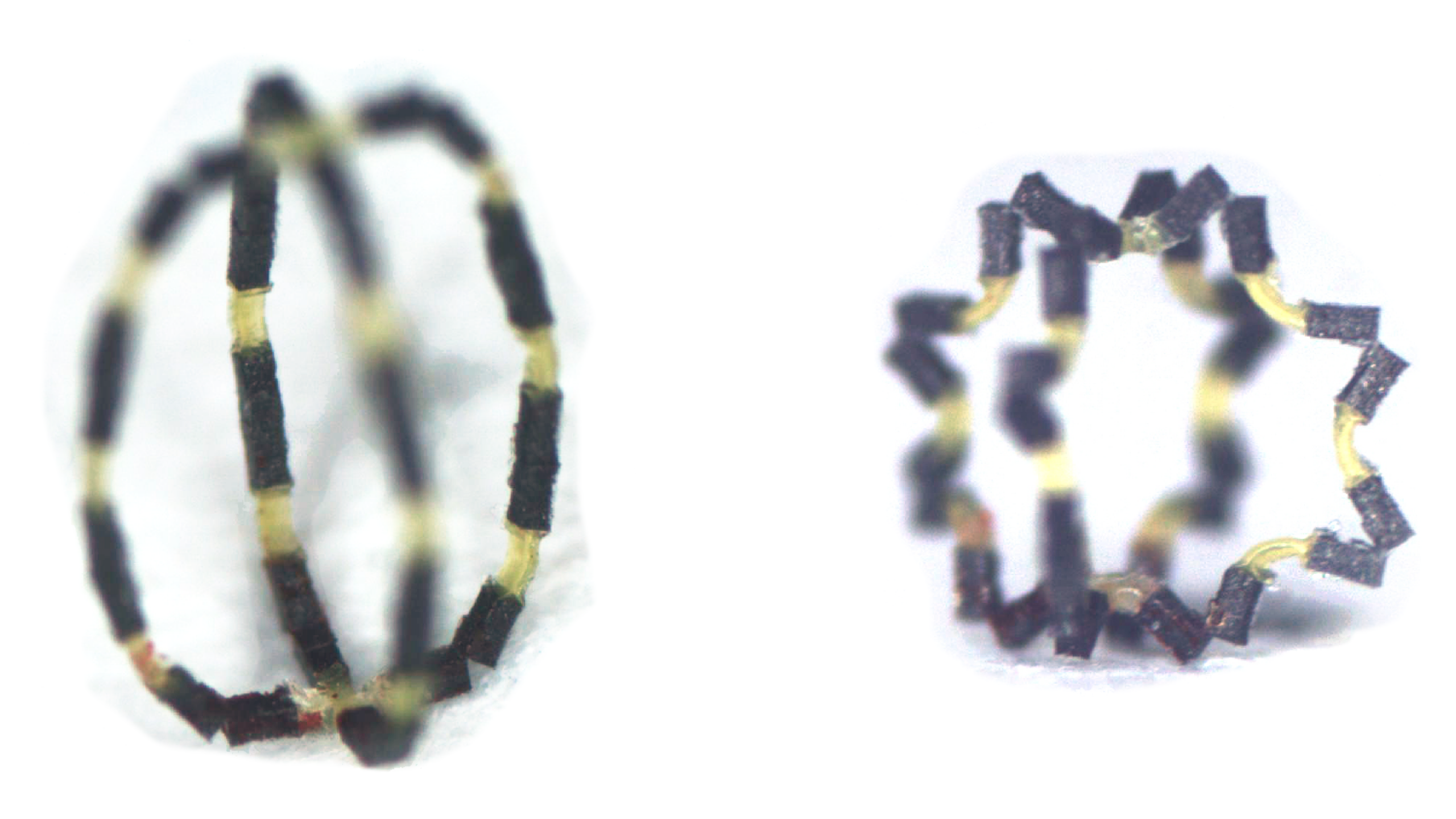
    As one would do with a Lego system, the scientists can randomly combine individual components. The building blocks or voxels – which could be described as 3D pixels – are made of different materials: from basic matrix materials that hold up the construction to magnetic components enabling the control of the soft machine. “You can put the individual soft parts together in any way you wish, with no limitations on what you can achieve. In this way, each robot has an individual magnetisation profile,” says Jiachen Zhang. Together with Ziyu Ren and Wenqi Hu he is first author of the paper entitled “Voxelated three-dimensional miniature magnetic soft machines via multimaterial heterogeneous assembly”. The paper was published in Science Robotics on April 28, 2021.

    A submillimeter small soft machine that can change its shape.

    A submillimeter small soft machine that can change its shape.

    The project is the result of many previous projects conducted in the Physical Intelligence Department at MPI-IS. For many years, scientists there have been working on magnetically controlled robots for wireless medical device applications at the small scale, from millimeters down to micrometers size. While the state-of-the-art designs they have developed to date have attracted attention around the world, they were limited by the single material with which they were made, which constrained their functionality.

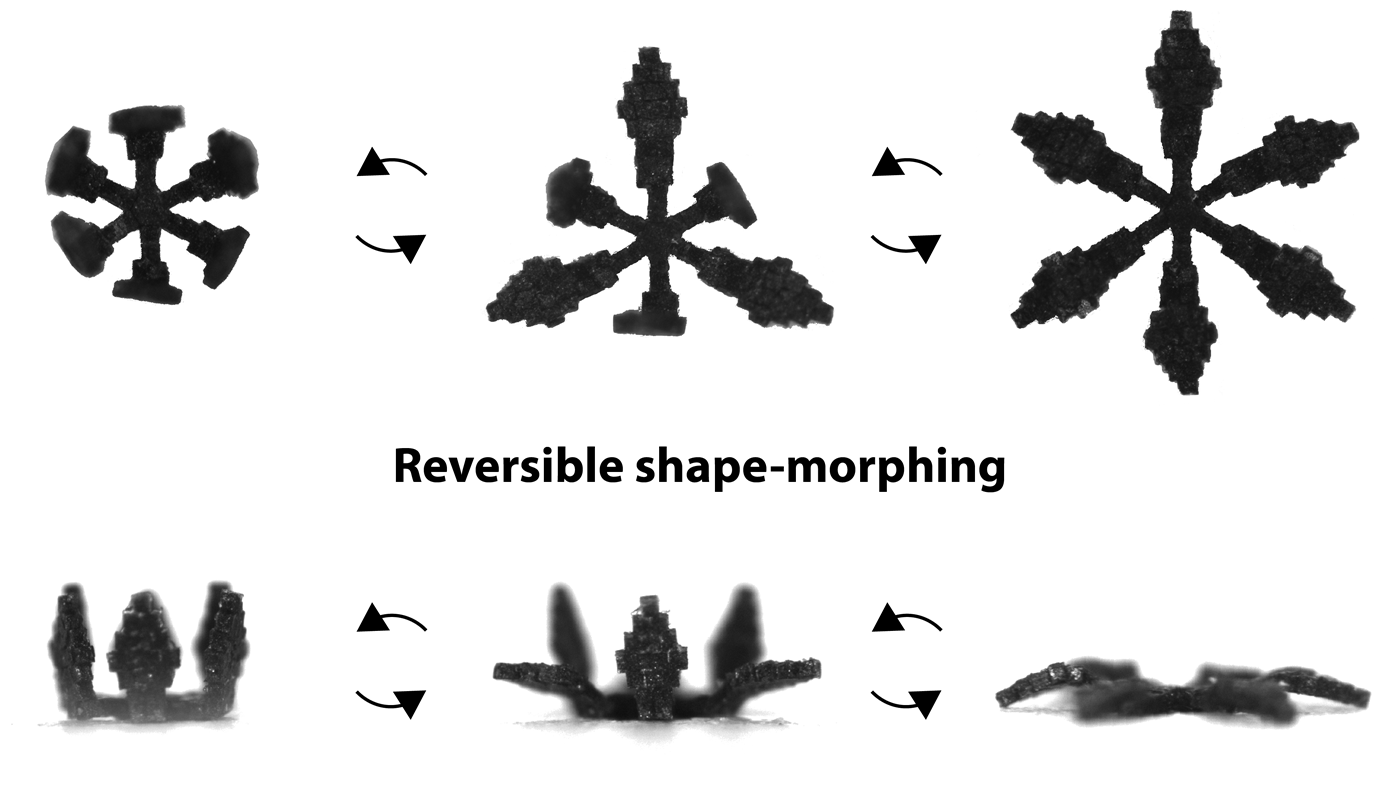
    The heterogeneous assembly approach fabricates a flower-shaped soft machine with complex stiffness distribution and reversible shape-morphing. Three of its petals bloomed first in lower magnetic field strength and the rest three bloomed later as the field strength increased.

    The heterogeneous assembly approach fabricates a flower-shaped soft machine with complex stiffness distribution and reversible shape-morphing. Three of its petals bloomed first in lower magnetic field strength and the rest three bloomed later as the field strength increased.

    “When building soft-bodied miniature robots, we have many different and often complex designs. As a result of their small size, the available fabrication capability is very limited, and this poses a major challenge. For years, researchers have been trying to develop an innovative fabrication platform that provides scientists with completely new capabilities. Our team has now succeeded in demonstrating a new way to construct much more complex soft robots with different components rather than just one. By mixing and matching, we enable tailor-made functionalities and complex robot morphologies. Our new modular building platform will pave the way for many new functional wireless robots, some of which could potentially become the minimally-invasive medical devices of the future,” says Metin Sitti, who leads the Physical Intelligence Department and has pioneered many wireless medical and bio-inspired miniature robots.

    “We have seen 3-D printing or mold casting of voxels with only one material. That limits the functionality – a single material can only do so many things,” says Ziyu Ren. “If you want more functionality like we did and a unique magnetisation profile, you have to introduce a whole set of different materials, for instance by mixing various non-magnetic and magnetic materials.

    “Previously, each robot’s magnetisation profile was limited to certain patterns due to the strong coupling with the geometry of the robot. Now, we have created a platform that can achieve a flexible magnetisation profile. We can do so by freely integrating multiple magnetic parts together in one system,” Jiachen Zhang adds.

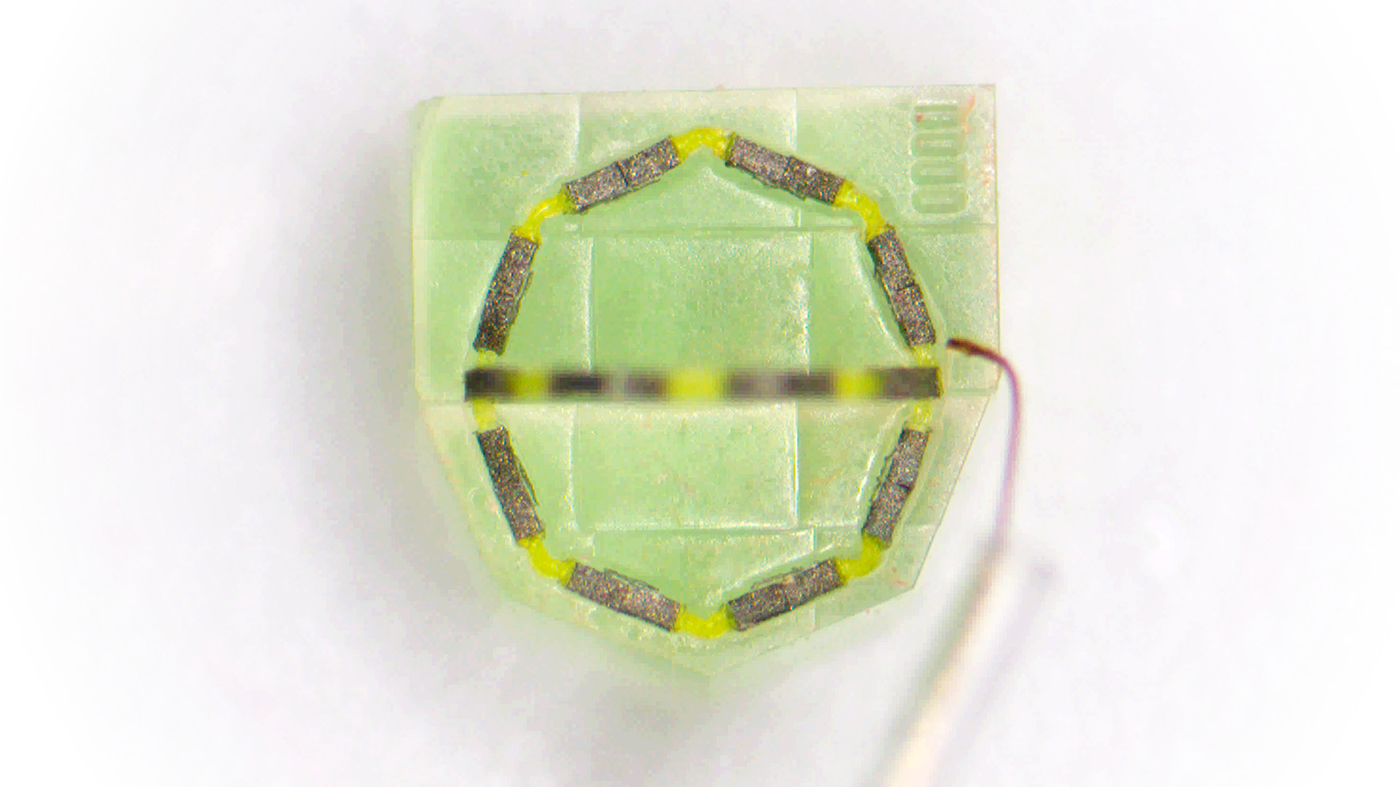
    Illustrations of shape-morphing miniature robots fabricated using the heterogeneous assembly platform. Voxels made of multimaterials are freely integrated together to create robots with arbitrary 3D geometries and magnetization profiles.

    Illustrations of shape-morphing miniature robots fabricated using the heterogeneous assembly platform. Voxels made of multimaterials are freely integrated together to create robots with arbitrary 3D geometries and magnetization profiles.

    The new building platform enables many new designs and is an important milestone in the research field of soft robotics. The Physical Intelligence Department has already developed a wide variety of robots, from a crawling and rolling caterpillar-inspired robot, a spider-like construct that can jump high, to a robotic grasshopper leg and magnetically-controlled machines that swim as gracefully as jellyfish. The new platform will accelerate the momentum and open up a world of new possibilities to construct even more state-of-the-art miniature soft-bodied machines.

    The scientists base each construction on two material categories. The base is mainly a polymer that holds up the matrix. But also other kinds of soft elastomers, including biocompatible materials like gelatin, are used. The second category comprises materials embedded with magnetic micro- or nanoparticles that make the robot controllable and responsive to a magnetic field.

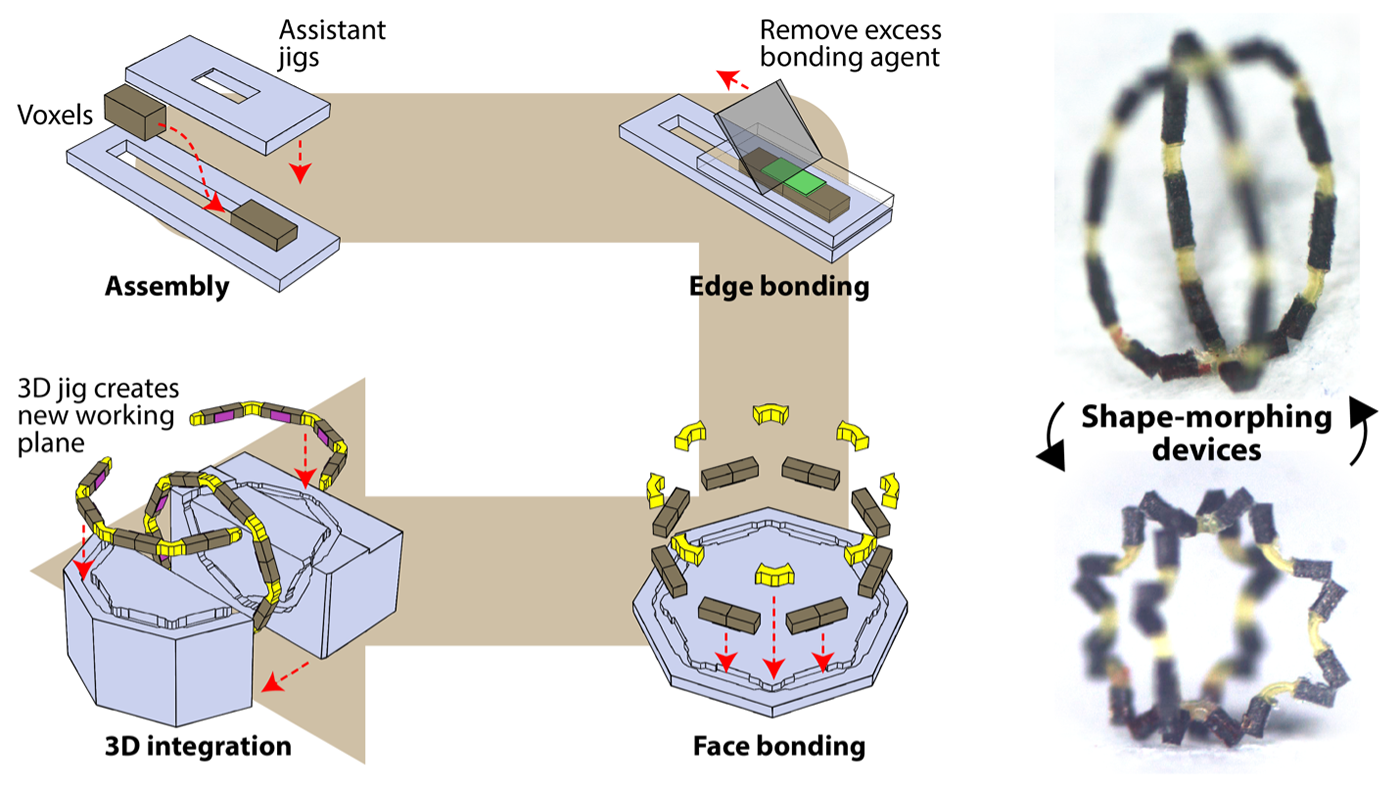
    A heterogeneous assembly platform fabricates multimaterial shape-morphing miniature robots.

    A heterogeneous assembly platform fabricates multimaterial shape-morphing miniature robots.

    Thousands of voxels are fabricated in one step. Like dough being distributed in a cookie tray, the scientists use tiny mold casts to create the individual blocks – each of which is no longer than around 100 micrometers. The composition then happens manually under a microscope, as automating the process of putting the particles together is still too complex. While the team integrated simulation before building a robot, they took a trial and error approach to the design until they achieved perfection. Ultimately, however, the team aims for automation; only then can they reap the economies of scale should they commercialize the robots in the future. “In our work, automated fabrication will become a high priority,” Jiachen Zhang says. “As for the robot designs we do today, we rely on our intuition based on extensive experience working with different materials and soft robots."

  • Cyber Valley Evening Colloquium on Autonomous Systems

    Cyber Valley Evening Colloquium on Autonomous Systems

    Tuesday, April 27, 2021

    17:00

    Multi-agent Replicator Reinforcement Learning Dynamics (Webex)

    Dr. Wolfram Barfuss (University of Tübingen)

    More information
     
    Abstract

    Autonomous multi-agent systems are important for various applications towards a sustainable future. However, without an adequate theoretical foundation, multi-agent learning applications are not only hindered by missing interpretability, their safe and beneficial application for a sustainable future cannot be ensured. In this talk, I will give an overview of my research on the link between evolutionary game theory and reinforcement learning, i.e., replicator reinforcement learning (RRL) dynamics. RRL is a semi-formal method to study idealised multi-agent learning behaviour for improved interpretability. Focusing on the example of social dilemmas, I will show how the agents’ caring for the future parameter alone can turn a tragedy of the commons into a comedy, given a sufficiently severe environmental threat. Regarding the safe and beneficial application of autonomous multi-agent systems, I will show conditions under which an optimisation paradigm is neither sustainable nor safe and reinforcement learning is neither stable nor predictable. I will end with a brief outlook on future work.

    Biographical Information

    Wolfram Barfuss is a postdoctoral research scientist working on collective learning for a sustainable future. He recently moved to the Tuebingen AI Center (Uni Tuebingen) and holds guest research positions at the Potsdam Institute for Climate Impact Research and Princeton University. Previously, he was a research fellow at the School of Mathematics (Uni Leeds) and the Max Planck Institute for Mathematics in the Sciences, Leipzig. He obtained his PhD from the Humboldt University of Berlin and the Potsdam Institute for Climate Impact Research in 2019.

    Link to talk details

    19:00

    Multimodal Traffic Operations with Connected and Automated Vehicles (Webex)

    Dr. Kaidi Yang (Stanford University, USA)

    More information
     
    Abstract

    Transportation systems are undertaking rapid transformation, thanks to the advances of disruptive technologies such as connected and automated vehicles. My research aims to leverage these advances to address the challenges in transportation systems. First, I will present my work on improving multimodal traffic operations using the information provided by connected vehicles. In particular, I will develop a multi-scale and multimodal perimeter control approach for large-scale traffic networks in a connected vehicle environment. Second, I will exploit the benefits of automated vehicles and devise strategies to innovate traffic operations in mobility-on-demand systems in a scenario with mixed autonomy.

    Biographical Information

    Dr. Kaidi Yang is currently a postdoctoral scholar with the Autonomous Systems Laboratory in the Department of Aeronautics and Astronautics at Stanford University. He obtained a Ph.D. degree from ETH Zurich in 2019, with a concentration on intelligent transportation systems. Before this, he received a BEng. in Automation, a BSc. in Pure and Applied Mathematics, and an MSc. in Control Science and Engineering from Tsinghua University. His main research interest lies in the design and operations of future mobility systems utilizing disruptive paradigms such as connected and automated vehicles, shared mobility, etc. He has published 11 papers in academic journals and made presentations at multiple international conferences, including a lectern presentation at International Symposium on Transportation and Traffic Theory (ISTTT). He is the recipient of two projects from the Swiss National Science Foundation (SNSF) Postdoc Mobility Fellowship. He has won the Best Paper Award for a paper published in 2019 on the journal Omega, the 2019 Chinese Government Award for Outstanding Self Finance Students Abroad, and the Best Student Paper (2nd place) in IEEE Intelligent Transportation Systems Conference. He serves as a Review Editor for Frontiers in Future Transportation.

    Link to talk details

    Wednesday, April 28, 2021

    16:00

    On the Rational Bounds of Human Cognition (Webex)

    Sebastian Musslick (Princeton University, USA)

    More information
     
    Abstract

    The human brain is one of the most complex autonomous systems on earth, with billions of neurons operating in parallel, giving rise to mental faculties such as reasoning, problem solving and the use of symbolic language. Despite the enormous capacity that the brain holds for parallel processing, humans are remarkably limited in the number of tasks they can execute simultaneously. Limitations in our ability to multitask are not only apparent in daily life. They are also universal assumptions of most general theories of human cognition. Yet, a rationale for why the human brain is subject to these constraints remains elusive. In this talk, I will draw on insights from neuroscience, psychology and machine learning to suggest that limitations in the brain’s ability to multitask result from a fundamental computational dilemma in neural architectures. Using a combination of graph-theoretic analysis, neural network simulation and behavioral experimentation, I will demonstrate that neural systems can face a tradeoff between learning efficacy, that is promoted through the shared use of neural representations across tasks, and multitasking capability, that is achieved through the separation of neural representations between tasks. This work suggests that it can be optimal for a neural system to sacrifice multitasking capability, to learn single tasks more quickly by sharing rather than separating representations between tasks. I will conclude by demonstrating that this tradeoff can explain a variety of behavioral and neural phenomena related to human multitasking and that it can inform the design of autonomous artificial agents tasked to navigate this tradeoff.

    Biographical Information

    Sebastian Musslick is a Fellow of the Cognitive Science Program at Princeton University where he is about to receive his PhD degree in Quantitative and Computational Neuroscience. His research program involves the study of fundamental computational dilemmas in neural systems, to explain limitations of human and artificial cognition. Sebastian received his diploma in Psychology at the Technische Universität Dresden in 2014, as well as a Master’s degree in Neuroscience at Princeton University. During his diploma studies, he joined the University of Colorado in Boulder as a short-term research scholar from 2012 to 2013 where he developed biologically inspired models of human task switching performance. Sebastian amassed a strong record of publishing and collaborating with partners from academia and industry across disciplines, including psychology, neuroscience, mathematics, physics and computer science. In an effort to facilitate interdisciplinary exchange about the study of human and artificial cognition, he co-organized several international workshops and conferences, including the annual Conference on the Mathematical Theory of Deep Neural Networks and the annual Workshop on Mental Effort.

    Link to talk details

    18:00

    Creating an Efficient Whole-body Tactile Skin using a Piezoresistive Structure and Contact Inference (Webex)

    Dr. Hyosang Lee (Max Planck Institute for Intelligent Systems, Stuttgart)

    More information
     
    Abstract

    Autonomous robots operating in complex and contact-rich environments are becoming essential for industry. These robots would benefit from a soft tactile skin that detects the location and strength of contacts over the entire robot's body surface. Implementing such tactile skin is challenging as the skin should seamlessly cover large and curved surfaces to monitor unexpected physical contacts. Human tactile skin efficiently resolves this challenge using an overlapped receptive field structure and cognitive processing. My research mimics this efficient feature by designing a piezoresistive structure with sparsely distributed electrodes and indirectly inferring contact locations and magnitudes from the electrodes. This approach considerably simplifies wholebody tactile sensor design and fabrication while achieving its contact sensing performance comparable to that of human skin. This talk will introduce key design components of a fabric-based tactile sensor and evaluation results, showing its potential toward efficient whole-body tactile skin applications.

    Biographical Information

    Dr. Hyosang Lee is currently a research scientist at the Max Planck Institute for Intelligent Systems, Stuttgart, Germany. He received a B.S. in Mechanical Engineering from Korea University in 2010. His passion for robotics led him to obtain an M.S. in Robotics from Korea Advanced Institute of Science and Technologies (KAIST), Daejeon, South Korea, in 2012, and a Ph. D. in Mechanical Engineering from KAIST in 2017 where he developed soft tactile skin using piezoresistive nanocomposites. Moved by his interest in haptics, he joined Max Planck Institute for Intelligent Systems as a postdoctoral research fellow in 2017. Since then, he works on the development of a feasible whole-body tactile skin and its possible applications.

    Link to talk details