User Group: Researcher

  • Women in Tech Entrepreneurship

    Women in Tech Entrepreneurship

    In Germany, only 15 percent of all start-ups have at least one woman on the founding team, and just four percent of tech start-ups were founded by women only. In the AI & Robotics start-up scene, the numbers are even lower, and female founders and scientists can face gender bias.
     
    At this event, women will share their experiences and talk about female tech entrepreneurship. 

    Vivian Chu, Ph.D.

    Co-founder and CTO, Diligent Robotics

    Ksenia Keplinger, Ph.D.

    Group Leader, Max Planck Institute for Intelligent Systems, Group: Organizational Leadership & Diversity

    Katherine J. Kuchenbecker, Ph.D.

    Director, Max Planck Institute for Intelligent Systems, Department: Haptic Intelligence

    Co-founder and Chief Science Advisor, Tactai, Inc.

    Eva Wolfangel

    Science Journalist

    Registration

    Please register here, people of all gender identities are welcome. The meeting will be held in English on Zoom.

    Contact

    Oliwia Gust –  Event Manager for Cyber Valley
    Phone: +49 7071 601 1554
    Mobile: +49 151 4075 6302 
    Mail: oliwia.gust@cyber-valley.de 


    The event is taking place in the context of International Women's Day on March 8.

  • Engaging in critical reflection on intelligent systems

    Engaging in critical reflection on intelligent systems

    One of the university's strategic goals is to build the knowledge society needs to shape its future responsibly. With the IRIS network, researchers aim to cooperate with one another in a process of critical reflection on the foundations, mechanisms, implications, and effects of intelligent systems in research, teaching, and society as a whole. For example, at the interface between AI and ethics, the researchers are examining how discrimination can be prevented when artificial intelligence is used in automated decision-making, or how stereotyping can be avoided in technology development.

    "The new IRIS research network illustrates what the University of Stuttgart does especially well: discussing and researching hot topics in an interdisciplinary manner, which includes a broad range of perspectives," said Professor Wolfram Ressel, Rector of the University of Stuttgart. “IRIS brings together scientists from all disciplines at the university, from the AI researcher and the philosopher to the linguist and software engineer. Together, they are working on designing intelligent systems in a manner that is responsible and sustainable. Ultimately, the expertise pooled within the IRIS network will enable us to be leaders in reflecting on intelligent systems.”

    Among other things, IRIS spokesperson and Junior Professor Maria Wirzberger and her team are concerned with the question of how technology can discriminate and how this can be counteracted. "Put simply, algorithms are based on standards that are set by people and can thus carry the same stereotypes within them. These stereotypes are often unconscious and thus flow into technology development unnoticed." Co-speaker Professor Steffen Staab works with his team across disciplines to gain a comprehensive understanding of technical decision-making, for instance loan approval through artificial intelligence. "In recent years, we have learned how the naive use of AI for automated decisions can lead to discrimination. For this reason, we are developing new methods to avoid, detect, and explain unfairness," he says.

    Other IRIS activities

    In addition to research, IRIS creates opportunities for dialog on current ethical and societal challenges related to intelligent systems. Discussions between members of society, industry the university, and beyond focus on topics such as data ethics, informational self-determination, and trustworthy AI. Moreover, IRIS also focuses on teaching: the Reflecting on Intelligent Systems in the Next Generation (RISING) initiative, led by Wirzberger, teaches students across disciplines to critically reflect on intelligent systems.

    For a responsible approach to intelligent systems

    How does IRIS help address stereotypes in technology development? "The benefit is that students, when they enter the labor force, are sensitized to this issue. Then things like discriminatory technology don't happen to the same extent," says Wirzberger. Secondly, IRIS strengthens the university's international network. When people of different backgrounds come together, good ideas emerge and there is a lively exchange, the scientist says. Scientists from the clusters of excellence and all of the university's disciplines are involved in IRIS. The network is funded by the German Research Foundation (DFG) as part of the Excellence Strategy of the German federal and state governments, as well as by the university's research fund.

  • Artificial intelligence supports medical prognoses

    Artificial intelligence supports medical prognoses

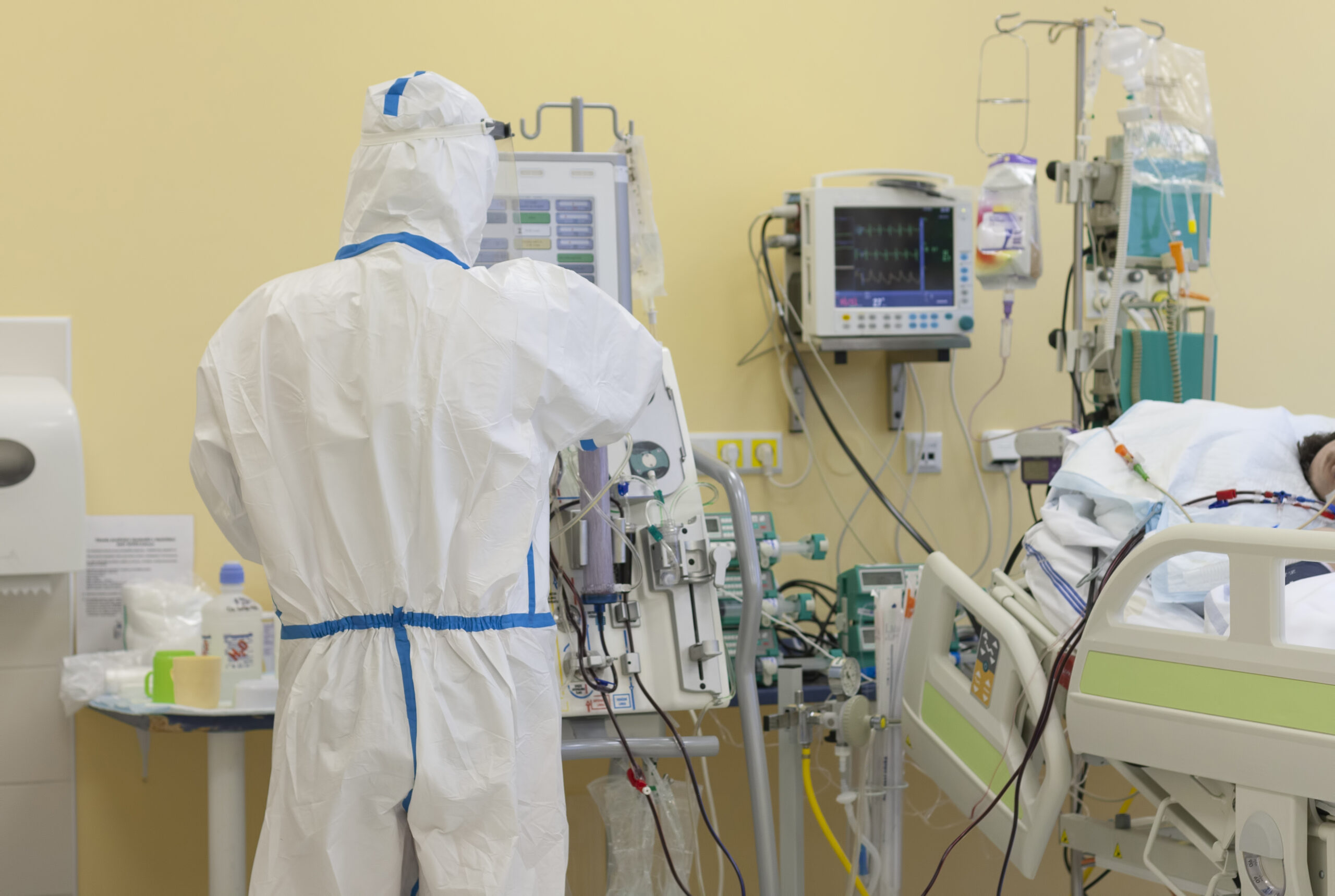
    Tübingen, February 16, 2021 – While hospital physicians collect a wealth of medical data on their patients, even specialists are often unable to predict whether an illness will lead to a person’s death until it is too late to save them. With COVID-19, for instance, advanced age and pre-existing conditions are relevant risk factors for serious disease, but by no means are they the only risks. Oxygen saturation, white blood cell count, and creatinine levels also play a role in health outcomes. “With these parameters, even experienced physicians cannot recognize clear patterns that would allow them to make predictions about mortality risk early enough to adjust treatment accordingly,” says Stefan Bauer, research group leader at the Max Planck Institute for intelligent Systems in Tübingen. By recognizing patterns in data, machine learning can provide valuable support.

    An international team led by Stefan Bauer of the Max Planck Institute for Intelligent Systems and Patrick Schwab, formerly of Roche, thus developed an algorithm and trained it to predict individual mortality risk for patients with COVID-19 by drawing on the data of thousands of patients around the world. They call the algorithm Covews, which is short for “Covid-19 Early Warning System”. In addition to Max Planck scientists from Tübingen and Roche, researchers from Harvard University, Harvard Medical School, the Massachusetts Institute of Technology, Tübingen University Hospital, and Winterthur Cantonal hospital also contributed to the research project. Their paper "Real-time prediction of covid-19-realted mortality risk using electronic health records" was published today in Nature Communications. 

    Predictions with 95 percent sensitivity and nearly 70 percent specificity

    Drawing on medical data, Covews can reliably predict a patient’s risk of dying up to eight days in advance with a sensitivity of more than 95 percent. This means that in 95 out of 100 cases, the algorithm can detect whether a patient will die unless preventative measures are taken. At the same time, Covews works with a specificity of just under 70 percent for a prediction eight days in advance, meaning that in about 70 out of 100 cases in which death is predicted, the patients ultimately die. In other words, the algorithm sounds a false alarm in only 30 out of 100 cases and is significantly better for shorter time horizons. The algorithm can also be trained to make less sensitive, but more specific predictions. "But detecting all people with a high mortality risk, if possible, is more important than incorrectly predicting a high risk in some," says Stefan Bauer. When the latter occurs, special therapeutic measures could be taken in more patients than necessary to avert presumed death.

    To develop and especially to train Covews, the researchers used 33,000 anonymized data records from a cohort called Optum, which tracks patients in various hospitals in the United States. They fed the algorithm information about how several routinely collected patient health parameters evolved over the course of the disease, and whether or not the person died from COVID-19. As a result, Covews learned to identify patterns in the data sets that indicated a high risk of mortality. The international team then tested how accurately Covews estimated this risk on about 14,000 other data sets from the Optum cohort. "However, our algorithm not only predicts mortality risk with a high degree of certainty with data sets from this cohort, but also with data from other hospitals," says Stefan Bauer. The researchers showed this by testing Covews on data from the TriNetX global health network, which includes about 5,000 patients with positive COVID tests in the U.S., Australia, India, and Malaysia. In these test cases in many different hospitals and regions around the world, Covews also predicted mortality risk very sensitively and specifically.

    Treatment decisions must always remain in doctors’ hands

    Although Covews makes reliable predictions, it will likely take quite some time before it is used in practice. "It often takes several years before such new techniques are used in everyday clinical practice," says Stefan Bauer. This is partly because at many hospitals, the available data are not sufficiently structured, making the development of suitable software based on the algorithm particularly challenging. In any case, by making Covews freely available on the internet, the researchers are laying the groundwork for putting the algorithm into practice quickly. Not only could it be used for COVID-19 patients; with the right training, it could also predict mortality risk for other diseases.

    Like most predictions using machine learning methods, Covews' predictions are derived from correlations rather than causal relationships. Correlations can be purely statistical, meaning they are not causal. Bauer’s team also points out a limitation of Covews' calculations: it is possible that the algorithm predicts treatment discontinuation rather than mortality. In that case, the predictions would not be based on medical facts alone." Medical considerations are not the only factors that play a role in the decision to discontinue treatment," says Stefan Bauer. Religious, cultural or personal attitudes can also lead people to stop undergoing treatment. For example, people may generally reject artificial respiration or refuse to accept life-saving measures out of fear of the long-term consequences of an illness. What’s more, family members or friends often have a say in such decisions. "Doctors must thus always decide on treatment measures," says Stefan Bauer. "However, our algorithm can provide insights that people can't derive from the data, and that can help with medical decisions."

  • Sometimes too convenient: AI under the microscope

    Sometimes too convenient: AI under the microscope

    The interdisciplinary team of scientists from the University of Tübingen (Robert Geirhos, Claudio Michaelis, Wieland Brendel, Matthias Bethge, Felix Wichmann) and the University of Toronto, Canada (Jörn-Henrik Jacobsen, Richard Zemel), observed that many AI errors occur secretly, so to speak, and initially go unnoticed. For example, at first glance, an algorithm seems to be excellent at recognizing which animals are in a photo. Only on closer inspection does it turn out that the algorithm has found a much more convenient strategy and sometimes simply pays attention to the background: For example, an empty green hilly landscape is unceremoniously referred to by the AI as a “herd of grazing animals” – because animals often occur in front of a green background – while a cow in front of an unusual background, for example on the beach, is not recognized in contrast. What at first seems like a funny mistake can actually have serious consequences. This is because similar AI processes are also used, for example, in cars with modern driver assistance systems to recognize pedestrians and are being tested in medicine for the early detection of cancer.

    This “shortcut learning” is not a phenomenon unique to AI systems, though. On the contrary, such shortcuts in learning are also observed in nature, including humans. For example: When students in history classes merely memorize dates without developing a deeper understanding of historical contexts, just to meet the specific requirements of a class assignment. Or an example from the animal world: In an experiment in which rats had to find their way through a maze with differently colored walls to reach their destination, the animals were quickly unerring. Amazingly, they found their way much better than the experimenters had expected. The ability to distinguish colors visually is not particularly pronounced in this type of rat. It was not until the test results were closely examined that it became clear that the animals were not using their eyes to find their way through the maze. Instead, they had learned the right route thanks to their highly developed sense of smell, because the different wall colors smelled differently.

    Analogously, AI systems also often look for any route to the goal that is most suitable for the system at the time. This may not be tragic for pictures of cows in different landscapes. But this behavior becomes problematic when, for example, banks use algorithms to grant loans. In the U.S., the applicant’s zip code can be used to infer the applicant’s social environment – and thus also the likelihood of repayment, i.e., creditworthiness. The shortcut in this case is that a correlation gains decisive significance via the specification of the zip code. But the algorithm cannot determine whether there is a causal relationship between the zip code and the actual creditworthiness of the bank customer.

    In their paper, a perspective Article published in the journal Nature Machine Intelligence, the researchers describe the common pattern behind many of these anecdotes reported by other researchers. They call for greater scrutiny of AI in the future. Good test scores of machine learning in mainstream testing procedures are not sufficient to guarantee good everyday usability. Specifically, the authors suggest developing and applying stronger test procedures in AI research. “The current standard test procedures are too weak, because this means that algorithms are often only tested on similar data,” says Robert Geirhos, a doctoral student at the University of Tübingen and lead author of the paper. “We therefore advocate that AI systems be tested with much heavier data sets, in which the unexpected is queried and thus transfer performance is demanded of them.”

    After all, until one has investigated whether an algorithm can easily handle unexpected images, such as a cow on the beach, you have to at least consider that the algorithm took a shortcut on the way to the answer. “Fortunately, however, ‘taking a shortcut’ is not the only option for an algorithm, only the most convenient one,” Geirhos points out. “If you challenge AI appropriately, it can certainly learn highly complex relationships.”

  • Bosch AI Con 2021

    Bosch AI Con 2021

    What is the AI CON 2021 about?

    Industrial AI or how to bring AI to the real world: A topic that not only Bosch is affected by. Learn about the Bosch way in this field through an exciting Keynote of Bosch’s CTO Michael Bolle on the AIoT Cycle and on the importance of Hybrid Models. You will also get insights into how other industrial companies handle this exciting field. But there is even more! You will have the chance to learn from renown researchers and AI experts from the industry sector like Raquel Urtasun (Uber ATG), Zico Kolter (Carnegie Mellon University), Jun Zhu (Tsinghua University), Nuria Oliver (MIT) or George Em Karniadakis (Brown University) about the latest findings and hot topics in the field of AI.

    Listen to exciting keynotes about various AI hot topics

    Experience what is possible through AI at our virtual exhibition

    Meet in instructive technical deep dives our AI experts and renowned researchers from the AI Community on innovative and hot topics

    Exchange with like-minded people to get new impulses and enable future collaborations

    From 13:00 – 17:00 Cyber Valley representatives will be available for virtual coffee breaks during BOSCH AI Con. If you’re interested in finding out about research and founding opportunities in Europe’s largest ecosystem for research and innovation in modern AI, please feel free to join for one of these 20-minute sessions. Our representatives will be talking about their experiences and answering questions about life as a researcher or entrepreneur in Cyber Valley.


    Be excited about what awaits you at the 2021 virtual AI CON!

  • Cyber Valley Professor listed among top researchers at the Wirtschaftswoche Ranking

    Cyber Valley Professor listed among top researchers at the Wirtschaftswoche Ranking

    The German magazine WirtschaftsWoche recently published their ranking of business and management researchers in all German speaking countries. The ranking is based on the platform forschungsmonitoring.com, which is run by the ETH Zurich and the Düsseldorf Institute for Competition Economics.

    The ranking is based on publications in overall 860 international peer-reviewed journals, weighted by the reputation of each journal. The authors' ranking includes 3.346 researchers, the U40 ranking is based on 481 scientists, and the life's ranking has overall 4.051 professors as basis for this evaluation.

  • Virtuelles S-TEC Spitzentreffen 2021

    Virtuelles S-TEC Spitzentreffen 2021

    Die Stuttgarter Fraunhofer-Institute IAO und IPA laden herzlich zum virtuellen S-TEC Spitzentreffen am 25. Februar 2021 ein, um gemeinsam mit Ihnen und Baden-Württembergs Wirtschaftsministerin Dr. Nicole Hoffmeister-Kraut einen Blick auf die laufenden Entwicklungen und Forschungserkenntnisse zum Thema KI und Robotik zu werfen. Ein besonderer Fokus liegt hierbei auf dem KI-Fortschrittszentrum »Lernende Systeme« und dem Zentrum für Cyber Cognitive Intelligence (CCI) der Stuttgarter Fraunhofer-Institute IAO und IPA. Das KI-Fortschrittszentrum »Lernende Systeme« schließt durch Technologietransfer die Lücke zwischen KI-Spitzenforschung und der breiten Anwendung in der produzierenden Industrie.

    Neben dem Grußwort der Ministerin bietet Ihnen die Veranstaltung einen umfassenden Einblick in die Erfahrungsberichte konkreter KI-Praxisbeispiele kooperierender Unternehmen aus der Region. Freuen Sie sich zudem auf Keynotes, Pitches und eine Podiumsdiskussion, in der Sie Ihre Erfahrungen, Ideen und Fragen mit den KI-Expertinnen und Experten teilen dürfen.

  • Progress in the field of Brain-Computer Interaction: scientists take BCI research out of the lab and into the real world

    Progress in the field of Brain-Computer Interaction: scientists take BCI research out of the lab and into the real world

    The field of brain-computer interaction (BCI) has been heralded as the next frontier for both medical and personal technologies. BCI ultimately aims to enable people who are completely paralyzed to communicate with the outside world by using their thoughts. However, until now, most research on BCIs for direct communication and control has taken place in laboratories, and this has posed an obstacle to progress in the field. This is because data collection in the laboratory setting is limited to a small number of people, and findings in a lab may not translate to real-life scenarios. What is more, the complex medical equipment that is used in this research area makes systems inaccessible to non-expert users, relatives, or caregivers.

    Scientists at the Max Planck Institute for Intelligent Systems and the University of Vienna have now addressed these challenges with MYND, an open-source software that combines consumer-grade recording hardware with an easy-to-use app. They present their research in the paper entitled “MYND: Unsupervised Evaluation of Novel BCI Control Strategies on Consumer Hardware”. The paper was recently presented at the ACM Symposium on User Interface Software and Technology (UIST), a leading forum for innovations in human-computer interfaces. It is now available in the Association for Computing Machinery’s (ACM) Digital Library.

    In BCI research, machine learning models use recorded neural activity to deduct specific mental states. However, most systems are only tested in a laboratory and not in real-life environments. By making it possible to run studies outside the lab with affordable hardware, MYND can thus serve as a tool that effectively complements initial basic research by asking questions about actual everyday use. 

    “With MYND, we hope to provide a framework that allows researchers to evaluate conceptual BCI systems in realistic conditions. After all, brain-computer interfaces are meant to function wherever and whenever the user needs them,” said Matthias Hohmann, the paper’s lead author, at the ACM Symposium on UIST. Hohmann recently completed his Ph.D. in the Empirical Inference Department at the Max Planck Institute for Intelligent Systems in Tübingen. The paper was co-authored by fellow MPI-IS researchers Lisa Konieczny, Michelle Hackl, Brian Wirth, Talha Zaman, and Raffi Enficiaud. Moritz Grosse-Wentrup, and a former MPI-IS group leader who is now professor of Neuroinformatics at the University of Vienna and Bernhard Schölkopf, Director of at thethe institute’s Empirical Inference Department at MPI-IS in Tübingen, supervised the project.

    “Particularly in the midst of the global COVID-19 pandemic, we’ve seen that restricted access to laboratories can severely impact data collection and research efforts in empirical sciences. MYND addresses this challenge effectively. What’s more, given the results of our study, we are confident that our approach could be a viable basis for research on accessible BCI usage in daily life,” Hohmann continued.

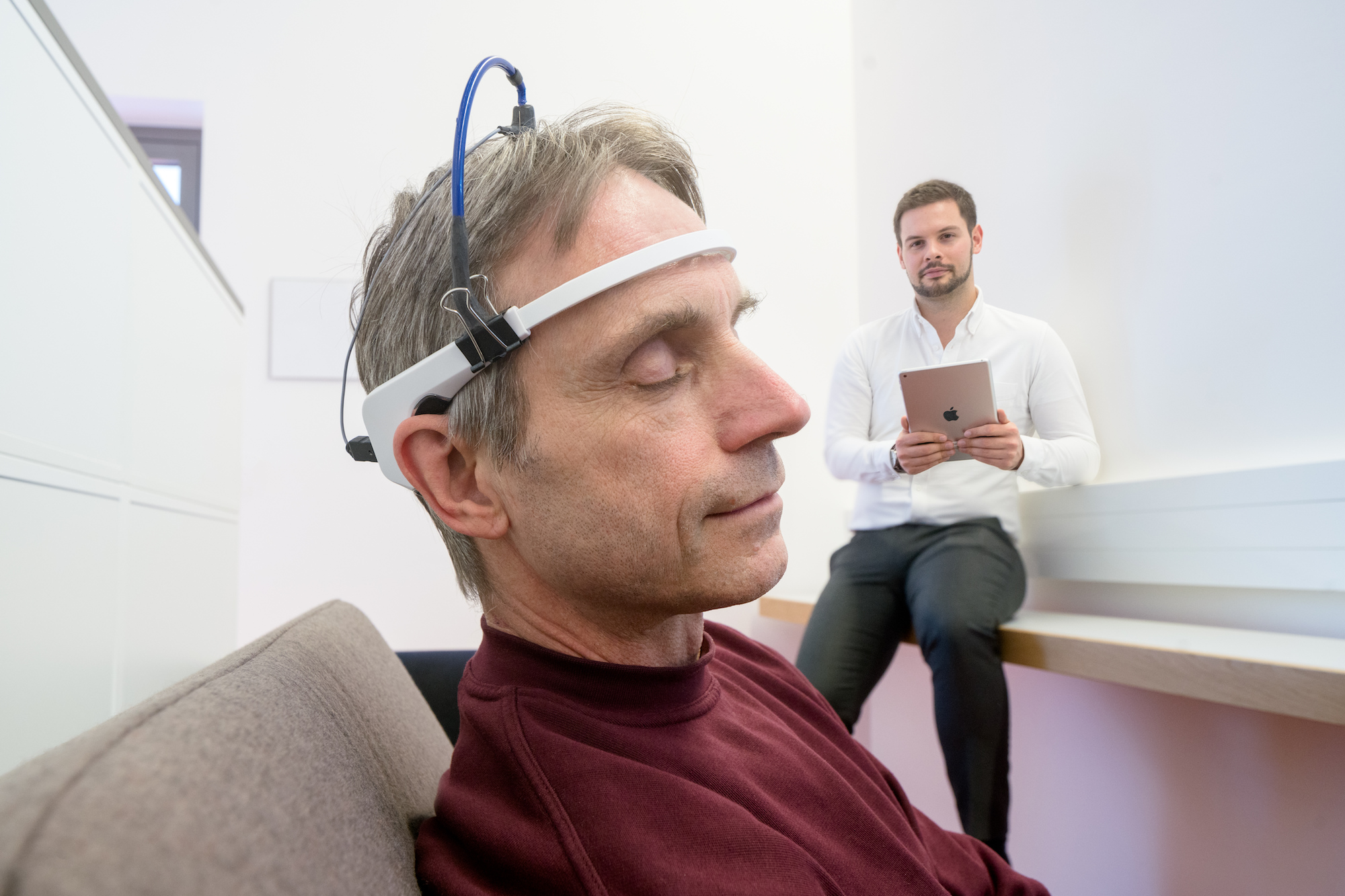
    Over the course of the MYND study, 30 participants were asked to use a consumer-grade electroencephalogram, a device that can be placed on a head and that records neural activity of the brain., while Ssubjects were asked to engage in specific mental activities: In one short task, they were asked to alternate between thinking of a happy memory and a mental calculation task. In the other, they were asked to alternate between remembering a song and a mental calculation task. Participants did both tasks several times over the course of one week while recording neural activity. After the study concluded, machine learning models were able to deduct the mental task from the recorded neural activity with a significant accuracy of 68.5 percent, and 64 percent, respectively. 

    The scientists noted that deduction accuracy – i.e., how different neural activity patterns were between mental tasks – decreased as the study progressed. This may have been because participants were asked to complete the same exercise each day. This, the researchers suggest, could potentially be remedied if participants used MYND to track self-devised brain control strategies on a schedule of their choosing – something that would not be possible in a traditional laboratory setting. The open-source framework thus opens up the possibility to enhance BCI lab research with aspects of human-computer interaction. 

    The open-source software is complemented with  code is available for further development and external contributionsresearch on github, along with documentation and guidance for the most likely adaptations, such as the addition of new recording hardware or experimental scenarios. The source code is available for further development and external contributions on github.


    Resources

    UIST Paper (ACM Digital Library, Open Access):

    https://dl.acm.org/doi/10.1145/3379337.3415844

    UIST Talk recorded (Youtube)

    https://www.youtube.com/watch?v=MEBZ2lwOTrk

    UIST Teaser (Youtube):

    https://www.youtube.com/watch?v=KxnbNAP2DDk

    Software Publication:

    http://doi.org/10.5281/zenodo.3802683

  • Research team receives 1.5 million euros to develop algorithms that learn with child-like curiosity

    Research team receives 1.5 million euros to develop algorithms that learn with child-like curiosity

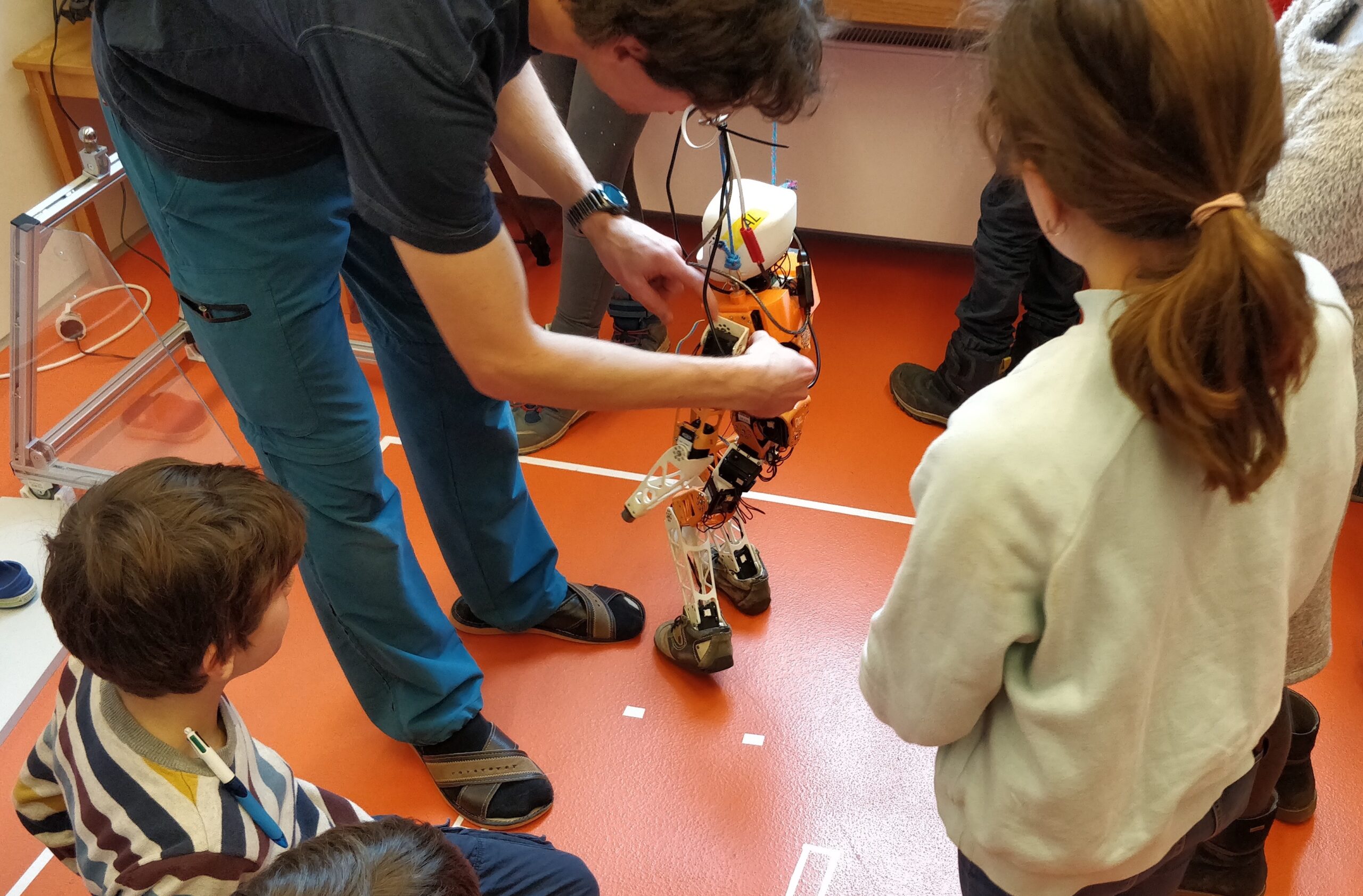
    The scientists first want to find out how children discover and learn to understand the world around them on the basis of their innate curiosity. In a second step, they will use their findings to develop mathematical routines based on human learning processes that could enable intelligent systems to develop childlike curiosity. The scientists will then test ways to equip robotic systems with these novel self-learning algorithms.

    "Even the famous computer scientist Alan Turing believed that true artificial intelligence can only be achieved if you manage to build a machine that learns like a child," said Eric Schulz, leader of the Computational Principles of Intelligence Lab, an independent research group at the Max Planck Institute for Biological Cybernetics. "So far, however, little is known about how children spontaneously explore their environment and how this behavior can be applied to challenging tasks in robotics and machine learning."

    An essential characteristic of human intelligence is the ability to systematically explore and understand one's own environment. In this context, exploration is not based on the traditional understanding of learning as the achievement of an externally imposed set of goals. Rather, children in particular act in a strongly self-motivated way and challenge themselves to learn or create something new again and again while playing.

    "In order to master this scientific challenge, we need even more interdisciplinary collaboration than before. Researchers in developmental psychology often have problems translating their findings on self-motivated learning into suitable mathematical form, while computer scientists have insufficient knowledge about aspects of human psychology. In our project, we want to combine the knowledge of the different disciplines in a holistic approach to develop new methods and achieve new insights," says Georg Martius, leader of the independent Autonomous Learning research group at the Max Planck Institute for Intelligent Systems.

    To this end, the researchers at the three Max Planck Institutes have decided to work together in interdisciplinary teams. Above all, the research project aims to deliver practical results that can either be immediately applied or further developed for computer science and AI applications. To ensure that the new findings can be quickly and fully transferred to science and application, all results and algorithmic codes will be made available to the general public via standard platforms, such as Github or OpenAI.