User Group: Researcher

  • Legal Forms & Business Models

    Legal Forms & Business Models

    Schedule

    • Welcome 
    • Legal forms
    • Business models
    • Business models in the software industry
    • Breakout Sessions
    • Closing Remarks

    Details below | Please register here.

    Welcome

    Julia Schmaus

    Innovation Manager

     
    Introduction of the topic

    Alex Diehl

    Senior Advisor Cyber Valley

    Legal Forms

    Florian Beilhack

    Max Planck Innovation

    Q&A  
    Business models

    Marcel Werle

    University of Stuttgart

    Q&A  
    Business models in the software industry

    Marcus Rübsam

    Entrepreneur und Advisor

    Q&A


    Breakout Sessions

    Legal forms & Business models

     
    Closing and final Q&A

    Alex Diehl and Tobias Dürr

    Senior Advisor Cyber Valley
    Innovation Manager

  • Kickoff AI Breakthrough Hub

    Kickoff AI Breakthrough Hub

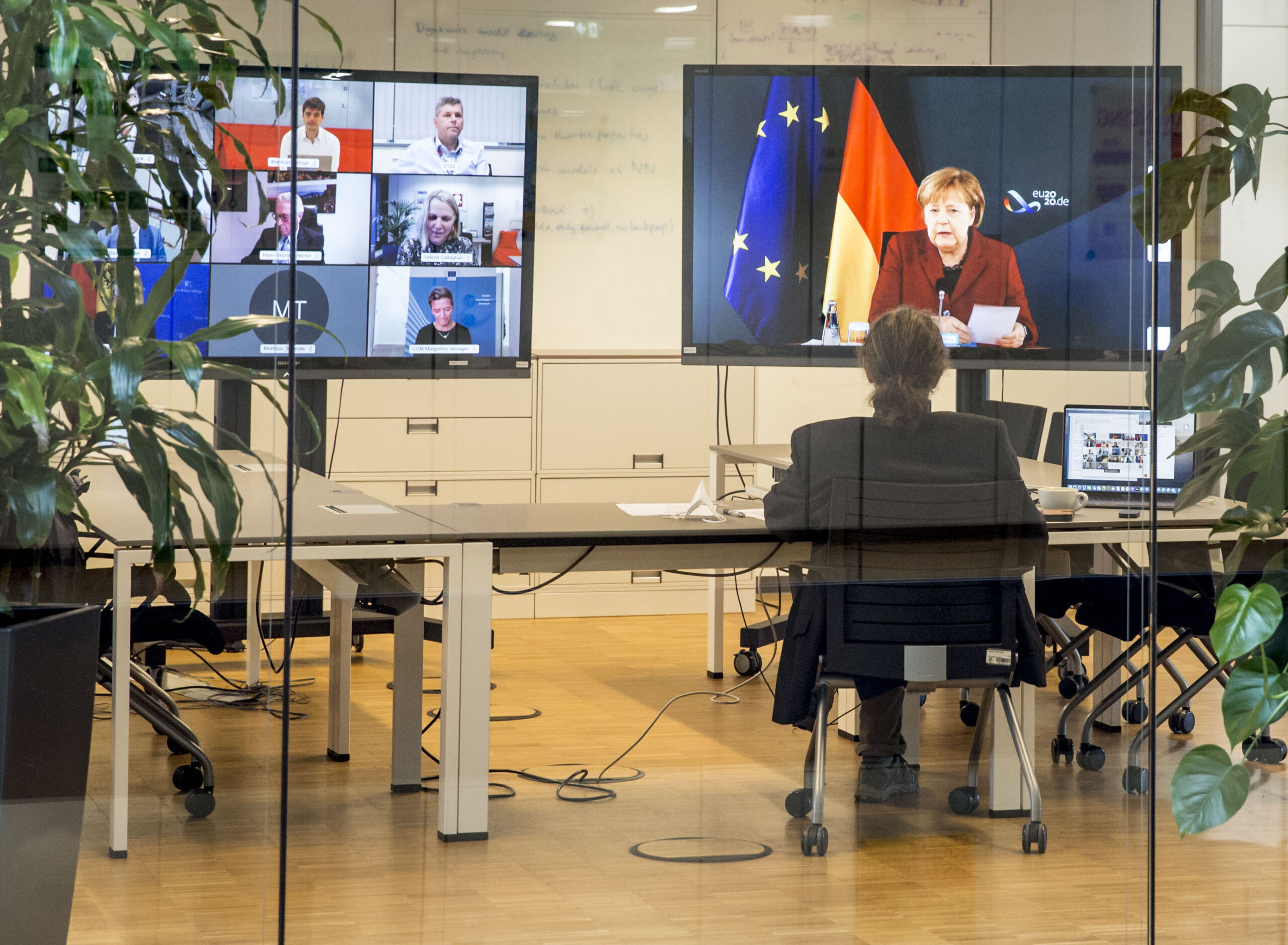
    Die Teilnehmenden der Videokonferenz sind:

    Startschuss des „AI Breakthrough Hub“

    • Dr. Angela Merkel
      Bundeskanzlerin
    • Winfried Kretschmann
      Ministerpräsident
    • Margrethe Vestager
      Exekutiv-Vizepräsidentin der EU-Kommission und Kommissarin für Digitales und Wettbewerb
    • Prof. Dr. Matthias Bethge
      Direktor des Kompetenzzentrums Tuebingen.AI, Professor an der Universität Tübingen
    • Dr. Michael Black
      Direktor am Max-Planck-Institut für Intelligente Systeme, Sprecher Cyber Valley
    • Prof. Dr. Bernhard Schölkopf
      Direktor am Max-Planck-Institut für Intelligente Systeme, Co-Direktor des Kompetenzzentrums Tuebingen.AI
    • Dr. Katherine Kuchenbecker
      Geschäftsführende Direktorin des Max-Planck-Instituts für Intelligente Systeme
    • Dr. Michael Bolle
      CTO/CDO Bosch GmbH

    Panel I: „Excellence in Research and Talent“

    • Anja Karliczek
      Bundesministerin für Bildung und Forschung
    • Theresia Bauer
      Landesministerin für Wissenschaft, Forschung und Kunst
    • Prof. Dr. Martin Stratmann
      Präsident der Max-Planck-Gesellschaft
    • Dr. h.c. Hans-Werner Hector
      Gründer der der Hector Stiftung
    • Prof. Dr. Bernd Engler
      Rektor der Universität Tübingen

    Panel II: „Excellence in Transfer and Venture“

    • Alex Diehl
      Senior Advisor Cyber Valley
    • Prof. Dr. Matthias Bethge
      Direktor des Kompetenzzentrums Tuebingen.AI
    • Dr. Raquel Urtasun
      ATG Uber, Chief Scientist, Vector Institute Toronto
    • Dr. Ulrich Quay
      Managing Director BMW iVentures, Mountain View
    • Naureen Mahmood
      CEO, Co-Founder Meshcapade GmbH
    • Dr. Benedikt Battke
      Partner Grazia

    Weitere Links

  • Teaching machines to see like people

    Teaching machines to see like people

    In the field of computer vision, a key challenge lies in teaching machines to “see” and draw conclusions about complex 3D scenes, just as human beings do. The ultimate aim is enabling technologies in realms such as autonomous driving and virtual reality to operate safely and reliably. While science is still a long way from achieving this, researchers at the University of Tübingen and the Max Planck Institute for Intelligent Systems (MPI-IS) have taken the field one step further with GRAF: Generative Radiance Fields for 3D-Aware Image Synthesis. They present their work this week at the Thirty-fourth Conference on Neural Information Processing Systems (NeurIPS 2020). One of the world’s leading machine learning conferences, NeurIPS 2020 is being held virtually until December 12.

    “Human beings are capable of looking at a 2D image and imagining exactly what it looks like from different angles and viewpoints in 3D,” said Katja Schwarz, the paper’s lead author.

    “But they can do even more: they can also imagine completely new scenes because they understand the underlying concepts required to create them. This calls for a sophisticated ability to reason in 3D that machines simply don’t have yet. Machines can already generate new 2D images really well, but science is still working on enabling them to reason better in 3D and learn abstract three-dimensional concepts. With GRAF, we offer an approach that vastly improves 3D-aware image synthesis for single objects and takes an important step in this direction.”

    Schwarz is currently a PhD student in the Autonomous Vision Group, which is split between the University of Tübingen and the MPI-IS. Her co-authors were fellow researchers Yiyi Liao and Michael Niemeyer, as well as Andreas Geiger, who is group leader.
    While methods for 3D-aware image synthesis already exist, they often require 3D training data or multiple images from the same scene with known camera poses. This information can be difficult to collect in real-world situations. An autonomous vehicle, for instance, must be able to operate safely when pedestrians suddenly cross the road or other unexpected obstacles appear. For obvious reasons, such scenes cannot be pre-recorded in real-life, making simulation an important part of the training pipeline.

    In response to this challenge, the scientists aimed to create a 3D-aware model that learns only from 2D images without viewpoint information. This is a challenging task, and existing approaches either produce low-image resolution or inconsistent object depictions when the viewpoint changes. With GRAF, the scientists set out to create a model that scales to high image resolution while maintaining consistent object depictions. In the long term, such models could generate realistic simulations for training robots or autonomous vehicles.

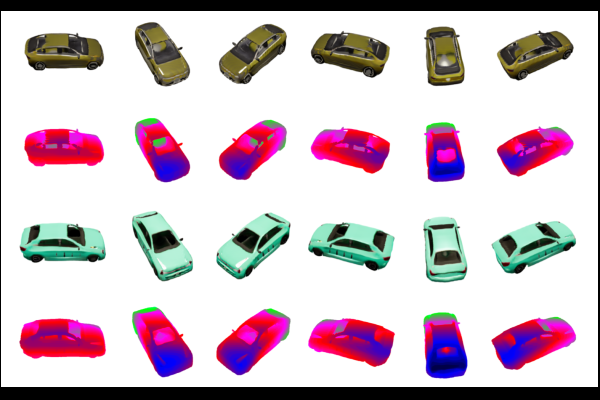
    To find out how a generative model could be made aware of the world’s 3D nature solely on the basis of 2D images, the researchers incorporated a virtual camera into their model. They then controlled its position so it could view the objects in the images from different angles. The 3D objects are modeled in a memory-efficient way that uses specific representations known as radiance fields. This is key for scaling the method to high image resolution. For a given camera viewpoint, every 3D object can then be rendered to a 2D image. By comparing the generated renderings to real images, the model learns to generate 3D-consistent images across camera viewpoints.

    “We analyzed our model on several synthetic and real-world datasets, and we found that our approach with radiance fields scales well to high-resolution while maintaining consistency across different camera viewpoints,” said Schwarz. The scientists not only tested GRAF on images of objects like cars and chairs, but also on natural images of people, birds, and cats, with very good results. In a next step, they plan to extend their approach beyond single objects to even more complex real-world scenes.

    More information about the GRAF project can be found at https://autonomousvision.github.io/graf/.

  • NeurIPS 2020

    NeurIPS 2020

    Monday, 7. December, 21:00-21:30 CET

    Katja Schwarz 

    Katja Schwarz is a PhD Student at Tuebingen University and scholar at the International Max Planck Research School (IMPRS) for Intelligent Systems (IS). She started her PhD in 2019 and is supervised by Prof. Andreas Geiger. Katja works at the intersection of Machine Learning, Deep Learning and Computer Vision. Currently, she is particularly interested in geometric scene understanding and 3D generative models.

    REGISTRATION

    Tuesday, 8. December, 21:00-21:30 CET

    Junhyung Park

    Junhyung Park has been a PhD student in the Empirical Inference Department at the Max Planck Institute for Intelligent Systems since November 2019. His work focuses primarily on reproducing kernel Hilbert space embeddings and causal inference. Outside work, he plays football and the piano, and also enjoys reading, traveling, and learning new languages.

    REGISTRATION

    Wednesday, 9. December, 21:00-21:30 CET

    Yiyi Liao

    Yiyi Liao is a postdoctoral researcher in the Autonomous Vision Group, which is affiliated with the University of Tübingen and the Max Planck Institute for Intelligent Systems. Her research interests include 3D scene understanding, reconstruction, and 3D-aware generative models.

    REGISTRATION

    Thursday, 10. December, 21:00-21:30 CET

    Fabian Sinz

    Fabian Sinz's research interests lie in the combination of machine learning and neuroscience. In 2018, he was appointed leader of the newly established independent Cyber Valley Neuronal Intelligence Research Group at the University of Tübingen. He is also currently an Adjunct Assistant Professor at the Baylor College of Medicine’s Center for Neuroscience and Artificial Intelligence in Houston, Texas.

    REGISTRATION

    Friday, 11. December, 21:00-21:30 CET

    Wieland Brendel 

    Wieland Brendel is a team lead at the University of Tübingen. His research focuses on robust and interpretable machine vision algorithms and the theory of representation learning. He studied theoretical physics and completed a PhD in computational neuroscience. Later, he switched to machine learning at the start of his postdoc. In addition to his position at the university, Wieland co-founded Layer7 AI in 2018, and was recently named one of Germany’s “Top 40 under 40” by Capital Magazin.

    REGISTRATION

  • AIxIA: AI Conference 2020

    AIxIA: AI Conference 2020

    This year’s conference will be held online and focusses on the application of Artificial Intelligence for the benefit of the environment!
    Climate Change is the biggest challenge of this century. We believe that Artificial Intelligence is a powerful technology that can contribute to a greener world, while at the same time driving economic growth for the benefit of humanity. For this we will present keynotes and talks that centre around this topic.

    The AIxIA keynotes, talks, discussions and state-of-the art use cases will cover two topics:

    AI & Industries

    From predicting malfunctions of machines and finding root causes to next-level process automation for production lines – AI technology has led to major improvements in manufacturing. Besides, we see that close human-robot collaboration is in advance. AI can reinforce the collaboration by “humanizing” the robot behavior. At the conference, we will look into how these innovations massively boost business success AND can have a positive environmental impact – the reduction of waste and energy usage are just two examples.
    Another aspect that will be covered is AI within the food industry. According to forecasts, humanity will need around 70 percent more food by 2050, than we produce today. AI solutions can help farmers to grow food more efficiently and at the same time in a more environmentally friendly way.


    AI & Sustainability

    Sustainability is a hot topic. An industry-wide shift is occurring which leads companies to include environmental sustainability goals in their corporate strategies. Companies must be aware of their footprint and what they can do to reduce it. The AI use cases presented in this session focus on these issues with a focus on energy, water, and resources.

    Find out more here: https://aixia.eu/

  • Robert Williamson moves to Tübingen

    Robert Williamson moves to Tübingen

    “We are absolutely excited and really proud that Bob Williamson is moving to Tübingen”, said Ulrike von Luxburg, one of the cluster speakers. “He is one of the most sharp-minded discussion partners I’ve ever met. His way of asking innocent-looking questions has shaped my own way of approaching science.”

    Williamson already has strong connections to the Tübingen machine learning community. Not only has he been a member of the Scientific Advisory Board of the Cluster of Excellence and is thus familiar with its work and progress, but he has also known many of the researchers in Tübingen and Stuttgart for a long time and has co-authored papers with some of them. “Tübingen is, in my view, the best place in Europe, and in fact I think now the world, for the sort of machine learning research I wish to do”, he said. “The collection and breadth of talent there is amazing.”

    You can find the full story on Williamson’s hiring and his research priorities on the website of the Cluster of Excellence.

  • Cyber Valley Tech Clinic

    Cyber Valley Tech Clinic

    On Friday, December 4th a computer vision problem regarding “6d Pose Estimation of Boxes and Trailers in Logistics” will be discussed. 

  • NEC Laboratories Europe and Cyber Valley research institutions sign MoU

    NEC Laboratories Europe and Cyber Valley research institutions sign MoU

    The MoU outlines the intent of NEC Laboratories Europe GmbH and Cyber Valley research partners to explore scientific research cooperation and support for regional start-up companies developing artificial intelligence solutions.

    Cyber Valley is Europe’s largest artificial intelligence consortium of industry and scientific partners in the fields of machine learning and intelligent systems. The agreement represents a major achievement for the State of Baden-Württemberg and principal sponsor of Cyber Valley in furthering the consortium’s position as a leader in artificial intelligence research.

    The Memorandum of Understanding was announced at the “Cooperation Event: Baden-Württemberg – Kanagawa” (Kooperationsveranstaltung) on November 19. The virtual event, hosted by Baden-Württemberg International, highlighted scientific cooperation between the State of Baden-Württemberg and the Prefecture of Kanagawa. Baden-Württemberg International is the center of competence of the State of Baden-Württemberg for international economic and scientific cooperation.

    The agreement between NEC Laboratories Europe and Cyber Valley research partners lays the foundation for strong, diversified scientific growth in Baden-Württemberg. “We look forward to collaborating with NEC Laboratories Europe on AI research and the fostering of start-ups in the region. With Cyber Valley, the MPI-IS, the University of Stuttgart, and the University of Tübingen have developed a globally renowned AI hotspot, continuing to attract some of the brightest talent and leading corporations in this field. This MoU marks another milestone in the further development of this ecosystem,” says Michael Black, Director of the Perceiving Systems Department at the Max Planck Institute for Intelligent Systems and Cyber Valley Spokesperson.

    NEC Laboratories Europe is the European research division of NEC Corporation, global leaders in technology and communication infrastructure and solutions. NEC’s strengths include original research in artificial intelligence and its applied use. For Cyber Valley, NEC’s future research collaboration will provide a global perspective in AI research areas such as biotechnology.

    For NEC Laboratories Europe, the collaboration offers shared scientific insights and the potential for accelerated scientific discovery. Dr. Juergen Quittek, Managing Director of NEC Laboratories Europe explains, “AI is a technology with large potential to transform our society. Still, the technical challenges are so huge that even leading institutions can substantially benefit from working together.”

    Detailed discussions will take place early in 2021 to define the scope and nature of the cooperation with the intent of formalizing the relationship in a legally binding agreement.

  • Virtual AI Roadshow: USA – Baden-Württemberg – Canada

    Virtual AI Roadshow: USA – Baden-Württemberg – Canada

    Join the virtual AI Roadshow, starting on November 17 – November 19, 2020 and discuss with experts from Pittsburgh/USA as well as Ontario and Québec/Canada. What to expect: Three days of networking, interesting info sessions, and keynotes.

    Which Topics will be discussed ?

    • AI and Ethics
    • AI and Autonomous Driving
    • AI and Healthcare
    • AI and Robotics

    Why participate?

    • As a company – get information on how to implement AI solutions in your company and find qualified contacts during effective one-to one meetings
    • As a university – find new international counterparts and to discuss new technology and innovative solutions
    • As a start-up – pitch your idea and business solution

    How can you benefit from this event?

    • Publish and showcase your products, projects, services or business needs or research results to event participants
    • Initiate and arrange promising pre-scheduled 1:1 meetings at the event
    • Generate fresh leads and meet new contacts in a time and cost-efficient way
    • Stay one step ahead of your competitors by being seen and visibly present at the event

    Learn more about the program and the speakers of the event here.

  • Another record in popularity: IMPRS-IS receives the highest ever number of applications

    Another record in popularity: IMPRS-IS receives the highest ever number of applications

    Stuttgart/Tübingen – Launched just three years ago, the International Max Planck Research School for Intelligent Systems (IMPRS-IS) has, again, far exceeded all expectations. In its recent application round for its fifth generation of scholars, the doctoral program saw a record number of applications: Of the 968 received, the top 489 completed applications have made it to the next phase of review. The applicants compete for funded doctoral positions which will begin in spring 2021. Selected applicants will get to work closely with IMPRS-IS faculty who are elite scientists affiliated with the Max Planck Institute for Intelligent Systems (MPI-IS), the University of Stuttgart, and the University of Tübingen. These Ph.D. applicants want to become part of the highly renowned multidisciplinary research landscape in Stuttgart and Tübingen in Southern Germany.

    “We are very proud we received yet another record number of applications,” says Dr. Leila Masri, who coordinates IMPRS-IS since its launch in early 2017. “We are particularly happy about the diversity: students from 55 countries applied and almost a third of them are female!”

    Currently, a team of over 100 faculty is reviewing the applications. Following this, faculty, associated faculty, and/or their representatives are asked to preliminarily interview applicants they are potentially interested in hiring. Ultimately, the top candidates will be invited to participate in a final selection symposium, set to take place virtually in January 2021.

    “We hope to see our entire IMPRS-IS community participate in the symposium, which will feature an introductory welcome, keynote talks, applicant talks, and virtual interviews,” says Masri. “I am excited to virtually meet the many brilliantly talented students, to hear about their current research projects and what they envision to potentially work on in the future should they join our school.”

    The International Max Planck Research School for Intelligent Systems brings together the MPI-IS and the Universities of Tübingen and Stuttgart. Together, they form an interdisciplinary graduate school of just under 70 internationally renowned faculty working at the leading edge of computational cognitive science, computer graphics, computer vision, control systems, human-computer interaction, machine learning, micro- and nanorobotics, perceptual inference, and robotics. The doctoral program is a key element of the Cyber Valley research ecosystem, which focuses on providing first-class education to the world’s top young researchers in the broad field of artificial intelligence.

    Currently, 159 full scholars are pursuing their doctorates within IMPRS-IS, far exceeding its initial vision of recruiting 100 Ph.D. scholars over the course of its initial six-year grant. IMPRS-IS is one of the largest of the Max Planck Society’s IMPRS doctoral schools. These high enrollment numbers reflect the success of all the faculty members at obtaining third-party funding, as well as their knack for creating attractive research projects that captivate qualified applicants.

    The creation of IMPRS-IS was made possible by a central grant from the Max Planck Society to the MPI-IS for an initial duration of six years, as well as significant funding from the state of Baden-Württemberg for doctoral education at the Universities of Tübingen and Stuttgart. The school’s first class of 28 scholars from 11 countries began in the fall of 2017. The scholars, who were selected in a multi-stage process, have each completed a master’s degree in a field related to intelligent systems, such as mathematics, computer science, machine learning, physics, engineering, and robotics.

    Find out more about IMPRS-IS at https://imprs.is.mpg.de