User Group: Researcher

  • Bioinspired cilia help understand which movement pattern generates maximal fluid flows

    Bioinspired cilia help understand which movement pattern generates maximal fluid flows

    Stuttgart – Scientists at the Max Planck Institute for Intelligent Systems (MPI-IS) have developed millimeter-sized magnetic arrays, which can pump viscous fluids as effectively as biological cilia that are common throughout nature. Their research was recently published in Science Advances with the title “Bioinspired cilia arrays with programmable nonreciprocal motion and metachronal coordination”. The authors Dr. Xiaoguang Dong, Dr. Wenqi Hu, Ziyu Ren, and Prof. Metin Sitti are members of the Physical Intelligence Department at the MPI-IS, where Sitti is the Director.

    Cilia are hair-like structures that exist, for instance, in the respiratory tract of the human body to clear away mucus and dirt, and in the female reproductive system to transport oocytes. Reef corals also have cilia – tiny slender appendages that can stir water to bring nutrients and oxygen.

    The soft robotic devices that the scientists have created greatly resemble real cilia. The only difference is the size: each replica array is just under one millimeter in size. This is one hundred times larger than natural cilia found in a lung, for instance.

    The scientists built the artificial cilia arrays from an elastomer into which they embedded magnetic particles in a very specific pattern. In this way, each array becomes programmable: the researchers can remotely control not only the asymmetric motion of each cilium, but also the coordinated motion of all cilia relative to their neighbors.


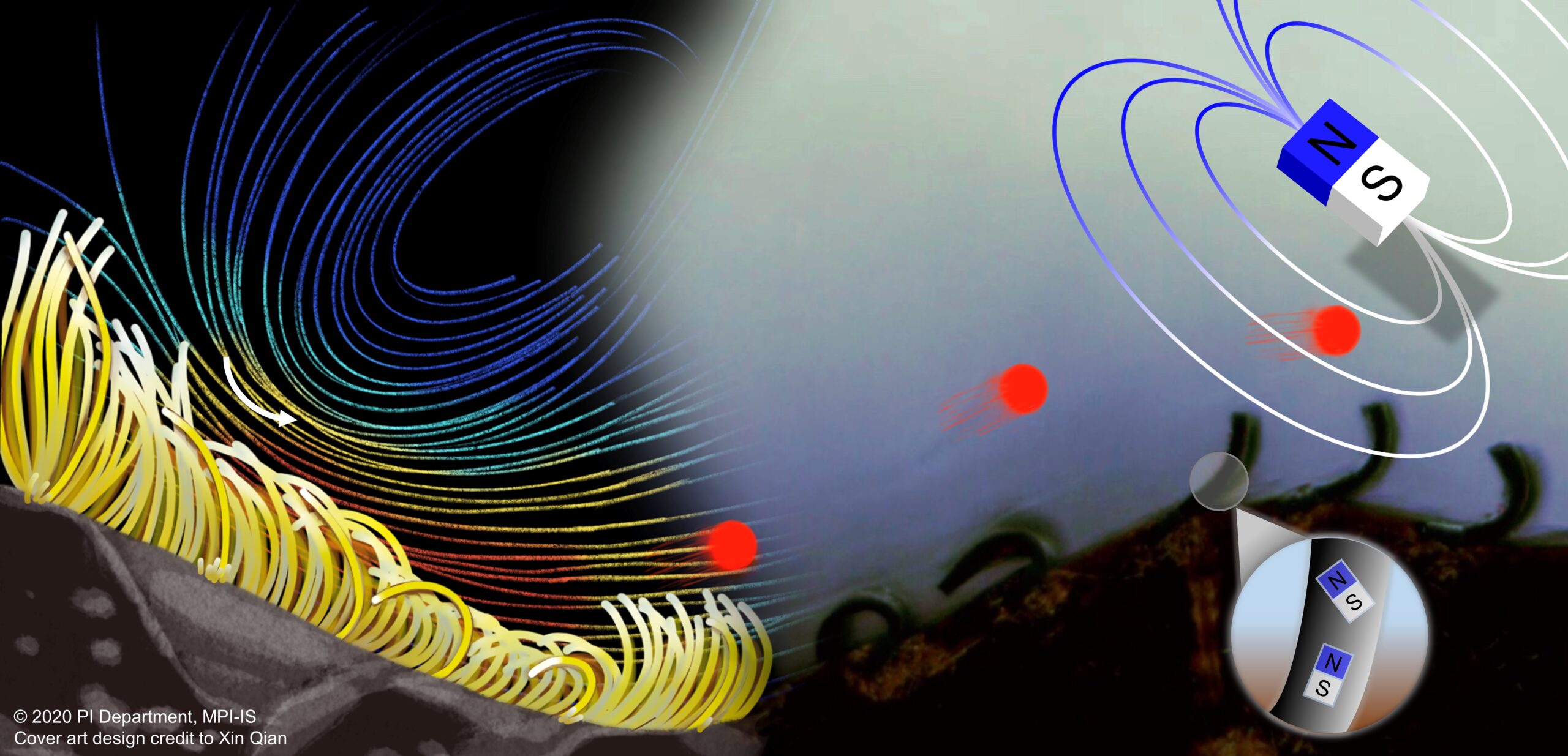
    Figure 1. Inspired by biological cilia (left), the artificial cilia arrays (right) pump fluid and transport particles efficiently thanks to their optimally coordinated movement. Copyright: Physical Intelligence Department (MPI-IS).

    The researchers applied a rotating external magnetic field and showed that their artificial cilia arrays performed a wave-like motion similar to natural cilia (Figure 1). They used a red-color dye and particle imaging techniques to show how the arrays pump a viscous fluid (glycerol) and transport particles efficiently thanks to the arrays’ optimally coordinated movement (Figure 2).


    Figure 2. The bioinspired cilia arrays pump a viscous fluid (glycerol) visualized by a red-color dye at the low Reynolds number regime. Scale bar, 1 mm. Copyright: Physical Intelligence Department (MPI-IS).

    The researchers recorded the movement of the artificial cilia using a high-speed camera, as featured in this video. The clip shows how the slender structures beat in a coordinated manner, similar to real cilia: the artificial arrays neither move back and forth in synchrony nor randomly. In fact, they perform a coordinated traveling wave-like movement. Research has shown that this so-called metachronal wave has been perfected in the course of evolution, optimizing the fluid flows.

    Investigating natural cilia and their collective behavior is a challenging task, as they are only a few micrometers small. Even with a microscope, cilia arrays are very difficult to see. Additionally, it is impossible to control their movement. Now, however, for the first time, the Stuttgart-based scientists were able to experimentally reveal the fundamental quantitative relationship between metachronal coordination and its induced fluid flow. “With our artificial system, we can mimic the cilia motion in a similar way to real cilia at a larger scale, while always maintaining the same physical laws. In this way, we can generate much cleaner data. We can quantify what movement patterns generate the maximal fluid flow,” Xiaoguang Dong says.

    In their experiments, the team showed that only antiplectic metachronal waves can enhance the fluid flow. Antiplectic means that the wave propagation direction is opposite to that of the fluid flow. “Our observation proves the critical function of antiplectic metachronal waves and reveals the fundamental quantitative relationship between metachronal coordination and the induced fluid flow in both artificial and biological cilia,” Ziyu Ren says.

    The team envisions that their research project could inspire many more: “Our artificial cilia arrays could be used to further investigate many interesting scientific questions, such as how the fluid flow patterns change when varying the cilia beating dynamics, boundary geometries, or the type of surrounding fluid,” Wenqi Hu says.

    “My team, the Physical Intelligence Department, is inspired by various biological systems. We want to learn the underlying physical principles behind their locomotion, intelligence and functional behavior and then use this knowledge to create state-of-the-art miniature robots. By doing so, we not only better understand the biological systems: in the future, we also aim to use our robots as innovative wireless medical devices to advance the healthcare system, helping to improve the welfare of our society,” Sitti says. 

    The full scientific paper can be found here:

    https://advances.sciencemag.org/content/6/45/eabc9323.full

    About the scientists:

    Dr. Xiaoguang Dong is a Postdoctoral Researcher in the Physical Intelligence Department. He received a Ph.D. degree in Mechanical Engineering from Carnegie Mellon University, USA in 2019. His research focus is developing miniature soft robots and devices for answering scientific questions in biomechanics and resolving engineering challenges in biomedical applications.

    Dr. Wenqi Hu comes from South West China. He received his Ph.D. from the University of Hawaii in 2014. He has been working on soft millirobots since he joined the Physical Intelligence Department team in Stuttgart back in 2014.

    Ziyu Ren is a Ph.D. student in the Physical Intelligence Department at the Max Planck Institute for Intelligent Systems in Stuttgart. Ziyu received his BSc and MSc degrees in mechanical engineering from Beihang University, China in 2014 and 2017. In his Ph.D. he focuses on developing magnetic soft millirobots.

    Prof. Dr. Metin Sitti has been the Director of the Physical Intelligence Department at the Max Planck Institute for Intelligent Systems in Stuttgart, Germany since 2014. As his current ancillary academic positions, he is a professor at ETH Zurich, Switzerland, professor at Koç University, Turkey, and an honorary professor at the University of Stuttgart, Germany. He was a professor in the Department of Mechanical Engineering and Robotics Institute at Carnegie Mellon University, Pittsburgh, USA (2002-2014), and a research scientist at the University of California at Berkeley, USA (1999-2002). He received the BSc (1992) and MSc (1994) degrees in electrical and electronics engineering and physics from Boğaziçi University, Turkey, and the Ph.D. degree (1999) in electrical engineering from the University of Tokyo, Japan.

    Sitti and his team aim to understand the principles of design, locomotion, perception, learning, and control of small-scale mobile robots made of smart and soft materials. The intelligence of such robots mainly comes from their physical design, material, adaptation, and self-organization more than from their computational intelligence. Such physical intelligence methods are essential for small-scale milli- and micro-robots especially due to their inherently limited on-board computation, actuation, powering, perception, and control capabilities. Sitti envisions his novel small-scale robotic systems to be applied in healthcare, bioengineering, manufacturing, or environmental monitoring to name a few.

  • Cyber Valley institutions once again among Germany’s top ranked at leading machine learning conference

    Cyber Valley institutions once again among Germany’s top ranked at leading machine learning conference

    Submissions to NeurIPS have tripled since 2017, with another sharp increase this year: a staggering 9467 full papers were submitted to the 2020 conference, a 40 percent year-on-year increase. Of these, 1903 papers were accepted.

    “Our strong year-on-year showing at one of the world’s most competitive machine learning conferences clearly supports our argument that we are attracting and educating the world’s best minds,” said Professor Bernhard Schölkopf, Managing Director at the Max Planck Institute for Intelligent Systems in Tübingen and Director of the institute’s Empirical Inference department and co-founder of Cyber Valley. “As Cyber Valley closes in on its fourth anniversary, our success at NeurIPS clearly shows that the research ecosystem’s academic and industrial partners are thriving and continue to gain momentum.”

    Founded in December 2016 in southwestern Germany, Cyber Valley is Europe’s leading research consortium in the field of artificial intelligence. According to a recent ranking of the Criterio R&D blog based on number of publications at NeurIPS, the Max Planck Institute for Intelligent Systems (14 papers) and the University of Tübingen (nine papers) are currently among Germany’s top three institutions in the field of machine learning. The University of Stuttgart and the Bosch Center for Artificial Intelligence in Renningen, both of whom are also Cyber Valley partners, are represented at NeurIPS 2020 with two and four papers, respectively. The Max Planck Institute for Biological Cybernetics, which is located on the Max Planck research campus in Tübingen, has had one paper accepted to this year’s conference.

    “Research excellence is the main reason why Cyber Valley keeps growing in leaps and bounds,” says Schölkopf. “It shapes the foundation of a unique AI ecosystem that also promotes innovation and entrepreneurship.” This ecosystem continued to evolve over the course of 2020, with the steady growth of the Cyber Valley Start-Up Network, the launch of the Investor Network, and the successful close of a fourth round of applications at the International Max Planck Research School for Intelligent Systems (IMPRS-IS), the PhD program which was founded as part of Cyber Valley. In addition to this, the European Laboratory for Learning and Intelligent Systems (ELLIS), which also has roots in Tübingen, launched an additional 13 research units at top institutions across Europe, taking the total to 30. ELLIS also recently expanded its international PhD program.

    A full list of papers, authors, and their affiliations is available here.

  • Metin Sitti receives the «Breakthrough of the Year» Award at the Fallings Walls World Science Summit in Berlin

    Metin Sitti receives the «Breakthrough of the Year» Award at the Fallings Walls World Science Summit in Berlin

    Berlin – At its Grand Finale on November 9, exactly 31 years after the fall of the Berlin Wall, Falling Walls presented Prof. Dr. Metin Sitti with the «Breakthrough of the Year» Award in the Engineering and Technology category. The Falling Walls World Science Summit is an annual international scientific event in Berlin that serves as a forum for discussion and debate about the scientific breakthroughs of the future.

    Sitti is a pioneer in many research areas, such as wireless miniature medical robots, gecko-inspired microfiber adhesives, bio-inspired miniature robots, and physical intelligence. “I am honored to receive this award. It is a great acknowledgment of my team's breakthrough research efforts,” says Sitti who is the Director of the Physical Intelligence Department at the Max Planck Institute for Intelligent Systems in Stuttgart, a Professor in the Department of Information Technology and Electrical Engineering at ETH Zurich, and a Professor at the School of Medicine and College of Engineering at Koç University.

    “My research breaks down barriers for the use of wireless medical devices inside the human body. I was greatly inspired by Fantastic Voyage, a 1966 science-fiction film about a microscopic submarine that ventures into a stroke patient’s body to open the blood clot in his brain. The moment I saw it, I started dreaming of creating tiny medical devices that could navigate complex regions inside our body. In minimally invasive procedures, these machines could diagnose and treat diseases at early stages and with few side effects,” Sitti says.

    In recent months, nearly 1000 nominees from 111 countries have competed for a Science Breakthrough of the Year Award in ten different categories. The awards honor some of the world’s most outstanding science projects and bright minds. At today’s Grand Finale, Sitti and the other recipients came together to discuss how science and innovation can contribute to the state of humanity.

    Sitti is an acclaimed scientist. In March 2019, he received a prestigious Advanced Grant from the European Research Council (ERC), which is awarded only to established researchers with a proven track record of excellence. In terms of the originality and significance of research contributions, grant recipients are exceptional leaders in their given fields. What is more, Sitti and his team recently received the Best Paper Award at the prestigious Robotics Science and Systems Conference for their invention of a baby jellyfish-inspired soft millirobot with medical functions.

    “I am passionate about pushing the scientific boundaries of what is currently possible with wireless tiny soft robots and their use in clinical applications, with the ultimate aim of saving more lives,” says Sitti.

    Soft milli- and microrobots such as those Sitti and his team are developing hold huge potential and could one day have a radical impact on medicine. The scientists are working intensively on developing wireless tiny machines that will, in the near future, be able to access smaller, difficult-to-access high-risk regions inside the body. As semi-implantable medical devices, these technologies will remain in patients’ bodies for long periods of time, enabling minimally or non-invasive diagnostic and therapeutic interventions.

    However, many challenges must still be overcome before these tiny robots can be applied. For instance, scientists must develop ways to move and control these tiny robots inside the body with high levels of precision, taking body fluid flows and organ movement into account. They must also ensure that patient safety is guaranteed, and that these robots can be in us for long periods of time, even in the face of potential immune or other reactions.

    Sitti and his team have been working on shape-programmable tiny soft machines built with biocompatible magnetic soft materials for many years. Their findings have been published in the world’s most respected scientific journals. For instance, in a Nature publication, his team showed how to program the shape deformations of a soft millirobot via external magnetic fields. This enables the robot to crawl, swim, jump, and roll safely through the complex regions of the human body. The robot can deliver medication at a target location, while being tracked by medical imaging systems remotely.

    Sitti received his BSc and MSc degrees in electrical and electronics engineering and physics from Bogazici University in Istanbul in 1992 and 1994, respectively, and his Ph.D. degree in electrical engineering from the University of Tokyo in 1999. He was a research scientist at UC Berkeley from 1999 to 2002 and a Professor at the Department of Mechanical Engineering and Robotics Institute at Carnegie Mellon University from 2002 to 2014. He became a Director at the Max Planck Institute for Intelligent Systems in Stuttgart in 2014.

    About Falling Walls:

    The fall of the Berlin Wall marked the dawn of a new era of freedom by breaking barriers both physical and imaginary in Germany and around the world. Three decades on, the night of 9 November 1989 has become a symbol of changing status quos and overcoming divisions of all kinds. Drawing inspiration from this historic moment, the Falling Walls Conference is driven by the desire to find out: which are the next walls to fall in science and society?

    Since its inception, the conference has become a unique global platform connecting science, business and society through a shared commitment to create breakthrough solutions to challenges across borders and disciplines.

    https://falling-walls.com/

  • Mobility & AI

    Mobility & AI

    Schedule

    • Welcome and Introduction – Michael Black  |  Cyber Valley Spokesperson
    • Keynote – Michael Halbherr  |  Co-Founder HERE and Technology Investor
    • Textual Explanations for Self-Driving Vehicles – Zeynep Akata  |  Uni Tübingen
    • Scientific Perspective on Mobility & AI – Andreas Geiger  |  Uni Tübingen / MPI IS
    • Investment – Tobias Jahn  |  BMW i Ventures
    • Companies & Start-ups
      • Kai Przybysz-Herz  |  NAiSE GmbH
      • Martynas Gudonavicius und Jurgis Pašukonis  |  Trafi
      • Philipp Gneiting  |  STARTUP AUTOBAHN / Mercedes Benz AG
    • Discussion

    Registration

    Please register here


  • Cyber Valley researchers enable better analyses of large networks

    Cyber Valley researchers enable better analyses of large networks

    In an effort to enable more accurate network analyses in applied network science, scientists at the Max Planck Institute for Intelligent Systems in Tübingen recently developed the Theoretical Criterion for Eigenvector Centrality (TCEC), a quantitative sampling method. The method aims to preserve representative network properties within finite data samples by measuring the influence of a single node in a network. Now, Nicolò Ruggeri and Caterina De Bacco are expanding the model to include a new sampling algorithm that improves estimates of PageRank centrality (PR), the algorithm used by Google Search to rank web pages in search engine results.

    They present their research in the paper entitled “Sampling on networks: estimating spectral centrality measures and their impact in evaluating other relevant network measures.” The paper was recently published in Applied Network Science. Ruggeri, the paper’s lead author, is a PhD student in the Cyber Valley Physics for Inference and Optimization group at MPI-IS in Tübingen and at ETH Zurich. De Bacco, who co-authored the paper, is group leader. 

    Ruggeri and De Bacco’s research can make a decisive contribution in a broad range of research fields, for instance in social science analyses that seek to infer the relationship between nodes in a network, such as social media channels.  

    “Our work was inspired by a conversation we had with a sociologist whose research focuses on analyzing the dynamics of hate speech on Twitter,” said Ruggeri. In such analyses, a major challenge lies in analyzing data samples drawn from complex networks. In most cases, not all the relevant information is available in the sample, and this can lead to biases in the analysis of the network properties under investigation. For instance, social scientists attempting to make an accurate analysis of the most influential users in an entire network would need a data sample that reflected influence accurately. 

    This is where the TCEC sampling model comes in. With it, Ruggeri and De Bacco have made it possible to get representative snapshots of user dynamics in major networks like Facebook and Twitter. It does this by selecting subsamples that well represent a measure of influence of single nodes in the network, which is also known as eigenvector centrality. “If a researcher selects network users randomly, the sampled network will likely be very different than the actual whole. Any analysis will then be a distortion of reality. With TCEC, a scientist sampling a network of millions of users like Twitter can select a data sample of 10,000 nodes that is more representative of the whole, in terms of users’ influence as measured by eigenvector centrality,” says De Bacco. 

    By expanding the model to include PageRank centrality, Ruggeri and De Bacco hope to further improve data samples, thus making network analyses even more accurate. Until now, however, the theoretical results of their research have shown that sampling for PR would lower the performance of the original TCEC algorithm. In a next step, the researchers plan to continue fine-tuning their method and applying it in collaboration with sociologists to study how influence on online social networks is related to real-life events.

    The original TCEC sampling method is available for use: Ruggeri and De Bacco have released the code, which is available at: https://github.com/cdebacco/tcec_sampling

  • Seeding & Early Funding Opportunities

    Seeding & Early Funding Opportunities

    Schedule

    • Welcome and Introduction
    • Overview Early Funding Possibilities
    • Parallel Sessions
      • Univeristy of Tübingen
      • University of Stuttgart
      • Max Planck Innovation
    • Experiences and Programs from the region and Q&A
    • Closing Remarks

    Details below | Please register here.


    Welcome and Introduction

    Alex Diehl and Julia Schmaus

    Senior Advisor Cyber Valley 

    Innovation Manager

    Overview Early Funding Possibilities

    Tobias Dürr

    Innovation Manager

    Parallel Sessions

    University of Tübingen

    Sandra Gässler and Daniel Heblik


    University of Stuttgart

    Jordi Mauri


    Max Planck Innovation

    Florian Kirschenhofer

    Early Funding Opportunities, experiences and programs from the region

    Fraunhofer IPA

    Philipp Topic


    bwcon

    Timothy Earnshaw


    High-Tech Gründerfonds

    Gernot Berger


    Computomics GmbH

    Sebastian Schultheiss

    Closing and final Q&A

    Alex Diehl and Tobias Dürr

    Senior Advisor Cyber Valley 

    Innovation Manager

  • “Science meets Fiction” – Künstliche Intelligenz im Film „Exit“

    Unmittelbar vor der Erstausstrahlung des Films am Mittwoch, 28. Oktober 2020, 20:35 Uhr in der ARD diskutieren wir gemeinsam mit den Machern von „Exit“ und mit KI-Forschenden, welche Folgen sogenannte Künstliche Intelligenzen für unsere Gesellschaft in Zukunft haben, und wie technologischer Fortschritt in einer gesellschaftlich wünschenswerten Weise gestaltet werden kann.

    Teilnehmerinnen und Teilnehmer: 

    • Katharina Dufner (SWR-Redakteurin)

    • Prof. Dr. Marco Huber (Leiter des Cyber Valley KI-Fortschrittszentrums „Lernende Systeme“, Fraunhofer IPA, Universität Stuttgart)

    • Prof. Dr. Ulrike von Luxburg (Professorin für Theorie des Maschinellen Lernens an der Universität Tübingen; Sprecherin des Exzellenzclusters “Maschinelles Lernen: Neue Perspektiven für die Wissenschaft”)

    • Sebastian Marka (Regisseur)

    • Erol Yesilkaya (Drehbuchautor)

    Moderation: Mirko Drotschmann (MrWissen2go)

    Anmeldung

    Sie können teilnehmen und mit-chatten im Zoom-Webinar (bitte hier anmelden) oder ohne Anmeldung den Live-Stream auf dem YouTube-Kanal des SWR anschauen. 

    Film

    Der Film "Exit" ist bereits jetzt in der ARD-Mediathek erhältlich.

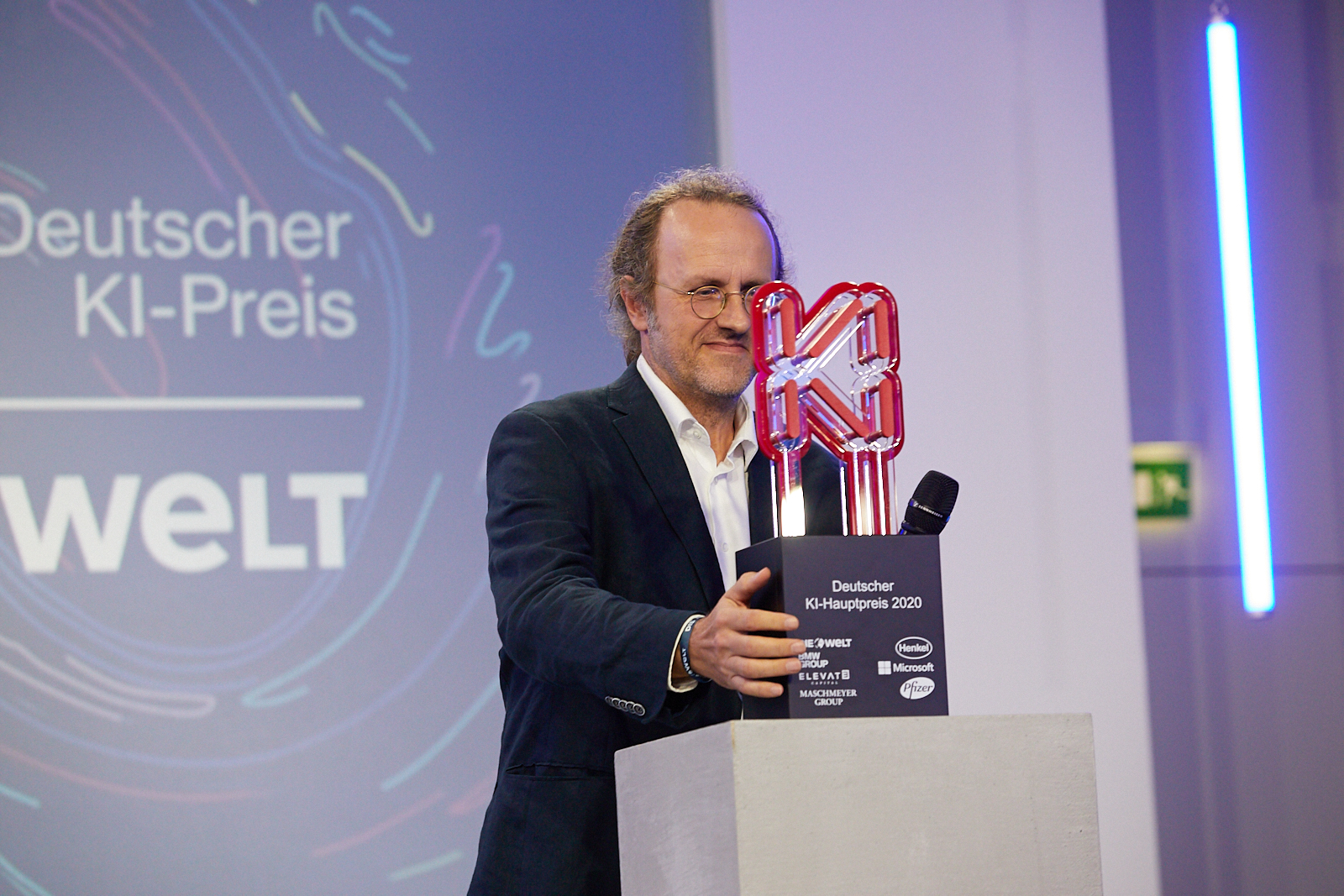
  • Bernhard Schölkopf gewinnt den Deutschen KI-Innovationspreis

    Bernhard Schölkopf gewinnt den Deutschen KI-Innovationspreis

    Berlin – WELT hat am Donnerstag, 1. Oktober 2020, den Zweiten „Deutschen KI-Preis“ verliehen und damit bahnbrechende Leistungen auf dem Gebiet der Künstlichen Intelligenz gewürdigt. Bei Axel Springer kamen führende Persönlichkeiten aus Politik, Forschung, Wirtschaft sowie der Tech– und Start-up-Szene zusammen. Die Preisverleihung fand aufgrund der Corona-Krise in einer hybriden Form statt, viele weitere Gäste konnten per Live-Stream die Veranstaltung verfolgen.

    Peter Altmaier, Bundesminister für Wirtschaft und Energie, hielt die Eröffnungsrede und zeigte sich bereits im Vorfeld überzeugt von Deutschlands KI-Community: „Es sind genau solche Innovationen, wie sie die Preisträger und Teilnehmer hier geschaffen haben, die wir mit einem europäischen Ordnungsrahmen ermöglichen und fördern wollen. Wir setzen uns in unserer Ratspräsidentschaft daher dafür ein, bei der Ausgestaltung eines europäischen Ordnungsrahmens den Fokus ganz klar auf Innovationen zu legen.“

    Der „Deutsche KI-Preis“ wurde in drei Kategorien verliehen: Mit dem 100.000 Euro dotierten KI-Innovationspreis zeichnete WELT Professor Dr. Bernhard Schölkopf, Direktor der Abteilung für Empirische Inferenz am Max-Planck-Institut für Intelligente Systeme in Tübingen, aus. Schölkopf fördert und betreibt seit Jahren anwendungsnahe Spitzenforschung im Bereich der Künstlichen Intelligenz. Er ist einer der international angesehensten KI-Forscher und eine der prägendsten Persönlichkeiten der deutschen KI-Szene.

    „Maschinelles Lernen und Kausale Inferenz sind wesentliche Teilgebiete der modernen Künstlichen Intelligenz. Meine Forschungsgruppe entwickelt Algorithmen, die mit großen Datensätzen gefüttert werden und durch dieses Training lernen, selbstständig Regelmäßigkeiten in den Daten zu erkennen – ebenso, wie ein Gehirn aus Beobachtungen Gesetzmäßigkeiten erkennt und Schlussfolgerungen zieht. Daher das Wort „Inferenz“: es geht um Wissen, das durch Schlussfolgern gewonnen wird. Eine Maschine findet in großen Datenmengen oft Strukturen, die ein Mensch nicht finden würde. Ich möchte mit meiner Forschung dazu beitragen, dass die theoretischen Methoden des maschinellen Lernens Anwendung finden, so z.B. in der Medizin oder Astronomie“, erklärt Schölkopf seine Forschungsgebiet.

    Klaus Boldt, Senior Editor und Mitglied der Chefredaktion WELT: „Künstliche Intelligenz ist schon heute allgegenwärtig, doch ihr Einfluss und ihre Bedeutung wird in Zukunft noch rasanter ansteigen. Um zu verstehen, welchen Einfluss KI auf die Wirtschaft und Gesellschaft hat und um diesen verantwortungsvoll zu gestalten, gilt es, Forschung und Wissenschaft vor Ort in Deutschland zu fördern. Mit dem ‚Deutschen KI-Preis‘ verschafft WELT dem Thema eine große Bühne und bringt KI-Experten mit Entscheidern aus Politik und Wirtschaft zusammen.“

    Über die Preisvergabe des Haupt- und Anwenderpreises und die Nominierung für den Sonderpreis entschied eine Jury bestehend aus herausragenden Vertretern der KI-Anwendung und -Forschung, unter Vorsitz von Hans-Christian „Chris“ Boos, Gründer und Geschäftsführer der KI-Firma Arago und einer der Vordenker der Branche.

    Unterstützt wird der „Deutsche KI-Preis“ von der BMW Group, Berlin Partner für Wirtschaft und Technologie (Sonderpreis), Elevate Capital, Henkel, der Maschmeyer Group, Microsoft und Pfizer.

  • New AI in medicine initiative launched

    New AI in medicine initiative launched

    According to Professor Bernd Engler, President of the University of Tübingen, the new initiative is open to further prominent players from universities, non-university research institutions, and companies. “In particular, we aim to cooperate closely with the University of Stuttgart, which is a world-class institution in areas such as data integration and simulation technology.” Both universities would also benefit from their membership in the Cyber Valley initiative, Europe’s largest research consortium in the field of modern AI. Other important partners are the German Cancer Research Center (DKFZ), the European Molecular Biology Laboratory (EMBL), the University of Heidelberg, and all medical universities in Baden-Württemberg. Companies from Baden-Württemberg’s world-renowned medical technology industry are also on board. Moreover, the research field offers enormous potential for new start-ups in the fields of diagnostics, medical technology, pharmaceuticals, and medical-related services.

    Engler announced that the university and its medical faculty will, in a first step, establish four additional professorships this year in this promising field of research. They will focus on the evaluation of medical image data, sequencing, and meta data, as well as on time series or statistics using machine learning methods, among other things, thus creating new AI-supported instruments for diagnosis, therapy decisions, and the development of new drugs. “With the construction of the Cyber Valley building in the Tübingen Technology Park, which is currently in the planning stage, the Max Planck Society and the university have made provisions for the possible accommodation of the new professorships and their research groups in the second construction phase,” the President said.

    The project of the university, its faculty, and the Max Planck institutes is also supported by the non-profit Hertie Foundation, among others. The foundation has set itself the goal of supporting the establishment of a further scientific lighthouse project on the use of artificial intelligence in the neurosciences in Tübingen. For 20 years, the foundation has supported  the Hertie Institute for Clinical Brain Research in Tübingen, which is now considered a model for the transfer of findings from cutting-edge basic research to clinical application.

    In addition to numerous research groups, some 15 professors in Tübingen are already researching the use of computer science methods in medicine and the life sciences. Funded by the German government, university institutions such as the “Machine Learning for Science” Cluster of Excellence and the AI Competence Center have made Tübingen a leading German location for basic research in machine learning. In addition, a growing number of local medical start-ups are part of the Cyber Valley Start-up Network.

    “With our AI Health Initiative, we will continue to build on an already strong foundation,” said Michael Black, Director of the Max Planck Institute for Intelligent Systems in Tübingen. “From patient care to diagnostics and individualized treatment, the possibilities for enhancing modern medicine with AI and robotics are endless. By pooling our strengths, we aim to make a decisive contribution to driving research in the field of AI and health forward.”

    “Our basic research helps offer a firm foundation for the pioneering translational plans of this excellent initiative,” said Peter Dayan, Managing Director at the Max Planck Institute for Biological Cybernetics. “For instance, work on the advanced analysis of high-resolution magnetic resonance images of the human brain offers new insights that could illuminate normal and dysfunctional neural organization. Cognitive tasks designed in consilience with artificial intelligence principles to index hidden dimensions of human decision-making are being purposed to examine the nature and course of psychiatric disease.”

    The Dean of the Faculty of Medicine, Professor Bernd Pichler, said that the use of modern medical diagnostic procedures generates enormous amounts of data, the evaluation of which can hardly be handled by conventional methods: “Similar challenges arise in the life sciences for a wide range of issues, from basic research to the translation of research results into clinical application, for example in personalized medicine. I am thus convinced that in the coming years and decades, groundbreaking successes in medical research and patient care will be accompanied by the use of artificial intelligence.” The analysis and intelligent interpretation of health data will not only simplify the prognosis of disease progression or improve the prevention and early detection of diseases, but also support the search for new drugs and therapeutic options.


    Media contacts:

    Dr. Karl G. Rijkhoek
    Director Communications University of Tübingen
    Phone: +49 7071 29-76788
    karl.rijkhoek@uni-tuebingen.de

    Valérie Callaghan
    Communications Manager Max Planck Institute for Intelligent Systems
    Phone: +49 7071 601-1832
    valerie.callaghan@tuebingen.mpg.de

    Dr. Daniel Fleiter
    Head of Communications Max Planck Institute for Biological Cybernetics
    Phone: +49 7071 601-777
    daniel.fleiter@tuebingen.mpg.de

  • CMOS chip projects ultrasound movies

    CMOS chip projects ultrasound movies

    Ultrasound is widespread in applications from medical imaging and industrial inspection to therapy and tissue ablation in surgery. While sophisticated technologies exist to detect and analyze ultrasound, the generation and projection of ultrasound is still fairly basic. Compared to optical systems, where one can use sophisticated light projectors, ultrasonic systems typically consist of a few sound generators that can bend or focus a beam, but not project changeable patterns such as images. 

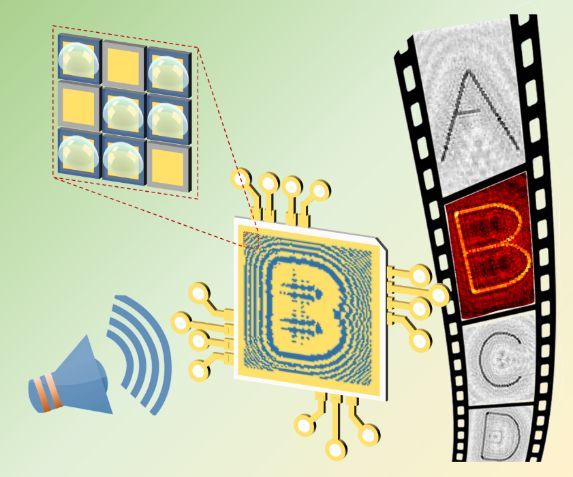
    Researchers from the Max Planck Institute for Intelligent Systems and the Institute for Microelectronics Stuttgart (IMS CHIPS) have now developed a system that allows complex acoustic images to be projected in water and changed on-the-fly. The new spatial ultrasound modulator is based on a specially adapted CMOS computer chip and was used to project the first movie where the images are formed with ultrasound. 

    Spatial ultrasound modulators extend the capabilities of ultrasound applications

    Spatial ultrasound modulators extend the capabilities of ultrasound applications
    Foto: MPI

    The spatial ultrasound modulator, which is capable of generating dynamic complex acoustic fields, now opens up the possibility to project and update much more sophisticated ultrasound patterns. “This technique could be useful, for instance, if one wants to project ultrasound only onto a small targeted region and adjust the exposed area carefully, as is desirable in medical applications”, says Zhichao Ma, the first author of the study which appears in the journal Nature Communications. 

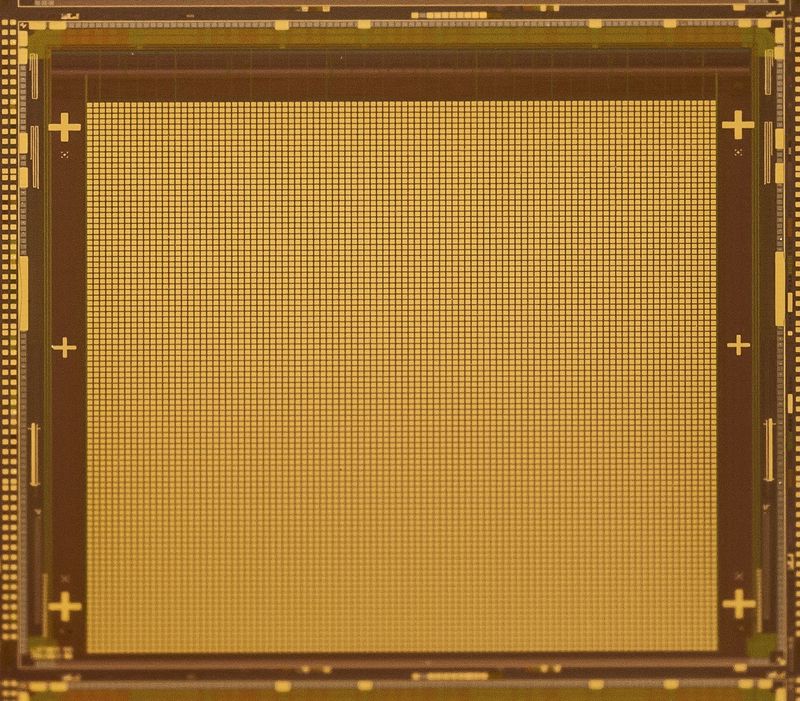
    The CMOS chip consists of 10,000 individually addressable electrodes covered in a conductive fluid. When an electrode receives a signal a current flows and a microbubble is formed at the electrode by electrolysis. Since it only takes a very thin layer of air to effectively block ultrasound in water, each microbubble behaves as a local sound blocker. By creating bubbles at some pixels and not at others, the CMOS chip acts as a mask limiting the regions through which the sound can pass. This mask can be shaped in the way of a computed digital hologram, and modulate the transmitted acoustic wave into any desired acoustic image. Even more so the bubbles on the chip can be wiped away and recreated to form the next holographic image and frame by frame an ultrasonic movie.

    The researchers show that potential applications of their new device include manipulating small objects using acoustic forces controlled by the fields they project. In one demonstration, they pattern polymer particles into different shapes that change with time. Beyond small particles, it is also possible to arrange living cells with acoustic holograms, as the researchers from the Micro Nano and Molecular Systems Lab have demonstrated previously. 

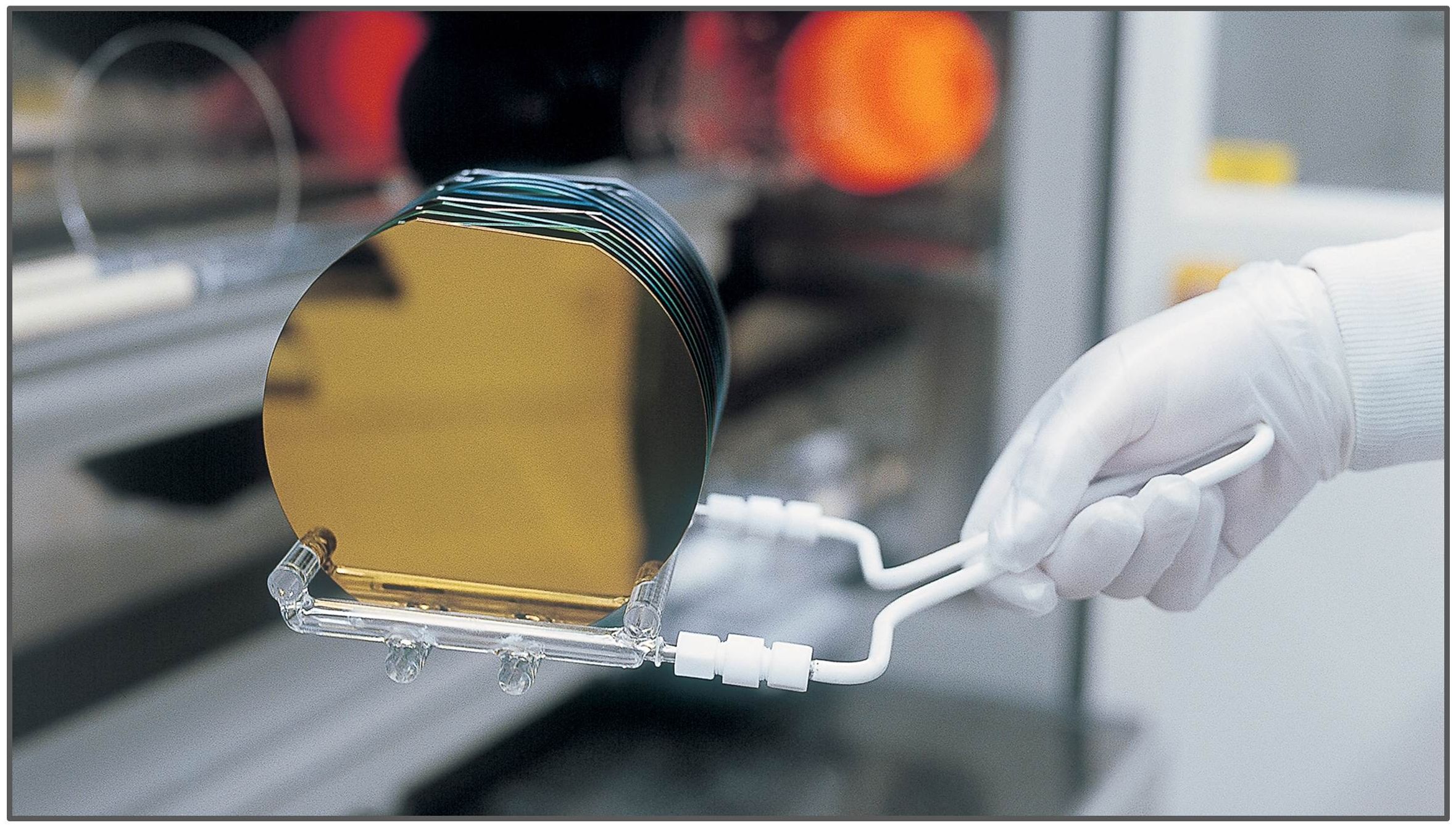
    Detail of the multi-electrode chip

    Detail of the multi-electrode chip
    Foto: IMS CHIPS