Tübingen, September 15, 2020 – The European Laboratory for Learning and Intelligent Systems (ELLIS) today inaugurated 30 research units at a virtual ceremony. Spanning 14 European countries, the ELLIS network includes several world-class institutions (see a full list of units below). The ELLIS units will make a decisive contribution to> securing Europe’s sovereignty and leadership in the research field of modern AI.
“Today, we celebrate the momentum that the ELLIS initiative has gained since it was founded just two years ago,” said Bernhard Schölkopf, co-founder of ELLIS and Director of the Max Planck Institute for Intelligent Systems in Tübingen, Germany, which will also be home to an ELLIS unit. “Since the first 17 units were announced at the end of 2019, we’ve added 13 more to the network. With their combined strengths, the units will contribute to enabling Europe to compete with the world’s AI hotspots, particularly the US and China. Together, the units are creating new opportunities for collaboration with scientists across Europe, and a strong foundation for developing AI that is in line with the values of open European societies.”
ELLIS is a pan-European effort initiated in 2018. Its central goal is to foster European research excellence in machine learning and related fields by offering scientists outstanding opportunities to carry out their research in Europe, and to train the next generation of young European researchers in this field of strategic importance. It focuses particularly on tackling fundamental research challenges in the field of AI that promote positive economic and societal impacts. At present, research topics within the ELLIS network include fundamental machine learning, computer vision, natural language processing, robotics, human-centric and trustworthy AI, and areas of application such as environmental modeling, autonomous systems design, biology, and health.
The ELLIS units were selected on the basis of scientific excellence by a committee of leading scientists from several different countries. In total, they have committed funding of some 300 million euros for an initial period of five years. Twenty percent of this sum will go toward ELLIS network activities such as student and faculty exchanges and the organization of joint ELLIS research programs and workshops.
ELLIS Units
Alicante (Nuria Oliver, Foundation ELLIS Unit Alicante)
Amsterdam (Max Welling, University of Amsterdam)
Berlin (Klaus-Robert Müller, TU Berlin)
Cambridge (Carl Rasmussen, Jose Miguel Hernandez Lobato, University of Cambridge)
Copenhagen (Ole Winther, University of Copenhagen)
Darmstadt (Stefan Roth, Technical University of Darmstadt)
Delft (Robert Babuska, Delft University of Technology)
Edinburgh (Chris Williams, University of Edinburgh)
Freiburg (Wolfram Burgard, University of Freiburg)
Genoa (Massimiliano Pontil, Lorenzo Rosasco, Italian Institute of Technology and University of Genoa)
Heidelberg (Oliver Stegle, German Cancer Research Center, EMBL, University of Heidelberg)
Helsinki (Samuel Kaski, Finnish Center for Artificial Intelligence FCAI, Aalto University)
Lausanne (Pascal Frossard, EPFL)
Leuven (Matthew Blaschko, KU Leuven)
Linz (Sepp Hochreiter, JKU Linz)
Lisbon (Mario Figueiredo, Instituto Superior Tecnico)
London (Arthur Gretton, University College London)
Munich (Daniel Cremers, Fabian Theis, Massimo Fornasier, Technical University of Munich, Helmholtz Zentrum München)
Oxford (Yee Whye Teh, Stephen Roberts, Michael Wooldridge, University of Oxford)
Paris (Gabriel Peyre, PaRis AI Research Institute, DataIA Institute, Sorbonne Center for Artificial Intelligence)
Prague (Josef Sivic, Czech Technical University, Czech Institute of Informatics, Robotics and Cybernetics)
Radboud (Marcel van Gerven, Radboud University Nijmegen)
Saarbrücken (Bernt Schiele, Max Planck Institute for Informatics, Saarland University)
Technion (Shie Mannor, Technion – Israel Institute of Technology)
Tel Aviv (Amir Globerson, Tel Aviv University)
Turin (Barbara Caputo, Politecnico di Torino)
Tübingen (Matthias Bethge, Bernhard Schölkopf, University of Tübingen, Max Planck Institute for Intelligent Systems)
Unimore (Rita Cucchiara, University of Modena)
Vienna (Christoph Lampert, IST Austria)
Zurich (Andreas Krause, ETH)
About the European Laboratory for Learning and Intelligent Systems (ELLIS):
Established in December 2018 at the Conference on Neural Information Processing Systems
(NeurIPS), the European Laboratory for Learning and Intelligent Systems (ELLIS) is a pan-European scientific organization that focuses on research and the advancement of modern AI, which relies heavily on machine learning methods that allow computers to learn from data and experience.
In March 2019, ELLIS established 11 research programs spanning a broad set of areas within modern AI, involving over 100 European researchers.
Im zweiten #ScienceTalk des Wissenschaftsministeriums spricht Ministerin Theresia Bauer mit dem Direktor des Max-Planck-Instituts für Intelligente Systeme und Mitbegründer der Cyber Valley-Initiative, Prof. Dr. Bernhard Schölkopf, über diese Fragen und über die Potenziale der künstlichen Intelligenz für den Wissenschafts-, Wirtschafts- und Gesundheitsstandort Baden-Württemberg.
„Künstliche Intelligenz ist die Schlüsseltechnologie für die Wertschöpfung der Zukunft, sie hat enorme Veränderungskraft für jeglichen technischen Fortschritt und für viele Wissenschaftsdisziplinen. Als Hochtechnologieland investieren wir in Baden-Württemberg daher kraftvoll in diese Zukunftstechnologie. Mit Erfolg: Wir sind das Land mit den meisten KI-Professuren in der Republik“, sagt Bauer.
Künstliche Intelligenz im Einsatz für die Gesundheit
KI kommt heute bereits in der Medizin zum Einsatz – beispielsweise bei der Diagnose von Hautkrebs. „Maschinelle Lernsysteme können trainiert werden auf der Erfahrung nicht nur von einem Arzt oder einer Ärztin, sondern von Hunderten von Ärzten. Daraus können komplexe Entscheidungsregeln abgeleitet werden, die dann genauso gut oder in manchen Fällen sogar besser sind als die besten Ärzte – und die nicht müde werden und Tag und Nacht arbeiten können“, so Schölkopf.
Auch bei der Bekämpfung von COVID-19 werde künstliche Intelligenz eingesetzt: „Sie kann dabei helfen, Rückschlüsse zu ziehen, wie sich die Pandemie wo und wann verbreitet hat und welche politischen Entscheidungen welchen Einfluss hatten“, so Schölkopf weiter. Um ein detailliertes Bild zu erhalten, hätten die Cyber Valley-Forschenden ein exemplarisches epidemisches Modell für Tübingen entwickelt.
Der #ScienceTalk ist nicht nur auf YouTube, sondern auch als Audio-Podcast abrufbar.
"Computomics’ data analysis experts offer custom services for next-gen sequencing projects – from crop science to metagenomics."
AIRAmed GmbH (Start-Up, Tübingen)
Christiane Lindig & Tobias Lindig
"Artificial intelligence makes neuroradiology measurable, Individual and objective."
Curedatis (Early Stage Start-Up, Stuttgart)
Robert Radloff
"Current methods for evidence generation and synthesis do not scale to meet the demands, imposed by the exponentional growth of the evidence base."
eye2you GmbH (Start-Up, Tübingen)
Jörn-Philipp Lies
"We want to make retinal eye care more accessible to everybody by leveraging the power of cutting-edge AI with the ubiquity of smartphones."
Grazia Equity GmbH (Investor, Stuttgart)
Benedikt Battke
"Capital for entrepreneurs."
Apollo Health Ventures (Investor, Hamburg)
Victor Bustos
"Apollo Health Ventures develops interventions with the potential to prevent or reverse age-related diseases and extend healthy human lifespan."
Discussion
Wieland Brendel
Machine learning researcher at the University of Tübingen & Co-Founder of Layer7 AI
Alexander Brem
Chaired Professor of Entrepreneurship in Technology and Digitization,
endowed by the Daimler Fund in the Stifterverband, at the University of Stuttgart
Prof. Wolfram Ressel, Rector of the University of Stuttgart, is pleased to welcome Dr. Ahmad as a new faculty member: “With his focus on aerial robots, Ahmad adds a very important aspect to our existing research spectrum in the area of robotics and artificial intelligence. His research makes a significant contribution to the University of Stuttgart’s vison Intelligent Systems for a sustainable society. We are pleased that Dr. Ahmad is now both continuing his activities in the Cyber Valley research consortium and complementing our excellent team at the Faculty of Aerospace Engineering and Geodesy.”
Anyone who has ever flown a drone knows how challenging it can be, as it calls for avoiding obstacles and being careful not to fly into them. It’s also not so easy to film your own dog in a field, for example, because it’s often impossible to predict which direction it will take next. Intelligent systems make it increasingly easy to identify obstacles and avoid them or detect moving objects and follow them. However, things get complicated when more than one aerial robot is in use simultaneously. How can individual robots exchange information and coordinate their actions so that they can collectively recognize an object and act accordingly? These are some of the questions that Ahmad’s research addresses.
“I am very pleased to be taking on this new challenge,” says Ahmad, who will be teaching Advanced Estimation for Flight Robotics. “I am fortunate that the University of Stuttgart has offered me the opportunity to add the field of flight robotics to the existing research of the aerospace faculty. I am also grateful that my previous position at the Max Planck Institute for Intelligent Systems (MPI-IS) in Tübingen gave me the opportunity to drive forward my research on vision-based multiple aerial systems over the past three years.”
Research Focus: Aerial Robotics
Ahmad and his research group focus on vision-based perception in multi-robot systems, particularly aerial robots. They are interested in investigating how the formation of a group of aerial robots can be controlled in the air. In practice, this is necessary whenever several aerial robots have to avoid a fixed obstacle or when they want to follow a moving object. Often, pre-specified formation geometry is used, but Ahmad and his team try to solve this problem differently. Equipped only with cameras, the individual robots exchange limited information with each other and develop a coherent understanding of the overall scenario to adjust their formation accordingly. The long-term goal of the team’s research is to gain a better understanding of how teams of robots can efficiently navigate, cooperate, and communicate with one another.
Over the course of the AirCap project at the MPI-IS, Ahmad has led his group of researchers in conceptualizing and developing a team of micro-aerial vehicles (MAVs) for markerless and outdoor human motion capture (MoCap). The system, which comprises multiple cooperating aerial robots, is the first that is capable of autonomously detecting, tracking, and following a person in a natural outdoor environment without the use of sensors or markers. Thanks to the MAVs’ onboard cameras and the system’s state-of-the-art back end, a human subject’s 4D skeletal pose and body shape can be reconstructed with a high level of accuracy. Such systems show great promise for application in a broad range of areas, like search and rescue operations, wildlife conservation, agriculture, and construction safety monitoring.
About Dr. Aamir Ahmad
Ahmad received his Bachelor of Technology in Civil Engineering from the Indian Institute of Technology (IIT) in Kharagpur, India. He then was a postdoctoral fellow at the University of Lisbon’s Institute for Systems and Robotics, where he completed his PhD in Electrical and Computer Engineering. He then went on to work as a research scientist at the Max Planck Institute for Biological Cybernetics and the MPI-IS in Tübingen. An award-winning scientist and leading young researcher in the field of flight robotics, Ahmad received the Marie Curie Intra-European Fellowship in 2013, one of the world’s most competitive academic fellowships.
In addition to his teaching and research activities at the University of Stuttgart, Ahmad will continue to lead the Robot Perception Group’s research projects at MPI-IS in Tübingen. He also plans on co-supervising PhD students for the International Max Planck Research School for Intelligent Systems (IMPRS-IS).
Stuttgart – The Max Planck Society has appointed Christoph Keplinger as a director at the Stuttgart location of the Max Planck Institute for Intelligent Systems (MPI-IS). He will lead the newly established “Robotic Materials” department to pursue research on soft robotics, functional polymers and energy capture – three interrelated areas that are critical to robotic materials, a new class of material systems that tightly integrate actuation, sensing and even computation to provide physical building blocks for the intelligent systems of the future. Keplinger joins MPI-IS from the University of Colorado Boulder in the US, where he was an Assistant Professor of Mechanical Engineering and a Fellow of the Materials Science and Engineering Program, and where he held an endowed appointment serving as Mollenkopf Faculty Fellow. He earned his Ph.D. (Dr. techn.) in physics from the Johannes Kepler University Linz in Austria, and he did his postdoctoral research at Harvard University in the US. Outside academia, he co-founded the start-up Artimus Robotics in 2018 and currently serves as its Chief Scientist.
In parallel to receiving his offer to join the Max Planck Society as a director, Dr. Keplinger was also selected for a 2021 Alexander von Humboldt Professorship at TU Dresden. He declined this prestigious appointment during the negotiations process in order to focus on his activities at MPI-IS.
“I feel honored that the Max Planck Society puts its trust in me,” says Dr. Keplinger. “I am thrilled about the prospect of true academic freedom, curiosity-driven research and the generous amount of long-term funding that comes with being a director at a Max Planck Institute. Clearly, this is a once-in-a-lifetime professional opportunity that will enable me to pursue a bold scientific agenda and to produce a higher level of creative research output than in any other institution that I am aware of. Here, I will be able to establish a large, world-leading research group in the field of robotic materials that can simultaneously address questions in the underlying materials science using tools from physics or chemistry, with lots of opportunities to collaborate with other groups on the Stuttgart campus, as well as work on new designs of robots that are based on intelligent materials systems, and that can tap into the rapidly growing toolkit from the areas of learning and perception, emerging from the Tübingen campus. Thus, my team and I can go from inventing new materials to testing these in complex robotic systems that make use of the latest discoveries in machine learning in an extremely short period of time, thereby creating a cutting-edge research ecosystem that will rapidly advance the state of the art.”
“I truly couldn’t be happier about the fact that Christoph Keplinger has joined our Board of Directors,” says Katherine J. Kuchenbecker, who heads the Haptic Intelligence Department and is currently Managing Director of MPI-IS. “Christoph started his first faculty position only five years ago but shows remarkable maturity as a scientist, a mentor, and a leader. I can’t wait to see the fundamental insights and clever innovations that he and his team create here in Stuttgart in the coming decades.”
“Prof. Keplinger is a remarkably creative and well-rounded scientist and a demonstrated leader in the robotic materials field,” says Metin Sitti, who heads the Physical Intelligence Department at the MPI-IS. “He has achieved international distinction and a reputation for scholarly excellence already very early in his independent career, with multiple highly influential publications in key areas of robotics and materials science that are critical for the future of intelligent systems.”
Challenging the status quo of how we build robots
Robots today rely on rigid components and electric motors based on metal and magnets, making them heavy, unsafe near humans, expensive and ill-suited for unpredictable environments. Nature, in contrast, makes extensive use of soft materials, such as muscle and skin, and has produced organisms that drastically outperform robots in terms of agility, dexterity, and adaptability. Christoph Keplinger’s research aims to fundamentally challenge current limitations of robotic hardware, using an interdisciplinary approach that synergizes concepts from soft matter physics and chemistry with advanced engineering technologies to introduce robotic materials that enable creation of intelligent machines that mimic the astonishing capabilities of organisms in nature.
The Robotic Materials Department at the Max Planck Institute for Intelligent Systems in Stuttgart, Germany.
For Keplinger’s first research focus of soft robotics, one central theme of research is the development of new classes of actuators – a key component of all robotic systems – that replicate the sweeping success of biological muscle, a masterpiece of evolution featuring astonishing all-around actuation performance, the ability to self-heal after damage, and seamless integration with distributed sensing. Areas of application for soft robotics will span from industrial automation, over medical and wearable robotics all the way to new types of human-machine interfaces. A second theme of research is functional polymers with unusual combinations of properties, such as electrical conductivity paired with stretchability, transparency, biocompatibility and the ability to self-heal from mechanical and electrical damage – key features for future biologically inspired robotic systems. A third theme of research is the discovery of new energy capture principles that can provide power to intelligent autonomous systems, as well as – on larger scales – enable sustainable solutions for the use of waste heat from industrial processes or the use of untapped sources of renewable energy, such as ocean waves.
“Looking at my future career here in Stuttgart, my long-term goal is to continuously push boundaries and explore new frontiers, and in particular, to completely transform the capabilities of humanity to build complex intelligent machines that rival or exceed the capabilities of organisms found in nature. I personally draw a lot of energy and excitement from envisioning the practical applications that will be triggered by the creation of new knowledge in my lab. In particular, my research program has impact on multiple areas that are directly tied to human quality of life, including aging, where wearable soft robotic devices will allow older people to maintain mobility and autonomy for longer parts of their lives, and also health, where my research will have applications in medical robotics. Our research will also make it possible to automate household chores and enable the creation of household robots based on inexpensive and adaptive robotic materials. Another important aspect we will work on is the development of intelligent material systems for use in energy, where new energy-capture principles will enable the economically viable use of untapped sources of renewable energy. I am mentioning the exciting practical applications that will be enabled by my research because I am fully aware of the responsibility that comes with having control over a large amount of public funding. As a research leader, I will continuously strive to give back to society by creating knowledge, by stimulating prosperity through innovation and creation of startup companies, by inspiring and mentoring the next generation of emerging research leaders, and by engaging the public into the celebration of scientific progress through outreach activities. I hope that many young people from many different backgrounds will join me and my team on this exciting journey and help shape the future of robotics by introducing new concepts inspired by nature.”
With the focus on robotics materials, Christoph Keplinger perfectly complements and extends the spectrum of research at MPI-IS. With campuses in Tübingen and Stuttgart, MPI-IS combines theory, software, and hardware expertise in a single interdisciplinary center. The Stuttgart site in particular concentrates on research on physically intelligent systems such as humans, robots, and animals. The “Haptic Intelligence” department led by Katherine J. Kuchenbecker deals with robot and human interaction through the sense of touch. The “Physical Intelligence” department led by Metin Sitti aims to understand the principles of design, locomotion, control, perception, and learning of small-scale mobile robots made of smart and soft materials. These two existing departments in Stuttgart are complemented by research groups that focus on biomechanics and neurocontrol of legged robots; the interaction of optical, electric, and magnetic fields with matter at small length scales; and on research at the intersection of biology and robotics, exploring the behavioral and morphological adaptations of natural systems to achieve robust locomotion.
The Stuttgart area is a great fit for Christoph Keplinger to advance his career. Several research centers at the University of Stuttgart and the two Fraunhofer Institutes IPA and IAO are in close proximity to the Stuttgart site of MPI-IS. These academic institutions are surrounded by several of the world’s top industry players, creating Europe’s largest ecosystem in the field of artificial intelligence (AI): Cyber Valley, founded in 2016, with partners from politics, science, business and society. This partnership strengthens research and teaching in the fields of machine learning, computer vision and robotics as well as the links between these fields. “Yes, that’s one thing I would like to help strengthen: Cyber Valley’s efforts in robotics. There is already a strong focus on computer science and AI, and I would like to significantly expand and strengthen the area of material science and robotics. I will continuously strive to promote the close integration of basic research and the development of new applications,” Keplinger says.
About
Christoph Keplinger is Austrian and 36 years old. Before joining the Max Planck Society as a director at the Max Planck Institute for Intelligent Systems (MPI-IS), he was an Assistant Professor of Mechanical Engineering and a Fellow of the Materials Science and Engineering Program at the University of Colorado Boulder in the US, where he also held an endowed appointment serving as Mollenkopf Faculty Fellow. Before joining CU Boulder, he did his postdoctoral research in mechanics and chemistry at Harvard University in the US, and he earned his Ph.D. in physics from the Johannes Kepler University Linz in Austria. His research has been published in top journals including Science, Science Robotics, PNAS, Advanced Materials and Nature Chemistry, as well as highlighted in popular outlets such as National Geographic and on TED.com.
In November 2018, he co-founded Artimus Robotics, a spin-out commercializing the HASEL artificial muscle technology invented in the Keplinger Research Group at CU Boulder. He has served as Chief Scientist of Artimus since its founding.
Dr. Keplinger has already won many awards for his outstanding research. In 2019, he received the Young Scientist Award at the International Conference on Active Materials and Soft Mechatronics, AMSM, for “very significant contributions to the field of soft sensors, actuators, and robotics”. In 2017, he received the Packard Fellowship for Science and Engineering, one of the most prestigious awards given to early-career scientists; this award provides funding over 5 years “to think big and look at complex issues with a fresh perspective”. In 2013, he received the EAPromising European Researcher Award from the European Scientific Network for Artificial Muscles, and in 2012, he received both the Loschmidt Award from the Chemical-Physical Society of Austria as well as the Erwin Wenzl Award for his outstanding dissertation; in 2011 he received the Award of Excellence from the Austrian Federal Ministry for Science and Research.
Neural Rendering and Representation Learning for 3D Holograms of Humans
Communicating via text messages, audio-, or video-calls is a part of our modern society. As a next evolution step, we already see early implementations of virtual 3D telepresence systems and personalized avatars. Capturing natural motions and expressions as well as the photorealistic reproduction of images under free views are challenging. With the rise of deep learning methods and, especially, neural rendering, we see immense progress to succeed in these challenges. In this talk, I will give an overview of my previous and ongoing research about image synthesis of humans, the underlying representation of appearance, geometry, and motion to allow for explicit and implicit control over the synthesis process. Specifically, I will talk about my work on facial reenactment and neural rendering.
Jochen Müller
Harvard University, Cambridge, USA
Wyss Institute for Biologically Inspired Engineering
Talk: Monday, August 31, 2020 – 9:30-10:00 am
A computational approach to the creation of digital matter
Human creativity, combined with bioinspiration and modern, computational tools is now able to derive the most captivating designs, elevating both structural appearance and functionality to unprecedented levels. The physical realization of these designs, however, remains a bottleneck. On the other end, the grand challenge in manufacturing is to create a process that is economical, fast, repeatable, and that enables the desired design freedom in both geometric complexity and choice of materials. Digital Fabrication and, in particular, Additive Manufacturing (AM) has emerged as a potent alternative to conventional manufacturing and is considered by many the holy grail. Despite this hype, however, AM still lacks behind the expectations and is often not able to handle the required complexity, which significantly limits progress in major research fields.
In my talk, I will address both the digital design of novel materials and structures with outstanding properties, and the fabrication thereof. First, I will present recent research that shows how the mutual exclusivity between stiffness and toughness can be overcome in mechanical metamaterials and how we can integrate (multi-)functionality, such as actuation and sensing, on a materials-level. Second, I will demonstrate AM-based solutions specifically tailored to these design paradigms that cannot be fabricated in any other way. Third, I will address the general limitations of AM and show how they can be (partially) overcome, with the ultimate goal of solving the grand challenge. Finally, I will outline potential next steps and provide a perspective on how the proposed, data-driven design approaches can dictate the future direction of the whole field.
Christian Rupprecht
University of Oxford, UK
Talk: Monday, August 31, 2020 – 10:00-10:30 am
Minimally Supervised Learning
We know that deep learning works exceptionally well with copious amounts of annotated training examples. Collecting this data is often tedious, expensive and sometimes even infeasible. This talk explores what we can learn from a reduced amount of annotated data and how including physical priors about the world can substitute manual supervision. We will show how incorporating explicit knowledge about the world in the model can lead to more interpretable predictions and better generalization.
Mateusz Malinowski
DeepMind, London, UK
Talk: Monday, August 31, 2020 – 10:30-11:00 am
Towards Scalable Visual Reasoning
With deep learning and large-scale datasets, we have seen a seismic shift in computer vision, where more traditional problems such as image recognition on ImageNet are one-by-one tackled with many successes. However, can we build and investigate architectures that go beyond simple classification?
In the first part of the talk, I will talk about my work on visual question answering. In this line of research, we ask machines various questions about the visual scene. Within that paradigm, we can test the "reasoning" capabilities beyond the typical classification. During the talk, I will also shortly mention related works on grounding language into percepts and actions as well as building a symbolic proof system using deep learning.
In the second part of the talk, I will briefly introduce my recent work on more scalable and biologically plausible training on temporal input streams such as videos. The underlying hypothesis is that we can exploit various redundancies in such signals to approximate the standard backpropagation algorithm accordingly.
Seyed-Moohsen Moosavi-Dezfooli
Institute for Machine Learning, ETH Zurich, Switzerland
Talk: Monday, August 31, 2020 – 2:00-2:30 pm
Geometric aspects of adversial robustness of deep networks
Despite showing impressive classification performance on many challenging benchmarks, generally in well-controlled settings, deep networks are intriguingly vulnerable to adversarial perturbations. It is indeed relatively easy to design noise that can change the estimated label of the classifier. The decision boundaries learned by state-of-the-art image classifiers are known to lie close to data samples. That is precisely why they exhibit such a poor performance under l_p-norm adversarial perturbations. The study of this high-dimensional phenomenon is proven to be a challenging yet extremely crucial task; it will eventually bring important benefits in safety-critical applications of machine learning such as self-driving cars, autonomous robots, and medical imaging.
In this talk, I will present some geometric insight about deep networks' decision boundaries and how their geometry contributes to the l_p-norm robustness properties of such classifiers. Furthermore, I will demonstrate how these observations can be exploited to design efficient methods to evaluate and improve the robustness of state-of-the-art image classifiers. In particular, I will show how controlling curvature of the decision boundary can be critical to improve l_p adversarial robustness, and how, by exploiting curvature, computationally efficient algorithms can be derived to measure robustness properties.
Rebekka Burkholz
Harvard T.H. Chan School of Public Health, Boston, USA
Talk: Monday, August 31, 2020 – 2:30-3:00 pm
Cascade Processes in Machine Learning
Cascade processes have been proven useful in modeling such diverse phenomena as epidemic spreading, signaling in biological networks, information propagation in social media, financial systemic risk, and the reorganization of international trade networks. In this talk, we will focus on two model classes, load redistribution and spreading models, and use them as means to an end to improve and develop machine learning algorithms. We will leverage the fact that load redistribution models correspond one-to-one to the evaluation of deep neural networks. We will derive successful initialization strategies and speed up model training based on analytic insights for random graph ensembles. We will further discuss how we can utilize these improvements for the inference of gene regulatory networks.
Antonio Vergari
University of California, Los Angeles, USA
Talk: Monday, August 31, 2020 – 3:00-3:30 pm
From Simple Inference to Complex Probabilistic Reasoning
Probabilistic reasoning is generally considered to be the framework-of-choice to enable and support decision making under uncertainty in real-world scenarios. Ideally, we would like a probabilistic ML system that is deployed in the wild to be able to i) allow humans (or other AI agents) to pose arbitrary and articulated queries, that is questions about states of the world; ii) to provide guarantees on their results; iii) to deal with complex, heterogeneous and potentially structured data and, moreover iv) to support chaining several inference steps together. In this talk, I will argue that the above desiderata are still unmet in the current landscape of probabilistic ML. Even the most prominent paradigm nowadays, deep generative modeling, is able to provide only a shallow, simplistic, form of inference and struggles when dealing with complex queries or data. I will then delineate how my past and current research aimed at closing this gap. Specifically, I will touch some recent works investigating principled frameworks within dealing with complex tasks such as reasoning about the behavior of classifiers or dealing with algebraic constraints over heterogeneous data can be done elegantly and efficiently. Lastly I will talk about some future research perspectives: extending these complex probabilistic reasoning routines to interactive and relational settings while allowing for approximations with guarantees.
Roberto Calandra
Facebook AI Research, USA
Talk: Monday, August 31, 2020 – 3:30-4:00 pm
Towards Embodied Intelligence
The creation of intelligent embodied artificial agents has long been a dream for roboticists and artificial intelligence researchers alike. In this talk, I will argue for several key advances that I believe are necessary before we can achieve this dream, and in particular two of these key research areas: multi-modal sensing, and data-efficient learning for fast adaptation. Regarding multi-modal sensing, I will discuss the importance of using alternative sensor modalities in addition to vision, and will present my recent research on using touch sensing to allow robots to perceive, understand, and interact with the world around them. About data-efficient learning, I will discuss the use of model-based reinforcement learning — which explicitly creates models of the world — and present some of my recent works to understand and overcome the limitations of current approaches
Tübingen – On August 3, the Max Planck Institute for Intelligent Systems (MPI-IS) in Tübingen, Germany, will launch the first global real-world robotics manipulation challenge in the cloud. The robotics challenge aims to democratize research by giving researchers around the globe access to advanced robotic systems. Until now, this access has generally been limited to top academic and industrial labs in the US, Europe, and Japan.
“We hope that this competition will lead to a more inclusive robotic learning community, foster exchange across academic and industry labs, and spark cooperation,” says Stefan Bauer, a research group leader in the Empirical Inference Department at the MPI-IS. “But we also want to create a benchmark to know what algorithm works best. We can collect much more data than what is possible in individual labs, as we have standardized tasks on a standardized platform.” Manuel Wüthrich, who is also part of the challenge’s organizing team, adds: “Since the robotic systems run around the clock, they generate enough data to actually use deep learning.”
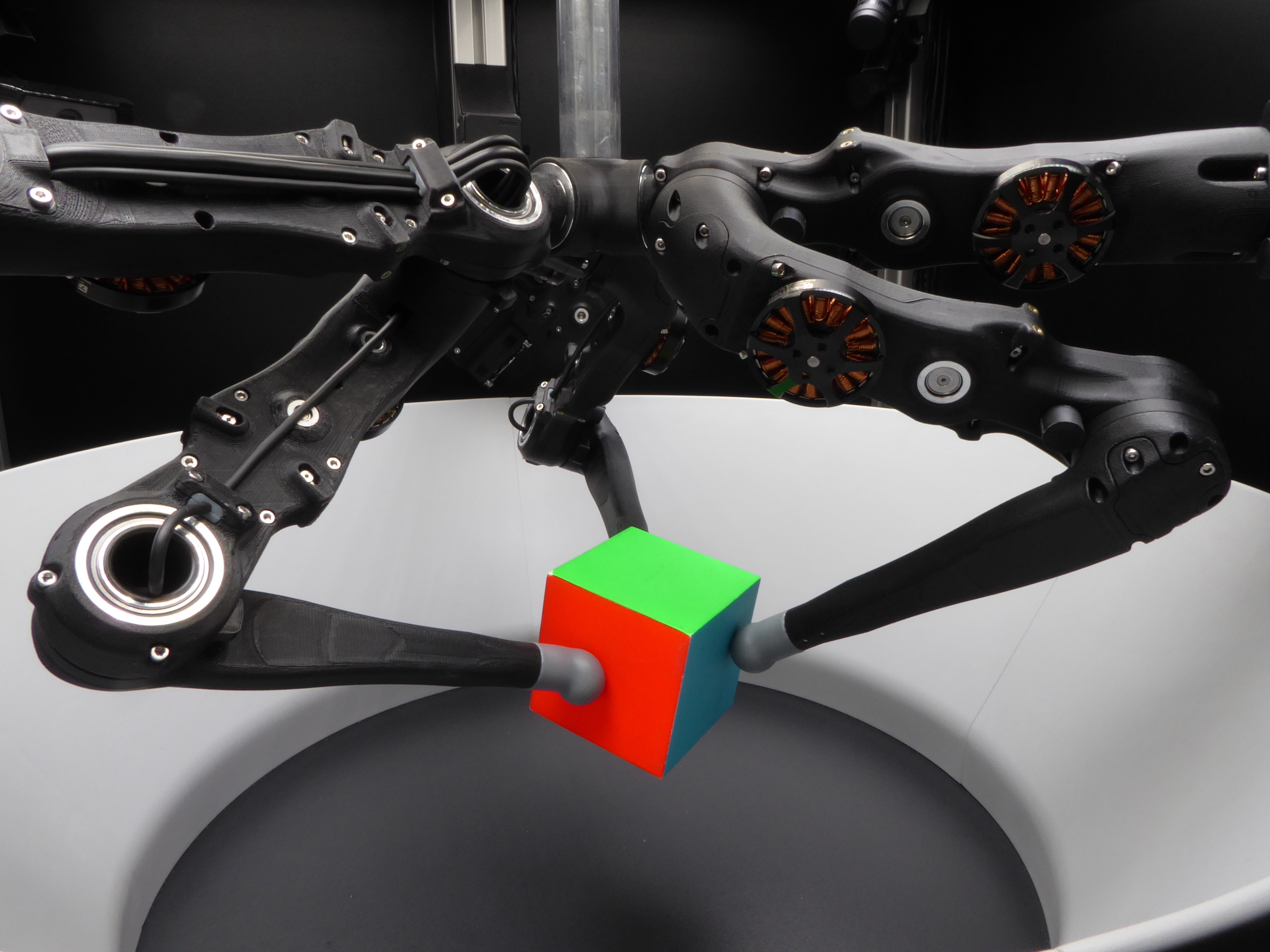
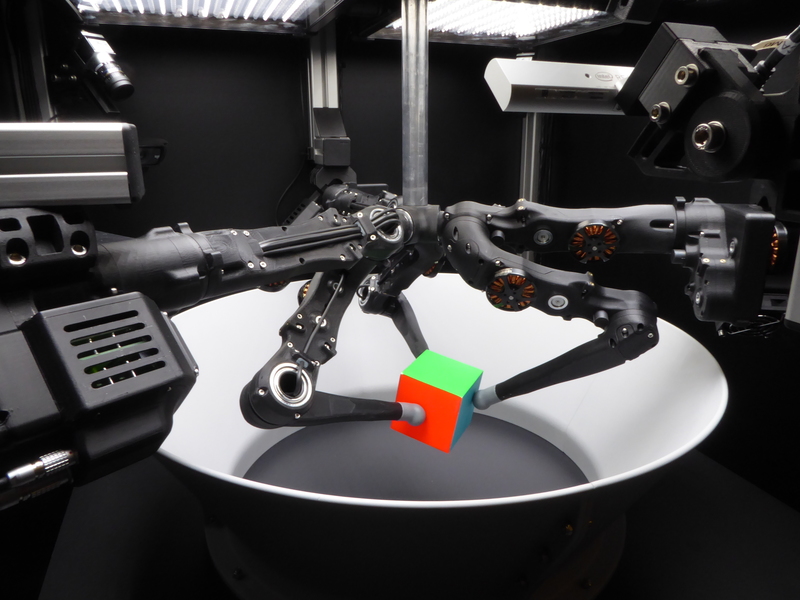
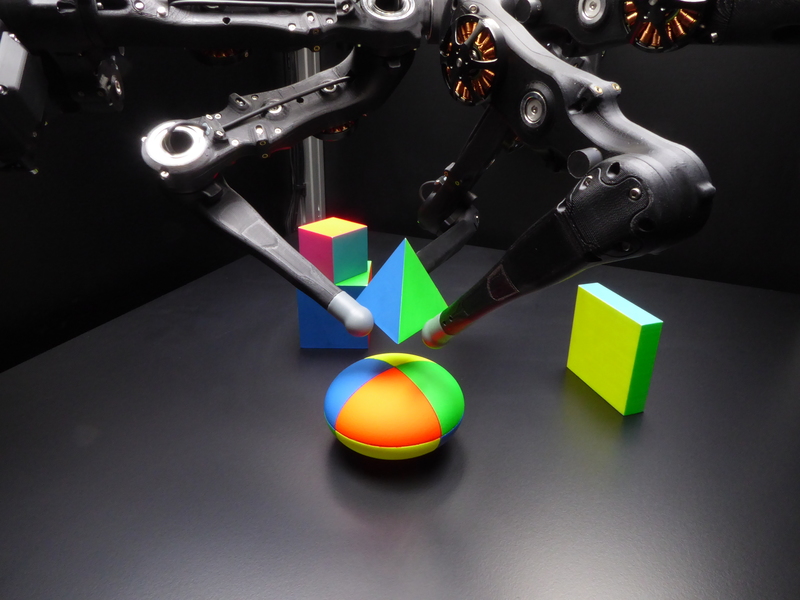
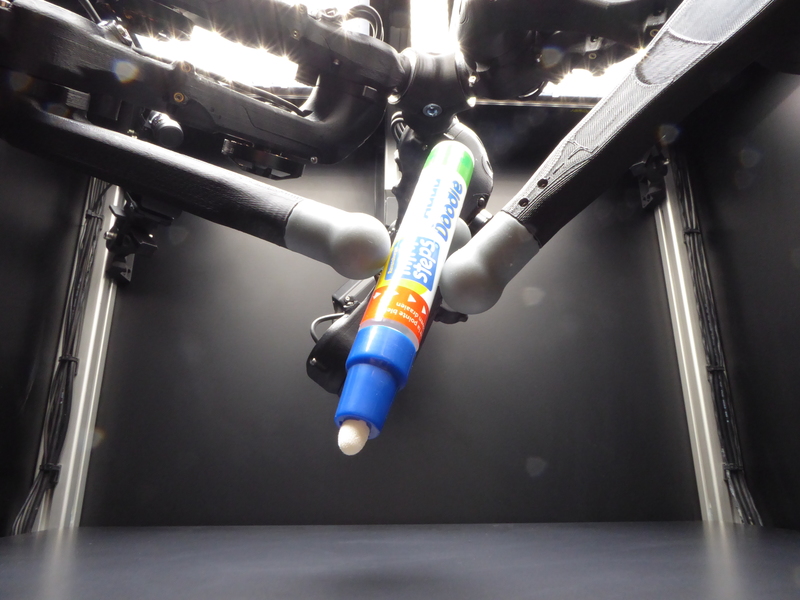
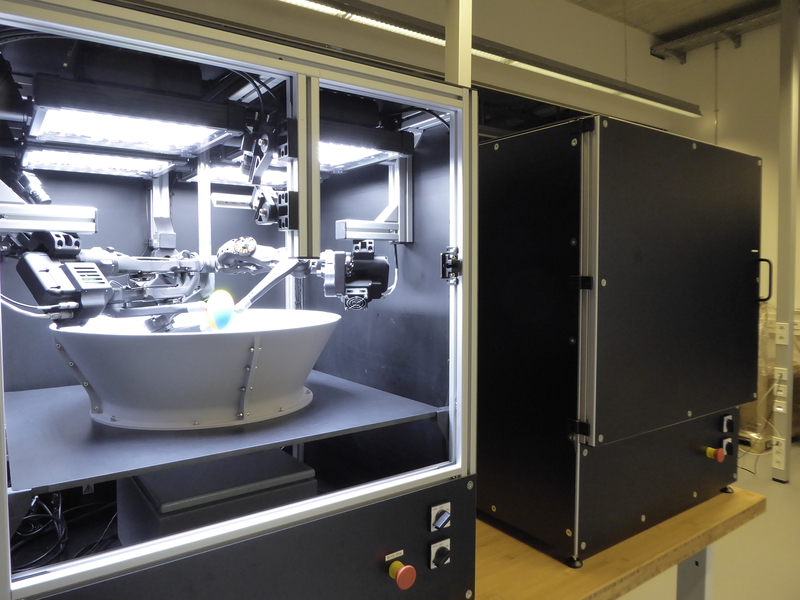
The robotic platform resembles a hand with three fingers. It is surrounded by three cameras that provide images to measure the results. Several identical robotic platforms have been set up around the robotic lab at the MPI-IS in Tübingen to run the learning algorithms the participating teams submit. Participants can execute their algorithms remotely thanks to a convenient and simple interface. Each team will have a budget of more than 100 real robot hours on one of the high-performing robotic platforms, without any restrictions on the algorithms they execute.
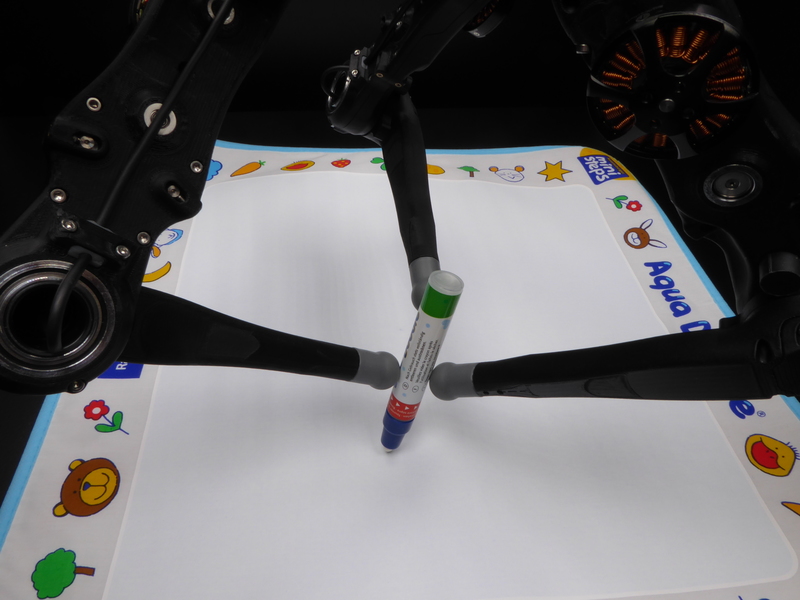
The challenge comprises three stages. First, participants familiarize themselves with the overall setup and aim to solve a task in a physical simulator. Next, they solve simple real-world tasks: specifically, they are required to train the robot to pick up an object and perform in-hand manipulation with a cube. In the final stage, the robot has to pick up a pen and write a short phrase like “I won!”.
To achieve these tasks, participants need to design advanced control or reinforcement learning algorithms. “We want to see the extent to which the teams are able to tune their algorithms to fulfill these very difficult tasks. Using a learning-based algorithm for writing with a pen can probably be considered a breakthrough in robotic manipulation,” says Wüthrich.
“For the first time, we can benchmark all these algorithms on real robots, making them comparable,” says Bauer. “Before, this kind of benchmarking was done mainly in simulation. There is no noise or friction, and contacts are simplified, which makes very impressive results in simulation possible. However, these insights do not typically translate to real robots, in particular for tasks that involve contact and complex interactions with the environment.” Wüthrich adds: “Now, a relatively large number of people who previously didn’t have access to such an advanced robotic platform are able to participate. While some top-notch universities may have extraordinarily good and advanced robots, for most researchers, it is very difficult to gain access to real robotic systems. It is very costly in terms of time and money. Our goal is thus to give a greater number of people access and an opportunity to achieve impressive manipulation results.”
The Real Robotic Challenge will run for 16 weeks. Ultimately, it will help advance the state of the art in dexterous manipulation, which has myriad applications. These include, for instance, construction, cleaning, patient and elder care, agriculture, and product assembly.
Tübingen/Stuttgart – Just three years after this interdisciplinary Ph.D. program was launched, the International Max Planck Research School for Intelligent Systems (IMPRS-IS) is seeing six of its doctoral students graduate. Ingrid Blaschzyk, Siyavash Haghiri, Steve Heim, Matthias Kümmerer, Brahyam Ponto, and Alonso Marco Valle will be honored at a ceremony following the Max Planck Institute for Intelligent Systems Summer Colloquium on Friday, July 24.
IMPRS-IS is a key element of the Cyber Valley research consortium. The interdisciplinary doctoral program focuses on providing first-class education to the world’s top young researchers in the broad field of intelligent systems. The graduates’ research projects spanned a variety of topics in computer vision, robotics, and machine learning.
“These first six IMPRS-IS graduates have backgrounds ranging from mathematics and computer science to physics and engineering. The sheer breadth of their research clearly demonstrates the potential impact of intelligent systems on society. Whether they choose to continue working toward an academic career, make the jump to industry, or start their own companies, we look forward to seeing how these young scientists influence the future,” says Katherine J. Kuchenbecker, spokesperson of the IMPRS-IS, a faculty member in the school, and Director of the Haptic Intelligence Department at the Max Planck Institute for Intelligent Systems.
“I really enjoyed supporting this future generation of scientists and helping shape their career. We are proud of what they have become and wish them all the best for the future,” says Leila Masri, the IMPRS-IS coordinator.
The graduate school brings together the Max Planck Institute for Intelligent Systems (MPI-IS), the University of Tübingen, and the University of Stuttgart. In total, the program counts 56 internationally renowned faculty and associated faculty working at the leading edge of science. Their research fields cover all three of the key areas of intelligent systems, which are commonly described as perception, action, and learning. The approach of offering research opportunities at three nearby institutions has been extremely well received, with doctoral students praising the ease of interaction among scientists from different disciplines.
“I really enjoyed meeting other scholars from different fields of research and seeing what they work on. I came out of my mathematics and stochastic bubble to meet mechanical engineers and roboticists. It was great to interact with scientists in many different disciplines,” says Blaschzyk, whose research project focused on statistically analyzing localized support vector machines (SVMs).
The school unites existing strengths and builds bridges between the three participating institutions. “Before joining IMPRS-IS, I was always a bit disappointed that there is so much interesting AI research going on in Tübingen and Stuttgart, however in so many different institutes and departments that it was very hard to know what research is actually done where and to get in contact with other researchers formally and informally. To me, IMPRS-IS was exactly the central point of contact I was looking for,” says Kümmerer.
Since it was launched in July 2017, IMPRS-IS has gained high visibility within the scientific community. To date, over 2,000 aspiring researchers from around the globe have applied for a spot in the school through its annual recruitment effort; the next application deadline is November 2, 2020. 160 students are currently pursuing their doctorates within IMPRS-IS. This total far exceeds the school’s initial vision of recruiting 100 Ph.D. scholars over the course of its initial six-year grant. At present, IMPRS-IS is one of the largest doctoral programs of the 65 within the Max Planck Society (MPG).
Apart from the initial grant from the Max Planck Society to MPI-IS, IMPRS-IS also receives significant funding from the state of Baden-Württemberg for doctoral education at the Universities of Tübingen and Stuttgart. The scholars are selected in a highly competitive multi-stage process, with an acceptance rate of between five and eight percent. Depending on their background and interests, each scholar has the option of earning their doctoral degree from either the University of Tübingen or the University of Stuttgart.
Hagihiri aptly summarizes the school’s draw, saying “I joined IMPRS-IS because of its excellent academic reputation, the world-renowned faculty and fantastic executive team. And I enjoyed the many opportunities to collaborate with others, and to learn a lot in the bootcamps and workshops.”
Professorin für Erklärbares Maschinelles Lernen, Exzellenzcluster „Maschinelles Lernen: Neue Perspektiven für die Wissenschaften“, Universität Tübingen
Juniorprofessorin für Lehren und Lernen mit intelligenten Systemen, Institut für Erziehungswissenschaft, Universität Stuttgart
Registrierung
Bitte melden Sie sich hier an – Teilnehmer*innen inklduiert männlich, weiblich und divers. Die Veranstaltung findet als Zoom-Konferenz und auf Englisch statt.
Cyber Valley in Kooperation mit dem Max-Planck-Institut für Intelligente Systeme sowie den Gleichstellungsbüros der Universitäten Stuttgart und Tübingen. Die Veranstaltung findet im Rahmen der Frauenwirtschaftstage 2020 statt.
Professor Dayan, you came to the Max Planck Institute for Biological Cybernetics and the University of Tübingen about a year and a half ago. How’s life in Tübingen?
Coming from London, it was obviously a big move. Before I came here, I was actually in San Francisco on sabbatical. Tübingen is lovely. I haven’t got a car, so walking up and down the hills takes a lot of effort. I hope I am a little bit fitter than I was before. In terms of its strong academic and intellectual environment, the University of Tübingen is fantastic. My wife works both at the university and the MPI, as well, and we have enjoyed our time here. One of the big differences coming from a big place to a smaller town is that you cannot even get on the bus without meeting someone you know – be it a student or a colleague. Of course, during the coronavirus pandemic, we have been very lucky to be in Germany because I think the country has handled the situation very well.
How has your work been affected by the COVID-19 pandemic?
Since my work is mainly theoretical and most of the experiments we do can be done online, these aspects of my work have not been dramatically impacted. Of course, not being able to meet in person has affected people in the group in various ways. Luckily, we are not a very big institute and we were still able to conduct experiments on site, provided that we practiced social distancing. On the whole, we have been very successful in keeping the disease away, which testifies to the hard work of everyone involved. At the beginning of the pandemic there were lots of uncertainties. But now, since the situation has stabilized, people are anxious to get back to work at the institute.
How have you settled in to your new working environment at the University of Tübingen and the Max Planck Institute for Biological Cybernetics?
In regards to my work at Max Planck, there are lots of change processes evolving over a period of time. We are moving from the institute’s second generation to the third generation. Building the team in my lab in the Computational Neuoscience department and slightly re-focusing the things that I’m working on has been great.
“We are trying to build an integrated PhD program”
And what are your main projects at the University of Tübingen?
At the university, one main effort has been the International Max Planck Research School (IMPRS), where we successfully applied for new funding together with Professors Cornelius Schwarz, Marc Himmelbach and the GTC (Graduate Training Centre of Neuroscience). We are trying to build an integrated PhD program, which can recruit students with bachelor’s degrees and ultimately lead to a PhD. This is not a common German or Bologna model. It’s been interesting to work in very close cooperation with the university and trying to generate a program that meets the needs of both students and research institutions, and which is also consistent with the principles of excellence that were set up by the GTC, and the strictures of German regulations. The first cohort will start in the autumn.
In terms of my Humboldt chair – that work has not fully started yet because it was meant to begin around the time the pandemic began. It is very hard to recruit people when you cannot meet them in person – especially since some of them would be coming from abroad. Nevertheless, the university, the President’s office and the whole administration have been incredibly supportive. I’m really looking forward to building those Humboldt groups once the impact of the virus decreases.
Your research focuses on decision-making processes in the brain, the role of neuromodulators – chemical substances that influence the functioning of the neural system – as well as neuronal malfunctions on psychiatric diseases. You are also regarded as a pioneer in the field of artificial intelligence (AI). Why did you choose these fields? What inspired you to go in this direction with your research?
When I was an undergraduate, I was actually a mathematician. However, I had already been interested in the early days of home computers at the challenges of developing systems that could simulate intelligence. When I was just finishing my undergraduate studies, a very influential book was published, called “Parallel Distributed Processing” by David Rumelhart and Jay McClelland. I was very lucky to grow up as a graduate student around that time. It was one of these epochal changes in thinking about both neuroscience and neural networks. Then I met some of the people who were involved in that work and I did my PhD at what we would now see as the computational neuroscience interface between biology, psychology and AI. I became interested in animal behavior and the ways we and other creatures make good and bad decisions and choices. When I started my postdoc, I was much more directly associated with neuroscience. Decision-making is one of few areas in neuroscience which we can tie together different levels of analysis: addressing the computational or perhaps ethological goals of choosing, the algorithms or psychological processes involved, and then the neural substrates. AI is mostly interested in the first two of these – and there are rich synergies with natural systems.
“To make good decisions, you have to be able to make good predictions”
Lately, you have also been looking at bad decisions…
After about 20 years of looking at good quality decision-making, it seemed like a good time to start thinking about what happens when people, other animals and machines make decisions that are sub-optimal, from either a subjective or objective perspective. That’s what got me thinking about psychiatry. This partly coincided with the fact that people I was working with in London at that time were actively studying neurological and psychiatric disease. And it coincided with the observation made by many psychiatrists that the tests and analyses that are available are insufficiently predictive in terms of prognosis, or the choice, or optimization of treatment, and are often not strongly based on the sort of multi-level analysis we were just talking about. Of course, not everything in psychiatry comes down to unfortunate decisions – but we are starting there.
So, what’s the common thread in your research? The connection between the ability to make predictions and decision-making?
Coarsely speaking: to make good decisions, you have to be able to make good predictions. You need to predict the effect of your decisions – not only in the short term but also in the long term. So, predictions are a central part of how you go about your decision-making. Another aspect of this is representation, the way the brain encapsulates those aspects of the external and internal worlds in the conjoint activity of populations of neurons, and that is intimately involved in how we generalize from one situation to another.
“Incredible concentration of people and collaborative energy”
How is this field of research connected to the research in the Cyber Valley ecosystem?
The Cyber Valley ecosystem has a lot of people interested in exactly this boundary between different aspects of natural intelligence and artificial intelligence. There are too many to name!
What makes the Cyber Valley ecosystem so special?
The incredible concentration of people and the collaborative energy is what makes the Max Planck Institutes and the institutions around our campus and the university such excellent places. Hats off to the mothers and fathers of this success! Another good example is the IMPRS, which has long been a critical component of interaction between the institute and the university. We have this fantastic partnership. At the same time, Tübingen has really invested in the field of neuroscience. That makes for a perfect environment for our work. The people you directly interact with are most important. Of course, it takes a while to build up collaborations and contacts. We are recruiting new groups that will have a big impact. The first group of recruits at the Max Planck Institute for Biological Cybernetics has already brought in fantastic skills and energy.
The term artificial intelligence is still quite abstract for most people outside the world of computer science. How would you describe it?
Like many words or concepts repeated too frequently, the meaning of AI is perhaps in danger of leeching out. On one hand, there are behaviors in which humans engage that seem to require flexible problem solving, exploiting past information and previously acquired skills in an adaptive manner. AI aspires to port this capacity into computers and robots and to enhance it dramatically, since there’s no obvious sense in which humans are the pinnacle of intelligence, any more than we are, for instance, the pinnacle of arithmetical calculators. On another hand, there are behaviors such as running gracefully over rough terrain, that we find simple – perhaps provided we don’t think about them too hard. AI would also like these to be accomplished by artificial systems – even though this is probably a different sort of capacity and certainly engages partly different neural systems. In both cases, AI will generate a new set of tools that enable us or help us to do things that we could not do or automate before.
What could be an example for an area in everyday life where big innovations can be achieved with AI?
I’m a basic researcher, so I’ll give you my opinion as a regular person rather than as a professional. One example that seems clear to me is automated mobility – self-driving cars for example, the bailiwick of Cyber Valley’s Professor Andreas Geiger. My children have held off learning to drive – so they are hoping for expeditious progress!