User Group: Researcher

  • Igniting the potential of AI

    Igniting the potential of AI

    Das virtuelle Event mit dem Titel „Igniting the potential of AI“ wird am 15. Dezember, 16:00–18:00 Uhr MEZ stattfinden. Zahlreiche renommierte Referent:innen geben Einblicke in Forschung und Innovation im Cyber Valley Ökosystem und beleuchten allgemein das Innovationspotenzial von KI.
     
    In diesem Event bringen wir spannende Eindrücke und Expert:innen aus Politik, Forschung, Start-up, Industrie und Investment zusammen. Eine detaillierte Agenda folgt in Kürze.

    Wir freuen uns darauf, viele von Ihnen bei unserem Jubiläumsevent zu begrüßen!


    Registrierung

    Bitte hier registrieren. Das Event findet via Zoom und in englischer Sprache statt.


    Sprecher:innen

    Grußwort von Winfried Kretschmann
    Ministerpräsident von Baden-Württemberg

    Grußwort von Theresia Bauer
    Ministerin für Wissenschaft, Forschung und Kunst Baden-Württemberg

    Michael Pfeiffer
    Global Head of AI Research, Bosch Center for Artificial Intelligence

    Michael J. Black
    Cyber Valley Sprecher und Direktor am Max-Planck-Institut für Intelligente Systeme

    Setareh Maghsudi
    Juniorprofessorin, Universität Tübingen

    Alexander Brem
    Direktor, Institut für Entrepreneurship und Innovationsforschung
    Inhaber des Lehrstuhls für Entrepreneurship in Technologie und Digitalisierung, gefördert vom Daimler-Fonds im Stifterverband

    Serina Pinar
    Gründerin und Chief Strategy Officer, Cytolytics GmbH

    Jonas Andrulis
    Gründer und CEO, Aleph Alpha GmbH

    Uwe Horstmann
    General Partner und Co-Founder, Project A Ventures


    Kontakt

    Julia Schmaus – Innovation Manager
    E-Mail: julia.schmaus@cyber-valley.de
    Telefon: +49 7071 601 1546
    Mobil: +49 151 6452 0213

  • AI & medicine: safe systems and their certification

    AI & medicine: safe systems and their certification

    “We want not only to improve the fundamentals of machine learning, but also to establish guidelines for certification of such AI systems, thereby enabling safe use in medicine,” says the project’s spokesperson, Professor Matthias Hein. “The AI research environment in Tübingen offers ideal conditions for this, as the expertise required for this is available here in a unique breadth in Germany. We are very pleased and grateful for the trust of the Carl Zeiss Foundation. This funding decisively advances research at the interface of AI and medicine at the University of Tübingen in structural terms.”

    Project partners are the Departments of Radiology and Ophthalmology at the University Hospital Tübingen (UKT). TÜV SÜD and TÜV AI.LAB will be involved as cooperation partners in the development of certification protocols. In addition, three medical start-ups are supporting the project with data and concrete use cases: the two Tübingen-based companies AIRAmed and eye2you, both members of the Cyber Valley Start-up Network, and the Berlin-based company Vara, which is developing AI systems to detect breast cancer.

    Since the founding of Cyber Valley at the end of 2016, the Stuttgart/Tübingen region has developed into a dynamic AI research ecosystem, with newly established professorships, research groups, industrial research labs, doctoral programs and Germany’s first international master’s degree program in machine learning – also thanks to the establishment of the BMBF Center of Excellence for Machine Learning (Tübingen AI Center) and the Cluster of Excellence “Machine Learning: New Perspectives for Science”, as well as the strong commitment of the Max Planck Institute for Intelligent Systems (MPI-IS). Consequently, researchers from all these institutions are involved in the project “Certification and Foundations of Safe Machine Learning Systems in Healthcare”. In addition, there are other scientists from the Institute of Ophthalmology, the Center for Quantitative Biology, the Department of Computer Science, the UKT, as well as from the working group “Ethics and Philosophy in Artificial Intelligence” of the Cluster of Excellence.

    About the Carl Zeiss Foundation:

    The Carl Zeiss Foundation’s mission is to create an open environment for scientific breakthroughs. As a partner of excellence in science, it supports basic research as well as applied sciences in the STEM subject areas (science, technology, engineering and mathematics). Founded in 1889 by the physicist and mathematician Ernst Abbe, the Carl Zeiss Foundation is one of the oldest and biggest private science funding institutions in Germany. It is the sole owner of Carl Zeiss AG and SCHOTT AG. Its projects are financed from the dividend distributions of the two foundation companies.

  • AI GameDev award show live on YouTube

    AI GameDev award show live on YouTube

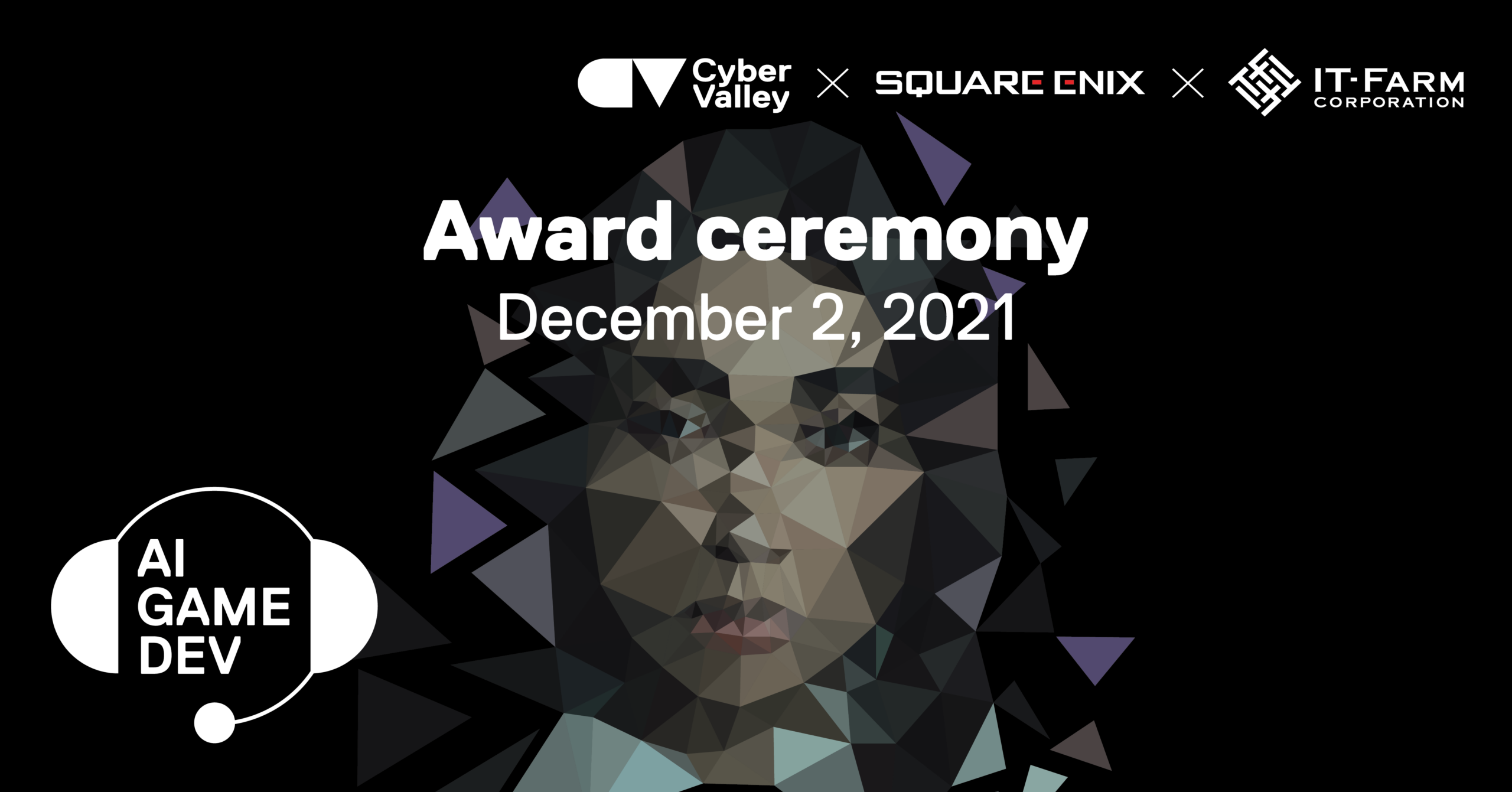
    Their submissions to the gaming competition either point in the direction of supporting creation or enhancing interactivity and the finalists all have either a scientific or entrepreneurial background and come from cities all over Europe. The AI GameDev award ceremony will be streamed live on the Cyber Valley YouTube channel on December 2, 2021, from 10:00 to 12:00 CET.

    The finalists are:

    • Automated Playtesting Algorithm
      Dr. Christian Guckelsberger, Department of Computer Science, Aalto University, Finland; Game AI Research Group, Queen Mary University of London, United Kingdom
    • Evija
      Michael Stettler, Werner Reichardt Centre for Integrative Neuroscience, University of Tübingen, Germany
    • GRAF
      Katja Schwarz, Autonomous Vision Group, Department of Computer Science, University of Tübingen, Germany
    • Kinetix SAS
      Start-up from Paris, France
    • Mlxar
      Start-up from Vienna, Austria
    • NeurCG
      Victoria Fernandez Abrevaya and Partha Ghosh, Perceiving Systems research group, Max Planck Institute for Intelligent Systems, Tübingen, Germany
    • Savitr
      Nitin Saini, Perceiving Systems research group, Max Planck Institute for Intelligent Systems, Tübingen, Germany

    For AI GameDev, Cyber Valley joined forces with game developer Square Enix and venture capitalist IT-Farm and called for submissions throughout August and September. In October, Cyber Valley researchers as well as representatives of Square Enix, and IT-Farm then decided on the finalists of the competition, making use of criteria such as benefit, competition, and progress.

    The seven finalists were recently notified about their successful submission and are now busy preparing for the award ceremony. Their innovative ideas are going to be captured in short videos which are then going to be aired publicly for the first time throughout the live stream. Following up, the finalists are going to answer questions from the jury. These are the jury members: Remi Driancourt (GM & Director of Research, Square Enix), Hasegawa Isamu (Senior Manager, Square Enix), Shinya Kasuga (Partner, IT-Farm), Oliver Passek (Advisor for film and media, Ministry of Science, Research and the Arts, Baden-Württemberg), Johanna Pirker (Assistant Professor, Graz University of Technology), Michael Sedlmair (Professor, University of Stuttgart) and Miyake Youichiro (Lead AI Researcher, Square Enix).

    The awards which can be won are threefold: main award, scientific award, and audience award. The main award is powered by Square Enix for the most innovative AI solution and consists of a visit to Tokyo, Japan, where the respective winners will examine a potential cooperation with Square Enix on practical use of their technology in production. The scientific award is powered by Cyber Valley for the most promising scientific performance and the prize is an exclusive Cyber Valley tour and meeting with top AI researchers, including a visit to the Max Planck Institute for Intelligent Systems in Stuttgart and Tübingen, Germany. The third prize at stake is the audience award powered by IT-Farm. The winners of this prize will be chosen by the audience and receive an exclusive business or fundraising mentorship by IT-Farm covering topics such as fundraising advice, sales pitch review, or business plan development.

    The award ceremony of the AI GameDev also falls within the five-year anniversary month of Cyber Valley and as such marks a special occasion. Cyber Valley as an internationally renowned hotspot for AI has successfully grown in the areas of research and innovation over the past years: professorships within the ecosystem have been appointed, Cyber Valley research groups have been founded and a start-up network as well as an investor network have been set up.

  • ELLIS continues to grow

    ELLIS continues to grow

    “We are very thrilled to welcome the four new units to the ELLIS network,” said Dr. Nuria Oliver, co-founder and vice-president of the ELLIS Society as well as Chief Scientific Advisor at the Vodafone Institute, Berlin. “We have now reached a critical mass at which the units are also effectively starting to collaborate with one another. Instead of speaking of stand-alone units, we’re delighted to see the network of units thrive.”

    The ELLIS unit in Jena, Germany, involves three research institutions: the Friedrich Schiller University Jena, the Max Planck Institute for Biogeochemistry, and the Institute for Data Science of the German Aerospace Center. At the interface between climate and environmental science as well as machine learning (ML) their emphasis lies on scientific knowledge integration in and generation from machine learning approaches. “The ELLIS Unit Jena now being part of the European network offers access to excellent AI expertise in Europe, leading to fantastic new avenues of interdisciplinary collaboration. AI is extremely relevant for earth, environmental and climate science, which are the main themes of our unit,” said Prof. Markus Reichstein, one of the two directors of the ELLIS Unit Jena and director at the Max-Planck-Institute for Biogeochemistry as well as at the Michael-Stifel-Center Jena for Data-driven and Simulation Science Jena. “This unit manifests the successful collaboration of the involved parties over the past ten years. We see the ELLIS Unit Jena as central node in the network, with the potential to foster the scientific breakthroughs which, through linkage to policy and business, eventually contributing to a sustainable development of our planet,” added Prof. Joachim Denzler, director of the Institute for Data Science of the German Aerospace Center and Chair of the Computer Vision Group at the University of Jena. 

    In Stuttgart, Germany, the newly established ELLIS unit is situated at the University of Stuttgart. Here the research focus is on interactive intelligent systems, natural and programming language processing, learning theory, and robot learning. One of the two unit’s founding directors and head of the Institute for Stochastics and Applications at the University of Stuttgart, Prof. Ingo Steinwart, said, “The ELLIS selection process is led by top scientists from different countries and is highly competitive and highly selective. The fact that there is now the ELLIS unit in Stuttgart not only underlines the excellence of the location with its research foci, but also in particular that of the researchers involved.”

    “Being accepted into the ELLIS network is a great success for our location in these important AI future areas, which will significantly increase our visibility within Cyber Valley, nationally and internationally,” added Prof. Andreas Bulling, Professor of Human-Computer Interaction and Cognitive Systems from the Institute of Visualization and Interactive Systems at the University of Stuttgart, and second founding director of the ELLIS unit in Stuttgart. “The chances of success for future research proposals as well as for attracting young researchers at all levels of the scientific career ladder increase.”

    The ELLIS unit in Milan, Italy, brings together excellent researchers from four institutions: Bocconi University, Politecnico di Milano, University of Milan, and University of Milan-Bicocca. The unit's main research areas are interactive learning, statistical learning and non-convex optimization, health and computational biology, as well as natural language processing and computational social sciences. Additional areas they intend to investigate include sequential decision-making and algorithmic game theory, as well as neural networks in connection with classical AI and neuroscience. “The ELLIS Milan unit is the result of a joint effort, combining the research groups of four major universities that have complementary skills and strong interdisciplinary components. Thanks to this recognition, Milan is now firmly on the map of European AI excellence,” said Prof. Nicolò Cesa-Bianchi, director of the ELLIS Unit Milan and Professor of Computer Science at the Department of Computer Science of the University of Milan. “The decision to join forces under the ELLIS framework is also a very timely decision, given that the Italian AI strategy is beginning to unfold. The goal is to fuel collaborations between the research groups, taking advantage of their complementary strengths.”

    The new UK ELLIS unit is located at the University of Manchester. It brings together experts in AI fundamentals with experts in other fields. Their research focus will be probabilistic modelling and Bayesian inference, AI technologies that work better with people, ML for digital health and medicine, and privacy-preserving ML. “The University of Manchester continues to grow as a center of excellence for AI research and the new ELLIS unit will further strengthen this activity,” said Prof. Magnus Rattray, Director of the ELLIS unit Manchester and Professor of Computational & Systems Biology and Director of the Institute for Data Science and AI at The University of Manchester. “Through the ELLIS Unit Manchester we will be able to better link ML researchers across Europe with impactful applications in biomedical and health research.” The University of Manchester has established a strategic partnership in a shared professorship with the director of ELLIS unit Helsinki, Prof. Samuel Kaski from the Aalto University, Finland. This northern link will be utilized in the future to set up the ELLIS unit Manchester and the ELLIS unit Helsinki as a twin unit, with tight collaboration already under way through joint research and exchange, which will be opened up to the rest of the ELLIS network.

    About ELLIS

    ELLIS (European Laboratory for Learning and Intelligent Systems) is a European AI network of excellence initiated in April 2018. Its central goal is to foster European research excellence in machine learning and related fields by offering scientists outstanding opportunities to carry out their research in Europe, and to train the next generation of young European researchers in this field of strategic importance. ELLIS has a three-pillar strategy to maintain and foster European technological sovereignty in this competitive field. The three pillars focus on fellows, students and locations. The aim is to invest in existing talent, foster new talent, and build a network of outstanding European innovation ecosystems. The ELLIS units are selected on the basis of scientific excellence by a committee of leading scientists from several different countries. At the moment, ELLIS consists of 34 units in 14 European countries and Israel. More information about the units and their scope can be found here: https://ellis.eu/units.


    Media contact

    Daniela Diaconu
    c/o Max Planck Institute for Intelligent Systems
    Max-Planck-Ring 4
    72076 Tübingen, Germany
    Email: daniela.diaconu@ellis.eu
    Phone: +49 7071 6011541

  • BWKI Hackathon

    BWKI Hackathon

    Bereitgestellt werden Daten aus der Praxis, eine umfangreiche Methodensammlung und Mentor:innen, die die Projekte begleiten. Ziel ist es Museen mit den Werkzeugen der KI lebendig zu machen! Challenge accepted?

    Die Gewinner:innen werden am 12. November im Livestream zum Finale des BWKI verkündet.


    Registrierung

    Die Anmeldung zum Hackathon ist noch bis zum 5. November 2021 möglich.


    Kontakt

    Caroline Seidel – Koordinatorin Lernmedien KI
    Telefon: +49 7071 29-70880
    E-Mail: caroline.seidel@uni-tuebingen.de

  • “Whoever develops AI systems has great power”

    “Whoever develops AI systems has great power”

    The interview has been edited and shortened for the written version. You can hear the longer version in the Cyber Valley Podcast Direktdurchwahl, Episode 05. Further texts and interviews on the topic of AI and machine learning, especially on questions of ethics and responsibility, can be found on the blog of the Cluster of Excellence at the University of Tübingen: www.machinelearningforscience.de. Please find the full interview below in German.
     

    Wo kommen Bürger:innen denn mit Themen der KI-Ethik in Berührung?

    Die klassischen Beispiele sind Ranking-Algorithmen, die mir Suchergebnisse in einer bestimmten Reihenfolge anzeigen oder Empfehlungssysteme für Produkte oder Medien. Aber auch mein Spam-Ordner wird durch eine KI befüllt oder der Wetterbericht, den ich mir anschaue. Hierbei arbeiten KI-Systeme im Hintergrund.


    Und was ist aus ethischer Sicht daran relevant; wie gehen Sie an so ein Themenfeld heran?

    Die Themenfelder der KI-Ethik sind unglaublich breit gefächert. Es gibt vier klassische Bereiche. Im ersten wird geschaut: Sind KI-Systeme fair oder diskriminieren sie gegen bestimmte Personengruppen? Der zweite beschäftigt sich mit der Frage, ob KI-Systeme transparent oder erklärbar sind. Im dritten Bereich wird geschaut: Wie sicher oder robust sind sie? Können sie angegriffen und missbraucht werden? Und im vierten Bereich geht es um Verantwortungsbeziehungen, um klären zu können, wer im Schadensfall haftet.


    Spannend finde ich, die Frage der Verantwortung auch wirklich zu stellen. Ein Beispiel: Ich bewerbe mich. Dort filtert ein autonomes System die Bewerbungen und ich als Frau werde vom System systematisch diskriminiert und komme nicht in den Auswahlprozess. Wer trägt die Verantwortung: der Entwickler oder die Firma, die das System einsetzt?

    Oder der Händler, der so ein Produkt vertreibt… Ich denke, Verantwortung wird auf mehrere Schultern verteilt. Beim angesprochenen Beispiel der algorithmischen Diskriminierung bestünde viel Verantwortung darin zu schauen, mit welchen Trainingsdaten ein KI-System angelernt wird. Sind in diesen Trainingsdaten Frauen genauso repräsentiert wie Männer? Das müsste in der konkreten Technikentwicklung angegangen werden.


    Allerdings sind das Themen, die meines Wissens in der klassischen Informatik nicht zwingend in den Studiengängen vorkommen.

    Ich würde nicht sagen, dass das nicht vorkommt. Insbesondere das Thema Fairness im maschinellen Lernen wird fast schon inflationär behandelt; das ist auch Teil des Studiums. Aber Ethik-Seminare im Informatikstudium sind kein Allheilmittel ist. Wichtiger ist, dass eine „ethische Atmosphäre“ an einer Fakultät geschaffen wird. Es geht nicht so sehr darum, sich mit ethischen Theorien zu befassen, sondern darum, dass Studierende bestimmte Persönlichkeitsmerkmale entwickeln, die sie zu verantwortungsbewussten Technikentwicklerinnen und -entwicklern machen. Denn ja: Wer KI-Systeme entwickelt, hat eine große Macht, weil diese Systeme skalieren. KI-Systeme werden möglicherweise am Ende von Millionen oder sogar Milliarden von Menschen benutzt – eine große Verantwortung.


    Ich glaube, das ist auch ein wichtiger Aspekt: Was wir hier besprechen, betrifft viele Menschen, auch wenn es ihnen gar nicht so bewusst ist. Wozu braucht es also eine KI-Ethik?

    Die Entwicklung ist, das KI-Systeme zunehmend in die Lebenswelt von Menschen kommen und ihnen weitreichendere Entscheidungsbefugnisse zugeschrieben werden. Immer da, wo die Systeme einen Einfluss auf menschliches Verhalten haben, wird es umso wichtiger, die gesellschaftlichen Folgen zu reflektieren, vorherzusagen, und möglicherweise bei Fehlentwicklungen zu intervenieren. Aber Aufgabe der Ethik ist auch, positive Ideen oder Visionen zu entwickeln, wie eine nachhaltige, sichere, friedliche Gesellschaft, in der Menschen und KI-Systeme enge „Beziehungen" eingehen, gelingen kann.


    Ein bekanntes Beispiel, wo dies noch nicht gelungen ist: Eine dunkelhäutige Frau wurde von dem Gesichtserkennungssystem im Smartphone nicht so gut erkannt wie zum Beispiel ein weißer Mann. 

    Ja, dieses spezifische Beispiel hat zu einem einschlägigen Paper geführt: „Gender Shades" von Joy Buolamwini und Timnit Gebru. Sie haben aufgedeckt, dass Gesichtserkennungssysteme schlechter für Frauen oder Menschen mit dunkler Hautfarbe arbeiten. Allerdings ist Gesichtserkennung als solche ja schon umstritten. Ist eine umstrittene Praxis automatisch besser, wenn sie bei allen Bevölkerungsgruppen gleich funktioniert? Ich will nicht sagen, dass algorithmische Diskriminierung kein Problem ist, ganz im Gegenteil. Ich denke nur, dieses spezifische Beispiel hätte man weiterdenken müssen. Gesichtserkennung als solche ist in vielen Kontexten problematisch, weshalb es ja auch in einigen Ländern oder Bundesstaaten Bemühungen gibt, Gesichtserkennung zu verbieten.


    Die EU-Kommission hat nun einen Rechtsrahmen entwickelt, der im Artificial Intelligence Act, also in einer Art „KI-Gesetz" münden soll. Sie verwendet darin den Begriff "vertrauensvolle KI“. Was genau ist damit gemeint?

    Die EU versteht darunter KI-Systeme, die rechtmäßig sind, also die Gesetze einhalten; KI-Systeme, die ethisch sind und ethischen Prinzipien entsprechen. Diese sollen zum Beispiel gesellschaftliche Wohlfahrt fördern oder Ähnliches. Und es beschreibt KI-Systeme, die robust sind, die also aus technischer Perspektive sicher sind. Wenn das eingehalten ist, spricht man von vertrauenswürdiger KI. Der vorgeschlagene Rechtsrahmen enthält eine Risiko-Pyramide mit vier Risiko-Stufen. Der angesprochenen biometrischen Gesichtserkennung in Echtzeit beispielsweise wird ein inakzeptables Risiko zugesprochen. Unter diese Risikoklasse fallen KI-Systeme, die explizit mit einem Verbot belegt werden sollen. Man muss allerdings auch dazu sagen, dass nur an der Spitze einige wenige Hochrisiko-KI-Anwendungen stehen. Die meisten KI-Systeme fallen unter wenig bis gar kein Risiko; beispielsweise ein Flaschenrückgabeautomat, der Leergut klassifiziert oder ein System, das kontrolliert, ob Werkstücke korrekt zusammengebaut sind. 


    Sind diese Regulierungsansätze ausreichend, um KI-Ethik von der Entwicklung bis zum Produkt einzuführen?

    Zuerst mal finde ich das großartig, was dort passiert. Europa hat, denke ich, wieder eine Vorreiterrolle. Aber man kann natürlich immer Dinge kritisieren, zum Beispiel, dass die militärische Anwendung von KI aus diesem Rechtsrahmen völlig ausgeklammert worden ist. Es gibt auch noch andere Themen, mit denen sich die KI-Ethik beschäftigt, die aber in der Legislative nicht abgebildet werden. Zum Beispiel die Frage der Nachhaltigkeit von KI-Systemen oder die prekäre Annotationsarbeit von Trainingsdaten. Über Clickarbeit werden Trainingsdatensätze, mit denen KI-Systeme angelernt werden, von Hand zusammengestellt. Das ist eine sehr prekäre, schlecht bezahlte Arbeit, die teilweise in Entwicklungsländern gemacht wird. Das könnte man beispielsweise über Lieferkettengesetze oder Ähnliches verbessern. Aber abseits dieser offenen Punkte sehe ich das sehr positiv. 


    Bei KI-Ethik geht es häufig um die Frage der Moral. Kann eine Maschine ethisch moralisch handeln oder müssen das trotzdem noch die Menschen, die sie bedienen und die sie entwickeln, machen?

    Das ist eine sehr schwierige Frage. Klassischerweise stellt man sich darunter vor, dass von oben herab in eine Maschine moralische Regeln eingebettet werden. Da gibt es ganz klassisch die Asimov‘schen Robotergesetze. Das, was wir als Moral bezeichnen, sind jedoch viele Handlungsregeln. Diese Regeln, so wie wir Menschen sie verarbeiten, kann man nicht in einer Maschine reproduzieren. Nichtsdestotrotz kann ich eine Maschine mit Daten trainieren, die menschliches Verhalten abbilden: wie Menschen Texte schreiben, wie Menschen Autos fahren, wie Menschen bestimmte Dinge machen. Wenn ich eine Maschine mit solchen Verhaltensdaten trainiere, dann reproduziert sie natürlich auch die Verhaltensmuster, die sie aus diesen Daten lernt.


    Herr Hagendorff, woran arbeiten Sie aktuell?

    Ich befasse mich mit methodischen Fragen der KI-Ethik. Dabei geht es vor allem darum, wie effektiv dieses Feld in der Umsetzung der eigenen Forderungen ist. Zum anderen befasse ich mich inhaltlich mit KI-Ethik und stelle etwa Fragen nach blinden Flecken im Diskurs.


    Welche Themen werden denn nicht ausreichend beachtet?

    Was ich zum Beispiel feststelle ist, dass die KI-Ethik zurzeit einen rein anthropozentrischen Zuschnitt hat. Man beschäftigt sich eigentlich nur mit dem Verhältnis von KI und Menschen, aber weniger mit den Auswirkungen von KI auf Tiere oder auf die Umwelt. Und dann gibt es Themen, die nicht den Stellenwert bekommen, die sie meiner Meinung nach haben sollten, zum Beispiel das Diversitätsproblem. Das Feld ist stark von Männern dominiert; von Männern aus reichen, demokratisch verfassten Industrienationen. Vielleicht sollten die Wertesettings aus anderen Bereichen der Welt einen stärkeren Eingang in die Entwicklung und Erforschung von KI-Systemen finden.
     

  • Andreas Geiger honored with Everingham Prize

    Andreas Geiger honored with Everingham Prize

    KITTI is among the world’s most popular datasets used in the development of self-driving cars and related machine vision applications. “KITTI has provided both data and a benchmark, and has driven the field over multiple tasks in computer vision,” said the citation from the distinguished panel of judges, which included renowned computer scientist Andrew Zisserman, professor of computer vision at Oxford University.

    “A big thank you to all the collaborators and to the jury for this award,” Geiger said. “Developing a dataset like this takes a lot of commitment and plenty of effort. Something like this can only be accomplished with a dedicated team. KITTI has been steadily developed since its initial release in 2012, driven by the needs of the computer vision community, and has now been cited more than 7,500 times in scientific papers. In this respect, the Everingham award recognizes the far-reaching scope of our work.”

    “This award is well-deserved,” said Michael J. Black, Cyber Valley spokesperson and director of the Perceiving Systems department at the Max Planck Institute for Intelligent Systems. “The impact of KITTI has been huge and really energized the entire space of autonomous vehicles.”

    Continued development of KITTI has since resulted in the recently released KITTI-360 dataset, which includes 360-degree sensors and 3D semantic annotations. The Everingham Prize is named after Mark Everingham, a scientist who died in 2012. The Briton was considered one of the leading computer scientists of his generation, who not only published very successfully but was also the driving force behind the PASCAL VOC project, which for the first time provided large standardized data sets and benchmarks for object recognition and thus, like the KITTI data set now awarded the Everingham Prize, had a lasting influence on the research field of computer vision.

  • Lernen Maschinen wie Menschen?

    Lernen Maschinen wie Menschen?

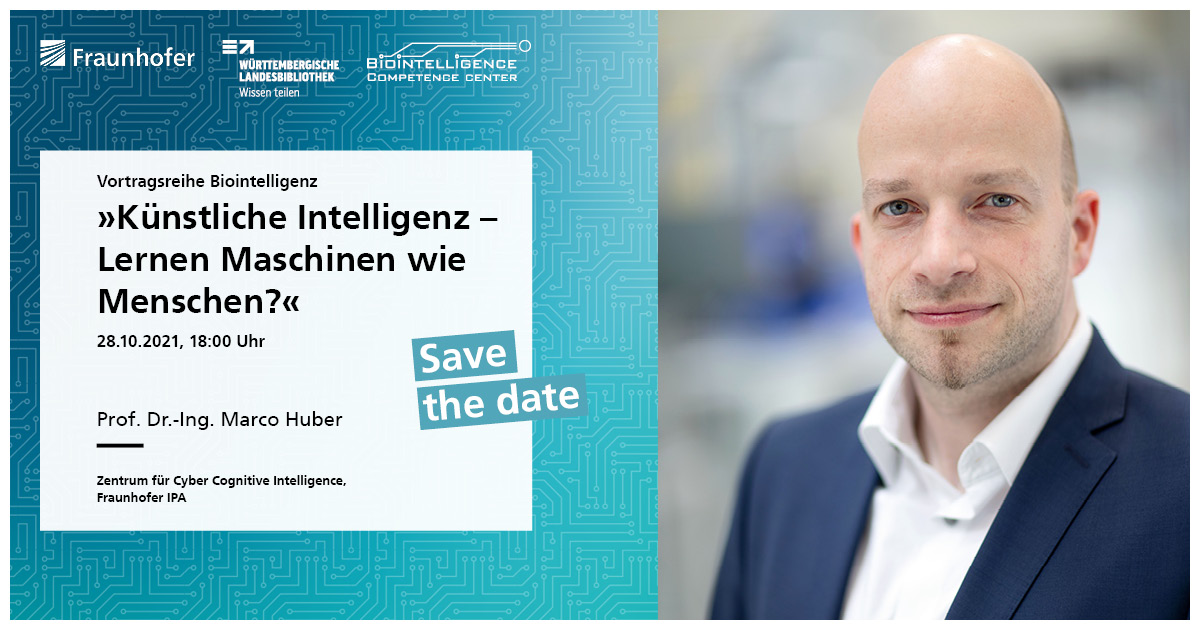
    KI spielt eine immer wichtigere Rolle in einer Vielzahl von Anwendungen wie etwa in der industriellen Automatisierung, der medizinischen Diagnostik, beim automatisierten Fahren oder in intelligenten Haushaltsgeräten. In diesem Vortrag wird der Schwerpunkt auf dem maschinellen Lernen liegen, dem derzeit am meisten erforschten und angewandten Teilbereich der KI. Maschinelles Lernen befasst sich mit dem automatischen Auffinden von Mustern in Daten, damit diese Muster zur Verarbeitung neuer Daten verwendet werden können. Jüngste Durchbrüche, z. B. bei der Generierung von Texten in natürlicher Sprache oder der Vorhersage der 3D-Struktur von Proteinen, beruhen auf maschinellem Lernen. Es wird aufgezeigt, wie die Technik des maschinellen Lernens funktioniert und wo die Gemeinsamkeiten aber auch Unterschiede zum menschlichen Lernen liegen. Auch werden einige Herausforderungen beim praktischen Einsatz von maschinellen Lernverfahren, etwa die fehlende Nachvollziehbarkeit der Ergebnisse, beleuchtet und Lösungsansätze vorgestellt.

    Erfahren Sie mehr über die Veranstaltung und wie Sie teilnehmen können unter dem untenstehenden Link.

  • It’s not the same river

    It’s not the same river

    Der Exzellenzcluster „Integrative Computational Design and Construction for Architecture“ (IntCDC) an der Universität Stuttgart veranstaltet die IntCDC Constructive Conversations, bei denen renommierte nationale und internationale Wissenschaftler und Industrieexperten zu aktuellen Themen und Herausforderungen im Bereich IntCDC sprechen.

    Die kommende IntCDC Constructive Conversations Session wird mit Aviad Almagor, Division Vice President, Emerging Technologies bei Trimble, stattfinden. Aviad Almagor hat sich auf einen sehr frustrierenden, aber auch sehr lohnenden Bereich spezialisiert – die Einführung und Umsetzung neuer Technologien in Unternehmensmärkten – kein Job für schwache Nerven. Seine Rolle erfordert flexible Hartnäckigkeit, sachkundige Ignoranz, Akrobatik und geistige Beweglichkeit. Aviad hat einen Master-Abschluss der Universität Cambridge, einen MBA-Abschluss der Heriot-Watt University, Schottland, und einen B.Arch-Abschluss des Israeli Institute of Technology.

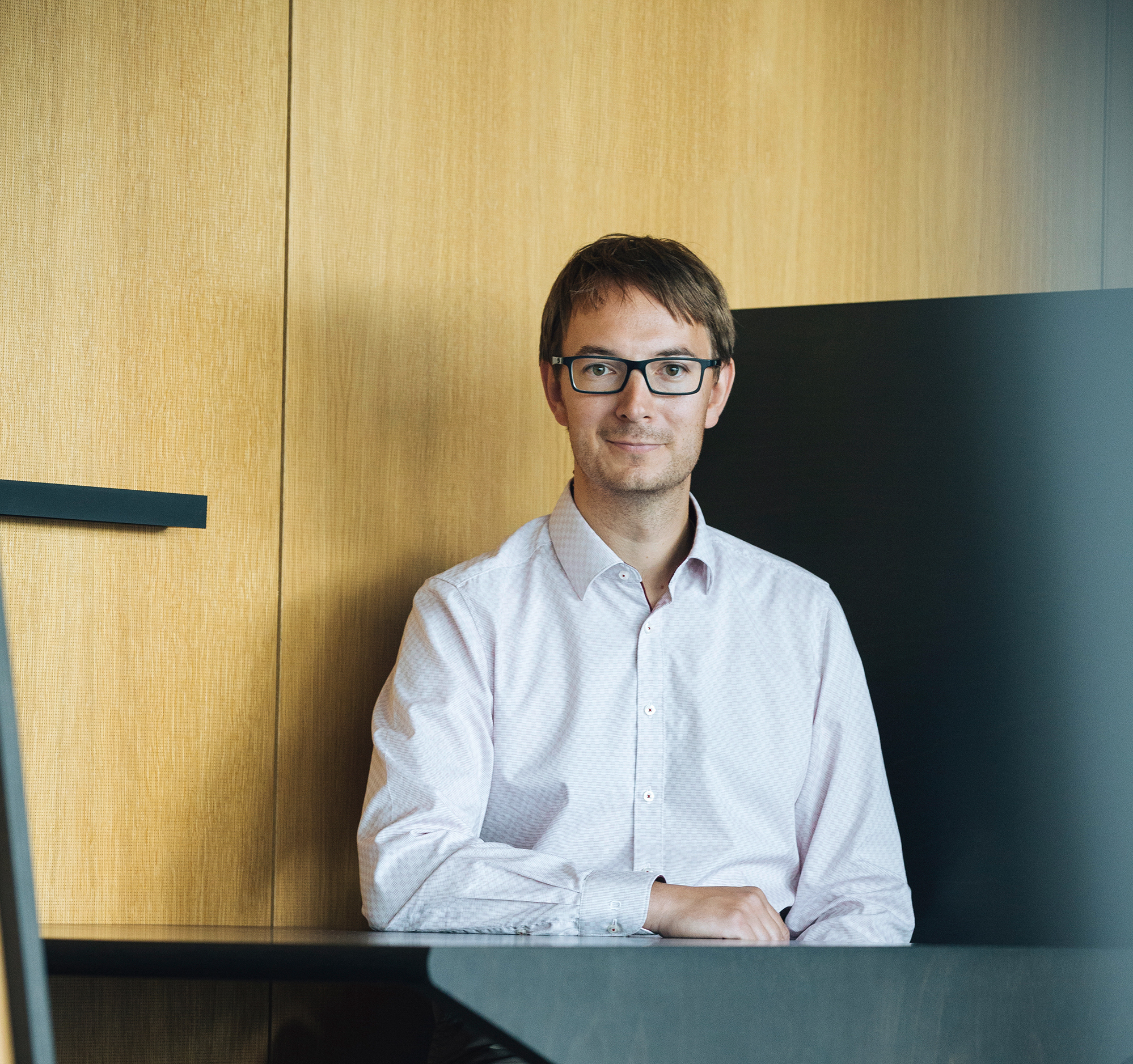
    Aviad Almagor – Division Vice President, Emerging Technologies at Trimble

    Foto: Aviad Almagor – Division Vice President, Emerging Technologies, Trimble

    Die Veranstaltung findet digital über WebEx und in englischer Sprache statt. Um an der Veranstaltung teilzunehmen, klicken Sie hier.