



The Cyber Valley Research Fund was established to support Cyber Valley research groups in conducting independent basic research in artificial intelligence and robotics. The fund totaled five million euros and included contributions from six of Cyber Valley’s founding corporate partners: Amazon, BMW, Bosch, IAV, Mercedes-Benz, Porsche, and ZF.
All project proposals were evaluated based on the principle of scientific excellence. In addition, the Public Advisory Board reviewed the ethical and societal implications of each project. Final funding decisions were made by the Cyber Valley Research Fund Board (RFB), which includes representatives from Cyber Valley’s academic partners as well as contributing industry partners.
Since its establishment, the Cyber Valley Research Fund has supported 20 research projects. The first projects began in 2020, and the final ones will conclude in 2026.
Contact for the scientific Community
-

Dr. Mariem Hafsa
Cyber Valley GmbH
Projects supported by the Cyber Valley Research Fund
-
Research Fund Project
Decision Making for Environmental Energy Exploitation with Small Aircraft
Overview Small unmanned aircraft, such as gliders and fixed-wing drones, are limited by battery capacity and flight time. In nature, birds and glider pilots extend their range… read more
-

Prof. Aamir Ahmad
University of Stuttgart, Max Planck Institute for Intelligent Systems
-
-
Research Fund Project
Communication-constrained Cooperation under Uncertainty: How to Make Strategic Decisions?
Overview In many real-world systems, multiple agents must cooperate while facing uncertainty about the environment, each other’s capabilities, and the consequences of their actions. Communication between agents… read more
-

Prof. Setareh Maghsudi
Ruhr University Bochum
-
-
Research Fund Project
Resource-efficient Autonomous Training Algorithms for Deep Learning
Overview Training deep-learning models requires large amounts of computing power, time, and energy. It also often depends on carefully chosen hyperparameters, such as the learning rate, which… read more
-

Dr. Frank Schneider
Aleph Alpha
-
-
Research Fund Project
Task and Motion Planning for Collaborative Robotic Construction with Irregular Materials
Overview Construction is responsible for a large share of global carbon emissions, partly because it relies heavily on energy-intensive materials such as steel and concrete. Bamboo, by… read more
-
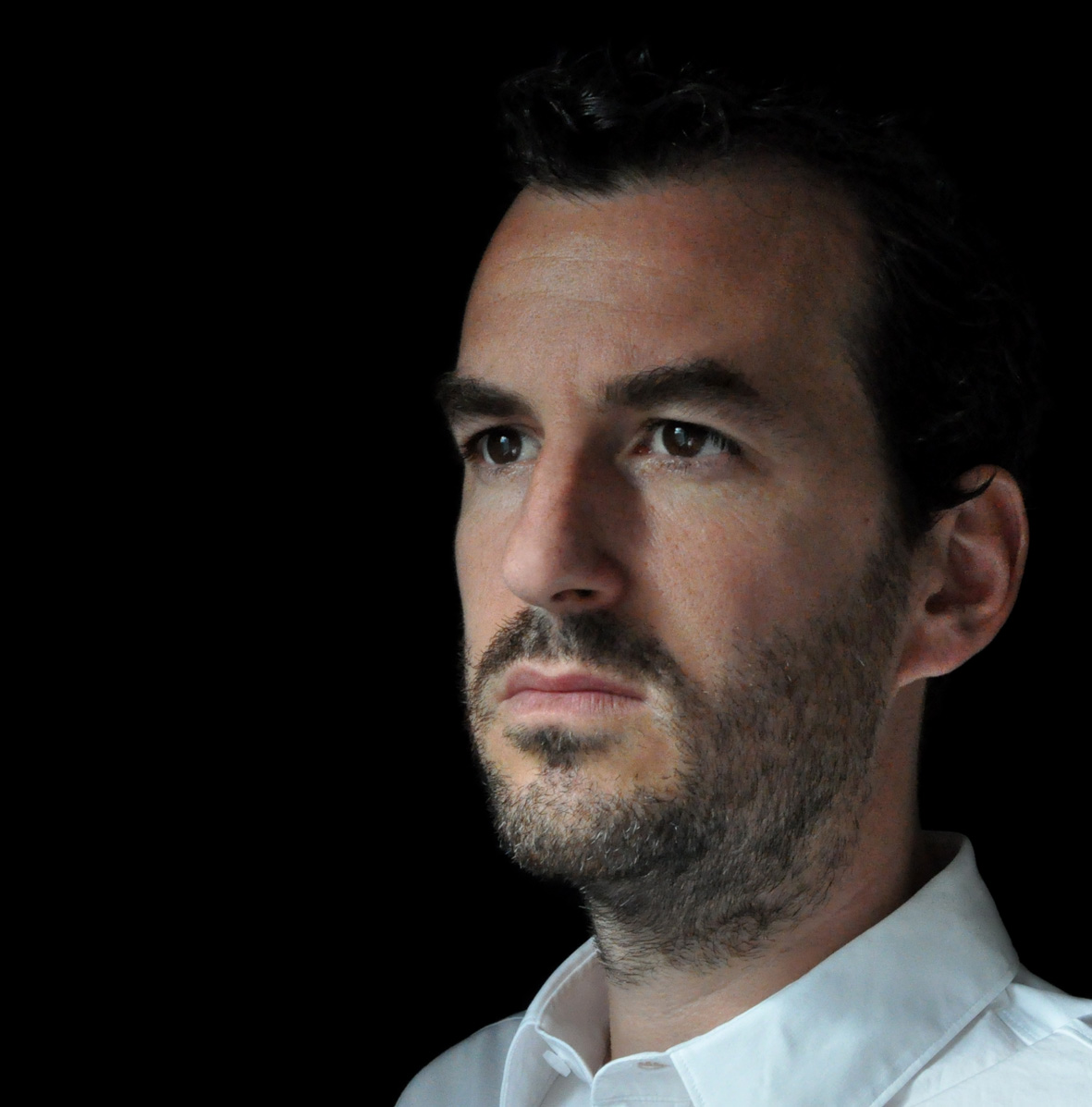
Prof. Achim Menges
University of Stuttgart
-

Dr. Nicolas Kubail Kalousdian
GreenSight; University of Stuttgart
-
-
Research Fund Project
Meta-Uncertainty in Bayesian Model Comparison
Overview Scientific theories are often translated into statistical models and tested by comparing their predictions with real-world data. Bayesian model comparison can then estimate how much support… read more
-

Prof. Paul-Christian Bürkner
TU Dortmund University
-
-
Research Fund Project
Neural Generative Weather Forecasting
Overview Traditional numerical weather prediction solves complex physical equations on supercomputers, which is accurate but computationally expensive and often struggles to represent uncertainty. Recent machine-learning models can… read more
-

Prof. Martin Butz
University of Tübingen
-
-
Research Fund Project
Contrastive learning for dimensionality reduction and visualization of transcriptomic data
Overview Single-cell transcriptomics measures the activity of thousands of genes in individual cells, producing extremely high-dimensional datasets. To interpret these data, researchers typically project them into two… read more
-
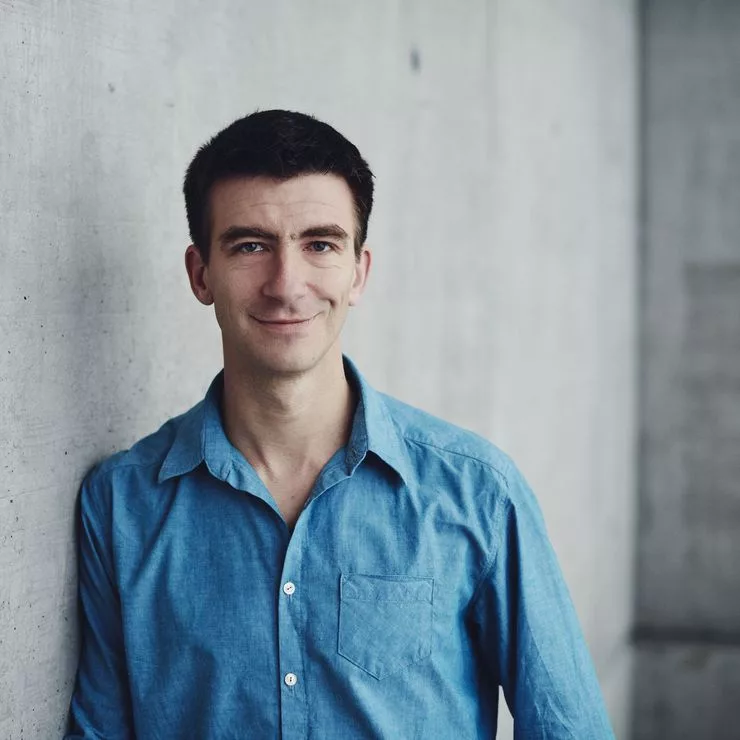
Dr. Dmitry Kobak
VIB Center for AI & Computational Biology (VIB.AI); University of Ghent
-
-
Research Fund Project
WildCap – Autonomous Animal Motion Capture for Wildlife Conservation
Overview Understanding animal behaviour at large spatial and temporal scales is crucial for ecology and conservation, but it is difficult to monitor wild animals continuously without interfering… read more
-
Prof. Aamir Ahmad
University of Stuttgart, Max Planck Institute for Intelligent Systems
-
-
Research Fund Project
Embedding combinatorial reasoning into learned control policies
Overview Many machine-learning systems can learn patterns from images or sensor data, but they often struggle when decisions must follow strict rules. Real-world tasks may involve budgets,… read more
-

Prof. Georg Martius
University of Tübingen; Ontic Labs
-
-
Research Fund Project
Learning effcient control of non-linear muscle-drivensystems: Morphological computation as guiding principle.
Overview Human movement depends on complex interactions between the brain, nervous system, muscles, and body. The brain does not calculate the exact force required for every muscle… read more
-
Prof. Georg Martius
University of Tübingen; Ontic Labs
-

Prof. Dr. Daniel Häufle
University of Tübingen; Hertie Institute for Clinical Brain Research
-
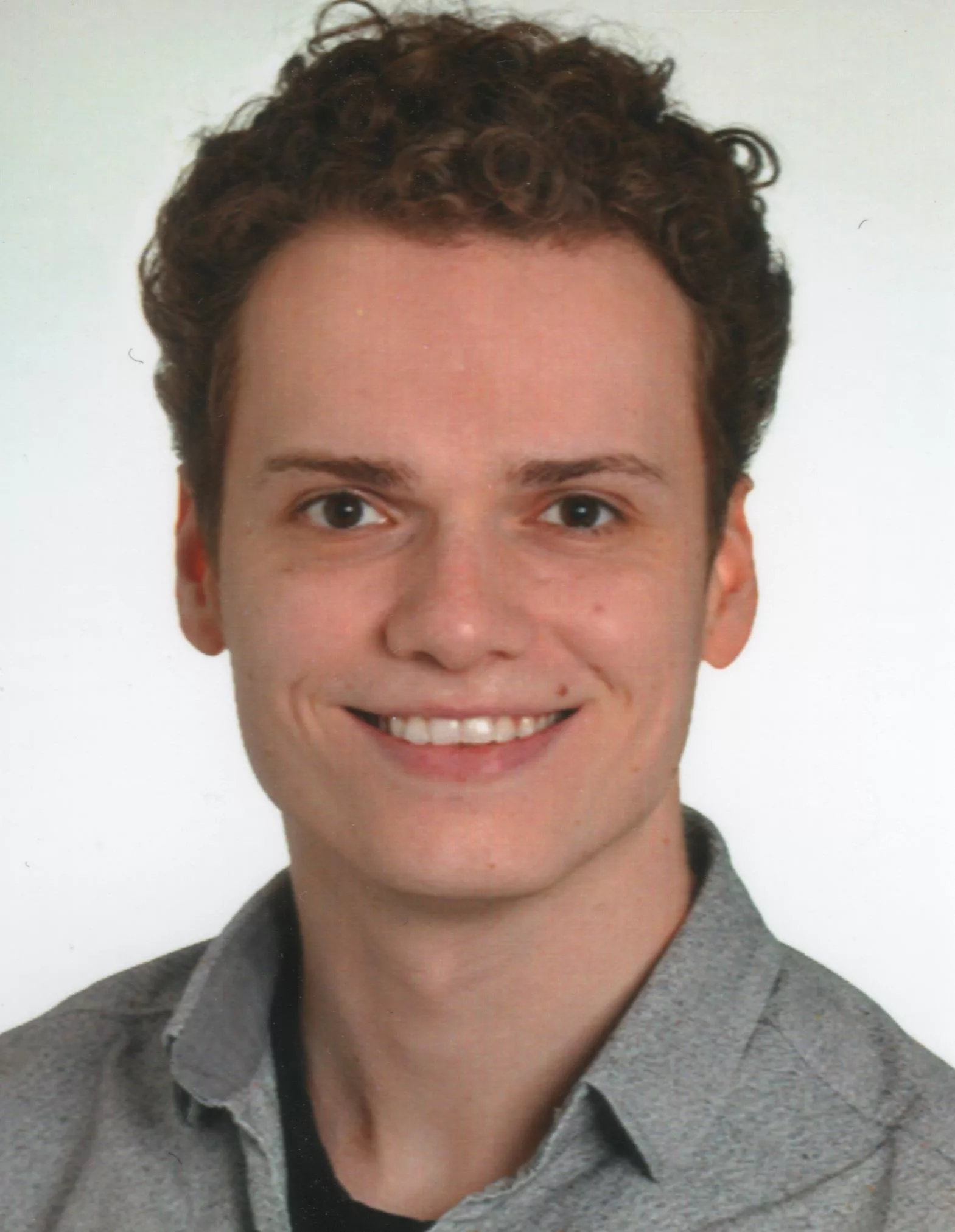
Dr. Pierre Schumacher
Eka Robotics
-
-
Research Fund Project
InstruData – Data-driven Musical Instrument Education
Overview Learning to play a musical instrument requires extensive independent practice, but learners cannot always receive regular feedback from a teacher. Led by Michael Sedlmair and Frank… read more
-

Prof. Dr. Michael Sedlmair
Fraunhofer IGD; TU Darmstadt
-

Frank Heyen
University of Stuttgart
-
-
Research Fund Project
MachineData: Machine Data Sets and Their Use for Learning Control
Overview Learning control policies directly on physical systems—robots, vehicles, or industrial machines—is difficult because data collection is expensive, noisy, and safety-critical. Classical control theory provides strong guarantees… read more
-
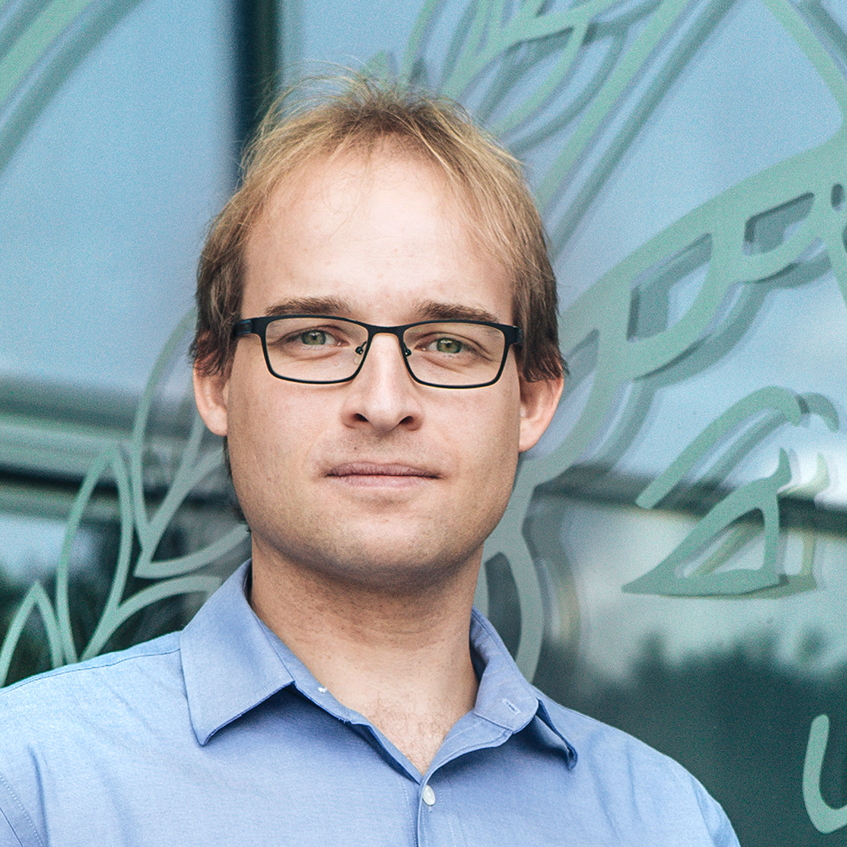
Prof. Dr. Sebastian Trimpe
RWTH Aachen University
-
-
Research Fund Project
Mechanisms of representation transfer
Overview Computer-vision systems can classify objects and segment images well, but they often fail when images are distorted or unfamiliar. Humans, by contrast, can interpret a wide… read more
-

Prof. Dr. Fabian Sinz
University of Göttingen
-
-
Research Fund Project
Soft-Sensing Interfaces with Multifunctional Smart Materials
Developing flexible sensors inspired by biological systems for robotics and healthcareOverview Led by Ardian Jusufi, this project investigated how biology and biomechanics can inform the design of soft robotic systems. Its goal was to develop flexible, stretchable,… read more
-

Prof. Dr. Ardian Jusufi
University of Zürich
-
-
Research Fund Project
Relaxing Restrictive Interdependence Assumptions in Networks
Advancing network models to better capture complex real-world interactionsOverview Network models are widely used to study complex systems, but many assume that connections are independent once the communities of the nodes are known. This assumption… read more
-
Dr. Caterina De Bacco
TU Delft, Netherlands
-
-
Research Fund Project
Self-Supervised Learning of Mobility Affordances for Vision-Based Navigation
Enabling robots to adapt their navigation to real-world environmentsOverview Mobile robots, including logistics robots and autonomous vehicles, must estimate their motion and adapt to different surfaces, wheels, and control inputs. This project investigated how robots… read more
-

Prof. Dr. Jörg Stückler
University of Augsburg
-
-
Research Fund Project
Learning Physics-Based Models for Visuo-Tactile Object Perception and Manipulation
Helping robots understand and handle objects through touch and visionOverview Robots still struggle to match human abilities in perceiving and manipulating objects, especially in complex, real-world environments. This project explored how robots can learn to understand… read more
-
Prof. Dr. Jörg Stückler
University of Augsburg
-
-
Research Fund Project
Anomaly Detection in Networks: Reciprocated and Dynamic Networks
Overview Led by Caterina De Bacco, Hadiseh Safdari, and Martina Contisciani, this project investigated how to detect unusual patterns in complex networks. The project was supported by… read more
-
Dr. Caterina De Bacco
TU Delft, Netherlands
-
-
Research Fund Project
Cyber-physical Twins of Human Organs
Overview Surgeons, like airline pilots, need realistic environments in which to practise complex procedures. However, existing surgical simulators and simple substitutes often fail to reproduce the anatomy,… read more
-

Prof. Tian Qiu
TU Dresden / German Cancer Research Center (DKFZ)
-
-
Research Fund Project
A Scalable Machine Learning Approach to Improving Human Decision Making
Using AI to support better planning and decision strategies in complex environmentsOverview As automation transforms the nature of work, many roles increasingly depend on people’s ability to plan, prioritze, and make decisions in complex and uncertain situations. The… read more
-

Dr. Falk Lieder
UCLA
-